
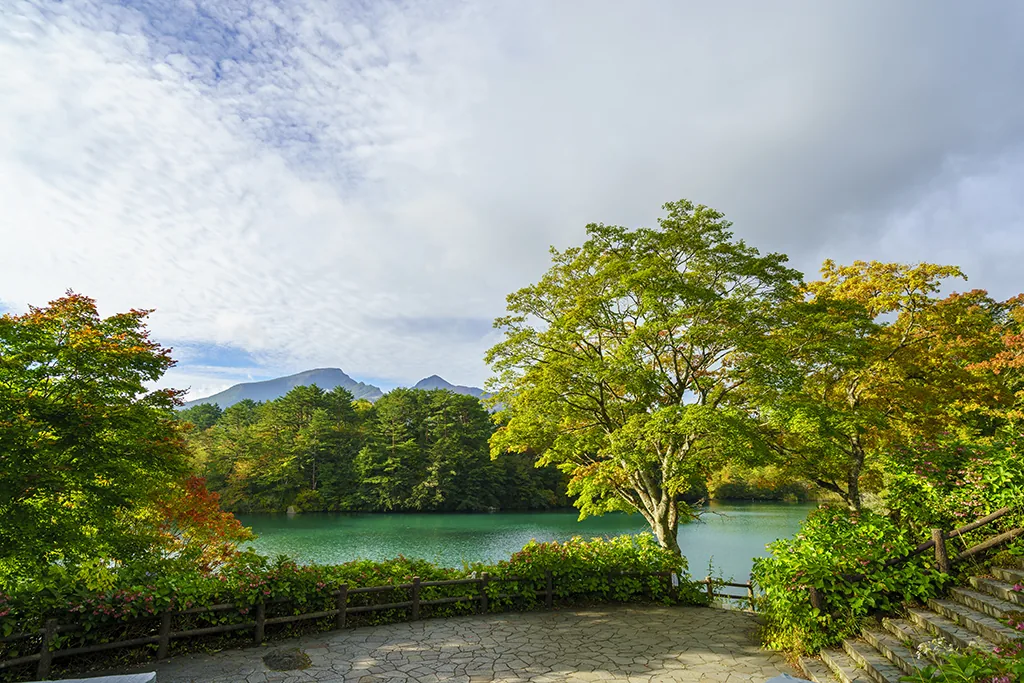
Ura-Bandai
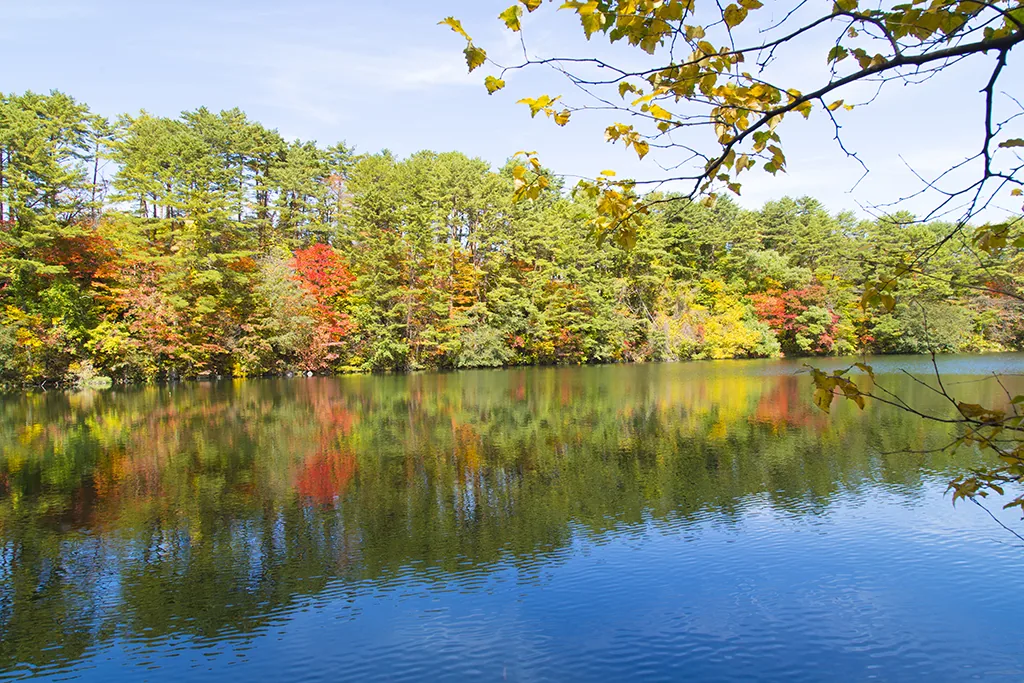
Photo: Ⓒ福島県観光物産交流協会
Areas of Fukushima
Ura-Bandai
Ura-Bandai sightseeing: walking the 4 km Goshikinuma Nature Trail past ponds of different colors, boats on Bishamon-numa, autumn leaves and buses from Inawashiro.
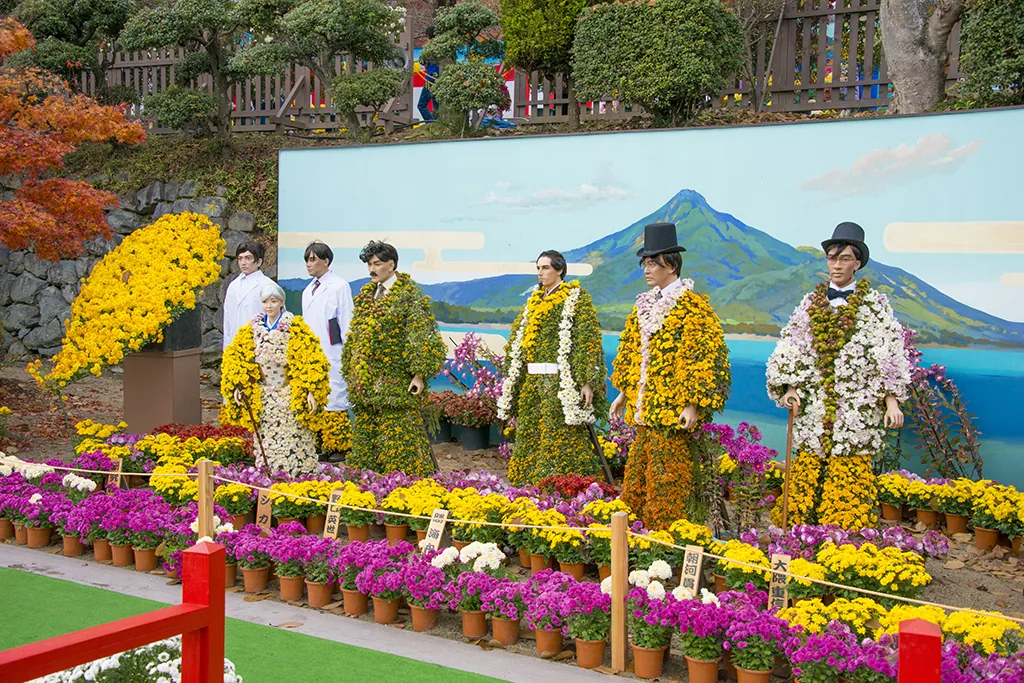 Oct 10 – Nov 23Nihonmatsu Chrysanthemum Doll Festival (Nihonmatsu no Kiku Ningyo)
 GuidesFukushima Autumn Leaves: Bandai-Azuma Skyline and Goshikinuma
Find on the map
This page is translated from the Japanese edition. Read the Japanese edition
What is the area like?
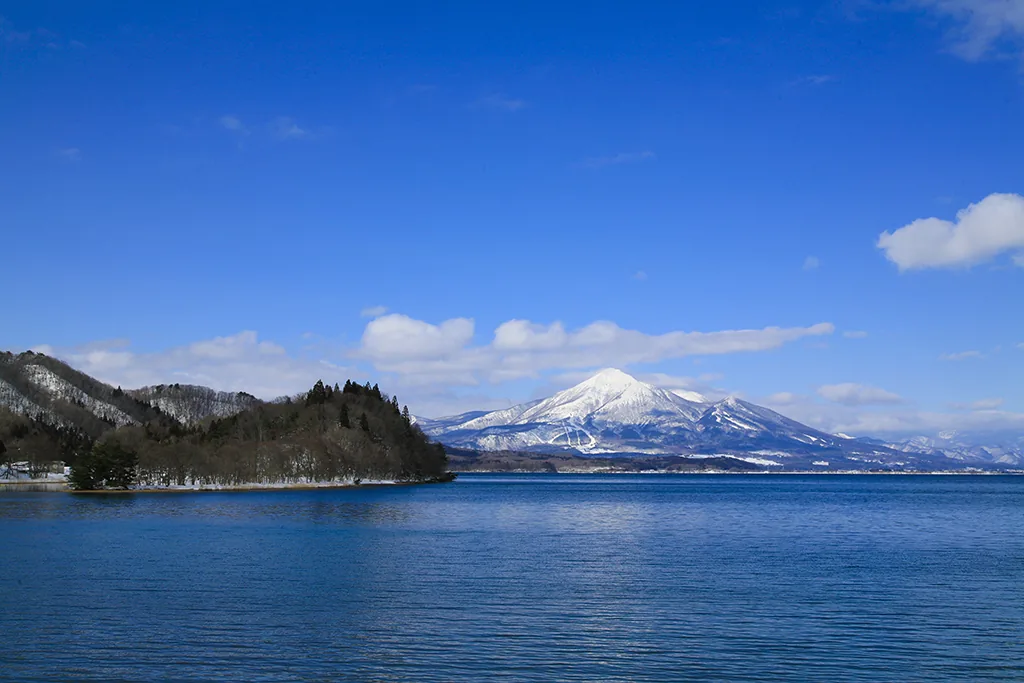
Ura-Bandai is the highland spreading over the north side of Mt. Bandai. In the 1888 (Meiji 21) eruption, part of the mountain collapsed, and the debris avalanche at its northern foot created lakes and ponds including Goshikinuma and Lake Hibara. Today ponds large and small are scattered through the forests of Bandai-Asahi National Park. Unlike the gentle Mt. Bandai seen from Inawashiro to the south, from here you see the rugged slopes left by the collapse.
Main sights
Goshikinuma Ponds (Goshikinuma Nature Trail)
A cluster of ponds scattered through the forest, each with water of a different color, from blue to green. The Goshikinuma Nature Trail linking them is a flat path about 4 km long, taking around 1 hour 10 minutes to 1 hour 30 minutes one way. The east entrance is at the Urabandai Visitor Center and the west entrance is near Urabandai Kogen-eki.
A short walk from the east entrance, Bishamon-numa is the largest of the ponds, with Mt. Bandai visible across the water from the shore. In the summer season you can also rent a rowing boat. Benten-numa and Ruri-numa are known for their deep blue, and the colors shift with the light, the season and the angle. In the foliage season, on still mornings, the colored trees are mirrored in the ponds. See Goshikinuma Ponds (Goshikinuma Nature Trail).
Getting there
- By bus: From Inawashiro Station on the JR Ban-etsu West Line, local buses bound for Ura-Bandai take about 25 to 30 minutes to the east entrance (Goshikinuma Iriguchi, at the Urabandai Visitor Center). Check routes and times with the bus company.
- Inawashiro Station is about 40 minutes from Koriyama Station on the Tohoku Shinkansen via the JR Ban-etsu West Line.
Getting around the area
You can walk the trail from one entrance and ride the local bus back from the other. If you are short of time, a round trip from the east entrance to Bishamon-numa alone is fine. There are no toilets or vending machines along the trail, so get drinks at the entrance. Parts of the path have exposed earth and rocks and get muddy after rain, so wear sturdy walking shoes.
The area is a Special Protection Zone, and taking plants or animals is not allowed. Note that the "Goshikinuma (Witch's Eye)" at Jododaira in Fukushima City is a different place, so take care when looking up directions. For foliage-season routes, see Fukushima Autumn Leaves.
Sights in Ura-Bandai
Fukushima guides
See all
More areas of Fukushima
- Aizu-Wakamatsu
- Kitakata
- Nishiaizu
- Inawashiro
- Ouchi-juku & Yunokami
- Minamiaizu (Maezawa)
- Hinoemata
- Fukushima City & Hanamiyama
- Iizaka Onsen
- Takayu & Azuma
- Nihonmatsu
- Dake Onsen & Mt. Adatara
- Koriyama
- Bandai-Atami Onsen
- Miharu
- Abukuma Cave
- Sukagawa
- Shirakawa
- Kashi Highlands
- Tanagura
- Soma & Matsukawaura
- Minamisoma (Odaka)
- Tomioka & Yonomori
- Natsui River Gorge
- Iwaki (Uchigo & Yumoto)
- Onahama & Misaki Park