
Dake Onsen & Mt. Adatara
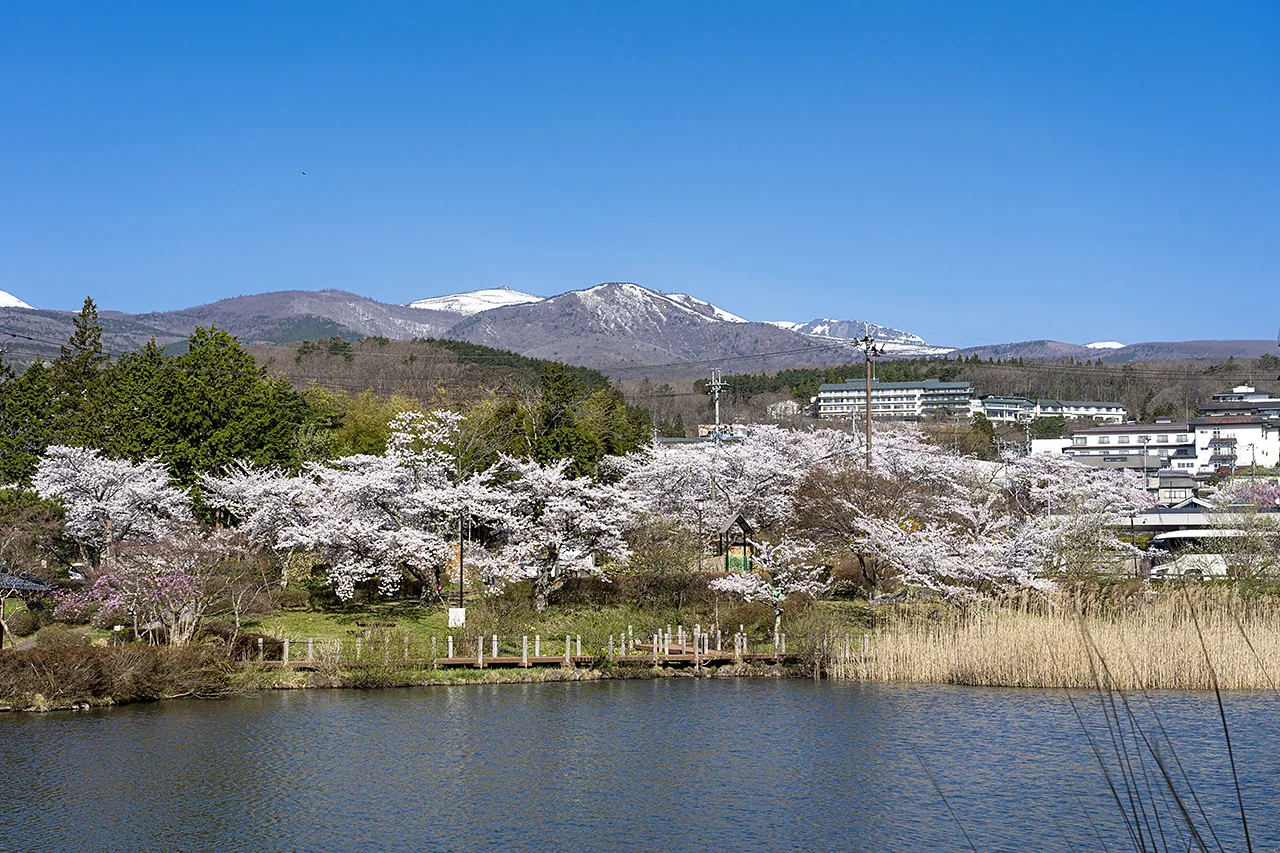
Photo: Ⓒ福島県観光物産交流協会
Areas of Fukushima
Dake Onsen & Mt. Adatara
Dake Onsen and Mt. Adatara: acidic spring water piped from the mountain, the cherry-lined Sakurazaka, the ropeway to Yakushi-dake, fall colors and volcano safety.
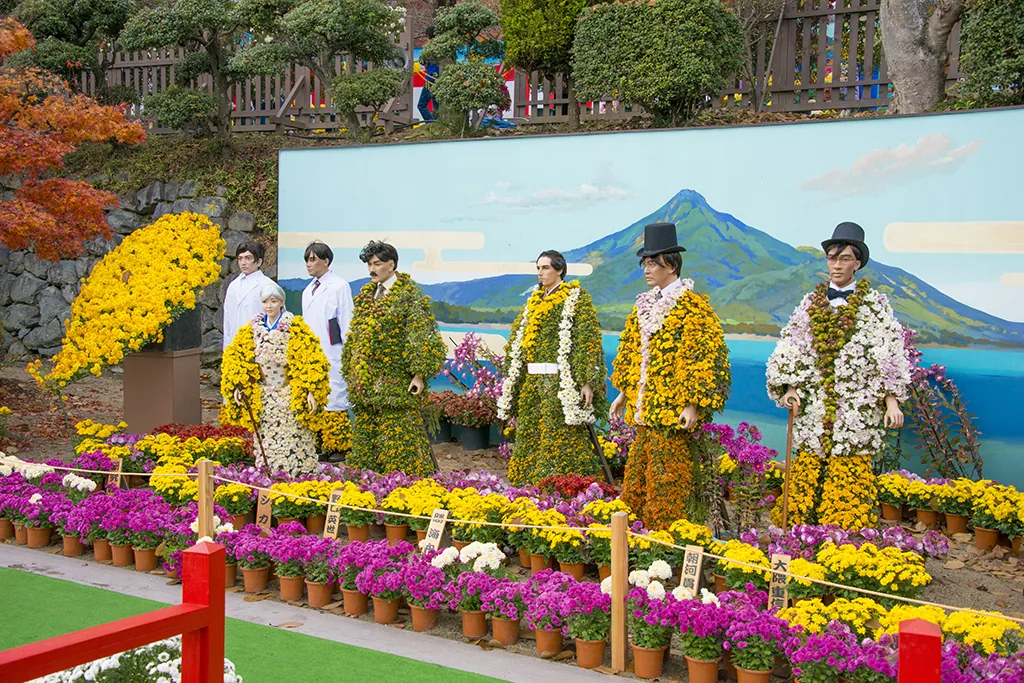 Oct 10 – Nov 23Nihonmatsu Chrysanthemum Doll Festival (Nihonmatsu no Kiku Ningyo)
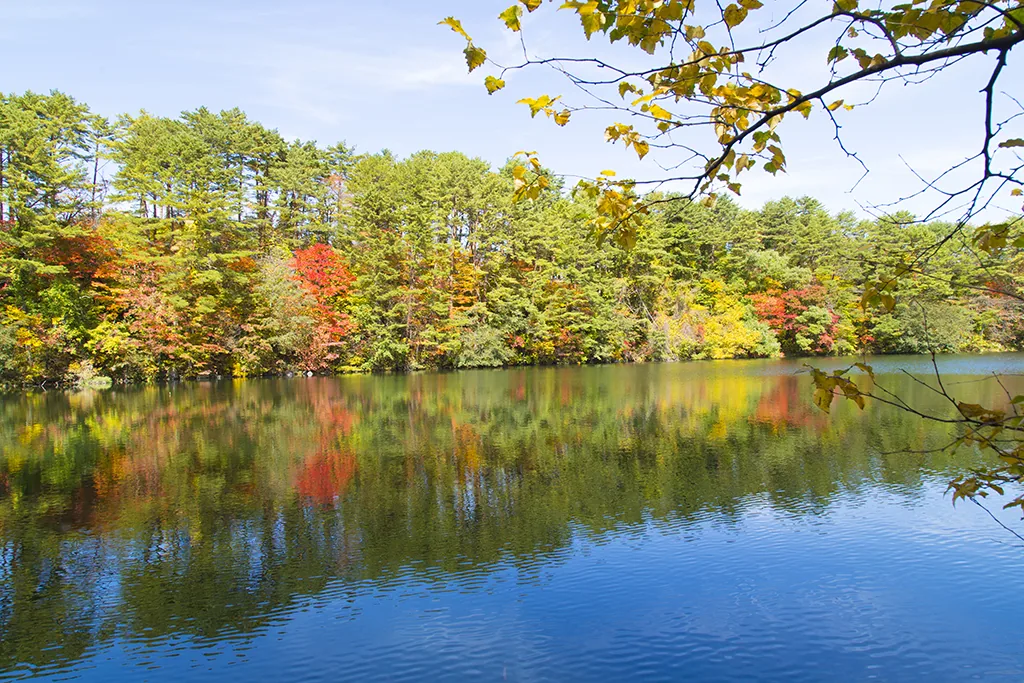 GuidesFukushima Autumn Leaves: Bandai-Azuma Skyline and Goshikinuma
Find on the map
This page is translated from the Japanese edition. Read the Japanese edition
What is the area like?
Mt. Adatara, rising west of Nihonmatsu, is a volcano of about 1,700 m and one of Japan's 100 Famous Mountains. In Takamura Kotaro's "Chieko-sho," the sky above the mountain is Chieko's "true sky." At its eastern foot lies Dake Onsen, a hot spring town that pipes its water down from a source high on the mountain. People come for the Sakurazaka in spring and the mountain's colors in autumn.
Main sights
Dake Onsen
The water is piped about 8 km from a source at about 1,500 m directly below Mt. Tetsuzan, and its acidity, around pH 2.5, is rare in Japan. Locals known as "yumori" (guardians of the spring) look after the pipeline.
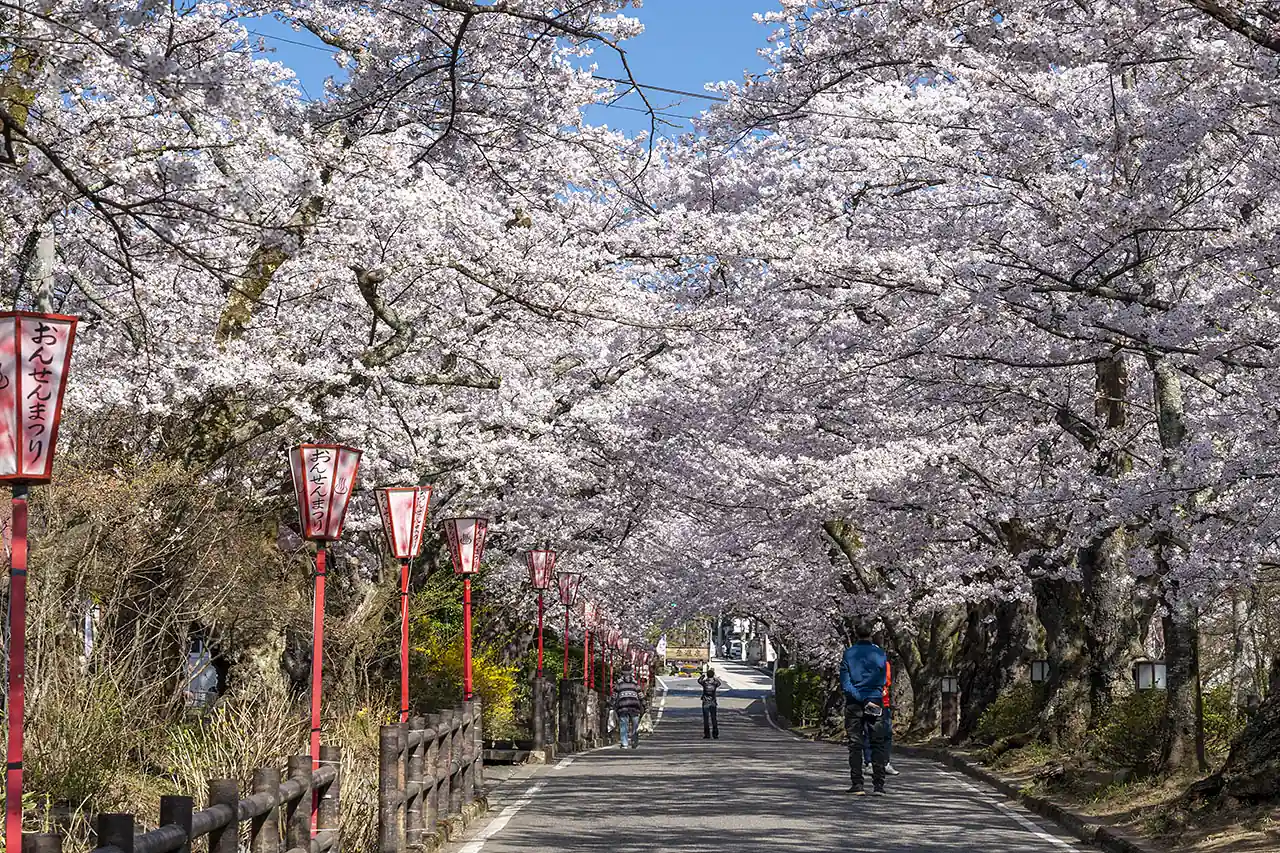
The Sakurazaka, a slope running down from the town center to Kagami-ga-ike pond, becomes a tunnel of cherry blossoms in spring, with bonbori lanterns lit from the evening. There is a footbath partway down. From Kagami-ga-ike Park at the bottom you can see Mt. Adatara across the pond. See Dake Onsen (Dake Hot Springs).
Mt. Adatara
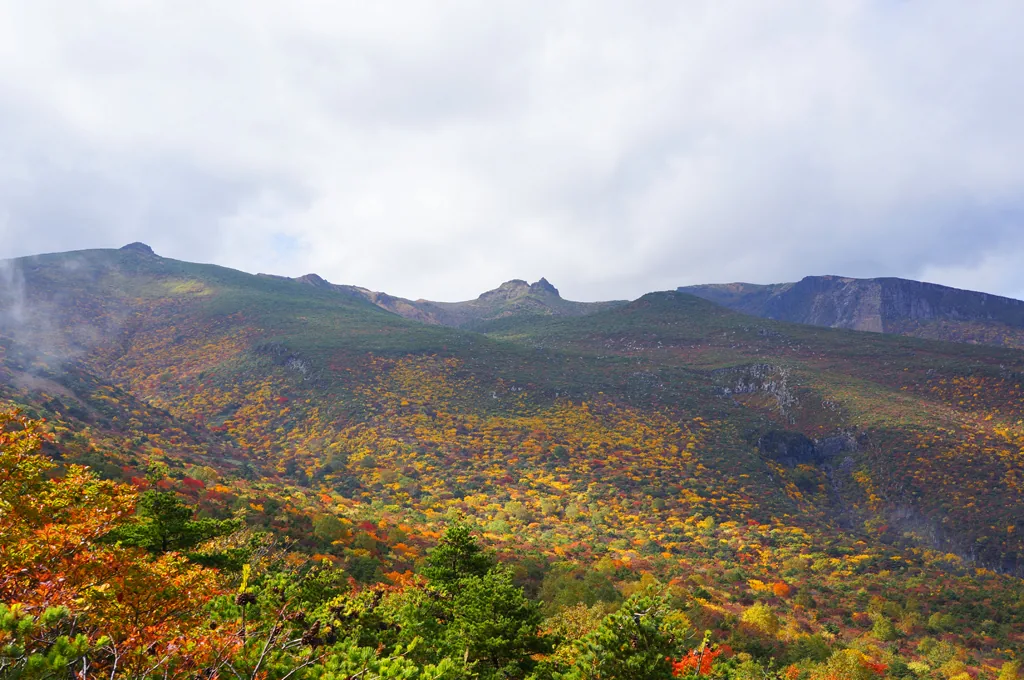
A ropeway climbs to Yakushi-dake at about 1,350 m, so even non-hikers can enjoy the mountain views. Walk the trail from the top station to reach Yakushi-dake Panorama Park. Autumn colors are usually at their best on the ridge from the summit to Mt. Tetsuzan from mid-September to early October, and around Yakushi-dake and Seishidaira from early to mid-October.
It is an active volcano under constant observation by the Japan Meteorological Agency; as of October 2026 its eruption alert level is 1 (note that it is an active volcano). Volcanic gas can collect in hollows and near fumaroles, so stay on the designated trails. Check the latest information from the Japan Meteorological Agency and local governments before you go. See Mt. Adatara (Adatarayama).
Getting there
- By bus: About 25 minutes from Nihonmatsu Station on the JR Tohoku Main Line by Fukushima Kotsu bus bound for Dake Onsen. For the ropeway's base station (Adatara Kogen Ski Resort), change at Dake Onsen to a bus for Okudake on days it runs. In some seasons a shuttle bus also runs from Nihonmatsu Station to Okudake.
- By car: About 15 minutes from the Nihonmatsu IC on the Tohoku Expressway to Dake Onsen, and about 20 minutes to the ropeway base station.
- The Tohoku Shinkansen does not stop at Nihonmatsu, so change to a local train at Koriyama or Fukushima Station.
Getting around the area
Stay at Dake Onsen and in cherry season you can stroll the lantern-lit slope at night and go up the mountain the next morning. The wind on the mountain is cold even in autumn and the weather changes quickly, so bring warm clothes and rain gear. If you climb to the summit, carry a map and plan so you can turn back early.
Near Nihonmatsu Station is the town of Nihonmatsu, with the Kasumigajo Park castle site. For comparing hot springs, see Fukushima Onsen; for cherry season, see Fukushima Cherry Blossoms.
Sights in Dake Onsen & Mt. Adatara
Fukushima guides
See all
More areas of Fukushima
- Aizu-Wakamatsu
- Kitakata
- Nishiaizu
- Inawashiro
- Ura-Bandai
- Ouchi-juku & Yunokami
- Minamiaizu (Maezawa)
- Hinoemata
- Fukushima City & Hanamiyama
- Iizaka Onsen
- Takayu & Azuma
- Nihonmatsu
- Koriyama
- Bandai-Atami Onsen
- Miharu
- Abukuma Cave
- Sukagawa
- Shirakawa
- Kashi Highlands
- Tanagura
- Soma & Matsukawaura
- Minamisoma (Odaka)
- Tomioka & Yonomori
- Natsui River Gorge
- Iwaki (Uchigo & Yumoto)
- Onahama & Misaki Park