Aizu-Wakamatsu Samurai History: Tsuruga-jo, Iimoriyama, Oyakuen
This guide is translated from the Japanese edition. Read the Japanese edition
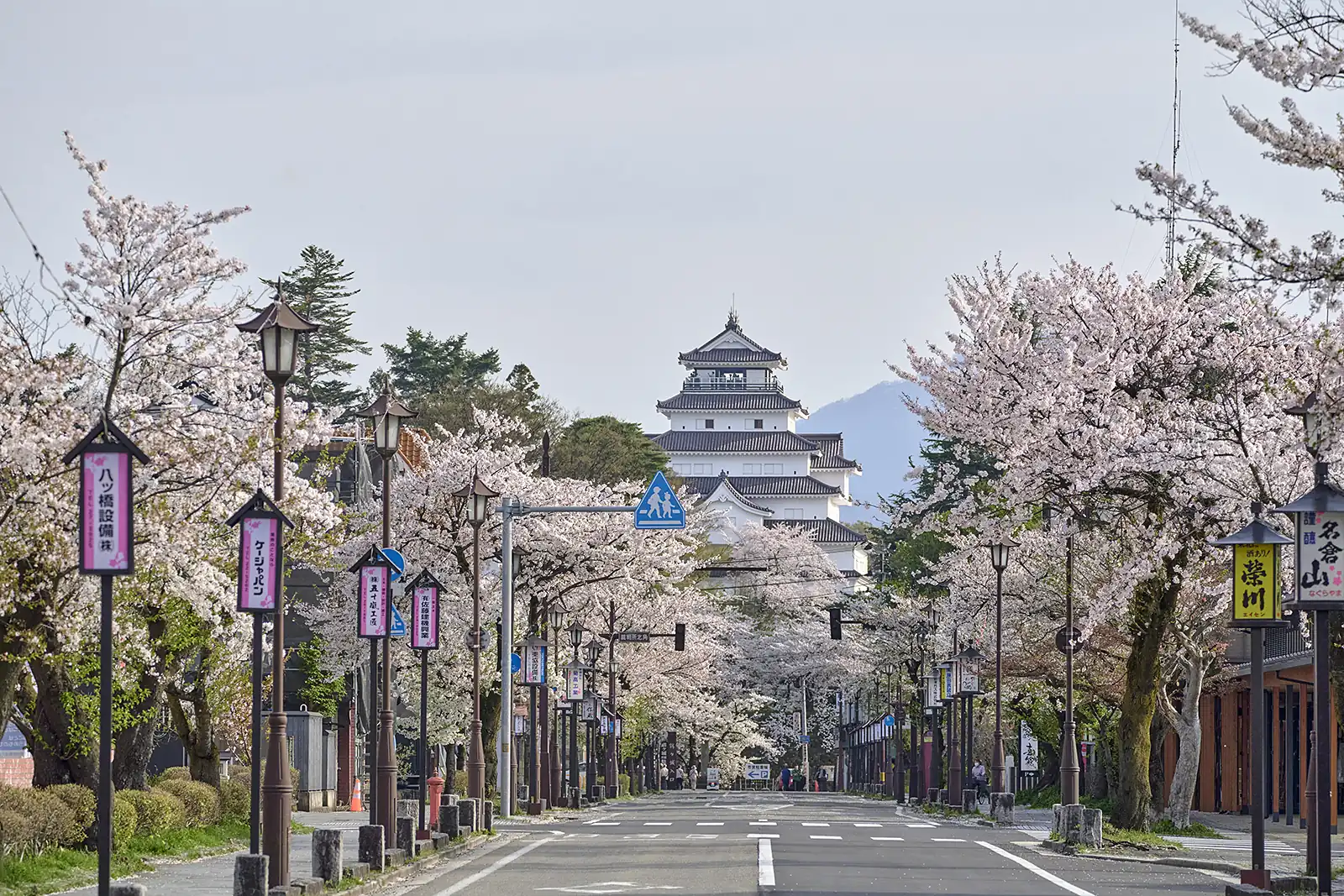
Aizu-Wakamatsu's samurai history at Tsuruga-jo Castle, Iimoriyama, Oyakuen and Hanitsu Shrine, from the Aizu Domain to the Boshin War, plus loop buses and transport.
Walk through central Aizu-Wakamatsu and a castle keep with red roof tiles rises beyond the moat and stone walls. This basin town in western Fukushima Prefecture grew up as the castle town of the Aizu Domain in the Edo period, and at the end of that era, in the Boshin War, its castle was surrounded by the new government's army. A castle, the hill where a unit of young samurai met their end, a lord's garden, and the shrine of the domain's founder: visit these four in historical order and even first-timers can follow the story from the domain's beginnings to the Boshin War.
The Aizu Domain and the Boshin War: the story in brief
The castle at Aizu is said to have begun as a residence built by the Ashina clan in the 14th century. At the end of the 16th century, Gamo Ujisato, sent to Aizu on the orders of Toyotomi Hideyoshi, rebuilt the castle on a larger scale, added a keep and named it Tsuruga-jo.
The Aizu Domain of the Edo period began with its first lord, Hoshina Masayuki. After the second lord, Hoshina Masatsune, the lords from the third onward took the Matsudaira name, and the domain reached the end of the shogunate era under its ninth lord, Matsudaira Katamori.
In 1868 (Keio 4), the new government's forces invaded Aizu in the Boshin War. Samurai and their families shut themselves inside Tsuruga-jo Castle and surrendered after a siege of about a month. The tragedy of the Byakkotai, a unit of Aizu's young samurai, happened during this fighting. Each of the four places below connects to some part of this story.
Tsuruga-jo Castle: the red-tiled keep and the memory of the siege
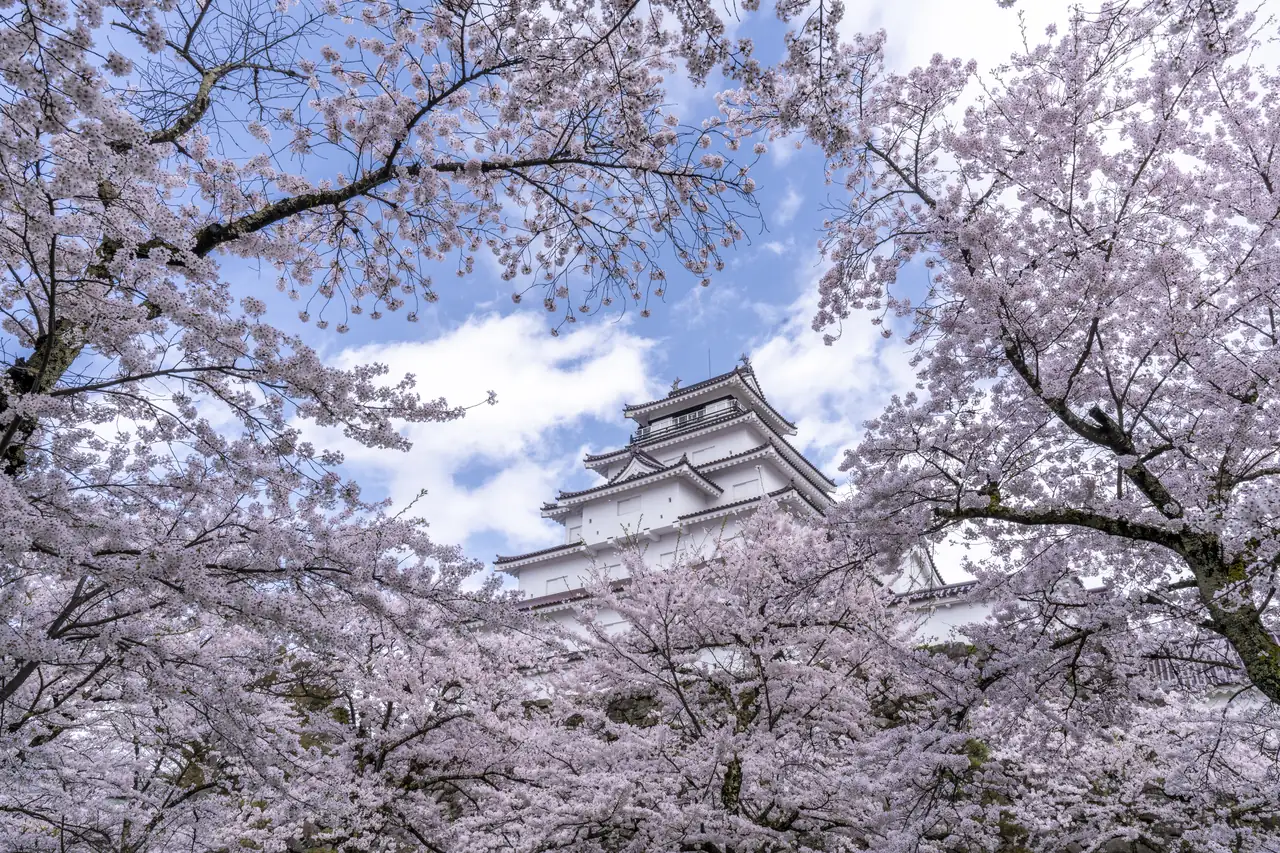
Tsuruga-jo Castle stands in the middle of Aizu-Wakamatsu. After the Boshin War, most of its buildings were torn down in 1874, in the Meiji era, leaving only the stone walls. The present keep was rebuilt in 1965 at the strong wish of local citizens. In 2011 its roof was re-tiled in red, following how it looked at the end of the Edo period. The long corridor building (hashiri-nagaya) and the Hoshii Yagura turret running south of the keep have also been reconstructed in wood, based on Edo-period plans and old photographs.
Inside, the keep is a local history museum, with exhibits on the castle's successive lords, the history of the Aizu Domain and the siege of the Boshin War. From the top floor you can see past the town to Mt. Bandai and to Iimoriyama, the next stop. Allow 30 minutes to an hour if you want to read the exhibits on the way up.
The grounds around the castle are a park. In spring the moat and stone walls are lined with cherry blossoms, and in winter the keep is capped with snow. Check opening hours and admission on the official Tsuruga-jo website.
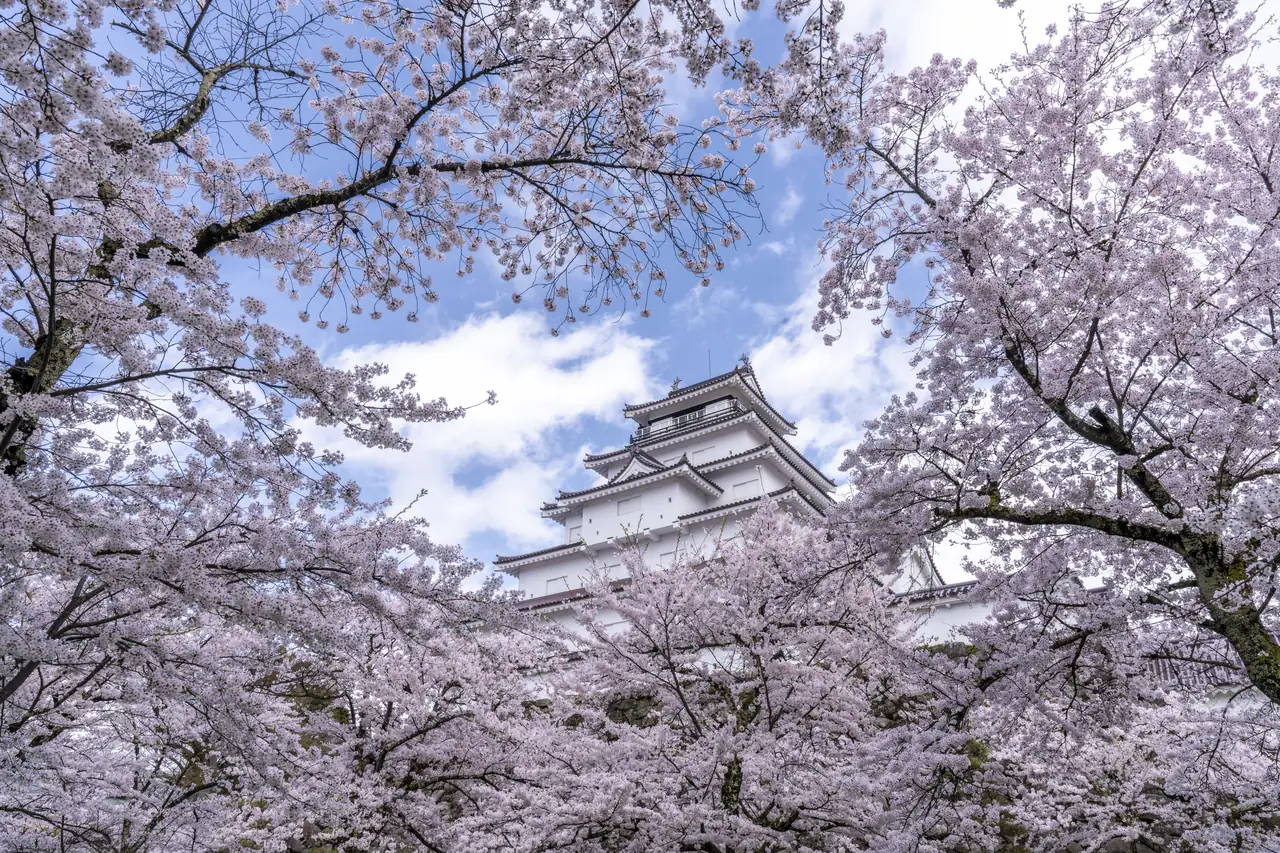
Photo: Ⓒ福島県観光物産交流協会
Mt. Iimoriyama: the graves of the 19 Byakkotai and the Sazaedo
Mt. Iimoriyama is a low hill northeast of the castle, looking down over the town. The Byakkotai (White Tiger Force) was a unit of Aizu's young samurai formed during the Boshin War. After losing the battle of Tonokuchihara, the members of its Shichu No. 2 Company retreated to Iimoriyama through the tunnel of the Tonokuchi irrigation channel. Seeing smoke rising over the castle town from the hill, they believed the castle had fallen and took their own lives here. Of the 20, only one survived, and he later told what had happened.
The "Graves of the Nineteen Byakkotai" line the hillside, with the place where they died just below. The approach is a stone staircase, with a moving walkway (slope conveyor) alongside.
One more building on the hillside is worth stopping for: the Sazaedo (Entsu Sanso-do), a hexagonal three-story hall built in 1796. Its passages up and down form a double spiral, so worshippers climb to the top and come back down without ever passing each other. It's a rare design, and the hall is a nationally designated Important Cultural Property.
Seeing the graves, the Sazaedo and the exit of the Tonokuchi tunnel the Byakkotai passed through takes about an hour.
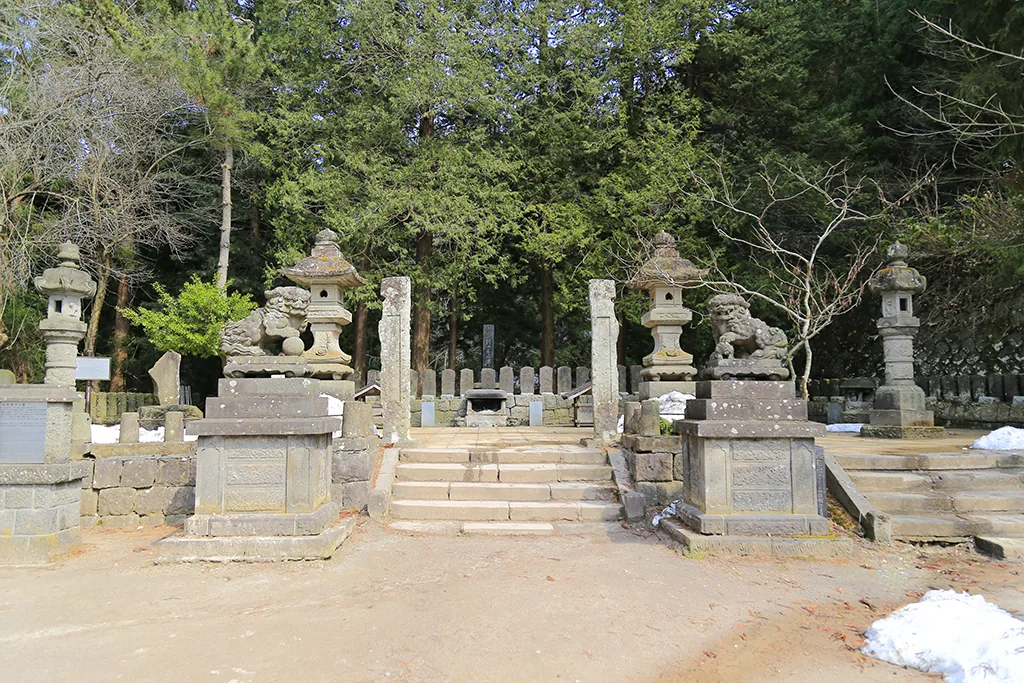
Photo: Ⓒ福島県観光物産交流協会
Oyakuen Garden: the Aizu lords' garden and herb garden
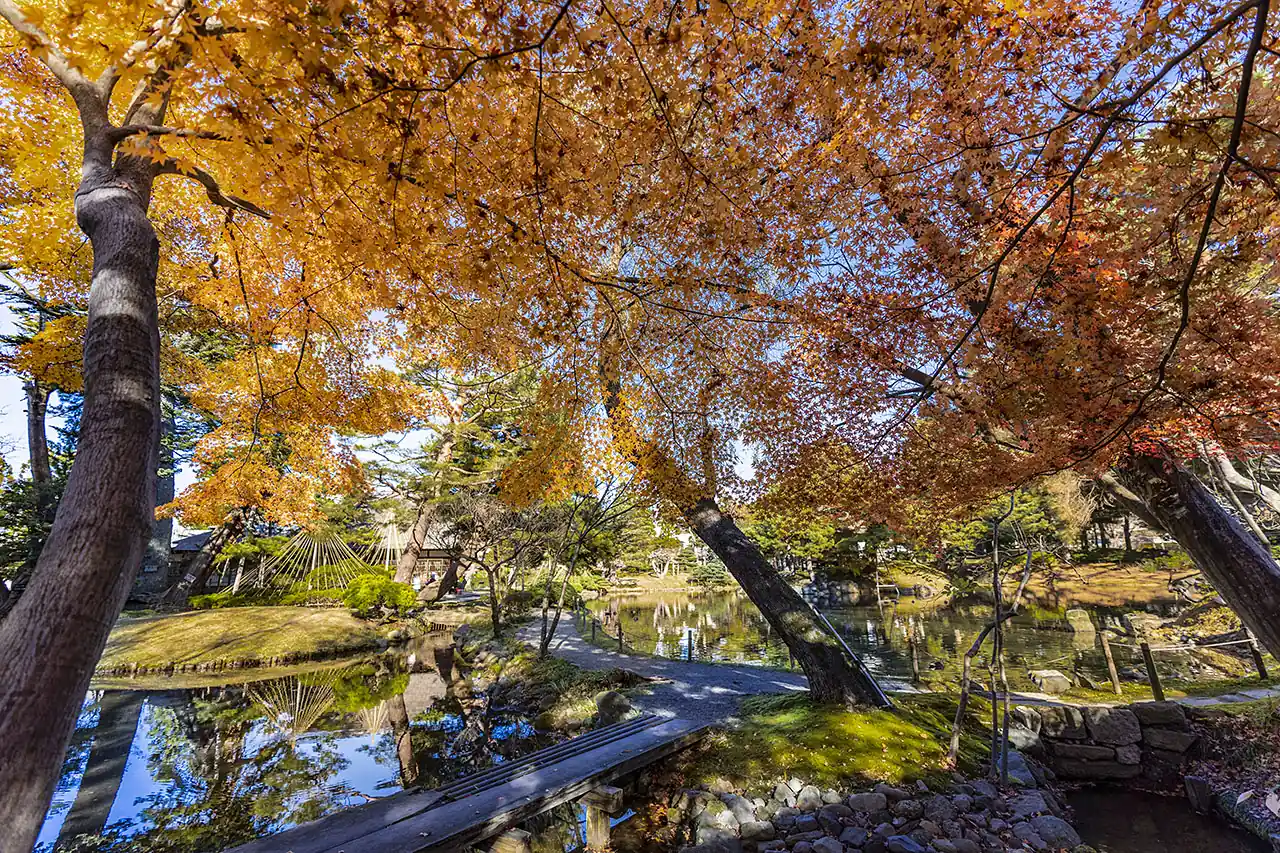
Oyakuen is the garden the lords of Aizu used as a villa, and it is a nationally designated Place of Scenic Beauty. It is said to have begun in the Muromachi period, when the Ashina clan built a villa on the site. In the Edo period the second lord, Hoshina Masatsune, began growing medicinal herbs here to protect the health of the people, which is where the name Oyakuen ("medicinal garden") comes from. Under the third lord, Matsudaira Masakata, the growing of Korean ginseng was tried, and in 1696 the garden that survives today was laid out.
It's a classic daimyo garden, with a pond shaped like the character 心 (heart) at its center and the mountains to the east as borrowed scenery. About 400 kinds of medicinal plants and trees are still grown here. By the pond, the Ochaya Goten is a thatched teahouse-style building where you can look out over the garden with a bowl of matcha. In autumn the trees around the pond change color, and in late autumn the pines are fitted with snow-protection ropes (yukitsuri).
After the history exhibits at the castle and Iimoriyama, it's a good place to sit and take a breather. Check opening hours on the Oyakuen page of the official Tsuruga-jo website.
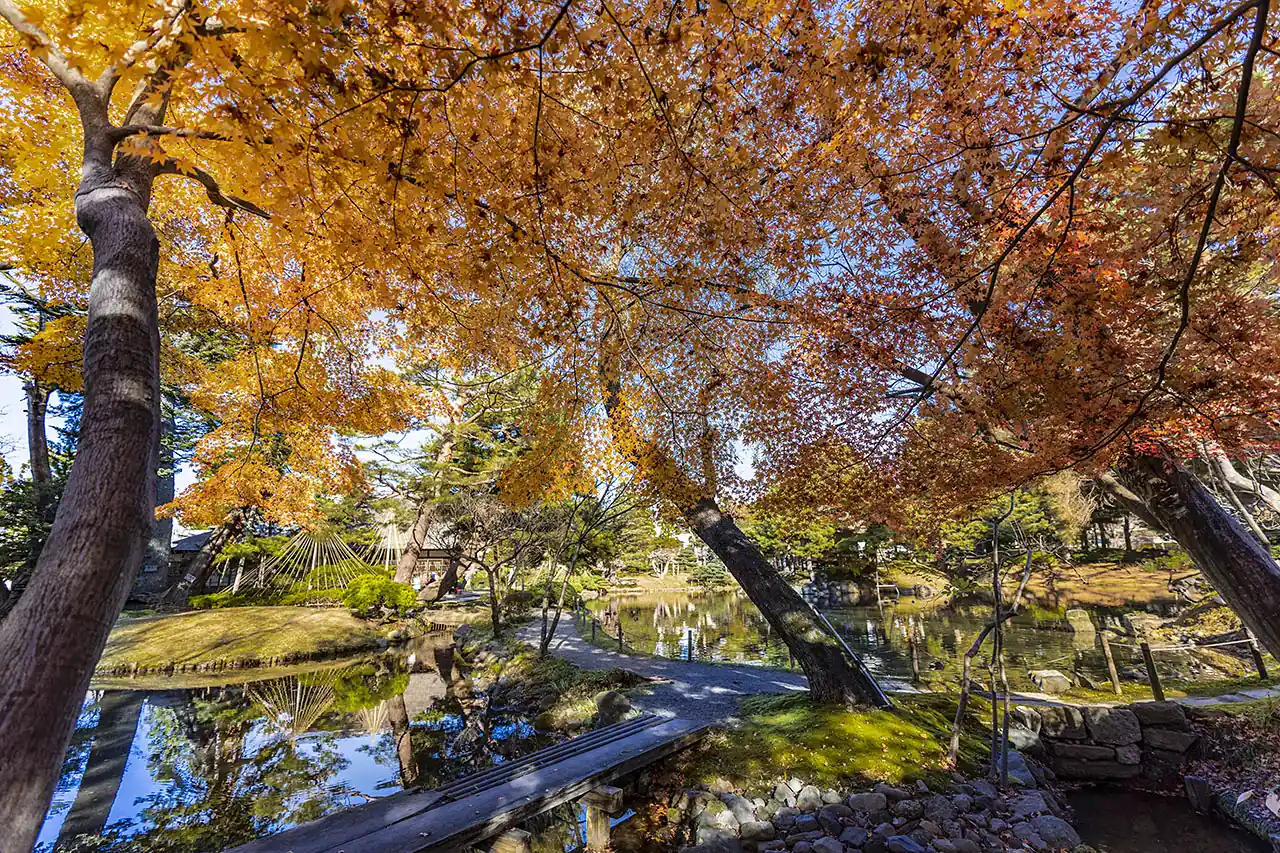
Photo: Ⓒ福島県観光物産交流協会
Hanitsu Shrine: the Inawashiro resting place of founder Hoshina Masayuki
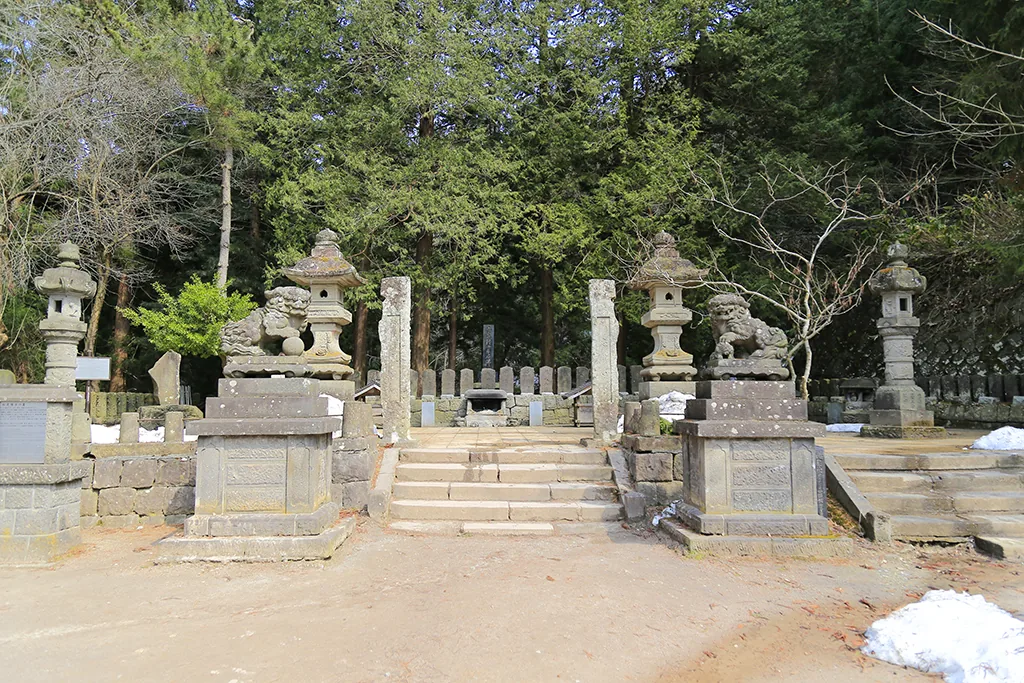
To go a step further into Aizu's history, head from Aizu-Wakamatsu to the town of Inawashiro and Hanitsu Shrine, which enshrines Hoshina Masayuki, the first lord of the Aizu Domain. Masayuki died in 1672 and, at his own wish, was buried in Inawashiro at the foot of Mt. Bandai. The shrine was built at his grave in 1675.
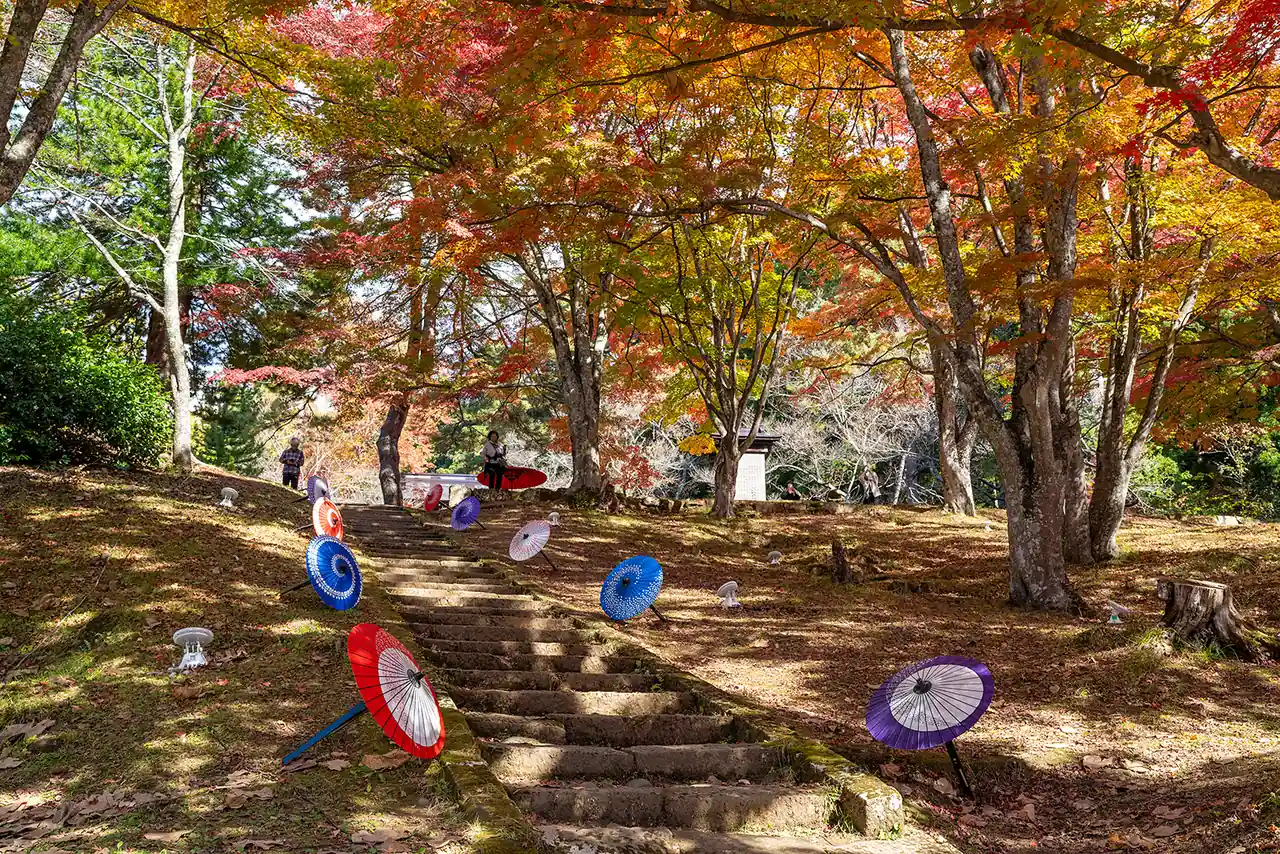
It stands on high ground at the eastern foot of Mt. Bandai, with the shrine buildings at the top of a stone stairway. The mood changes with the seasons: cherry blossoms in spring, fresh green in summer, and in autumn the whole precinct turns red and gold.
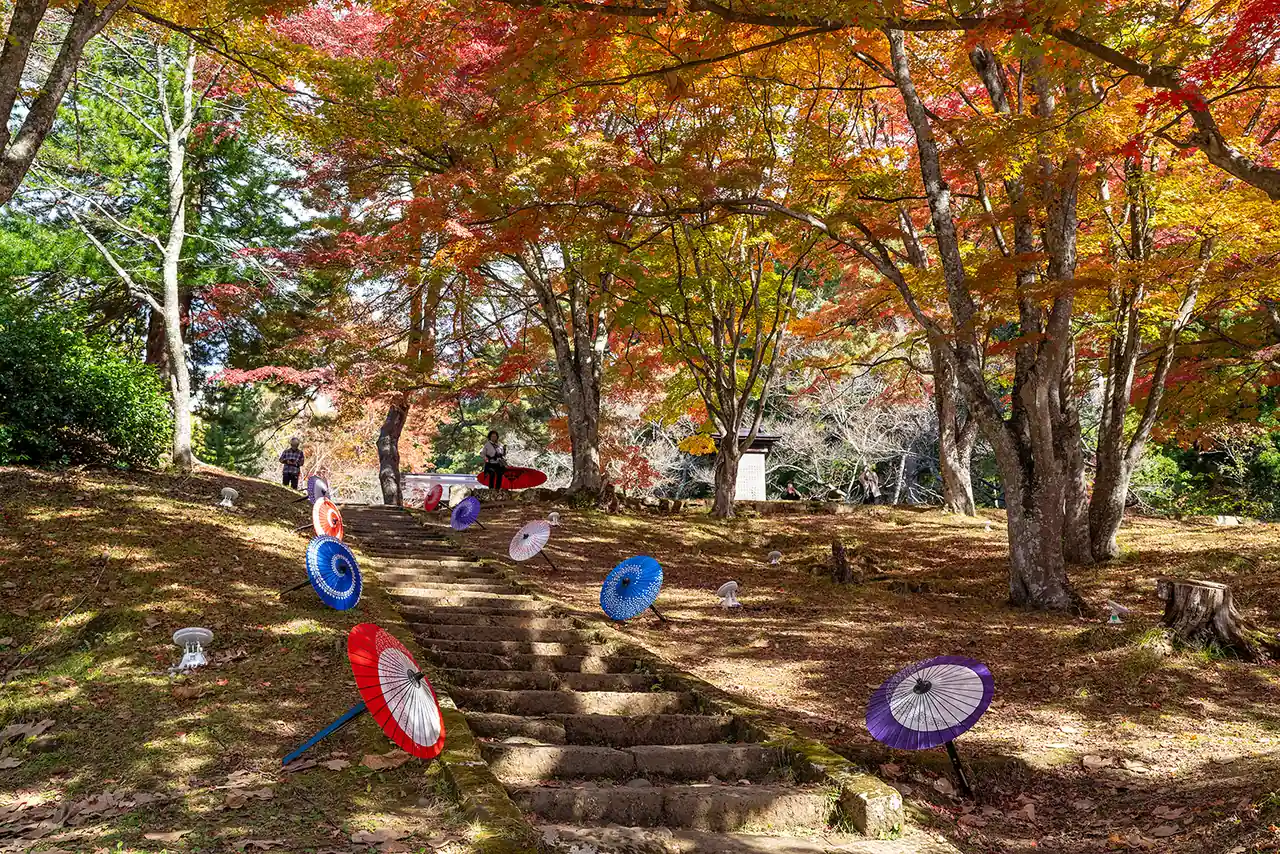
Photo: Ⓒ福島県観光物産交流協会
Getting around: Aizu-Wakamatsu's loop buses and the trip to Inawashiro
From Tokyo to Aizu-Wakamatsu, take the Tohoku Shinkansen to Koriyama Station and change to the JR Ban'etsu West Line. A rapid train from Koriyama to Aizu-Wakamatsu takes about an hour. Check times on the JR East website.
Within Aizu-Wakamatsu, the loop buses that start from Aizu-Wakamatsu Station are the easy option: the Haikara-san (counterclockwise) and the Akabe (clockwise). They link Tsuruga-jo Castle, Iimoriyama, Nanokamachi and more, each running every 30 minutes. Check routes, times and day passes on the Aizu Bus website.
For a single day, this order works without rushing.
- Morning: loop bus from Aizu-Wakamatsu Station to Iimoriyama for the graves and the Sazaedo
- Midday: on to Tsuruga-jo Castle and the Boshin War exhibits in the keep's museum
- Afternoon: rest and enjoy the garden at Oyakuen
- The next day, or if you have a car: Hanitsu Shrine in Inawashiro
For Hanitsu Shrine, the practical way is to ride the Ban'etsu West Line from Aizu-Wakamatsu back to Inawashiro Station and take a taxi from there. With a car, you can combine it with the sights around Lake Inawashiro and Mt. Bandai.
For more on getting around town, see the Aizu-Wakamatsu area page; for Ouchi-juku and the other thatched villages of Minami-Aizu, see our feature on the thatched villages of southern Aizu.