Fukushima Onsen: Takayu, Iizaka, Dake, Bandai-Atami, Iwaki-Yumoto
This guide is translated from the Japanese edition. Read the Japanese edition
How to choose a Fukushima onsen town: milky sulfur water at Takayu, Iizaka's Sabakoyu, Dake's piped mountain water, station foot baths, train access and public-bath tips.
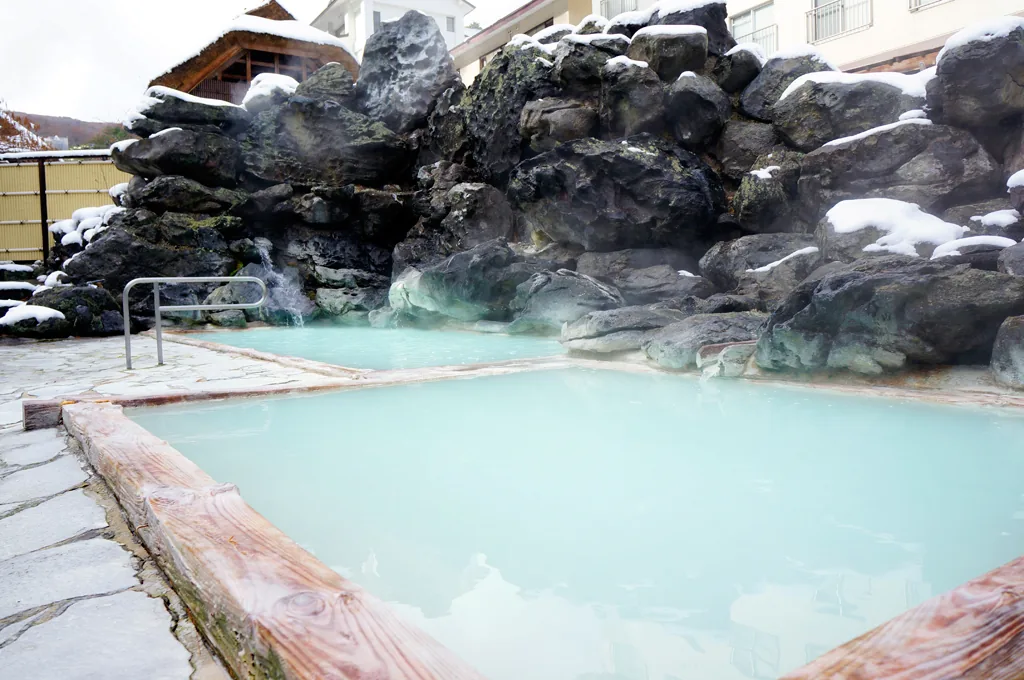
Ride a local bus about 40 minutes uphill from the west exit of Fukushima Station and you reach Takayu Onsen, known for its milky white sulfur water. Fukushima City alone has two hot spring towns with completely different characters: Takayu up in the mountains and Iizaka in town. This guide helps you pick an onsen town in Fukushima Prefecture by the type of water and how to get there from the station. Do you want to soak in cloudy sulfur water, walk from one public bathhouse to the next, or just warm your feet between trains? The right place depends on what you are after.
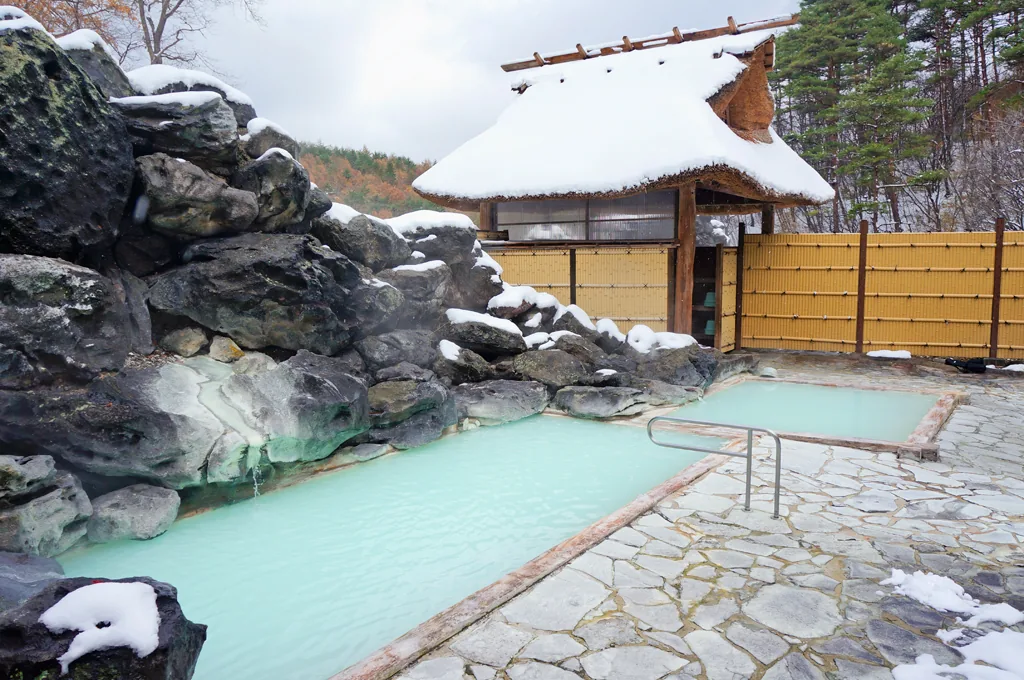
Takayu Onsen: milky sulfur water on the slopes of Mt. Azuma
Takayu Onsen sits on the slopes of the Azuma range, west of Fukushima City. Its water is a cloudy white sulfur spring, and together with Zao Onsen and Shirabu Onsen in Yamagata Prefecture it has long been counted among the "three Takayu of Oshu." According to the local tourism association the springs were opened in 1607. The town marked its 400th anniversary in 2007.
If you are not staying overnight, the communal bathhouse Attakayu, in the middle of the hot spring town, is the easiest place to bathe. Some inns also accept day visitors; check the tourism association's website.
The bus bound for Takayu Onsen from the west exit of Fukushima Station takes about 40 minutes. There are only a few buses a day, so check the return times first. Takayu is also the starting point of the Bandai-Azuma Skyline, the road over the Azuma range, so with a car you can combine it with the volcanic scenery at Jododaira.
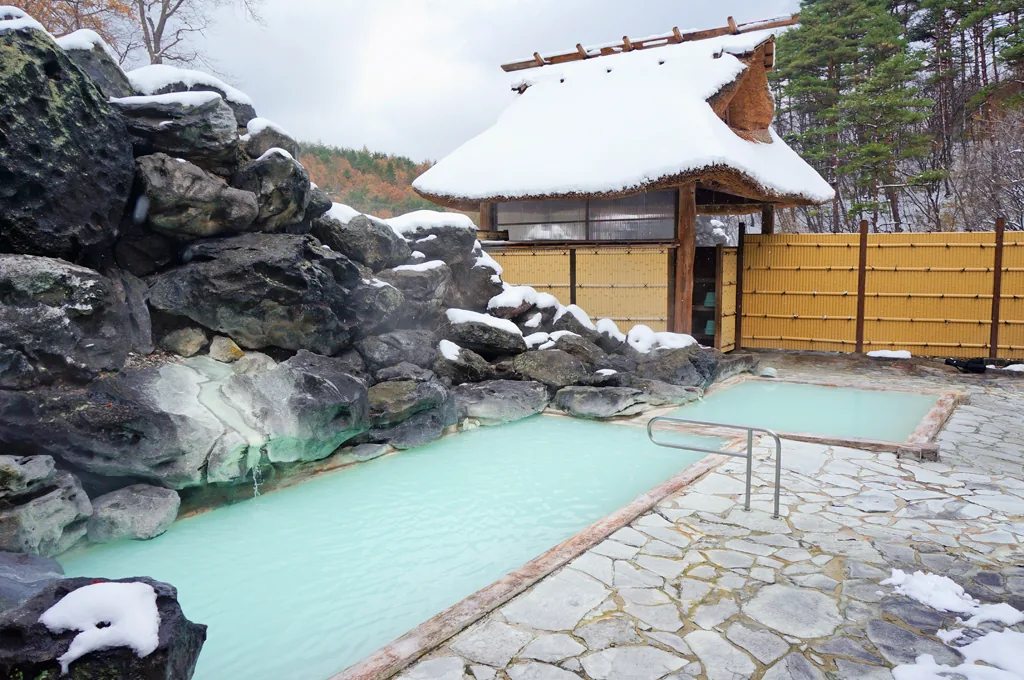
Photo: Ⓒ福島県観光物産交流協会
Iizaka Onsen: a hot spring town you can reach by train, with public bathhouses
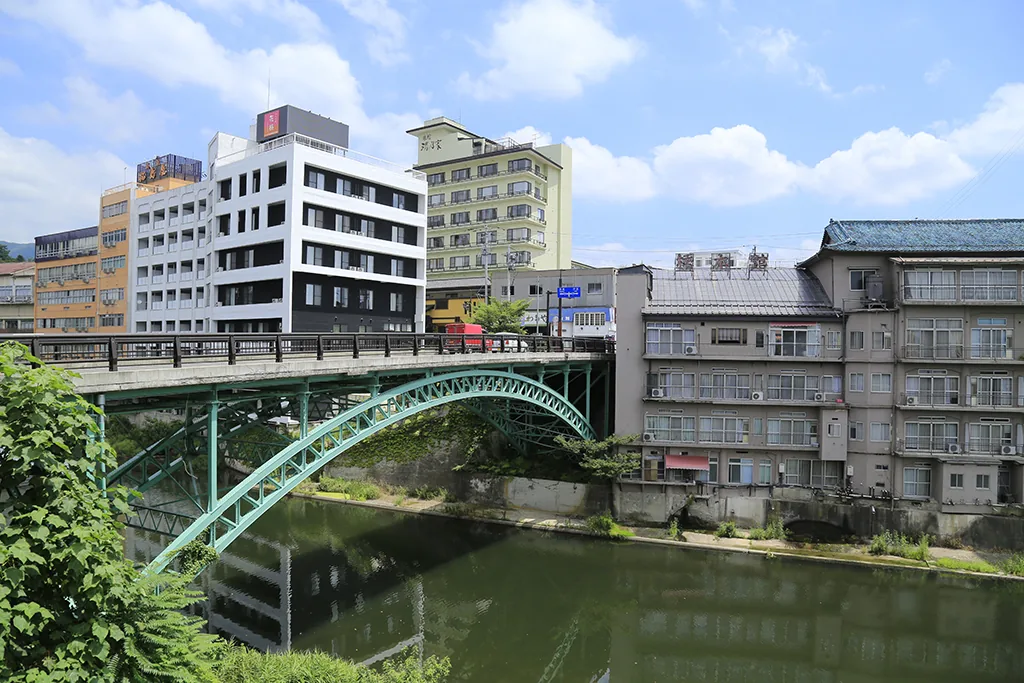
Iizaka Onsen is about 23 minutes from Fukushima Station on the Fukushima Kotsu Iizaka Line. Get off at the last stop, Iizaka Onsen Station, and the hot spring town begins right there. Inns line the Surikami River, and there are a number of public bathhouses used by locals as well.
The best known is Sabakoyu, about 5 minutes' walk from the station. It is said to be the oldest bath in Iizaka, and the haiku poet Matsuo Basho is said to have bathed here in 1689. The current wooden building was rebuilt in 1993, modeled on a Meiji-era public bathhouse. The water is very hot: Fukushima City's tourism information puts it at 46–47°C. Next door is a covered foot bath. If hot water is not for you, try Hakoyu, a public bathhouse just outside the station, which has two tubs: one filled straight from the source and very hot, and one adjusted to a more comfortable temperature.
Since one train takes you there from Fukushima Station, you can stay at a hotel in Fukushima City, ride out in the evening for a soak at a public bath, and take the train back.
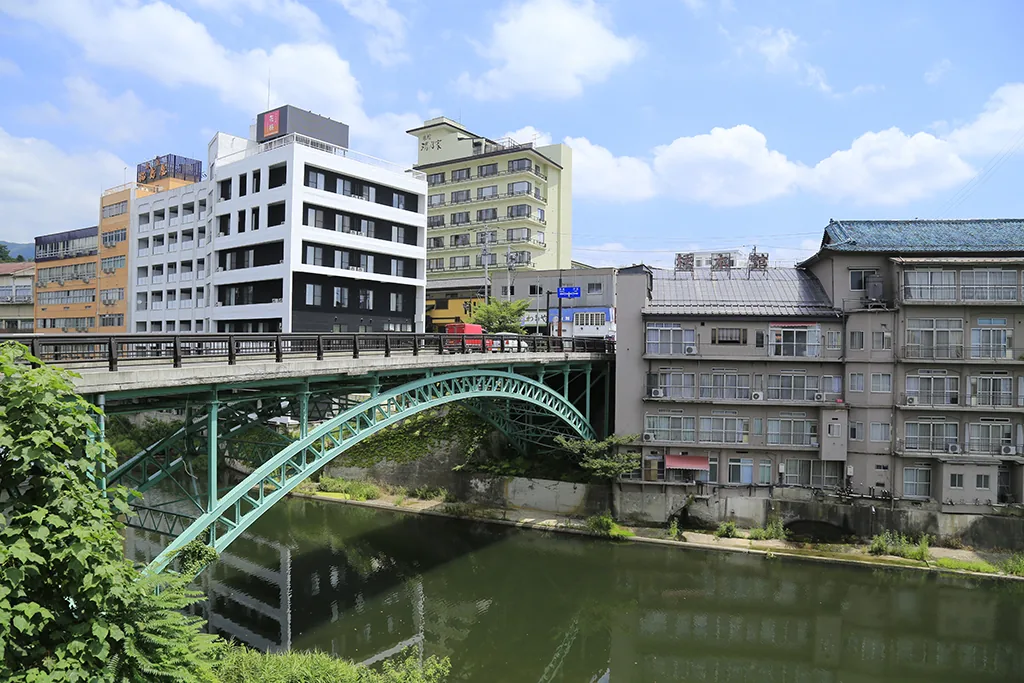
Photo: Ⓒ福島県観光物産交流協会
Dake Onsen: water piped about 8 km from a source on Mt. Adatara
Dake Onsen in Nihonmatsu City lies at the eastern foot of Mt. Adatara. Its source lies directly below Mt. Tetsuzan in the Adatara range, at about 1,500 m above sea level, and the water is piped about 8 km down a drop of some 900 m to the town. It is an acidic spring at pH 2.5, and according to the tourism association it is churned on its way down the mountainside, which makes it gentler on the skin. The source and the pipeline are looked after by caretakers known as yumori.
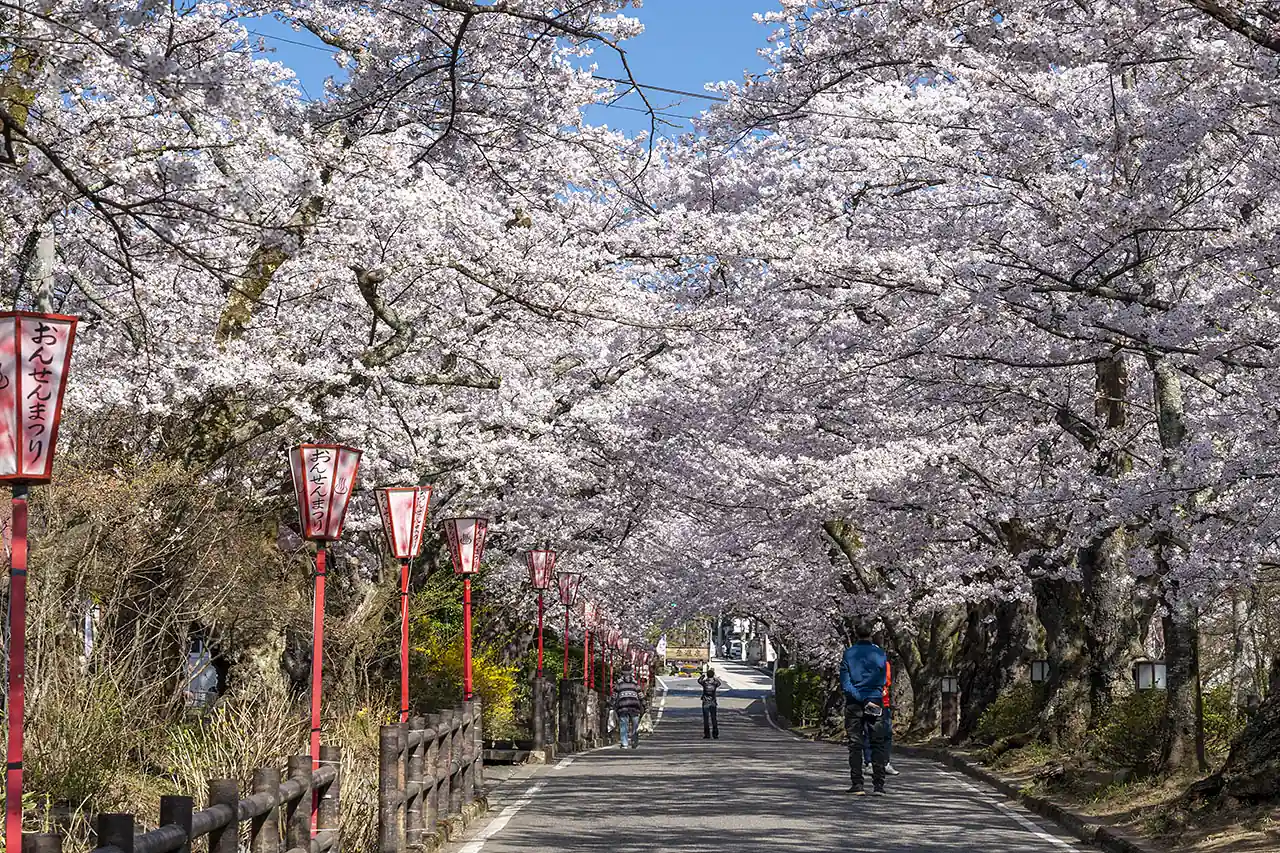
Around mid-April, the slope running down from the main street to Kagami-ga-ike Pond becomes a tunnel of cherry blossoms (Fukushima cherry blossom spots).
The bus to Dake Onsen from JR Nihonmatsu Station on the Tohoku Main Line takes about 25 minutes. The Tohoku Shinkansen does not stop at Nihonmatsu, so change to a local train at Koriyama or Fukushima.
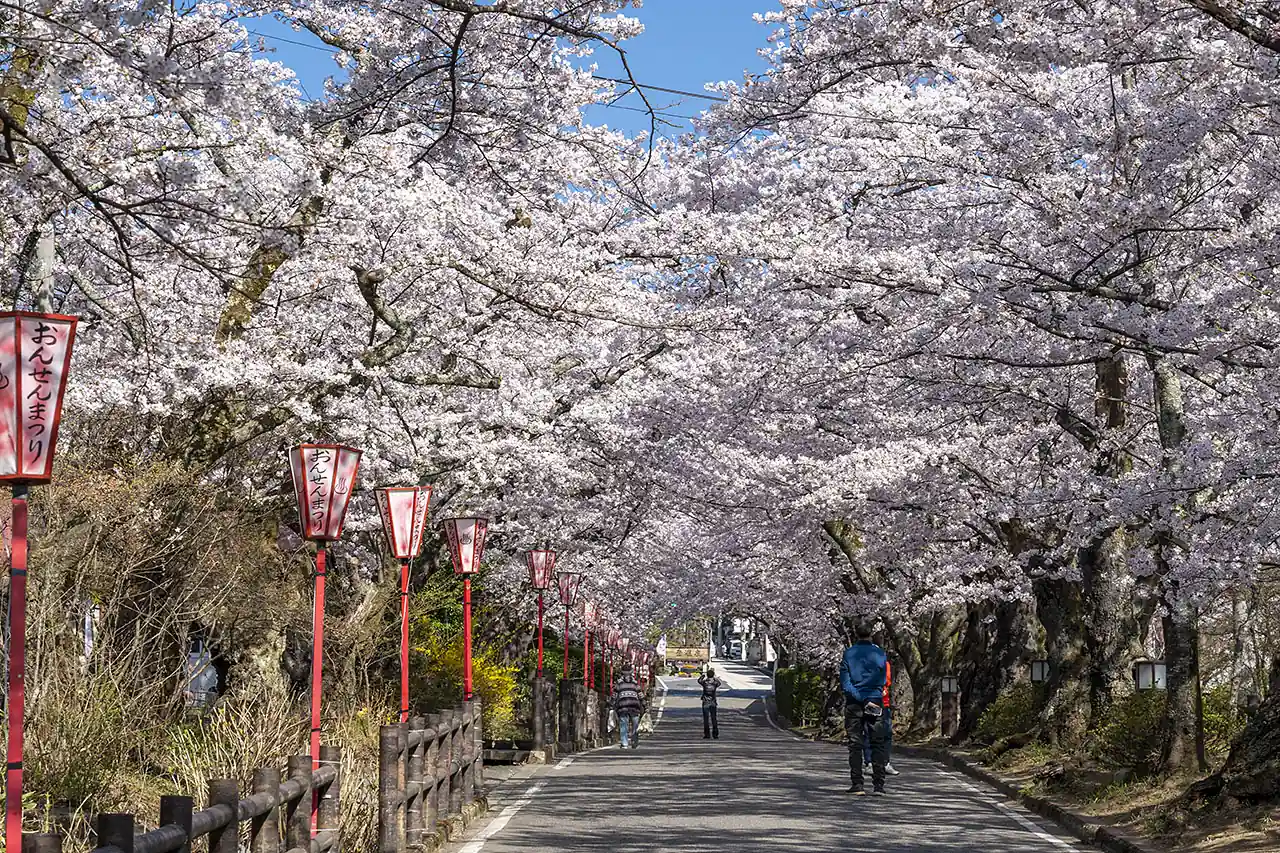
Photo: Ⓒ福島県観光物産交流協会
Bandai-Atami Onsen: the "beauty bath" close to Koriyama
At Bandai-Atami Onsen, in western Koriyama City, the hot spring town begins right in front of Bandai-Atami Station on the JR Ban'etsu West Line. It is said to have more than 800 years of history. According to the legend of Princess Hagi, a princess from Kyoto suffering from illness recovered after bathing here, and the water has long been loved as a gentle "beauty bath."
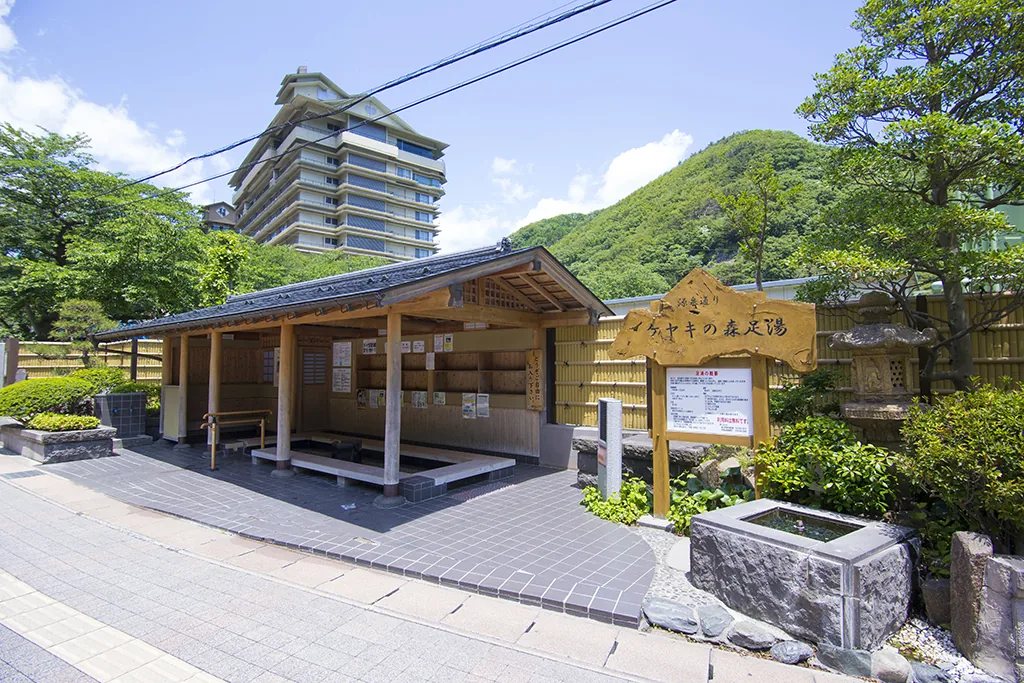
There is a covered foot bath in front of the station, and you can buy a towel at the tourist information desk inside the station building. The town has three foot baths in all, and you can walk from the hot spring shrine in the middle of town to the foot bath at Keyaki no Mori (Zelkova Forest). The Hagihime Festival is held every year on August 9 and 10. Because it sits on the way from Koriyama to Inawashiro and Aizu-Wakamatsu, it is an easy place to spend the night before heading into Aizu.
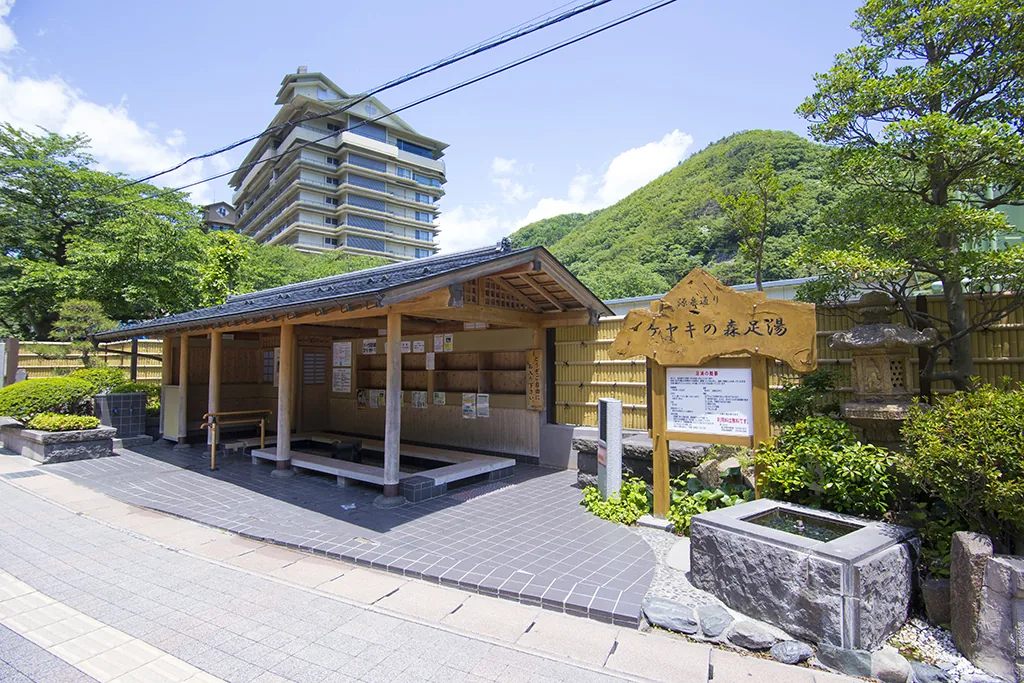
Photo: Ⓒ福島県観光物産交流協会
Yunokami-Onsen Station and Iwaki-Yumoto Onsen: foot baths by the station
Some stations let you warm your feet in hot spring water partway through a train journey.
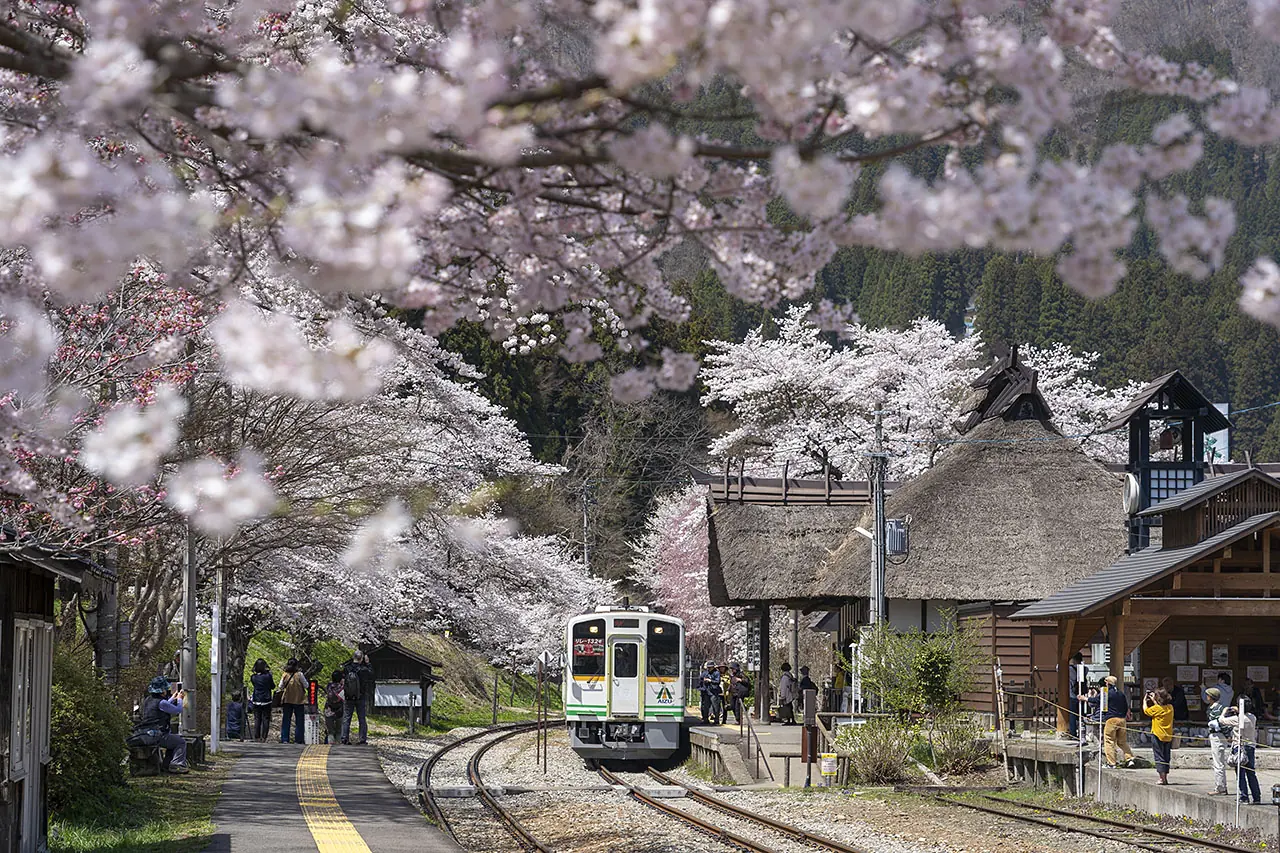
Yunokami-Onsen Station on the Aizu Railway is known for its thatched-roof station building. Inside the station grounds is a foot bath, Oyako Jizo no Yu, where you can warm up while waiting for the bus to Ouchi-juku. For more on the station and how to visit Ouchi-juku, see Ouchi-juku and the thatched villages of Minami-Aizu.
Iwaki-Yumoto Onsen, in Iwaki City on the Hamadori coast, is counted as one of Japan's "three oldest hot springs," alongside Arima Onsen and Dogo Onsen. It was once called Mihako no Miyu, and the oldest record of the springs is said to be the Engishiki register of shrines from 927. The water contains sulfur.
Just to the right as you leave JR Yumoto Station on the Joban Line is Ai-yu Monogatari, a free foot bath fed directly from the source. About 9 minutes' walk from the station is Sahako no Yu, a public bathhouse run by Iwaki City in a Japanese-style building modeled on late Edo architecture, where you can bathe without staying at an inn. From Tokyo Station, the Hitachi limited express on the Joban Line takes about 2 hours 20 minutes to Yumoto (choose a train that stops there). For the seaside around Onahama and Shioyazaki, see Things to do on the Hamadori coast.
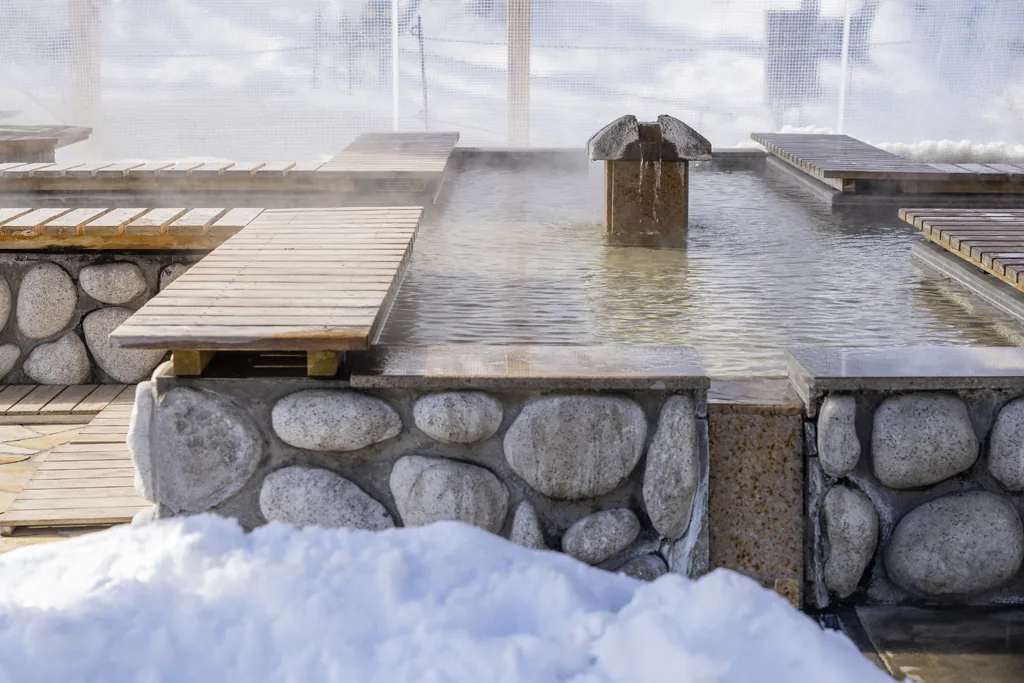
Photo: Ⓒ福島県観光物産交流協会
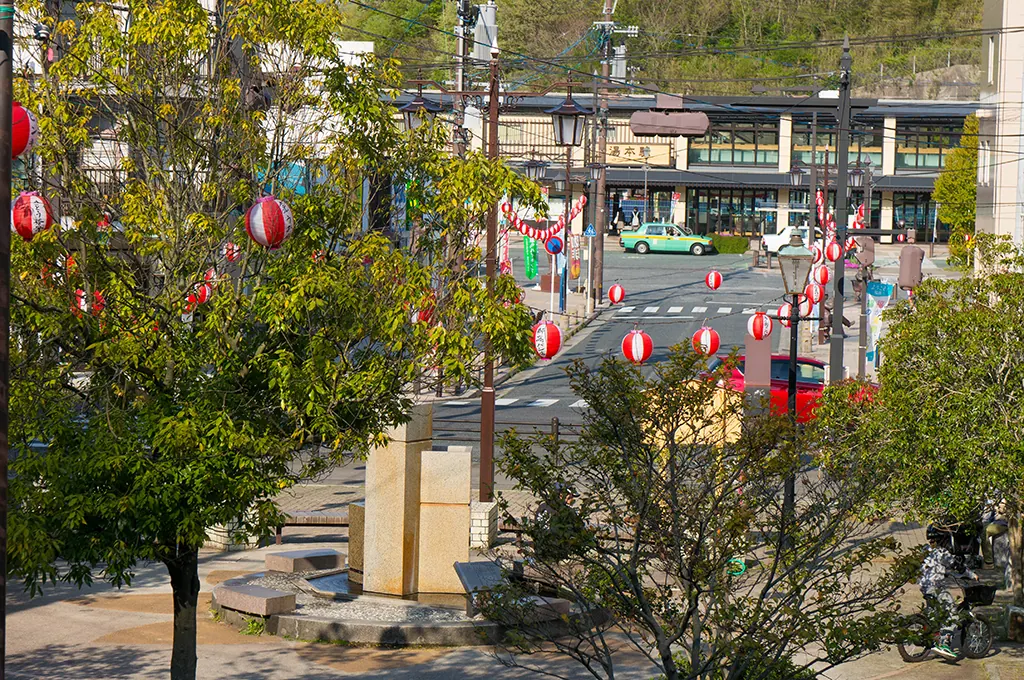
Photo: Ⓒ福島県観光物産交流協会
Before you use a public bathhouse
Town bathhouses work a little differently from the large baths at a ryokan.
- Bring soap and a towel: Iizaka's public bathhouses do not provide soap, shampoo or towels. Bring a small towel and soap.
- Ease into very hot water: Some baths, like Sabakoyu, are very hot. Instead of sinking in up to your shoulders, pour water over yourself first and get in slowly, feet first.
- Check ahead if you have tattoos: Policies differ from one facility to another.
- Fees, hours and closing days vary by facility: Baths also close temporarily at times, so check with the facility or the tourism association before you go.
For the basics of using a Japanese onsen, such as the order of washing and what to do with your towel, see Onsen etiquette in Japan.
Getting around: which station to start from
By combining Tohoku Shinkansen stations with local lines, you can reach most of Fukushima's onsen towns without a car.
| Onsen town | Base station | From the station |
|---|---|---|
| Takayu Onsen | Fukushima Station (west exit) | Local bus, about 40 min; a few a day |
| Iizaka Onsen | Fukushima Station | Fukushima Kotsu Iizaka Line, about 23 min |
| Dake Onsen | Nihonmatsu Station | Local bus, about 25 min |
| Bandai-Atami Onsen | Bandai-Atami Station | The hot spring town is in front of the station |
| Yunokami Onsen | Yunokami-Onsen Station | Foot bath in the station grounds |
| Iwaki-Yumoto Onsen | Yumoto Station | Foot bath outside the station |
If you stay in Fukushima City, one option is Iizaka on the first evening and Takayu plus the Bandai-Azuma Skyline on the second day. Buses to Takayu are infrequent, though, and the Skyline is a mountain road for driving, so a car makes it much easier to take in the mountain scenery. The Skyline is closed in winter.
In winter, snow piles up at mountain onsen towns such as Takayu and Dake. If you drive, you need winter tires; if you are not used to snowy roads, the train and bus are the safer choice. Check bus times with Fukushima Kotsu and trains with JR East and the Aizu Railway.