Fukushima Cherry Blossoms: Miharu Takizakura, Hanamiyama and More
This guide is translated from the Japanese edition. Read the Japanese edition
Fukushima cherry blossom spots in order of bloom, from Hanamiyama and Miharu Takizakura to castle ruins and the Kannonji River, with timing and train and bus access.
In Fukushima Prefecture, the cherry blossoms take about a month, from late March to late April, to move north and west across the prefecture and up into the mountains. When the trees start flowering in the cities of Koriyama and Fukushima, the buds are still tight around Inawashiro and on the slopes of Mt. Adatara, and that gap is something you can plan a trip around. The spots themselves look completely different from one another: a single tree said to be over a thousand years old, a hillside of flowering trees opened to the public by a farming family, castle stone walls, a tunnel of blossoms through a residential street. Below are the main spots in order of when they usually bloom, with directions for each.
When do cherry blossoms bloom in Fukushima?
| Spot | Area | Typical peak |
|---|---|---|
| Kaiseizan Park | Koriyama | Late March to mid-April |
| Hanamiyama | Fukushima City | Late March to mid-April |
| Yonomori cherry trees | Tomioka | Around early April |
| Kasumigajo Park | Nihonmatsu | Early to mid-April |
| Shirakawa Komine Castle | Shirakawa | Early to mid-April |
| Miharu Takizakura | Miharu | Early to mid-April |
| Sakurazaka slope, Dake Onsen | Nihonmatsu | Around mid-April |
| Kannonji River | Inawashiro | Mid- to late April |
Flowering can shift by more than a week from year to year. The coastal Hamadori region and the cities of Nakadori along the shinkansen line bloom first; high-altitude hot spring towns and Inawashiro in the Aizu region follow later. Once your dates are set, keep an eye on the bloom reports published by each town and tourism association so you don't miss the peak.
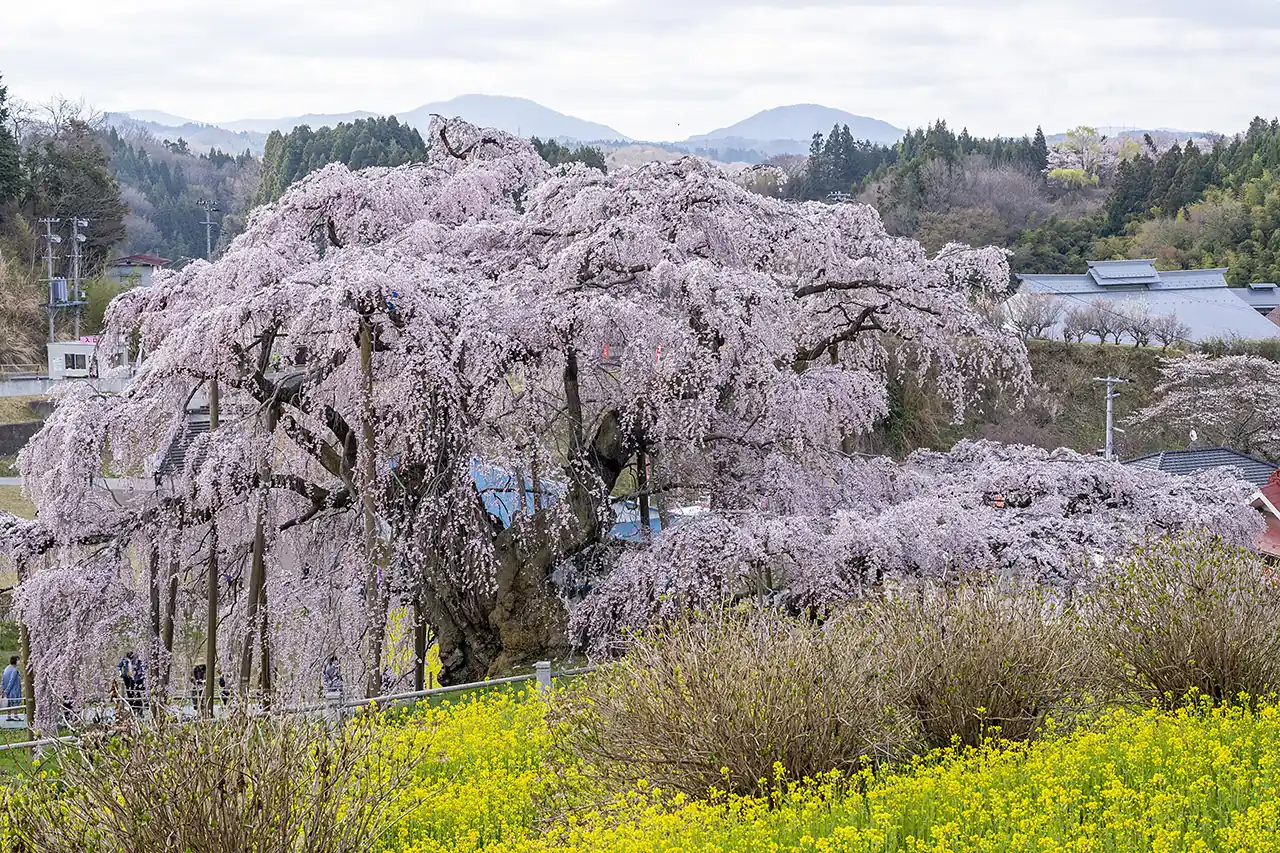
Miharu Takizakura: a weeping cherry said to be over 1,000 years old
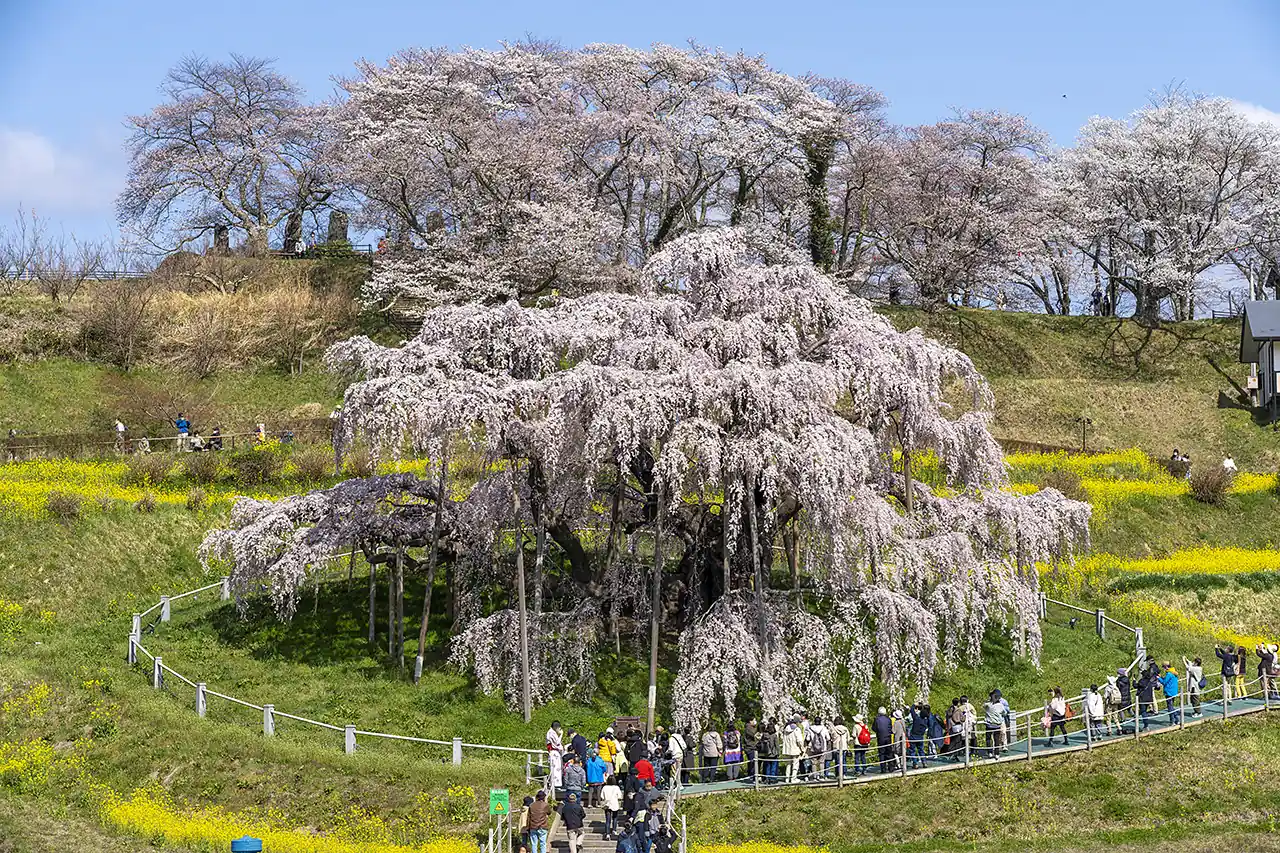
Miharu Takizakura in the town of Miharu is a single red weeping cherry tree (beni-shidarezakura) of the Edohigan type. It is a designated Natural Monument of Japan and is said to be more than a thousand years old. Pale pink blossoms pour down from branches spread in every direction, which is why it was named after a waterfall (taki). It is often counted among Japan's three great cherry trees.
The tree usually peaks in early to mid-April. On weekends at full bloom, crowds arrive from the morning, so early morning or late afternoon is better for an unhurried look. During the bloom the tree is lit up at night, and standing alone against the dark hills it looks like a different tree from the daytime one. A viewing fee is charged during the blossom season; check the amount and dates on the official websites of Miharu Town or the Miharu Tourism Association.
The tree is a long way from central Miharu and not a practical walk. During the bloom, a temporary "Takizakura-go" bus runs from Miharu Station on the JR Ban'etsu East Line, and taxis are also available. Miharu Station is reached from Koriyama Station on the Ban'etsu East Line, so from a base in Koriyama the round trip fits into half a day.
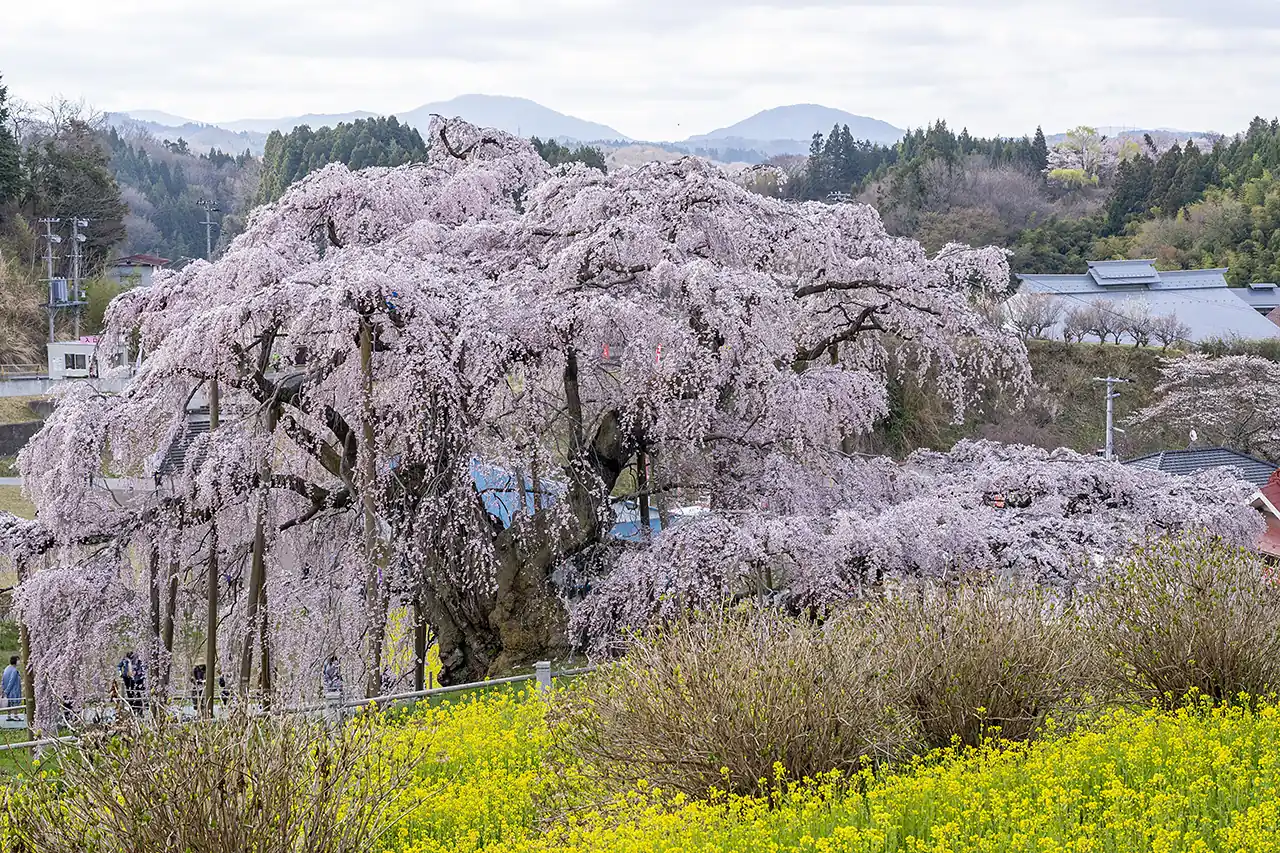
Photo: Ⓒ福島県観光物産交流協会
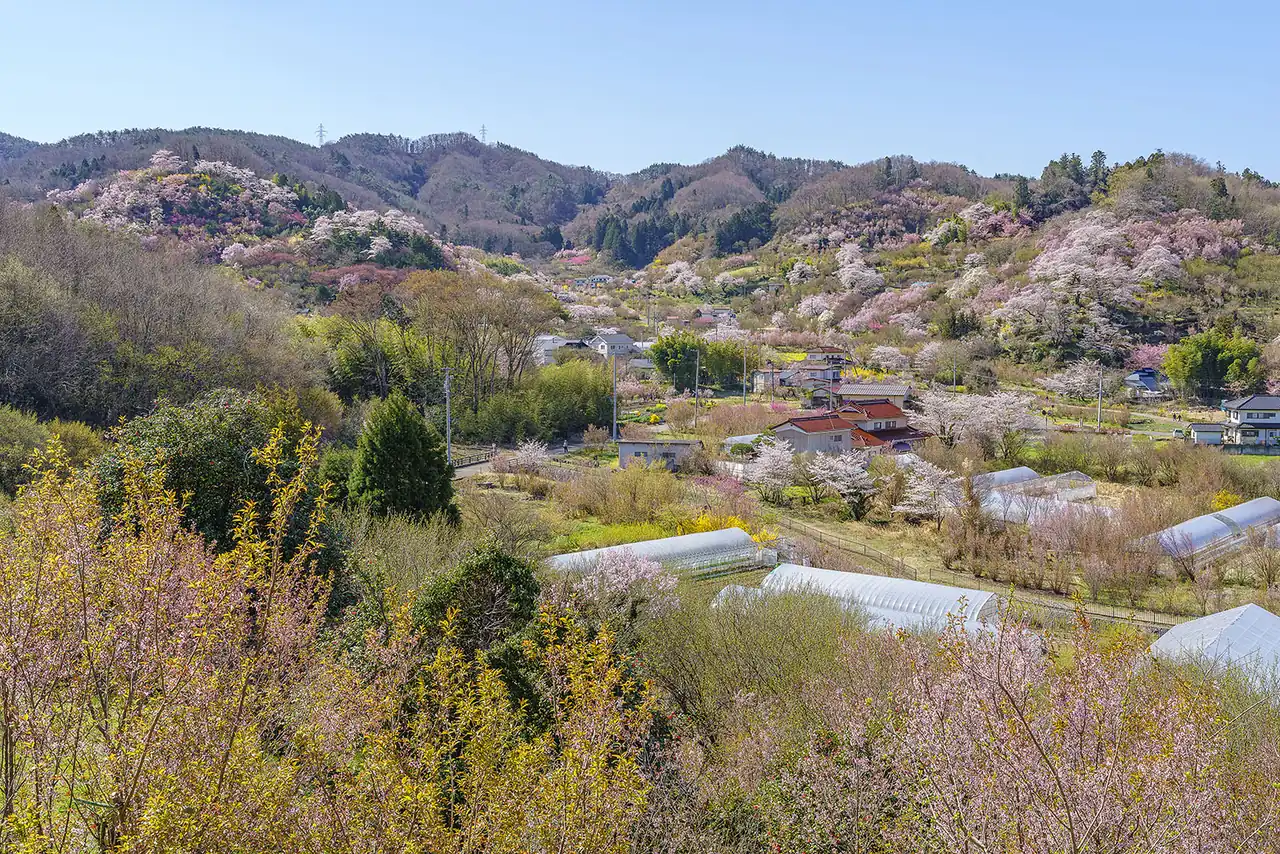
Hanamiyama: a hillside opened by a family of flower growers
Hanamiyama, in the Watari district of Fukushima City, is private land belonging to farmers who grow flowering trees. It has been open to the public since 1959, cared for by successive generations of the family. Cherries bloom alongside plum, forsythia, flowering peach and Japanese quince, so the slopes turn a patchwork of pale pink, yellow, white and deep rose. The view that captures the place best is not from below but from the paths on the hill, looking down over the city of Fukushima toward the Azuma mountains.
The usual peak is late March to mid-April. During the flower season, roads around the hill are restricted, and visitors with cars park at temporary lots and take a shuttle bus. A temporary bus also runs from the East Exit of Fukushima Station during the bloom. Because this is private land, picnicking parties are not allowed. Stay on the marked paths and don't touch the trees.
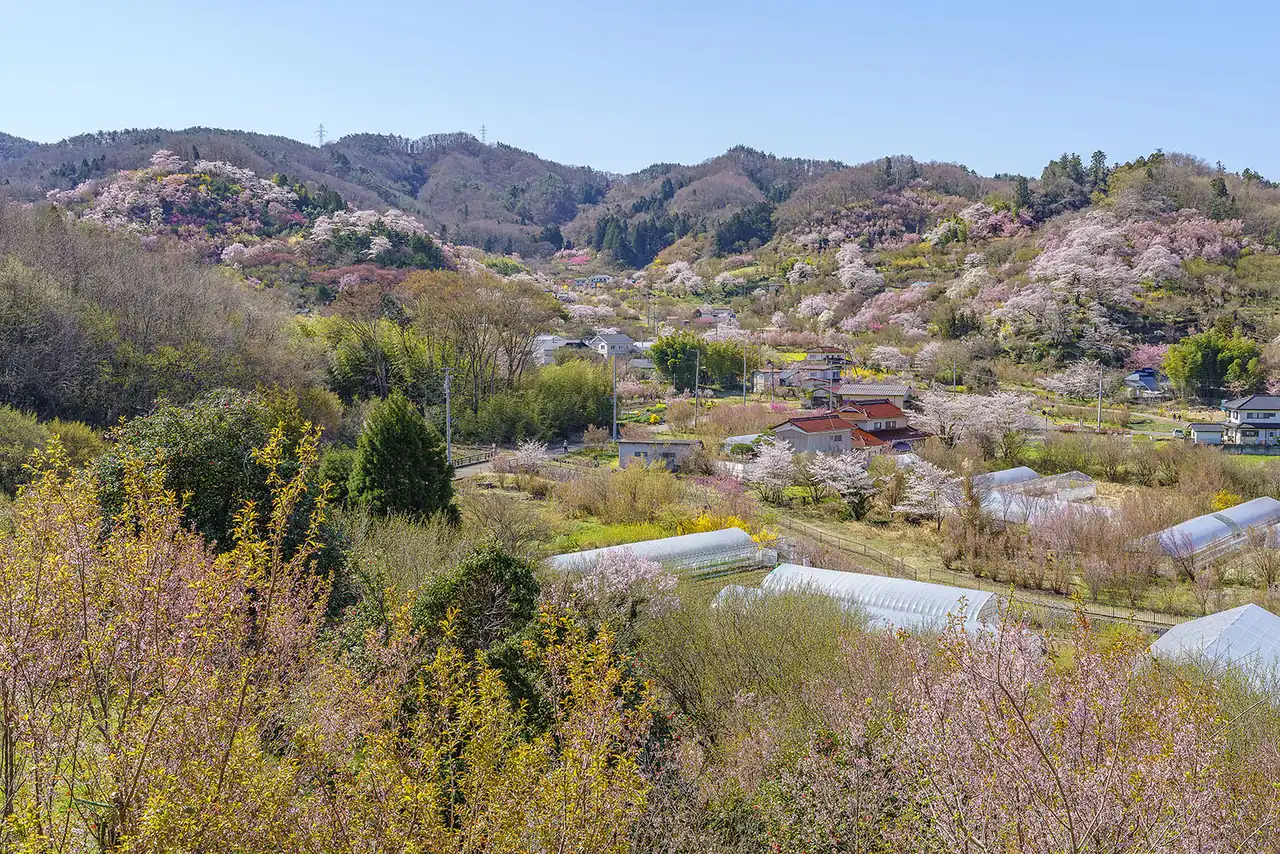
Photo: Ⓒ福島県観光物産交流協会
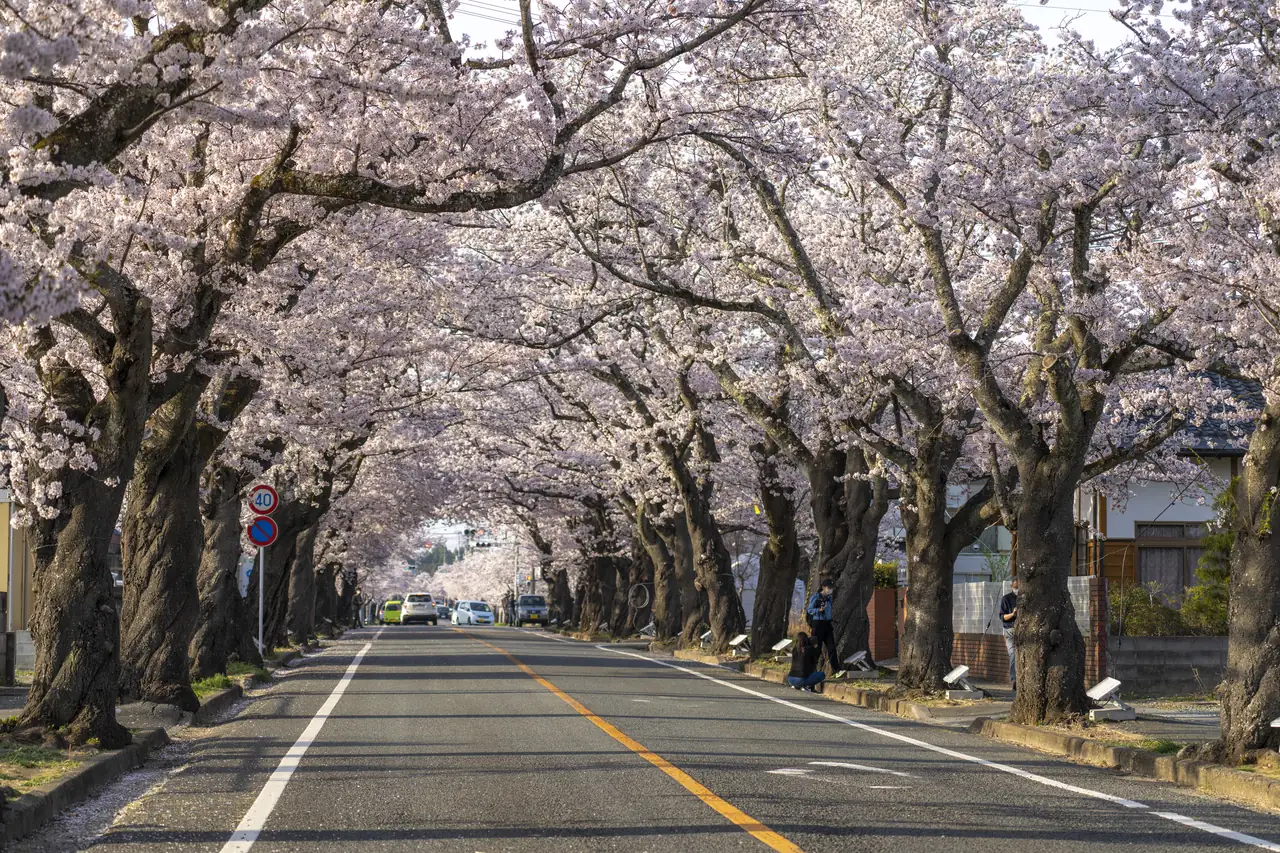
Yonomori cherry trees: a tunnel of blossoms in Tomioka
In the town of Tomioka in the Hamadori region, the Yonomori cherry trees line a road running through a residential area. Branches of Somei-yoshino reach from both sides, and at full bloom they form a tunnel so dense you can barely see the sky. It is within walking distance of Yonomori Station on the JR Joban Line.
After the accident at TEPCO's Fukushima Daiichi Nuclear Power Station, the people of Tomioka lived away from their town for many years. The trees kept flowering all the while, and the avenue has become a special sight for the townspeople. The usual peak is late March to early April, with illuminations during the cherry blossom festival. The walkable sections and parking can change from year to year, so follow the signs on site.
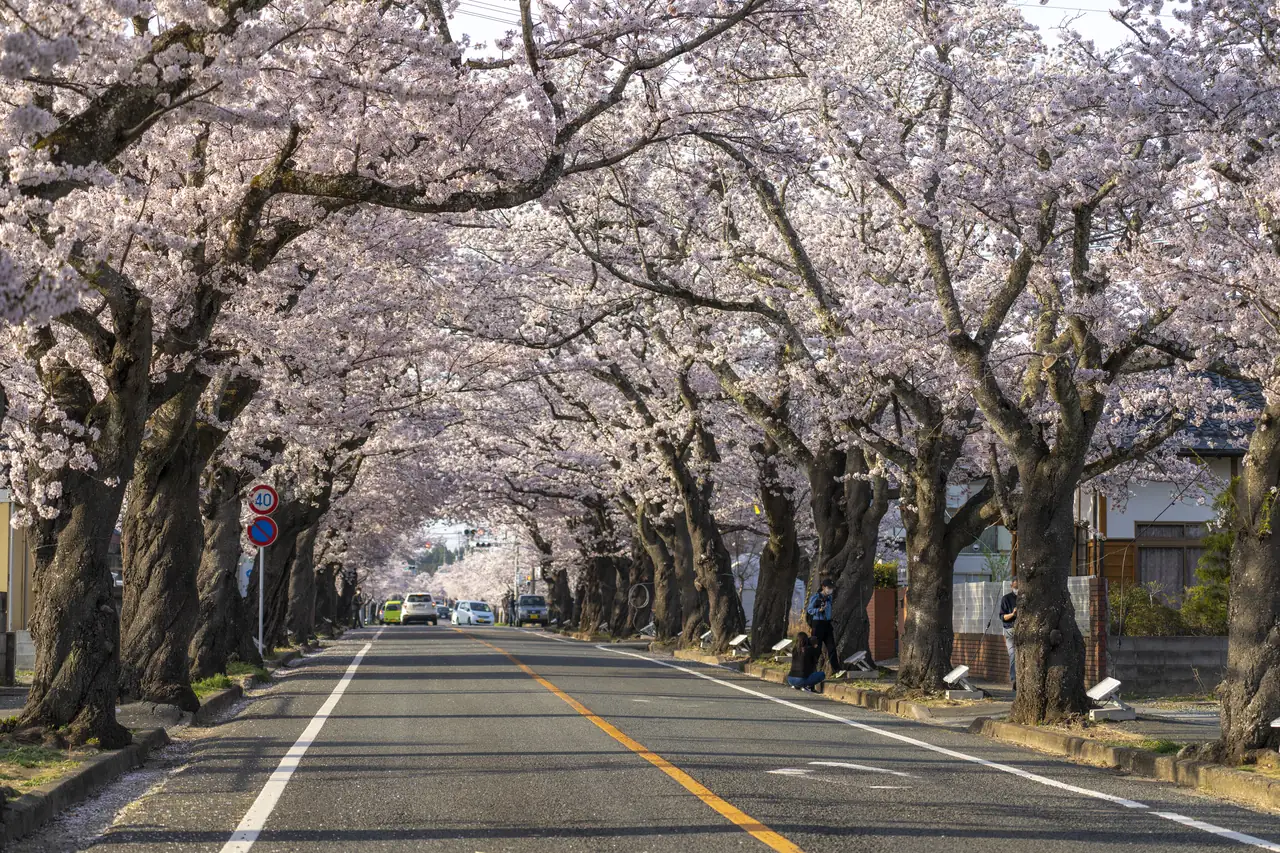
Photo: Ⓒ福島県観光物産交流協会
Kasumigajo Park and Shirakawa Komine Castle: blossoms over castle walls
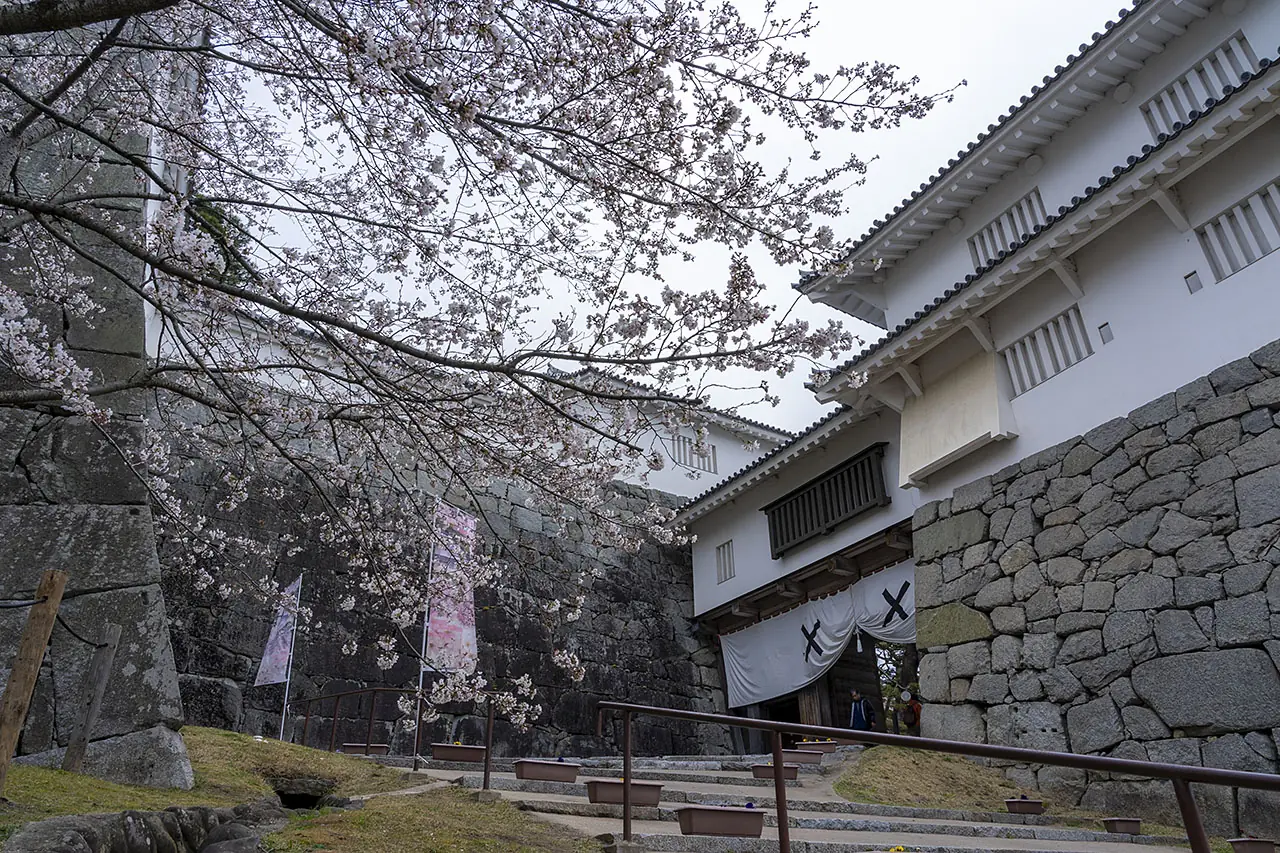
Kasumigajo Park in Nihonmatsu occupies the site of Nihonmatsu Castle. The ruins are a National Historic Site and are listed among Japan's Top 100 Cherry Blossom Spots. The Minowa Gate at the entrance was rebuilt in 1982, and cherries blooming against its stone walls and white-walled gatehouse are the park's signature view. Climb the slope to the site of the inner citadel, and you can see Mt. Adatara beyond the blossoms. A cherry blossom festival usually runs from early April to early May, with the park lit up at night during the festival. It's about a 20-minute walk from Nihonmatsu Station on the JR Tohoku Main Line.
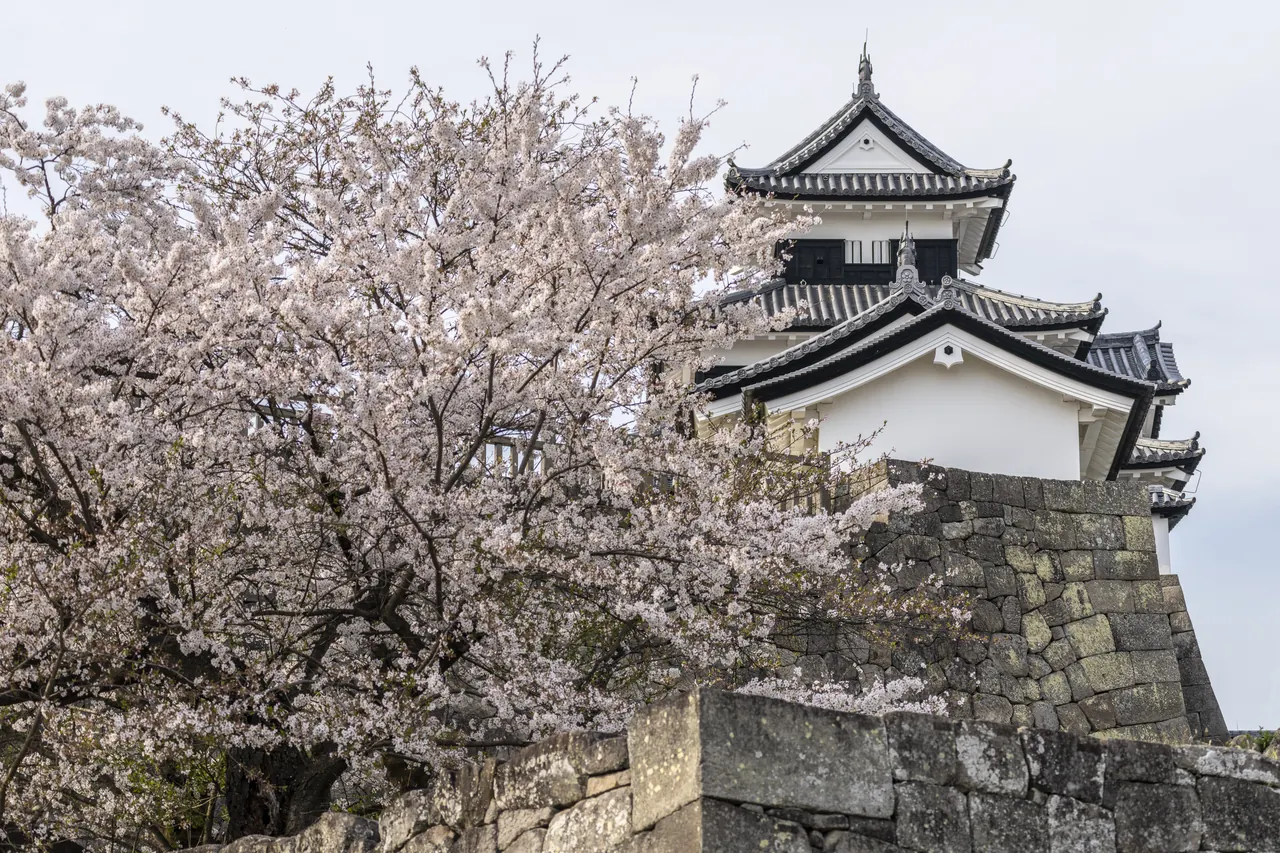
In the south of the prefecture, Shirakawa Komine Castle in Shirakawa fell during the Boshin War. Its three-story turret was rebuilt in wood in 1991 and the Mae-gomon Gate in 1994, both based on Edo-period drawings. The turret on its stone walls and the cherry blossoms are at their best together in early to mid-April. The castle is about a 5-minute walk from JR Shirakawa Station, which is one stop by local train from Shin-Shirakawa Station on the shinkansen.
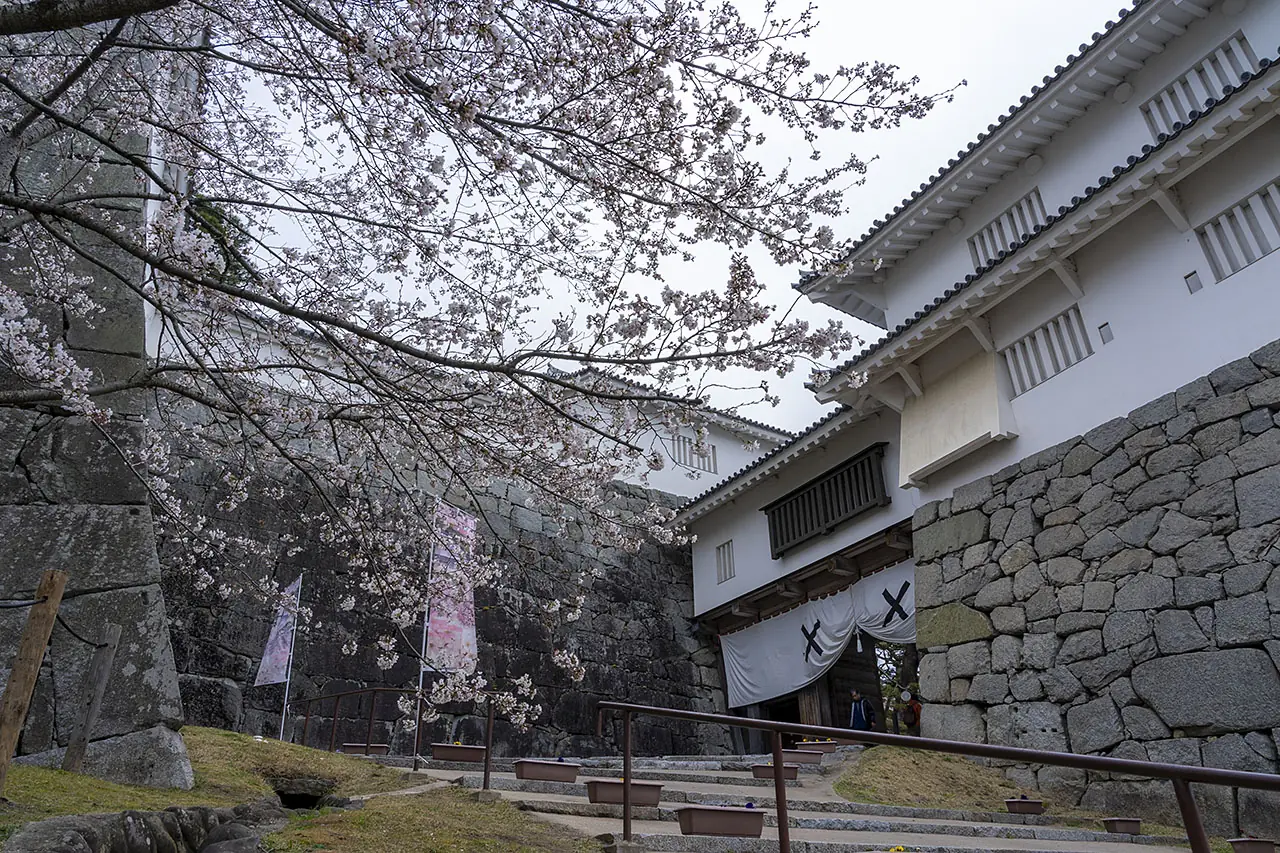
Photo: Ⓒ福島県観光物産交流協会
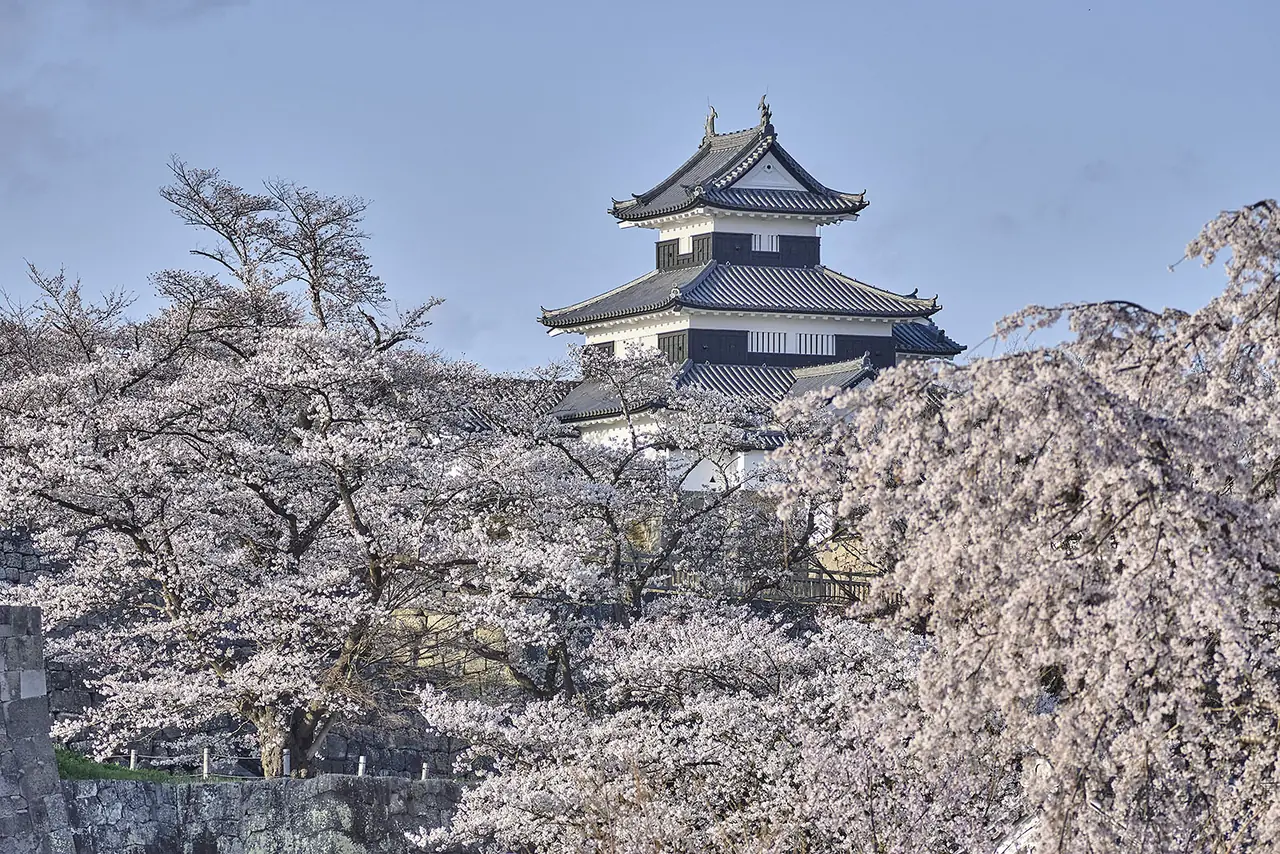
Photo: Ⓒ福島県観光物産交流協会
Koriyama and Nihonmatsu: Kaiseizan Park and the Sakurazaka slope at Dake Onsen
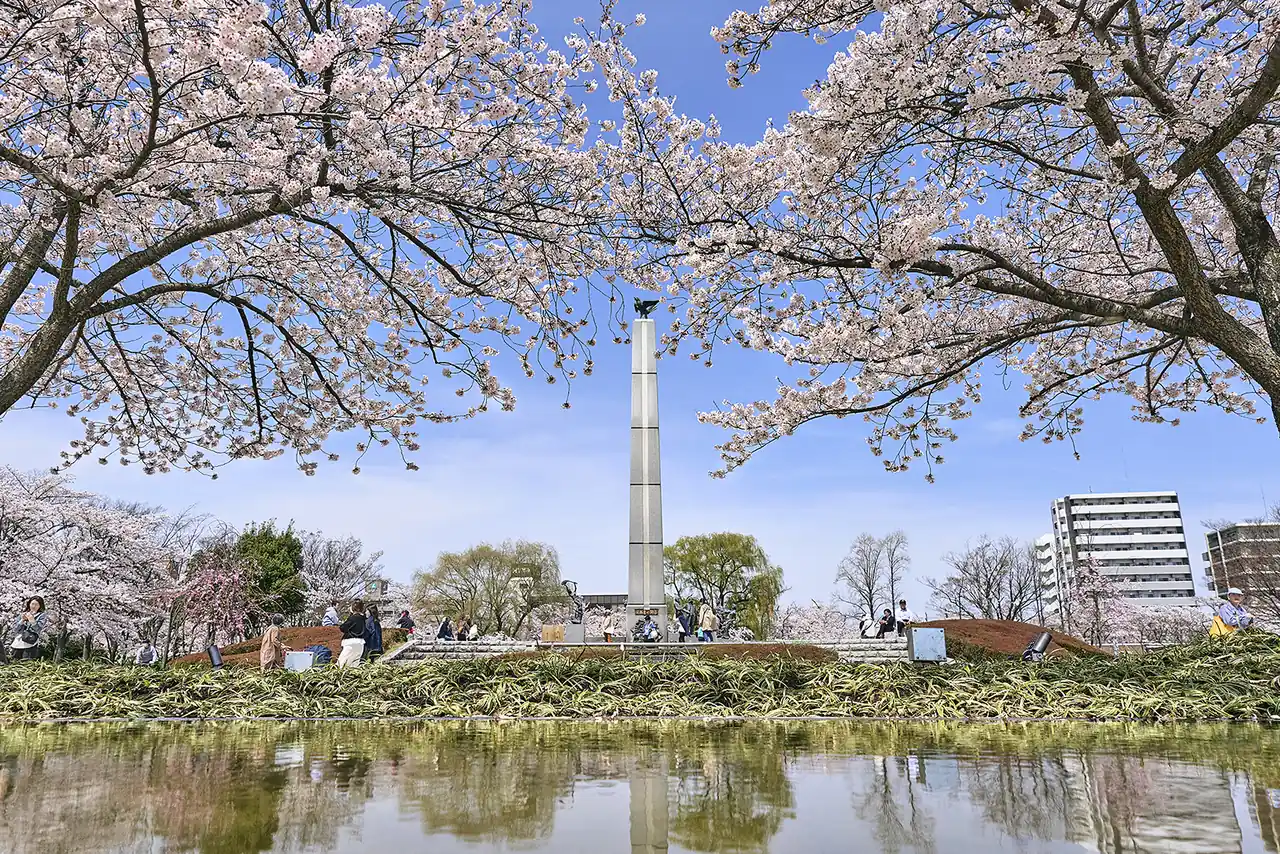
Kaiseizan Park in Koriyama is centered on Isuzu Lake, a reservoir built in the early Meiji era for the Asaka land reclamation project. The park has about 1,300 cherry trees, including Somei-yoshino planted around 1878 that are said to be the oldest surviving in Japan. The usual peak is late March to mid-April, with illuminations at night. From bus stop 9 in front of JR Koriyama Station, take a bus to the "Shiyakusho" (City Hall) stop, right next to the park, so it's easy to fit in between shinkansen connections.
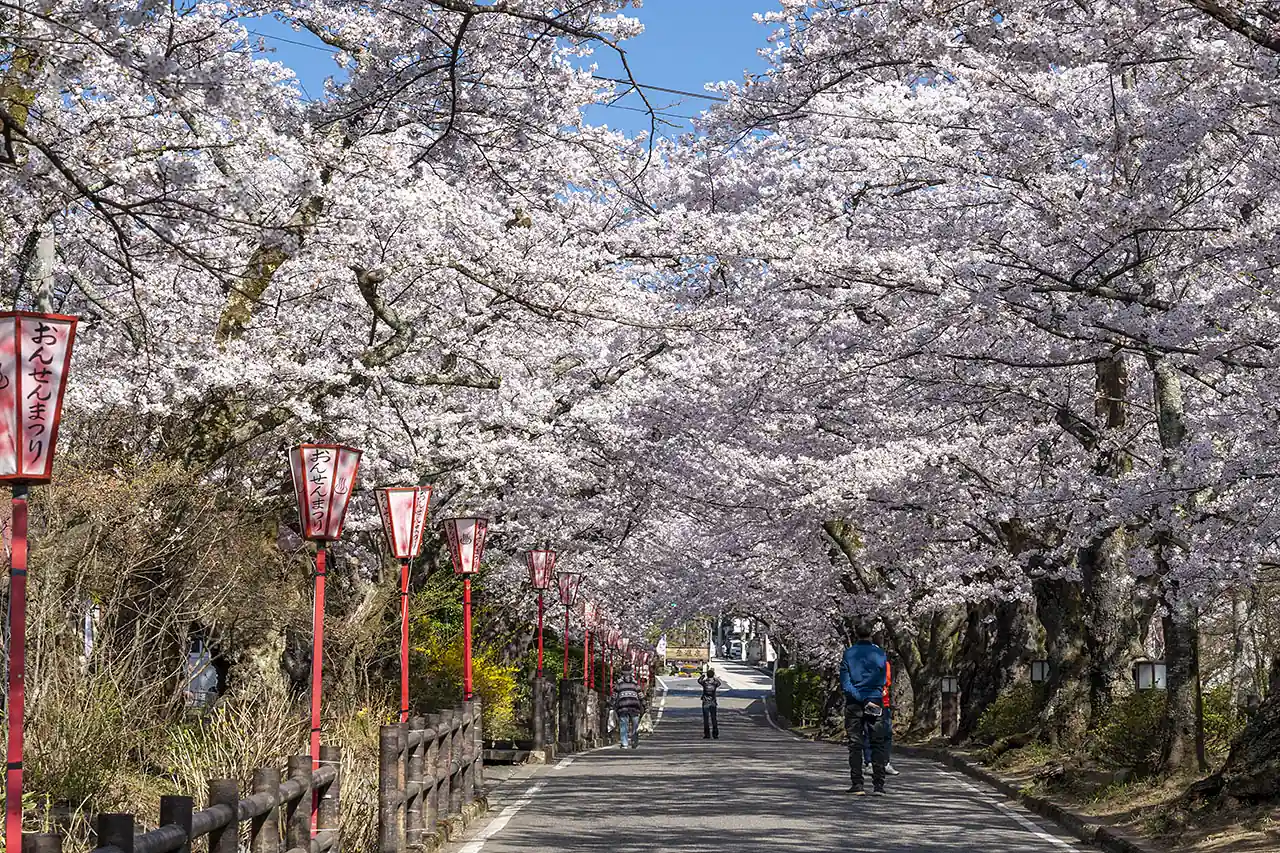
At Dake Onsen, on the slopes of Mt. Adatara, a slope of about 200 meters running down from the main street of the hot spring town to Kagami-ga-ike Pond becomes a tunnel of cherry blossoms known as Sakurazaka. Because of the altitude, it often peaks around mid-April after the blossoms in the cities have fallen, which makes it a candidate if you're chasing cherry blossoms later in the season. Being able to soak in a hot spring after the walk is part of the appeal.
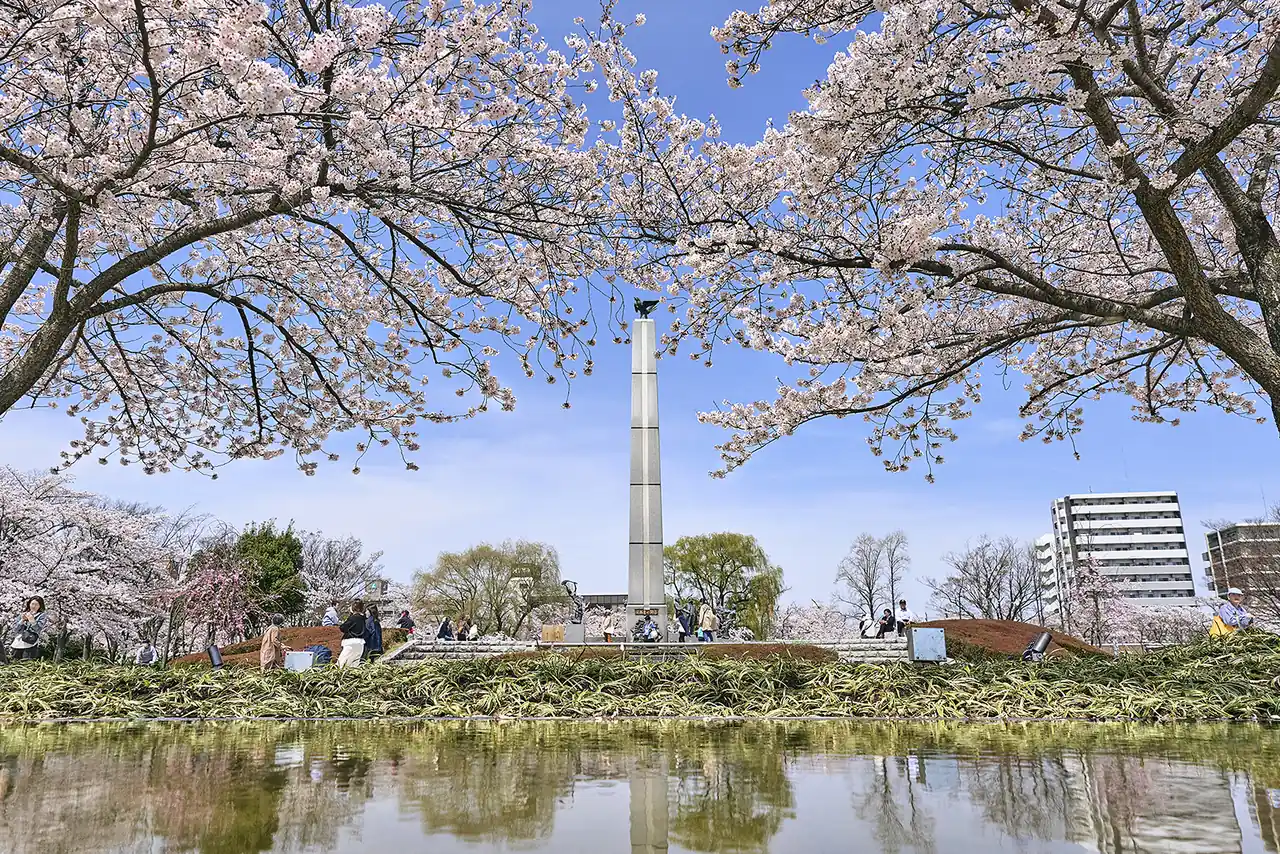
Photo: Ⓒ福島県観光物産交流協会
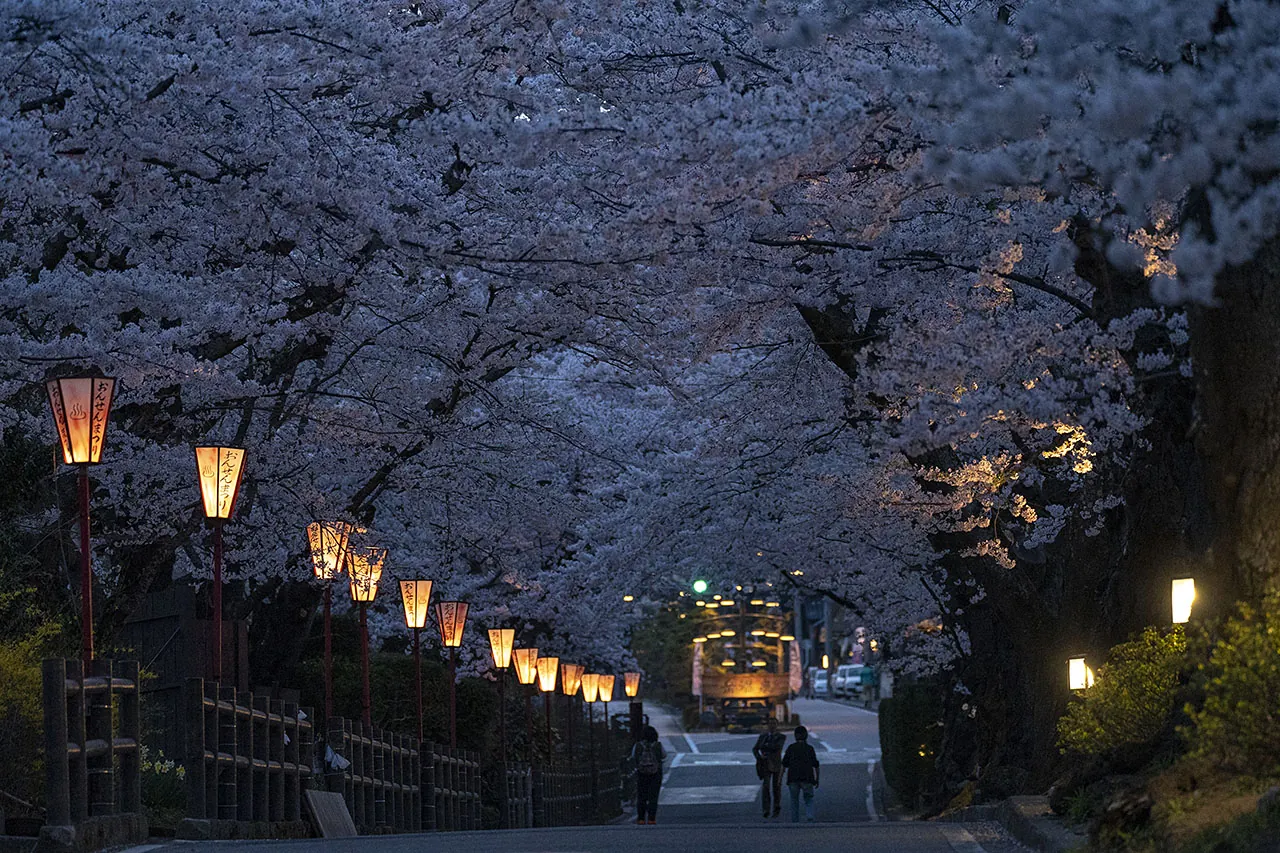
Photo: Ⓒ福島県観光物産交流協会
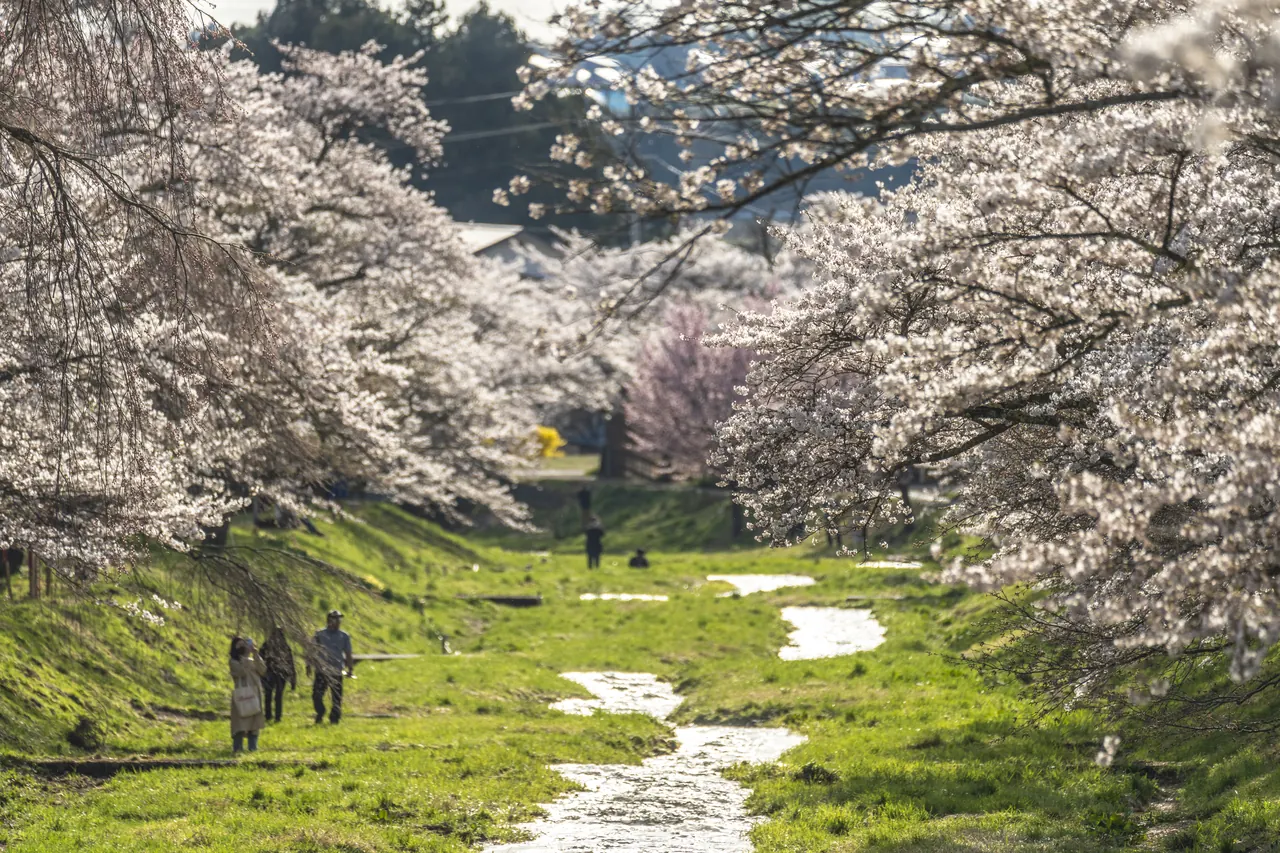
Kannonji River: the last riverside cherries to bloom, in Inawashiro
The Kannonji River cherry trees in Inawashiro, in the Aizu region, line both banks of the river for about 1 km. Edohigan and weeping cherries mix with the Somei-yoshino, their branches hanging over the water. The river is at the foot of Mt. Bandai, and the usual peak, mid- to late April, is one of the latest among the prefecture's major spots. There are night illuminations during the cherry blossom festival.
You can walk there from Kawageta Station on the JR Ban'etsu West Line. Coming by train from Aizu-Wakamatsu or Koriyama and walking along the river and back takes about half a day including travel. Snow can linger in early spring around Inawashiro in some years, so if you're driving, check that your car has the right tires.
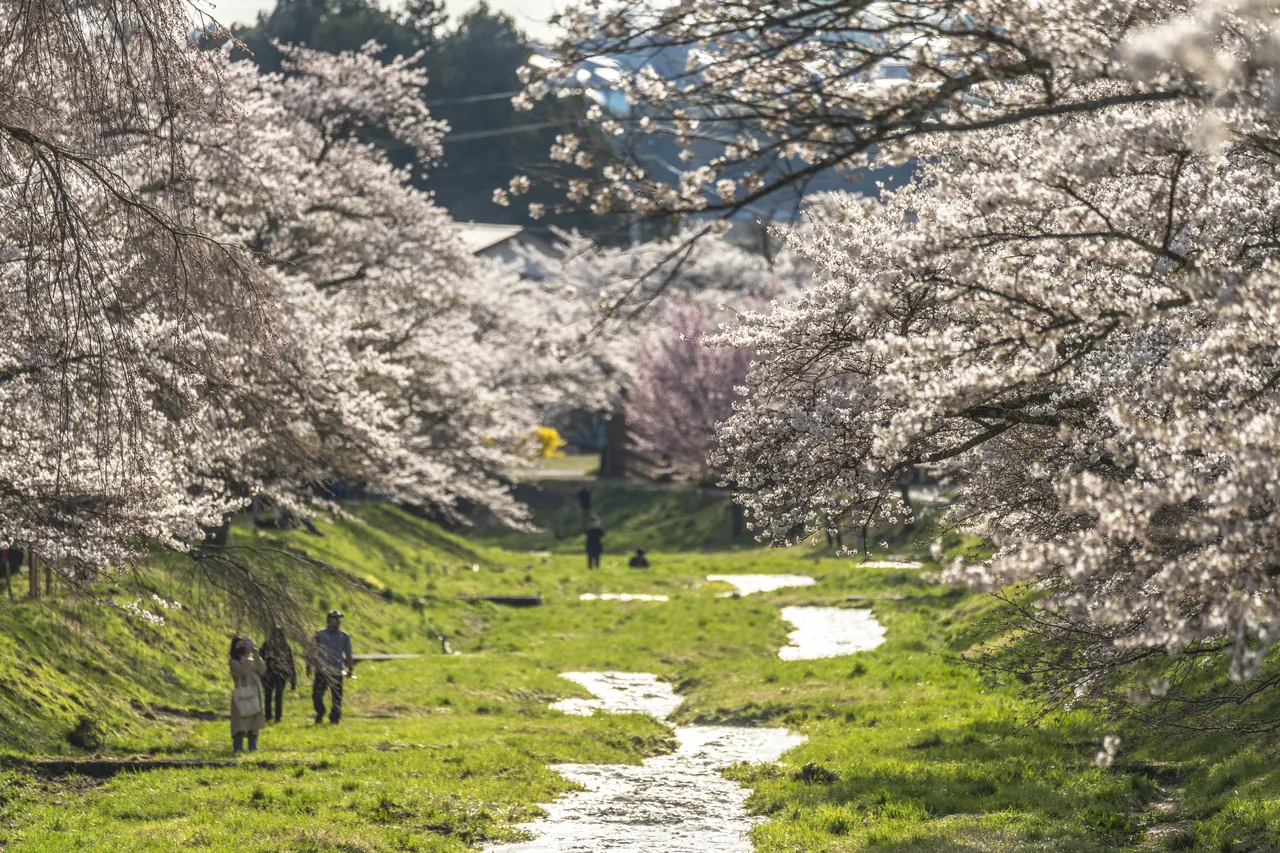
Photo: Ⓒ福島県観光物産交流協会
Getting around in cherry blossom season
Fukushima Prefecture is wide from east to west and divided into three regions: Hamadori, Nakadori and Aizu. Most of the cherry blossom spots are easiest to reach from the three Tohoku Shinkansen stations of Shin-Shirakawa, Koriyama and Fukushima.
- From Koriyama: Kaiseizan Park is a bus ride from the station, Miharu Takizakura is reached by the Ban'etsu East Line and the temporary bus, and the Kannonji River by the Ban'etsu West Line. To combine two spots in a day, Miharu Takizakura in the morning and Kaiseizan Park in the afternoon is a comfortable order.
- From Fukushima or Nihonmatsu: Hanamiyama is reached by temporary bus from Fukushima Station, and Kasumigajo Park is a walk from Nihonmatsu Station on the Tohoku Main Line. Dake Onsen is reached by bus or taxi from Nihonmatsu Station; stay overnight at the hot spring and you can walk the Sakurazaka slope in the quiet of the morning.
- Shirakawa: Shirakawa Komine Castle is a short walk from Shirakawa Station. Coming by shinkansen from the Tokyo direction, you can break your journey at Shin-Shirakawa.
- Hamadori: For the Yonomori cherry trees, take the JR Joban Line to Yonomori Station. The Joban Line also runs there from the Iwaki and Sendai directions.
Roads around Miharu Takizakura and Hanamiyama get very congested on peak weekends. If you drive, arrive early in the morning; otherwise the temporary buses make timing easier to predict. Their operating days and stops are set each year to match the bloom, so check the official website of each municipality before you go. If you're thinking about an autumn trip, see Fukushima autumn leaves. For more places to visit, browse the list of spots in Fukushima.