Ouchi-juku and To-no-Hetsuri: A Half-Day Trip by Aizu Railway
- Yunokami-Onsen Station
- Ouchi-juku (Post Town)
- To-no-Hetsuri (Tower Cliffs)

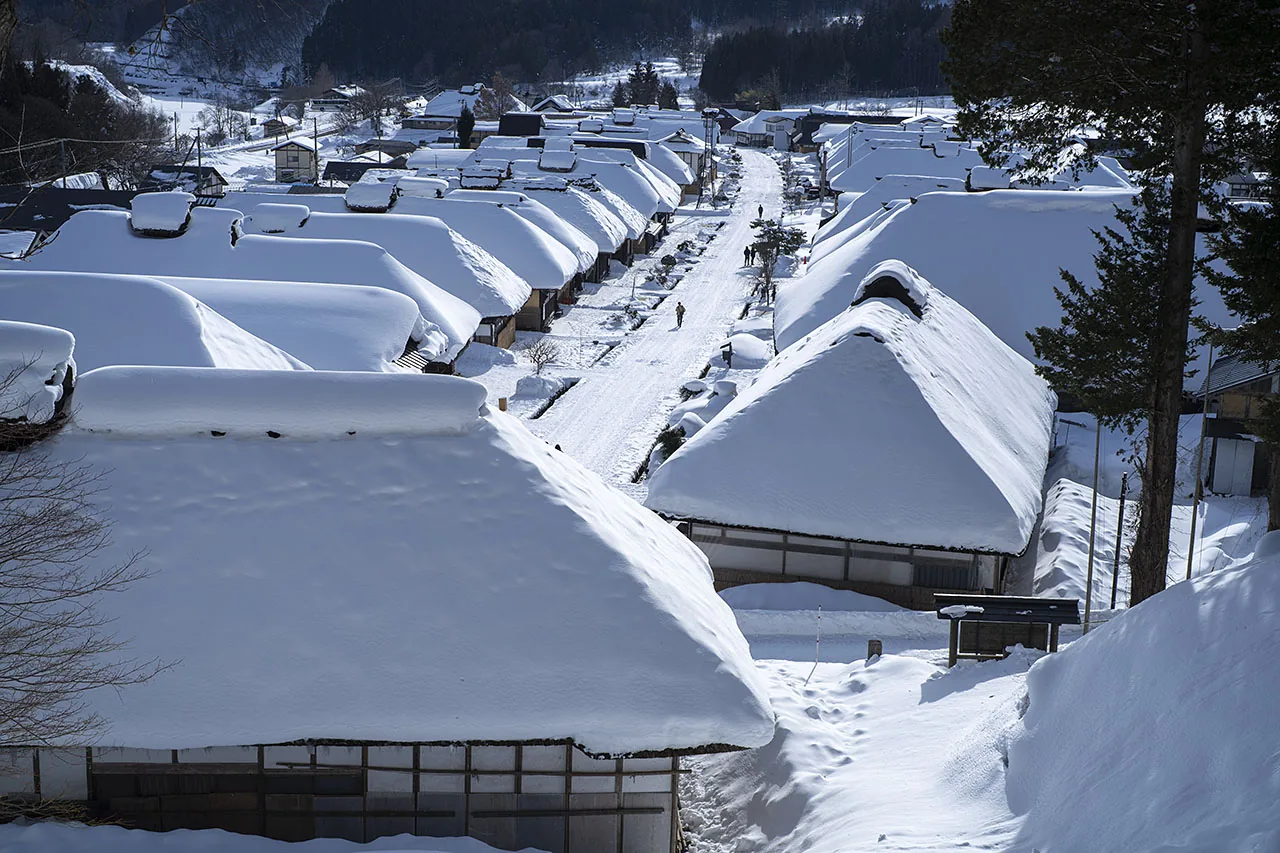
Photo: Ⓒ福島県観光物産交流協会
Areas of Fukushima
Ouchi-juku sightseeing: the thatched post town, thatched Yunokami-Onsen Station, the To-no-Hetsuri cliffs, the February snow festival, negi soba and the Aizu Railway.
 Oct 10 – Nov 23Nihonmatsu Chrysanthemum Doll Festival (Nihonmatsu no Kiku Ningyo)
 GuidesFukushima Autumn Leaves: Bandai-Azuma Skyline and Goshikinuma
This page is translated from the Japanese edition. Read the Japanese edition
Head south from Aizu-Wakamatsu on the Aizu Railway through the mountains along the Okawa (Aga) River and you enter the town of Shimogo. This is the gateway to Minamiaizu: here are Yunokami-Onsen Station with its thatched station building, the post town of Ouchi-juku with thatched houses in the mountains beyond, and To-no-Hetsuri, where tower-like rocks line the riverbank. All three can be visited from Aizu Railway stations.
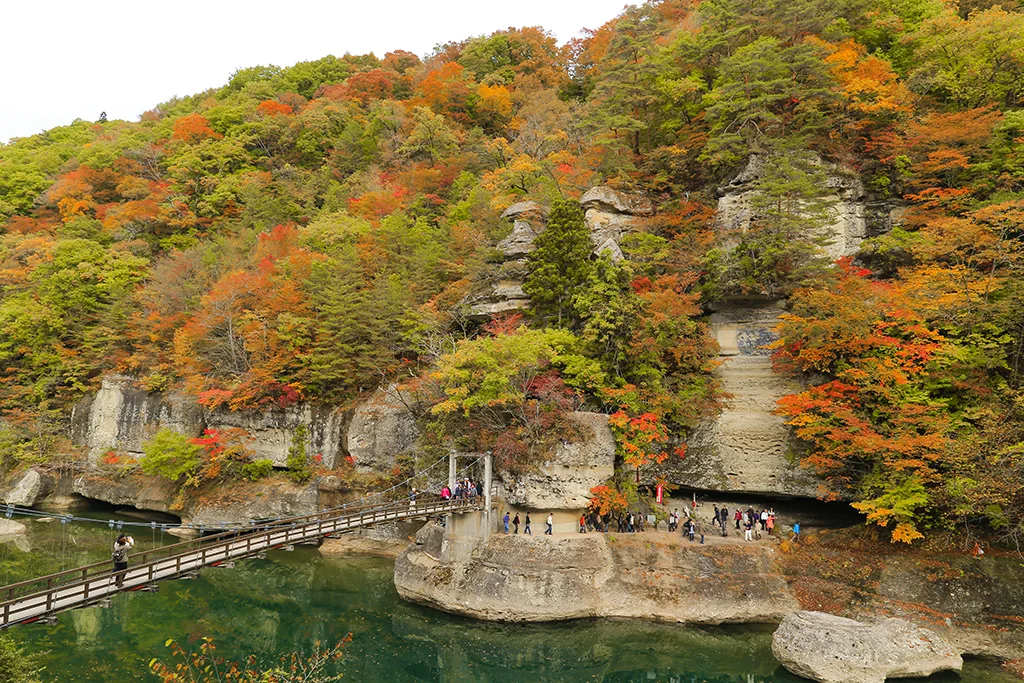
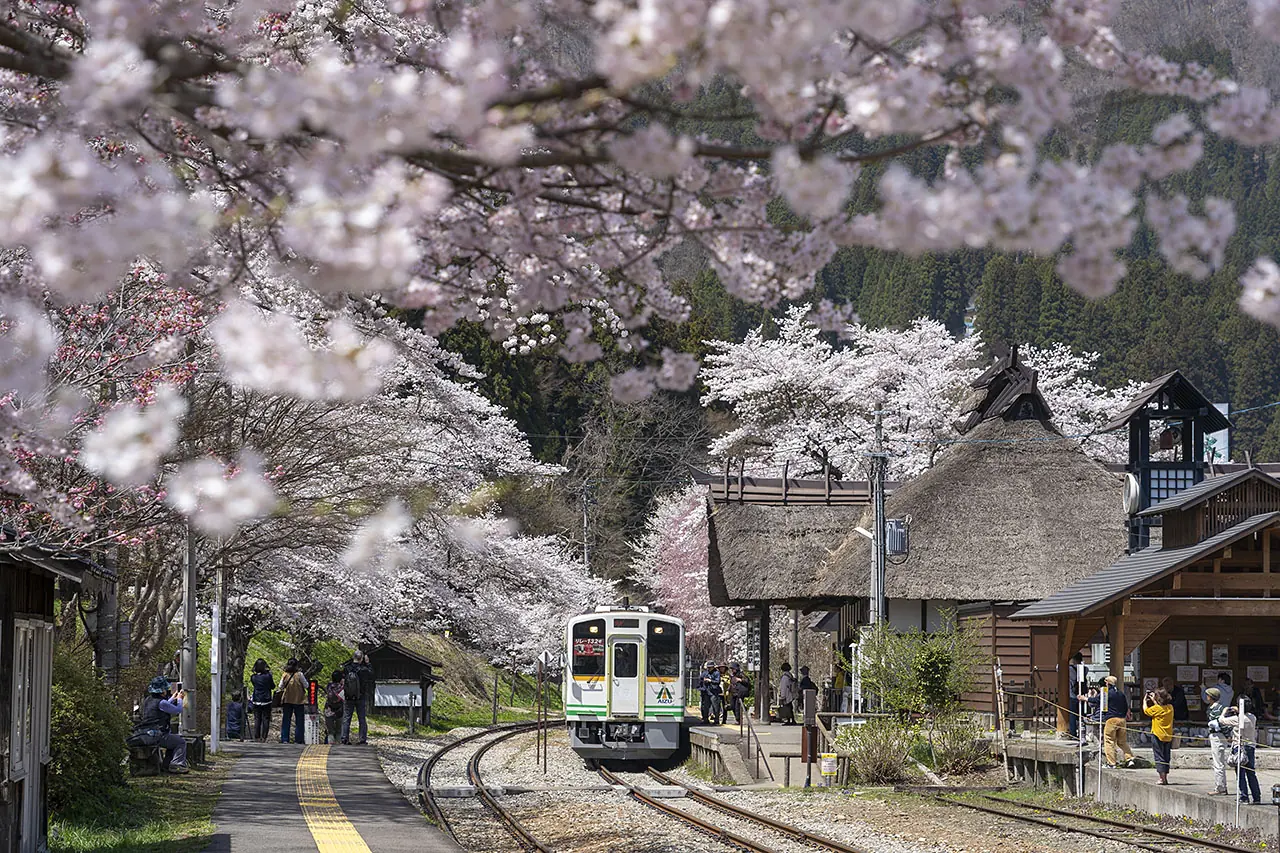
The views change with the seasons: cherry blossoms at the station in spring, autumn leaves at To-no-Hetsuri, and Ouchi-juku buried in snow in winter.
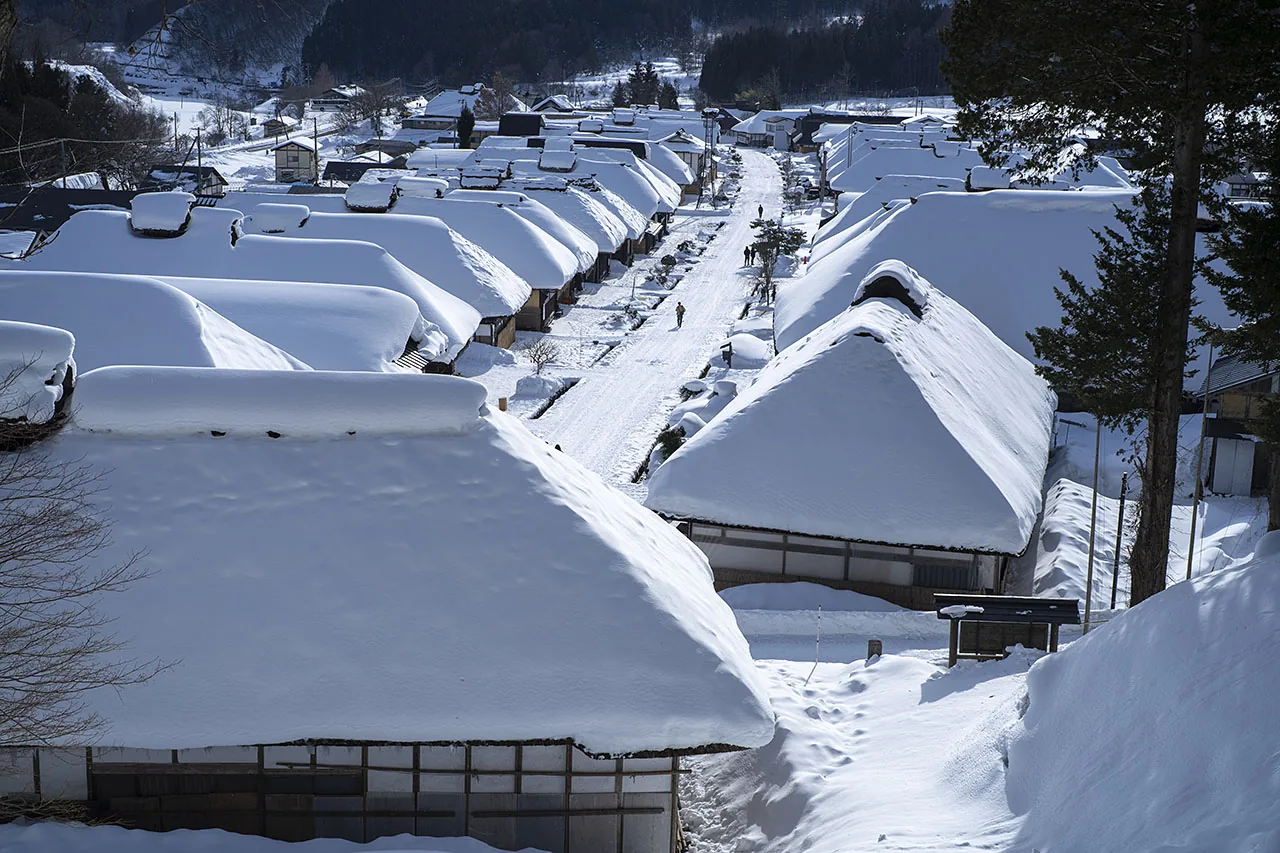
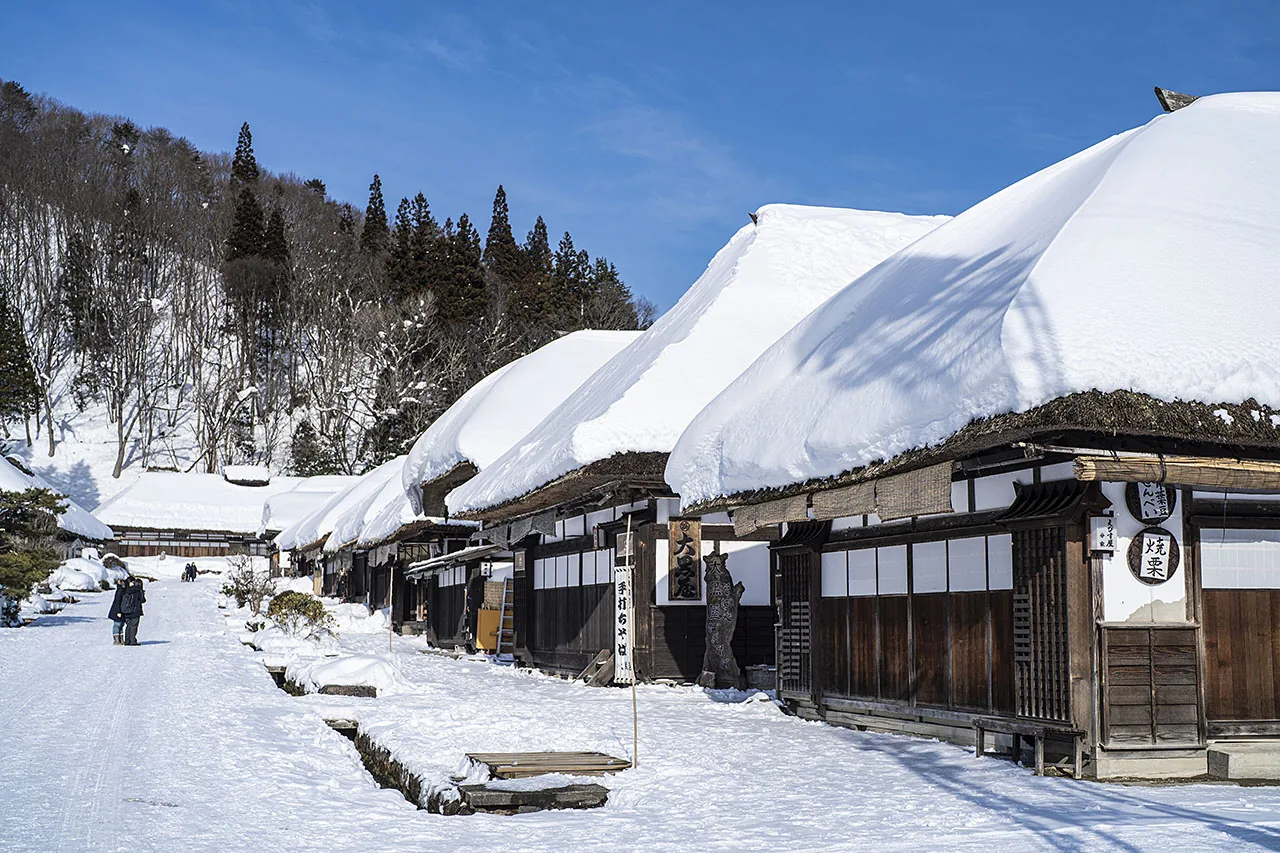
A village that thrived as a post town on the road from Aizu-Wakamatsu to Imaichi in Shimotsuke (now Tochigi Prefecture). Thatched farmhouses line both sides of the straight road, and in 1981 (Showa 56) it was selected as a National Important Preservation District for Groups of Traditional Buildings. Many of the houses, where people still live, run souvenir shops and restaurants.
In winter the roofs are heaped with snow, and every February the Ouchi-juku Snow Festival lines the street with snow lanterns made by the residents. Dates are set each year, so check announcements from Shimogo Town or the Ouchi-juku tourism association. This is where people live, so don't go into the back of shops or onto private property. See Ouchi-juku (Post Town).
A station on the Aizu Railway Aizu Line, known for its thatched station building, designed to match the houses of Ouchi-juku. The waiting room has an irori hearth, and inside the station grounds is the "Oyako Jizo no Yu" footbath. In spring the cherry trees along the platform bloom, usually from late April to early May. See Yunokami-Onsen Station.
A cliff on the bank of the Okawa (Aga) River lined with tower-shaped rocks. "Hetsuri" means cliff in the Aizu dialect, and the site was designated a National Natural Monument in 1943 (Showa 18). Cross the Fujimi-bashi suspension bridge and you can see the rock walls up close from the far bank (the bridge is closed in winter). Spring, when the wisteria blooms, and autumn are especially popular. See To-no-Hetsuri (Tower Cliffs).
The specialty of Ouchi-juku is "Takato soba," eaten using a whole leek as a chopstick. At the thatched houses along the street you can browse souvenirs and stop for a meal.
Aizu Railway trains are not frequent, so check the time of your return train first, then plan the order of Ouchi-juku, Yunokami-Onsen Station and To-no-Hetsuri. Stay at Yunokami Onsen and you can split them over two relaxed days. In winter, snow is deep at Ouchi-juku and the street freezes easily, so wear non-slip shoes. Winter tires are a must if you drive.
For routes combining Minamiaizu (Maezawa) and Hinoemata further south, see Ouchi-juku and the Thatched Villages of Minamiaizu; for the snowy season, see Fukushima in Winter.