Fukushima Winter: Snowy Ouchi-juku, Tsuruga Castle and Festivals
This guide is translated from the Japanese edition. Read the Japanese edition
Where to go in Fukushima in winter: snowy Ouchi-juku, Tsuruga Castle and its candle festival, Tenkyokaku and more, with tips on trains, buses and snowy roads.
In January in Aizu, snow piles thick on the thatched roofs and the icicles hanging from the eaves freeze white to their tips. Winter in Fukushima looks very different from one region to the next. The snow is deepest in Aizu and Minami-Aizu, where you can see a post town, a castle and a lakeside Western-style villa under snow. Here's where to go in snowy Fukushima and how to combine trains, buses and cars.
Where to go in Fukushima in winter: snow and timing
| Destination | Area | Winter highlights | Typical timing |
|---|---|---|---|
| Ouchi-juku | Minami-Aizu (Shimogo) | Snowy thatched houses, snow festival | Snow scenery January–February; festival in February |
| Yunokami-Onsen Station | Minami-Aizu (Shimogo) | Thatched station and foot bath | December–March |
| Tsuruga Castle | Aizu-Wakamatsu | Castle keep in snow | December–February |
| Aizu Painted Candle Festival | Aizu-Wakamatsu | Candlelight at Tsuruga Castle and Oyakuen | February |
| Tenkyokaku | Inawashiro | A Meiji-era Western-style villa in snow | December–March |
In Aizu, the snow may settle in December in some years and stay light until January in others. If you want to be sure of snow scenery, January to February is the best bet. In March, the snow starts to melt on sunny days and the roofs gradually clear.
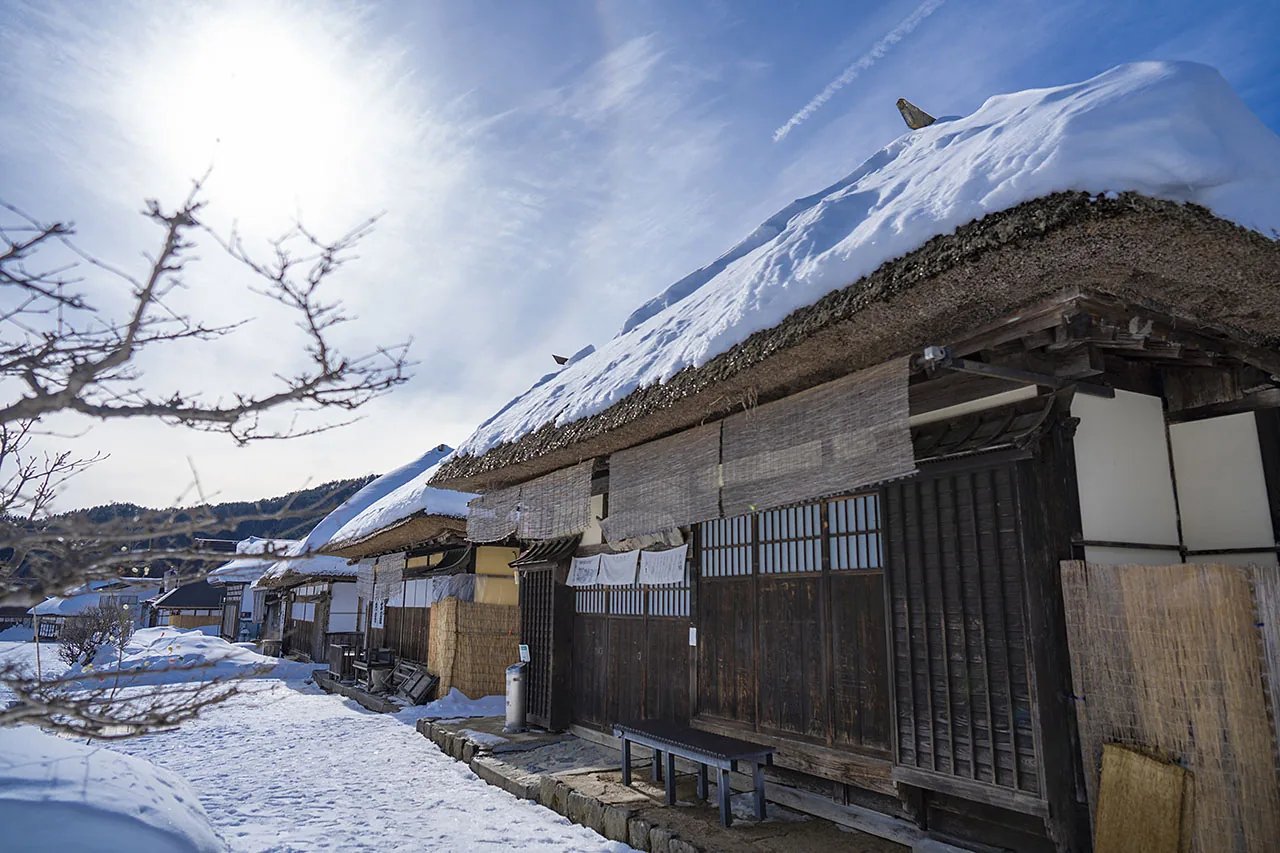
Ouchi-juku: a thatched post town buried in snow
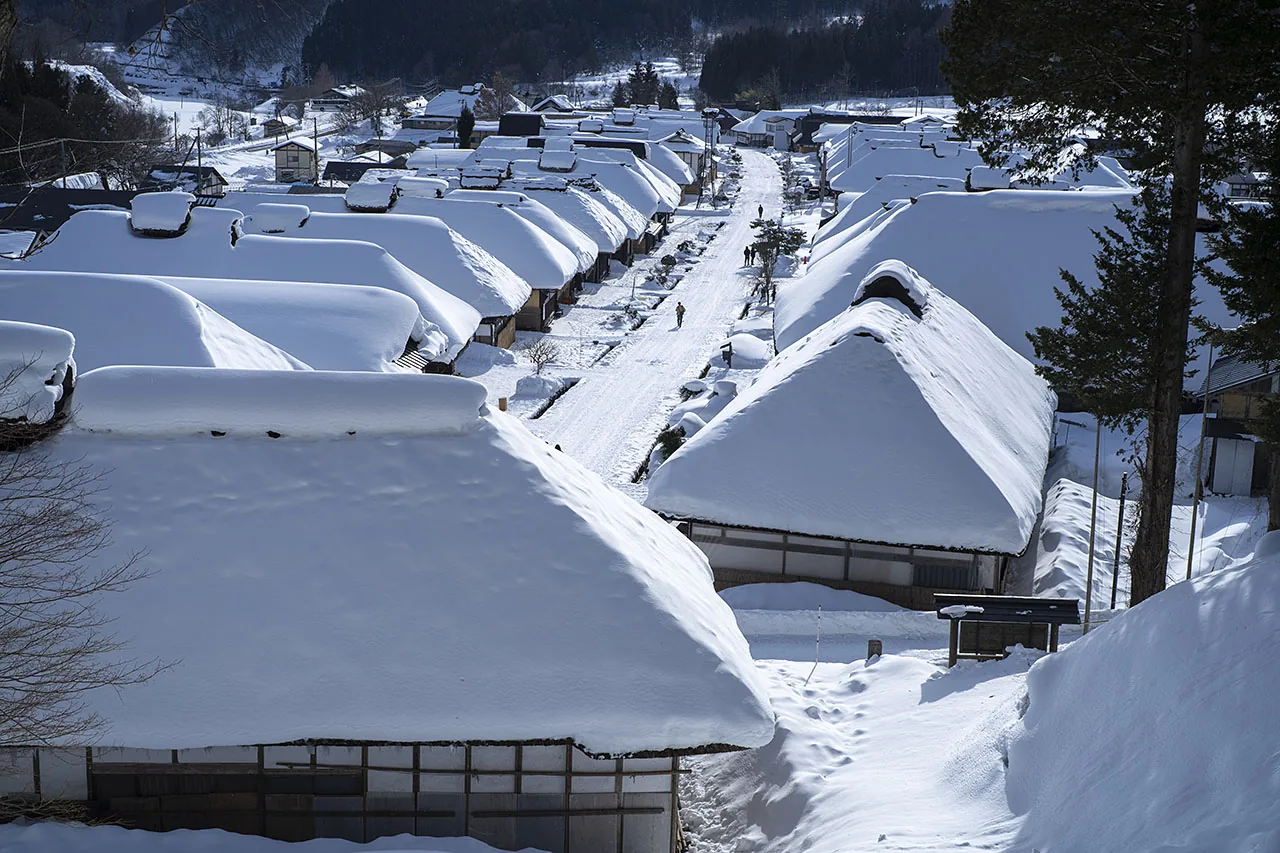
Ouchi-juku in Shimogo prospered as a post town on a highway in the Edo period. Thatched houses line both sides of the street, and in 1981 the village was selected as a National Important Preservation District for Groups of Traditional Buildings. In winter, snow piles up on the roofs and the whole row of houses looks like a white band. Climb to the high ground at the far end of the village and you can look down on the snowy roofs of the post town.
On the second Saturday and Sunday of February, the Ouchi-juku Snow Festival is usually held. Snow lanterns along the street are lit, and fireworks go up at night. Crowds arrive on festival days, and the roads and parking lots around the village get congested.
The nearest station is Yunokami-Onsen Station on the Aizu Railway, and from there you go by shared bus or taxi. Bus operating days and frequencies can change in winter, so check before you go. The road is a snowy mountain road, so if you drive, winter tires are essential. Shimogo is the gateway to Minami-Aizu, and To-no-Hetsuri is in the same town.
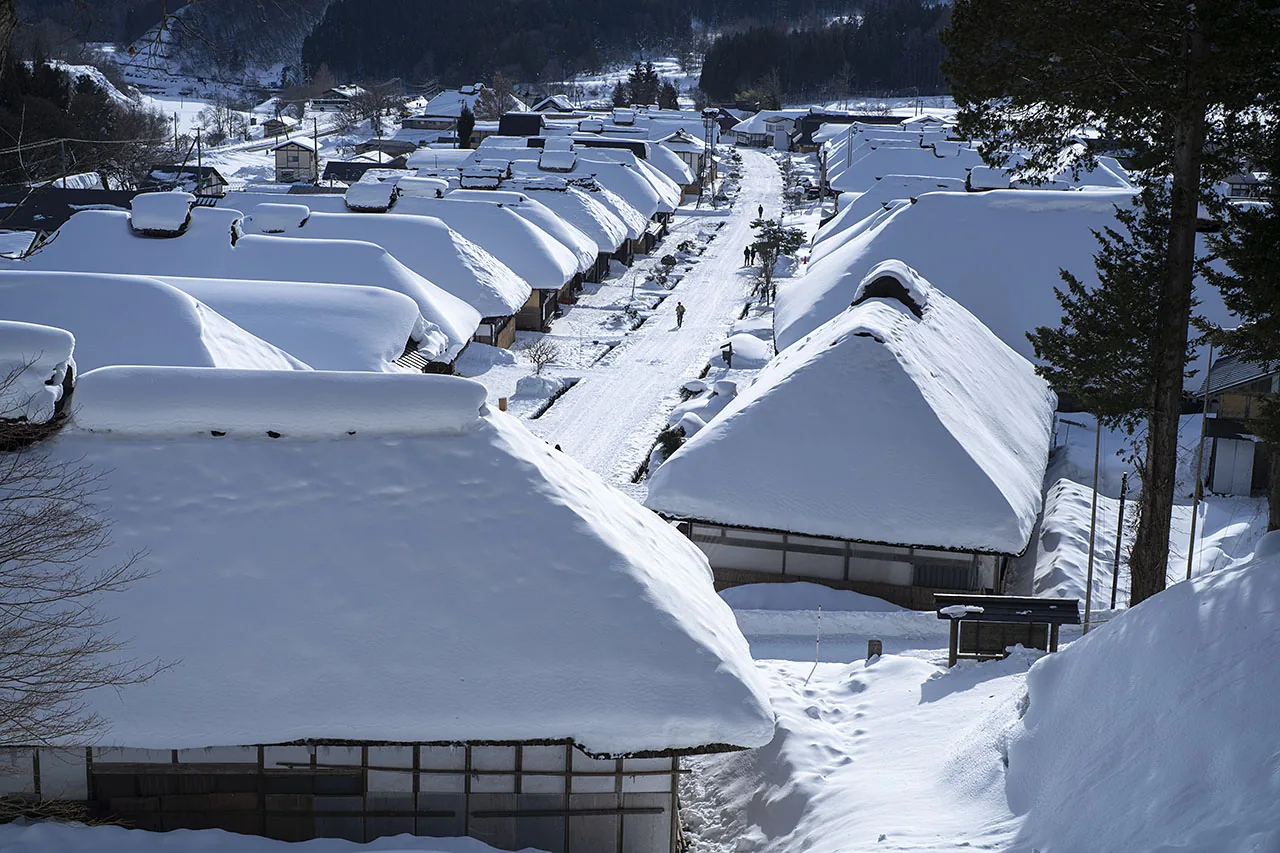
Photo: Ⓒ福島県観光物産交流協会
Yunokami-Onsen Station: a thatched station with a foot bath
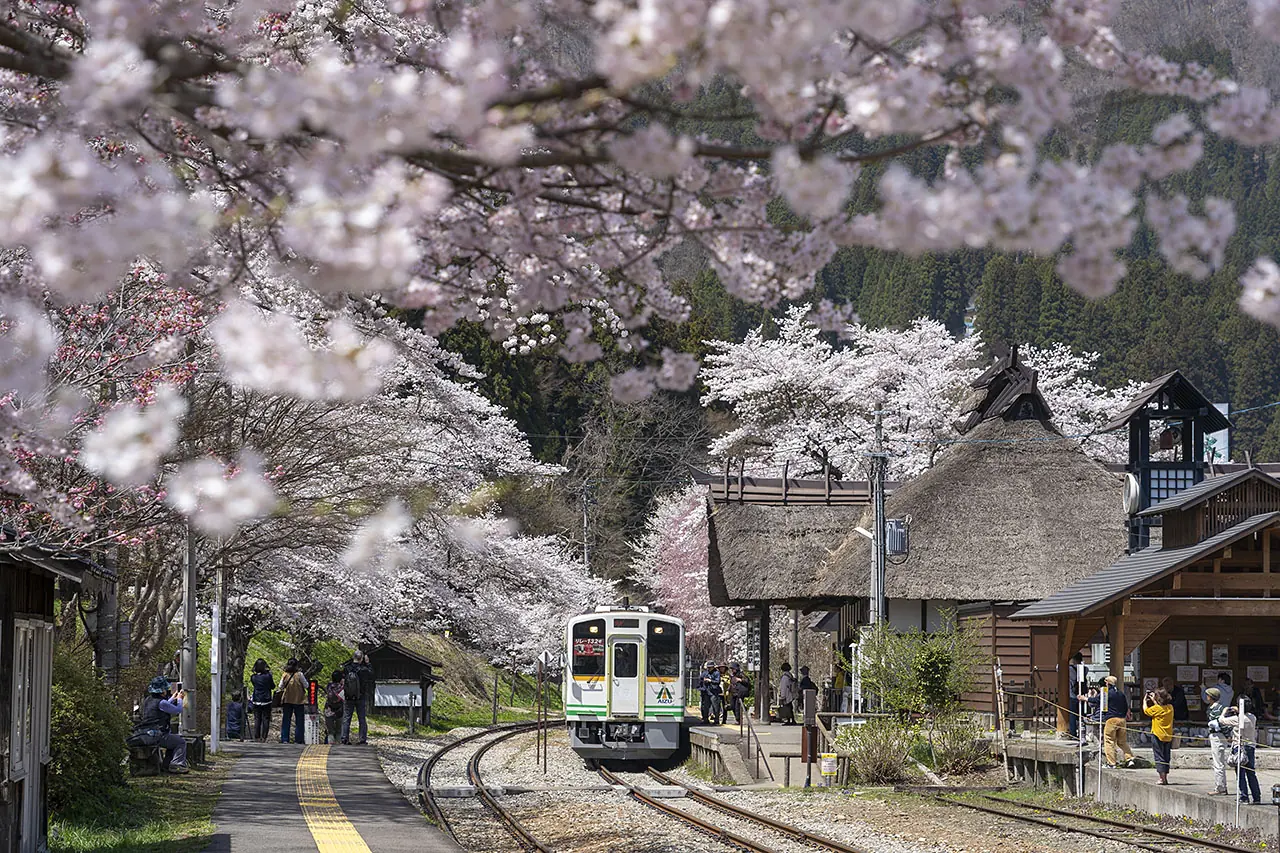
On the way to Ouchi-juku, Yunokami-Onsen Station has a thatched roof designed to match the houses of Ouchi-juku. The waiting room has an irori hearth, and the thatch of the ceiling has turned a smoky, glossy black. On snowy days you can watch Aizu Railway trains pass in front of the white-roofed station.
Inside the station grounds is the Oyako Jizo no Yu foot bath. You can warm your cold feet while waiting for the bus to Ouchi-juku or for your train. It is closed for cleaning at certain times, so check the notice on site.
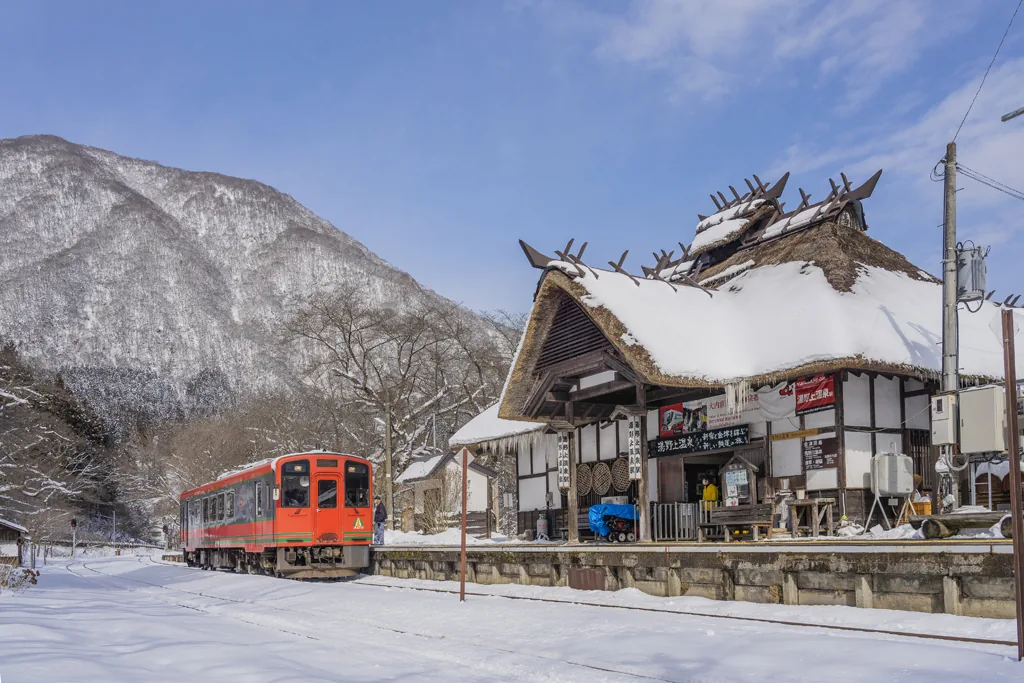
Photo: Ⓒ福島県観光物産交流協会
Tsuruga Castle and the Aizu Painted Candle Festival: a snowy keep and evening lights
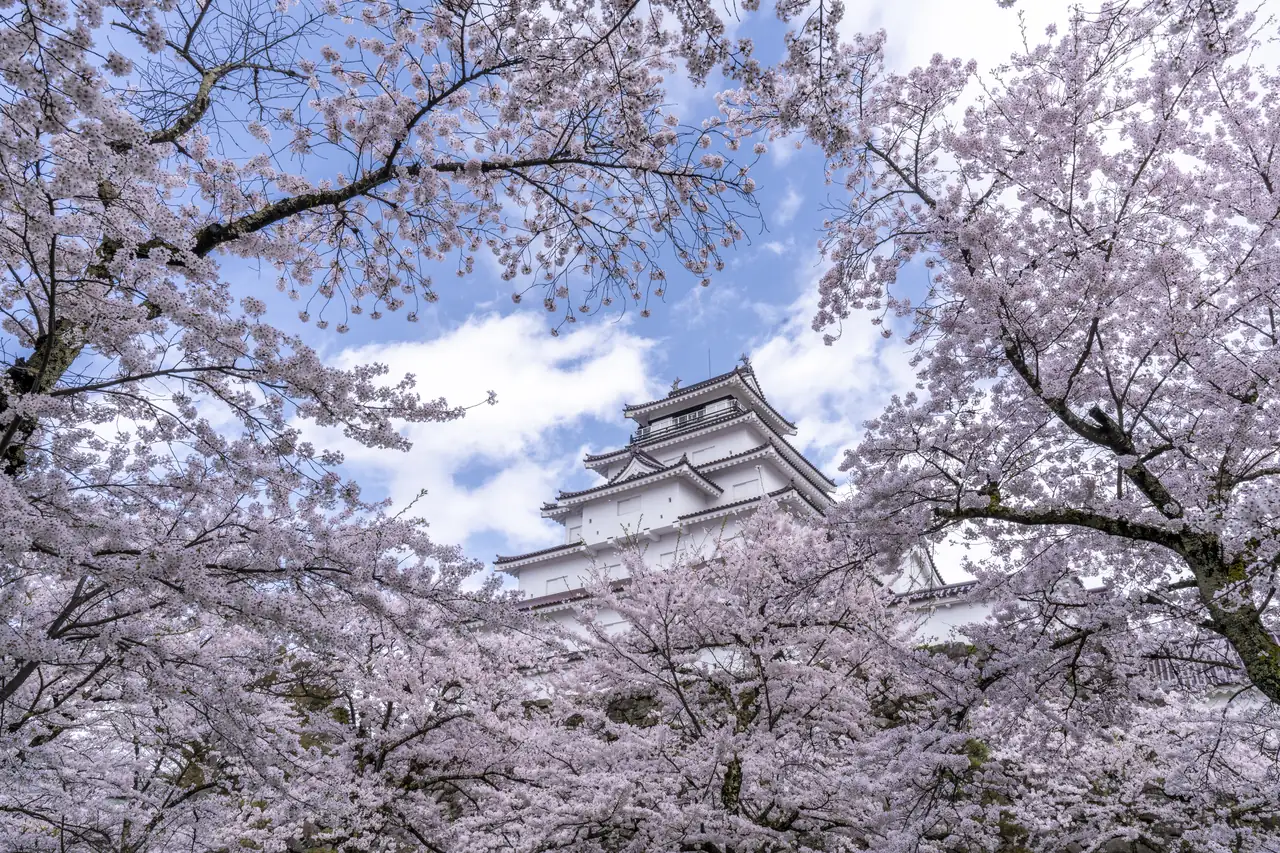
Tsuruga Castle in Aizu-Wakamatsu is where the Aizu domain held out under siege in the Boshin War. In winter, snow settles on the stone walls and around the moat, and the white-walled keep seems to melt into the snowy landscape. From Aizu-Wakamatsu Station, take the town loop bus "Haikara-san" or "Akabe" to the "Tsurugajo Iriguchi" stop and walk about 5 minutes.
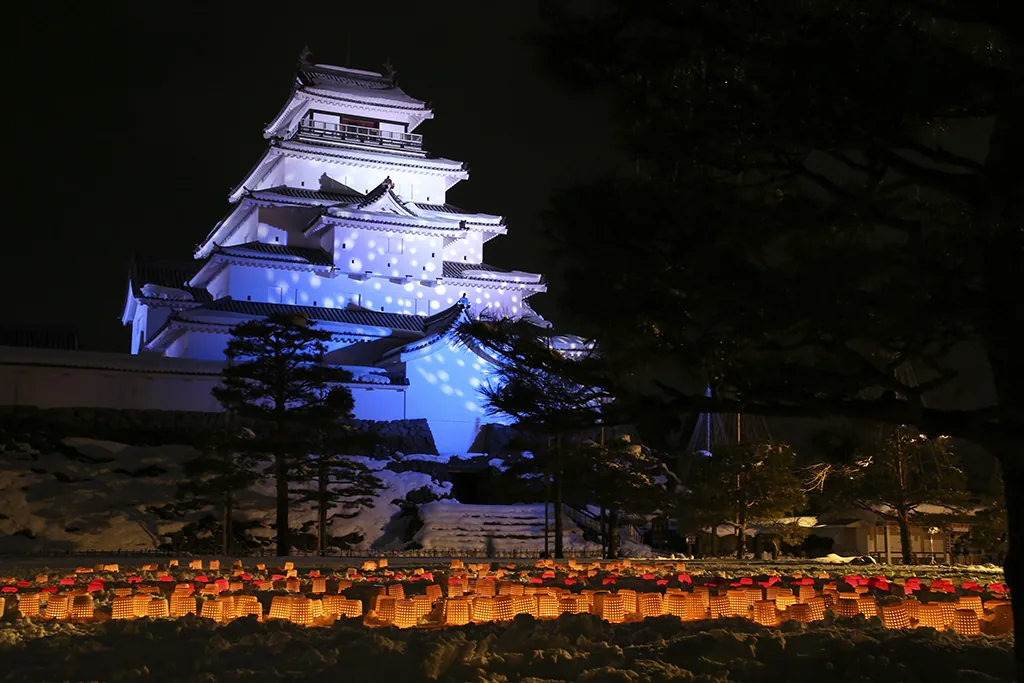
The Aizu Painted Candle Festival (Aizu Erosoku Matsuri) is usually held in February. It's a winter festival in which painted candles, a traditional Aizu craft, are lined up and lit at Tsuruga Castle, Oyakuen and other places around the city; at the foot of the illuminated keep, small lights line the snow. In the Oyakuen garden, candles in bamboo tubes light up the snowy grounds. The festival runs from evening into the night, and after sunset Aizu gets very cold. Gloves and shoes with good grip will let you walk on the snow for longer. Staying in central Aizu-Wakamatsu makes it easier to reach the venues at night.
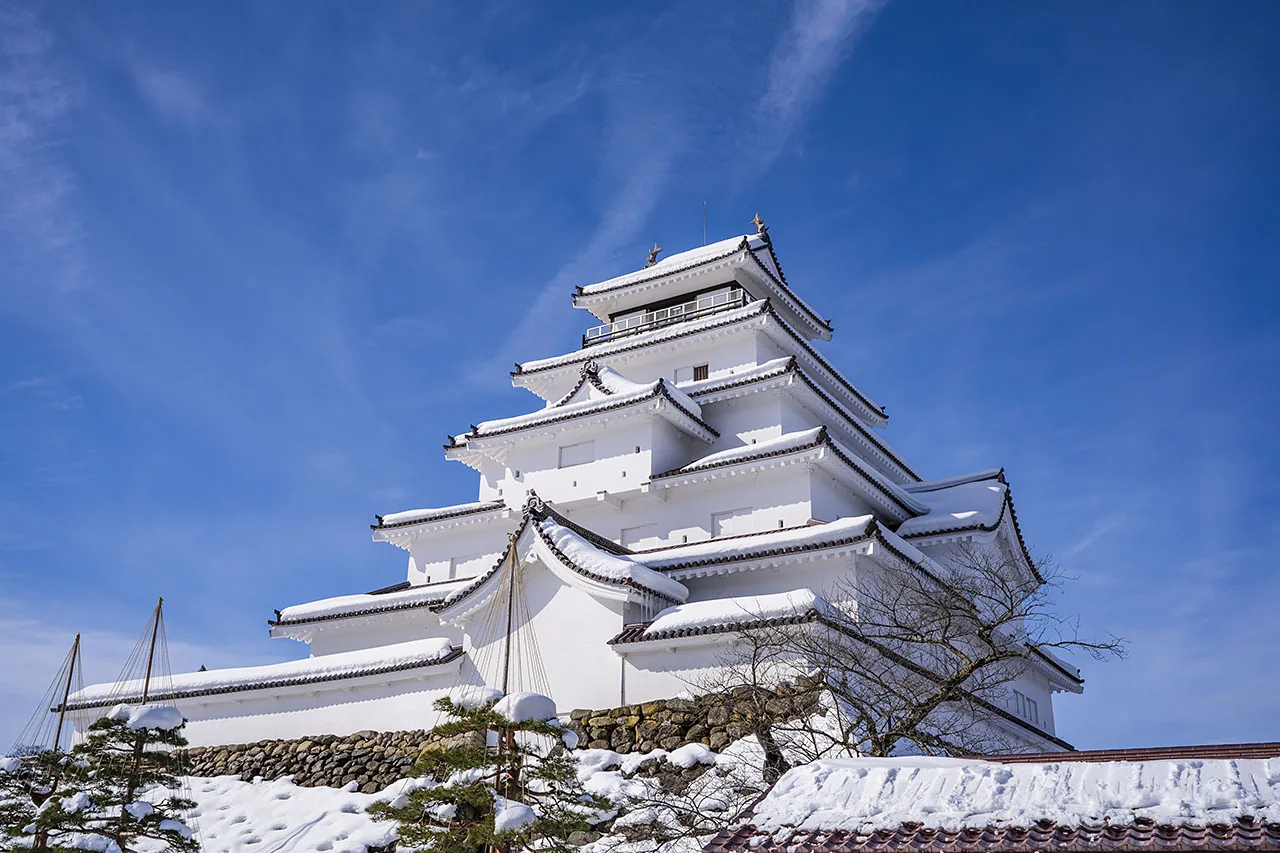
Photo: Ⓒ福島県観光物産交流協会
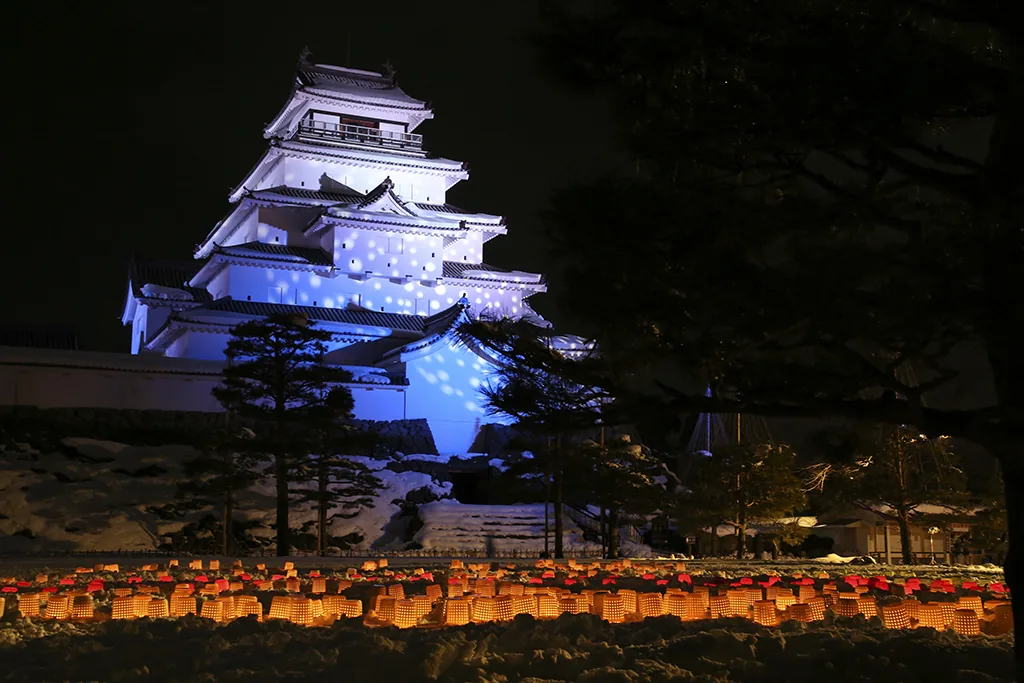
Photo: Ⓒ福島県観光物産交流協会
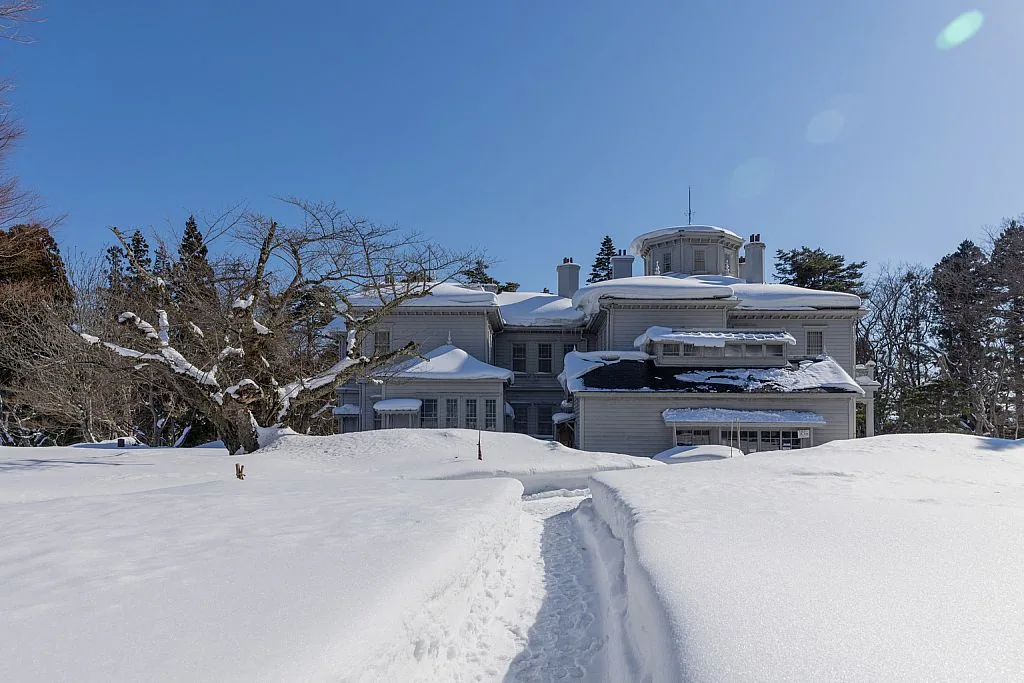
Tenkyokaku: a Meiji-era Western-style villa by Lake Inawashiro
On high ground by Lake Inawashiro, Tenkyokaku is a wooden Western-style building completed in 1908 as a villa for Prince Arisugawa Takehito. It was named by the Crown Prince (later Emperor Taisho), who visited the same year. The main building, annex and front gate are Important Cultural Properties of Japan.
Surrounded by snow, the white villa has a stillness quite different from summer. Inside, you can see the rooms of a Meiji-era imperial villa, from the dining room with its chandelier to marble fireplaces. From Inawashiro Station on the JR Ban'etsu West Line, take a bus to the "Nagahama" stop and walk about 10 minutes. On clear winter days, you can see snow-capped Mt. Bandai from the lakeshore.
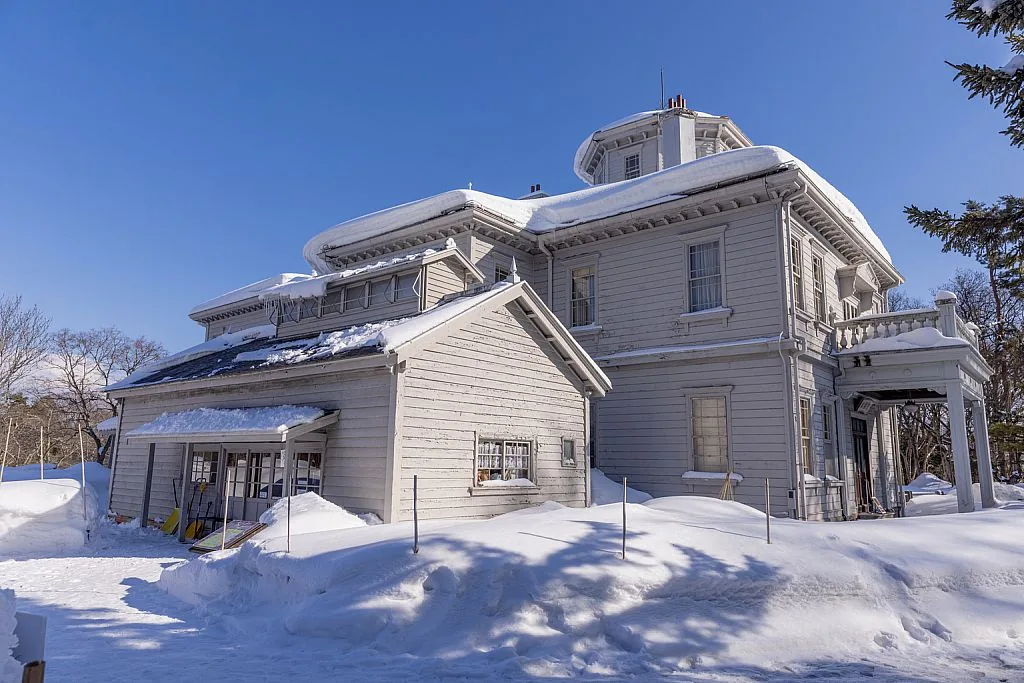
Photo: Ⓒ福島県観光物産交流協会
Getting around in the snow season
The basic approach to a winter trip in Fukushima is to enter snowy Aizu by train, then connect onward by local lines and buses.
- To Aizu-Wakamatsu: Change to the JR Ban'etsu West Line at Koriyama Station. Inawashiro Station is on the way, so stopping at Tenkyokaku before continuing to Aizu-Wakamatsu keeps you moving in one direction.
- To Ouchi-juku and Yunokami Onsen: Take the Aizu Railway from Aizu-Wakamatsu Station and get off at Yunokami-Onsen Station. From the Kanto region, you can also come in from the south by changing from Tobu Railway lines to the Aizu Railway.
- By car: Winter tires are a must. On mountain roads in Aizu and Minami-Aizu, there are days with icy surfaces or blizzards that cut visibility. If you're not used to driving in snow, combining trains and buses is the safer choice.
Trains can be delayed or canceled on snowy days. On lines with few trains, missing one can mean a long wait for the next, so leave plenty of margin in your timetable. For spring in Fukushima, see Fukushima cherry blossoms; for autumn, Fukushima autumn leaves. For more places to visit, browse the list of spots in Fukushima.