Inawashiro Things to Do: Mt. Bandai, Lake Inawashiro, Tenkyokaku
This guide is translated from the Japanese edition. Read the Japanese edition
Things to do in Inawashiro: Mt. Bandai, Japan's fourth-largest lake, the Tenkyokaku and Guest House imperial villas, Hanitsu Shrine and riverside cherry trees.
About 40 minutes from Koriyama Station on the Ban'etsu West Line, you step off at Inawashiro Station and see Mt. Bandai filling the sky to the north. The town of Inawashiro spreads over the southern foot of Mt. Bandai and the north shore of Lake Inawashiro. It lies between Aizu-Wakamatsu and Koriyama, and its imperial villas by the lake, the shrine to the founder of the Aizu domain and its spring cherry trees all fall within a day's drive. Here is what you can see in Inawashiro and how to get around from the station.
Mt. Bandai: a gentle shape from the south, scars of an eruption to the north
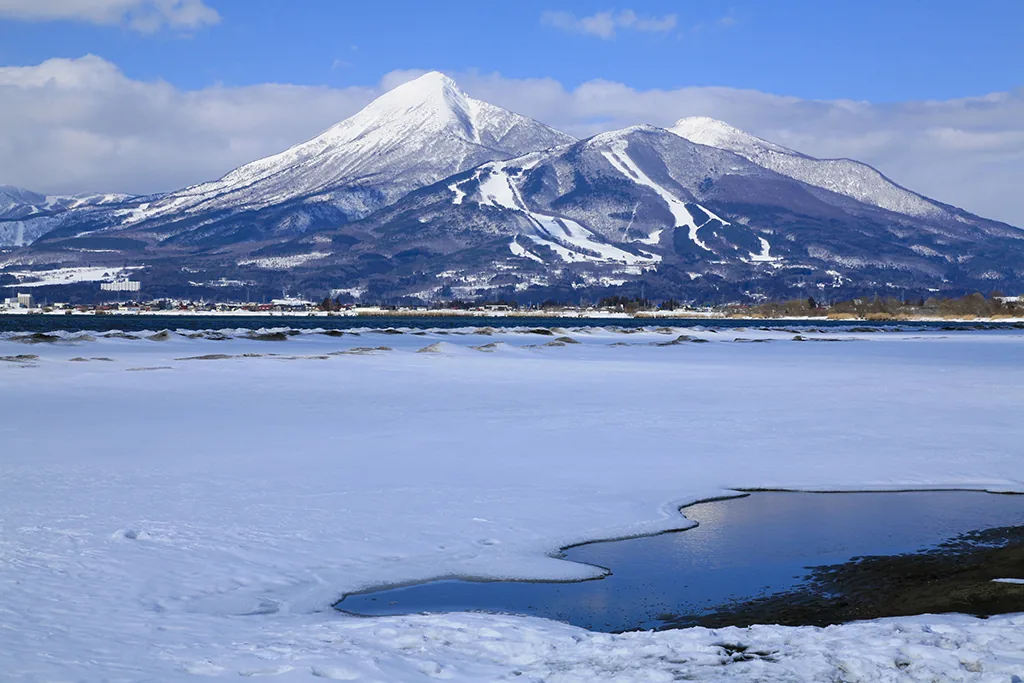
Mt. Bandai is a 1,816 m volcano rising north of Lake Inawashiro, also known as "Aizu Fuji." Seen from the town or the lake, it is a gentle mountain with wide, spreading slopes. Mt. Bandai beyond rice paddies just after planting, or beyond ripe autumn rice, is a typical Inawashiro view.
The north side of the mountain is a different story. In the phreatic eruption of July 15, 1888 (Meiji 21), Kobandai, which stood on the north side of Obandai (today's main peak), collapsed, and a debris avalanche buried the villages at the foot of the mountain. Rivers were dammed, creating Lake Hibara and the other lakes and ponds of Urabandai. For Goshikinuma and the rest of Urabandai on the north side, see Fukushima autumn leaves.
Mt. Bandai is an active volcano under constant monitoring by the Japan Meteorological Agency. If you are thinking of climbing it, check the agency's volcano information before you go.
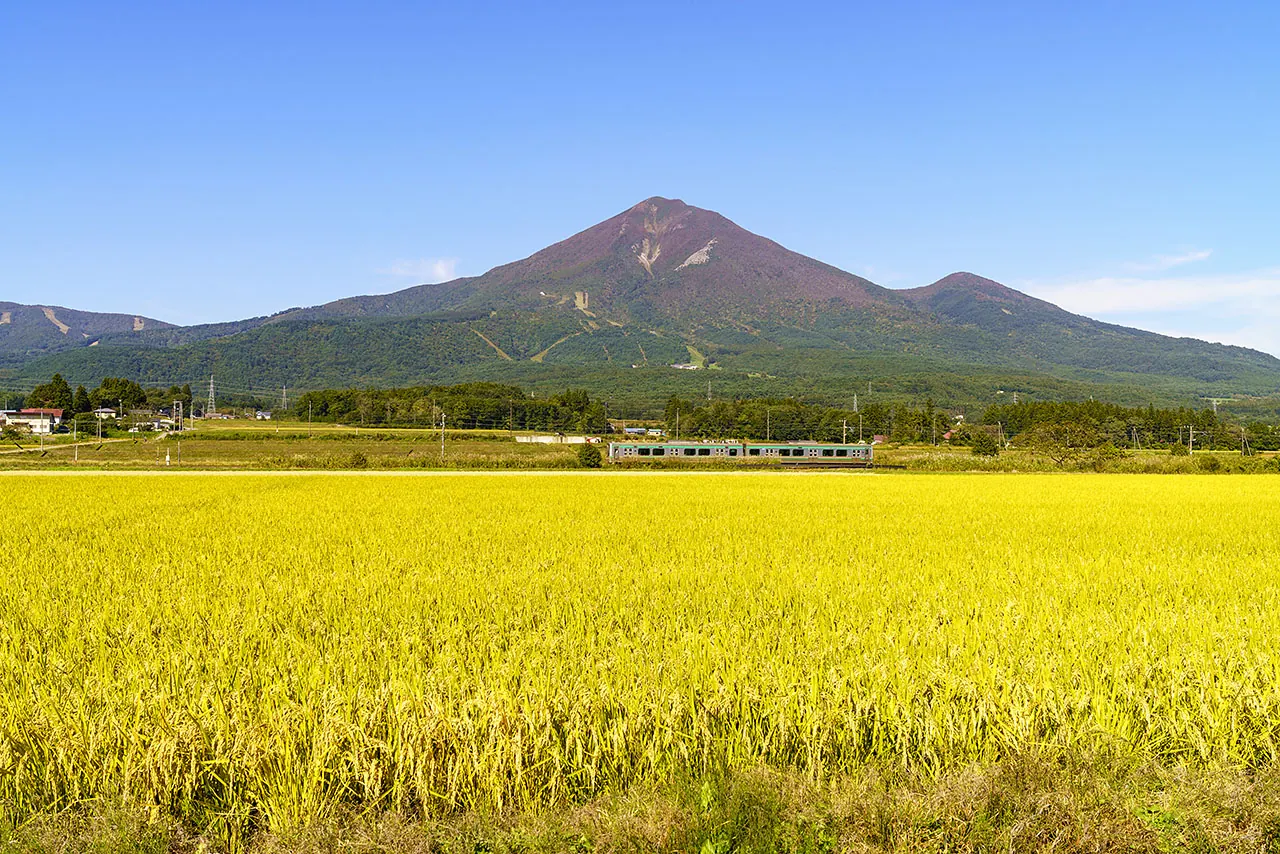
Photo: Ⓒ福島県観光物産交流協会
Lake Inawashiro: Japan's fourth-largest lake, and Mt. Bandai from the shore
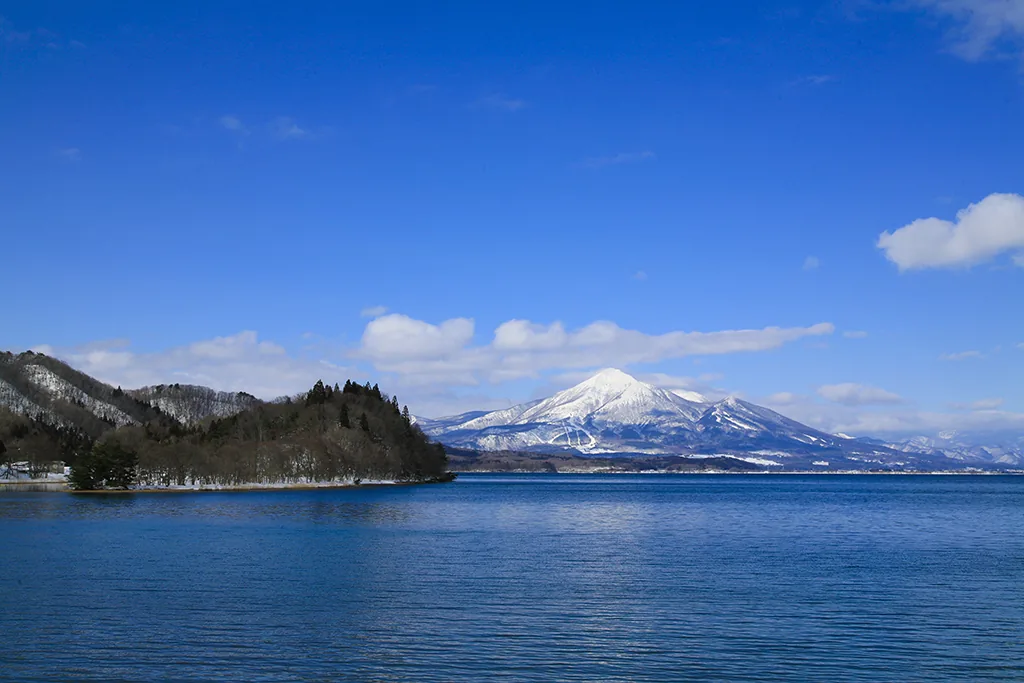
Lake Inawashiro lies near the center of Fukushima Prefecture. With an area of 103.3 km², it is the fourth-largest lake in Japan. Tenjinhama on the north shore looks across the water straight at Mt. Bandai and is about 10 minutes by car from Inawashiro Station. In the coldest stretch, from around late January to early February, lake water whipped up by the west wind freezes onto the trees along the shore, forming shibuki-gori (spray ice). In winter, swans also come to the lake.
Shidahama, on the northeast shore along Route 49, is a stretch of white sand and pine trees. Fukushima Prefecture's website also features the view of Mt. Bandai across the lake from here. In summer it is busy as a lake swimming beach. On the high ground of the northwest shore stand Tenkyokaku and the Fukushima Prefecture Guest House, covered next.
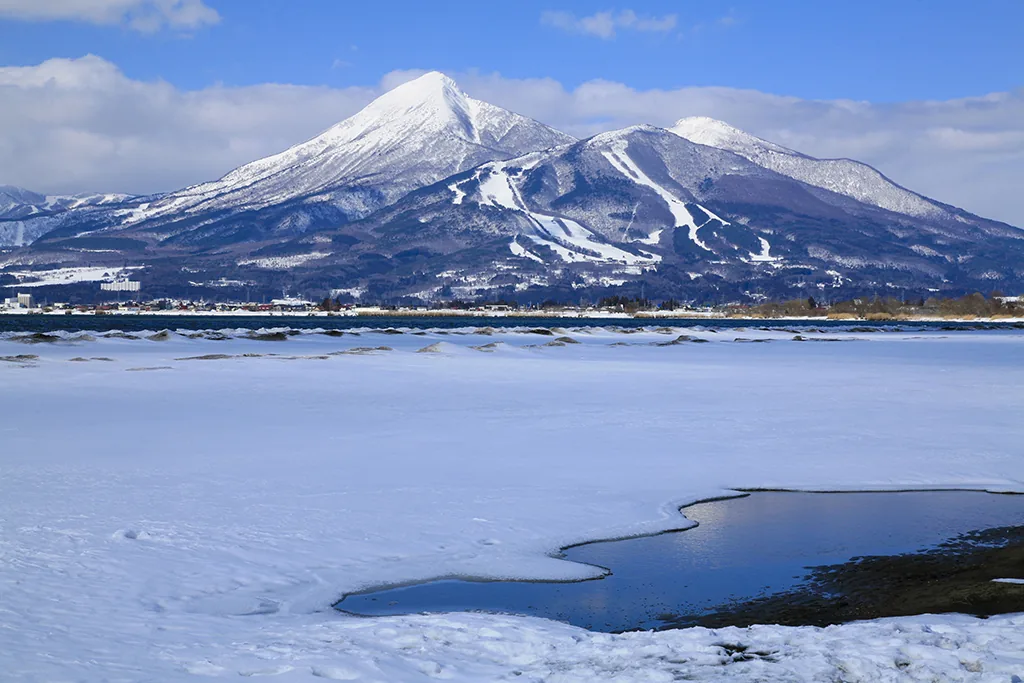
Photo: Ⓒ福島県観光物産交流協会
Tenkyokaku: a Meiji-era Western-style villa above the lake
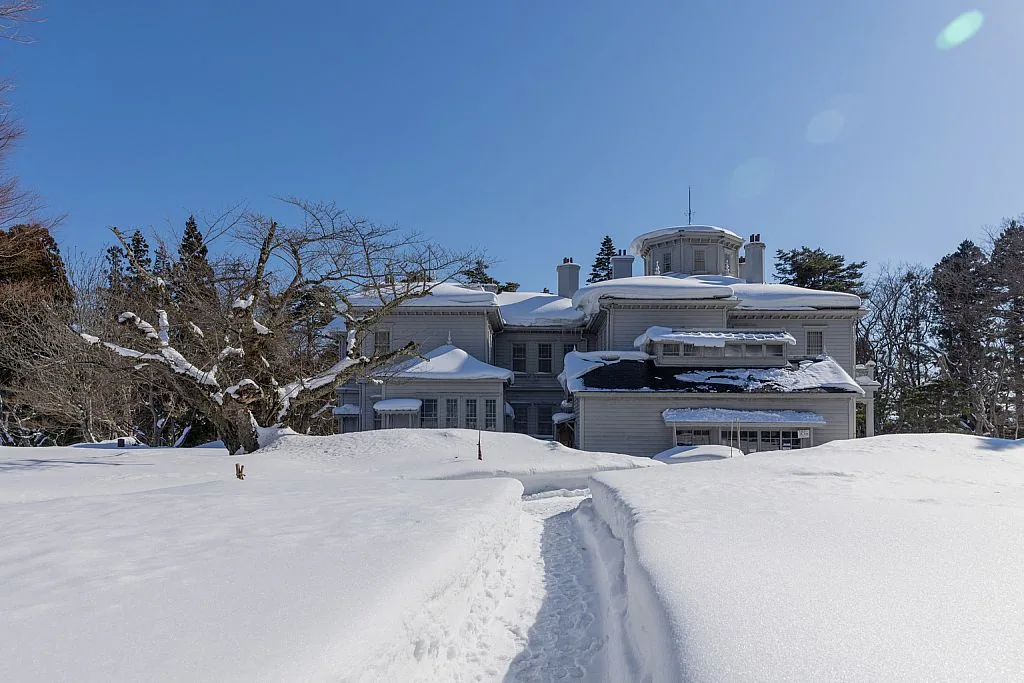
Tenkyokaku is a wooden Western-style building in the woods on high ground along the northwest shore of Lake Inawashiro. Prince Arisugawa Takehito, who traveled through Tohoku in 1907, was taken with the lakeside scenery, and the villa was completed the following year, 1908 (Meiji 41). Crown Prince Yoshihito (later Emperor Taisho), who visited the same year, gave it the name Tenkyokaku. The main building, annex and front gate are National Important Cultural Properties.
The building is based on the Renaissance style, and its octagonal corner tower makes it easy to spot. You can go inside and walk through the rooms of the imperial villa, including a dining room hung with a chandelier and a fireplace. From the bus stop in front of JR Inawashiro Station, take an Aizu Bus about 9 minutes to Nagahama, then walk about 10 minutes. By car it is about 8 km from the Inawashiro Bandai Kogen IC, with free parking.
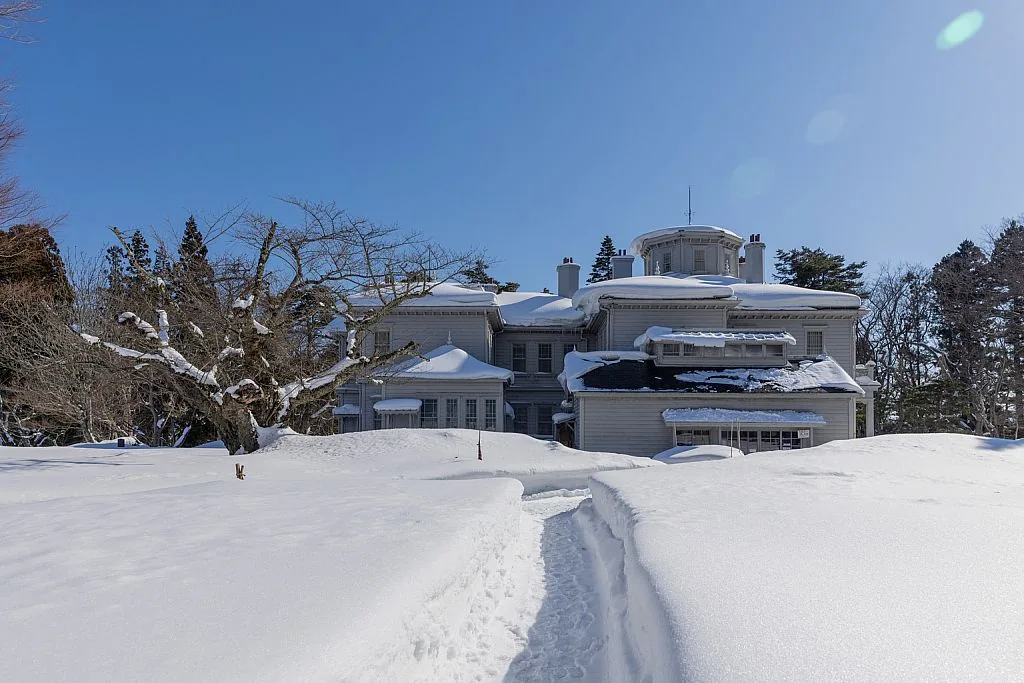
Photo: Ⓒ福島県観光物産交流協会
Fukushima Prefecture Guest House: a Taisho-era Japanese-style villa near Tenkyokaku
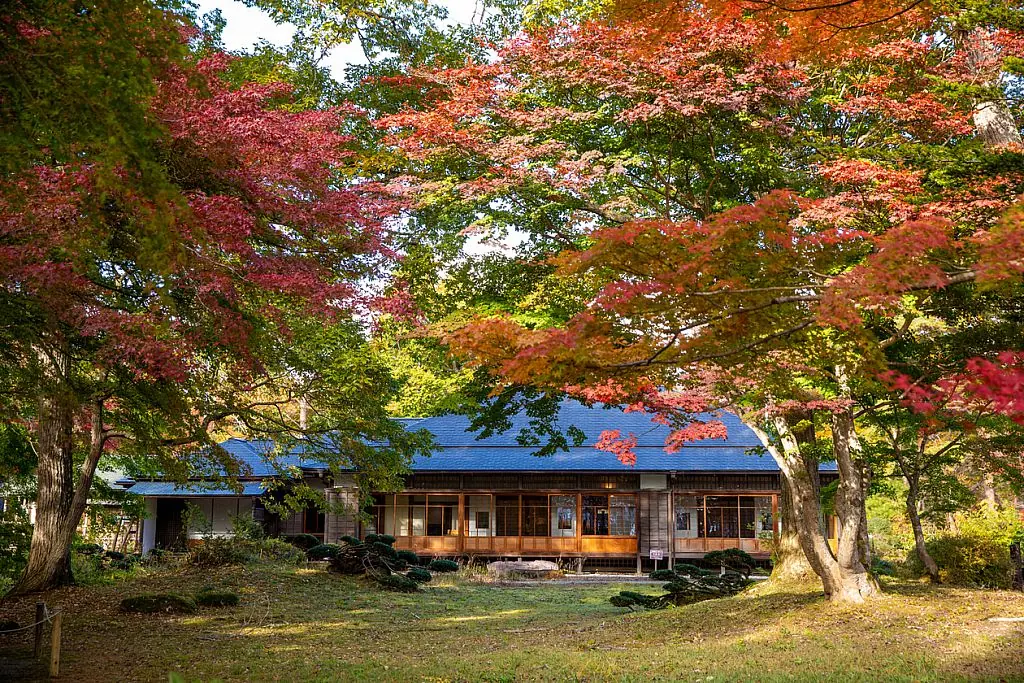
On a hill about 500 m from Tenkyokaku stands the Fukushima Prefecture Guest House (the former Takamatsu-no-miya Okinashima Villa). It is a Japanese-style villa built in 1922 (Taisho 11) by Prince Takamatsu Nobuhito for Princess Yasuko, widow of Prince Arisugawa Takehito, to rest and recuperate. The entrance wing, living wing, kitchen wing and other buildings are National Important Cultural Properties.
Normally only the garden is open, free of charge, from spring to autumn (it is closed in winter, usually from around November to April). The interior can only be seen during special openings held for set periods each month from spring to autumn. These are guided tours by advance reservation only; reception is at Tenkyokaku, and the program is combined with a visit to Tenkyokaku. The Guest House has no parking of its own, so walk about 10 minutes along a gravel forest road from the Tenkyokaku parking lot. Seen one after the other, the Western-style Tenkyokaku and this house show the difference between two imperial villas: Meiji and Taisho, Western and Japanese.
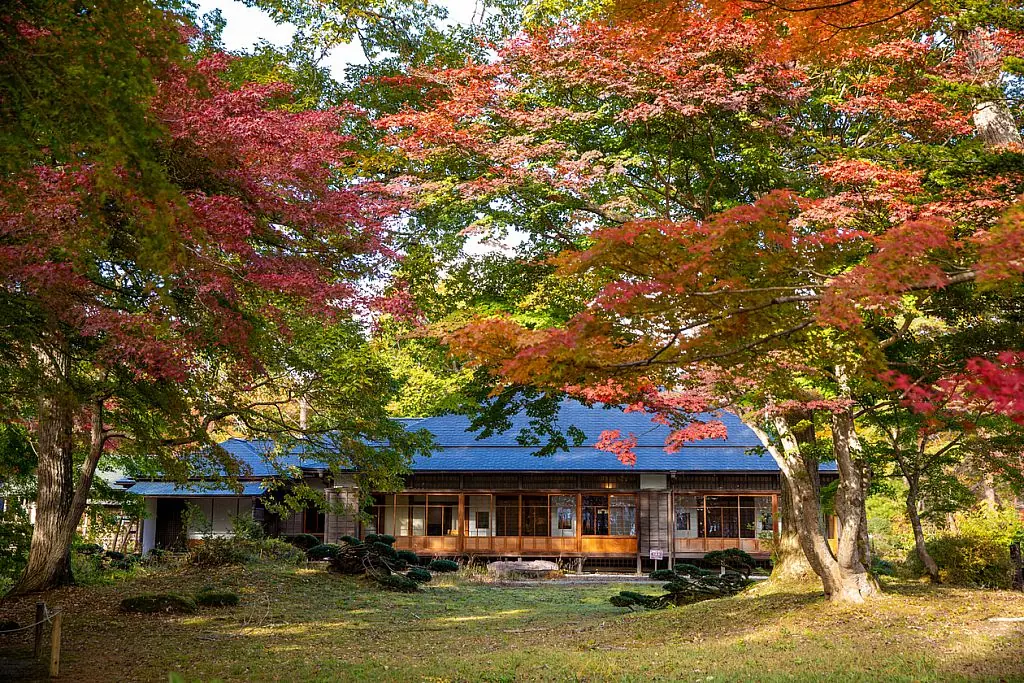
Photo: Ⓒ福島県観光物産交流協会
Hanitsu Shrine: the founder of the Aizu domain at the foot of Mt. Bandai
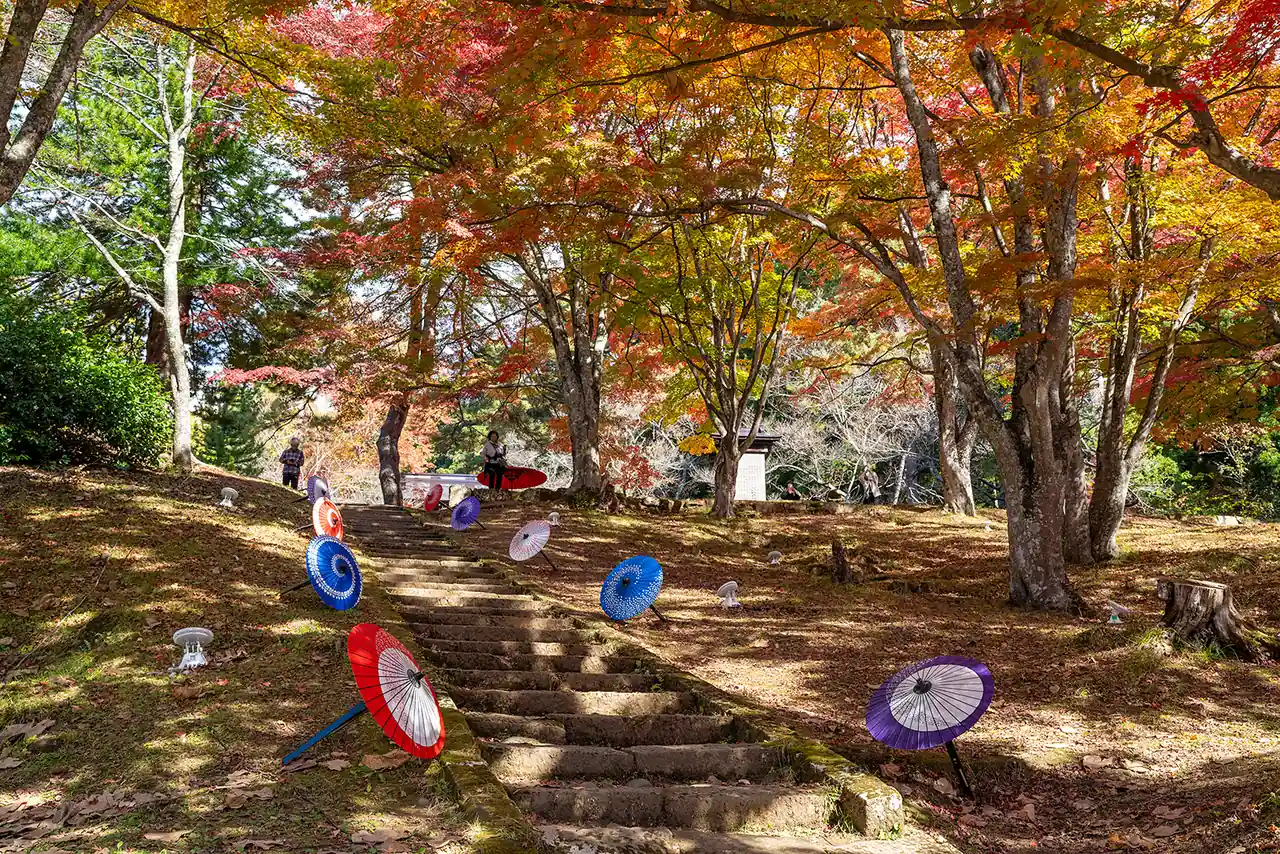
Hanitsu Shrine (Hanitsu-jinja) stands in the forest at the foot of Mt. Bandai and enshrines Hoshina Masayuki, the first lord of the Aizu domain. Masayuki is said to have loved this place and chosen it for his grave, and the shrine stands together with his tomb.
The shrine buildings sit at the top of a flight of stone steps. In spring there are cherry blossoms, in early summer fresh green leaves, and in autumn the maples in the grounds turn bright red. The autumn color usually peaks from late October to mid-November, and the shrine gets busier then. It is about 10 minutes by car from the Inawashiro Bandai Kogen IC; from Inawashiro Station a taxi is the easiest option. For the history of the Aizu domain and Masayuki, see Aizu-Wakamatsu samurai history.
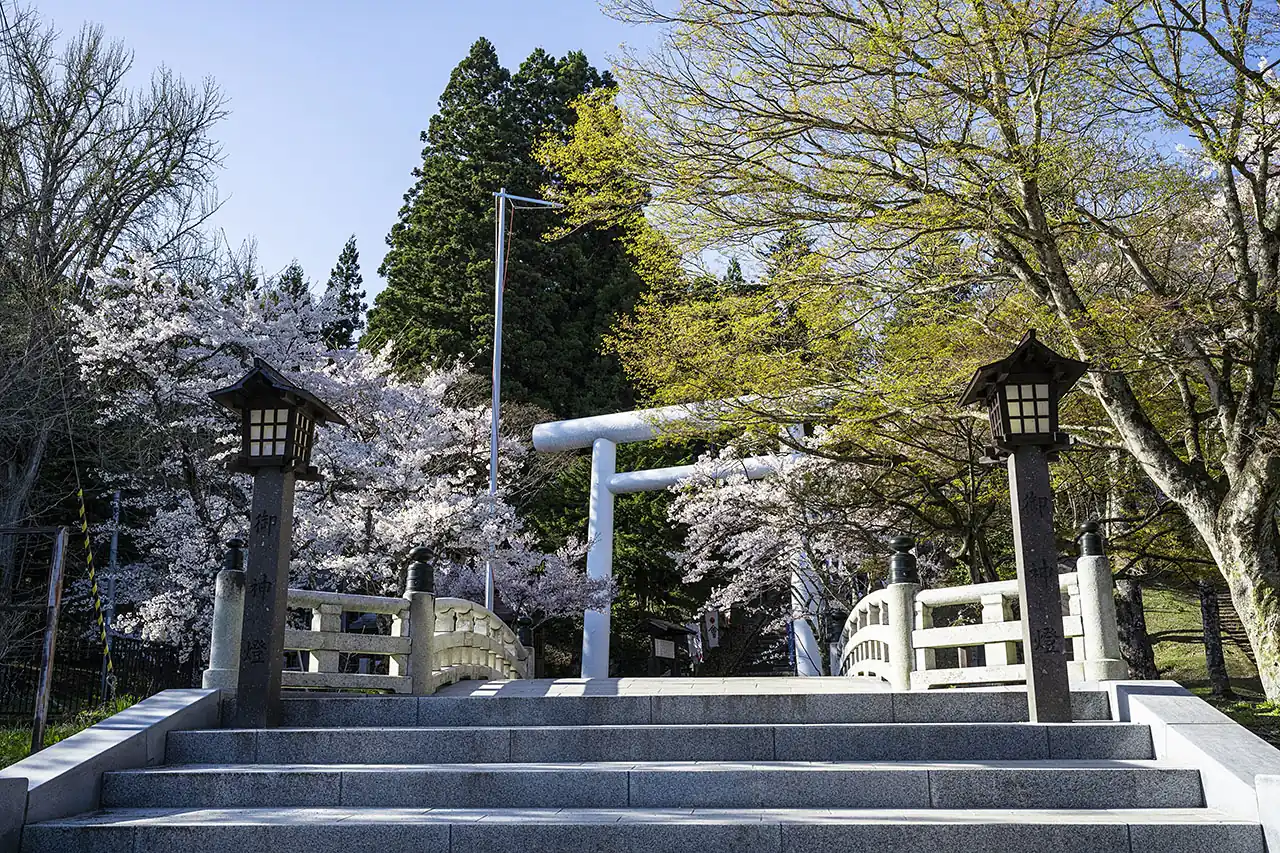
Photo: Ⓒ福島県観光物産交流協会
Kannonji River cherry trees: riverside blossoms that usually peak in late April
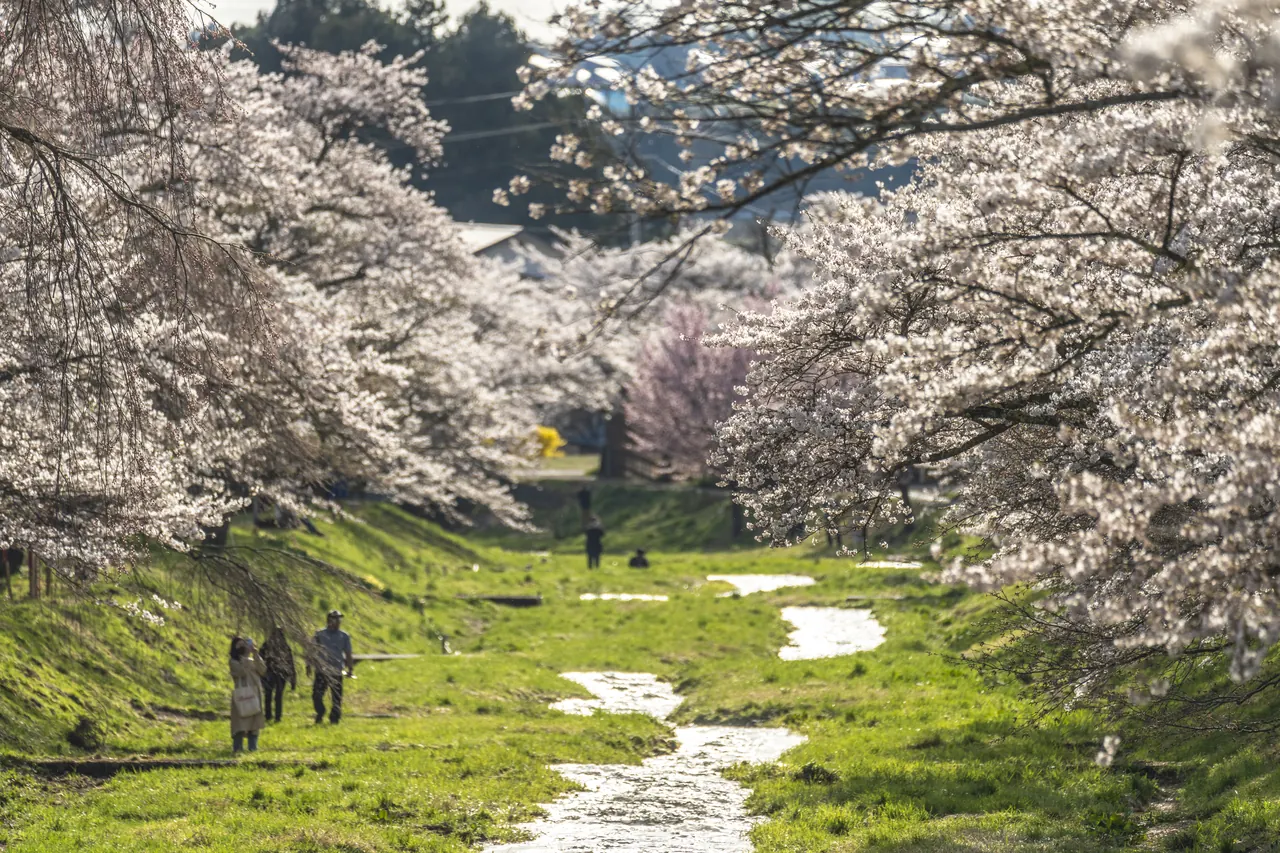
The Kannonji River cherry trees line both banks of a river in Inawashiro for about 1 km. Around 200 trees, mostly Somei-yoshino, are planted here, and at full bloom their branches meet over the river. Late April is the usual guide for peak bloom, though in some years the trees are in full bloom by mid-April. During the cherry blossom festival the trees are lit up at night. Kawageta Station, one stop from Inawashiro toward Koriyama on the JR Ban'etsu West Line, is about a 2-minute walk from the downstream end of the trees. For bloom timing and routes that combine other cherry blossom spots, see Fukushima cherry blossom spots.
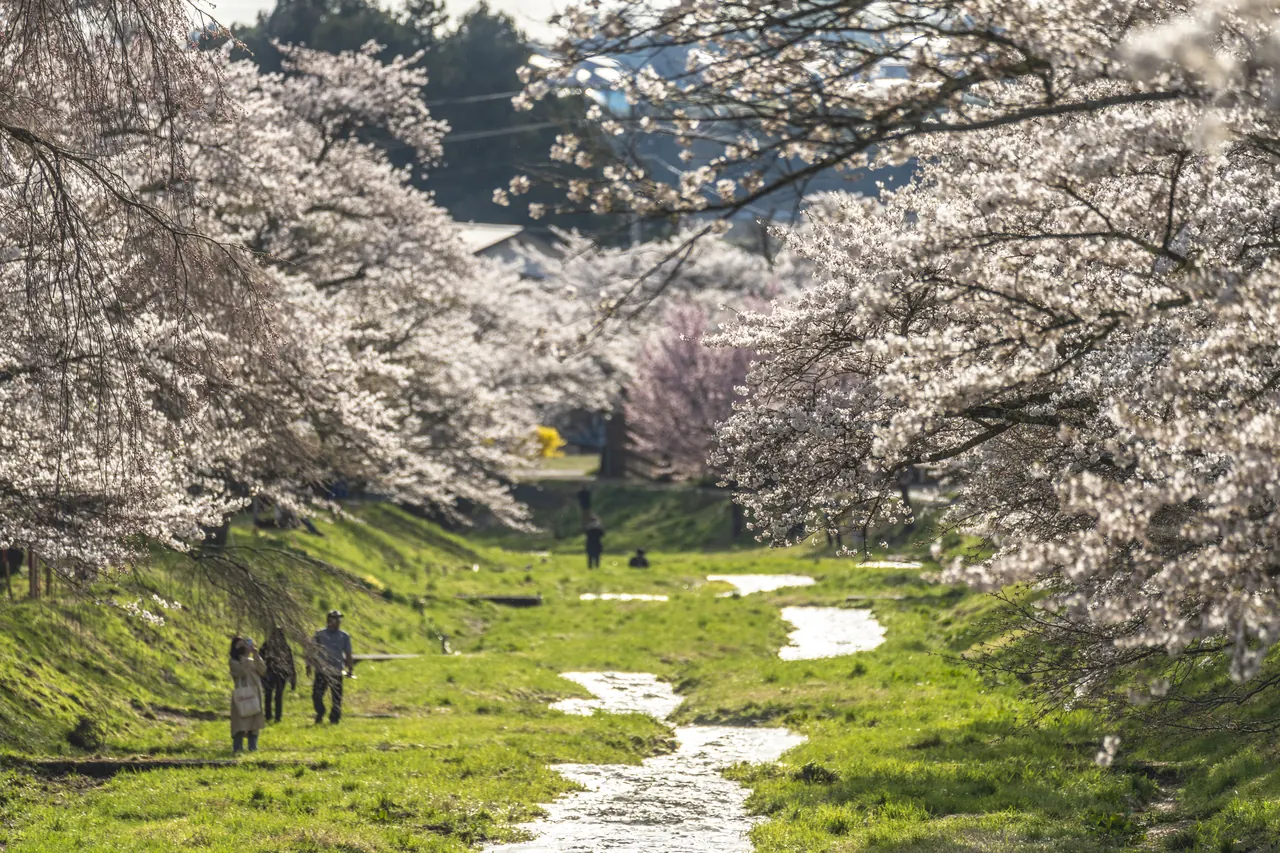
Photo: Ⓒ福島県観光物産交流協会
Getting around: buses and taxis from Inawashiro Station, or start from the IC by car
To reach Inawashiro, change from the Tohoku Shinkansen to the Ban'etsu West Line at Koriyama Station. According to the town of Inawashiro, it is about 1 hour 30 minutes by Shinkansen from Tokyo Station to Koriyama, and about 40 minutes on the Ban'etsu West Line from Koriyama to Inawashiro. You can also come from Aizu-Wakamatsu on the Ban'etsu West Line.
The sights are spread around town, so it matters to decide in advance how you will get around from the station.
- Tenkyokaku and the Fukushima Prefecture Guest House: Aizu Bus from in front of Inawashiro Station to Nagahama. Check times with Aizu Bus.
- Hanitsu Shrine: Taxi from the station. Decide how you will get back before you set out, too.
- Kannonji River cherry trees: About a 2-minute walk from Kawageta Station on the Ban'etsu West Line.
- Goshikinuma in Urabandai: About 25–30 minutes by local bus toward Urabandai from Inawashiro Station.
By car, you can start from the Inawashiro Bandai Kogen IC on the Ban'etsu Expressway and plan a day like this: Hanitsu Shrine in the morning, Tenkyokaku and the Guest House by the lake at midday, and Urabandai in the afternoon. Inawashiro gets heavy snow in winter, and Tenkyokaku is surrounded by it. Winter tires are a must if you drive in winter.
Parts of the Ban'etsu West Line are sometimes suspended after heavy rain or other problems, with replacement buses running instead. In summer 2026, too, heavy rain led to the suspension of the section between Inawashiro and Aizu-Wakamatsu, and replacement buses ran for a time. As of November 2026, the line is running normally. Check JR East's service information before you go.