Fukushima Folk Toys: Okiagari-koboshi, Akabeko and Miharu-goma
This guide is translated from the Japanese edition. Read the Japanese edition
Fukushima folk toys and where to buy them: Aizu's okiagari-koboshi and akabeko, the Miharu-goma horse, Shirakawa daruma and the workshops of Takashiba Deko Yashiki.
Set a doll small enough to sit in your palm on the table, tip it over with a finger, and it wobbles and pops straight back up. This is Aizu's okiagari-koboshi. In Fukushima Prefecture, papier-mache figures (hariko, made by layering paper over a mold) and carved wooden toys have been handed down in castle towns and mountain hamlets alike. Most have long been displayed as good-luck charms, and many are light and easy to take home as souvenirs. Aizu, Miharu and Shirakawa each have their own folk toys, and at Takashiba Deko Yashiki in Koriyama you can visit the makers' workshops.
Okiagari-koboshi: Buy One More Than Your Family at Aizu's Tokaichi
Okiagari-koboshi are small papier-mache dolls made mainly in Aizu-Wakamatsu. A weight in the base means they get back up however many times they fall, so these little dolls are treated as charms for health and perseverance. They are said to date back about 400 years, to when Gamo Ujisato, then lord of Aizu, had his retainers make them and sell them at New Year.
In Aizu-Wakamatsu, Tokaichi, the year's first market and a tradition of more than 400 years, is held every January 10 along Shinmei-dori, Omachi-dori and nearby streets, with stalls selling okiagari-koboshi, pinwheels and other lucky charms. The custom is to buy one more okiagari-koboshi than the number of people in your family.
To the west, in Nishiaizu Town, akabeko and other Aizu papier-mache toys are also made. Aizu-Wakamatsu's sights are on the Aizu-Wakamatsu page.
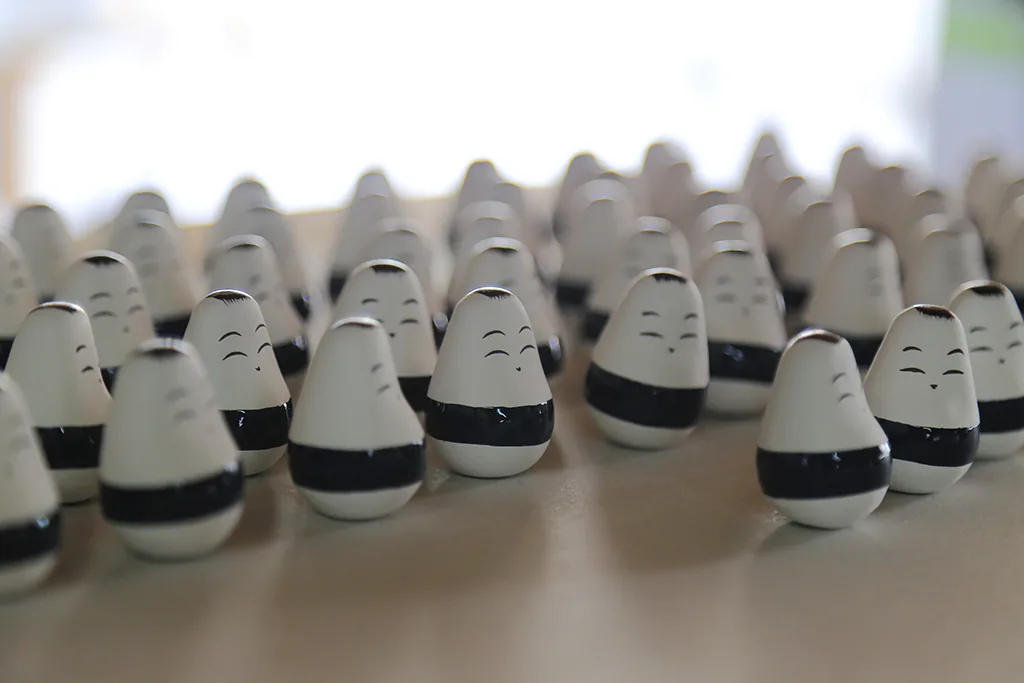
Photo: Ⓒ福島県観光物産交流協会
Akabeko: the Red Cow with a Nodding Head
Akabeko is a papier-mache red cow whose head bobs gently. Beko means cow in the Tohoku dialect. Yanaizu in Aizu is regarded as the birthplace of akabeko: after a great earthquake in 1611 toppled the Kokuzo-do hall of Enzoji Temple, the rebuilders were struggling to haul the huge timbers when a herd of red-haired cattle appeared and helped them, the legend says.
Red is said to ward off misfortune, and children who have an akabeko are said to be protected from harm. Souvenir shops in Aizu-Wakamatsu are lined with akabeko large and small, and some workshops in the city offer akabeko painting sessions.
Miharu-goma: Black and White Horses and the Legend of Sakanoue no Tamuramaro
Miharu-goma is a toy horse carved from wood and painted. Its origin is told through a legend of Sakanoue no Tamuramaro: a monk of Kiyomizu-dera in Kyoto carved wooden horses from the wood left over after making a Buddhist statue, and they turned into real horses that helped Tamuramaro in battle.
The black horse is a charm for children, safe childbirth and raising children, and the white horse for a secure old age and long life; together they are said to protect you for a lifetime. Although it carries the Miharu name, it is made in Takashiba, in Nishita-machi, Koriyama City, which belonged to the Miharu domain in the Edo period. For Miharu town and its Takizakura cherry tree, see the Miharu page.
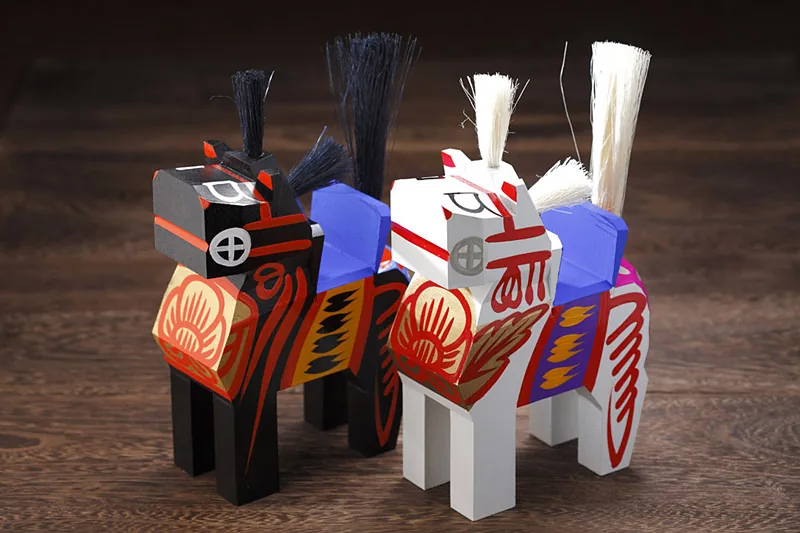
Photo: Ⓒ福島県観光物産交流協会
Shirakawa Daruma: a Face of Cranes, Turtles, Pine, Bamboo and Plum
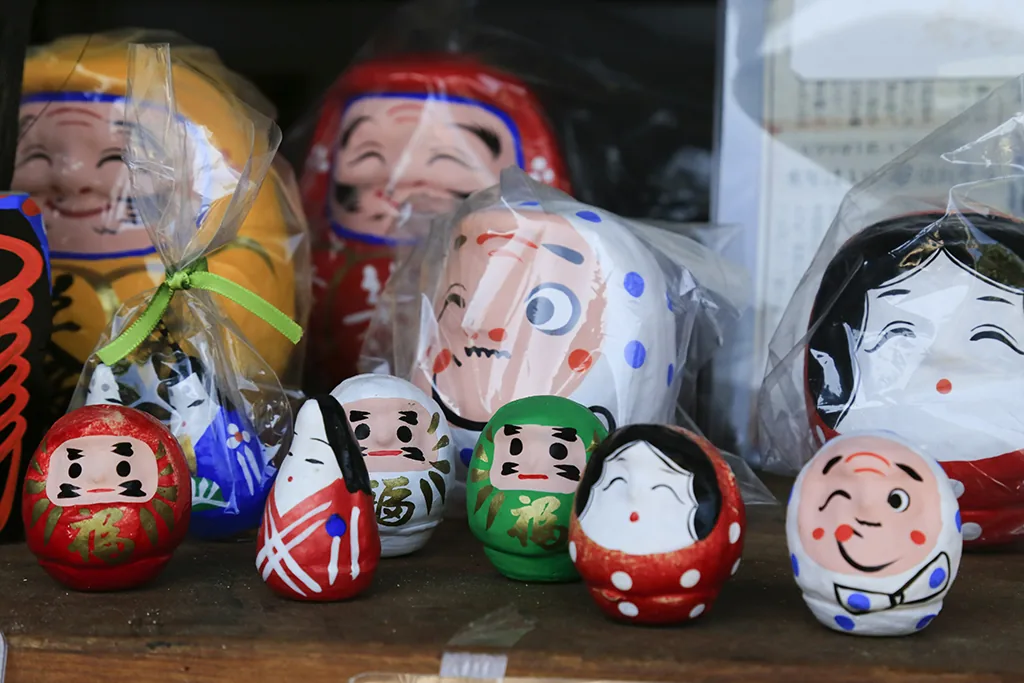
Shirakawa daruma are Shirakawa's daruma dolls, with a crane, a turtle, pine, bamboo and plum painted on the face. The eyebrows represent a crane, the moustache a turtle, the whiskers by the ears pine and plum, and the chin beard bamboo; Matsudaira Sadanobu, lord of the Shirakawa domain, is said to have had the painter Tani Buncho paint them. They come in 18 sizes. Every February 11, the Shirakawa Daruma Market fills the streets of central Shirakawa with stalls. Walking around the town is covered in things to do in Shirakawa.
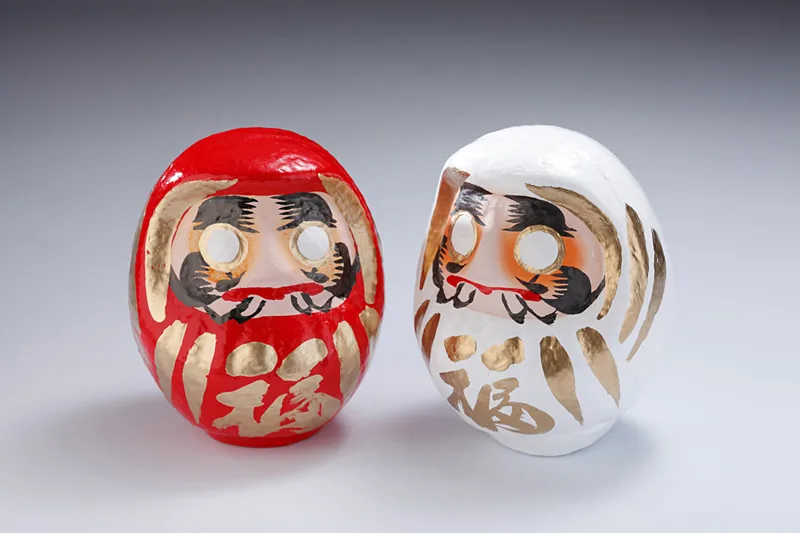
Photo: Ⓒ福島県観光物産交流協会
Takashiba Deko Yashiki: a Hamlet of Papier-Mache Workshops
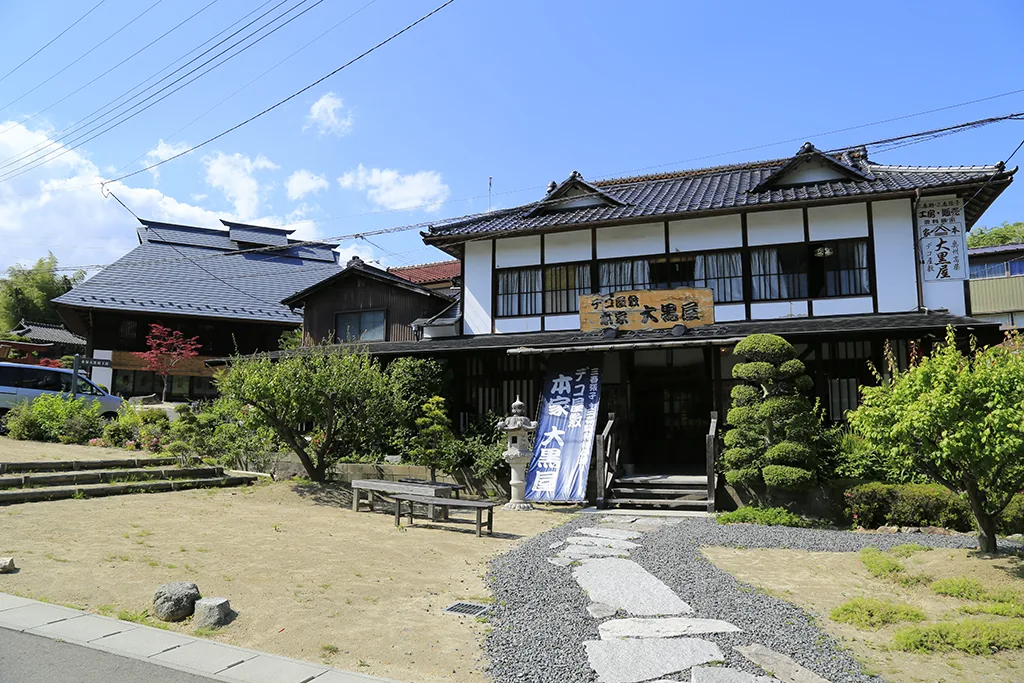
Takashiba Deko Yashiki is a hamlet of folk-toy workshops in Takashiba, Nishita-machi, Koriyama City. In this village, part of the Miharu domain in the Edo period, papier-mache dolls and Miharu-goma have been made for more than 300 years. Miharu hariko are made by layering washi paper over a wooden mold and then painting the shape; they include daruma and masks.
Four workshops still carry on the craft, and you can choose dolls in their shops. Some workshops offer painting sessions where you color a plain papier-mache piece and take it home. What is offered and whether you need to book differ by workshop, so check in advance. The Takashiba Deko Festival is held on the first Sunday of June each year.
From JR Koriyama Station, take a Fukushima Kotsu bus bound for Miharu, get off at Odaira and walk about 5 minutes. It is about 6 minutes by car from Miharu Station on the JR Banetsu East Line, so in spring you can also plan a trip that takes in Miharu's Takizakura cherry tree.
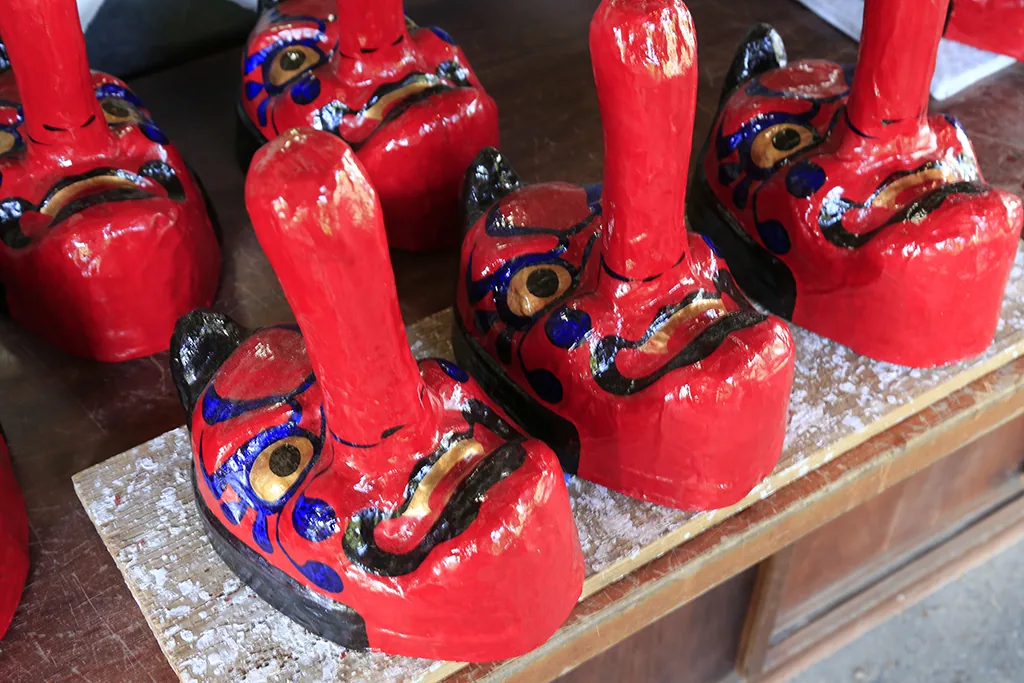
Photo: Ⓒ福島県観光物産交流協会
Buying Folk Toys and Taking Them Home
- Papier-mache is made of paper, so it is light but easily crushed and sensitive to water. If it goes in a suitcase, ask for a box or wrap it in clothes so it keeps its shape.
- Days off vary from workshop to workshop. Check that they are open before you visit.
- Tokaichi and the Daruma Market draw big crowds, and roads around the venues get congested. Look up public transport information in advance.
- Souvenir shops in Aizu-Wakamatsu also stock akabeko and okiagari-koboshi — handy if you don't have time to visit the workshops where they are made.