Old Tokaido in Shizuoka: Walk from Satta Pass to Arai Checkpoint
This guide is translated from the Japanese edition. Read the Japanese edition
Where to walk the old Tokaido in Shizuoka: Satta Pass, Yui-juku, Seiken-ji, Mariko's tororo soup, the Utsunoya Meiji tunnel and Arai Checkpoint.
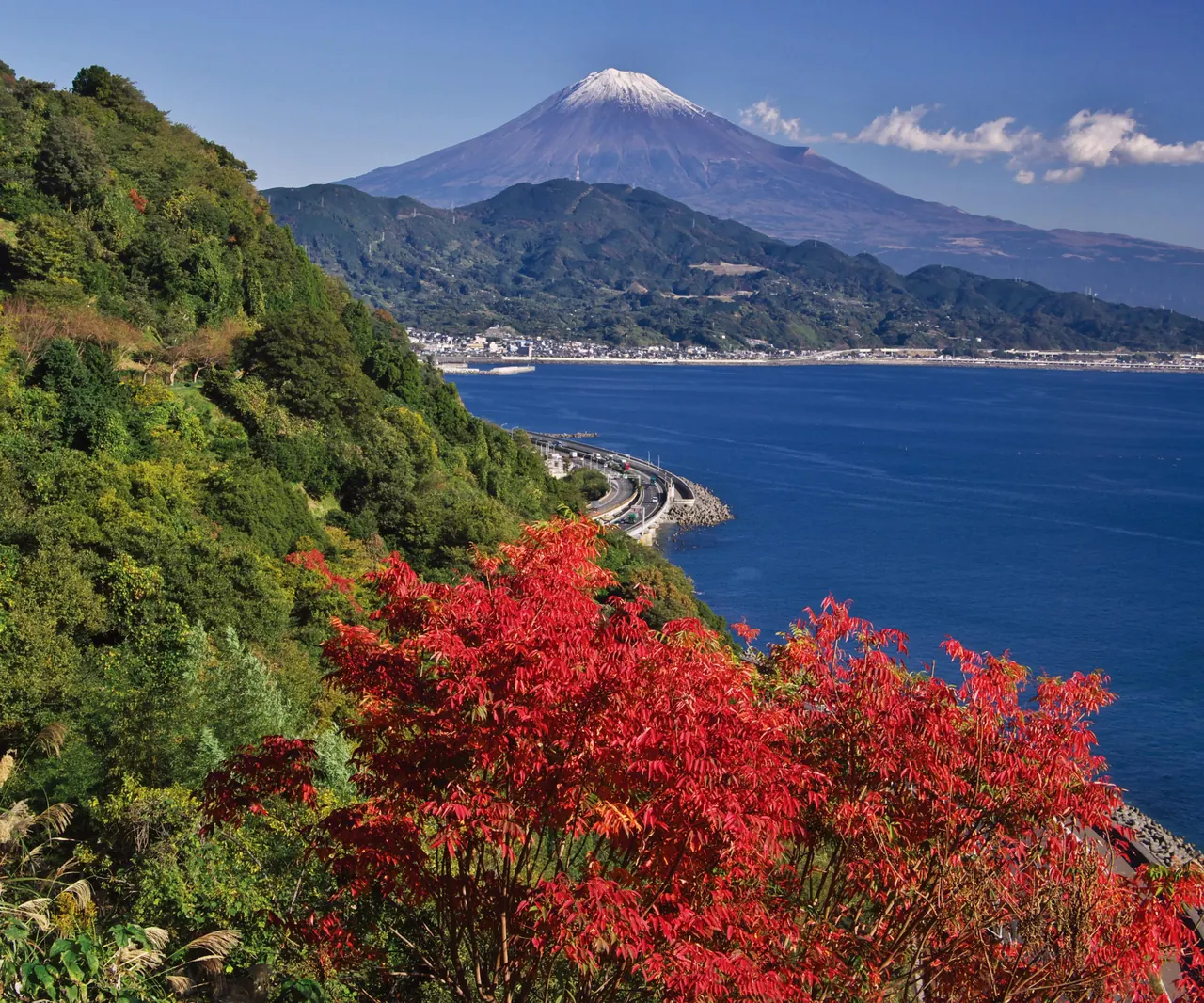
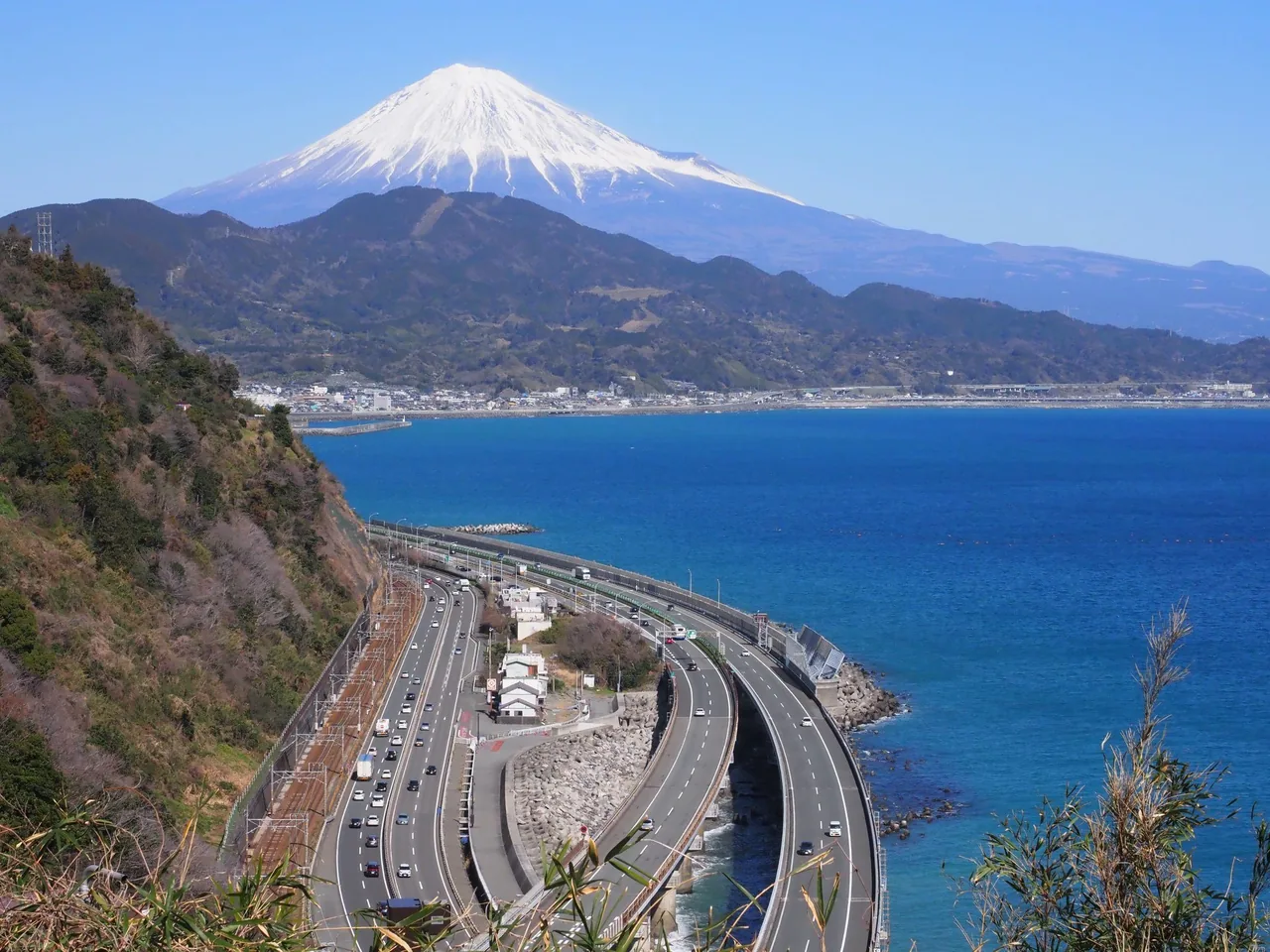
From the lookout on Satta Pass, the Tomei Expressway, National Route 1 and the JR Tokaido Line squeeze together along the shore below, and Mt. Fuji rises beyond Suruga Bay. The Tokaido, the great highway linking Nihonbashi in Edo (Tokyo) with Kyoto, ran a long way east to west through what is now Shizuoka Prefecture. Between Yui in the east and Arai in the west, the prefecture still has a mountain pass painted in woodblock prints, the site of a post town's main inn, a restaurant that has served tororo soup for more than 400 years, and a checkpoint building from the Edo period.
Satta Pass: the sea and Mt. Fuji that Hiroshige painted
Satta Pass lies between Yui and Okitsu in Shimizu Ward, Shizuoka City. It is known as one of the scenes in Utagawa Hiroshige's woodblock series The Fifty-three Stations of the Tokaido, and you can still see clearly how the mountains drop straight into the sea. From the lookout at the top, the road and railway along the coastline, Suruga Bay and Mt. Fuji fill one view. Fuji tends to be clearest on sunny mornings from autumn into winter, when the air is crisp.
The classic walk follows the old Tokaido between Okitsu Station and Yui Station on the JR Tokaido Line. A walking event run by JR Central set the route from Okitsu Station over Satta Pass to Yui Station at about 7.5 km, roughly two hours not counting breaks. Slopes and narrow farm roads continue on both sides of the pass, so wear comfortable shoes. If you drive, the parking lot at the pass holds only about eight cars, and the road down toward Yui is too narrow in places for two ordinary cars to pass.
Yui-juku: the main inn site and the Hiroshige museum
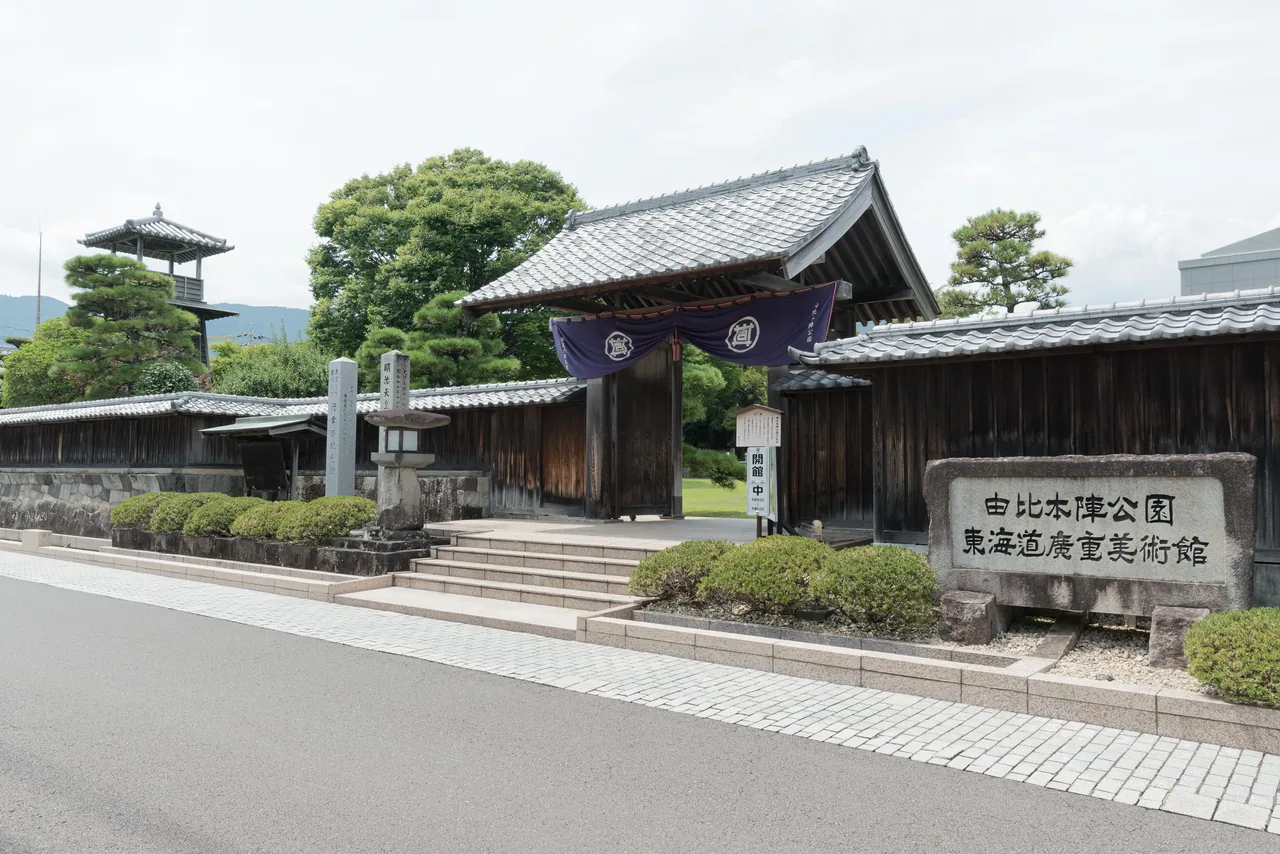
Yui-juku was the 16th post town counting from Edo. The site of the honjin, the main inn where feudal lords and other dignitaries stayed, is now Yui Honjin Park, whose white walls and gateway recall the days when this was the heart of the town. It is about a 25-minute walk from JR Yui Station and sits on the way to Satta Pass.
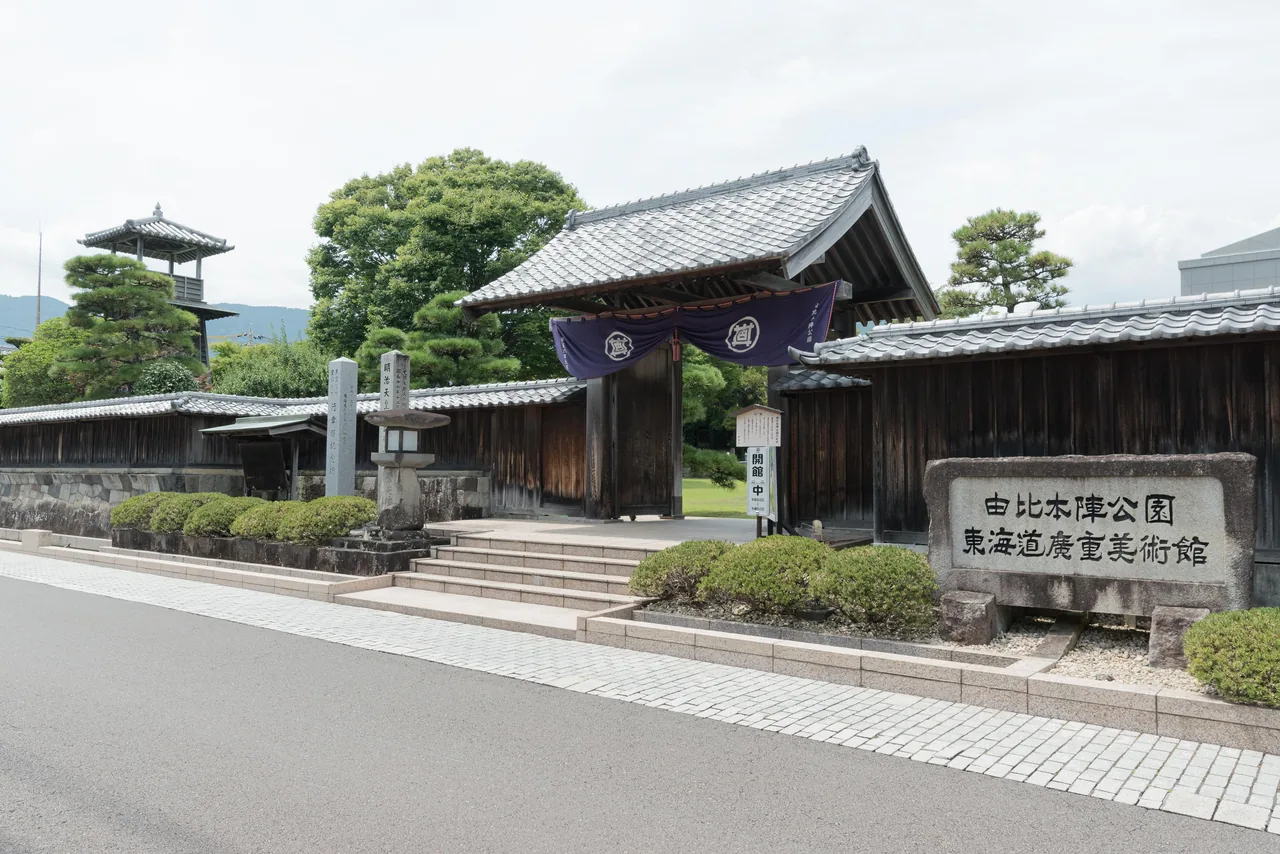
Photo: copyright© Shizuoka Prefectural Tourism Association.
Inside the park, the Tokaido Hiroshige Museum of Art focuses on Hiroshige's prints. It is closed for equipment replacement work from June 1, 2026 to the end of March 2027, with reopening planned for April 2027 (check Shizuoka City's announcements for the exact date). If you visit Yui before then, the museum will not be open.
Seiken-ji in Okitsu: a temple tied to Ieyasu and the Korean envoys
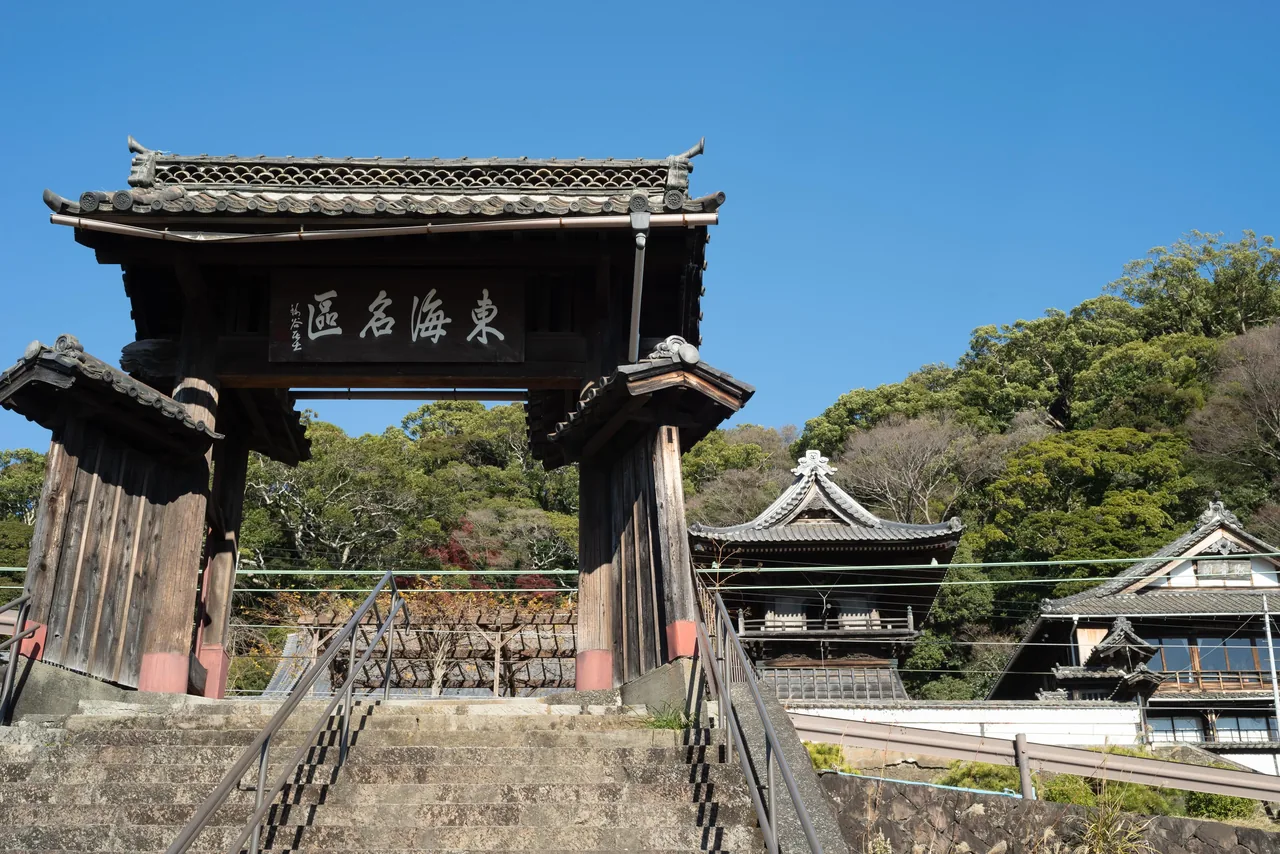
At the western foot of Satta Pass in the old post town of Okitsu, Seiken-ji Temple has its halls on a slope overlooking the Tokaido. The temple keeps the Tenarai-no-ma, the room where Tokugawa Ieyasu is said to have been taught as a child, and the grounds have the Garyubai, a plum tree Ieyasu is said to have grafted.
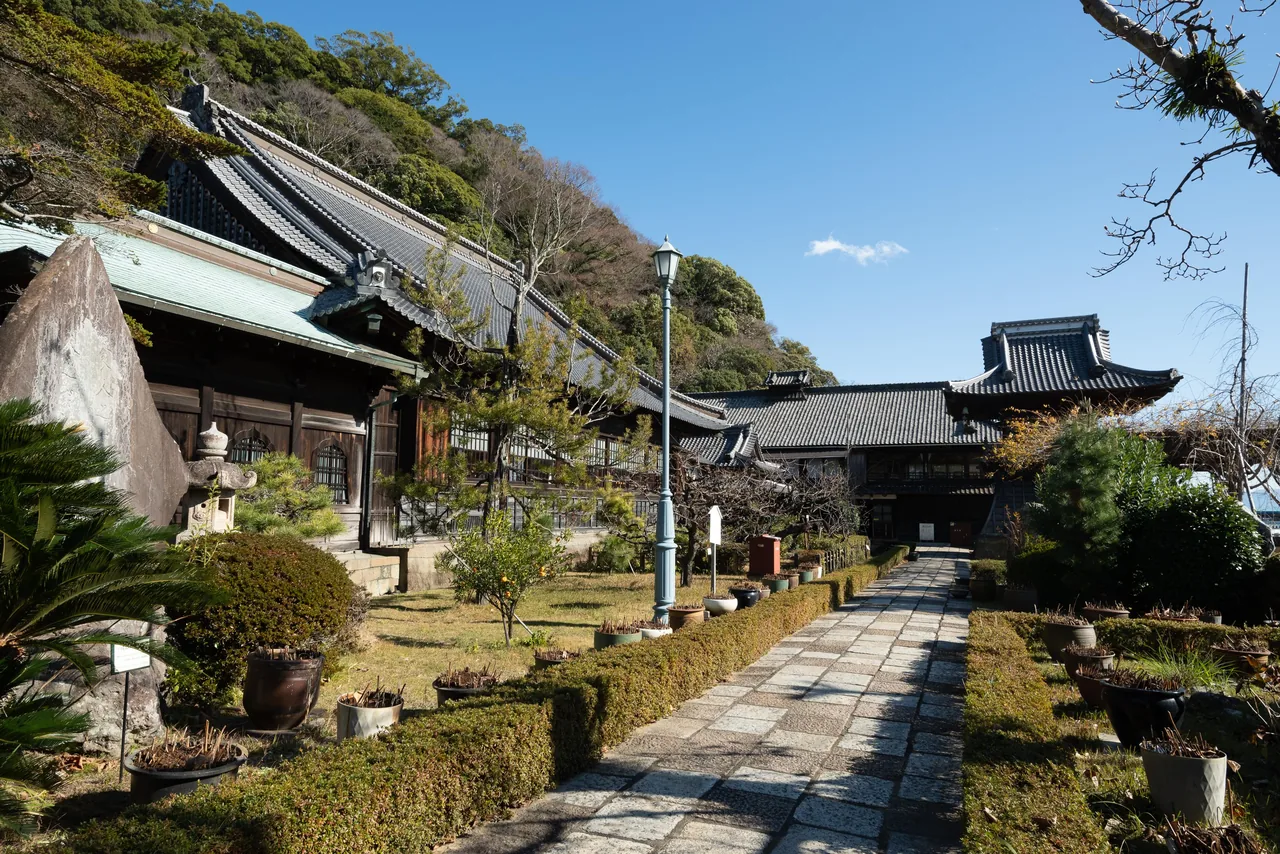
Photo: copyright© Shizuoka Prefectural Tourism Association.
In the Edo period, the Joseon missions (Chosen Tsushinshi), the embassies sent from Korea to Japan, stopped at this temple on their way along the Tokaido to Edo. Many plaques and other calligraphy left by the envoys survive here, and in 1994 the temple grounds were designated a National Historic Site as one of the "Joseon Mission Sites." It is within walking distance of Okitsu Station, so you can fit it in at the start or end of a day on Satta Pass.
Mariko-juku and Utsunoya Pass: tororo soup and a Meiji-era tunnel
West of Shizuoka Station, the post town of Mariko-juku is known for tororo-jiru: grated jinenjo (wild yam) thinned with dashi broth and poured over rice cooked with barley. By the Mariko Bridge on the old Tokaido, Chojiya has served tororo soup for more than 420 years since the Edo period, and its thatched building is a piece of highway scenery in itself. The restaurant appears in a haiku by Matsuo Basho, in Jippensha Ikku's comic novel Tokaidochu Hizakurige, and in Hiroshige's Fifty-three Stations of the Tokaido.
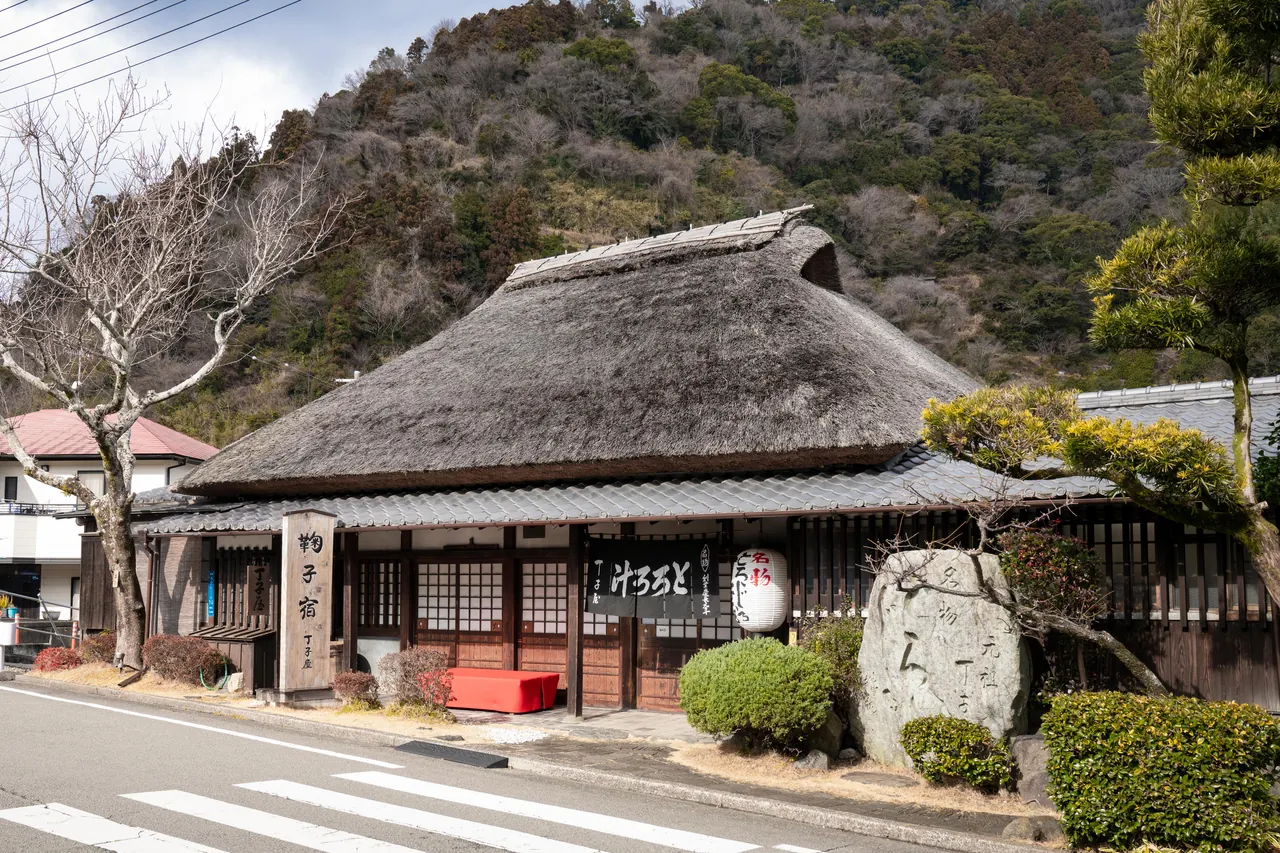
Photo: copyright© Shizuoka Prefectural Tourism Association.
Farther west from Mariko, Utsunoya Pass sits on the border between Shizuoka City and Fujieda City. In the hamlet of Utsunoya just below the pass, old houses line the former highway. The routes over the pass were rebuilt in each era: the Tsuta-no-Hosomichi (Ivy Path) mentioned in the Heian-period Tales of Ise, the Edo-period Tokaido and the road tunnels from the Meiji era onward all run through the same narrow valley.
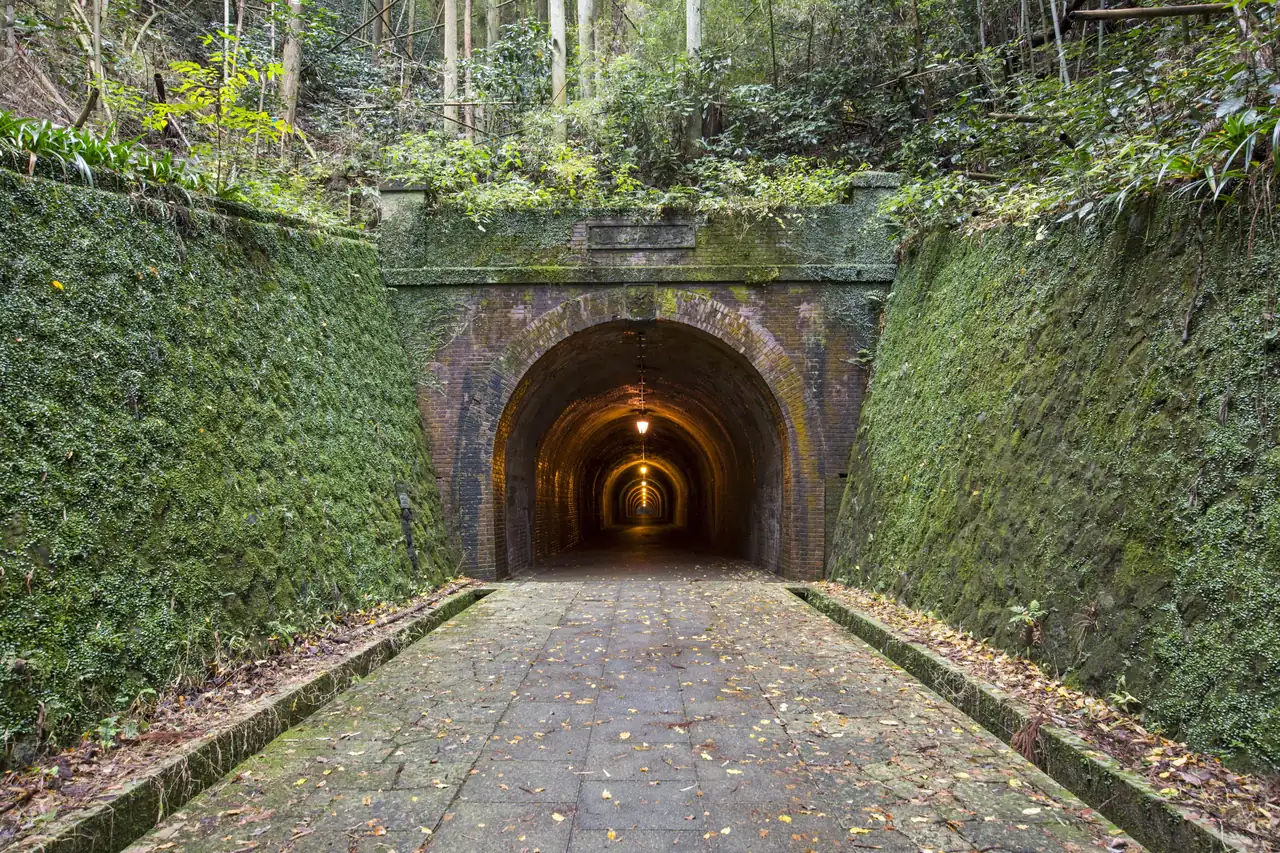
The Meiji Tunnel at Utsunoya is a brick road tunnel opened in 1876, about 200 meters long. In 1896 it burned and partly collapsed after a fire started by the oil lamps that lit the inside, and it was repaired in 1904. It was registered as a National Tangible Cultural Property in 1997, and today it is a pedestrian path you can walk through under its lights. By car, park at Michi-no-Eki Utsunoyatoge on National Route 1, a short walk from the hamlet.
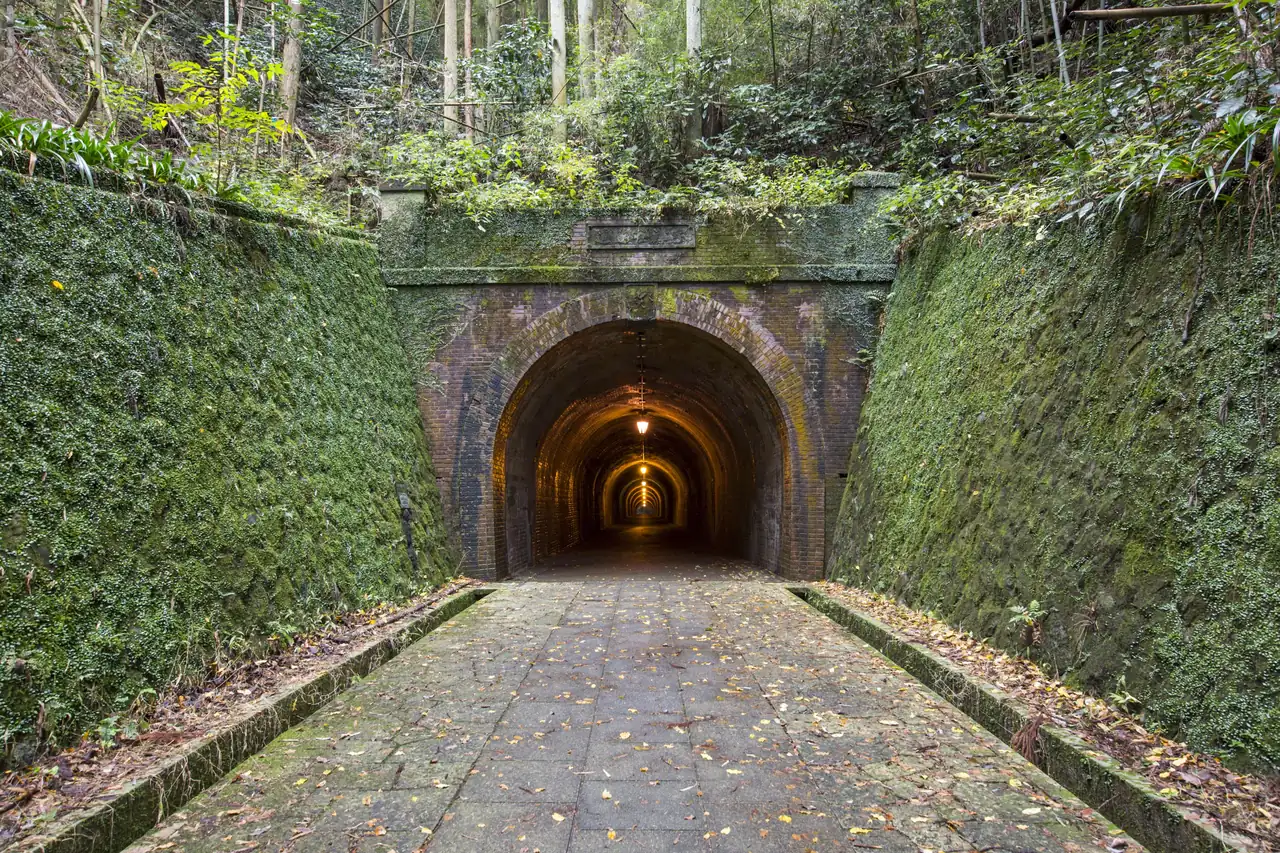
Photo: copyright© Shizuoka Prefectural Tourism Association.
Arai Checkpoint and the Kinokuniya inn: a barrier station by Lake Hamana
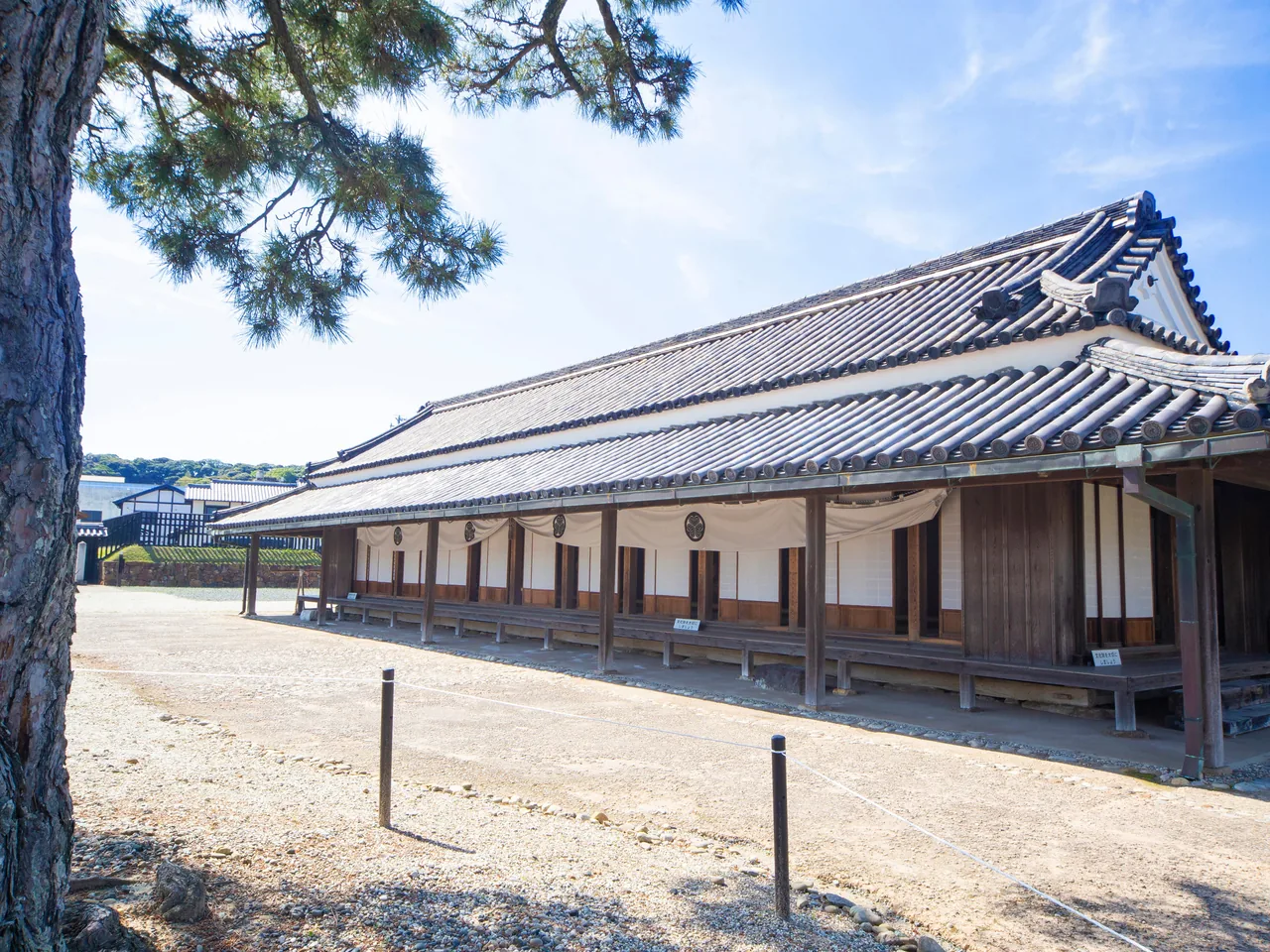
At Arai-juku in Kosai City, on the western edge of the prefecture, an Edo-period checkpoint building still stands. Arai Checkpoint (Arai Sekisho) is the only surviving checkpoint building in Japan and was designated a Special Historic Site in 1955. The present building was rebuilt from 1855 after heavy damage in the great earthquake of 1854 and was completed in 1858. Nowhere else can you see the place where officials inspected travelers with the building itself still standing. The Arai Checkpoint History Museum is next door.
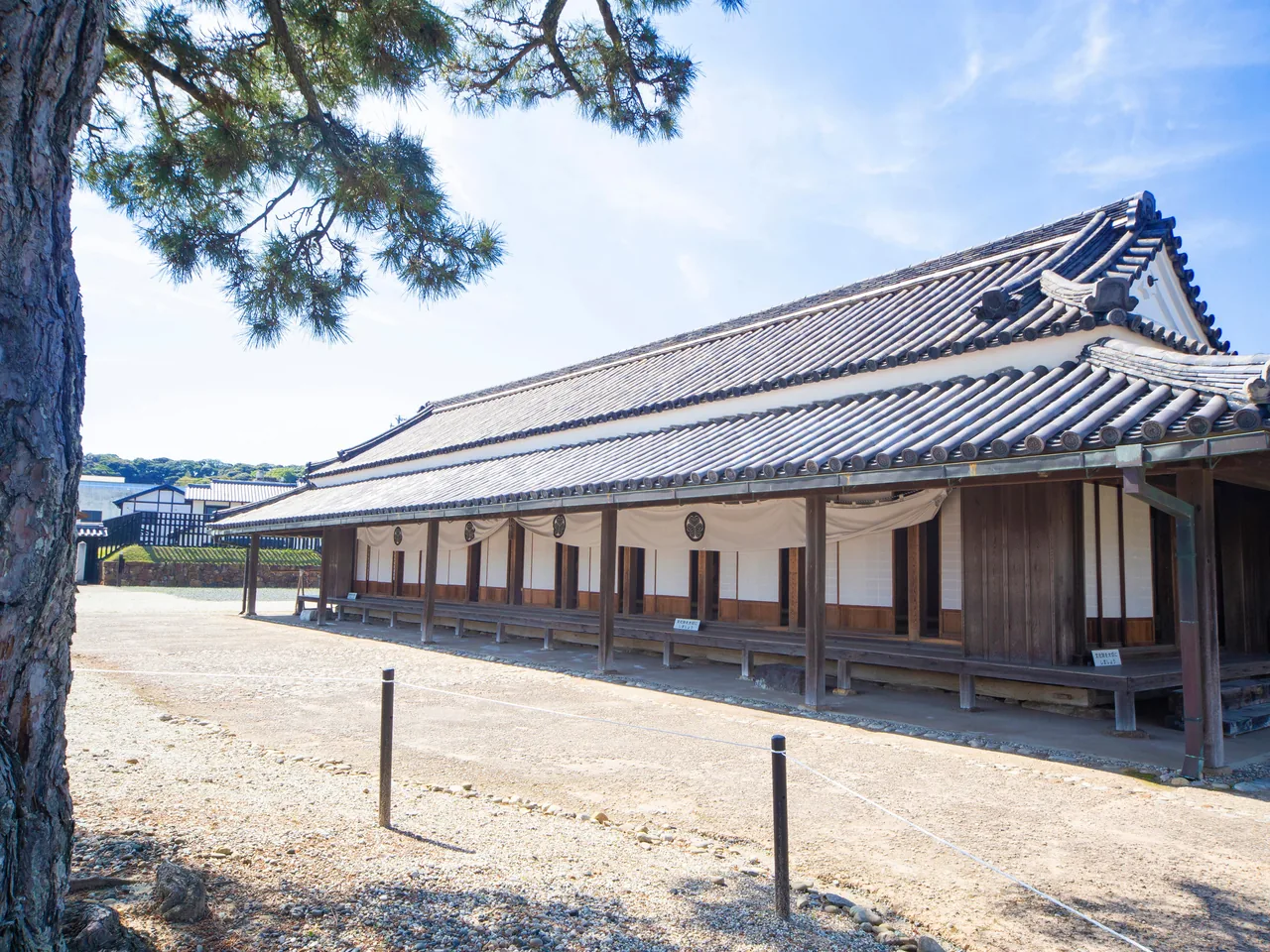
Photo: copyright© Shizuoka Prefectural Tourism Association.
A short walk from the checkpoint, the Hatago Kinokuniya Museum occupies the building of the Kinokuniya, an inn (hatago) in Arai-juku, the 31st post town from Edo. The present building was rebuilt right after a great fire in 1874, and its latticed front still shows the layout of an old inn. The checkpoint is about an 8-minute walk from Araimachi Station on the JR Tokaido Line.
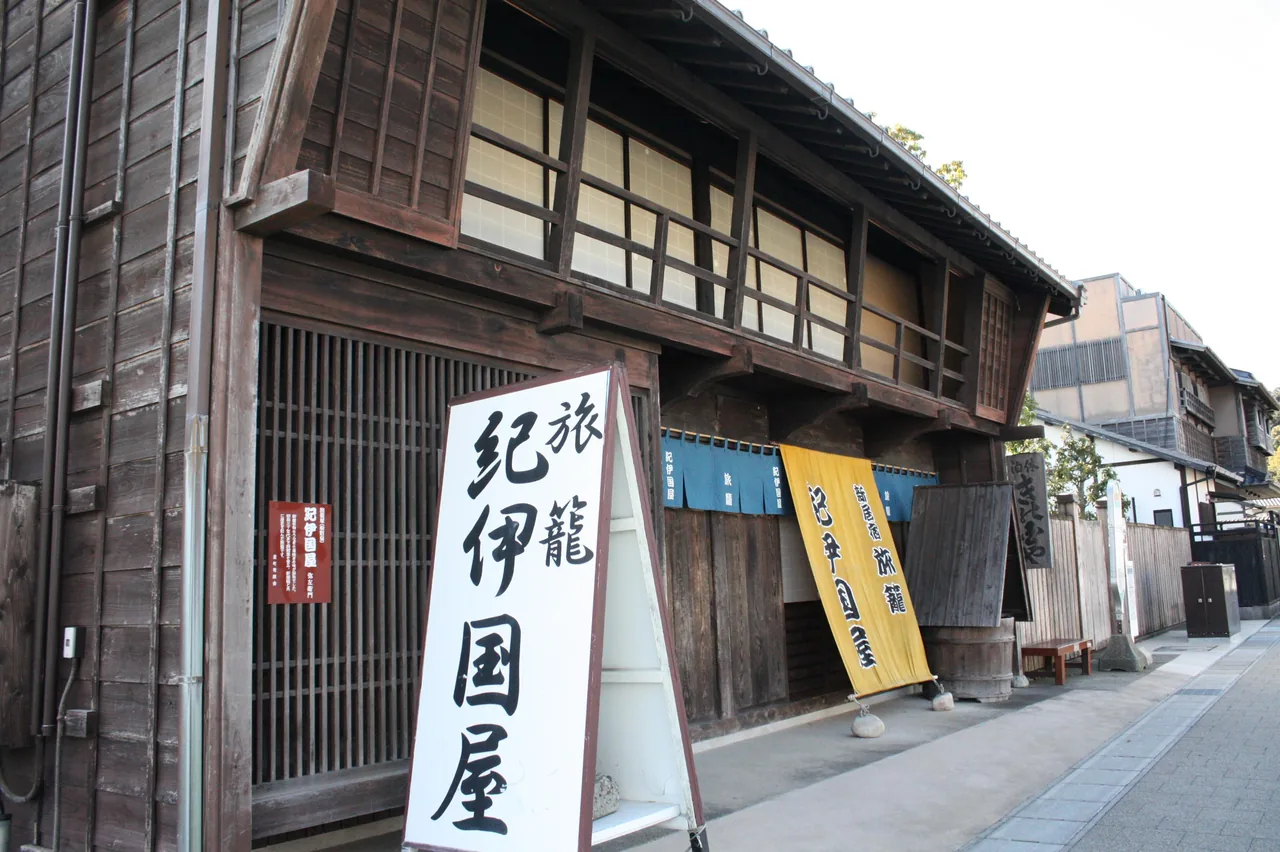
Photo: copyright© Shizuoka Prefectural Tourism Association.
How to plan it: walking from the stations
The Tokaido sights in Shizuoka are spread far apart, with Yui in the east and Arai in the west, so trying to see everything in one day doesn't work. Splitting the trip into sections, each starting from a JR Tokaido Line station, makes it much easier.
| Section | Starting station | Sample plan |
|---|---|---|
| Yui – Satta Pass – Okitsu | Yui Station / Okitsu Station | Walk the old Tokaido from Yui Station over the pass to Okitsu Station (about 7.5 km station to station, roughly two hours). Stop at Seiken-ji on the Okitsu side |
| Mariko – Utsunoya | Shizuoka Station | Take a local bus toward Fujieda to Mariko and Utsunoya. After a tororo soup lunch, head for the Utsunoya hamlet and the Meiji Tunnel |
| Arai | Araimachi Station | Walk from the station to Arai Checkpoint and the Hatago Kinokuniya Museum. Easy to combine with sightseeing around Lake Hamana |
Between Yui and Okitsu and around Mariko, old houses still line the narrow former highway. Many stretches pass through residential areas, so keep your voice down as you walk. You can find more places along the route in the list of spots in Shizuoka.