
Southern Tokushima Coast: Sea Turtles, Tebajima and the DMV
This guide is translated from the Japanese edition. Read the Japanese edition
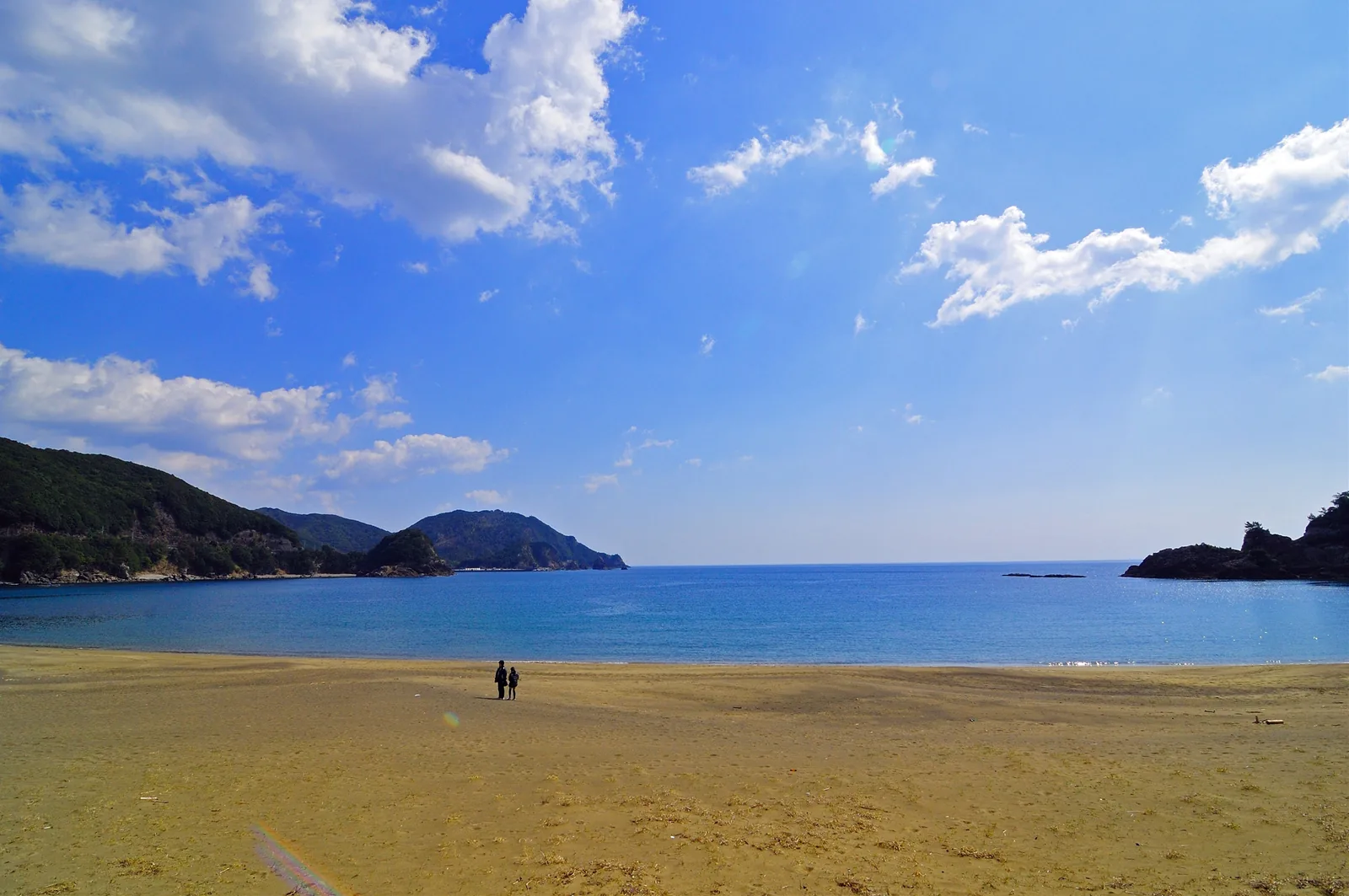
Southern Tokushima by the sea: Hiwasa's turtle beach and museum, Yakuo-ji, Tebajima Island, the thousand-year coral, Takegashima's undersea observation boat and the DMV.
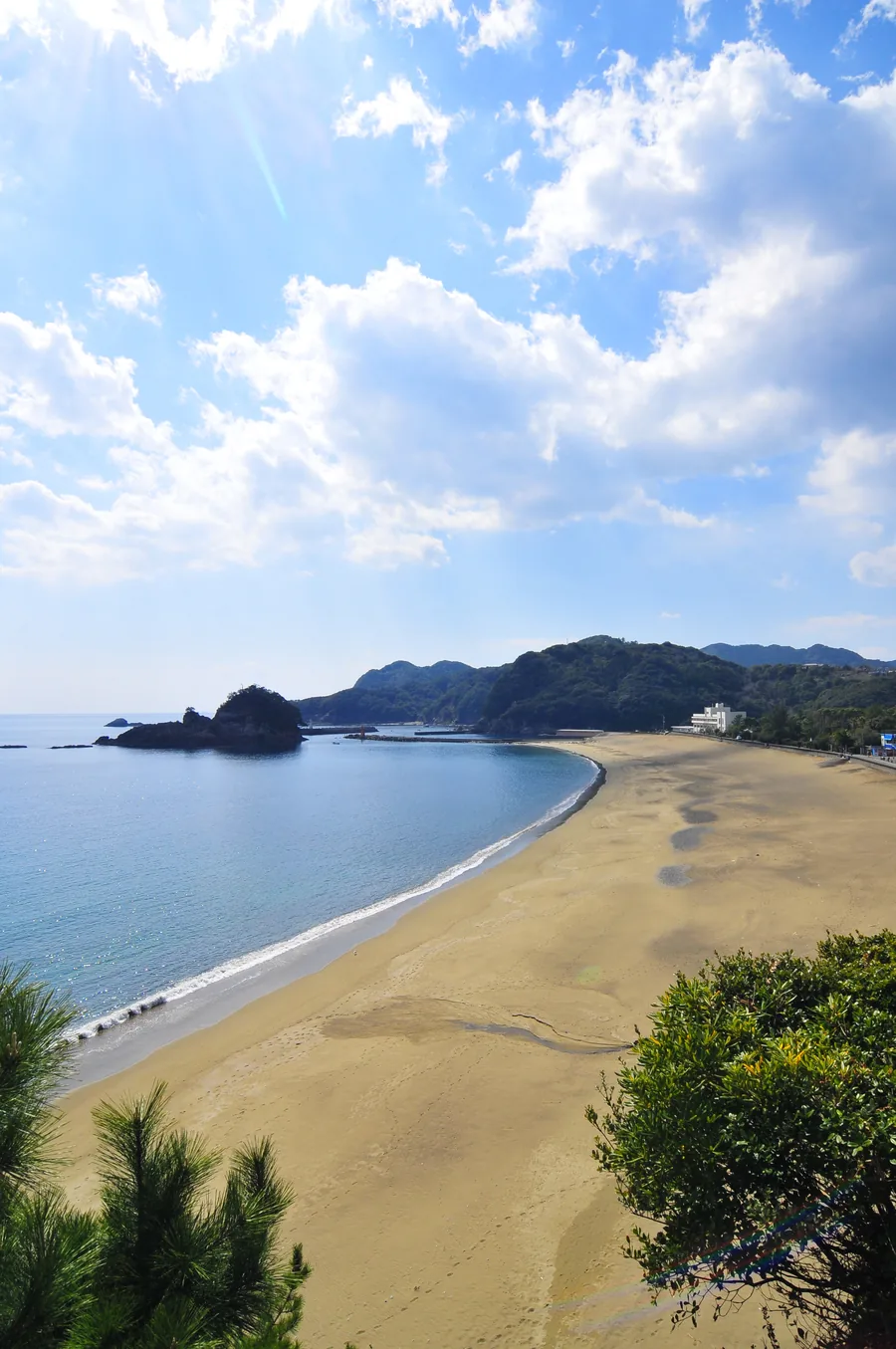
Headlands run out beyond the curving sand of Ohama Beach in Hiwasa, Minami Town. From early summer into summer, loggerhead turtles come ashore here to lay their eggs. Heading south from Tokushima City, the JR Mugi Line follows the Pacific to Hiwasa, Mugi and its terminus at Awa-Kainan. Beyond that is the stretch served by the DMV, which runs on both rails and roads (suspended as of November 2026). Here are the seaside towns of southern Tokushima, from north to south.
Hiwasa: a turtle beach and a pilgrimage temple
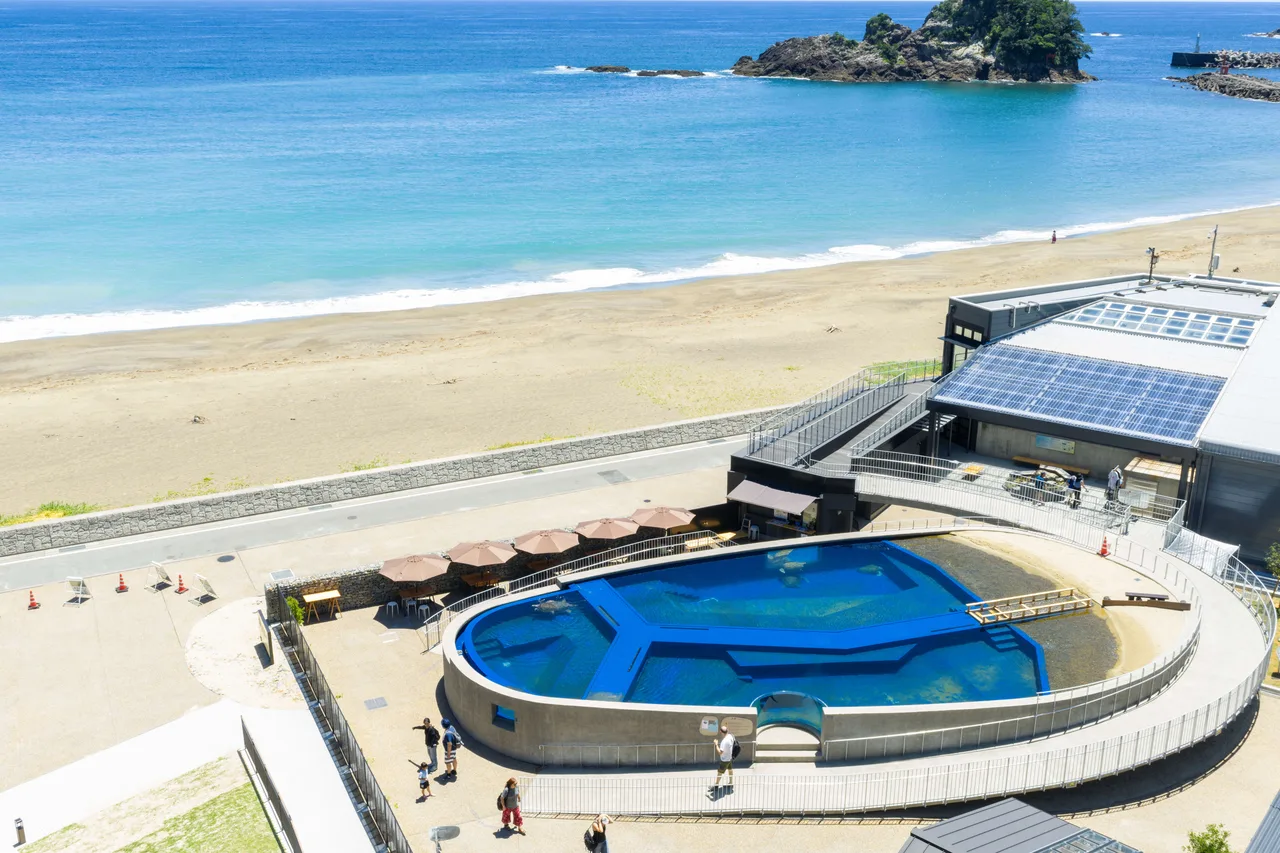
Ohama Beach is a national natural monument, designated as a nesting site for sea turtles. Loggerheads come ashore from mid-May to around mid-August. An average of 70 are said to come ashore each year, but in 2026 there were six landings. Minami Town restricts activity on the beach from May 20 to August 20 to protect them, so if you visit then, follow the instructions of the town and the museum. The beach is about 20 minutes on foot from JR Hiwasa Station.
Right by the beach is Hiwasa Sea Turtle Museum Caretta, dedicated entirely to sea turtles. It opened in 1985 and has since been fully renovated. In the outdoor pool facing the shore you can watch live turtles swimming.
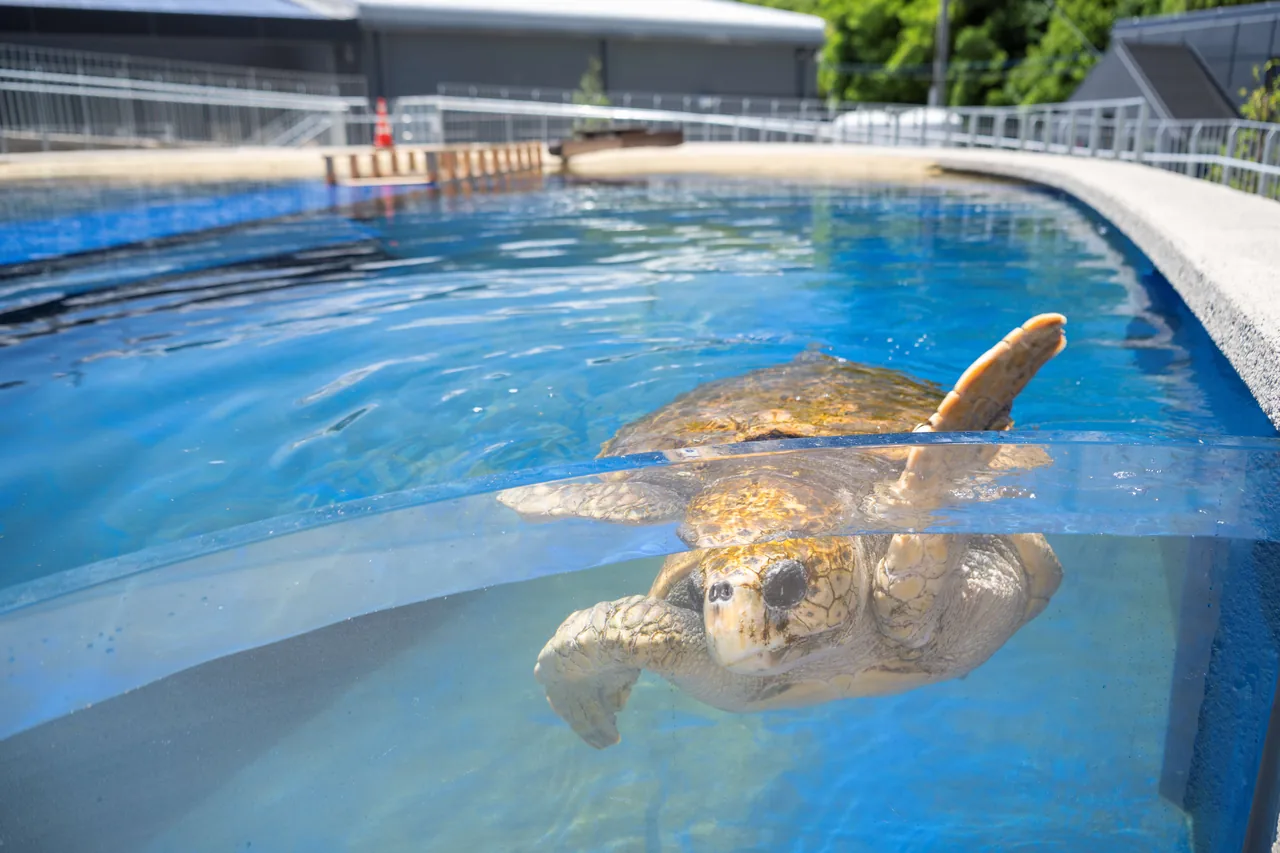
Courtesy of Tokushima Prefecture and the Tokushima Prefecture Tourism Association
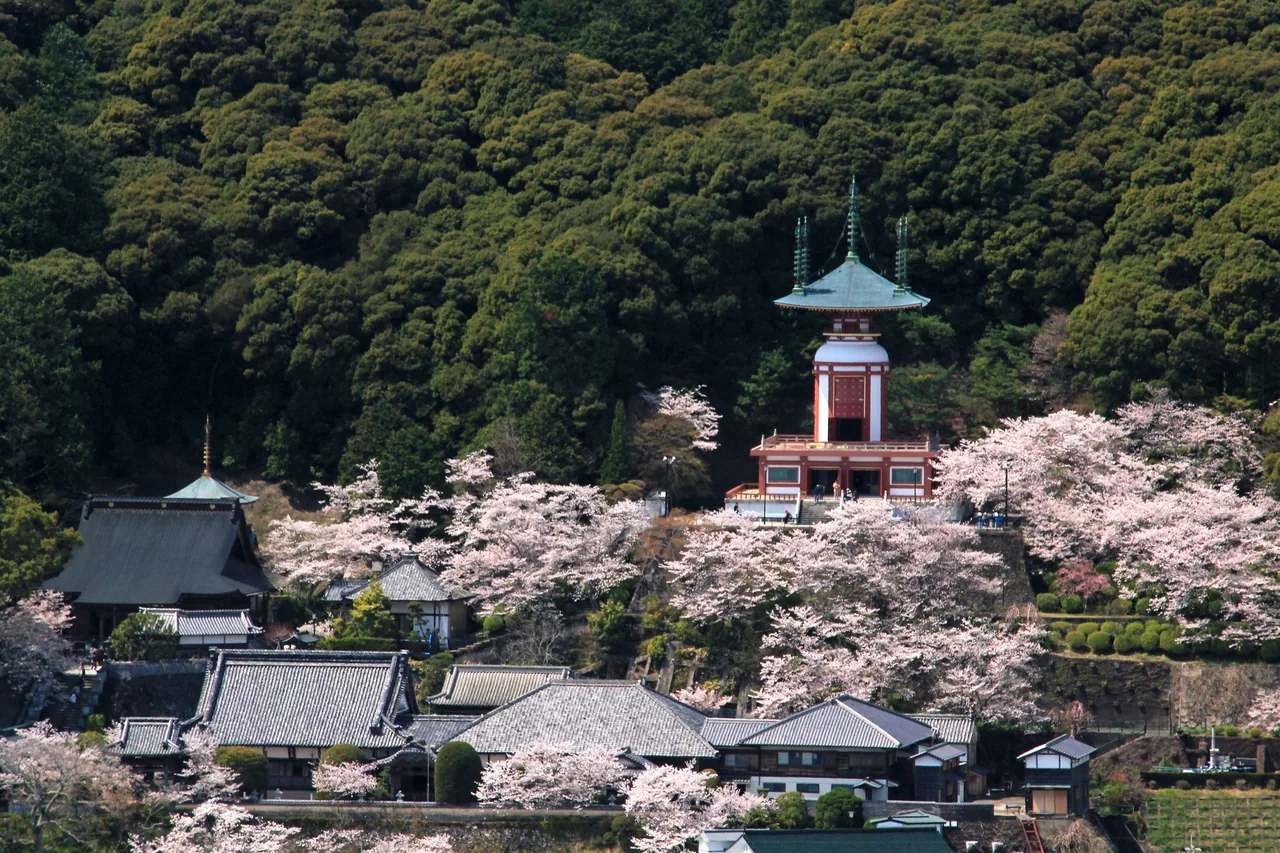
On high ground about 10 minutes' walk from Hiwasa Station stands Yakuo-ji Temple, Temple 23 of the Shikoku 88-temple pilgrimage and the last of the temples in Awa (Tokushima). Known for warding off misfortune, it draws local worshippers as well as pilgrims. From the Yugito pagoda at the top of the grounds you can look out over the town of Hiwasa.
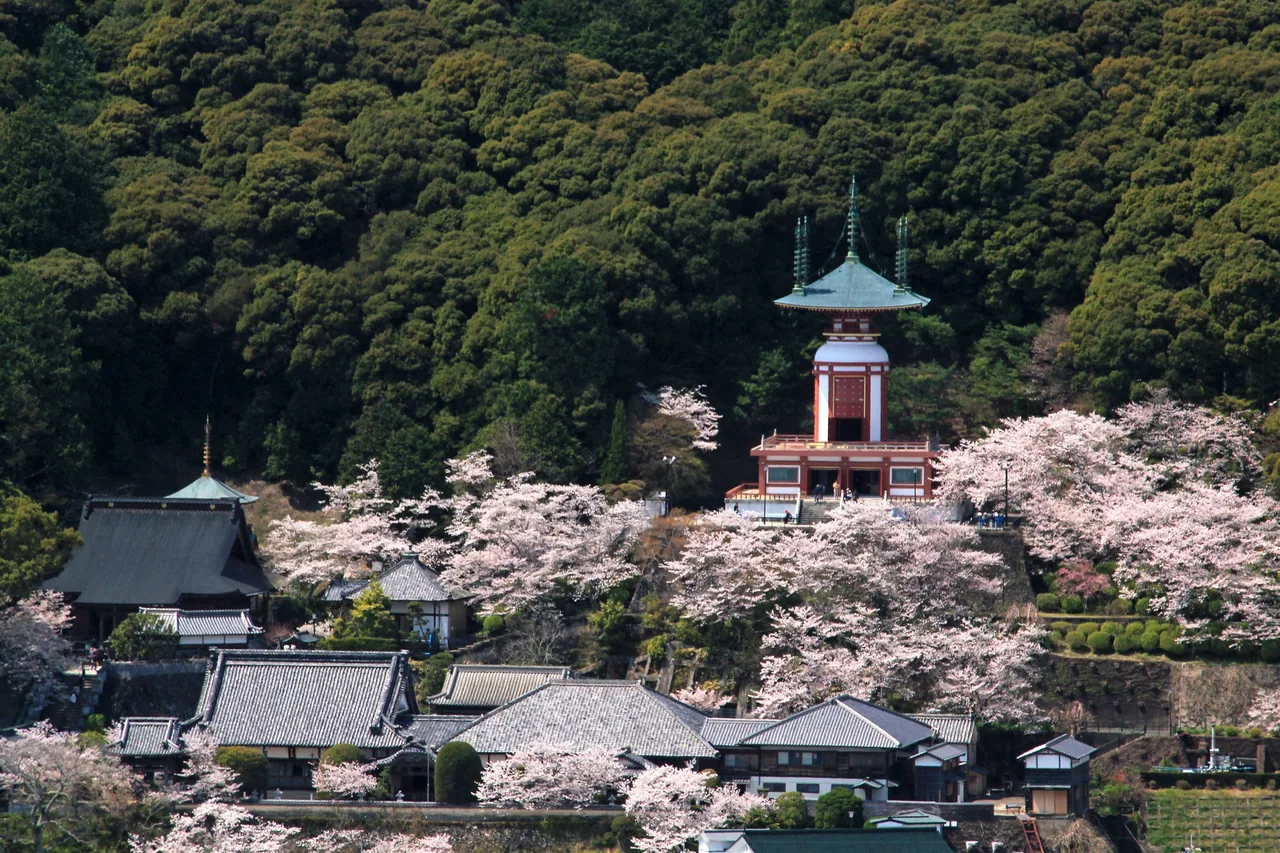
Courtesy of Tokushima Prefecture and the Tokushima Prefecture Tourism Association
The Hiwasa coastline: Ebisu Cave and the Senba Cliffs
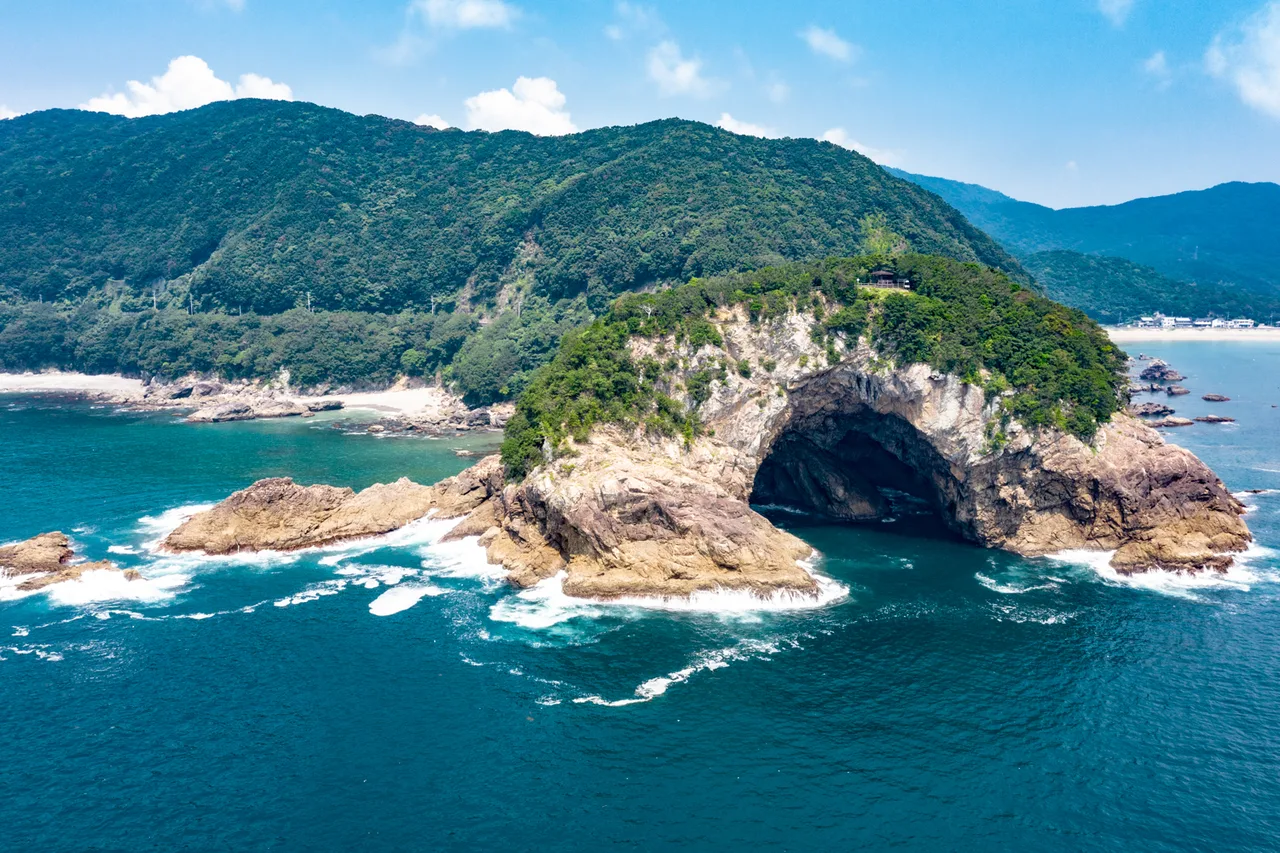
Near Ohama Beach, Ebisu Cave is a sea cave carved by waves through a 52-meter rocky hill. The opening, about 30 meters across and 40 meters deep, cuts right through the rock, and from the lookout above you can see Ohama Beach and the Pacific. The footing can be rough, so wear comfortable shoes.
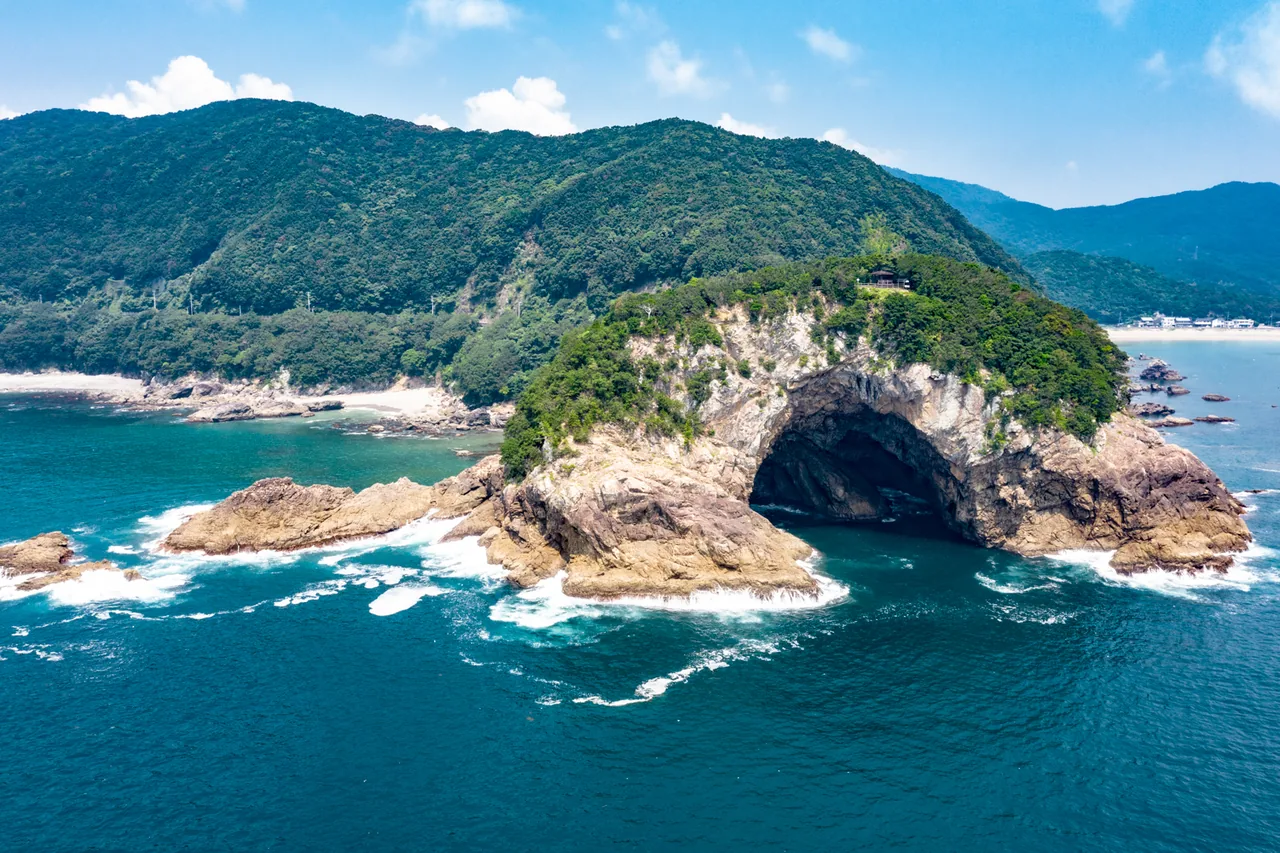
Courtesy of Tokushima Prefecture and the Tokushima Prefecture Tourism Association
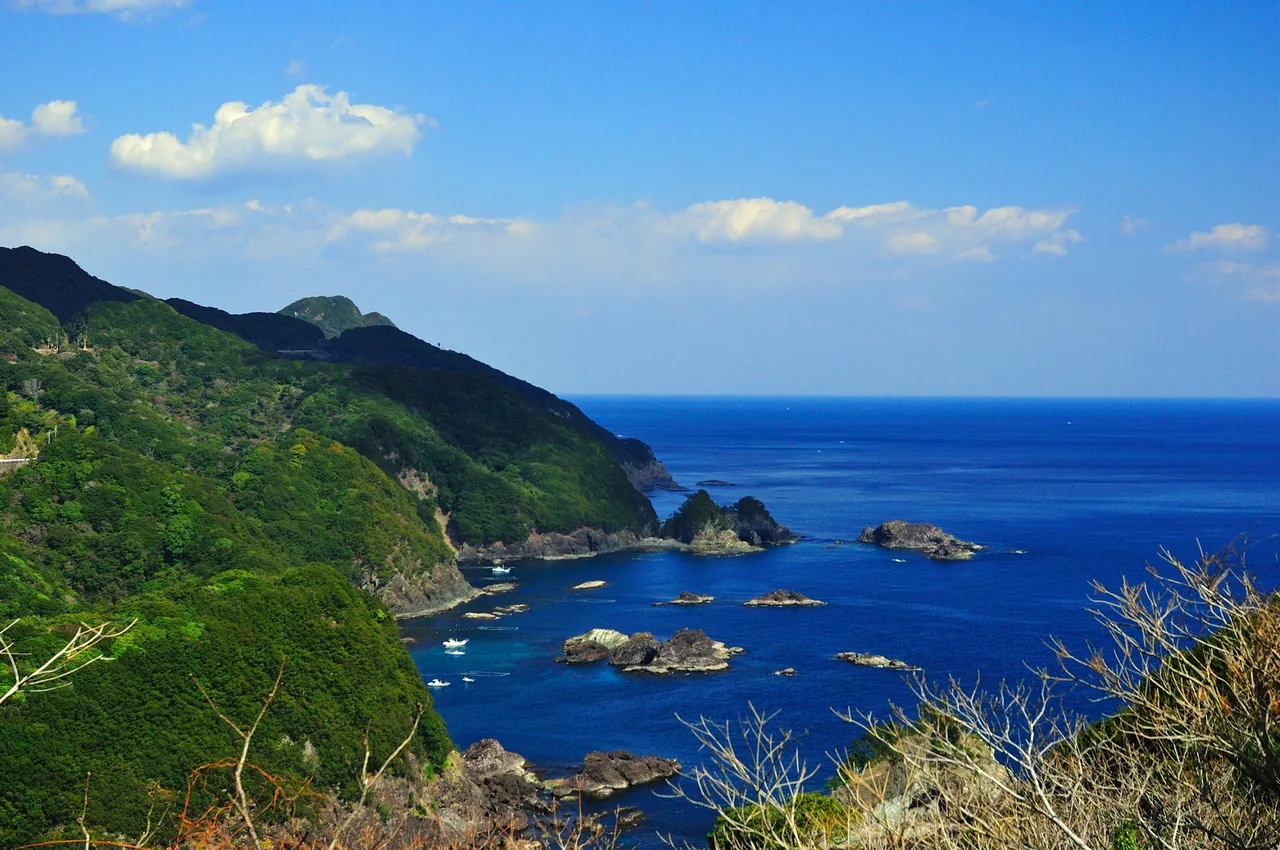
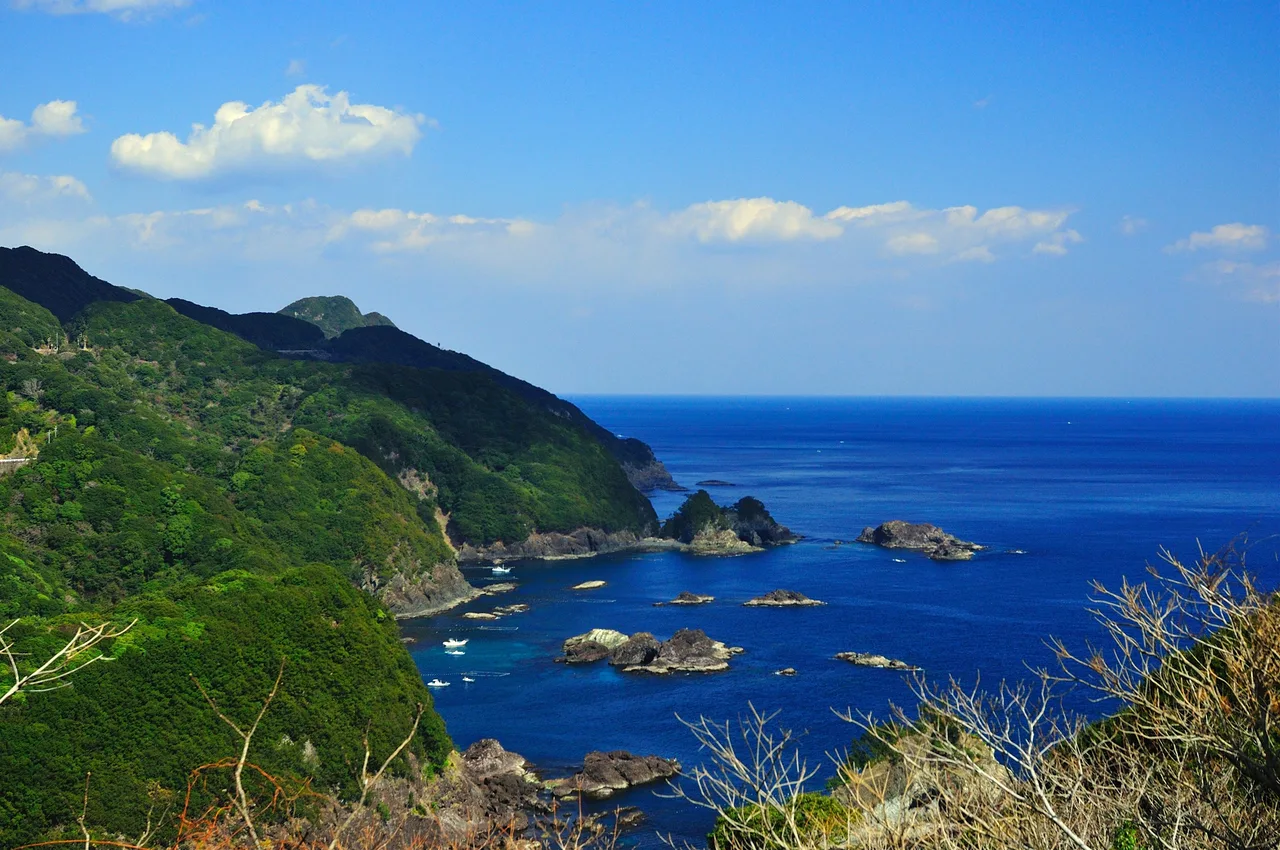
On the Hiwasa coast, the Senba Cliffs reach 240 to 250 meters in height. Their almost sheer walls climb straight out of the sea, and you can view them from lookouts along the coastal Minami-Awa Sunline road. From Hiwasa Port, the Umigame Marine Cruise (about 40 minutes) takes you on a local fishing boat past Ohama Beach, the Senba Cliffs and Ebisu Cave. Awanavi lists the Umigame Marine Cruise as scheduled to close on March 31, 2027.
Courtesy of Tokushima Prefecture and the Tokushima Prefecture Tourism Association
Roadside Station Hiwasa, which shares a building with Hiwasa Station, sells vegetables and fish from Minami Town, sudachi soft-serve ice cream and more. You can drop in while waiting for your train.
Mugi: Tebajima Island and the thousand-year coral
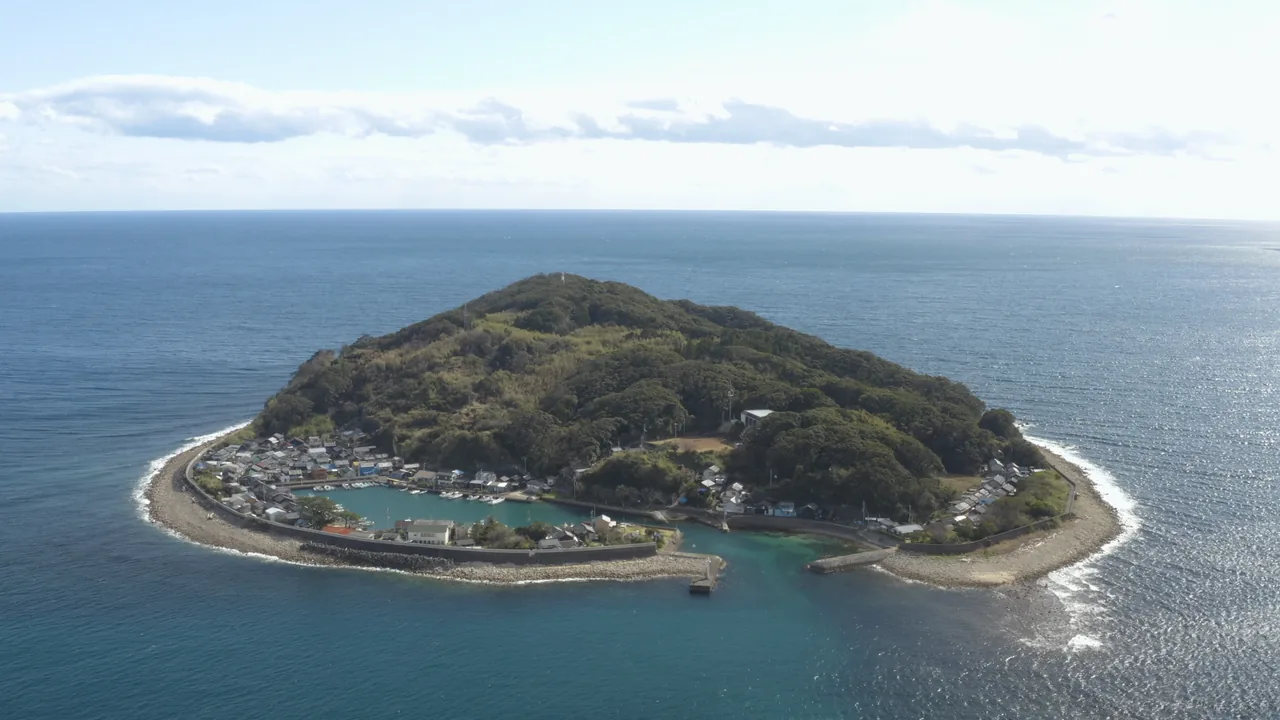
From Mugi Port, within walking distance of Mugi Station, the Oikemaru ferry takes about 15 minutes to reach Tebajima Island, a small island about 4 kilometers around. The houses of a fishing village that prospered on bonito fishing still ring the harbor, and in 2017 the village was selected as a national Important Preservation District for Groups of Traditional Buildings. You can wander past "mise-zukuri" houses, whose shutter boards fold up and down to become an awning and a bench, and along lanes between stone walls. There are only a few boats a day, so check the return time before you cross.
Courtesy of Tokushima Prefecture and the Tokushima Prefecture Tourism Association
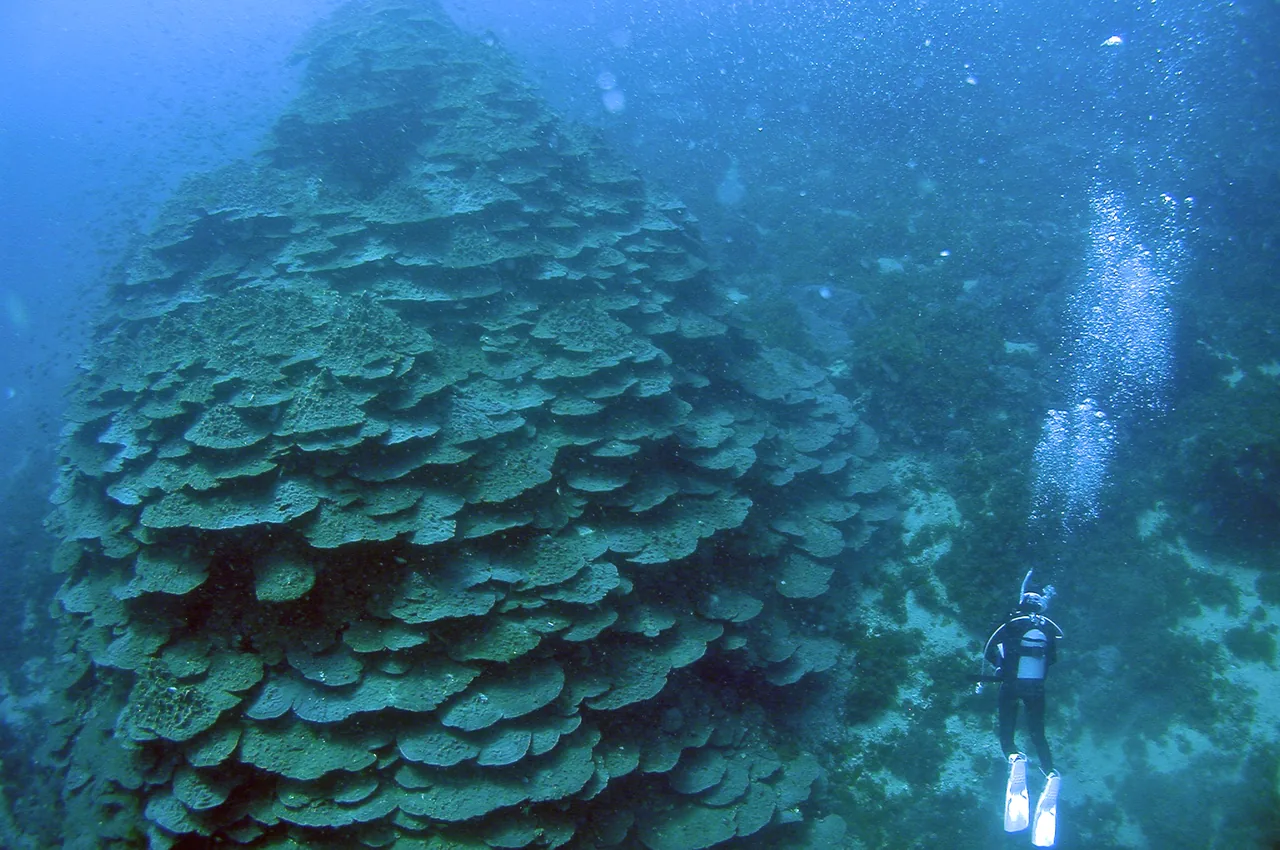
Off Mugi, on the seabed by Mugi-Oshima Island at a depth of about 23 meters, is a colony of lobe coral about 9 meters tall and about 30 meters around. Based on its growth rate, it is estimated to be more than 1,000 years old, and is known as the "Thousand-Year Coral."
Courtesy of Tokushima Prefecture and the Tokushima Prefecture Tourism Association
By the sea in Mugi is Morasco Mugi, a shell museum with a collection of about 6,000 shell and fossil specimens from around 2,000 species. From mid- to late June, hydrangeas bloom along the old national road near Uchizuma Beach.
Kaiyo: the DMV, Todoroki Falls and Takegashima
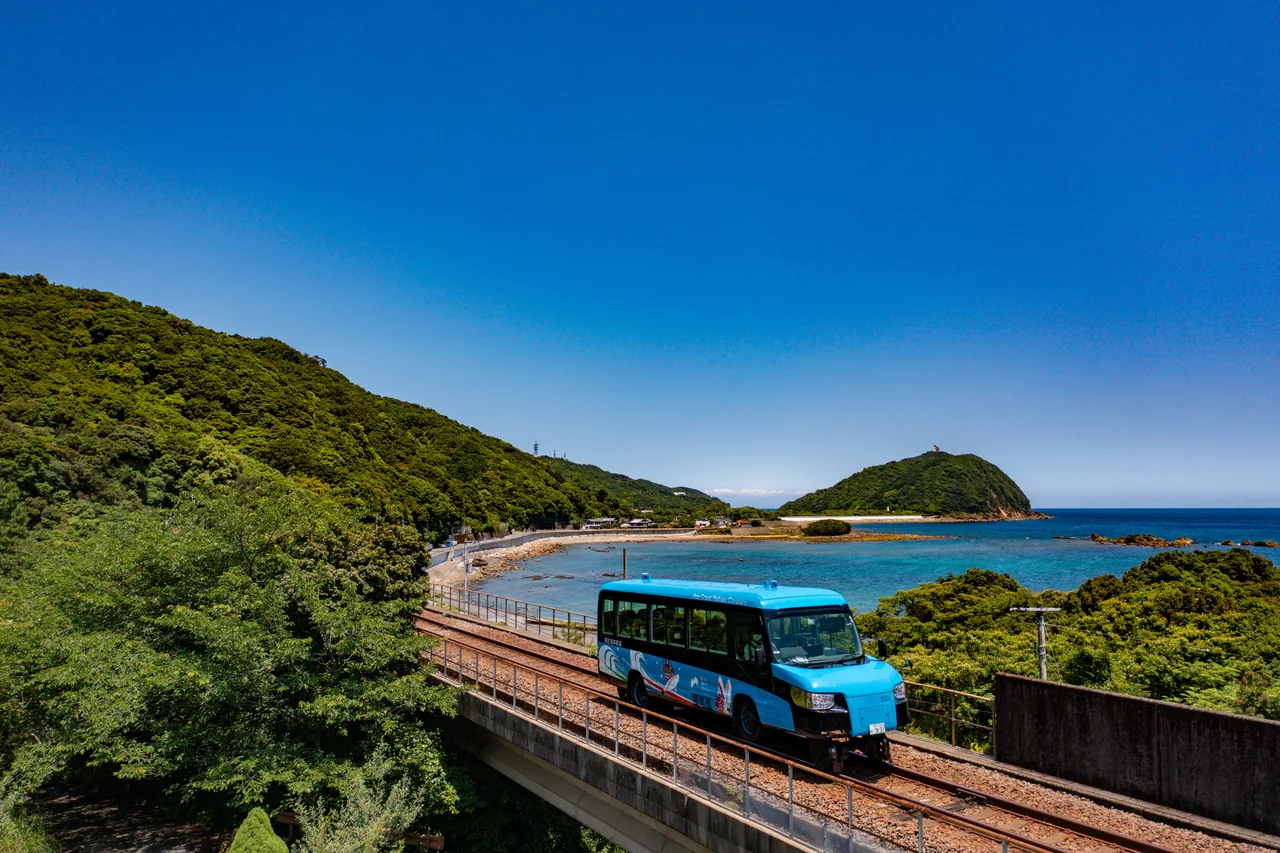
At Awa-Kainan Station, the end of the JR Mugi Line, you can change to the Asa Seaside Railway's DMV (Dual Mode Vehicle). It runs as a train on rails and as a bus on roads, and it began commercial service on December 25, 2021. It lowers and raises its steel wheels to switch between rail and road in about 15 seconds. Since October 16, 2026, all DMV services have been suspended for the time being because of a vehicle fault, with no date yet for resuming (Asa Seaside Railway notice, as of November 18, 2026). Check the Asa Seaside Railway's information for when service resumes and for timetables. Reservations to ride are taken on Hassha Orai Net, the booking site for highway and local buses, and cannot be made by phone.
Courtesy of Tokushima Prefecture and the Tokushima Prefecture Tourism Association
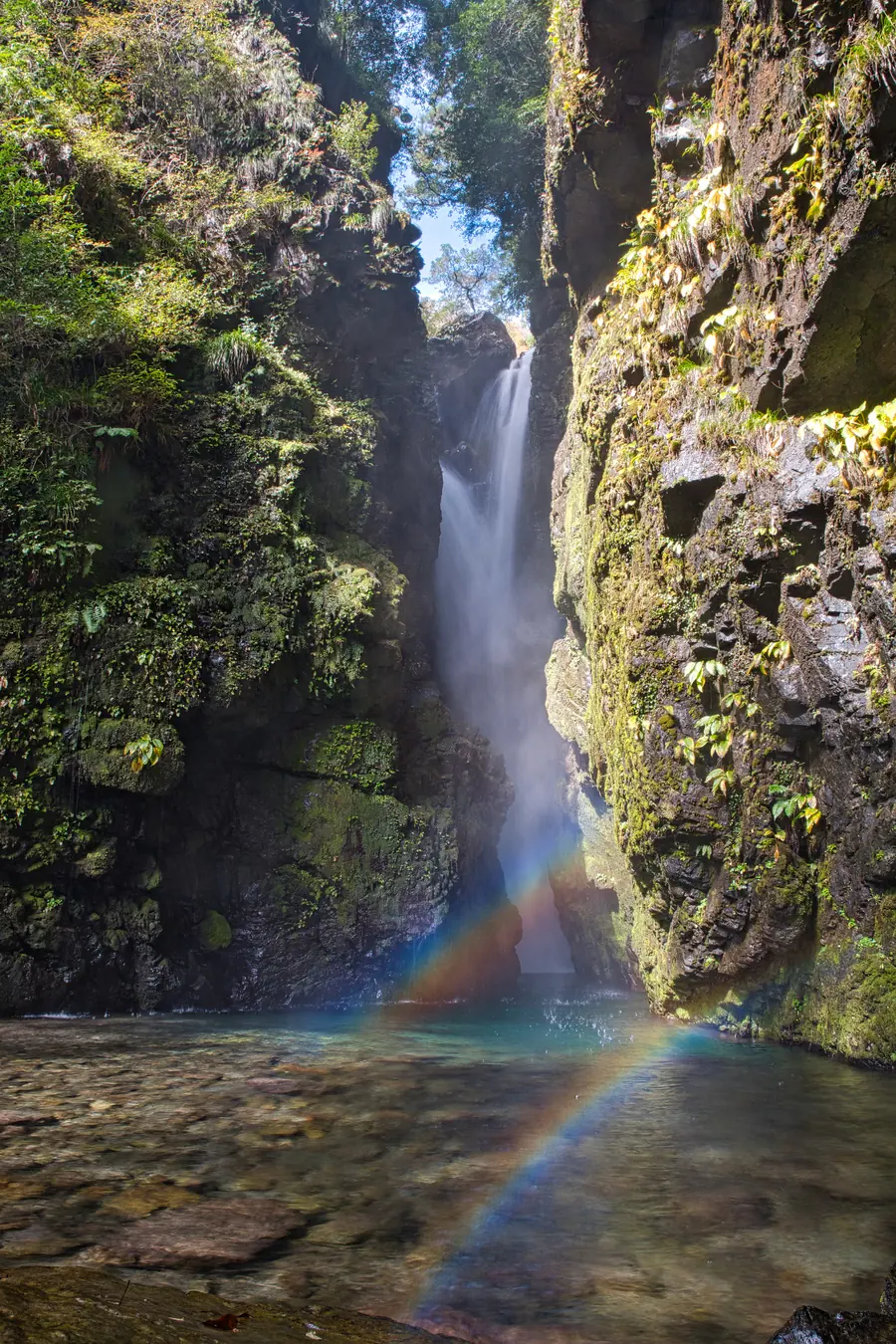
Head inland from the sea and you reach Todoroki Falls, one of Japan's Top 100 Waterfalls. The main fall drops at the back of a gorge between rock walls, and more falls large and small continue upstream, together called the Todoroki Kujukutaki. Take the town bus from Awa-Kainan Station to "Todoroki Jinja" and walk about 5 minutes.
Courtesy of Tokushima Prefecture and the Tokushima Prefecture Tourism Association
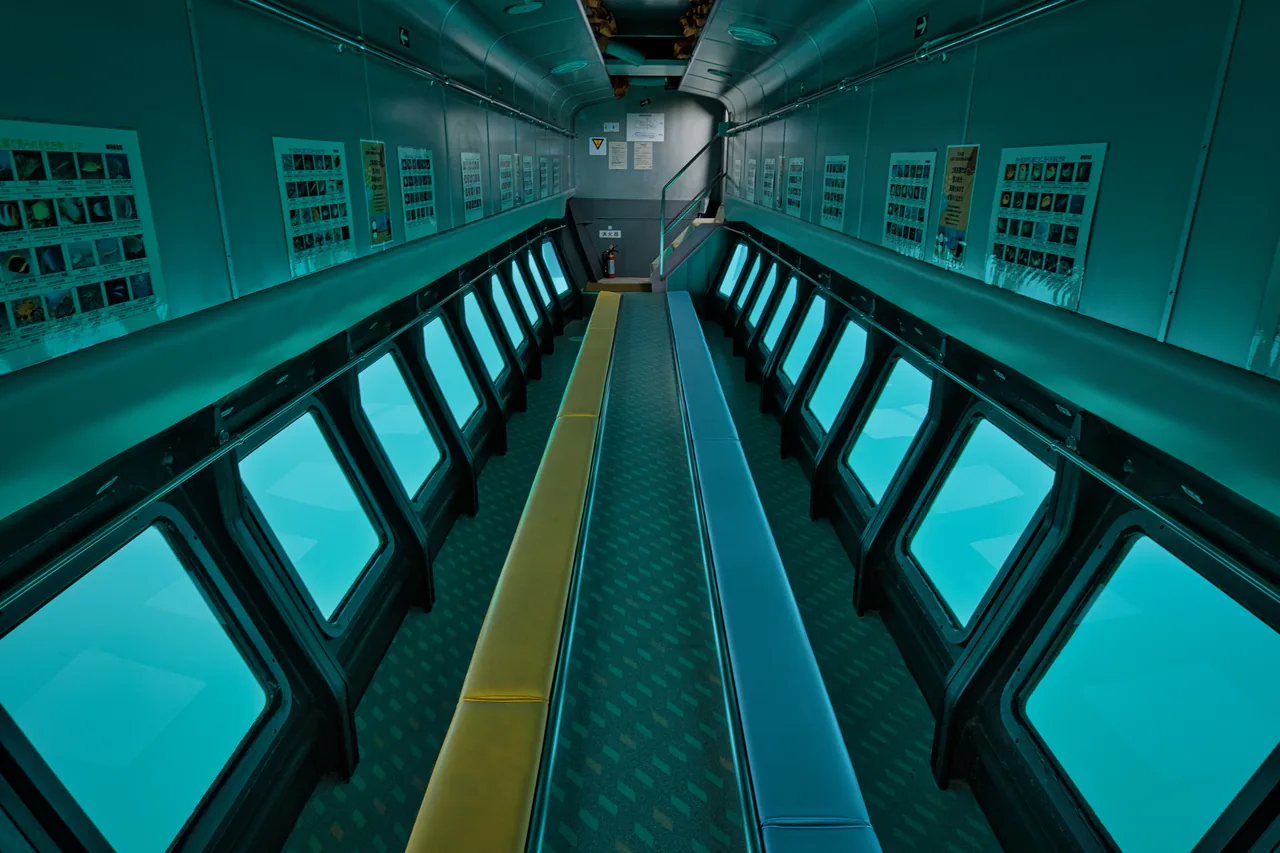
At Takegashima in Shishikui, close to the border with Kochi Prefecture, the Blue Marine undersea observation boat spends about 40 minutes touring Takegashima Marine Park. From seats in the viewing room at the bottom of the boat you look out through the windows at branching and plate corals and schools of fish. The boat does not run on Tuesdays (or the next day when Tuesday is a holiday; it runs during Golden Week), and there are also closures for inspections, so check the operating schedule before you go.
Courtesy of Tokushima Prefecture and the Tokushima Prefecture Tourism Association
Surfing on the southern coast
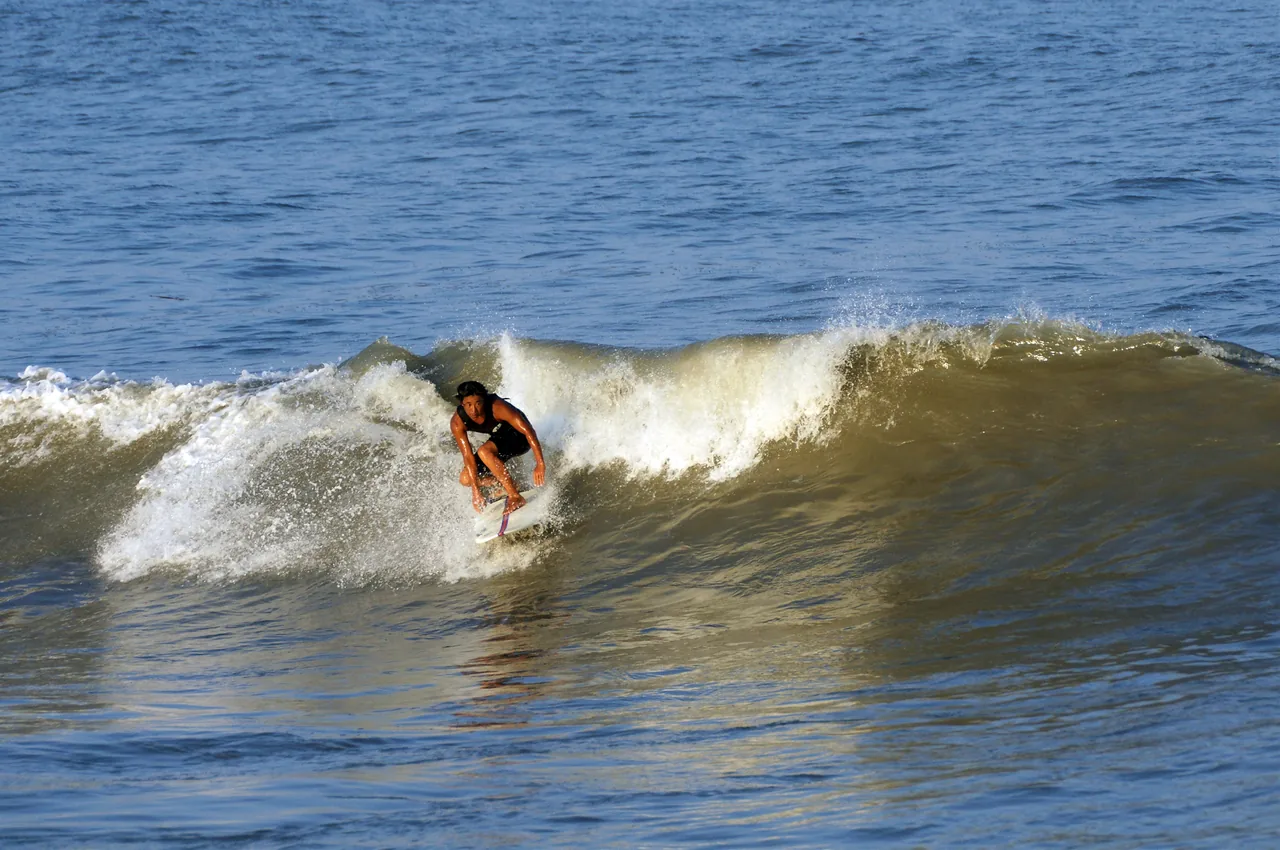
The Pacific coast of southern Tokushima is also known for surfing. In Kaiyo Town, the area around the mouth of the Kaifu River and Ote Beach in Shishikui are listed as surf spots, and surf shops in town offer lessons and rentals. Uchizuma Beach in Mugi is another surf point. Check wave conditions and local rules on the Awanavi surfing page or with a local shop.
Courtesy of Tokushima Prefecture and the Tokushima Prefecture Tourism Association
Getting around the south
Hiwasa, Mugi and Awa-Kainan all have stations on the JR Mugi Line, so you can travel through them in order by train. Pick your trains from the timetable in advance and decide where you will get off, and the connections will be straightforward. Places away from the stations, such as Todoroki Falls and the Senba Cliffs lookouts, mean combining town buses, taxis or a car.
For food from the region, see our Tokushima food guide. For DMV suspensions and the restart of service, check the Asa Kaigan Railway website (in Japanese).
Places in this guide
Ohama Beach
Hiwasa Sea Turtle Museum Caretta
Yakuo-ji Temple (Temple 23 of the Shikoku Pilgrimage)
Ebisu-do Sea Cave
Senba Sea Cliffs
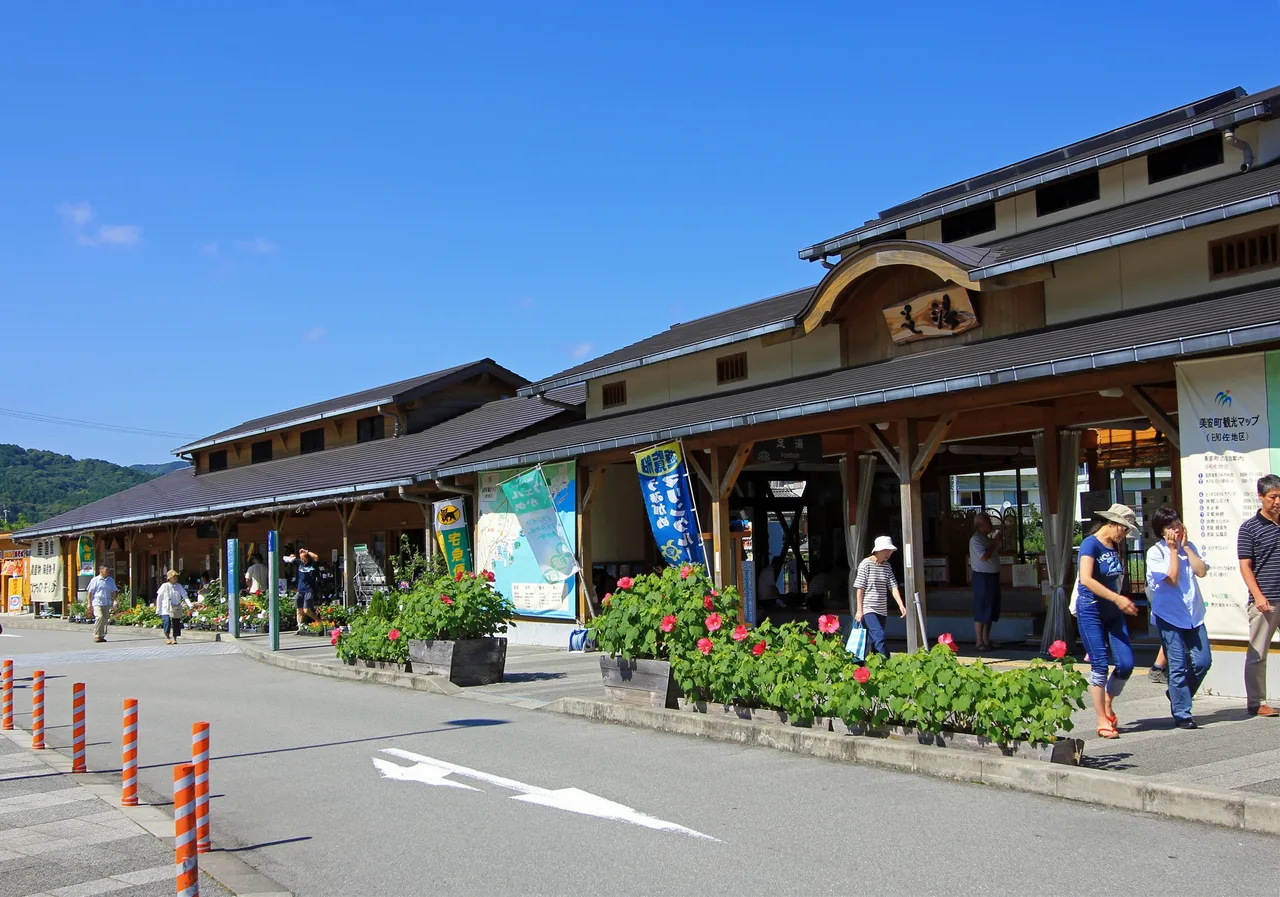
Michi-no-Eki Hiwasa (Roadside Station)
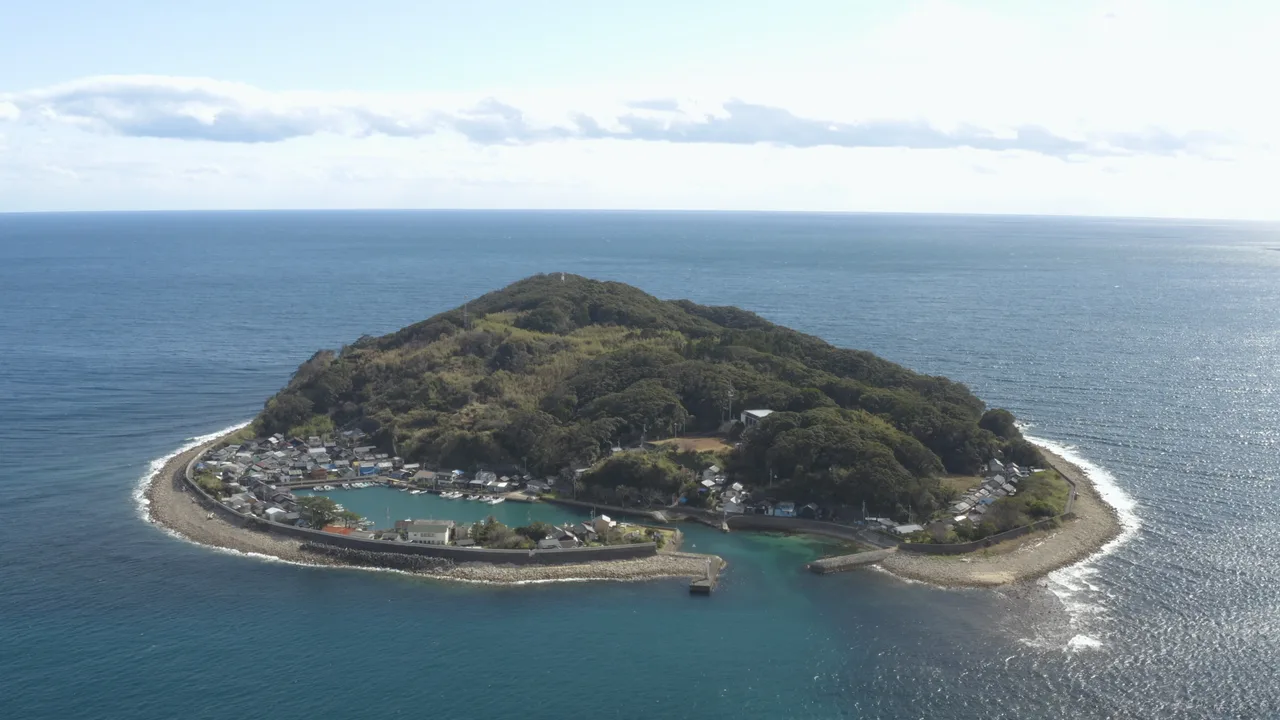
Tebajima Island
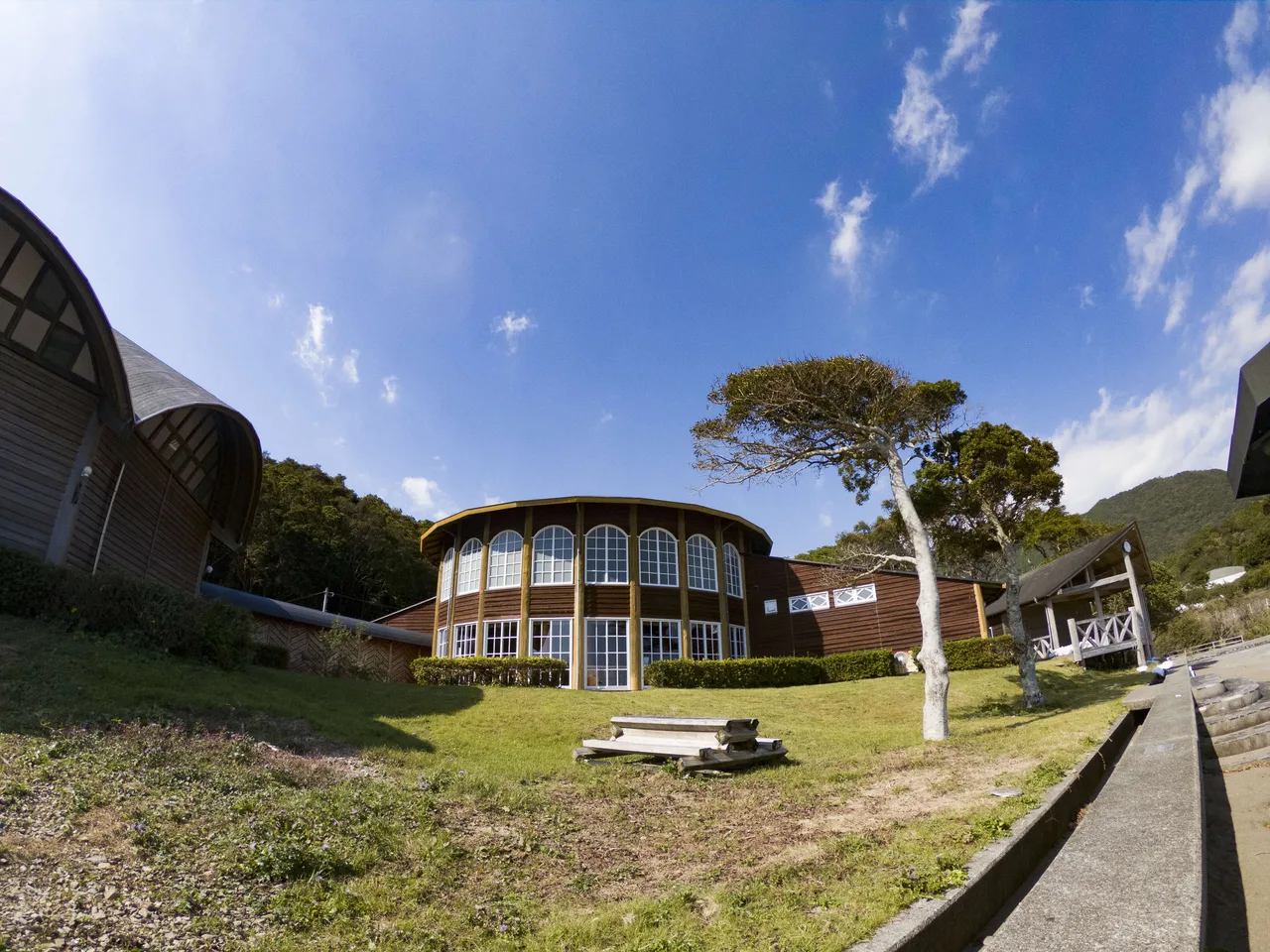
Morasco Mugi (Shell Museum)
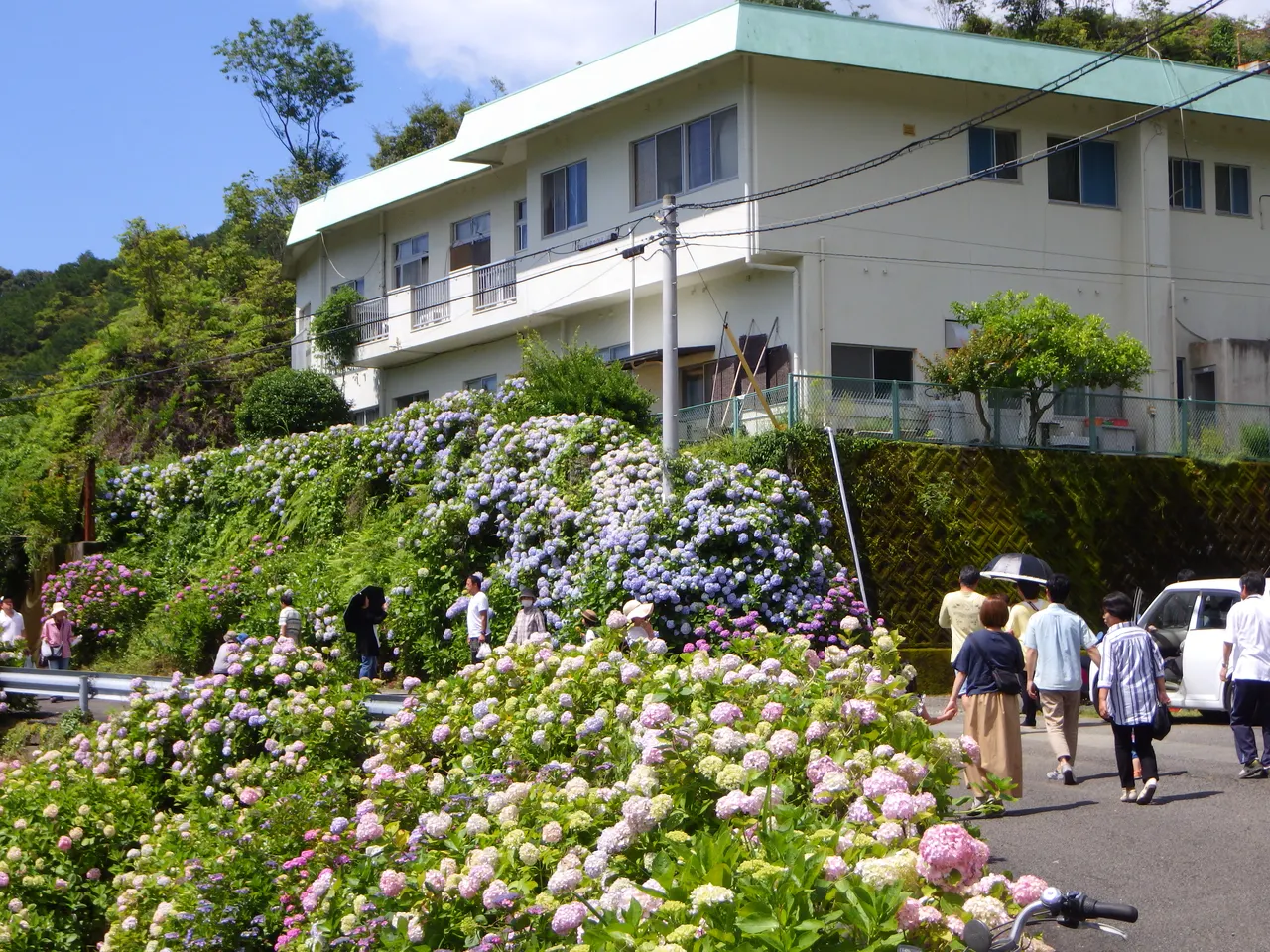
Uchizuma Coast and Hydrangea Road
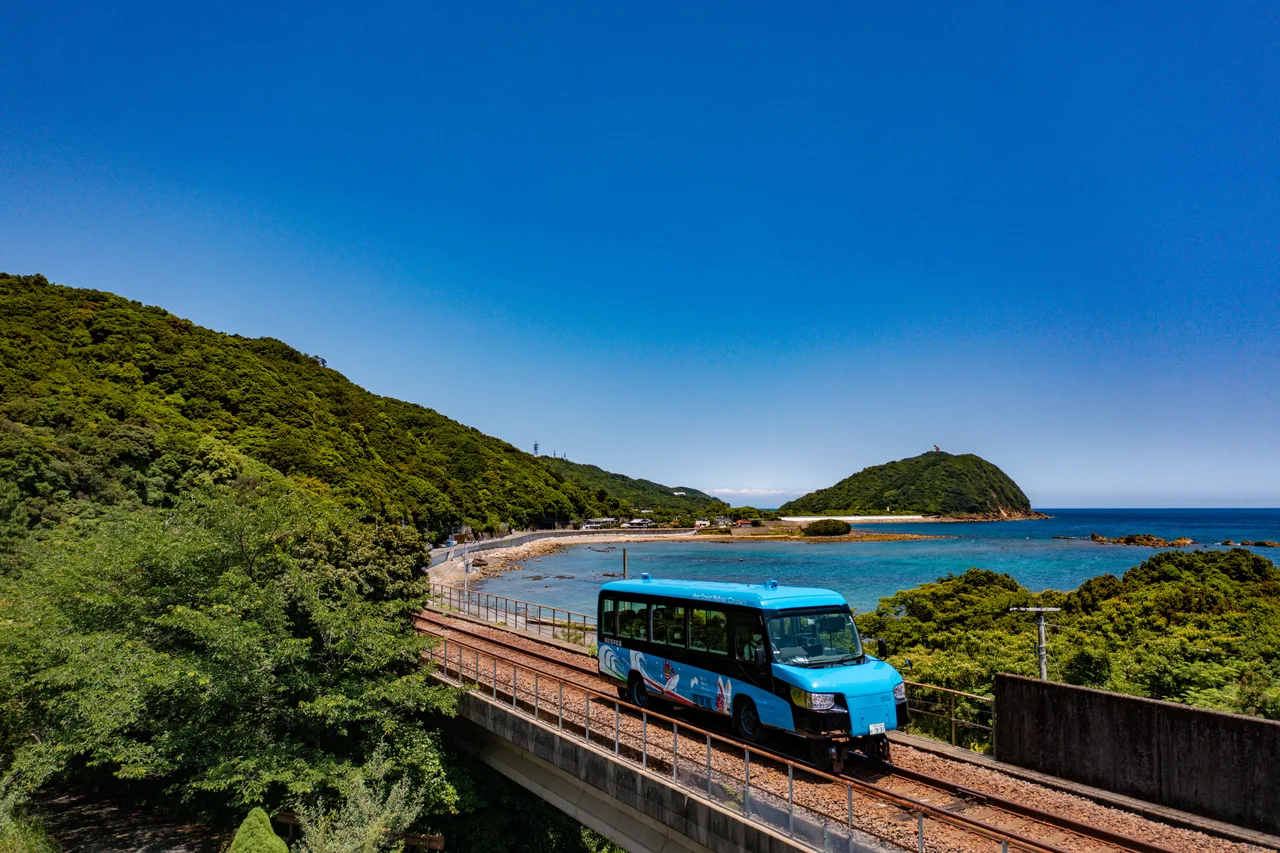
DMV at Awa-Kainan Station (Asa Seaside Railway)
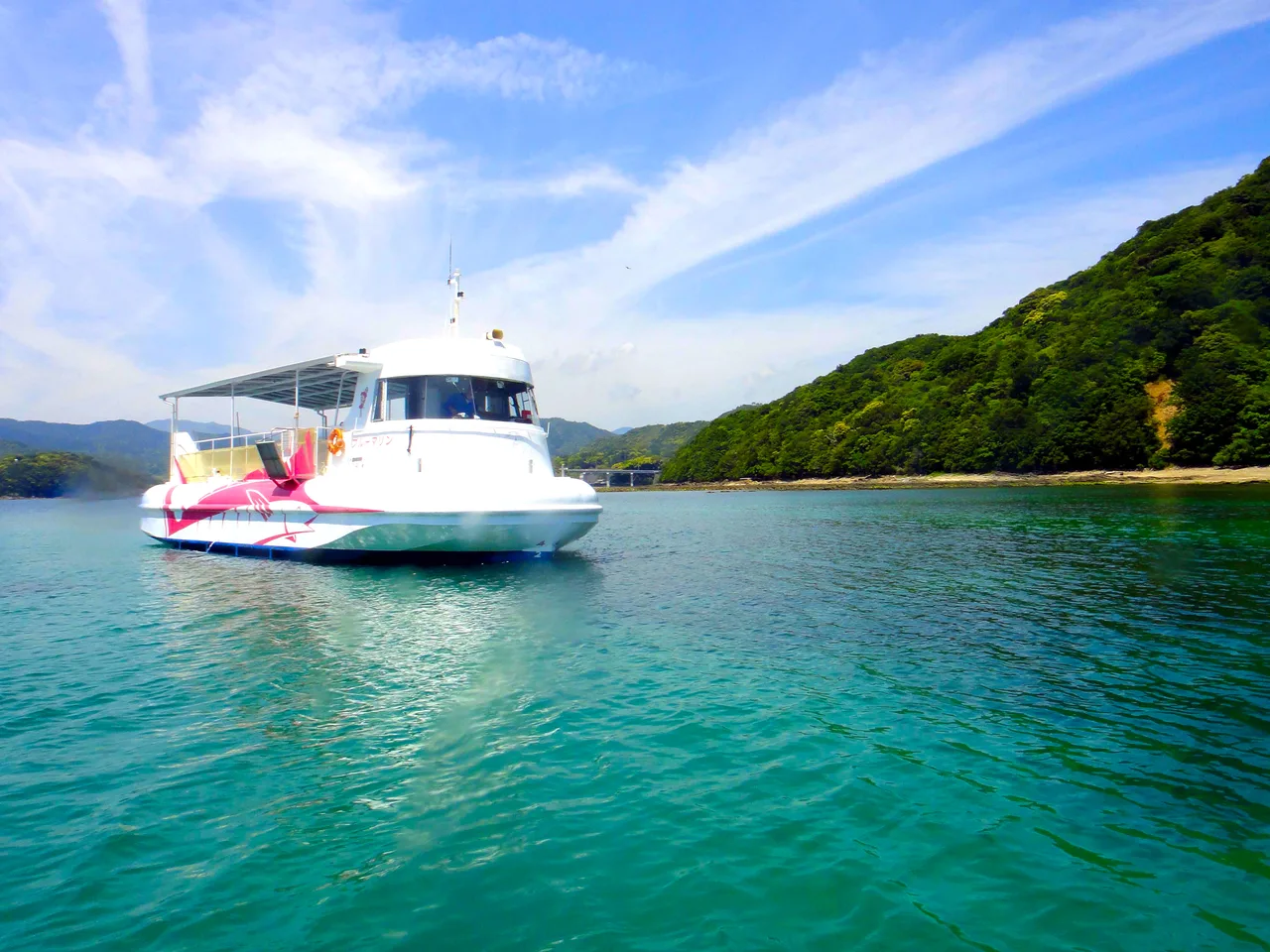
Blue Marine Undersea Sightseeing Boat (Takegashima Marine Park)
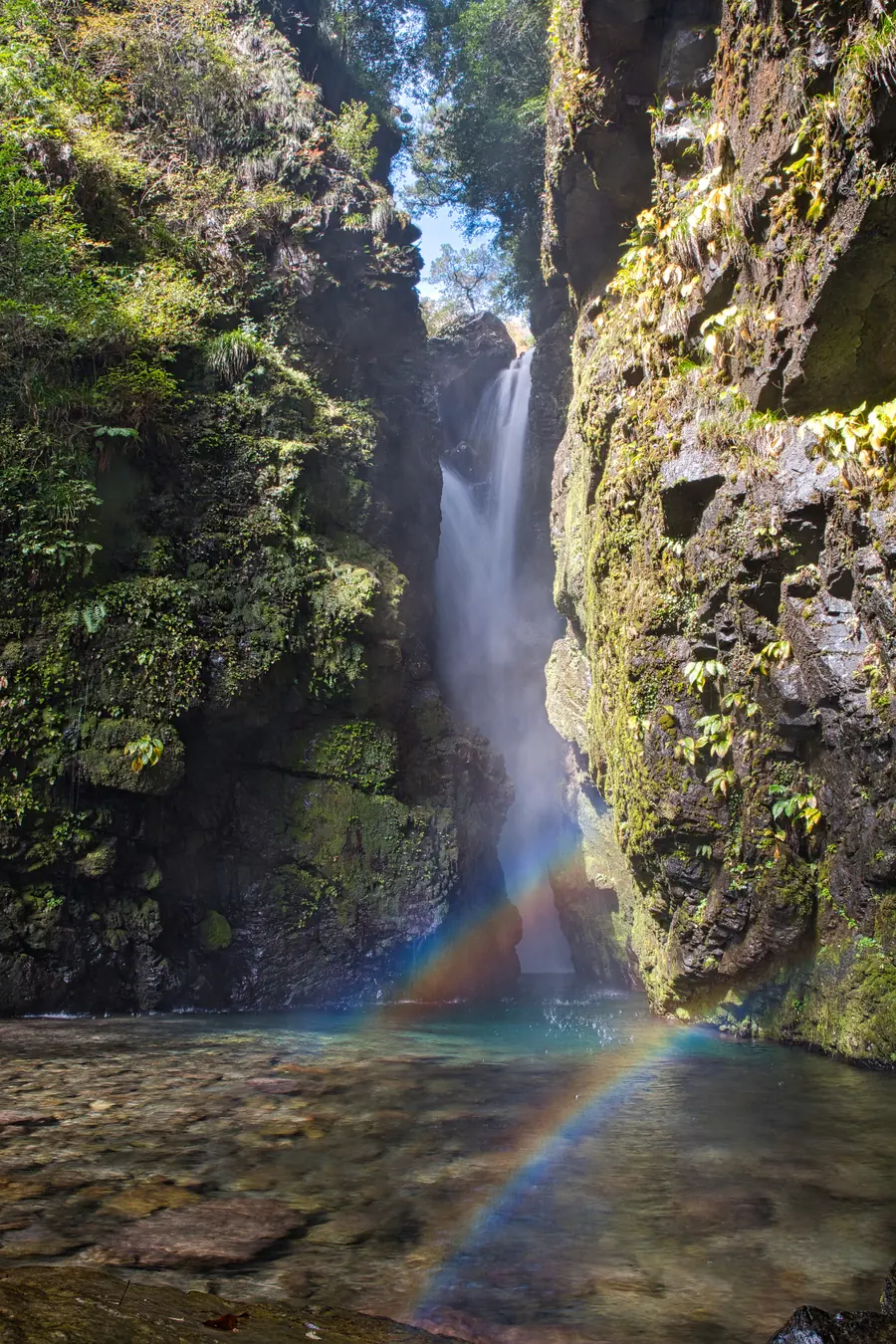
Todoroki Falls and Todoroki Shrine