
Tokyo Flower Calendar: Where to See Blossoms and Autumn Leaves
This guide is translated from the Japanese edition. Read the Japanese edition
Where to see flowers in Tokyo month by month: plum, cherry blossoms, azaleas, hydrangeas, lotus and autumn leaves, with usual peak times and crowd tips.
Spring in Tokyo means cherry blossoms, but they are only one part of the city's flower year. Plum trees bloom at Yushima in February, azaleas cover the hill at Nezu in April, hydrangeas fill a temple hillside in June, lotus flowers open on Shinobazu Pond on summer mornings, and in November the ginkgo avenues and old daimyo gardens turn yellow and red. Once your travel dates are set, knowing what will be in bloom that month can change where you decide to go.
When do flowers bloom in Tokyo? A month-by-month overview
Peak times shift each year with the weather. Treat the periods in the table as a rough guide to when things usually bloom.
| Usual period | Flower | Where |
|---|---|---|
| February to early March | Plum | Yushima Tenmangu, Koishikawa Korakuen |
| Late March to early April | Cherry | Chidorigafuchi, Yanaka Cemetery, Sumida Park, Ueno Park, Shinjuku Gyoen |
| April | Azalea | Nezu Shrine |
| June | Hydrangea | Takahata Fudoson (Hino City), Hakusan Shrine |
| July to August | Lotus | Shinobazu Pond |
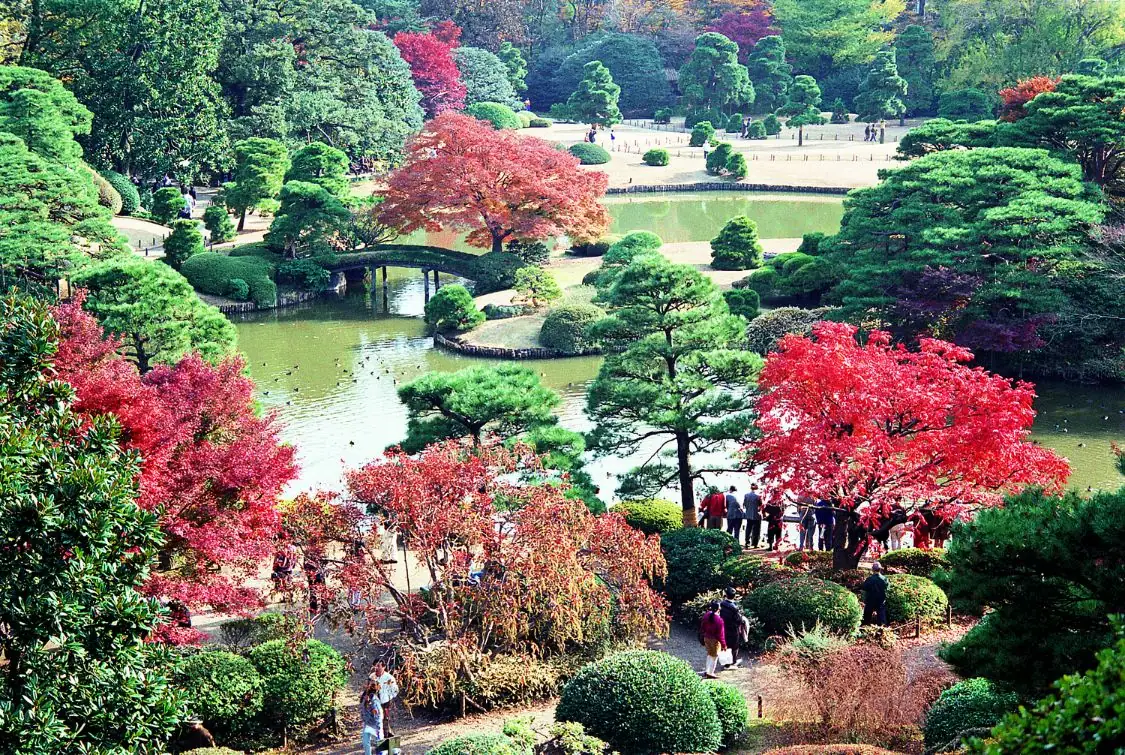
| November to early December | Ginkgo and maple | Jingu Gaien Ginkgo Avenue, Rikugien, Koishikawa Korakuen |
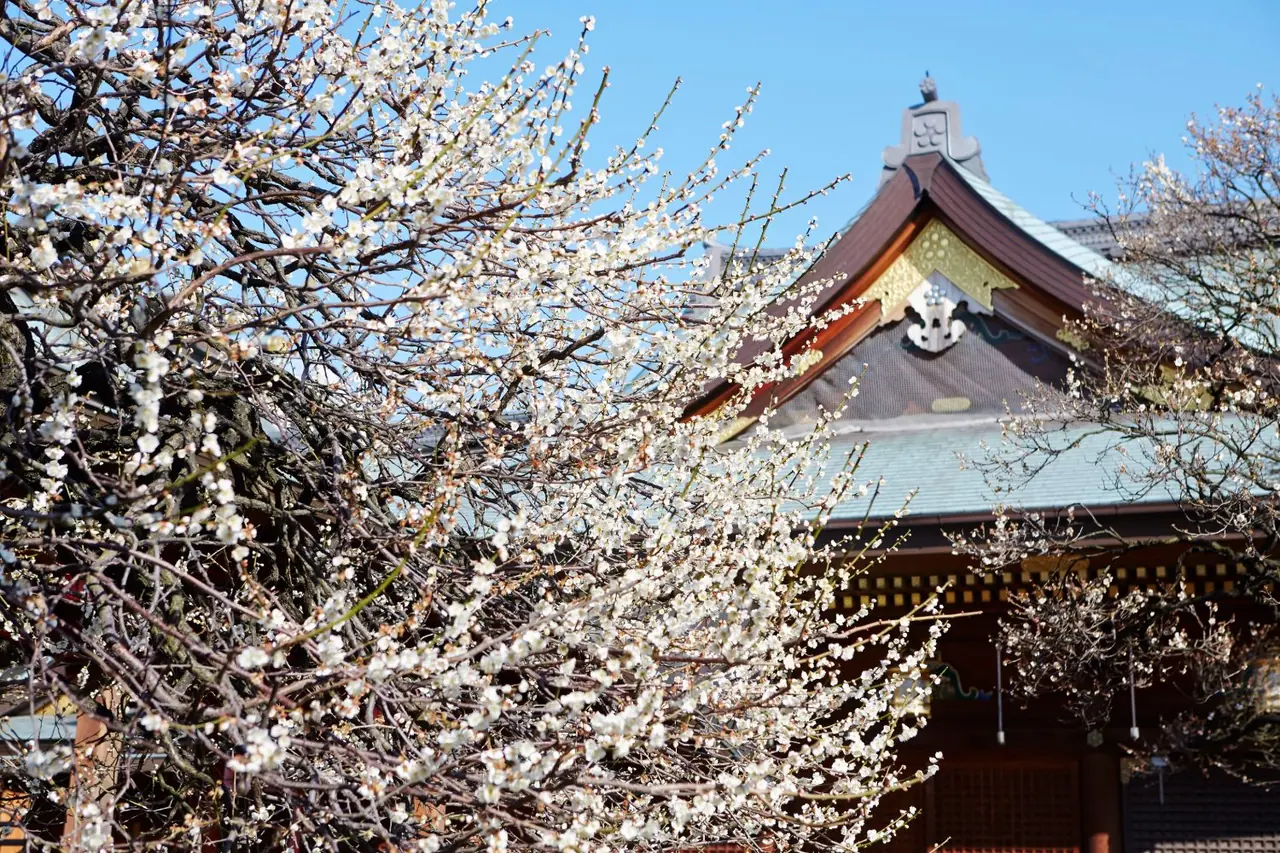
February to early March: plum blossoms at Yushima Tenmangu and Koishikawa Korakuen
Yushima Tenmangu, a shrine to Sugawara no Michizane, the deity of learning, holds the Bunkyo Plum Blossom Festival from early February to early March each year. Its plum garden has about 300 trees, around 80 percent of them white-flowering. On festival weekends a temporary stage goes up in the grounds, and on Sundays an open-air tea ceremony has been held in the plum garden. The festival falls during Japan's entrance exam season, so on some days the shrine is busy with students praying for success. The nearest station is Yushima on the Tokyo Metro Chiyoda Line, about two minutes on foot from Exit 3.
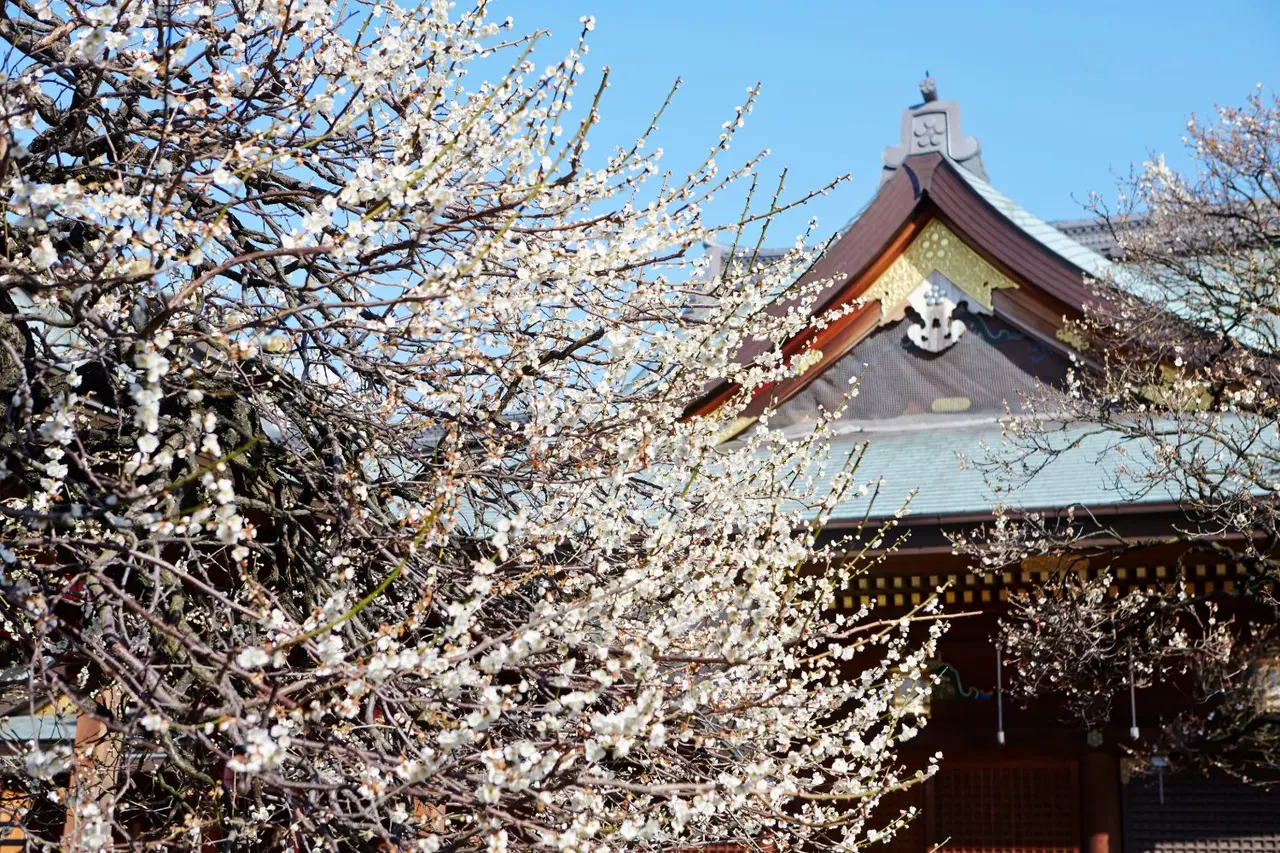
Photo: © TCVB
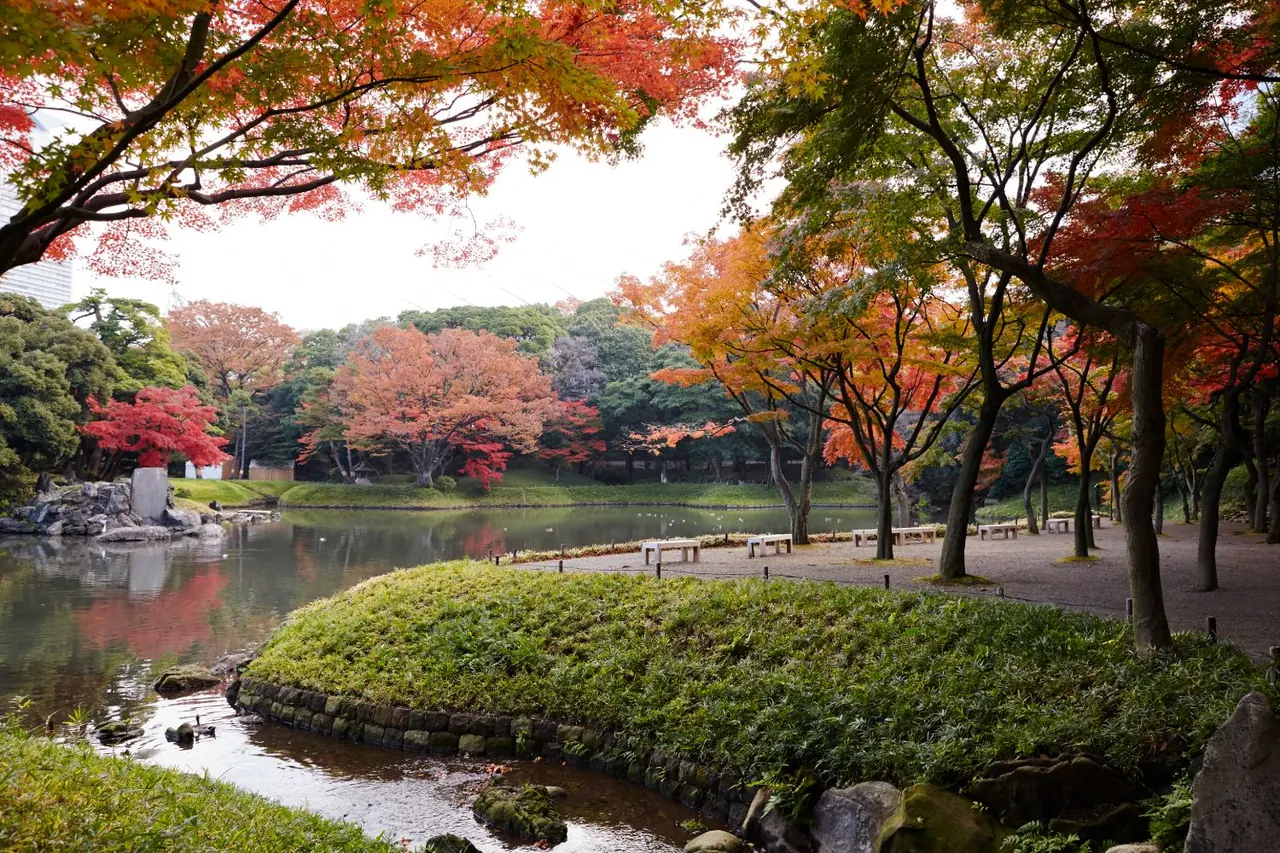
Koishikawa Korakuen, also in Bunkyo, has a plum grove that usually peaks around February. You can combine it with a walk past the garden's ponds and stone bridges, which makes it a good choice if you want to see the garden itself as well as the blossoms.
Late March to early April: five cherry blossom spots in Tokyo
According to the Japan Meteorological Agency's 1991–2020 averages, Tokyo's Somei-yoshino cherries open around March 24 and reach full bloom around March 31. The petals start to fall once full bloom has passed, so late March to early April is the main window for the famous spots. How to check bloom forecasts and the etiquette of cherry blossom viewing are covered in Japan Cherry Blossom Season: Bloom Updates and Hanami Etiquette.
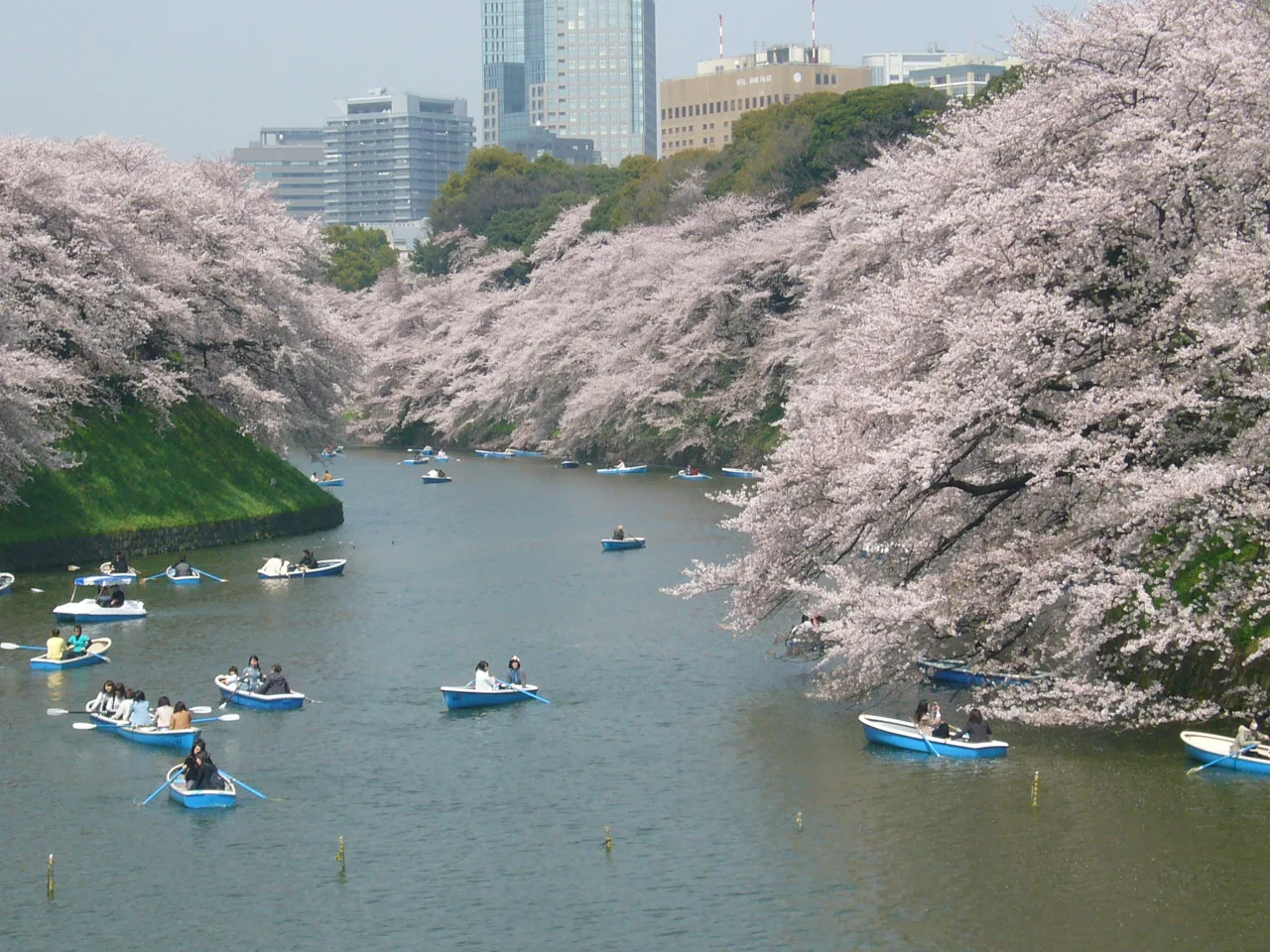
Chidorigafuchi: The Chidorigafuchi Green Way runs for about 700 meters along the Imperial Palace moat, and is known for cherry branches reaching out over the water. During the cherry season, Chiyoda City's Chiyoda Sakura Festival usually lights up the trees at night, and from the city-run boat pier you can look up at the blossoms from the water. Drinking parties and smoking are prohibited on the Green Way, and on weekends during the illumination it becomes one-way. It's about a five-minute walk from Kudanshita or Hanzomon Station.
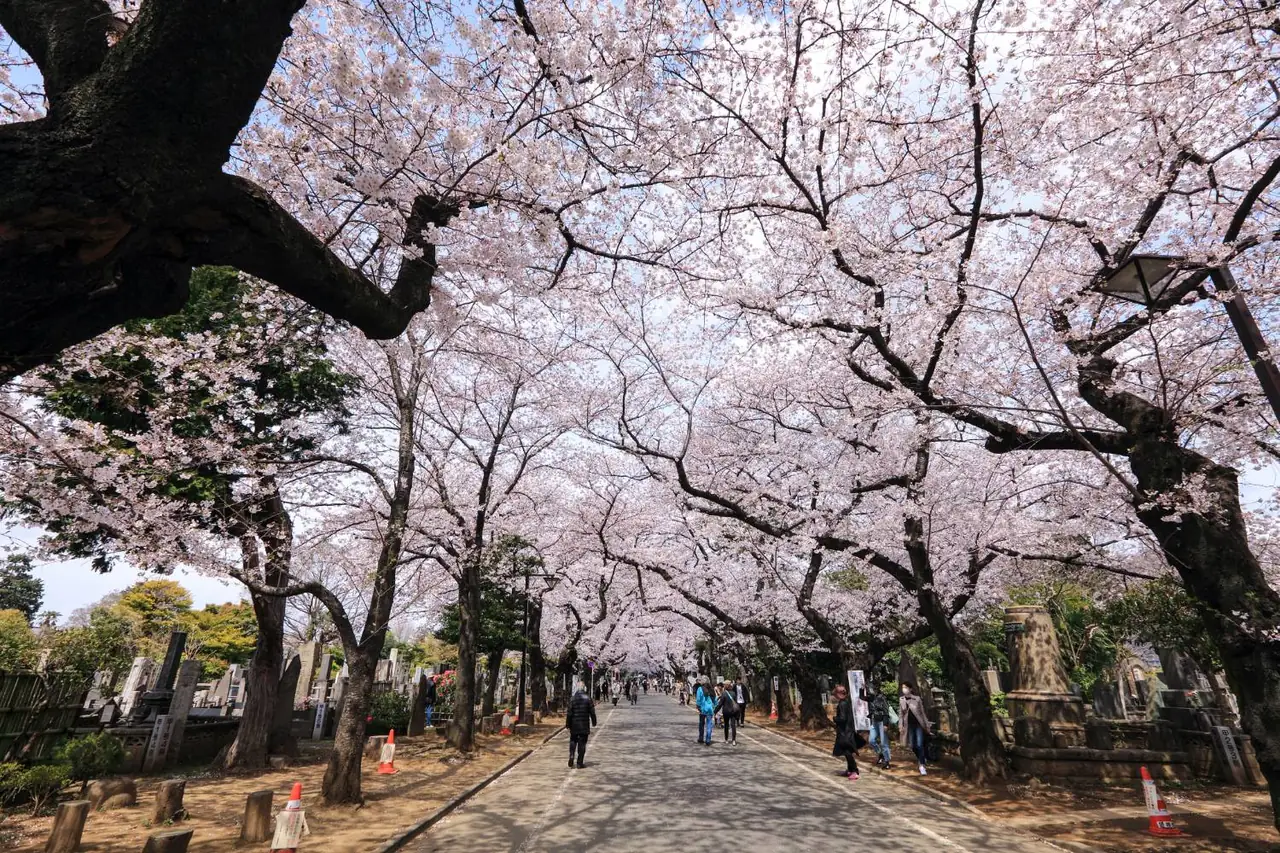
Yanaka Cemetery: A metropolitan cemetery just south of Nippori Station, whose central Sakura-dori avenue becomes a tunnel of cherry blossoms. People still come here to visit graves, so stay out of the burial plots and keep your voice down.
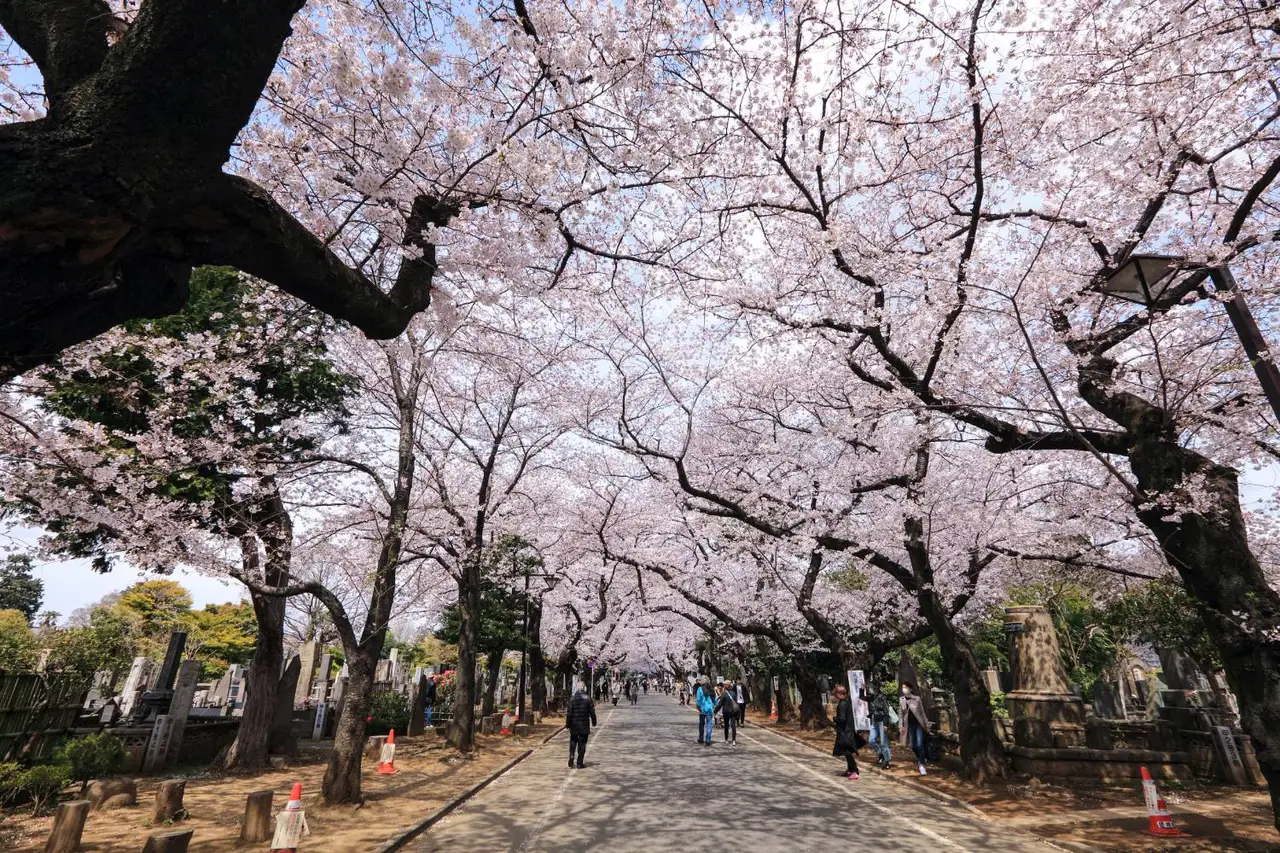
Photo: © TCVB
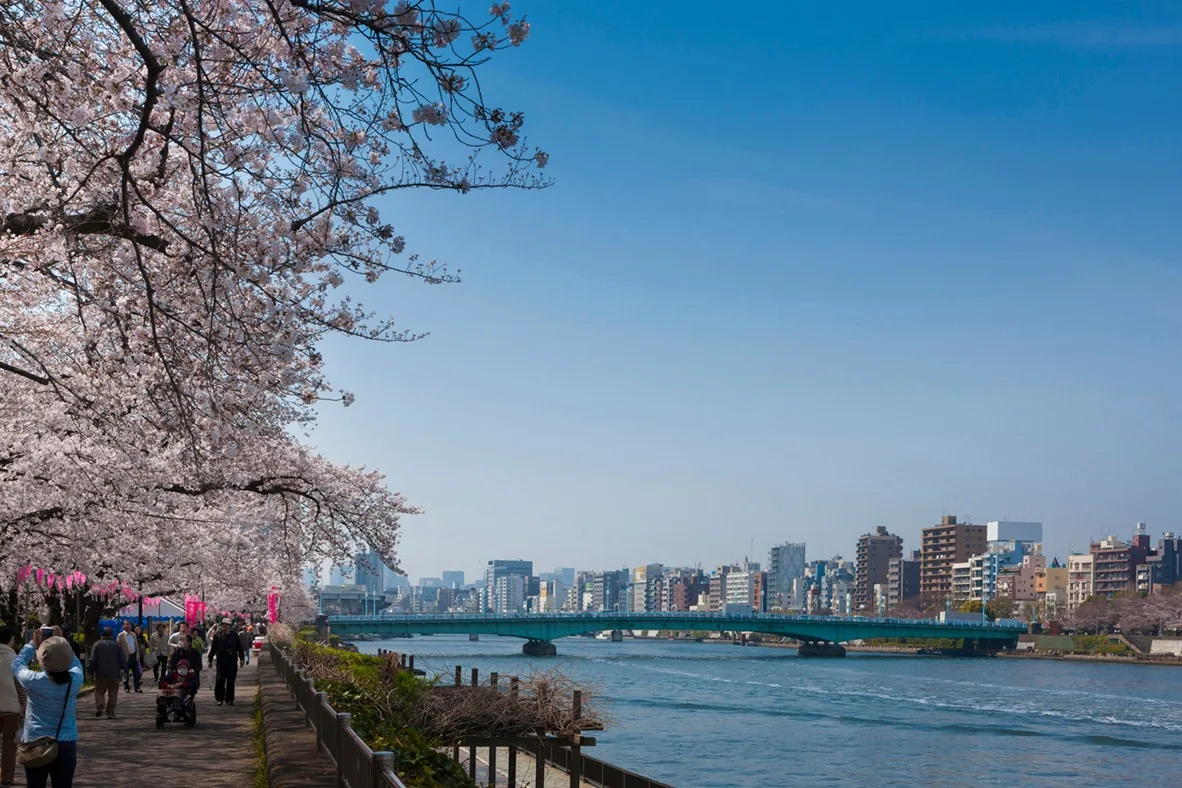
Sumida Park: This park lines both banks of the Sumida River. Its cherry trees are said to date back to planting ordered by the shogun Tokugawa Ietsuna in the Edo period, and the eighth shogun, Yoshimune, is recorded as adding more. Tokyo Skytree rises across the river, and the park is about five minutes on foot from Asakusa Station.
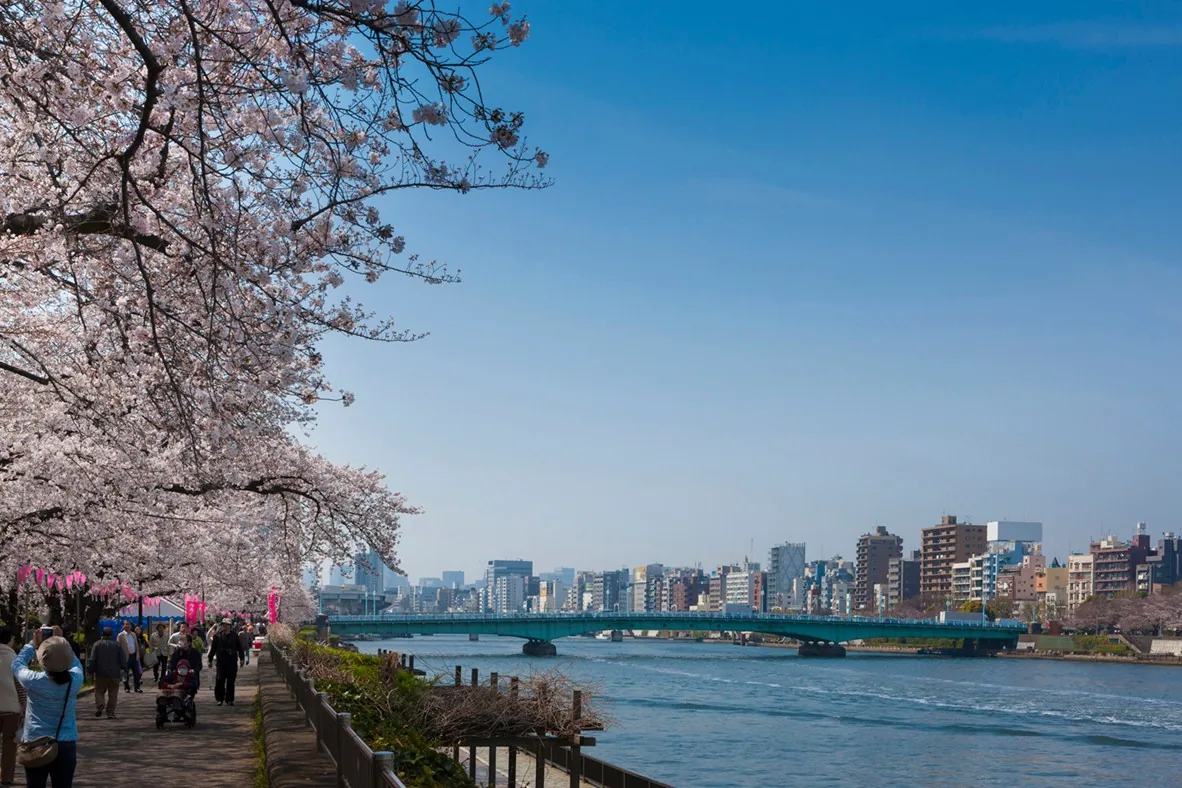
Photo: © TCVB
Ueno Park: About 800 cherry trees grow in the park, and it gets very crowded in blossom season. The park announces its hanami rules each year, so check them before you go.
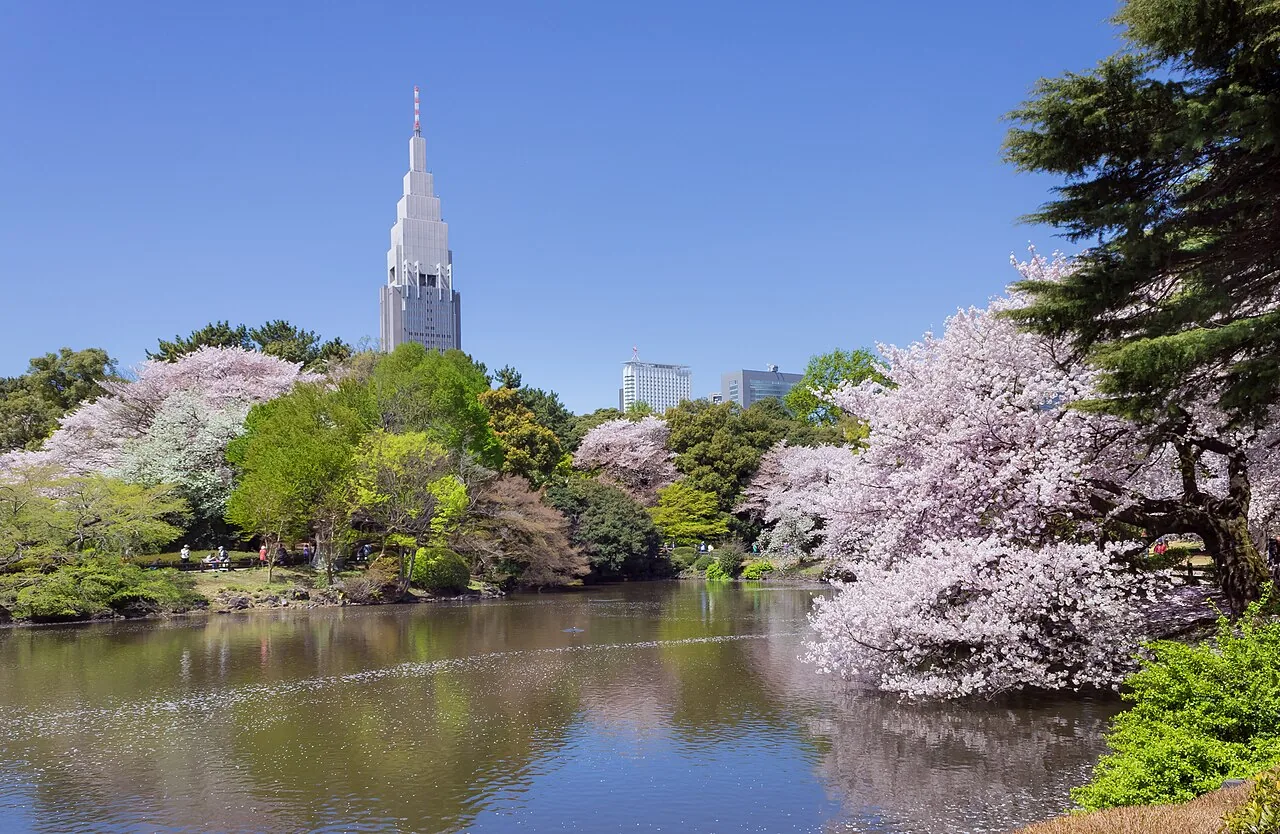
Shinjuku Gyoen: About 900 cherry trees of around 70 varieties grow here. Early-blooming kanzakura flower from February to early March, Somei-yoshino in late March and double-flowered yaezakura in mid-April, so something is usually in bloom over a long period. Admission is charged, and during cherry season advance reservations may be required, mainly on weekends and holidays.
If you want blossoms a little before the Somei-yoshino, consider the weeping cherry at Rikugien. The large tree, about 15 meters tall, usually peaks from mid to late March.
April: azaleas at Nezu Shrine
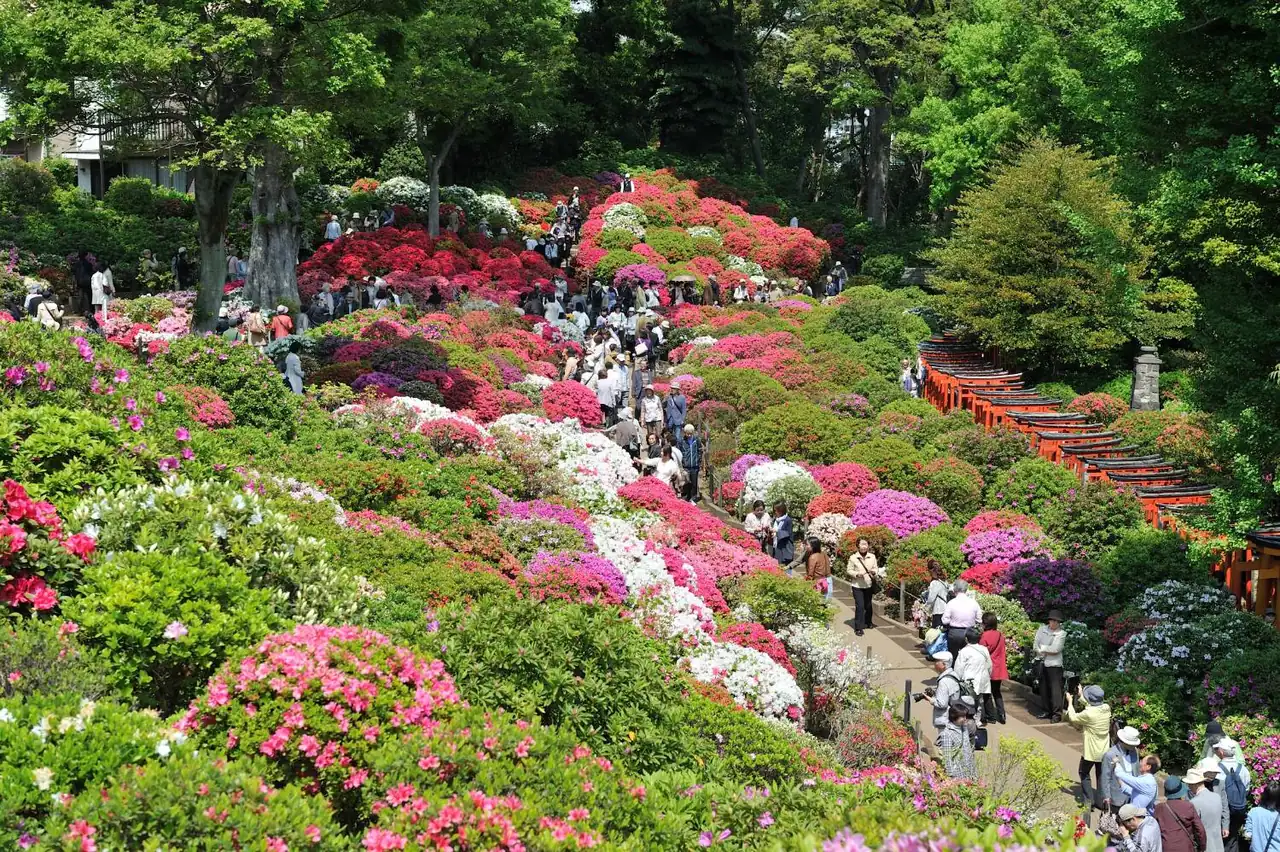
Nezu Shrine holds the Bunkyo Azalea Festival throughout April each year, when the Tsutsuji-en azalea garden, a hill in the grounds that is normally closed, opens to visitors. Its 3,000 or so azalea bushes of about 100 varieties include early and late bloomers, so a visit at a different point in the month shows different flowers. Entry to the garden requires a donation fee, and the amount changes with how the flowers are blooming. It's about five minutes on foot from Nezu or Sendagi Station on the Tokyo Metro Chiyoda Line. For details, see the Bunkyo Azalea Festival page.
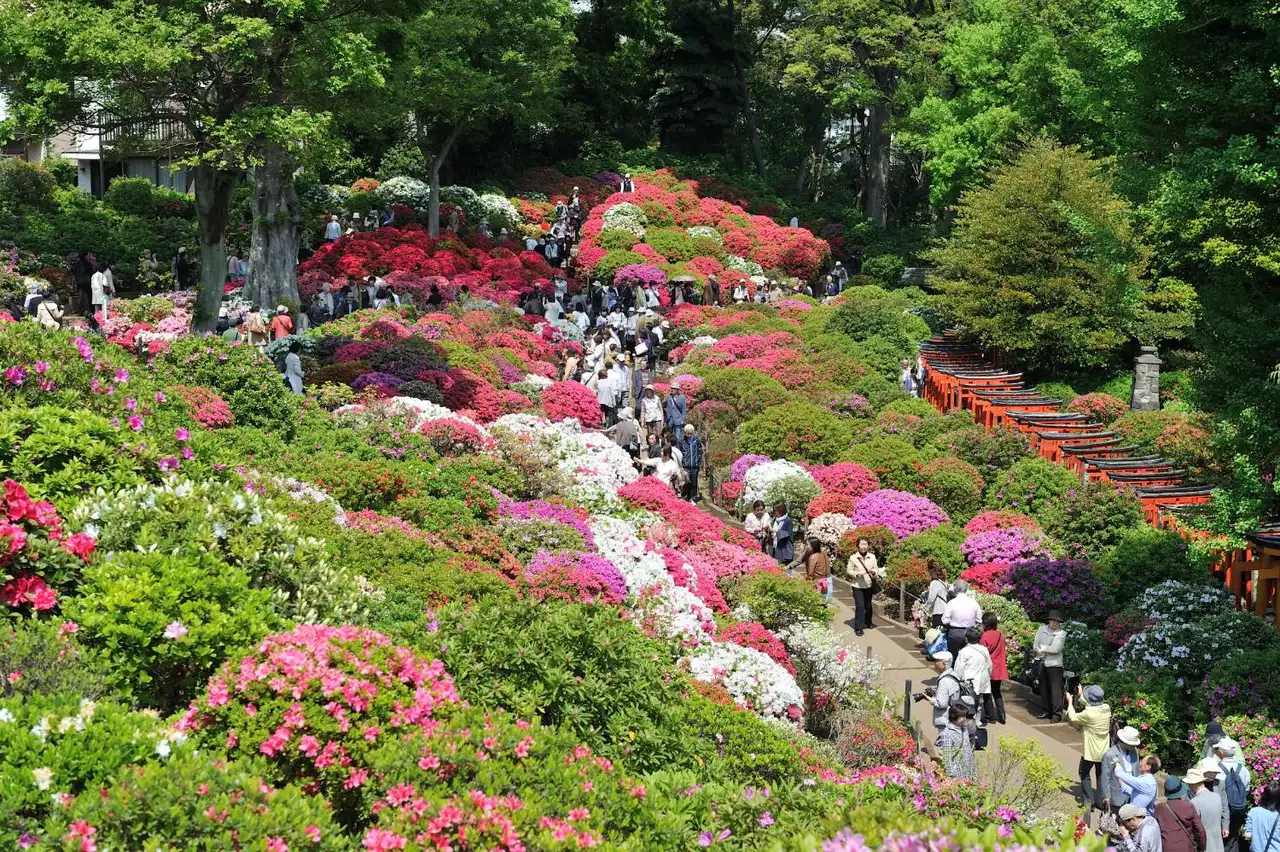
Photo: © TCVB
June: hydrangeas at Takahata Fudoson in Hino
In the rainy season, Takahata Fudoson temple in Hino City is worth the trip out. Hydrangeas of many varieties grow mainly along the Sannai Hachijuhakkasho pilgrimage path on the temple's hill, and a hydrangea festival runs throughout June each year. Mountain hydrangeas usually peak from late May to mid-June, and Western hydrangeas from mid to late June. The temple is about a five-minute walk from Takahatafudo Station on the Keio Line and Tama Monorail, and limited express trains on the Keio Line run there from Shinjuku. The hillside path gets slippery when wet, so wear shoes with good grip.
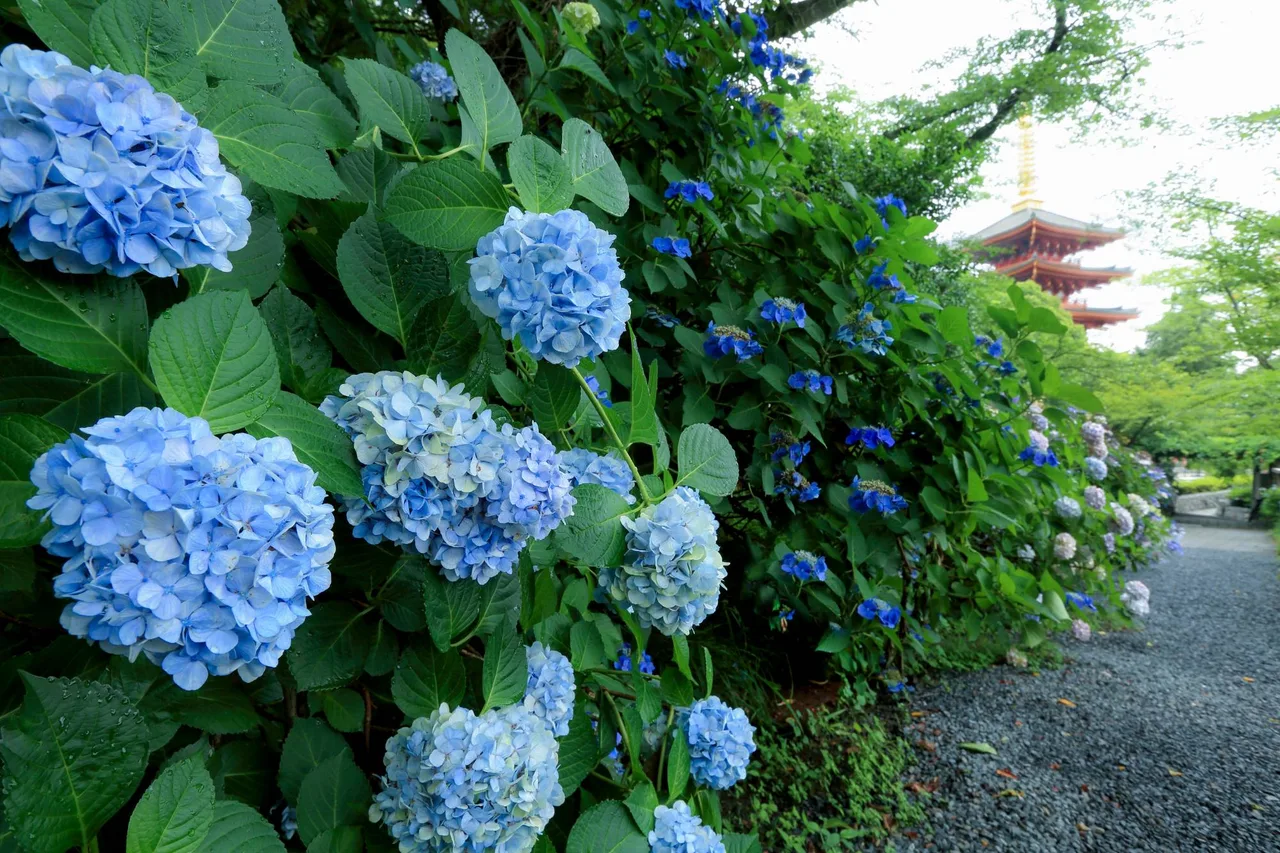
Photo: © TCVB
Closer to central Tokyo, Hakusan Shrine and Hakusan Park in Bunkyo hold the Bunkyo Hydrangea Festival every June, with about 3,000 hydrangeas. It's about three minutes on foot from Exit A3 of Hakusan Station on the Toei Mita Line.
July to August: see the lotus on Shinobazu Pond in the morning
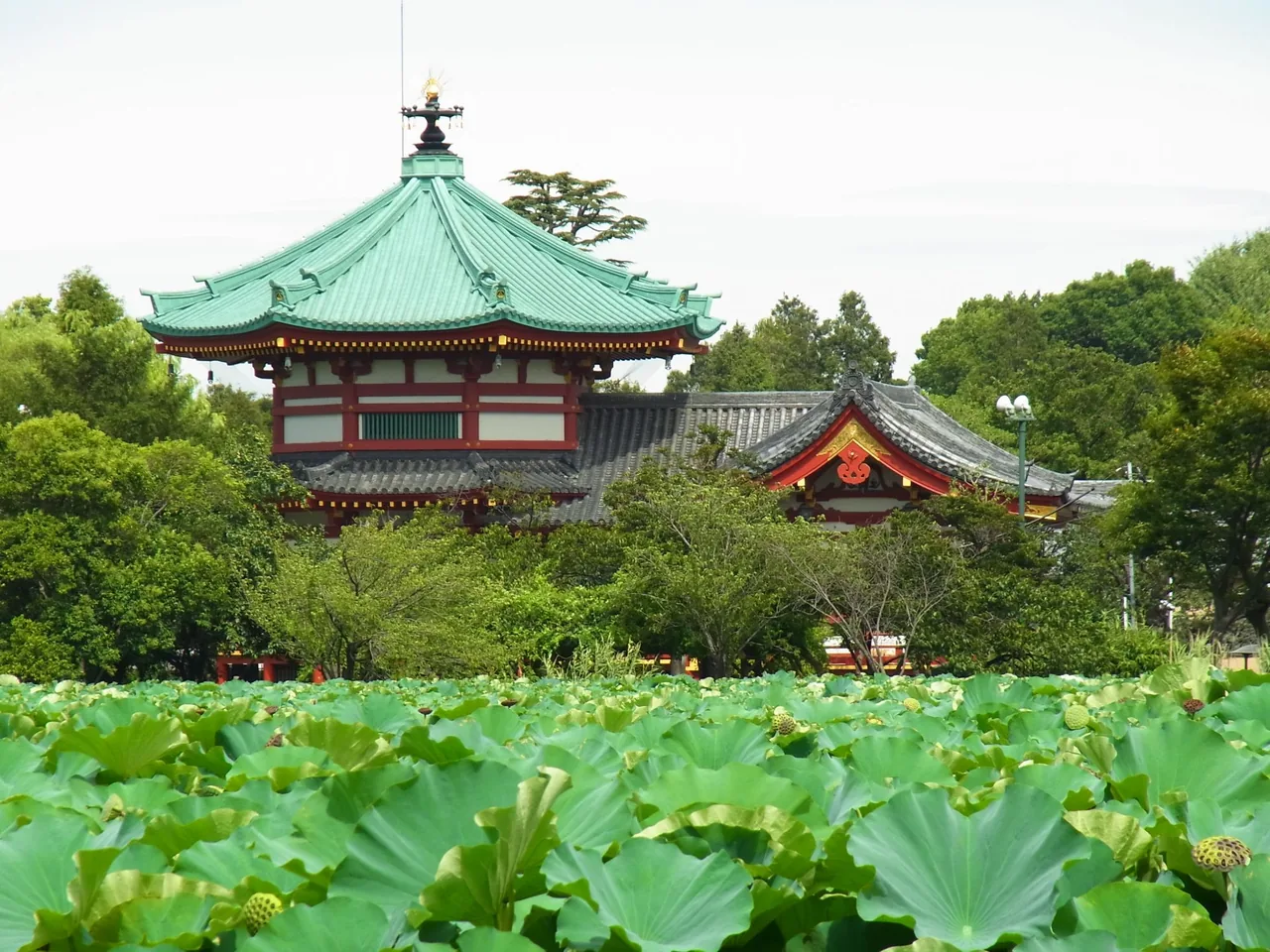
At Shinobazu Pond in Ueno Park, lotus leaves spread across the water and pink flowers bloom from around early July to late August. Lotus flowers open from early morning until late morning, so by early afternoon they may already be closed. Going in the morning, before the heat builds, is better for seeing the flowers and easier on you.
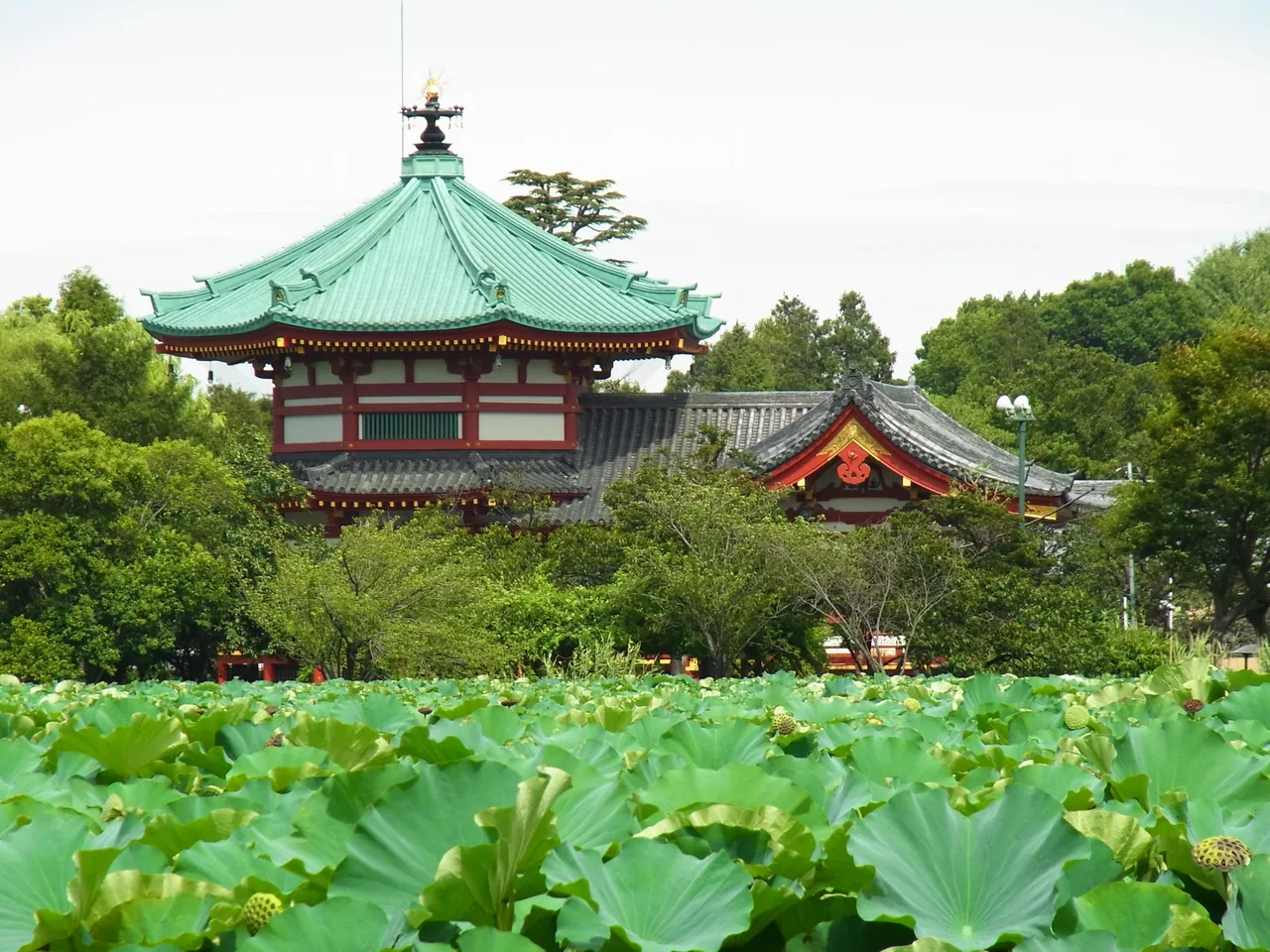
Photo: © TCVB
November to early December: the ginkgo avenue and garden autumn leaves
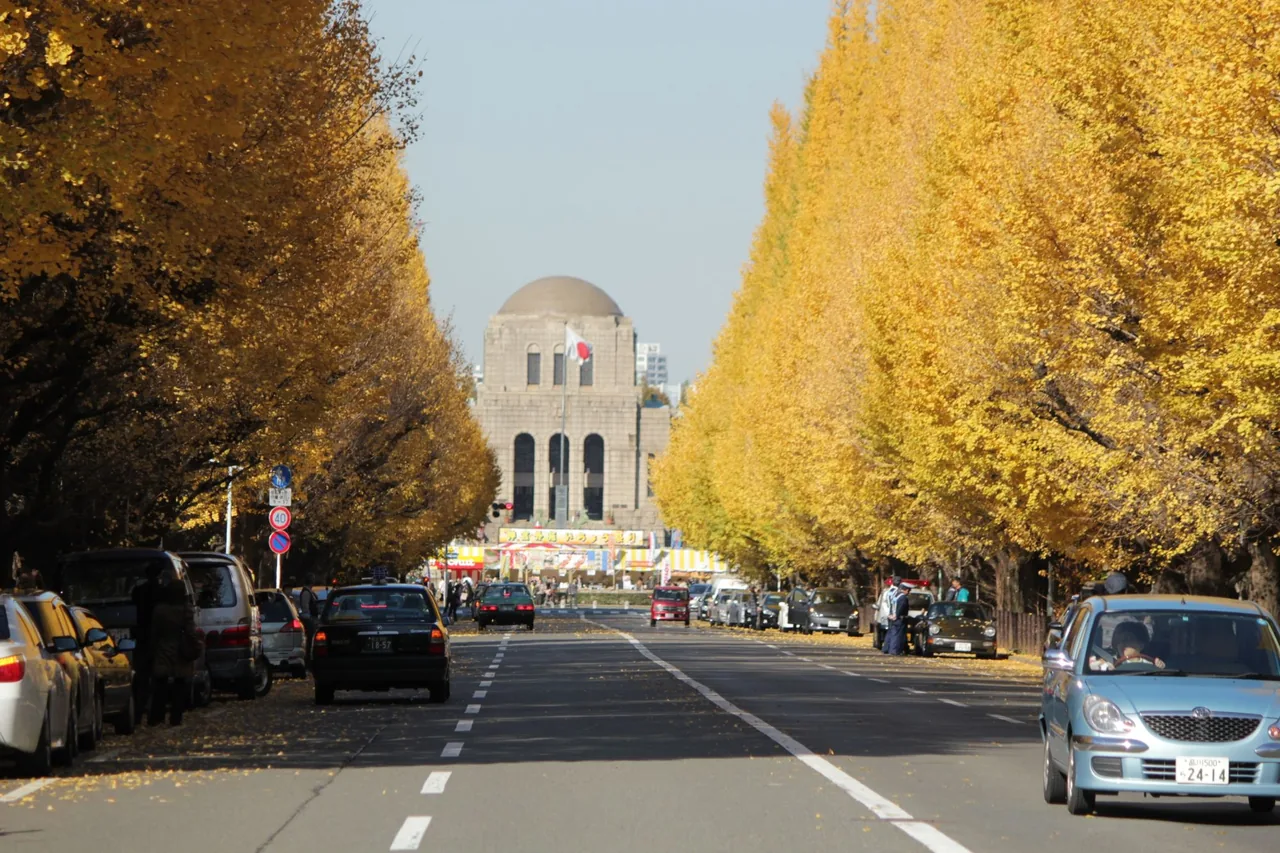
The Jingu Gaien Ginkgo Avenue runs for about 300 meters from Aoyama-dori, lined with 146 ginkgo trees. The leaves usually turn golden from mid to late November, and toward the end of the season the road is carpeted with fallen leaves. It's crowded at midday on weekends; for photos, weekday mornings are calmer. You can walk there from Gaienmae or Aoyama-itchome Station.
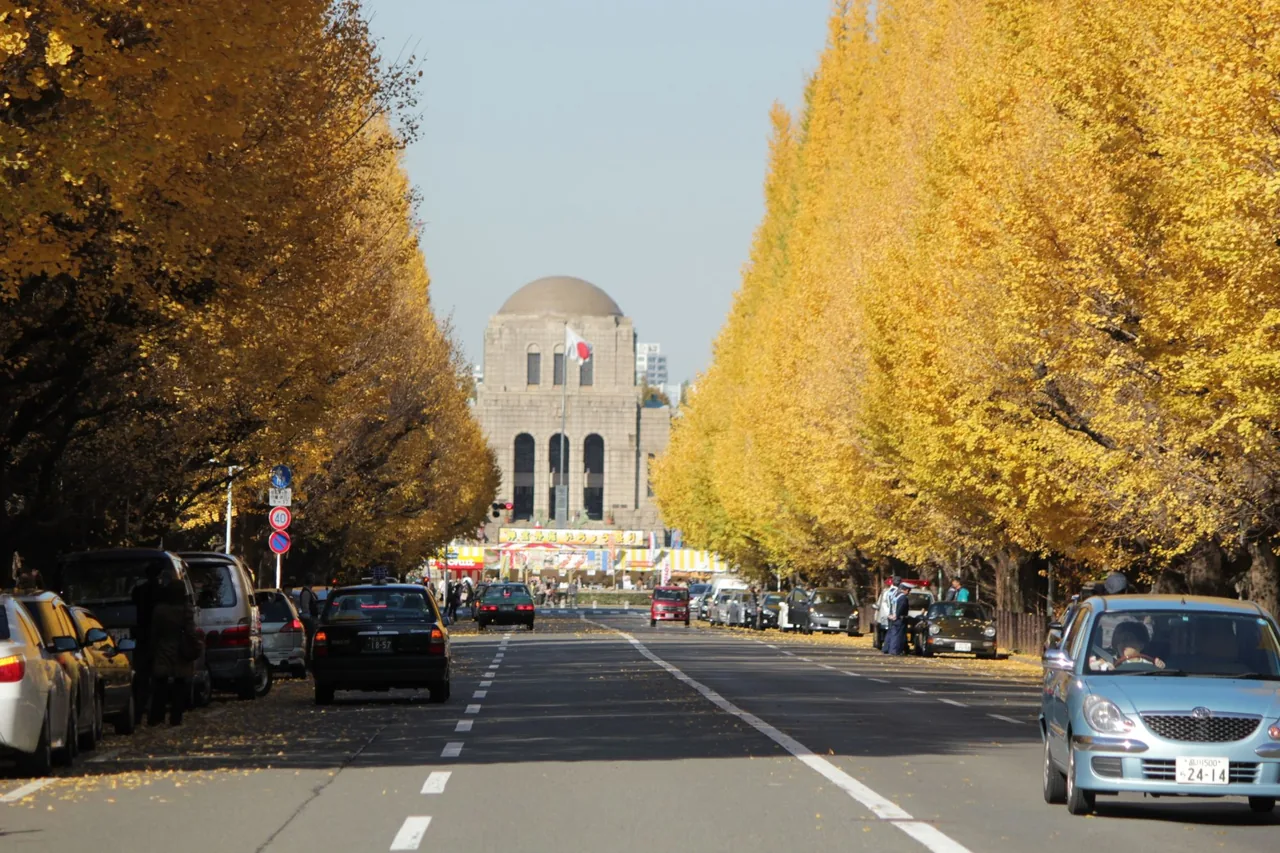
Photo: © TCVB
For red maples, head to a daimyo garden. Rikugien holds special night viewings in the autumn leaf season, scheduled for November 25 to December 6 in 2026. Koishikawa Korakuen has many trees that change color, Japanese maples among them, and they usually peak from late November to early December. Both gardens charge admission.
Checking bloom information and planning your visit
Bloom times shift every year. A few days before you leave and again on the morning of your visit, check the official website of the venue or organizer for the latest conditions.
- During cherry season, bloom conditions for the metropolitan parks are published in one place. Popular spots are crowded on full-bloom weekends, so weekday mornings or later in the afternoon are easier.
- Festival dates, entry arrangements and fees are reviewed every year. Check the official website to see whether you need to book.
- In gardens and parks, don't touch the flowers or branches, and take your rubbish home with you.
Official information:
- Flower calendar for metropolitan parks (Tokyo Metropolitan Government Bureau of Construction)
- Chiyoda Sakura Festival (Chiyoda City Tourism Association)
- Cherry blossoms at Shinjuku Gyoen (Ministry of the Environment)
- Festivals and events (Bunkyo City)
- Takahata Fudoson
- Meiji Jingu Gaien
To find more places to visit in Tokyo, browse the Tokyo spot list.
Places in this guide
Hotels nearbyPR
See prices and availability for hotels in Tokyo and book on our partner Trip.com.
See hotels in Tokyo on Trip.com