Matsuba Crab in Tottori: Season, Itsukiboshi and How to Eat It
This guide is translated from the Japanese edition. Read the Japanese edition
Tottori's Matsuba crab season runs from November 6 to March 20. Oya-gani and Wakamatsuba-gani, the Itsukiboshi brand, and how to eat snow crab.
Every year, November 6 is the day the Matsuba crab season opens in Tottori. In 2026 the season opened on Friday, November 6, and from then until March it is crab season in Tottori.
Matsuba crab, Oya-gani and Wakamatsuba-gani: what's the difference?
Matsuba-gani is the snow crab (zuwaigani) caught in the Sea of Japan. In Tottori Prefecture, snow crabs go by different names depending on their sex and stage of growth.
- Matsuba-gani: fully grown males. The shell is hard and the legs are packed with meat.
- Oya-gani: females. Much smaller than the males, they are eaten for the eggs carried under the body (sotoko) and the roe inside the shell (uchiko).
- Wakamatsuba-gani: males that have recently molted. Because the shell is soft and the meat holds a lot of water, they have long also been called mizu-gani ("water crab").
The same snow crab goes by other names elsewhere, such as Echizen-gani in the Hokuriku region. In Tottori and the rest of the San'in region, a menu that says Matsuba-gani means male snow crab.
When is the season? The 2026 season opened on November 6
The fishing seasons in Tottori Prefecture are:
- Matsuba-gani (males): November 6 to March 20
- Oya-gani (females): November 6 to December 31 (under the fishers' own rules)
- Wakamatsuba-gani: February 1 to February 20 (under the fishers' own rules, since the 2025 season; until then, to the end of February)
Around the day after opening, the first auctions of the season are held at the markets in Amishiro in the east of the prefecture, Karo in Tottori City, and Sakaiminato in the west. Fishing depends on the weather, and boats cannot go out on days when the sea is rough.
November and December are the only months when you can try both males and females. After New Year the Oya-gani season ends, and in February Wakamatsuba-gani join the lineup. Check which crab is in season for the dates of your trip.
Tags and Itsukiboshi: how to spot Tottori crab
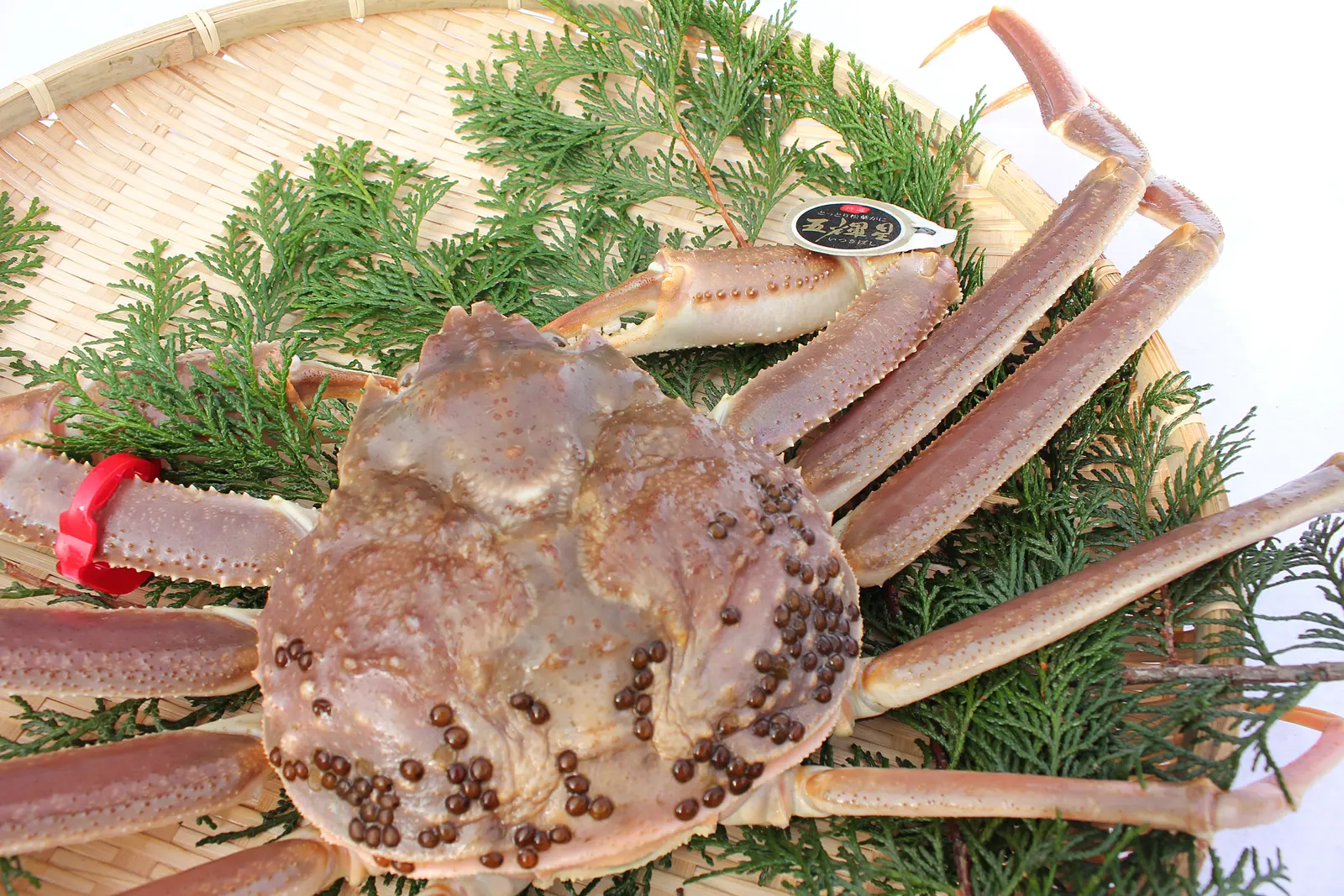
Photo: ©Tottori Pref.
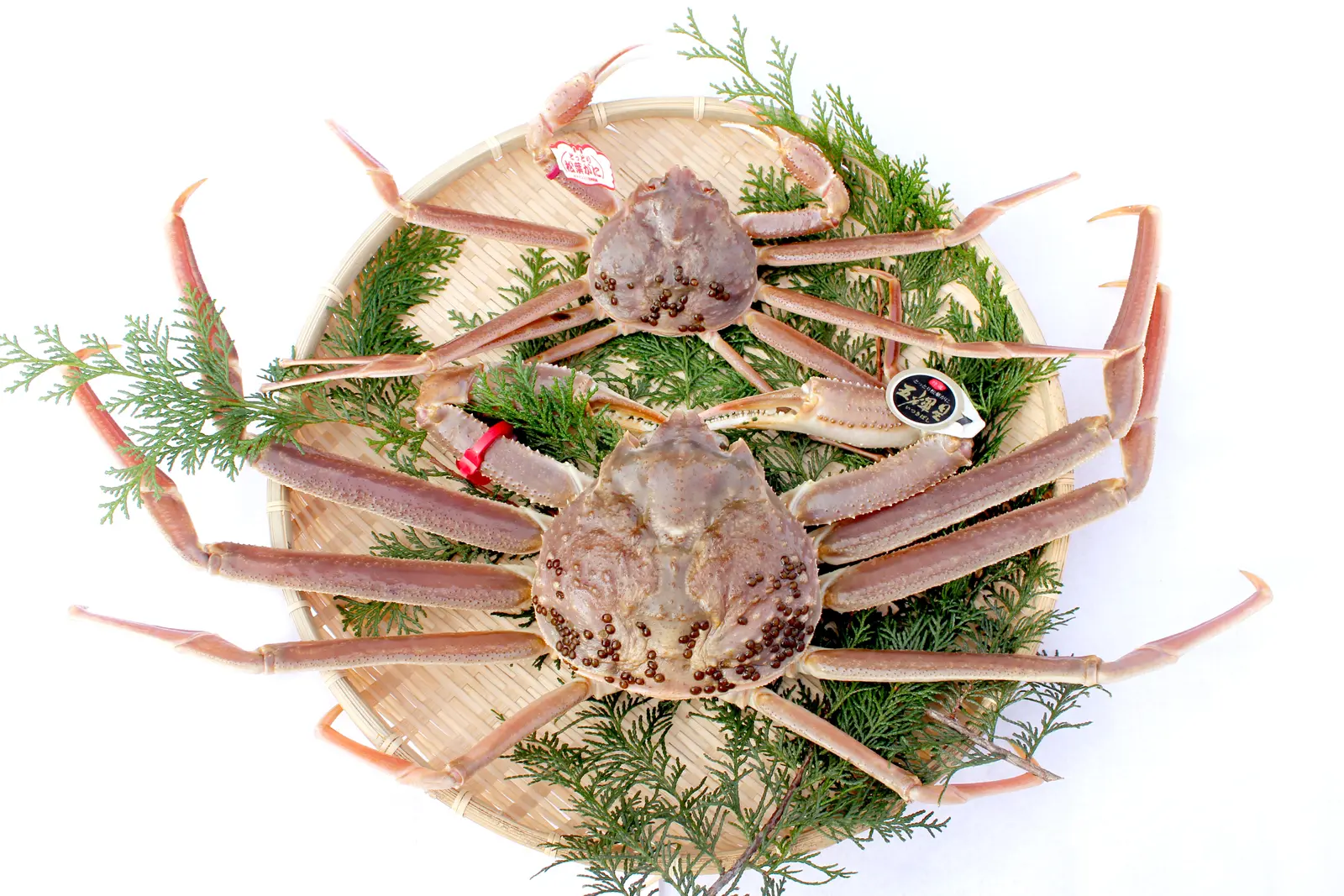
The photo above shows an Itsukiboshi tag attached to the leg of a raw Matsuba crab. Matsuba crabs landed by Tottori's offshore trawlers that have a shell at least 11 cm wide and are of good quality go to market with a tag proving they come from Tottori. The two crabs in the photo at the top of the page also carry a "Tottori Matsuba-gani" tag and an Itsukiboshi tag.
Itsukiboshi is the top brand chosen from among them, launched in 2015. There are five standards, and expert judges make the selection.
- Size: shell at least 13.5 cm wide
- Weight: at least 1.2 kg
- Shape: all legs intact
- Color: a vivid color
- Meat: well filled with meat
When choosing a crab, weight is said to be a better guide than size. A crab that feels heavy in the hand is well filled with meat and kani-miso (crab innards). The black dots on the shell are the eggs of a marine leech; they tend to appear on crabs that molted long ago and are taken as a sign of a well-filled crab.
How to eat it: boiled, grilled, sashimi and kani-suki
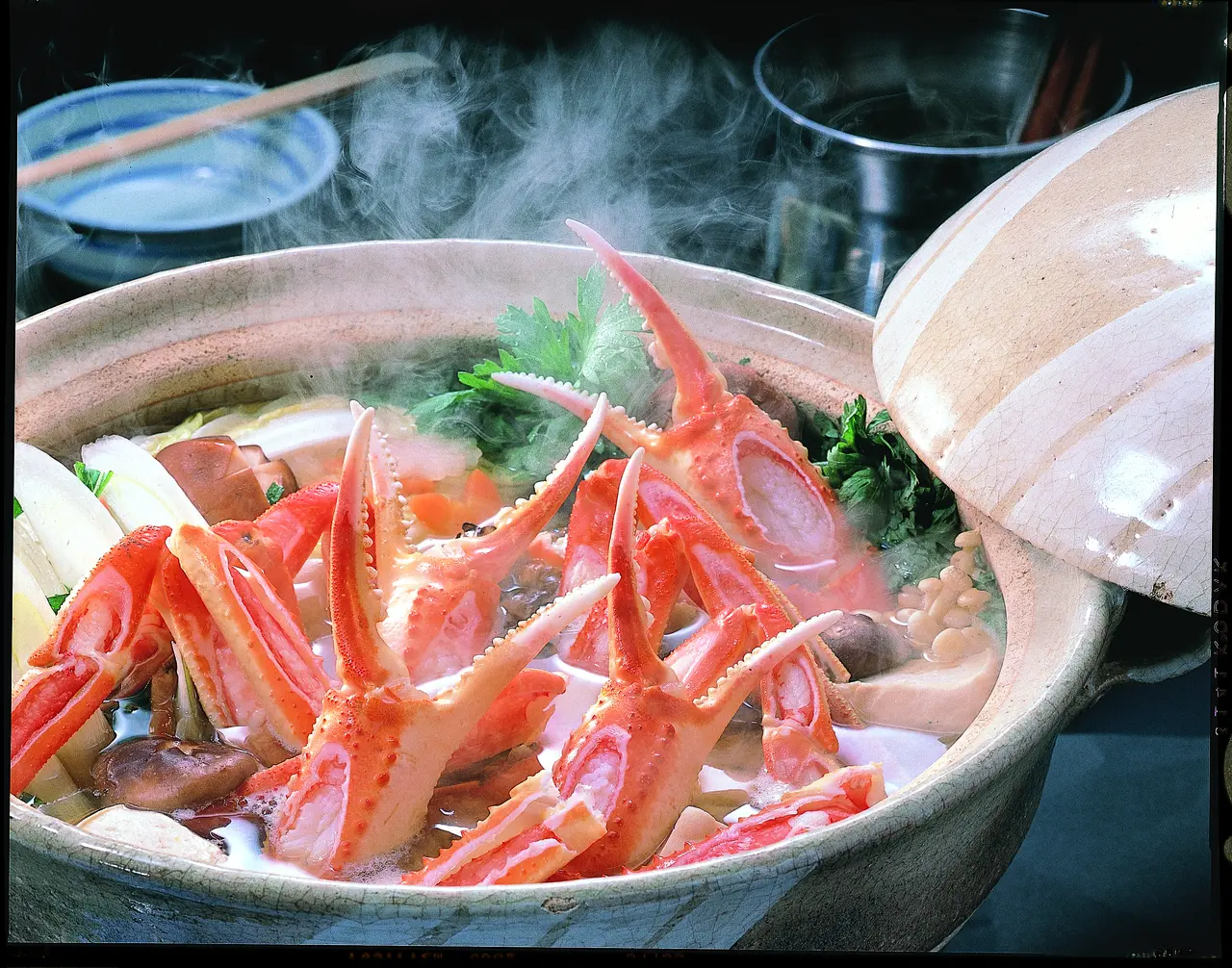
Photo: ©Tottori Pref.
The simplest way to eat Matsuba crab is yude-gani, boiled in salted water. Crack open the legs, boiled in their shells, and enjoy the sweet meat as it is. The shell holds kani-miso, and some people mix the meat with it.
Sashimi and grilled crab (yaki-gani) are ways to enjoy it that only work with very fresh crab from the source. The raw leg meat, peeled from the shell, is translucent with a smooth sweetness. For yaki-gani, the crab is grilled in its shell over a net for a toasty aroma.
On a cold night, try kani-suki (crab hot pot), in which crab legs and vegetables simmer in dashi broth. The broth full of crab flavor is also good turned into rice porridge (zosui) at the end.
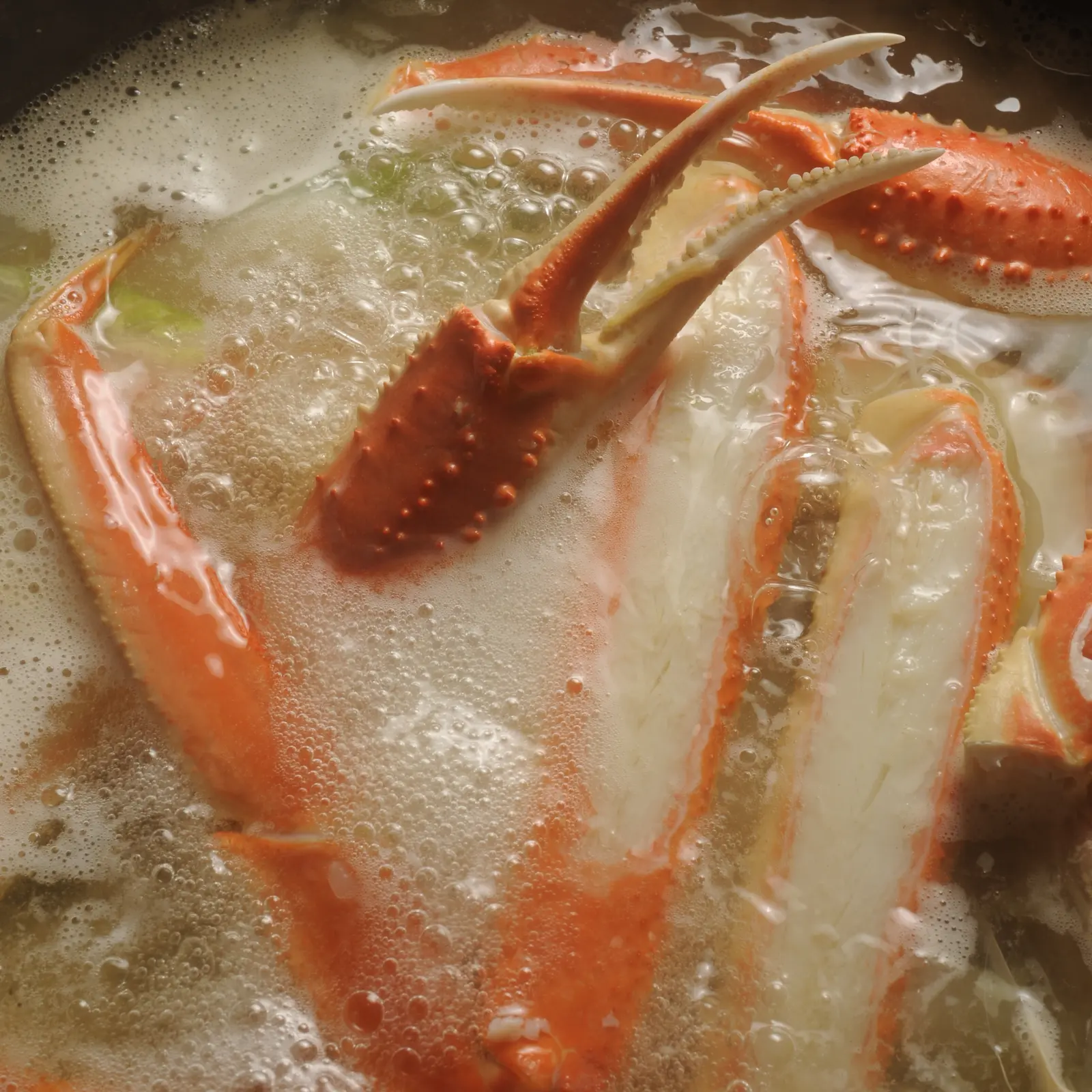
Photo: ©Tottori Pref.
Oya-gani are boiled, then the shell is removed and the roe, eggs and meat are eaten together. They are much smaller than the males, with a richer taste that is different from Matsuba crab. Wakamatsuba-gani are known for their soft shells and watery meat.
Where to eat it: port towns and hot springs
If crab is the reason for your trip to Tottori, base yourself in a port town or a hot spring resort. Fish markets and casual restaurants gather around Sakaiminato's port. Sakaiminato also lands more red snow crab (beni-zuwaigani) than any other port in Japan, and that season runs from September to June, so you can compare it with Matsuba crab. See the Sakaiminato Port page for more about the port.
Winter is also when crab dishes appear at dinner in hot spring ryokan. If you plan to eat crab as part of an overnight stay, book early. Dishes, and whether you get Matsuba crab or Oya-gani, vary from inn to inn, so check when you book.
For Tottori's other specialties, including Nijisseiki pears, sakyu rakkyo and seafood bowls, see Tottori food guide.