West Izu Sunset Coast: Koganezaki, Dogashima and Kumomi
This guide is translated from the Japanese edition. Read the Japanese edition
West Izu sunset spots: golden Koganezaki, the sea caves of Dogashima, Mt. Fuji beyond Kumomi and Senganmon, and Iwachi cove, plus getting around by bus.
As the sun drops, the rocks and islets along the West Izu coast slowly turn into silhouettes. The western side of the Izu Peninsula faces Suruga Bay, so from the same shore you can watch the sun sink into the sea and see Mt. Fuji across the water. From Koganezaki in the north to Kumomi in the south, its coastline of cliffs, sea caves and small coves looks quite different from Izu's east side.
Koganezaki: rock that glows gold at sunset
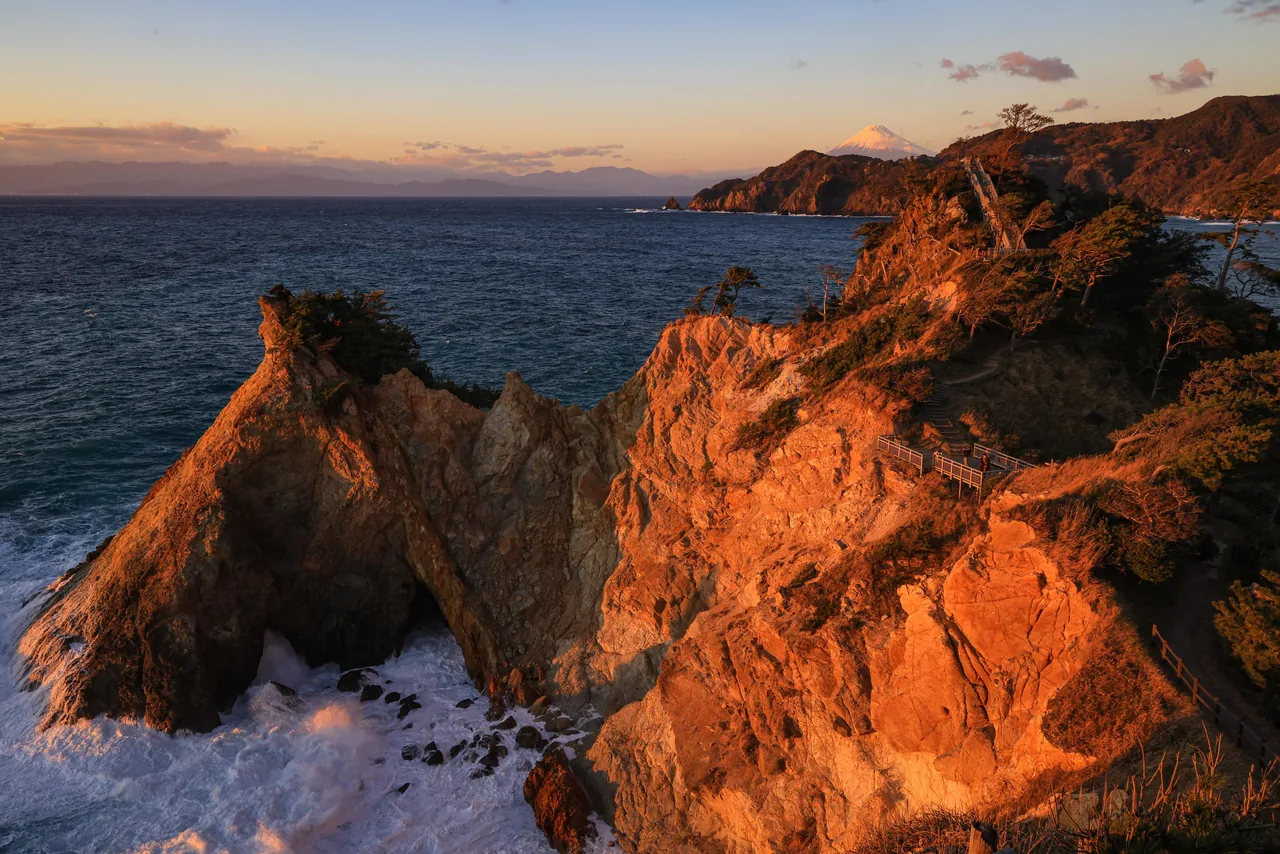
Koganezaki, in Ugusu, Nishiizu Town, is a cape named for the way its rock face glows gold in the evening sun. The color comes from rock altered by hot spring water and geothermal heat, and the cape was designated a Shizuoka Prefecture Natural Monument in 1988. The whole cape is Koganezaki Park, and from the lookout you can see Mt. Fuji across Suruga Bay and "Uma Rock," a rock shaped like a horse's head.
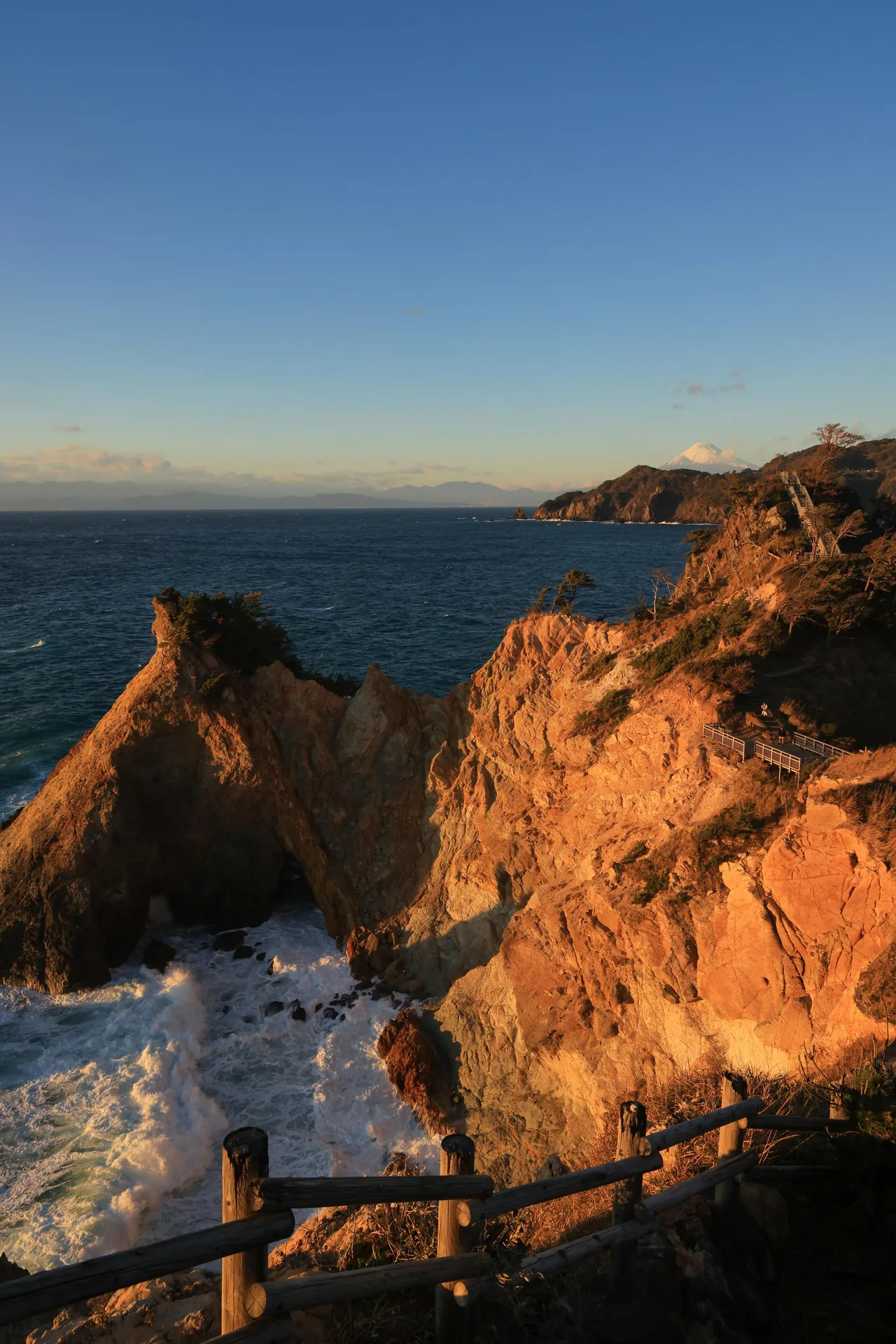
Photo: copyright© Shizuoka Prefectural Tourism Association.
The rock only looks golden in the short window between the sun dipping west and setting. You can watch the sunset here all year. Get off the Tokai Bus at "Koganezaki Crystal Park" and walk 10 to 15 minutes to the park. It gets dark underfoot after sunset, so check your way back while it's still light.
Dogashima: sea caves and islets in the dusk
South of Koganezaki, Dogashima is a coastline of white tuff cliffs and small islets. By day the main sight is Tensodo, a sea cave whose ceiling has partly collapsed into a round "skylight." Take the sightseeing boat into the cave, and the light pouring through the hole turns the water blue. Boats are canceled when the sea is rough, so check that day's service.
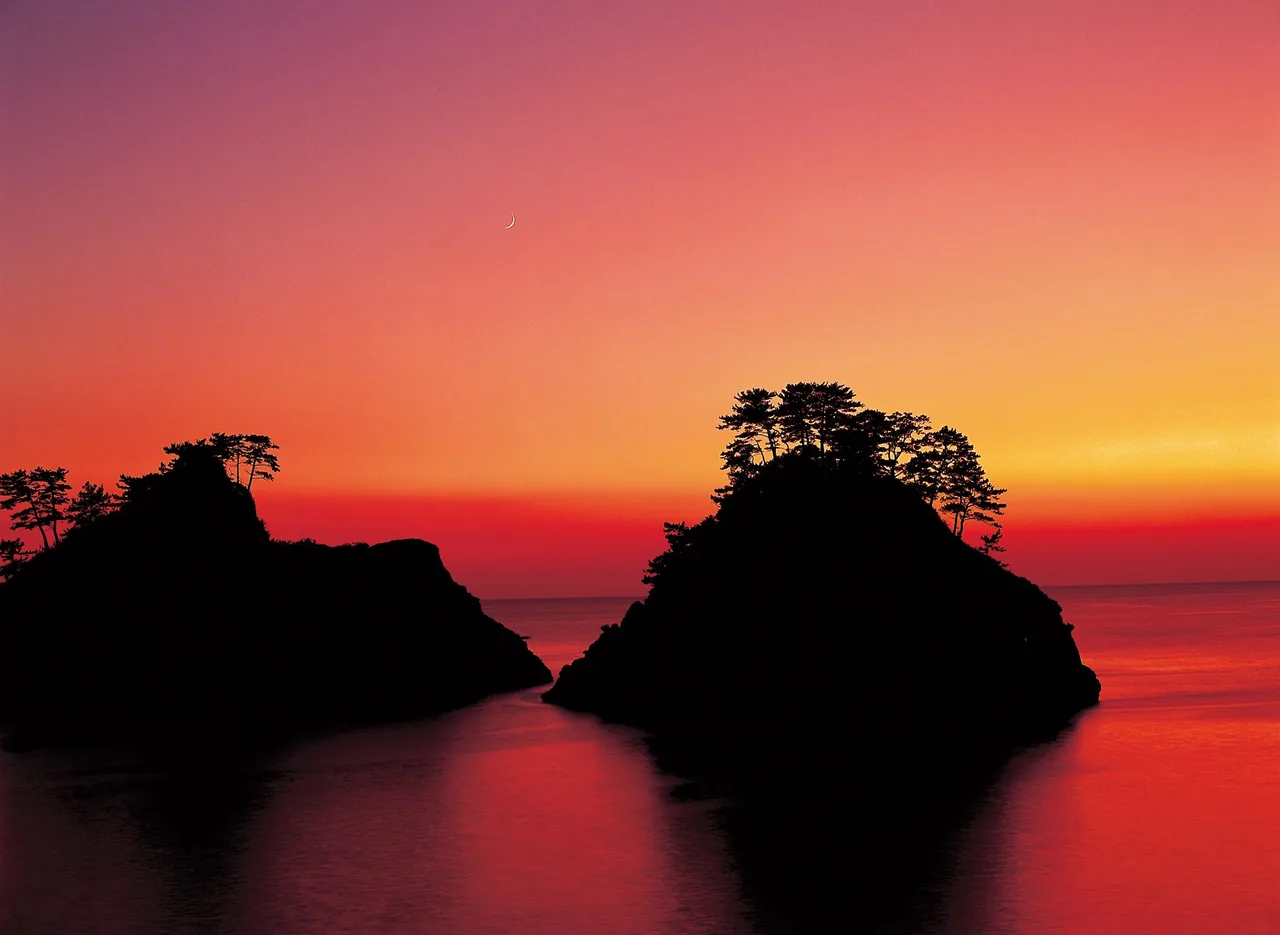
Photo: copyright© Shizuoka Prefectural Tourism Association.
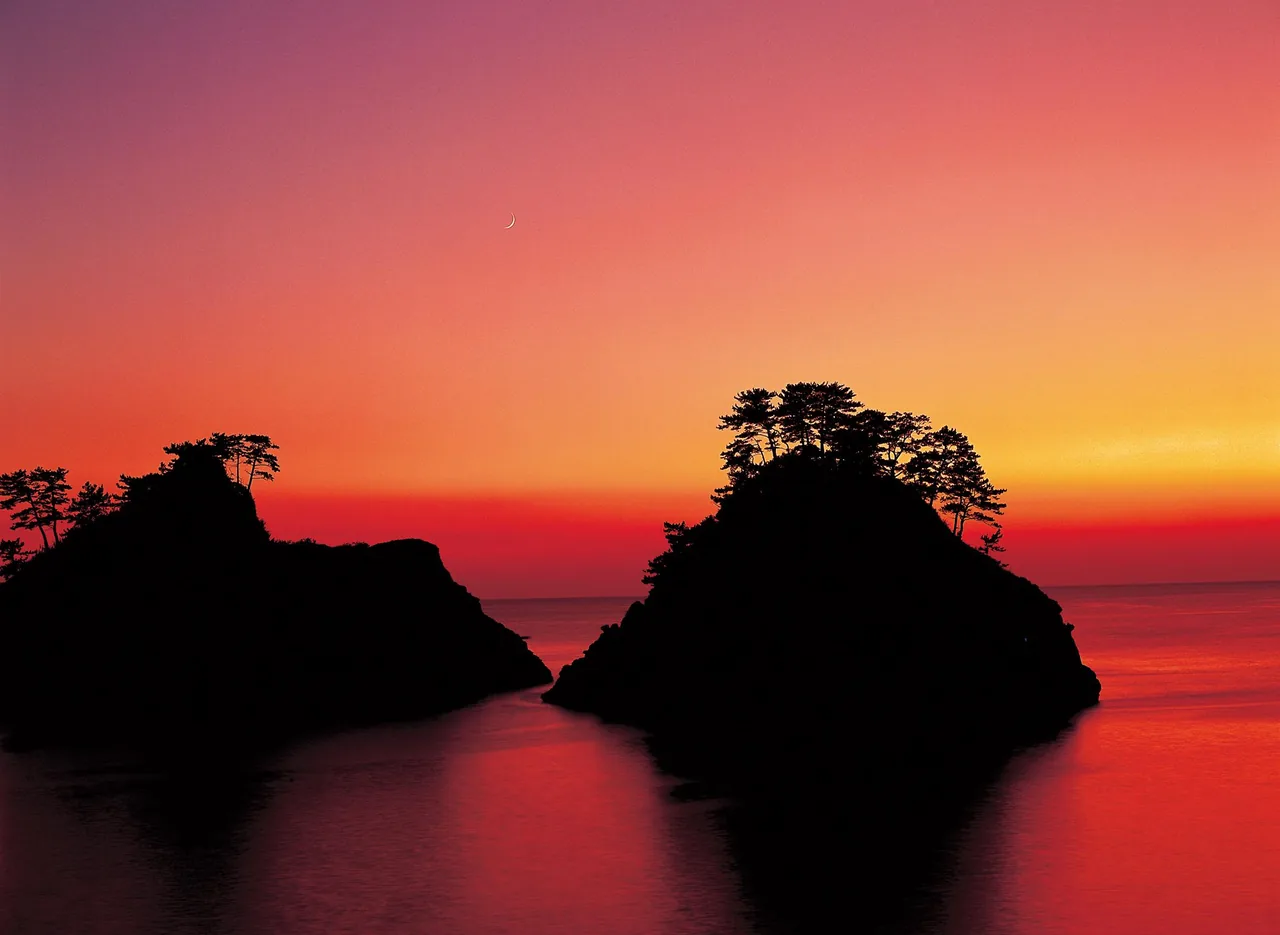
Dogashima is also a well-known sunset spot, and as the sun goes down the offshore islets become shadows against a red sky. At low tide a stone path appears to Sanshiro Island, and you can walk across. This "tombolo" appears in daytime mainly during spring tides from about March to September, and the Nishiizu Town Tourist Association publishes a tide table. Tokai Buses run here from Izukyu-Shimoda Station and Shuzenji Station.
Kumomi Coast and Senganmon: Mt. Fuji across the sea
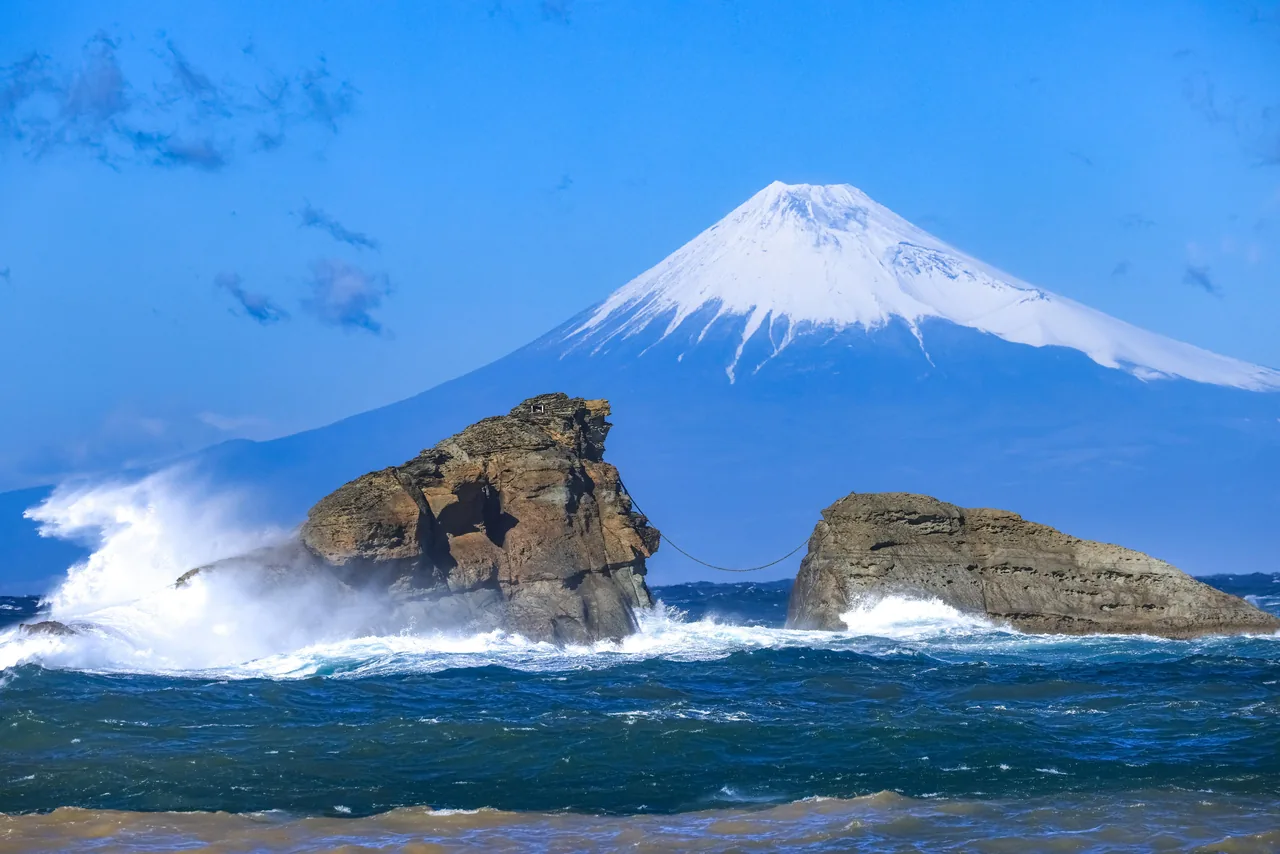
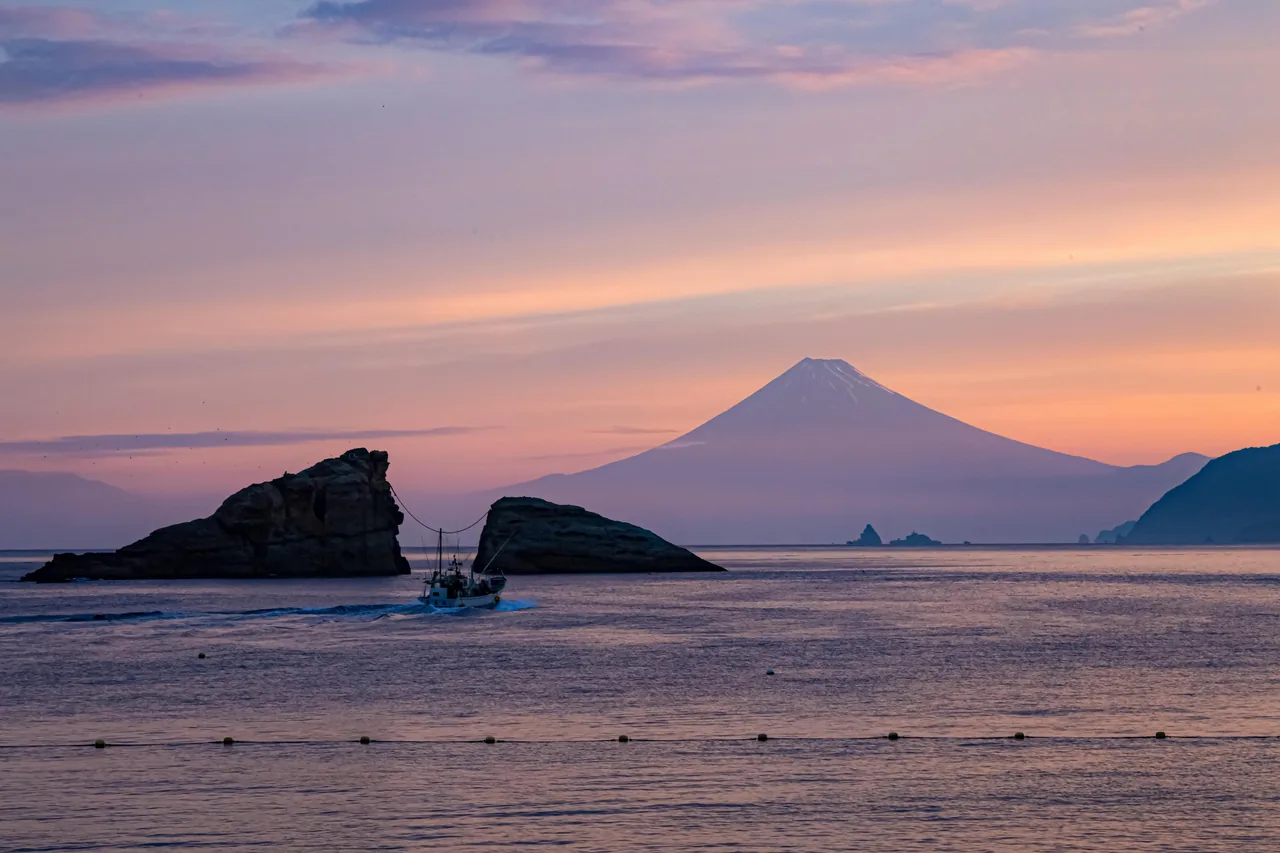
South of Matsuzaki, Kumomi Coast is a beach in front of a small village. Mt. Fuji rises straight ahead across Suruga Bay, and two rocks known as Ushitsuki-iwa sit offshore. As the sun sets and the sky changes color, Fuji and the rocks stand out like a shadow play. Behind the beach, steep stone steps climb Mt. Eboshi (162 m) to Kumomi Sengen Shrine at the top.
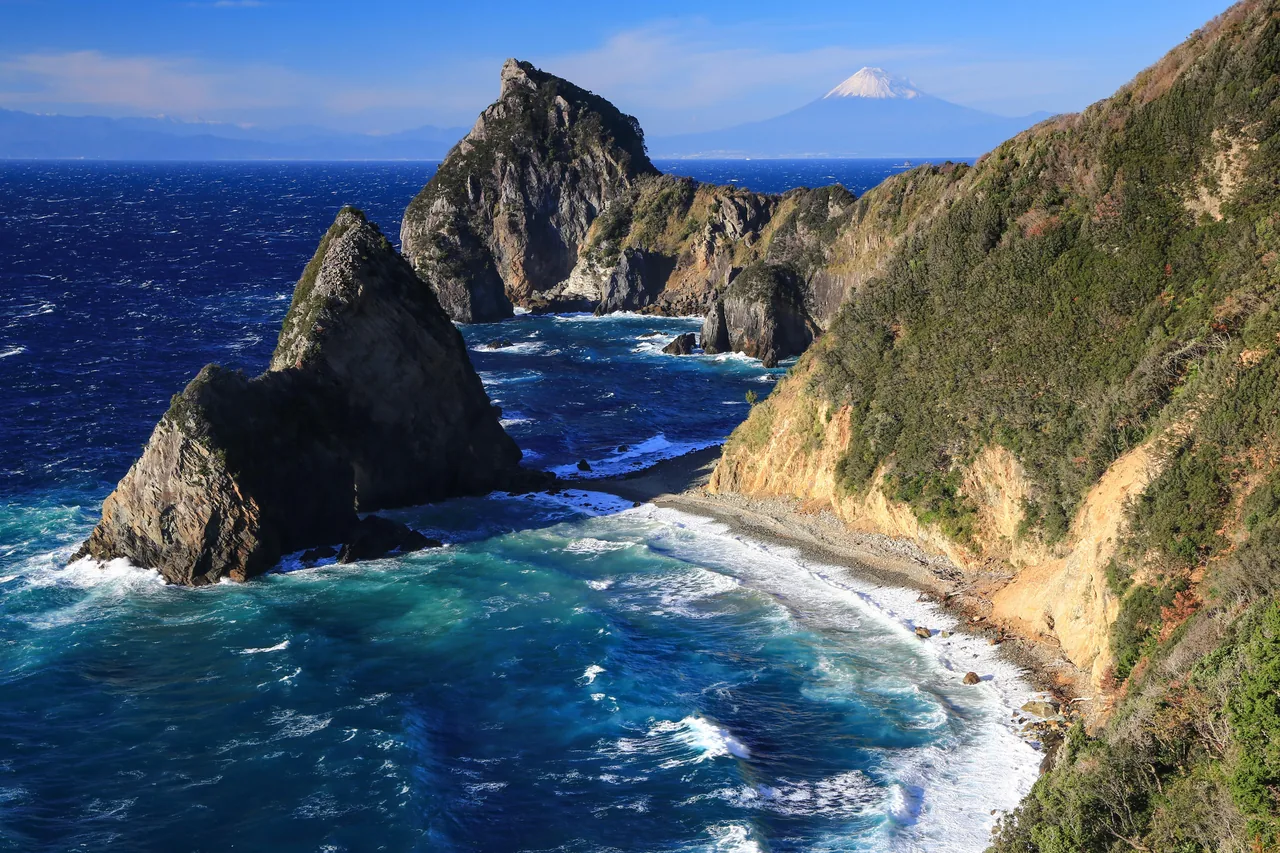
Senganmon, standing in the sea off Kumomi, is a huge rock with a gate-like hole through its middle. It was once a magma channel of an undersea volcano; the softer layers around it were worn away by waves, leaving the hard part above the water. A path of about 400 m leads from Kumomi village down to the shore, with a climb of about 200 m of steps to a viewpoint on the way. Because of the risk of falling rocks, Matsuzaki Town asks visitors to avoid it in rain or strong wind.
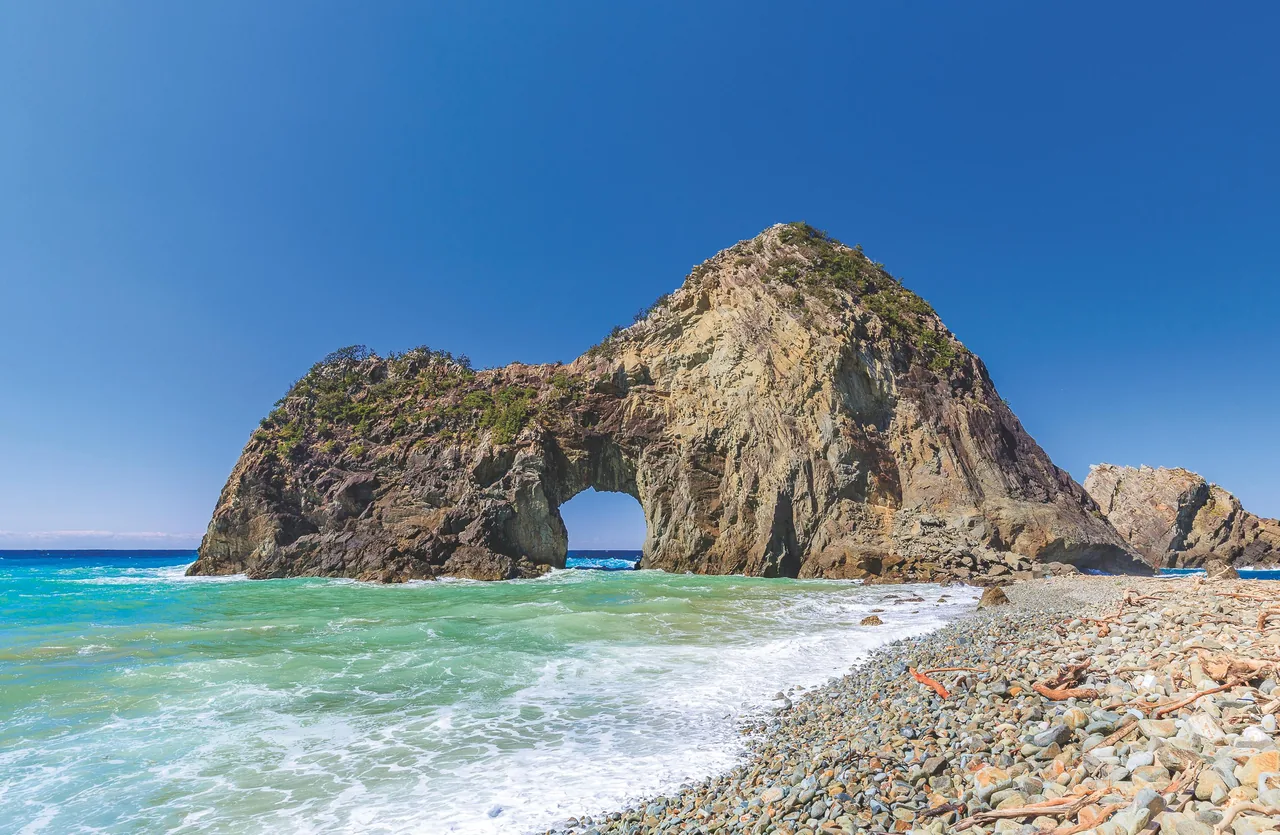
Photo: copyright© Shizuoka Prefectural Tourism Association.
Mt. Fuji is often hidden by cloud, and whether you'll see it depends on the weather. Check the tourism webcam that Matsuzaki Town publishes before you set out to avoid a wasted trip. Take the bus toward Kumomi-Iriya from Matsuzaki Bus Terminal and get off at "Kumomi-hama."
Iwachi and Matsuzaki: a quiet cove and an old town
Iwachi in Matsuzaki Town is a small village on a cove flanked by headlands on both sides. Known as the "Côte d'Azur of the Orient," it is famous for the contrast between its white sand beach and turmeric-yellow roofs, seen from the national highway. The water inside the bay is calm, and in summer it's a swimming beach.
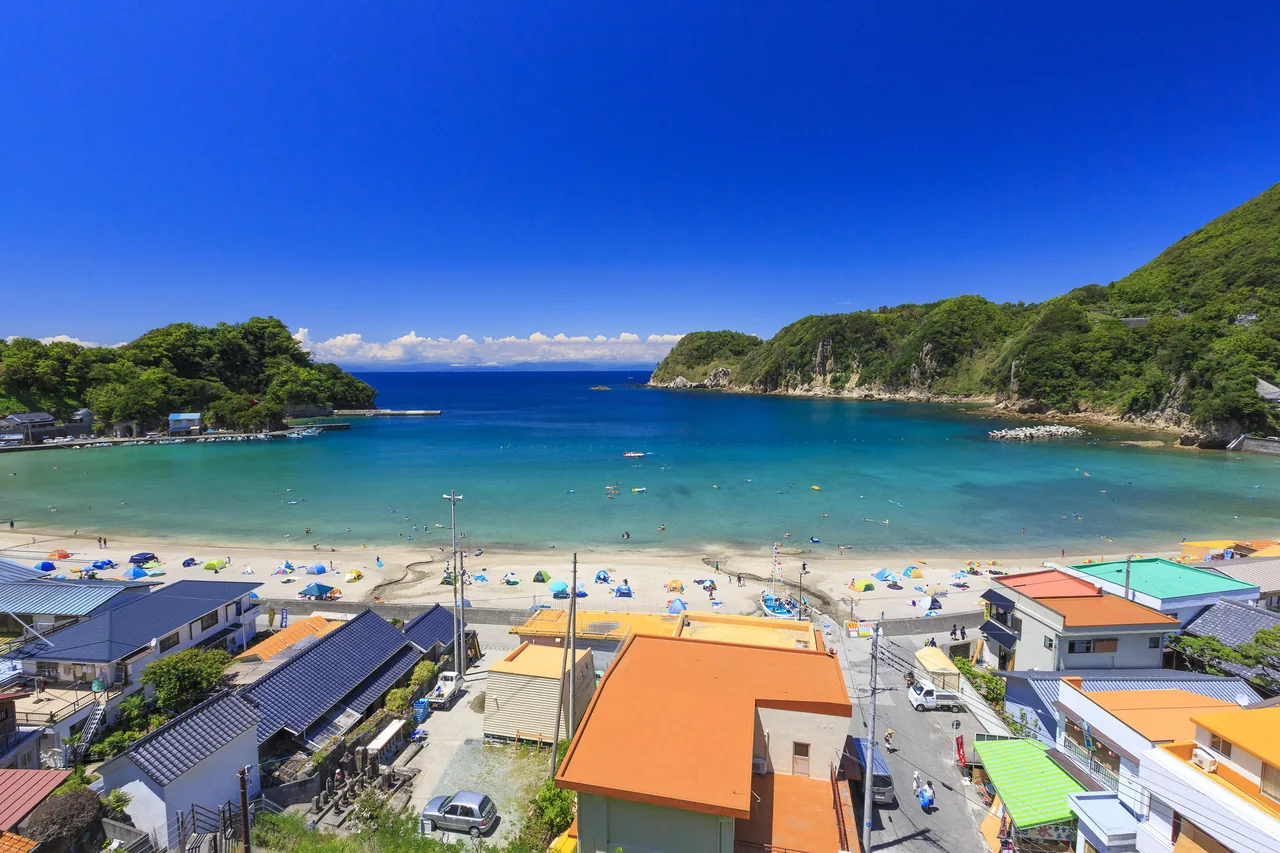
Photo: copyright© Shizuoka Prefectural Tourism Association.
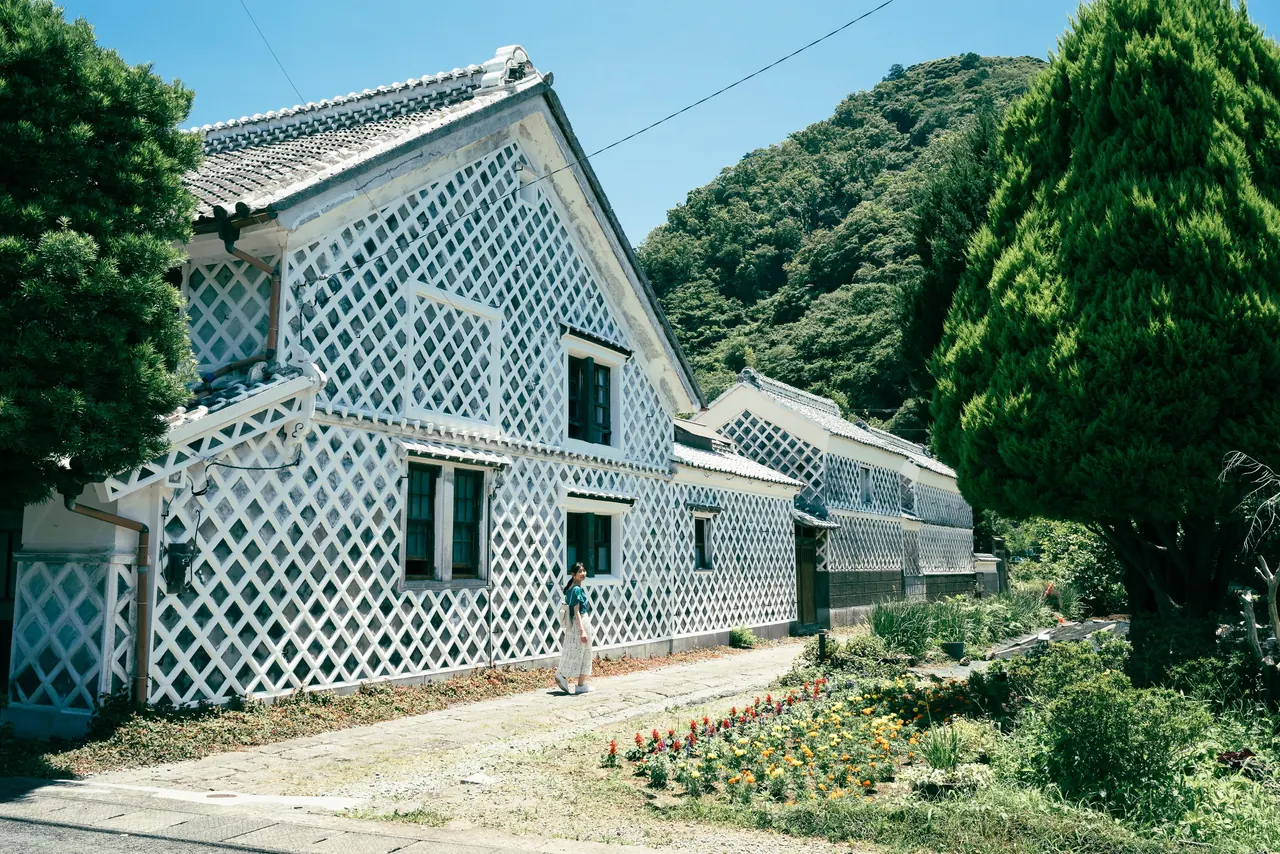
In the center of Matsuzaki is the Namako-kabe street, lined with buildings whose walls have a black-and-white lattice pattern. Stroll the town while you wait for the evening, then head to the sea as the sun gets low, and the day flows nicely.
Getting around West Izu: bus or car
No railway runs through West Izu. By train, go to Izukyu-Shimoda Station on the Izukyu Line or Shuzenji Station on the Izuhakone Railway and change to a Tokai Bus.
| From | To | Bus |
|---|---|---|
| Izukyu-Shimoda Station | Matsuzaki | Tokai Bus toward Matsuzaki |
| Izukyu-Shimoda Station | Dogashima | Tokai Bus to Dogashima |
| Shuzenji Station | Dogashima | Tokai Bus |
| Matsuzaki Bus Terminal | Kumomi-hama | Tokai Bus toward Kumomi-Iriya |
Check journey times and departures on the Tokai Bus timetable.
Buses thin out after sunset. Check the time of your return bus first, or plan to stay overnight in West Izu so you can watch the sun go down without rushing. By car, coastal Route 136 links all these spots, but it's a winding road, so take care driving after dark.
Getting around the whole peninsula, East Izu and Shimoda included, is covered in the Izu Peninsula travel guide, and beaches for summer swimming in the guide to Izu's beaches.