Kawarage Jigoku
About
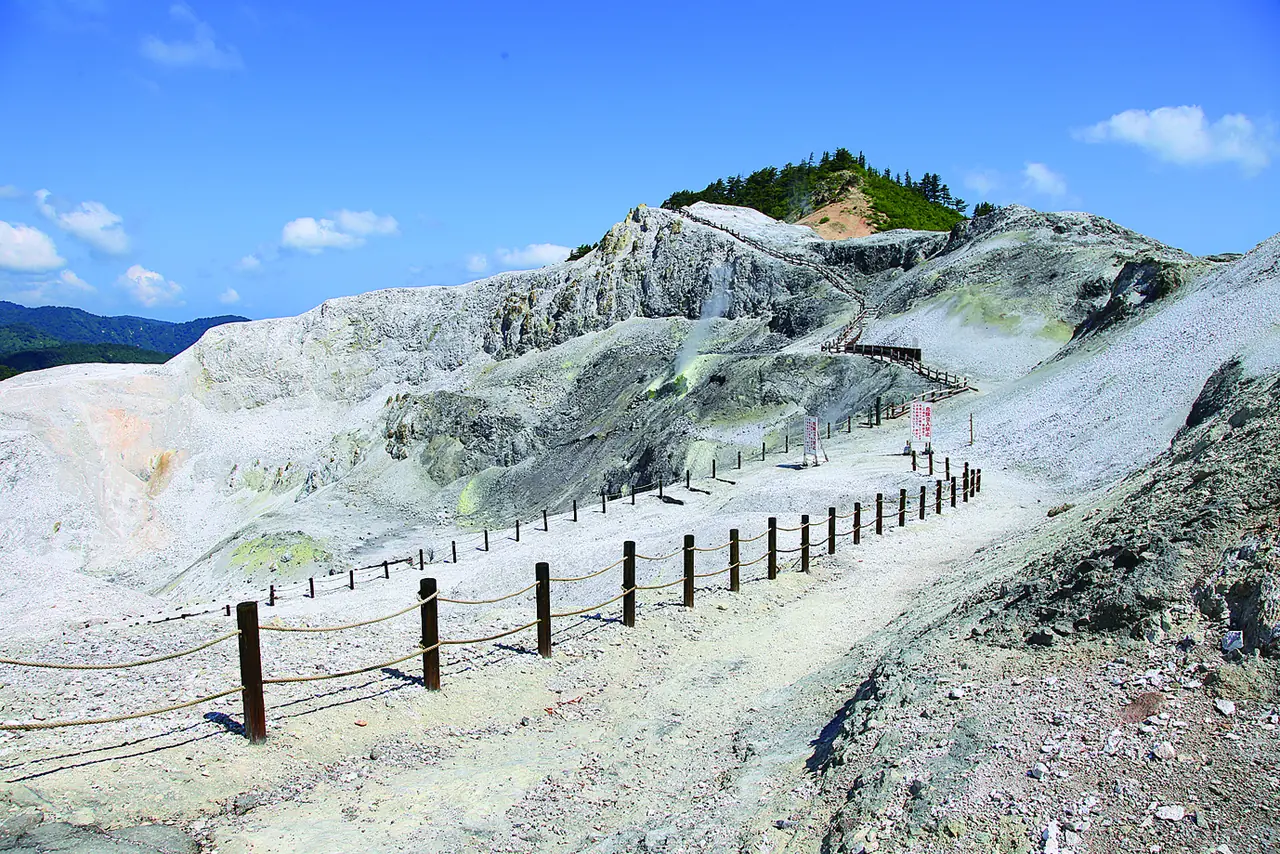
High in the mountains of Yuzawa, Kawarage Jigoku ("Kawarage Hell") is an expanse of grey-white rock where almost nothing grows. Volcanic gas vents from all over the slopes and the air smells of sulphur. It is counted among Japan's three great sacred mountain sites, alongside Osorezan in Aomori and Tateyama in Toyama, and has drawn mountain ascetics and pilgrims for centuries. You can only visit when there is no snow; the area is closed for winter from early November to early May.
This text was translated automatically and may contain errors.
Walking among the white rocks
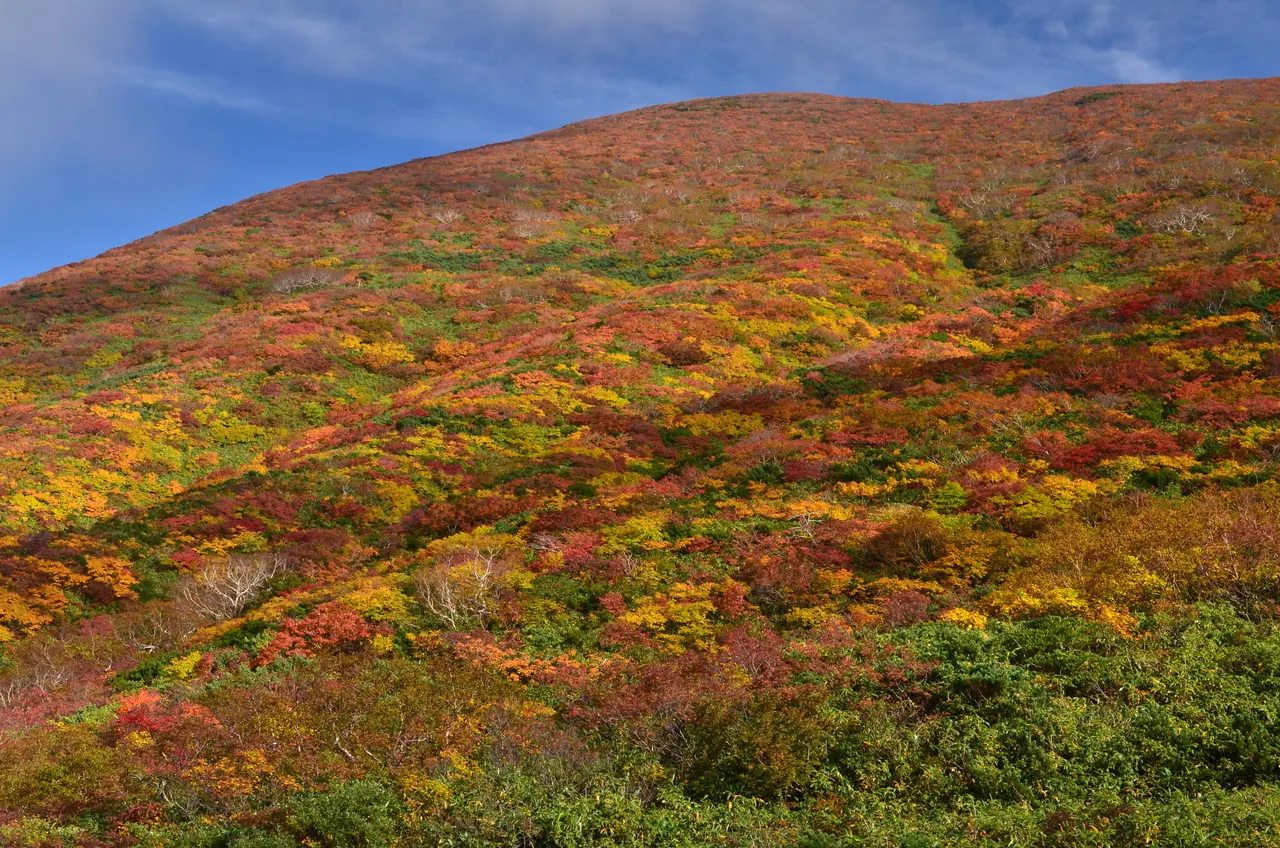
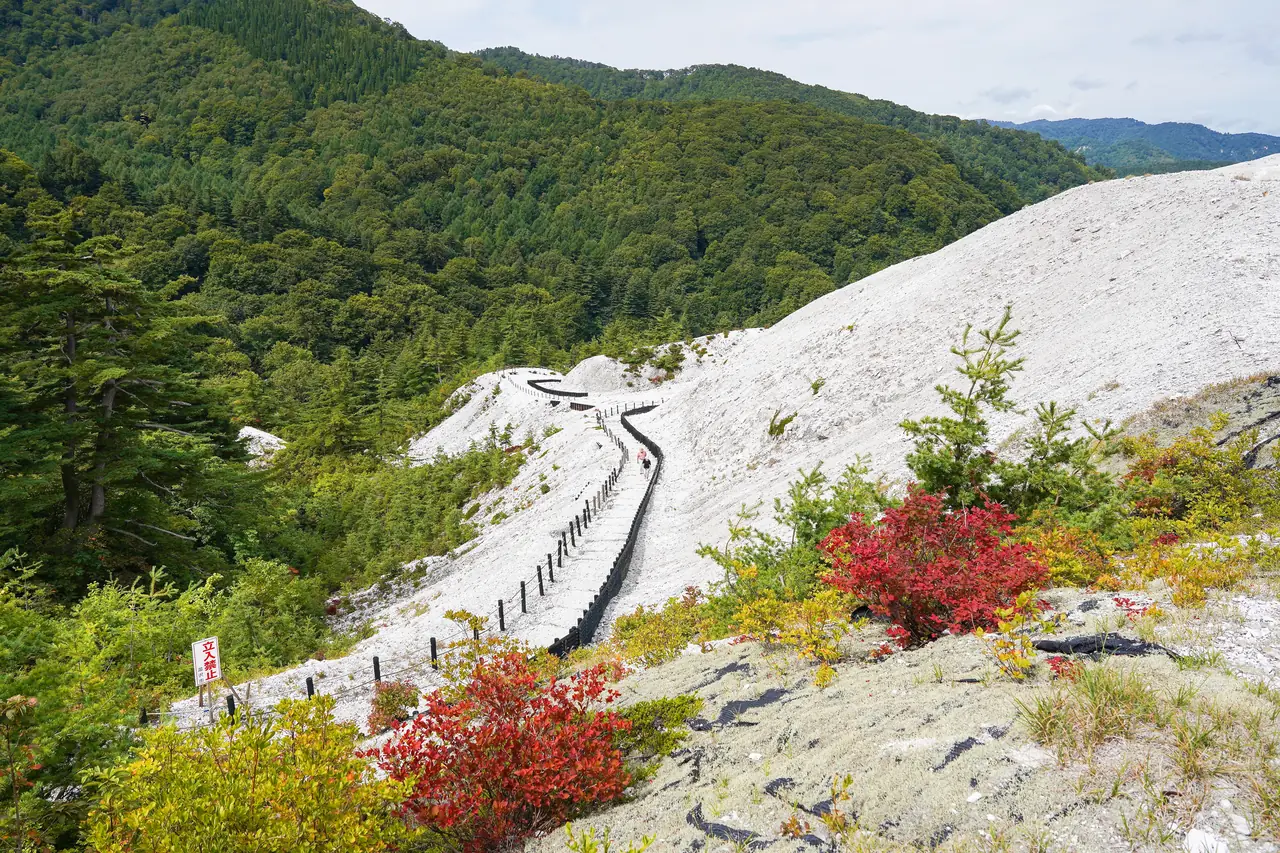
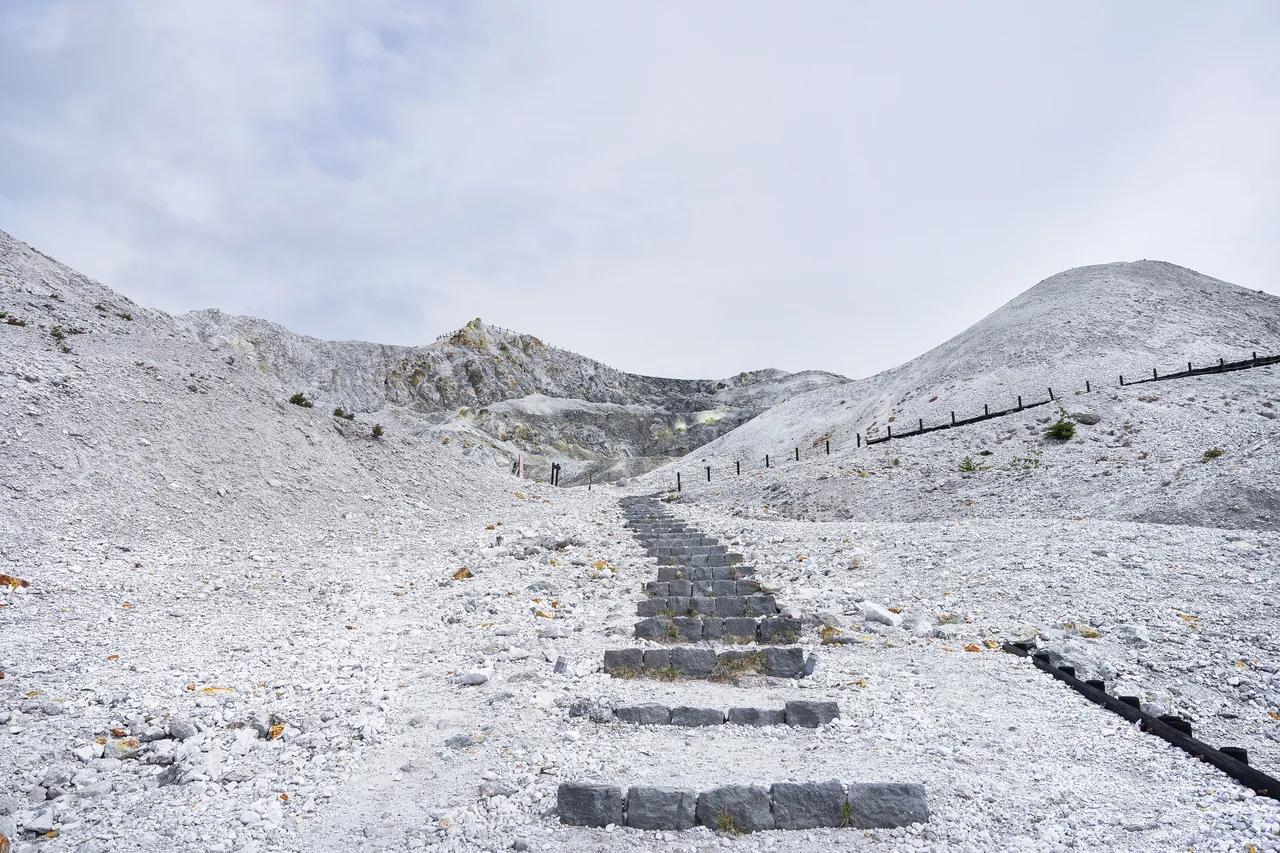
The path winds across slopes of white gravel. In autumn the shrubs beside it turn red, sharp against the pale ground. The white colour comes from hot water and volcanic gas rising from underground and altering the rock, and Yuzawa City introduces the area on its cultural-properties pages as the Kawarage acid alteration zone.
A mountain opened as a sacred site
Tradition says the monk Gesso opened Kawarage as a sacred site in 807. Its barren landscape was likened to the hell of the afterlife, and many ascetics and pilgrims made their way here. Sugae Masumi, a travel writer of the Edo period, also visited and left drawings of the steaming vents.
A history of sulphur mining
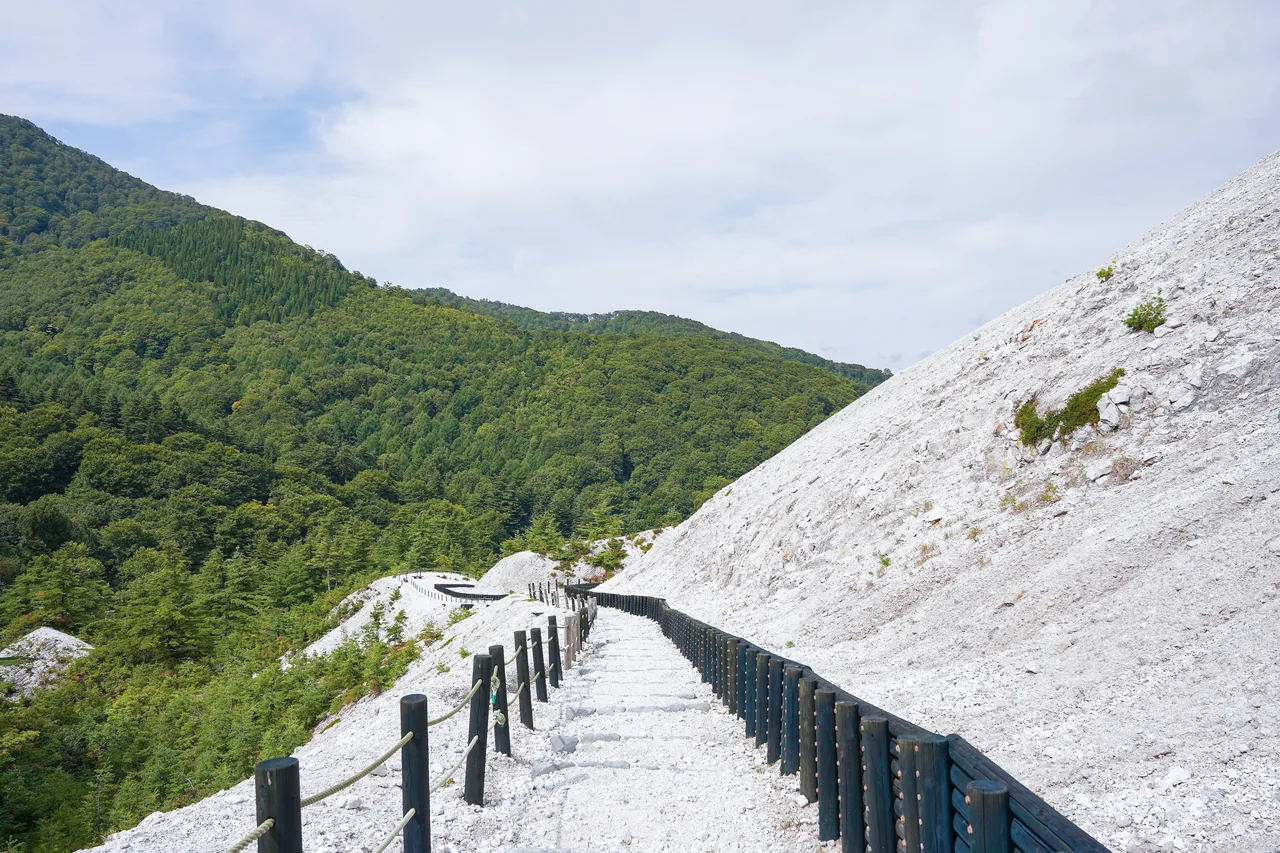
Kawarage was also a sulphur mine for a long time. Mining began in 1623 and continued for 344 years until the mine closed in 1966. Today the path detours around spots where hydrogen sulphide gas is concentrated. The gas is densest close to the ground, so never step outside the rope fences or into restricted areas, and take particular care with small children.
- Access
- About 50 minutes by car from JR Yuzawa Station. Check Yuzawa City's page for the winter closure dates and any road closures nearby.