Nishimonai Bon Odori
- Aug 16, 2026 – Aug 18, 2026
About
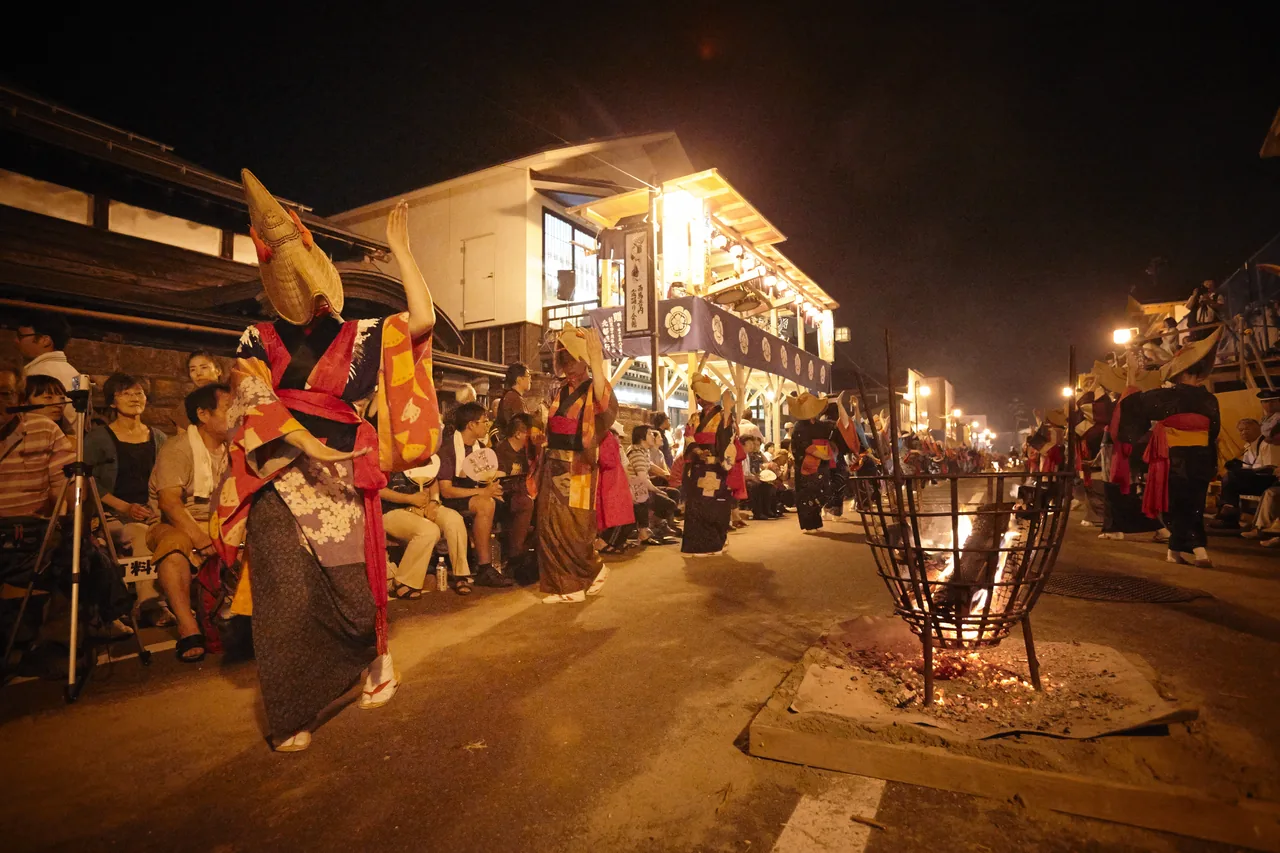
A Bon dance, the dance held in summer to welcome back the spirits of ancestors, performed every year on the nights of August 16 to 18 in the Nishimonai district of Ugo Town. Dancers with their faces hidden under woven straw hats or black hikosa-zukin hoods move slowly and gracefully along Honcho-dori street. In 1981 it became the first Bon dance in Japan to be designated an Important Intangible Folk Cultural Property, and in 2022 it was inscribed on UNESCO's Intangible Cultural Heritage list as one of the furyu-odori dances. In rain, it moves to the Ugo Town General Gymnasium.
This text was translated automatically and may contain errors.
Honcho-dori after dark
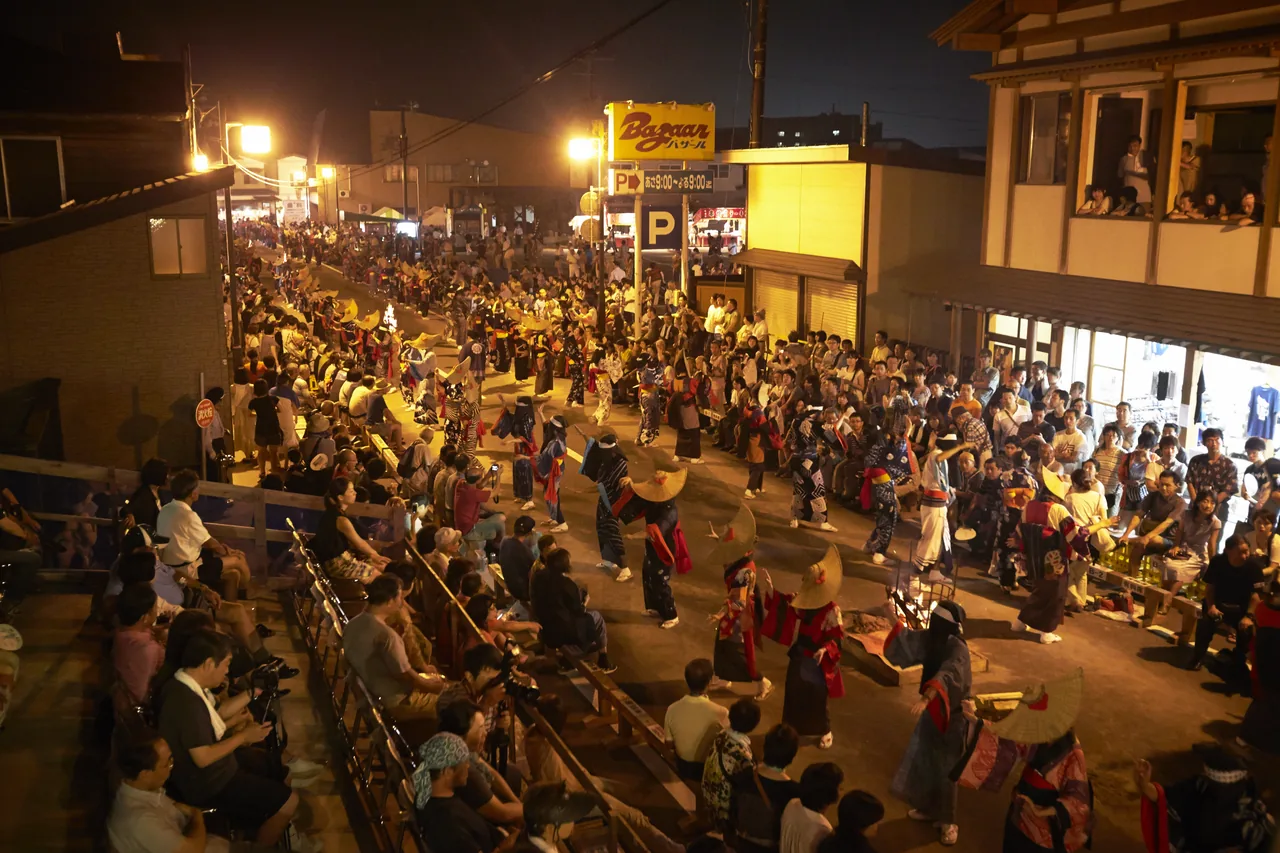
The dance takes place on Honcho-dori in Nishimonai. After sunset spectators line both sides of the street, and a long procession of dancers moves slowly along it. The music, played on a stage set up on the street, comes from flutes, large and small drums, shamisen, hand drums and bells. Paid seating is available, with reservations taken each year.
Hanui, the patchwork kimono
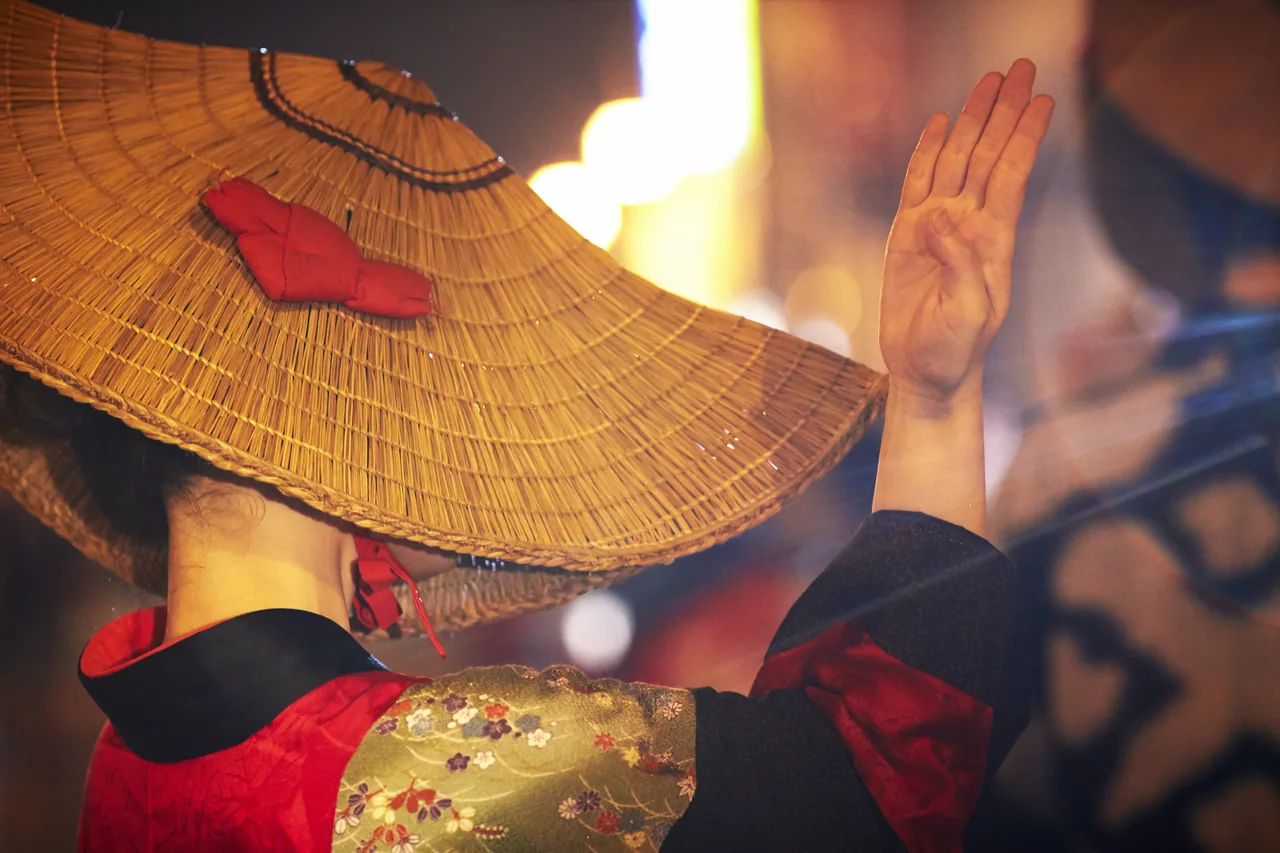
The hanui worn by women dancers is sewn from pieces of old silk. It is considered a garment of high standing: a dancer may wear one only once her family and those around her agree that her dancing has become good enough. Paired with a straw hat that curves up sharply at front and back, it hides the face completely, leaving only the movement of the hands and the pattern of the cloth.
Straw hats and hikosa-zukin hoods
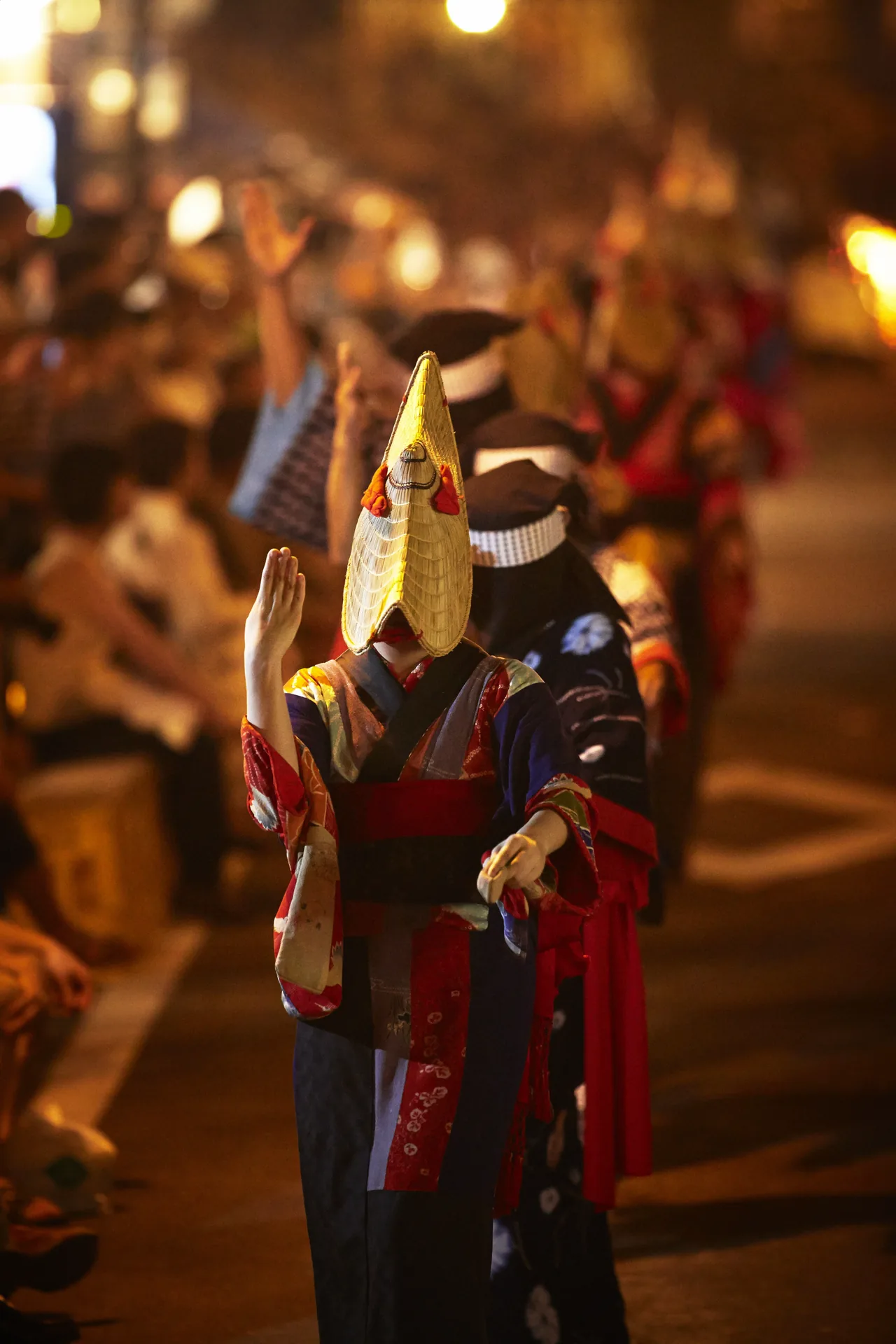
The other way of hiding the face is the hikosa-zukin, a black hood shaped like a bag with holes cut only for the eyes. Its origin is unclear, and it gives the dance an eerie air that has earned it the name "dance of the dead." Dancers in the hood wear indigo-dyed yukata.
From ondo to jinku
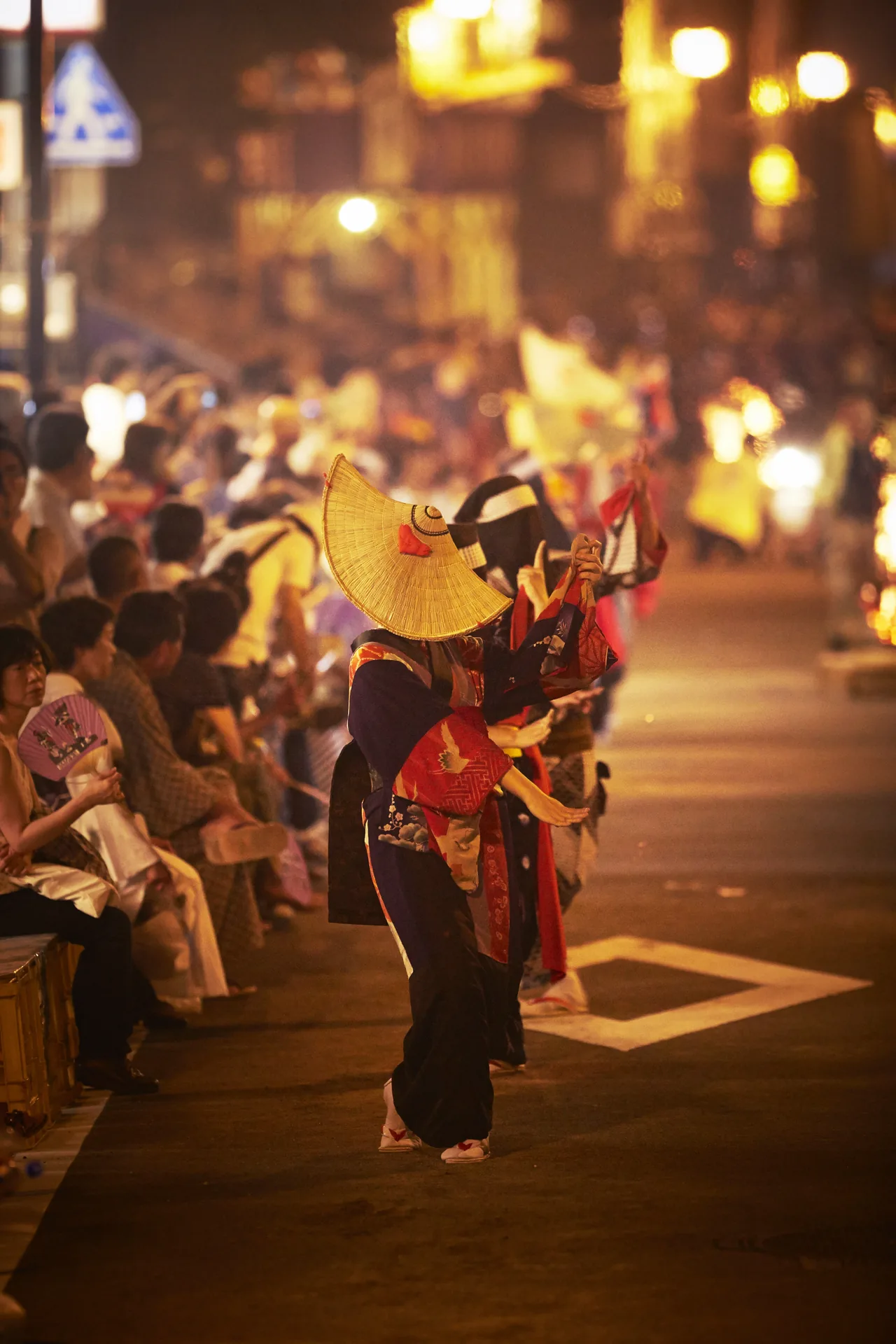
By custom the evening begins with dances to ondo songs, and as the night deepens it shifts to the jinku dance. The jinku dance is also called gange, and the mood on the street changes as the night goes on. On the last night, August 18, the dancing continues later than on the other nights.
- Access
- The nearest station is Yuzawa on the JR Ou Line, and Ugo Kotsu's Nishimonai Line bus runs from Yuzawa to Nishimonai. Roads around the venue are closed to traffic from evening until late at night during the festival, so if you are driving, check parking on Ugo Town's festival guide.