Shirakawa Barrier Site (Shirakawa-no-Seki)
About
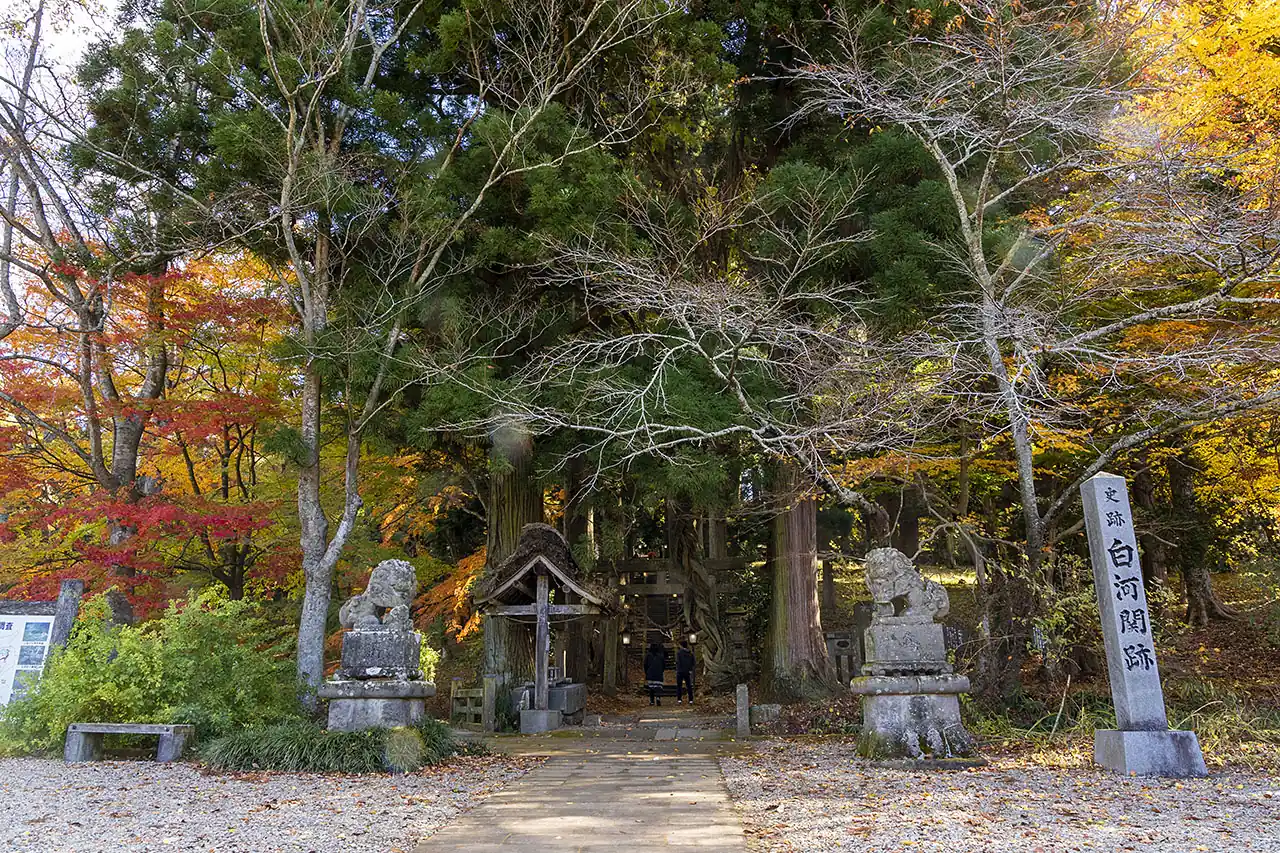
The remains of an ancient checkpoint on the road from the capital to Michinoku, the far north of Japan. It first appears in records in 799, and later became an utamakura, a place famed in classical poetry that people in the capital longed to see. The whole wooded hill known as Seki-no-Mori is a National Historic Site, with Shirakawa Shrine on its summit. The wooded grounds are at their most beautiful in fresh spring green and autumn colour.
This text was translated automatically and may contain errors.
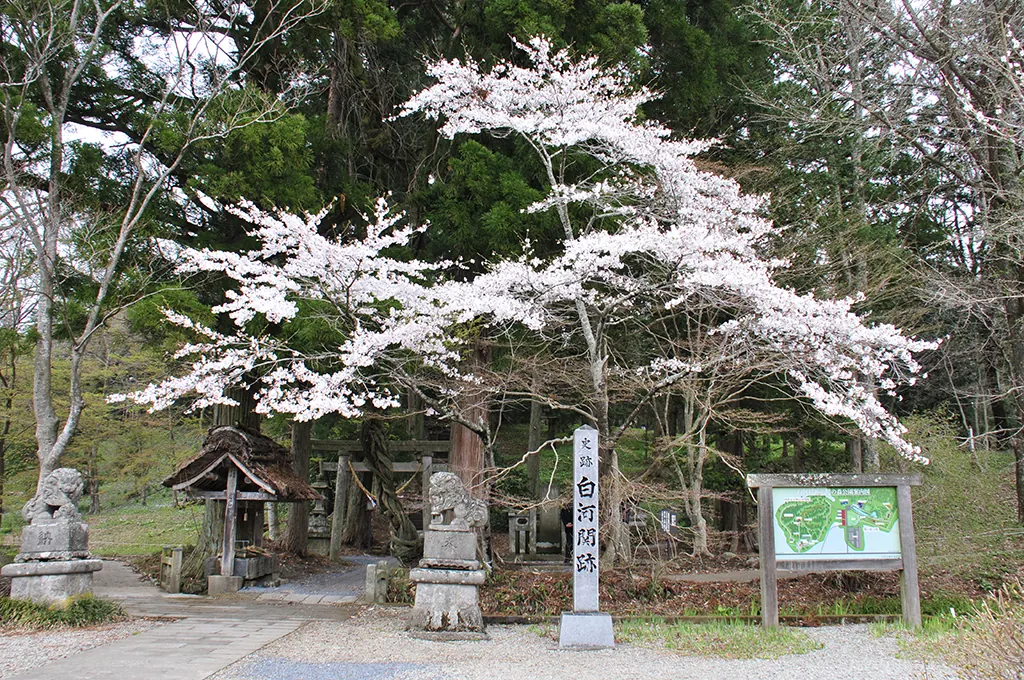
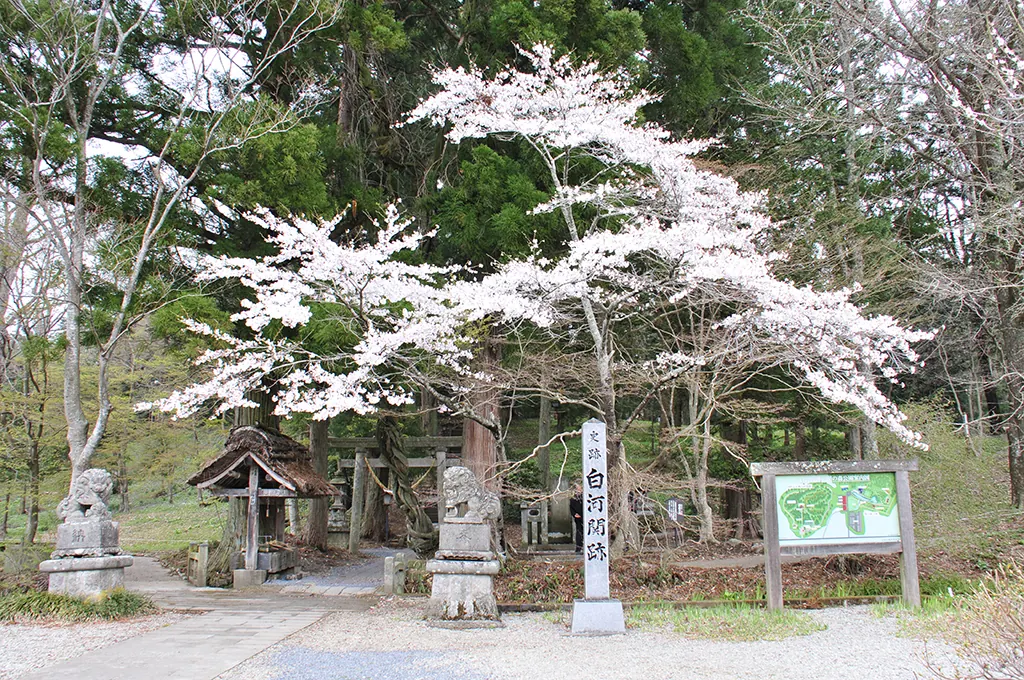
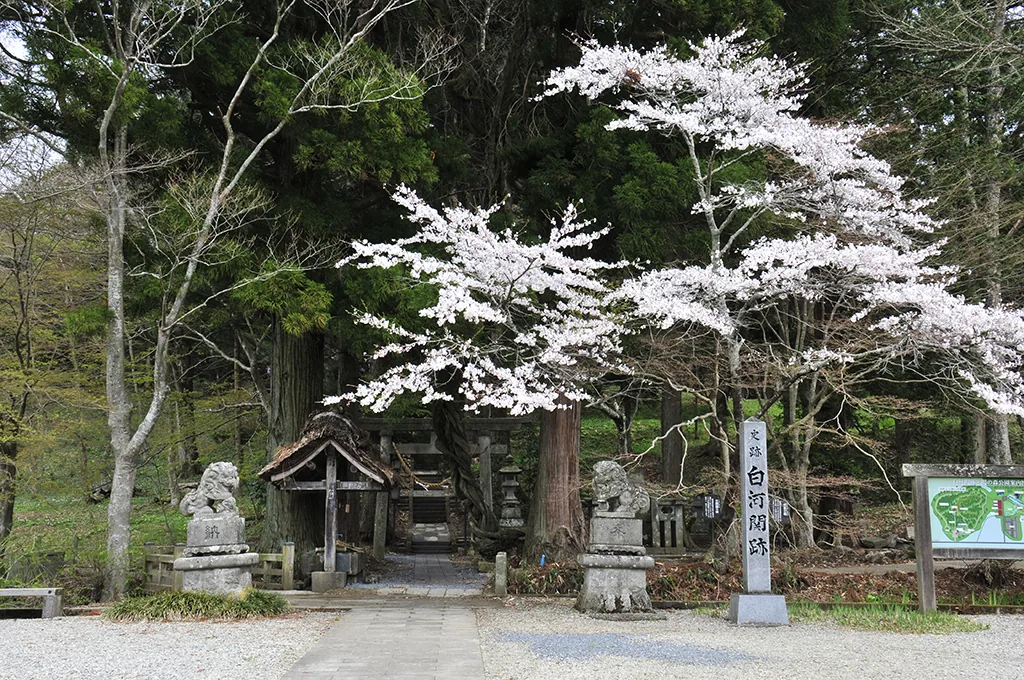
Shirakawa Shrine on the hilltop
The barrier site is a free-standing hill about 410 metres above sea level, just south of Hatajuku village and roughly 3 km from the border with Tochigi Prefecture. Shirakawa Shrine sits on top of the hill. No checkpoint buildings survive, but excavations from 1959 uncovered dry moats, earthen embankments and traces of fences, confirming that this was the barrier.
The "Kokanseki" stone erected by Sadanobu
The barrier fell out of use around the 10th century, and for a long time no one knew exactly where it had stood. In the Edo period Matsudaira Sadanobu, lord of the Shirakawa domain, studied the question, identified this spot as the site, and in 1800 erected a stone inscribed "Kokanseki" (site of the old barrier). Today's barrier site begins with that piece of research.
A poets' landmark and the Junii cedar
Ever since the monk Noin wrote of leaving the capital with the spring haze and arriving at Shirakawa as the autumn wind blew, the barrier has appeared in countless poems; Saigyo and Matsuo Basho are also said to have come here. Poem stones and monuments are scattered around the grounds. The Junii-no-Sugi, a cedar said to have been planted by the poet Fujiwara no Ietaka, is estimated to be about 800 years old.
- Access
- The site is in Hatajuku, well south of central Shirakawa. Route buses run, but so infrequently that Shirakawa City recommends coming by rental car; there are rental car offices around Shin-Shirakawa Station.