Shiroyone Senmaida
About
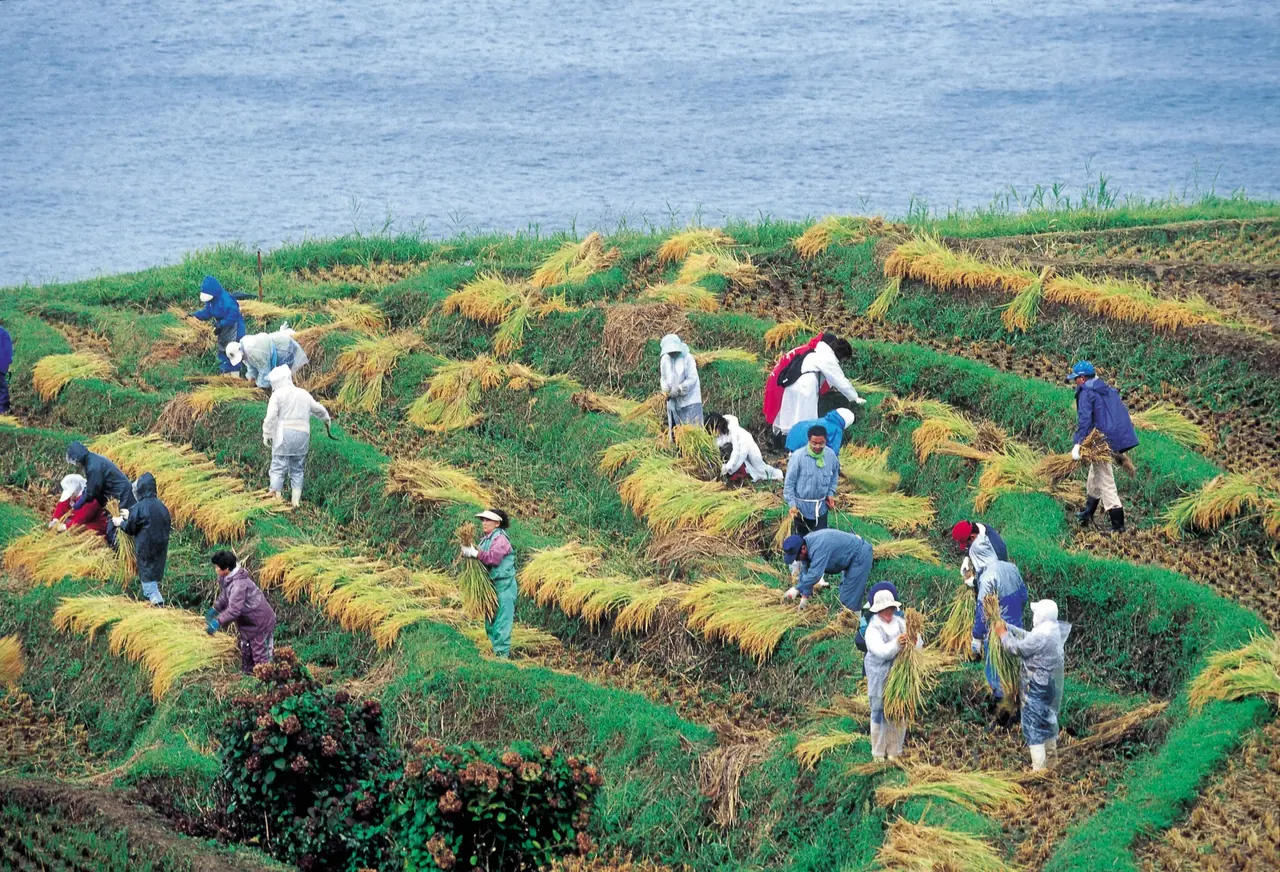
Terraced rice fields in Shiroyone, Wajima, where 1,004 small paddies cascade down a slope facing the sea. They are a nationally designated Place of Scenic Beauty and one of the components of the Globally Important Agricultural Heritage System "Noto's Satoyama and Satoumi," of which they are considered a symbol. The terraces were damaged in the Noto Peninsula Earthquake, but rice was planted and harvested in the restored paddies in 2025, and a harvest event was announced again for 2026. Check the official website for the latest situation before you visit.
This text was translated automatically and may contain errors.
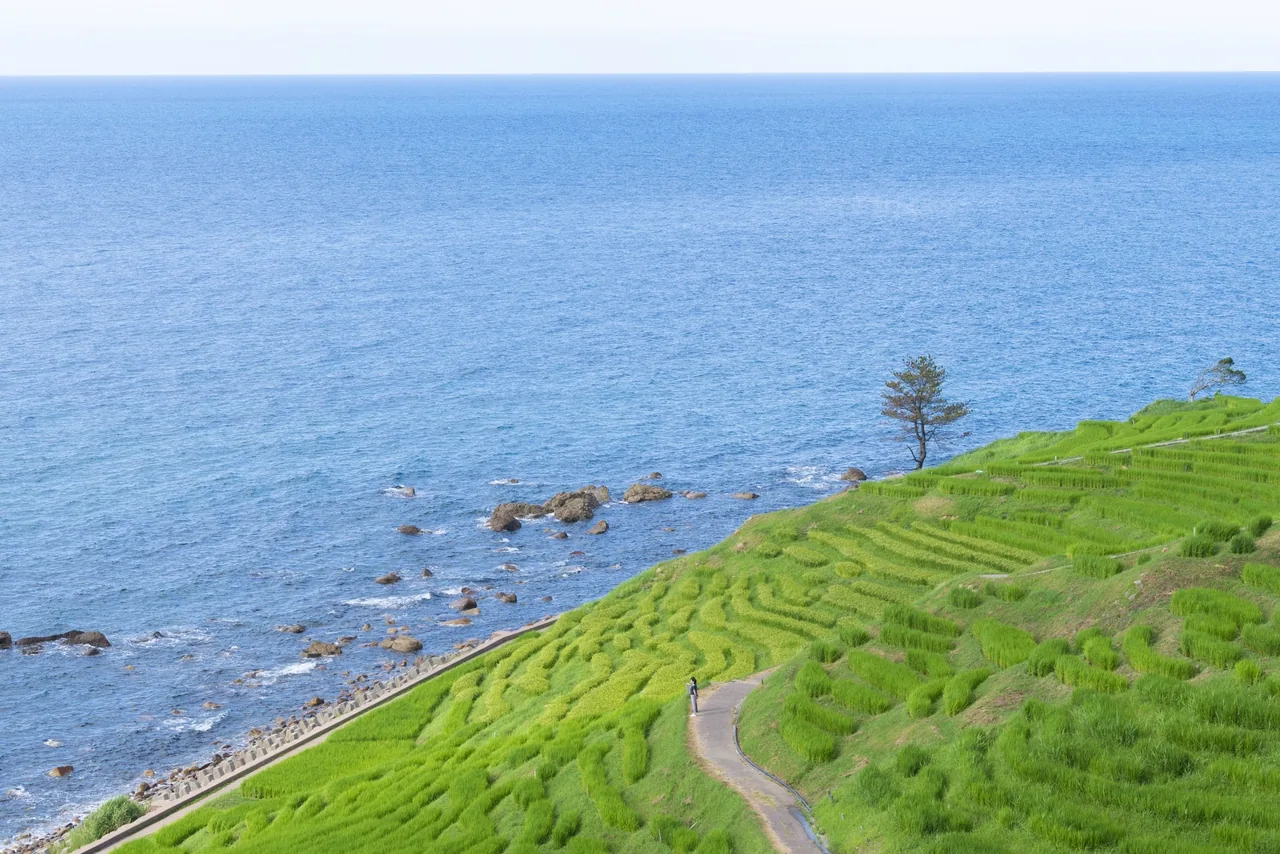
1,004 paddies running down to the sea
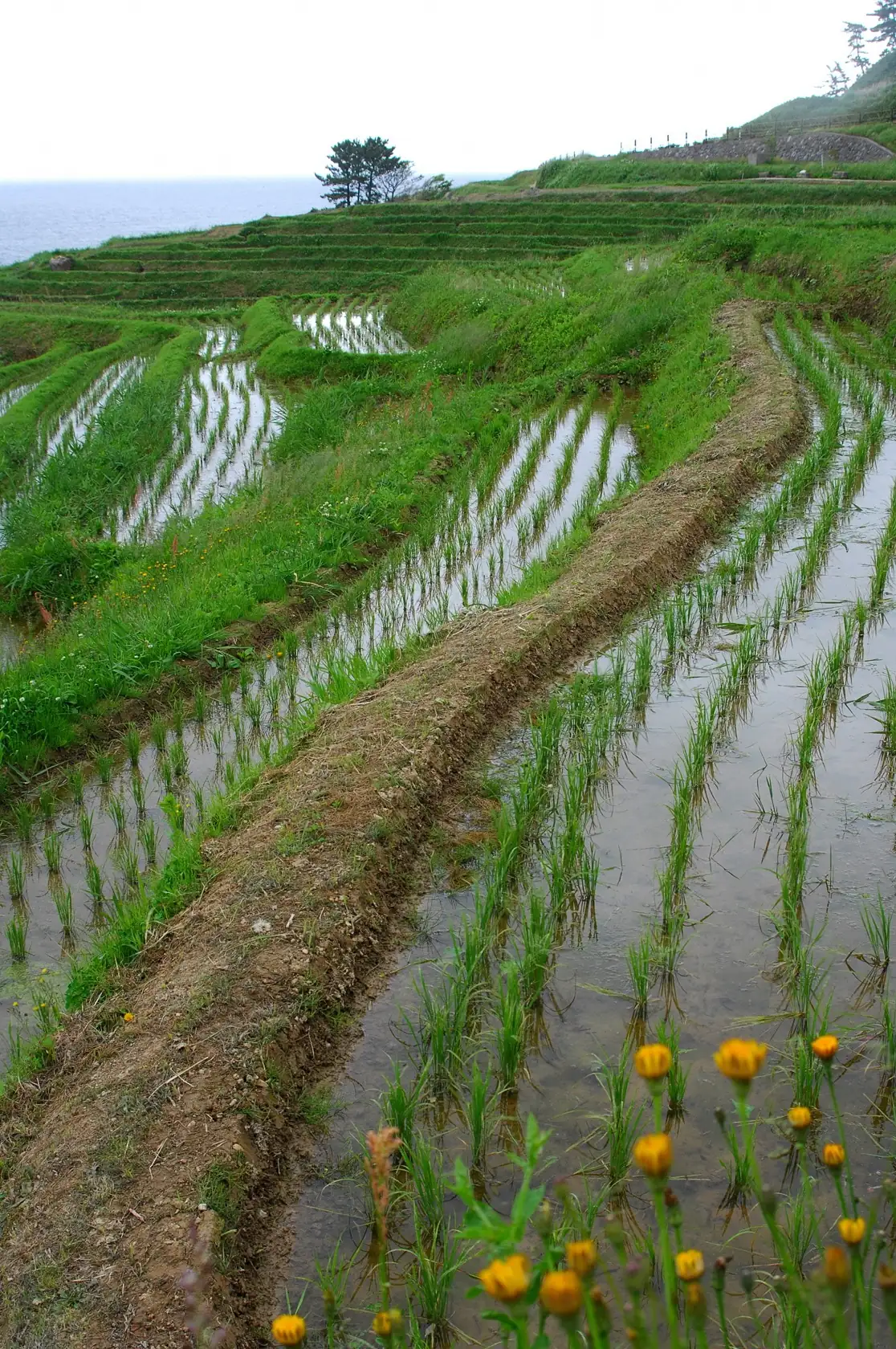
Looking down from the high ground by the road, green paddies descend in steps to the very edge of the Sea of Japan. Each paddy is small, curving with the shape of the slope as they stack one above another. In early summer, seedlings stand in rows in the flooded paddies; the fields turn green in summer and gold in autumn. Allow 30 minutes to an hour to take in the view and walk a little.
Aze no Kirameki is on hold
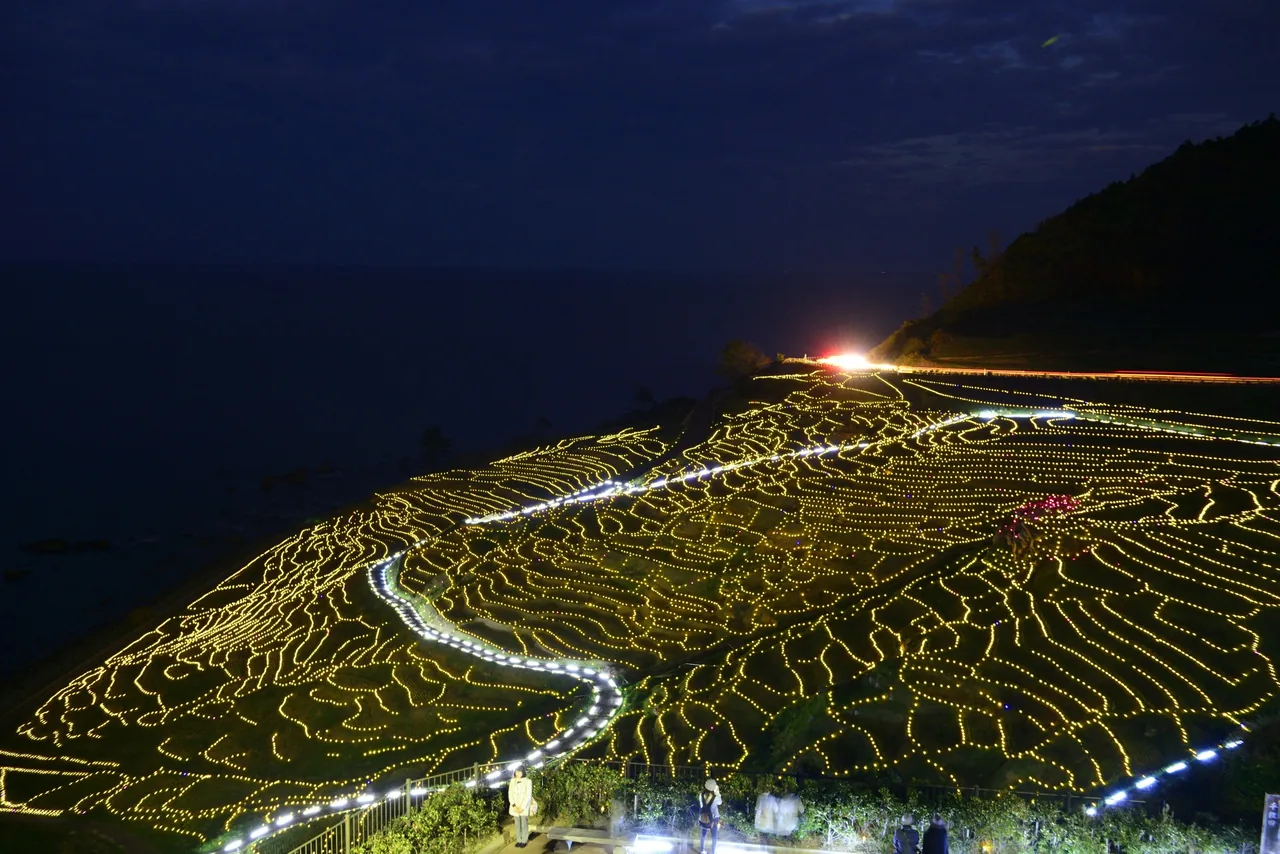
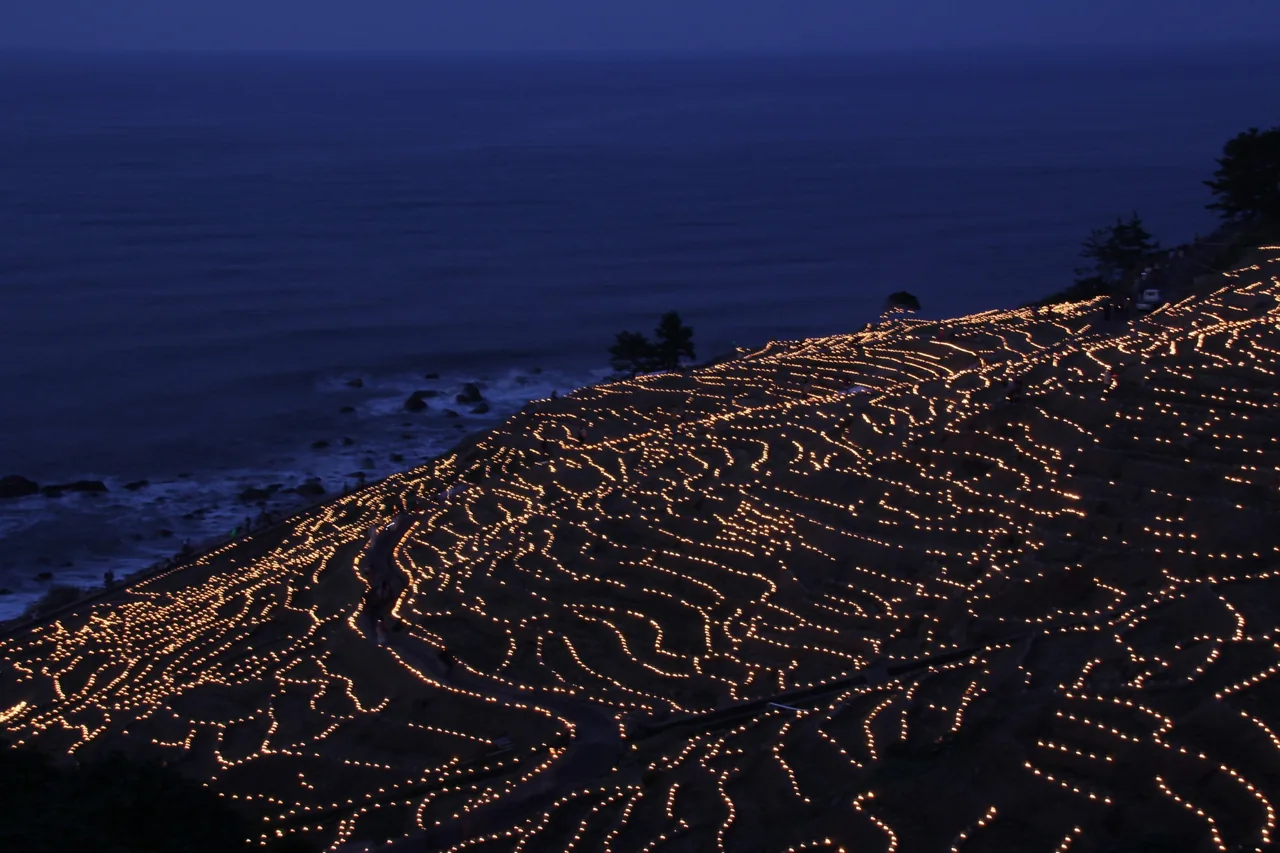
Before the earthquake, an illumination called Aze no Kirameki outlined the terraces with lights placed along the ridges between the paddies, usually from mid-October to mid-March. According to the official website, it was not held in fiscal 2025 because of the disaster, and as of November 2026 no further event has been announced. Check the official website to see whether it will be held.
Visiting terraces on the road to recovery
Since the earthquake, the paddies have been gradually restored, and planting and harvesting under the owner program have resumed. These are fields still farmed by local growers and community members, so stay off the ridges and paddies and enjoy the view from designated spots.
- Access
- About 15 minutes by car from the Wajima roadside station (Michi-no-Eki Wajima) in central Wajima.