
Full day · About 5 h
Arita and Imari Day Trip: Walking Japan's Porcelain Towns
Arita's porcelain stone quarry, a shrine with a porcelain torii and the white-walled Uchiyama district, then Imari and the Nabeshima kiln village of Okawachiyama.
This itinerary is translated from the Japanese edition. Read the Japanese edition
Izumiyama Porcelain Stone Quarry
Allow about 30 min
Walk here from Kami-Arita Station on the JR Sasebo Line. Tradition holds that the potter Yi Sam-pyeong, who came from the Korean Peninsula, found porcelain stone here in the early 17th century; the white rock faces left by centuries of digging are still visible. It is a national historic site and the natural starting point for Arita's porcelain story.
Walk
Sueyama Shrine
Allow about 30 min
From the Fudanotsuji crossroads in the Uchiyama district, turn toward the railway, cross the tracks at the level crossing and climb the stone steps. The large white porcelain torii with blue arabesque patterns was donated in the Meiji era, and even the guardian lion-dogs and the fence posts are made of porcelain.
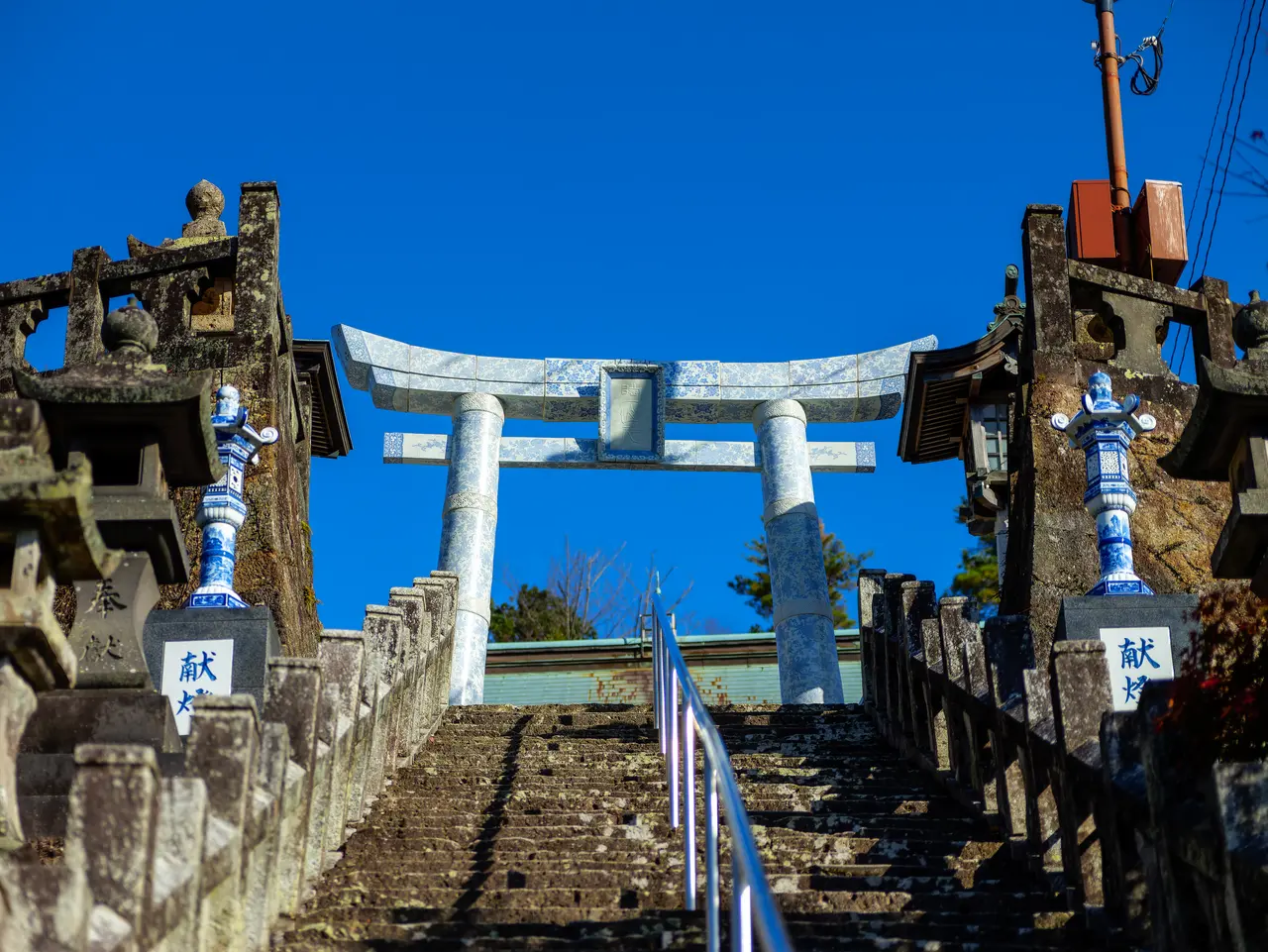
Photo: ©Saga Prefectural Cultural Tourism Federation Walk
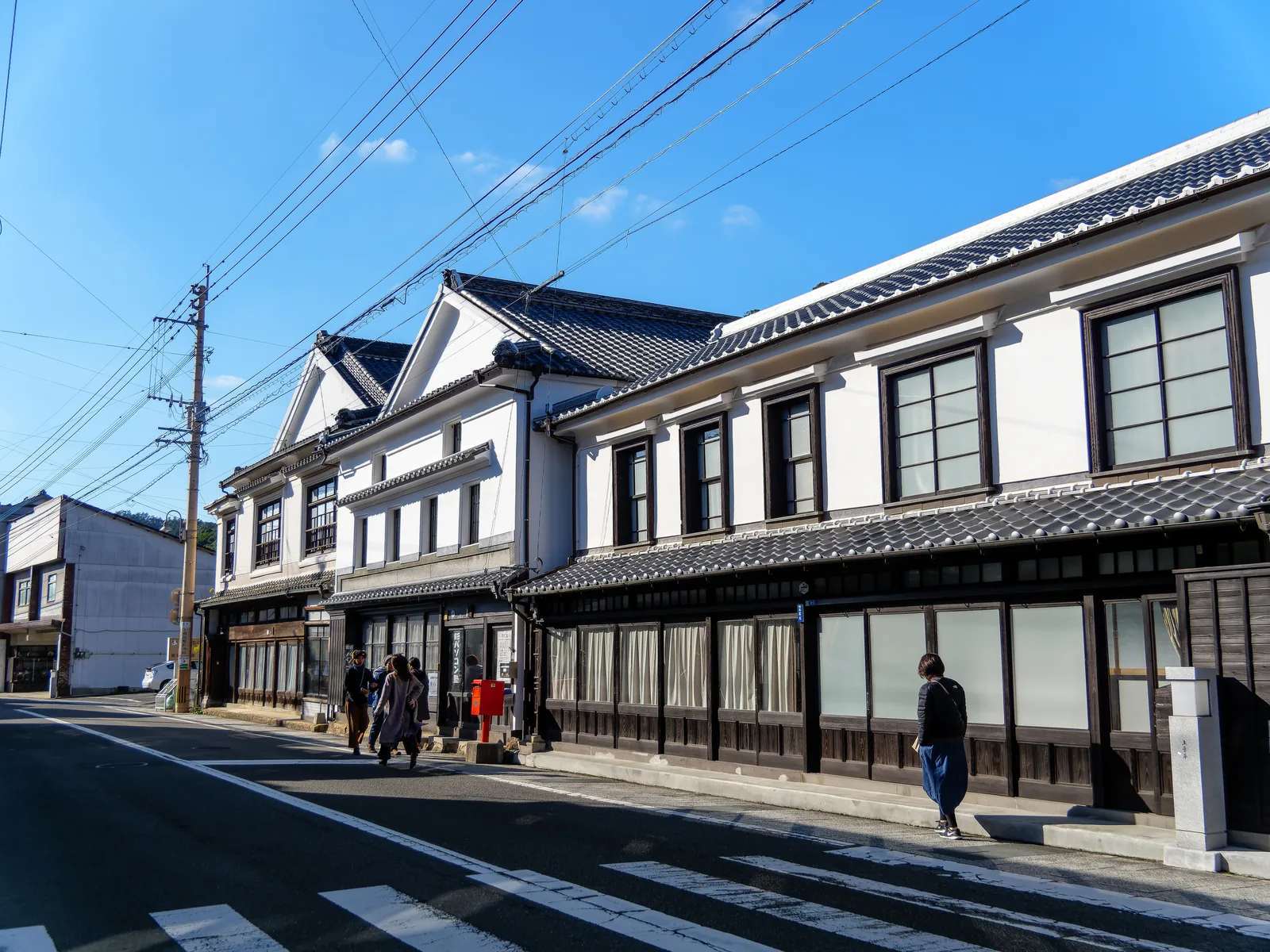
Arita Uchiyama Old Town
Allow about 120 min
The street running from the site of the upper checkpoint at Izumiyama to the lower checkpoint at Iwayagawachi is a nationally designated Preservation District for Groups of Traditional Buildings. White-walled storehouse-style merchant houses and Western-style buildings now hold kiln shops and galleries, so you can compare pieces as you go. Have lunch along this street. From the western end of town, walk or take the town's community bus to Arita Station.
Train
Okawachiyama (Nabeshima Clan Kiln Village)
Allow about 90 min
Take the Matsuura Railway from Arita Station to Imari Station, then a bus bound for Okawachiyama or a taxi. The Saga domain ran its official kilns here to make porcelain for gifts to the shogun's family, and about 30 kilns line the stone-paved slopes beneath sheer rock peaks.
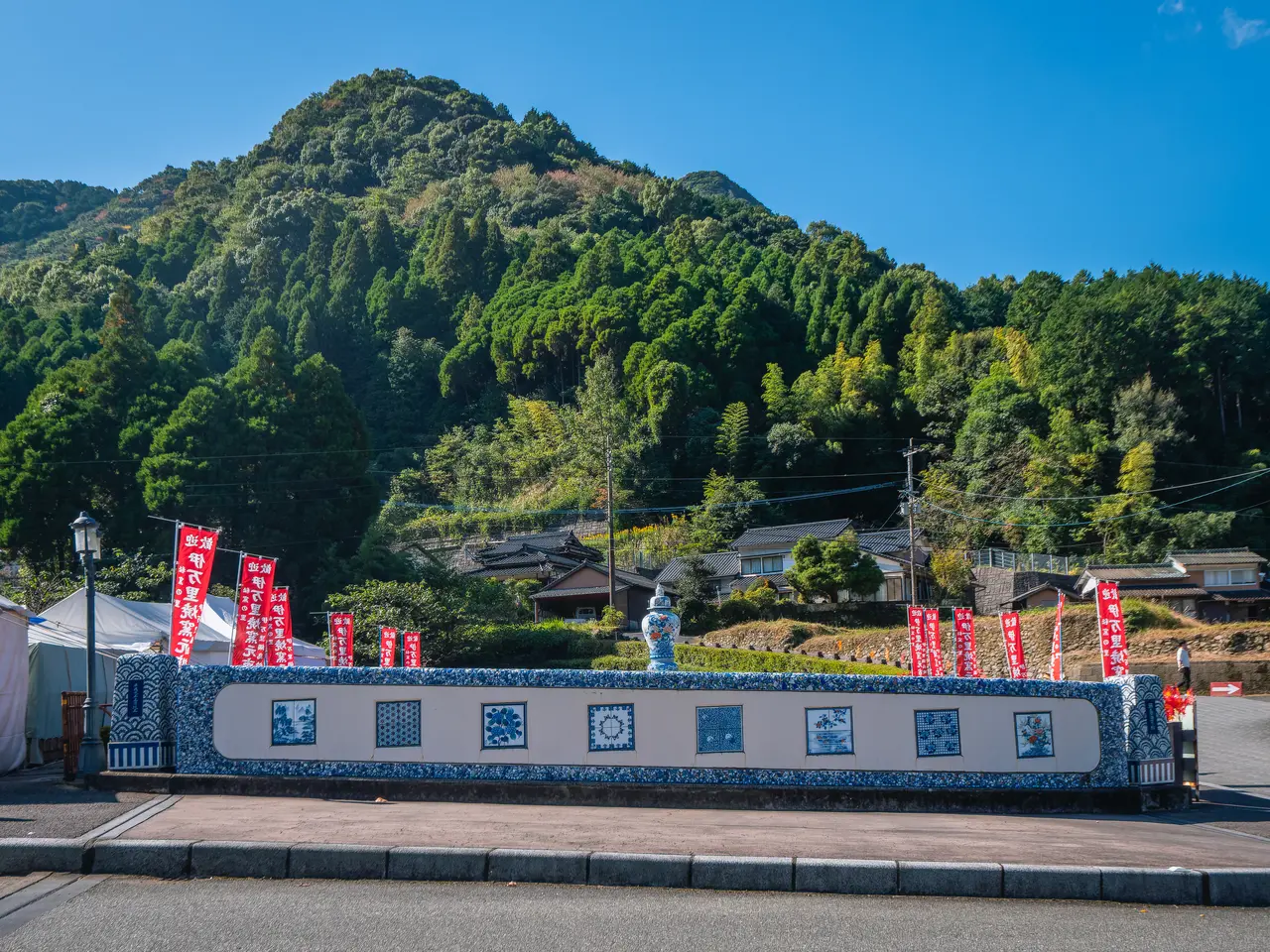
Photo: ©Saga Prefectural Cultural Tourism Federation Bus
Imari's Lucky Bridges
Allow about 30 min
Return to Imari Station by bus and walk to the nearby Imari River. Three bridges, Aioi-bashi, Enmei-bashi and Saiwai-bashi, are known as the "lucky bridges," and you can cross them along the riverside promenade, Ai-ai Dori. It is a quiet way to end the day by the river in a town that prospered on the porcelain trade in the Edo period.