Things to Do in Akita City: Senshu Park, Kanto and the Market
This guide is translated from the Japanese edition. Read the Japanese edition
Things to do in Akita City on foot from the station: the city market, Senshu Park, Foujita's giant mural, Neburi Nagashi Kan and the August Kanto Festival.
Walk a short way from Akita Station along the street in front of it and a market building with a tall red vertical sign comes into view. Akita City's sights, from this market to the castle-ruin park, the art museum and the festival hall, sit within walking distance of the station. Breakfast at the market, the castle ruins and art museum before lunch, the kanto lantern poles in the afternoon: one day before you head to Kakunodate or Lake Tazawa is enough to cover the main sights of Akita City.
Morning at Akita City Market
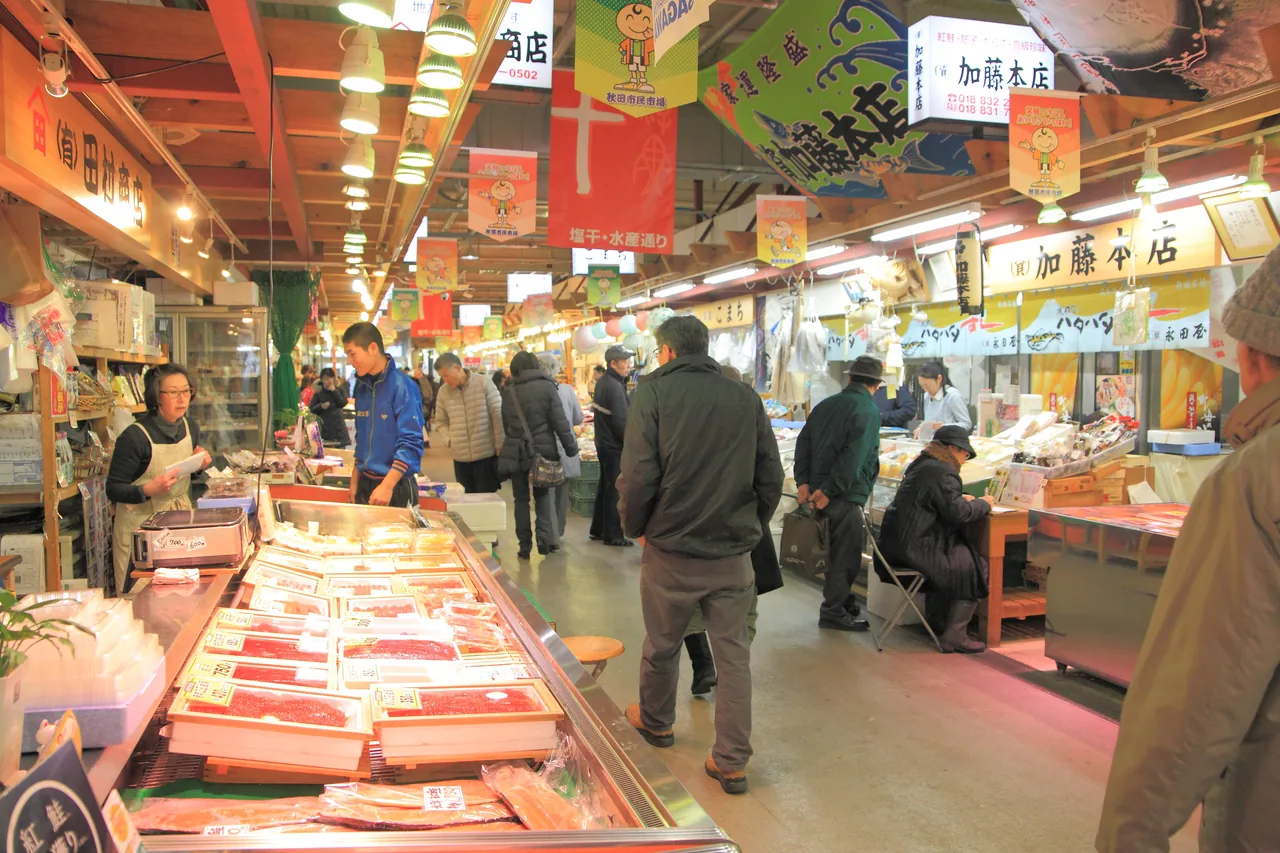
Akita City Market, a few minutes on foot from JR Akita Station, is known as "Akita's kitchen." Dozens of shops selling fresh fish, produce, prepared foods and dried goods fill a covered building, so you can wander around without getting wet on snowy or rainy days.
In the fish aisles, whole fish from nearby waters are laid out, and some shops sell cod roe and salmon roe by weight. Hatahata (sandfish), an Akita specialty, appears both as whole fish and as processed foods such as hatahata sushi. Iburi-gakko, daikon radish smoked and then pickled in rice bran, keeps well and makes an easy souvenir. Inside the market there is also a conveyor-belt sushi restaurant run by the market and diners that open in the morning, so you can make it your breakfast stop.
The market is closed on Sundays, and hours vary by shop. Check the official website before you go.
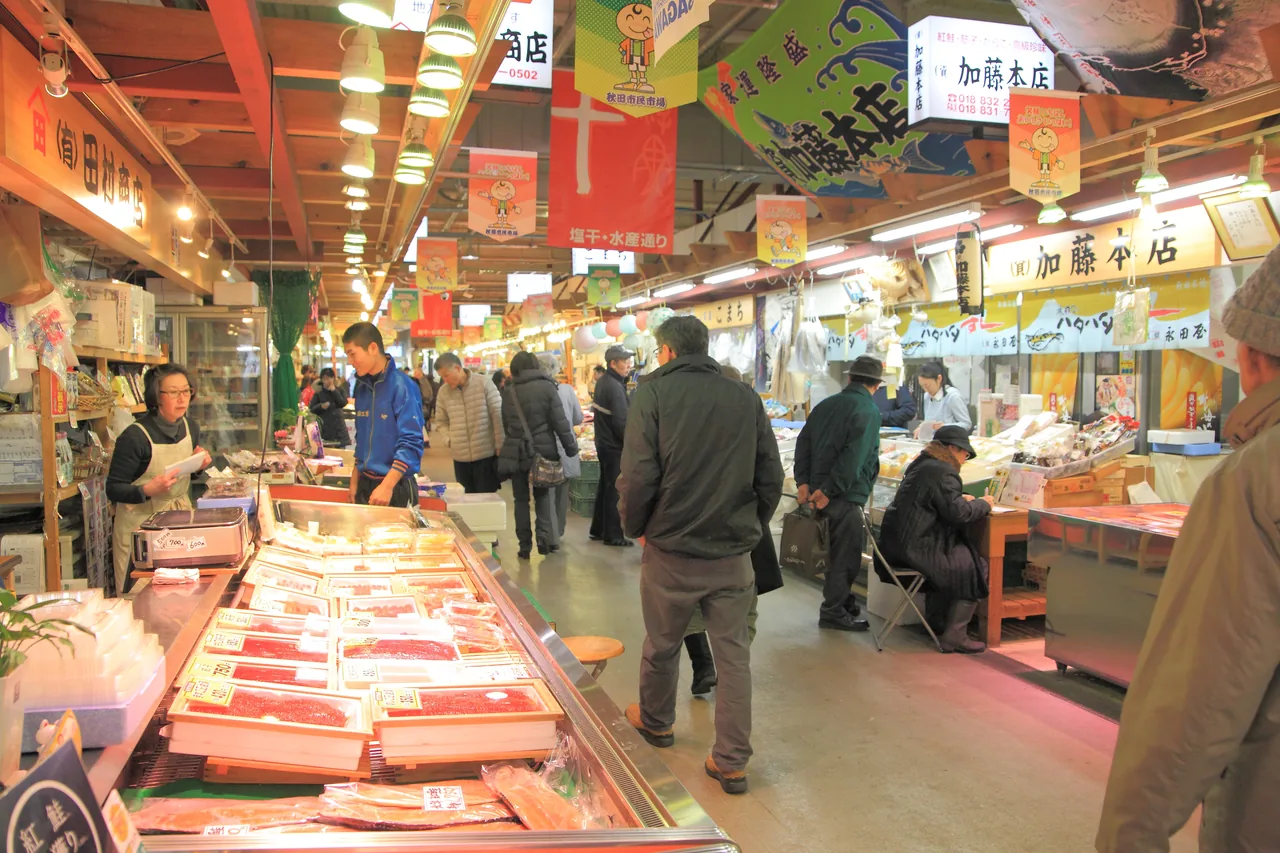
Photo: Akita Prefecture
Senshu Park: Kubota Castle's gate and the lotus moat
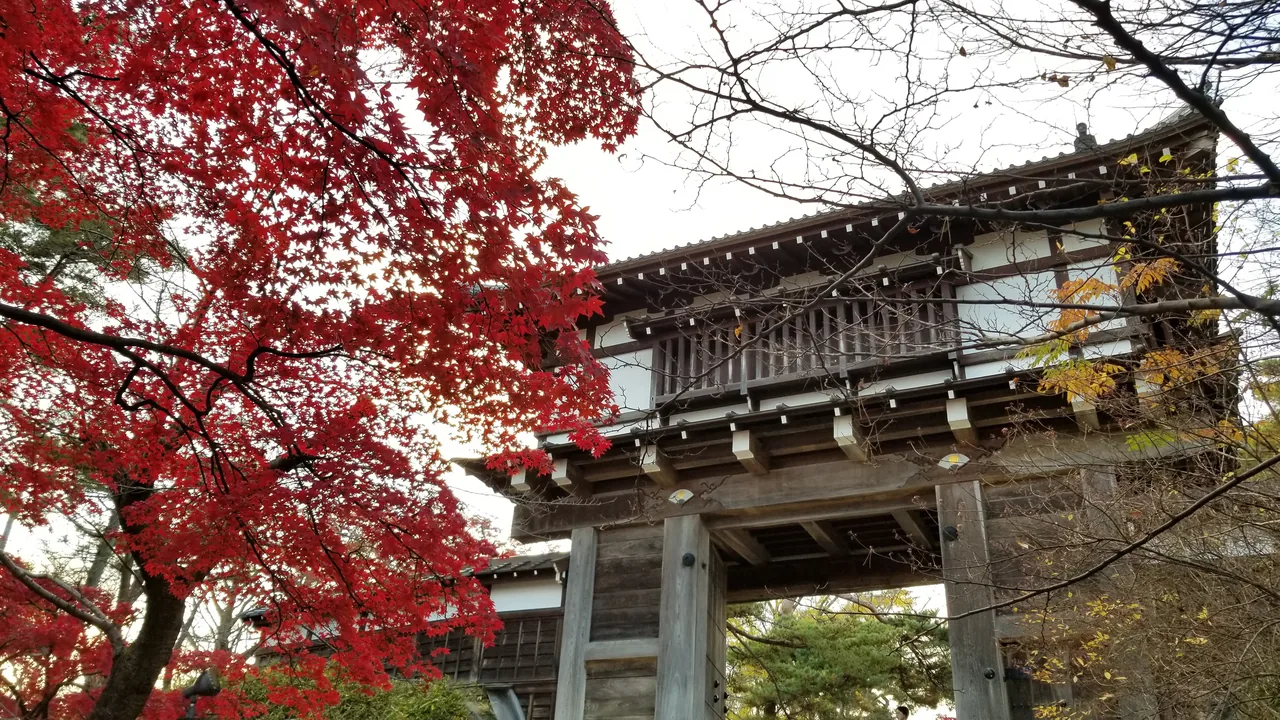
About 15 minutes on foot from the west exit of the station, Senshu Park occupies the ruins of Kubota Castle, from which the Satake clan ruled the Akita domain for 12 generations, 267 years from 1602 to 1869. At the top of a flight of stone steps stands the Omotemon, once the main gate of the inner citadel: a two-story wooden gatehouse rebuilt over two years from 1999 based on historical records and excavations. Just below the gate is the Omonogashira Gobansho guardhouse, the only domain-era building left within the castle grounds.
Deeper in the inner citadel, the Osumi Yagura turret was built in 1989 to mark the city's 100th anniversary, and its top-floor observation room looks out over the city. In summer, about 7,500 square meters of lotus fill the Otemon moat, with the office buildings near the station right on the other side. In spring about 650 cherry trees bloom in the park during the cherry blossom festival.
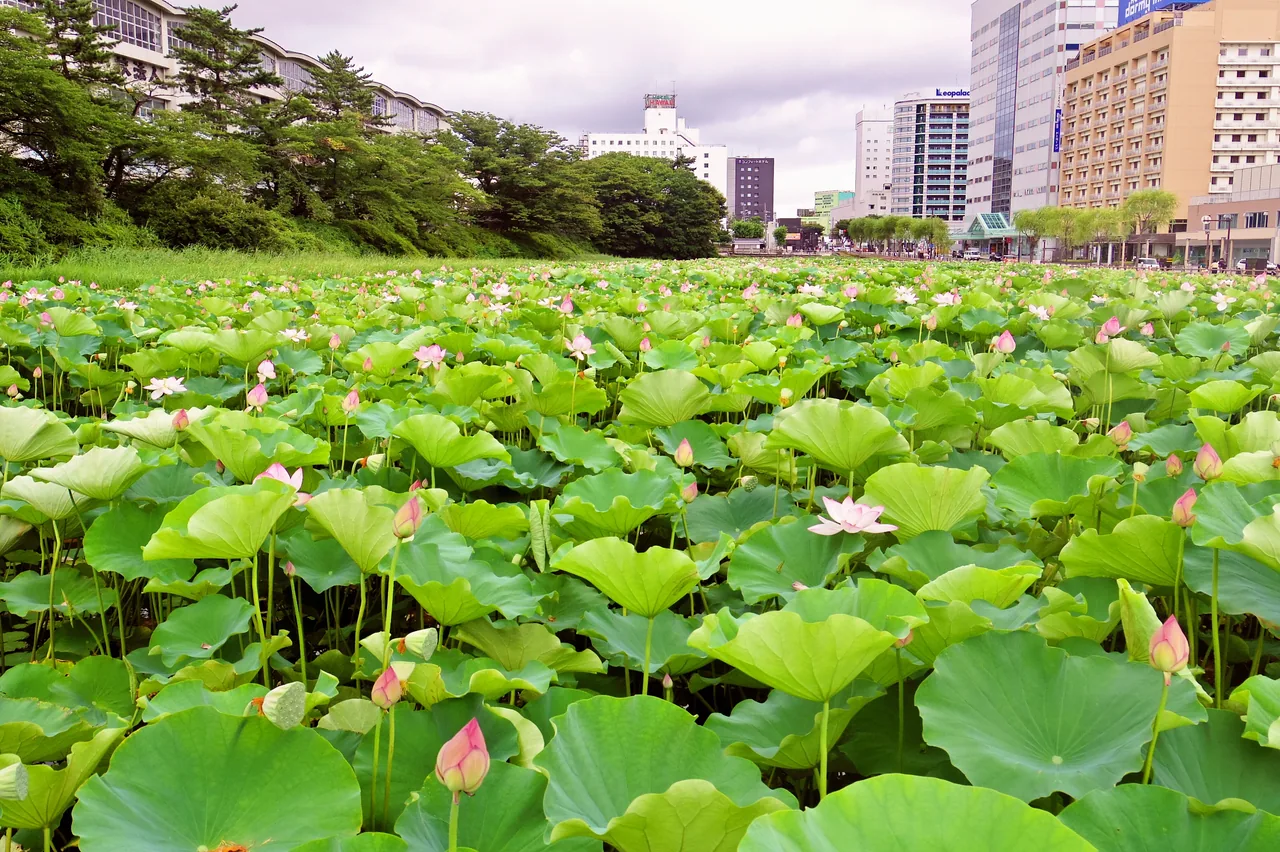
Photo: Akita Prefecture
Akita Museum of Art: Foujita's giant mural "Events of Akita"
Facing Senshu Park, in a corner of the Area Nakaichi complex, stands the Akita Museum of Art, designed by Tadao Ando Architect & Associates. The building uses bare concrete walls and a triangle motif, and from the second-floor lounge you look across a water garden laid over the first-floor roof to the moat of Senshu Park.
The highlight is "Events of Akita" (Akita no Gyoji) by Tsuguharu Foujita, in the second-floor mural gallery. Commissioned by Masakichi Hirano, a wealthy Akita City businessman, and completed in 1937, the painting measures 3.65 m tall and 20.5 m wide and sets the festivals and daily life of Akita at the time side by side on a single canvas. Photography isn't allowed, so take the time to look closely. Check opening days and exhibitions on the museum's official website.
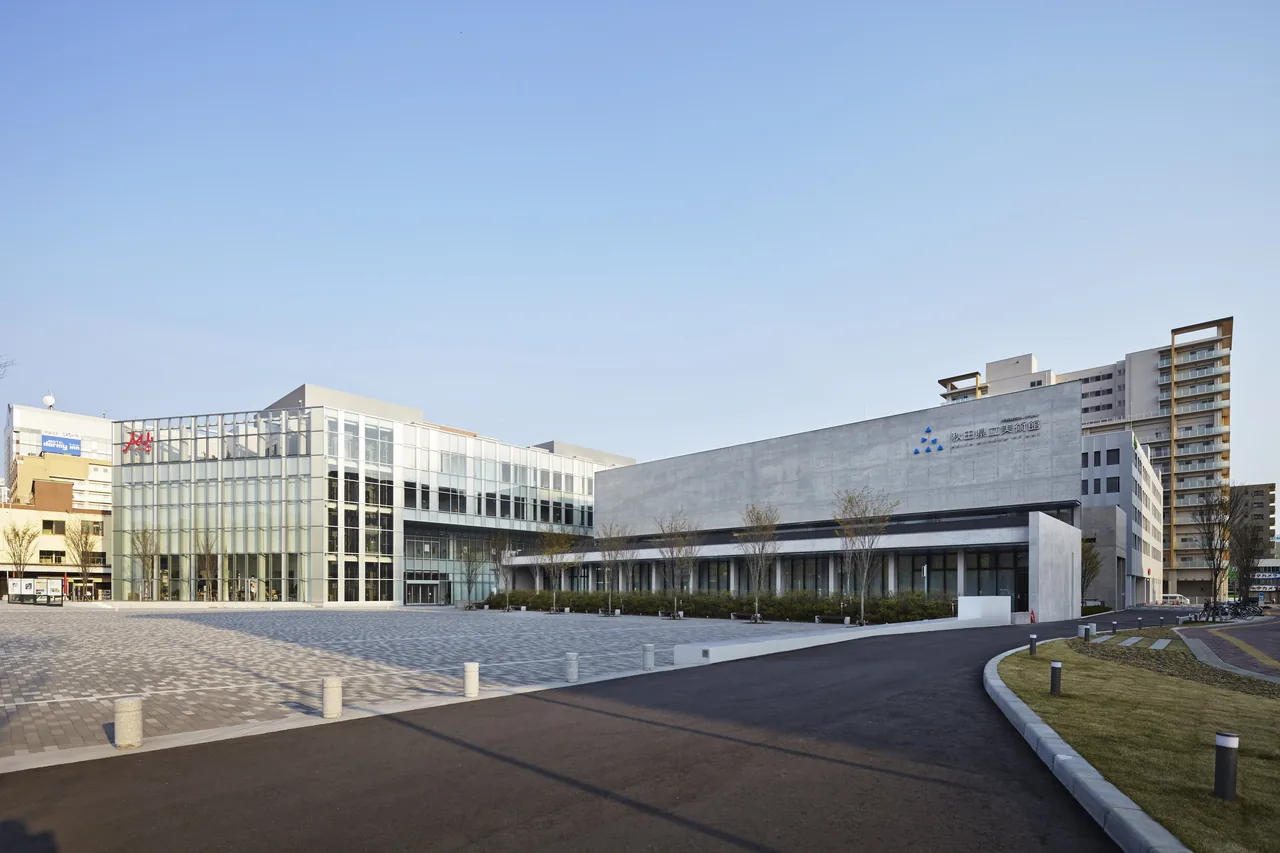
Photo: Akita Prefecture
Neburi Nagashi Kan: hold a kanto pole yourself
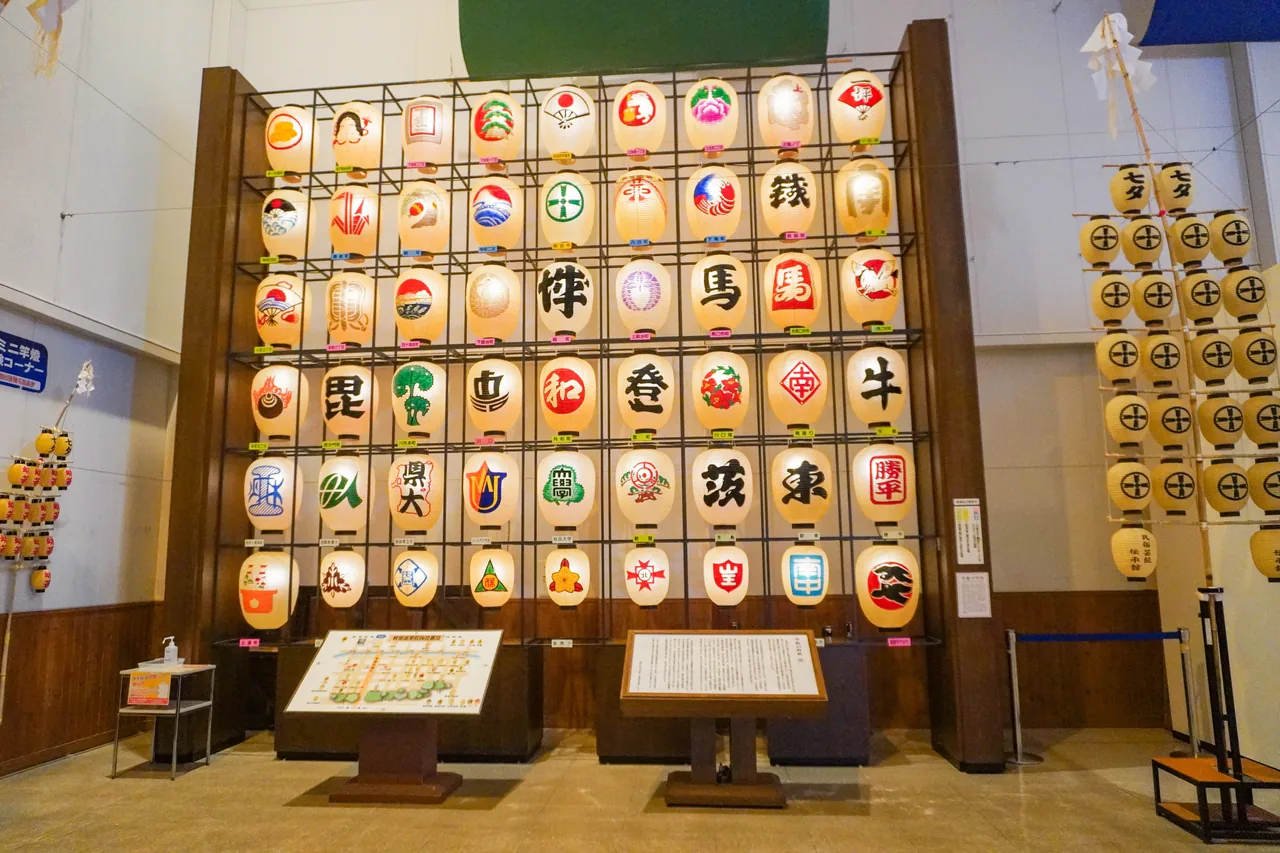
In the Omachi district, a little way from the art museum, Neburi Nagashi Kan (Akita City Folk Performing Arts Center) lets you see the kanto lantern poles of the August festival up close in any season. It is about 15 minutes on foot from Akita Station. In its atrium hall stand kanto of different sizes, led by the largest, the oowaka: 12 m long, 50 kg, with 46 lanterns.
In the hall you can pick up a small kanto and try to hold it upright, which quickly shows how hard it is just to keep it steady. On Saturdays, Sundays and holidays from spring to autumn, kanto performers give demonstrations; check the dates and times with Akita City. Next door, the former Kaneko family residence belonged to a merchant family that ran a wholesale business in kimono fabric, cotton and hemp cloth in the Meiji era, and you can walk straight through to it from the center.
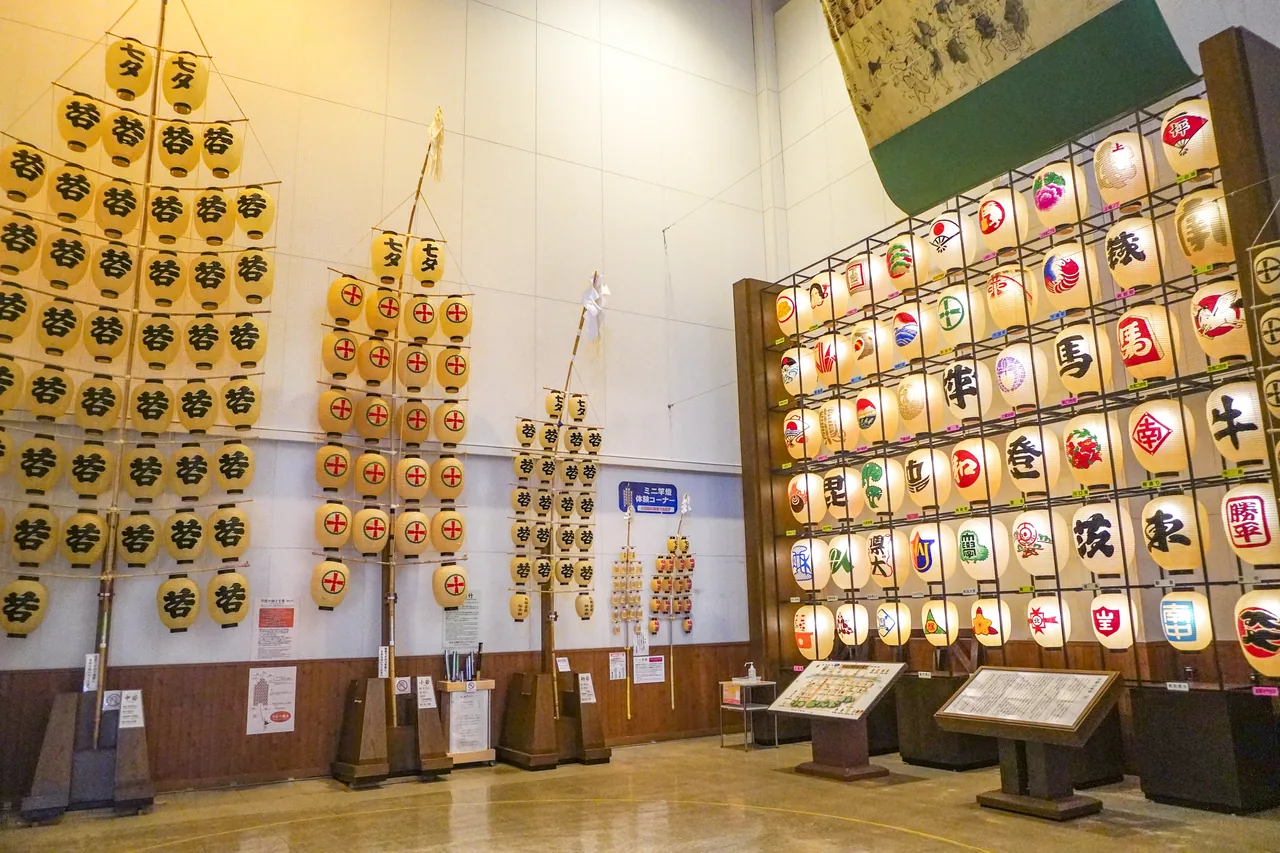
Photo: Akita Prefecture
Visiting in August: how to watch the Akita Kanto Festival
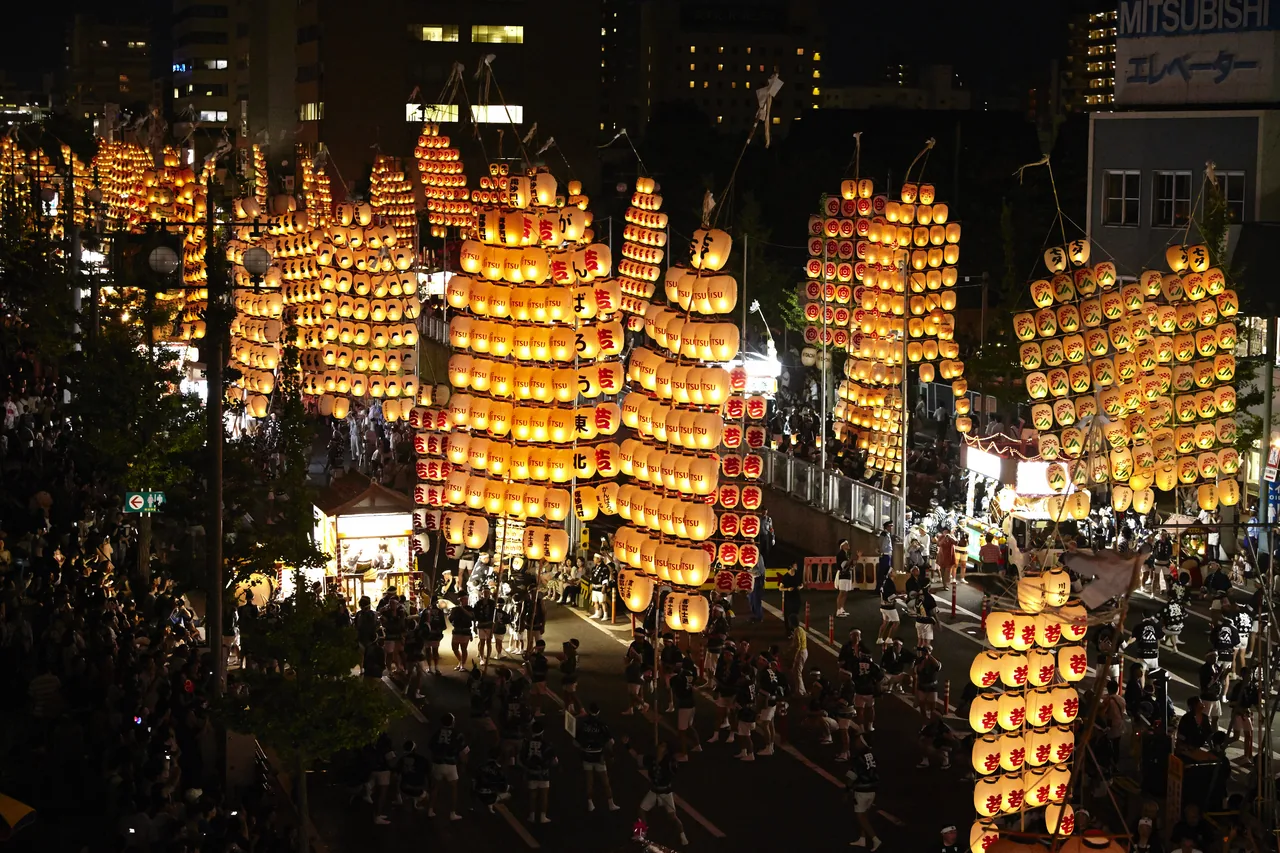
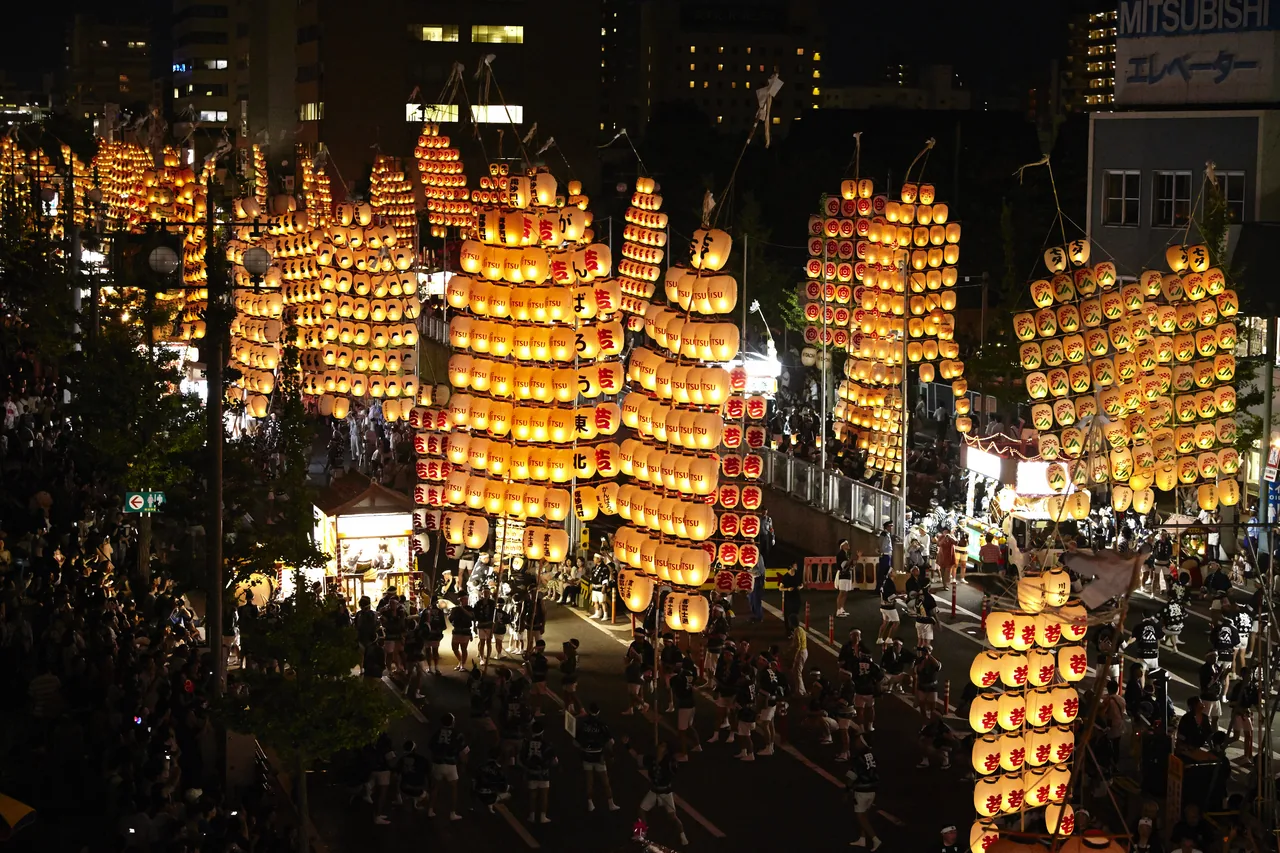
The Akita Kanto Festival, a nationally designated Important Intangible Folk Cultural Property, is held for four days from August 3 to 6 every year. At night about 280 kanto rise along Kanto Odori avenue. Performers shift each pole from the palm to the forehead, shoulder and hip. Paid seating is set up on the avenue's central median, and the surrounding streets are closed to traffic during the evening performance.
To watch the technique closely, go to the daytime Kanto Myogi Taikai competition, held from August 4 to 6 at the Area Nakaichi Nigiwai Hiroba plaza, about 10 minutes on foot from Akita Station. Team and individual categories decide that year's masters, and unlike at night, you can clearly see the performers' hands.
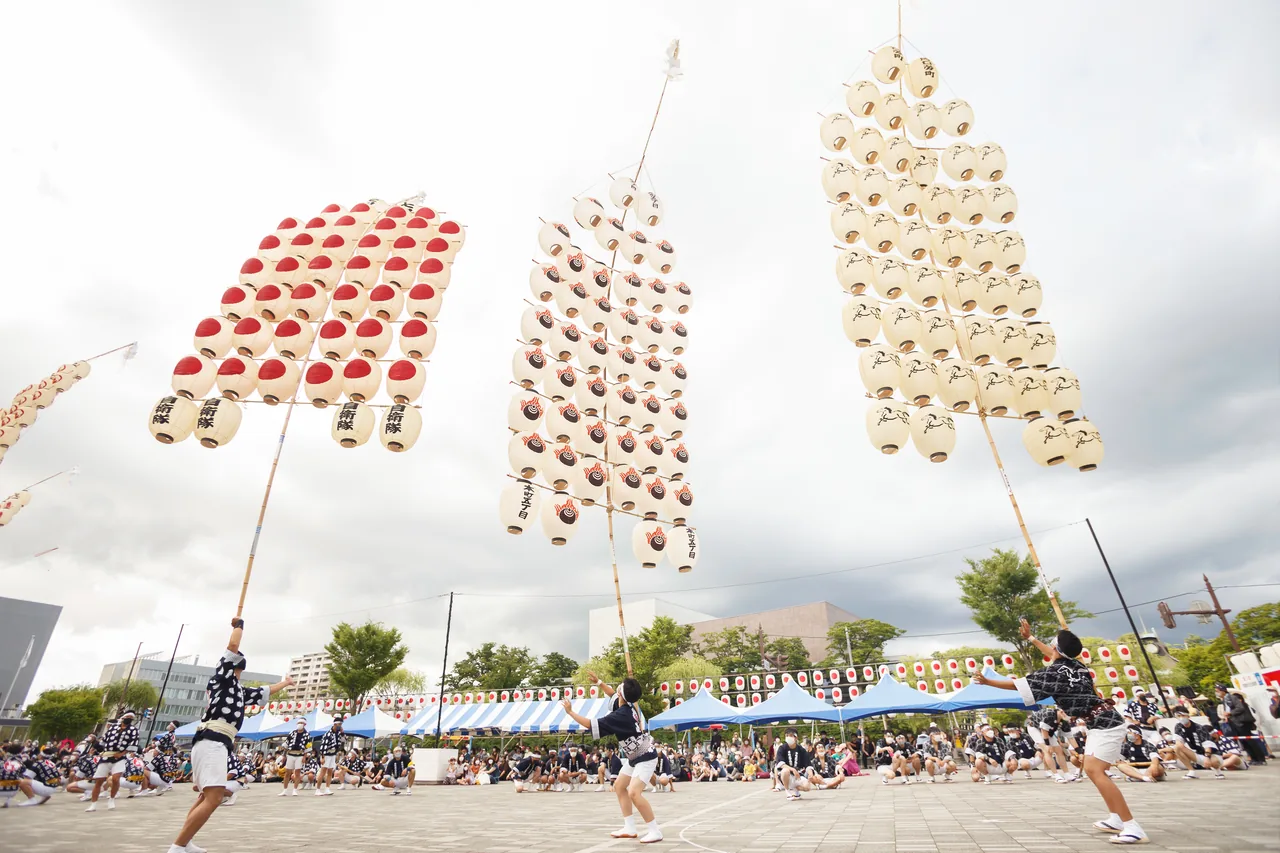
Photo: Akita Prefecture
Further afield: Akita Prefectural Museum
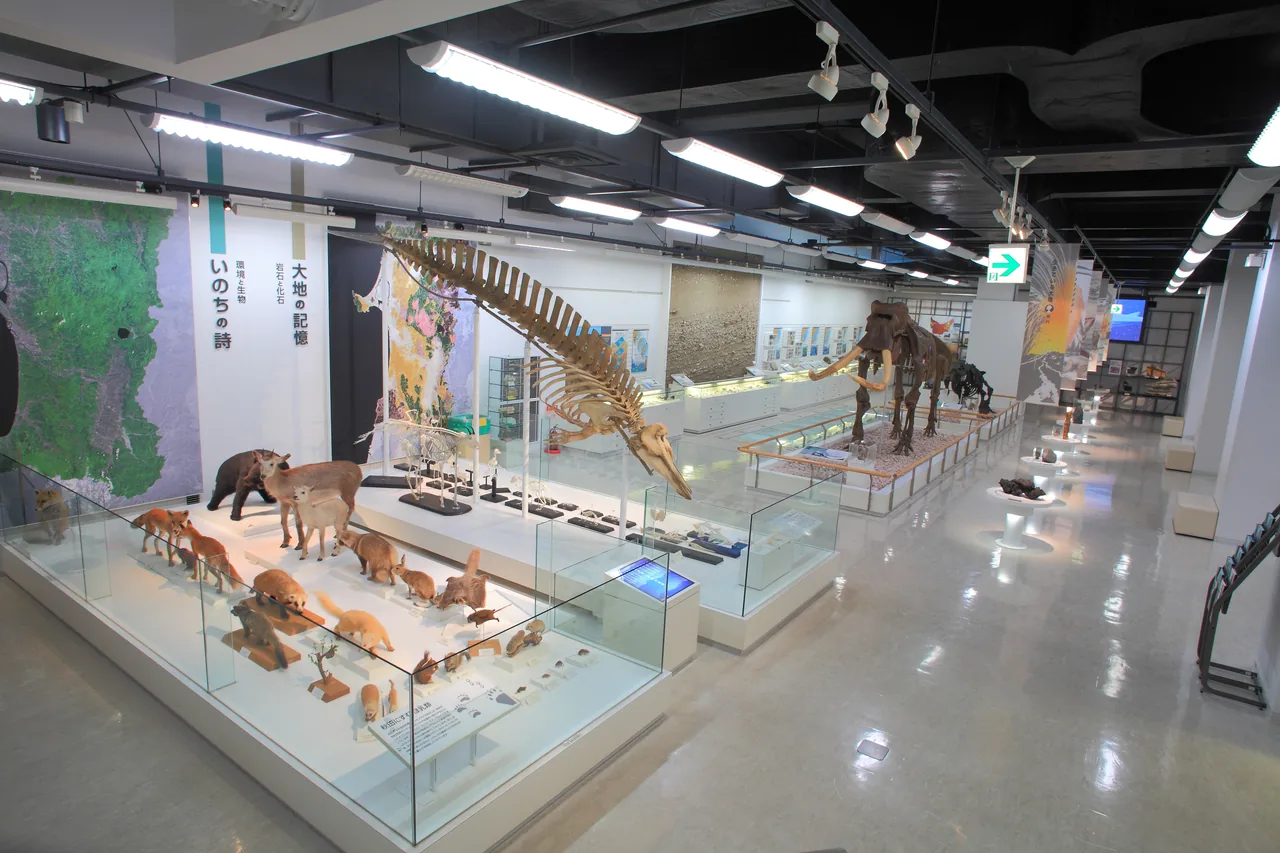
With half a day to spare, head to the Akita Prefectural Museum in Koizumigata Park in the north of the city. Across six fields, archaeology, history, folklore, crafts, biology and geology, it traces Akita from the formation of the land to people's lives. The Jomon gallery, with its reconstructed pit dwelling, is worth seeing before you visit sites such as the Oyu Stone Circles. It also works well on rainy or snowy days.
The nearest station is Oiwake on the JR Ou Main Line and Oga Line, about 20 minutes away on foot. Because the museum is away from the center, you might stop on the way to the Oga Peninsula.
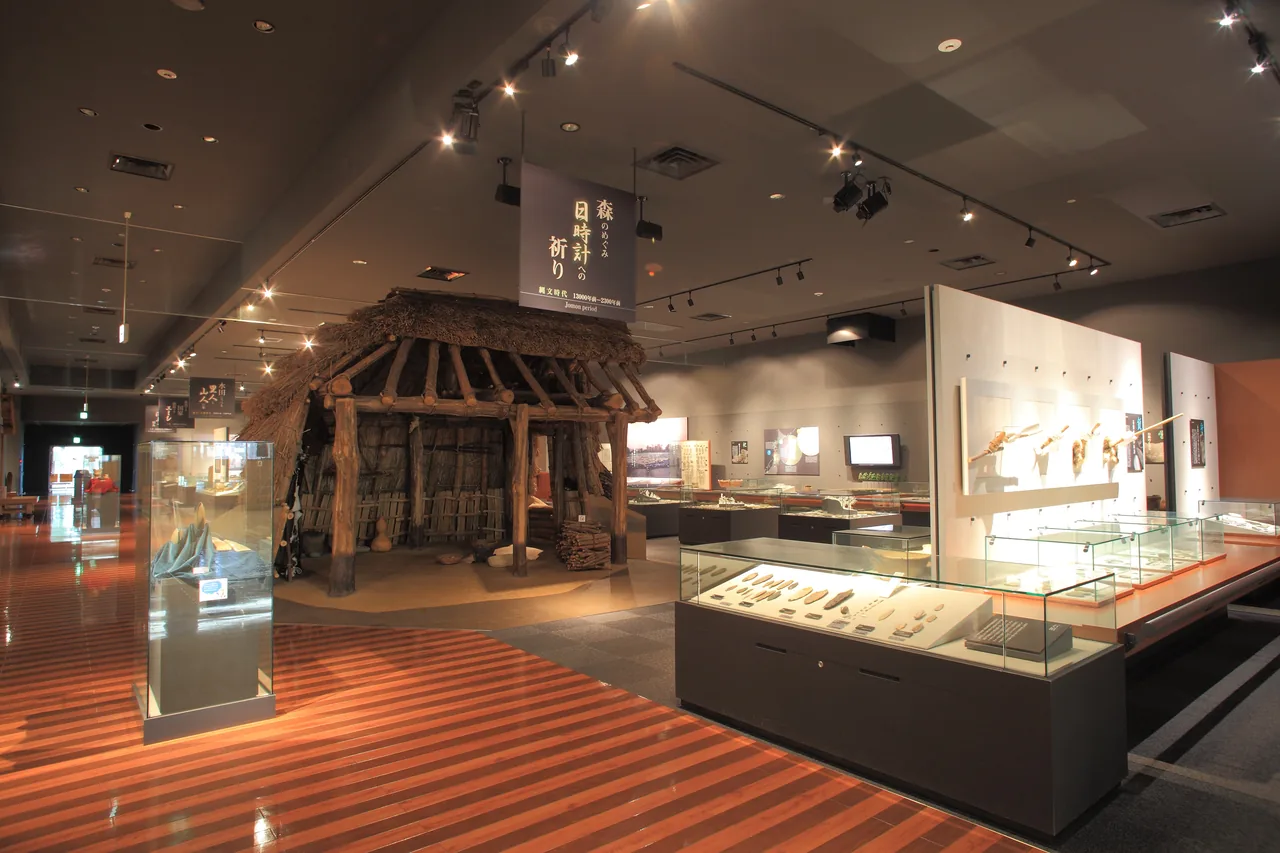
Photo: Akita Prefecture
A sample day
One possible order for a day on foot, starting from Akita Station:
- Morning: breakfast and shopping at Akita City Market (a few minutes on foot from the station)
- Late morning: the Omotemon gate and Osumi Yagura in Senshu Park (about 15 minutes on foot from the west exit)
- Midday: "Events of Akita" at the Akita Museum of Art, across from the park
- Afternoon: try holding a kanto at Neburi Nagashi Kan
- Evening: back to the station and on to Kakunodate, Lake Tazawa or Oga
If your visit falls on August 3–6, spend the evening watching the night kanto on Kanto Odori. For how to combine Akita City with the rest of the prefecture, see our first-timer's guide to Akita. Check festival dates and seating with the Akita City Kanto Festival Executive Committee, and Senshu Park with Akita City.