Ehime Souvenirs and Crafts: Pearls, Imabari Towels, Iyo Kasuri
This guide is translated from the Japanese edition. Read the Japanese edition
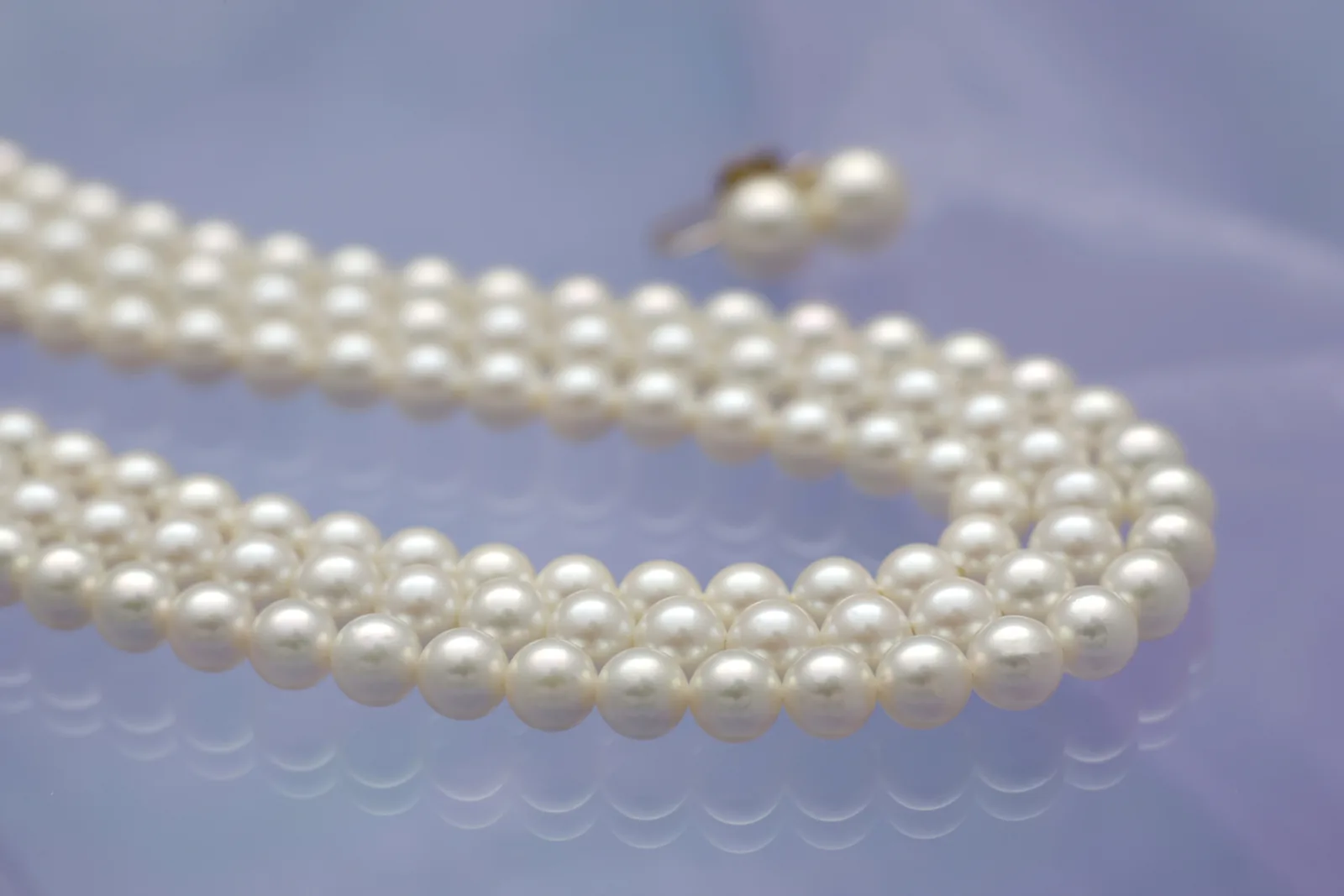
Ehime souvenirs and crafts: Uwajima pearls, certified Imabari towels, Iyo kasuri cotton, hime-daruma dolls, Sakurai lacquerware, Tobe ware and horaku-yaki.
In the inlets around Uwajima, rafts for growing pearls float in rows. Towel looms run in Imabari, and in Matsuyama, cotton kasuri dyed with indigo has long been woven. Ehime's crafts and local products differ from town to town in both materials and history.
Uwajima pearls: grown in the sheltered Uwa Sea
The coast of the Uwa Sea, in the southwest of the prefecture, is an area where pearl farming with Akoya oysters thrives. Its many bays and inlets, sheltered from waves, suit the work.
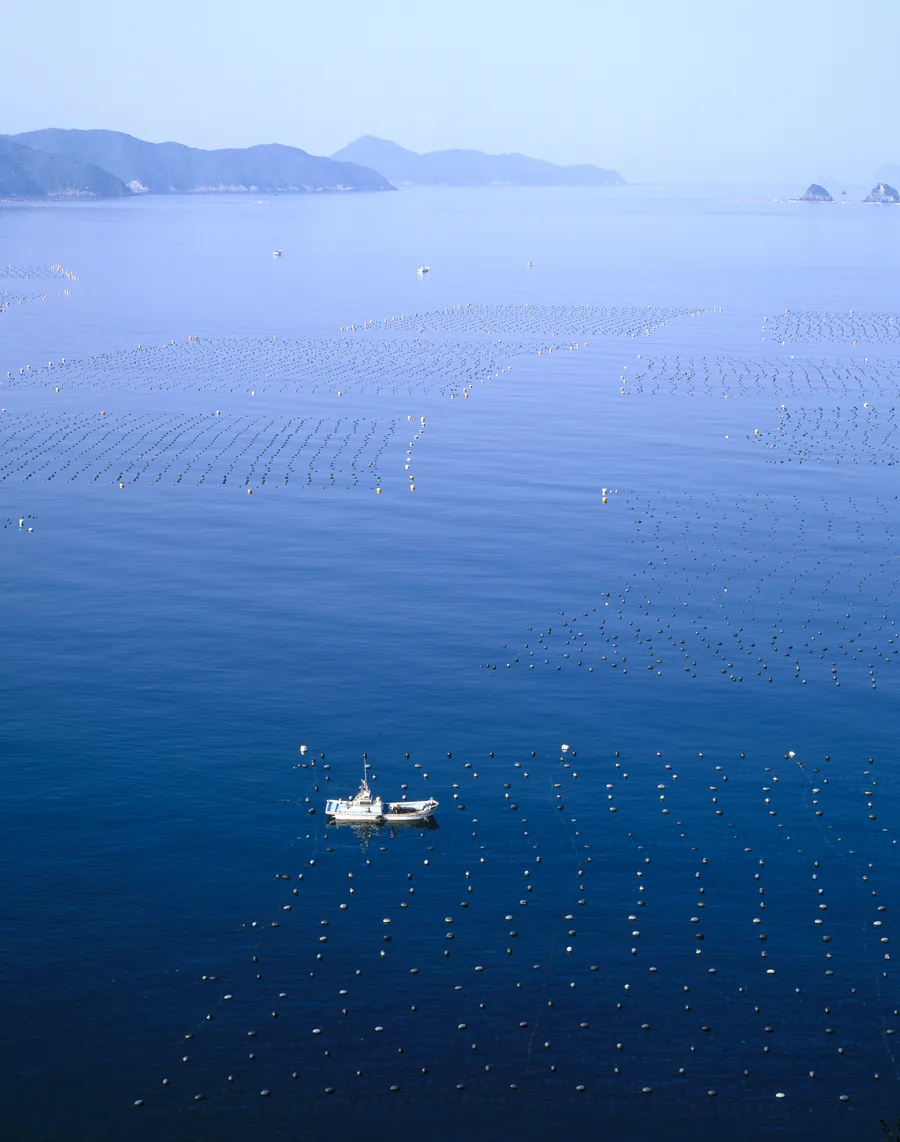
Photo: Ehime Prefectural Tourism & Local Products Association
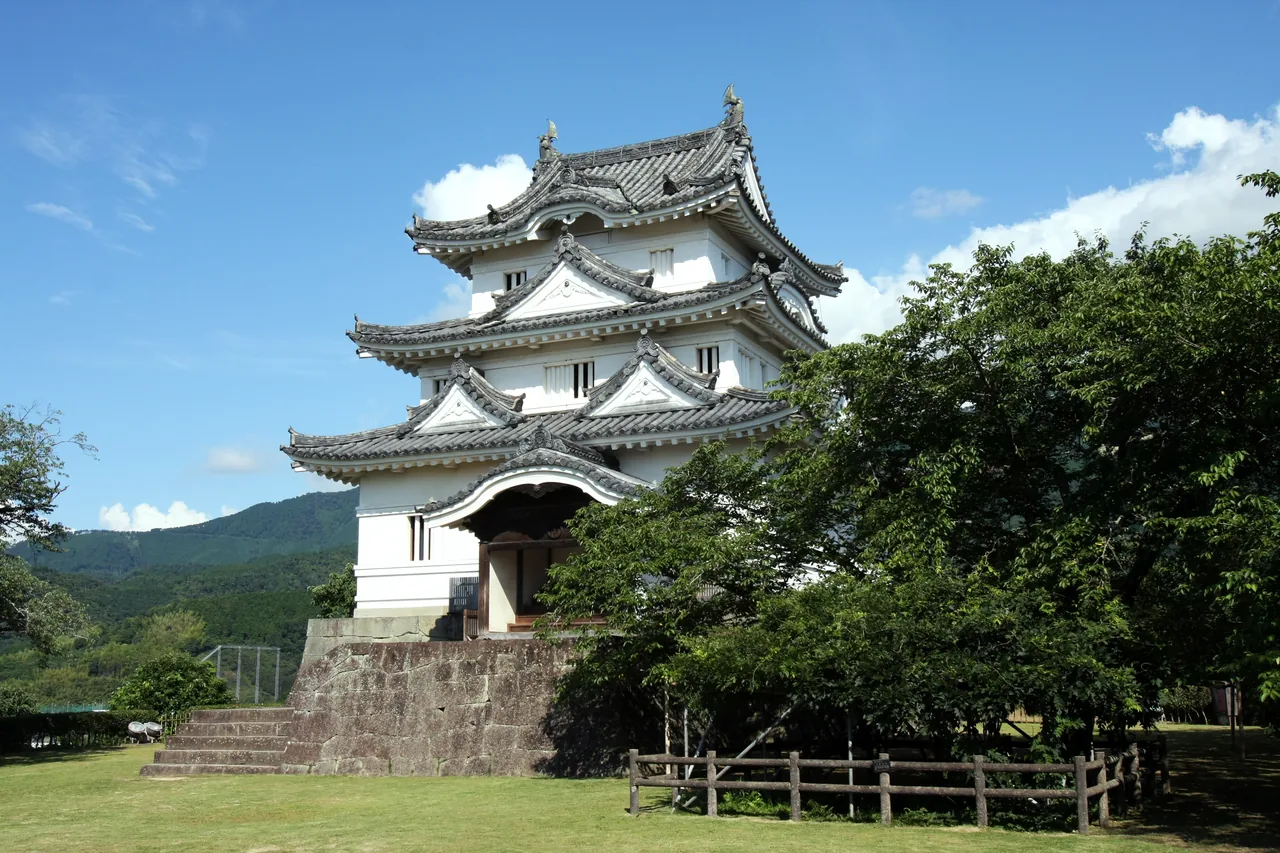
Ehime is also the top prefecture in Japan for producing the mother oysters used to grow pearls. For walking around Uwajima, see our Uwajima and Nanyo travel guide and the page on Uwajima Castle.
Imabari towels: a mark only for those that pass the standard
Towel making in Imabari goes back to 1894, when towel weaving was started to make up for a slump in plain white cotton. Today Imabari is Japan's largest towel-producing area.
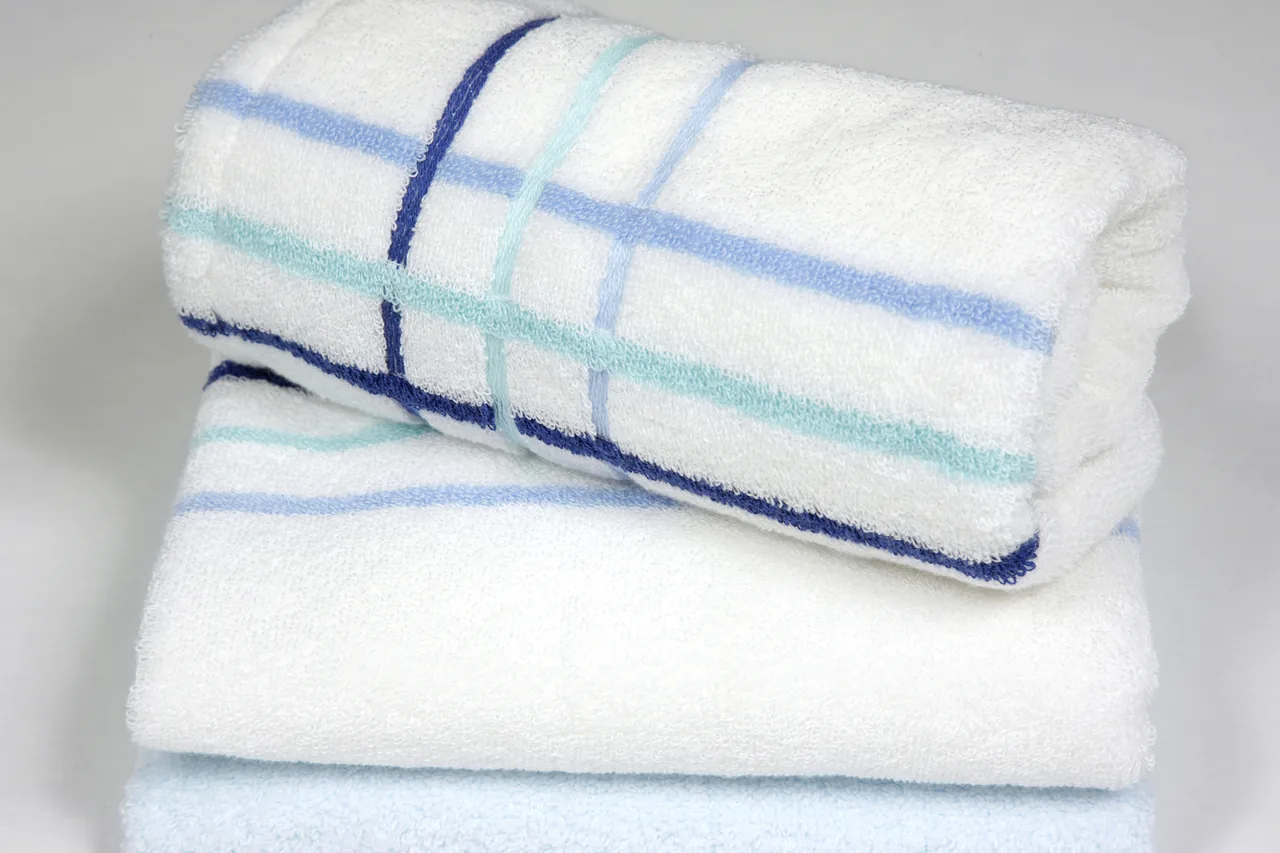
Photo: Ehime Prefectural Tourism & Local Products Association
The "Imabari Towel" brand mark is attached only to products that pass the quality standards set by the Imabari Towel Industrial Association. One of these is absorbency: a small piece of the towel dropped onto water must start to sink within five seconds.
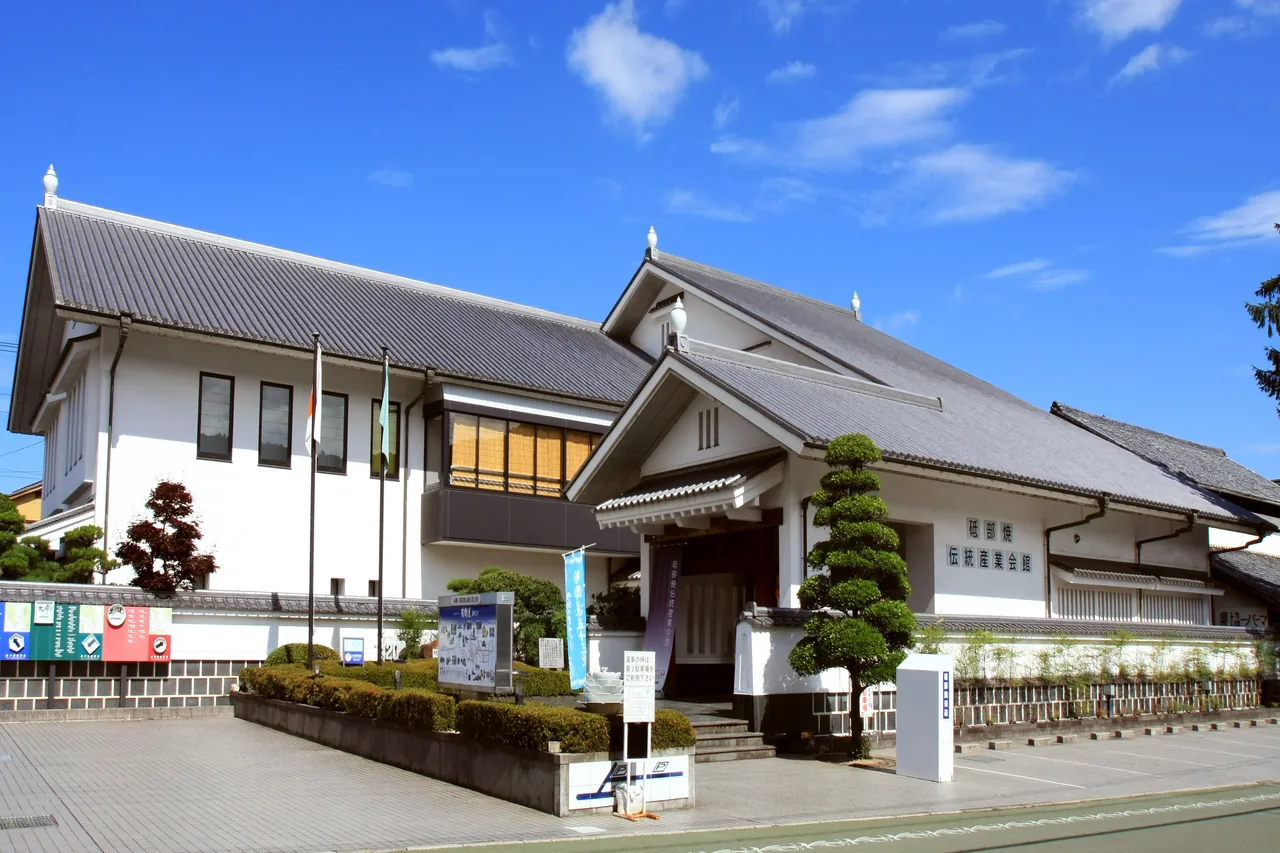
To see how towels are made, visit the Towel Museum in Asakura, Imabari. Its paid gallery shows the production process, and you can choose Imabari towels in the shop inside.
Iyo kasuri: indigo cotton woven in Matsuyama
Iyo kasuri is a plain-woven cotton ikat in which patterns are woven with threads dyed in indigo beforehand. It is counted among Japan's three great kasuri. It is said to have been devised by Kagiya Kana of Matsuyama in the Kyowa era (1801–1804) of the Edo period.
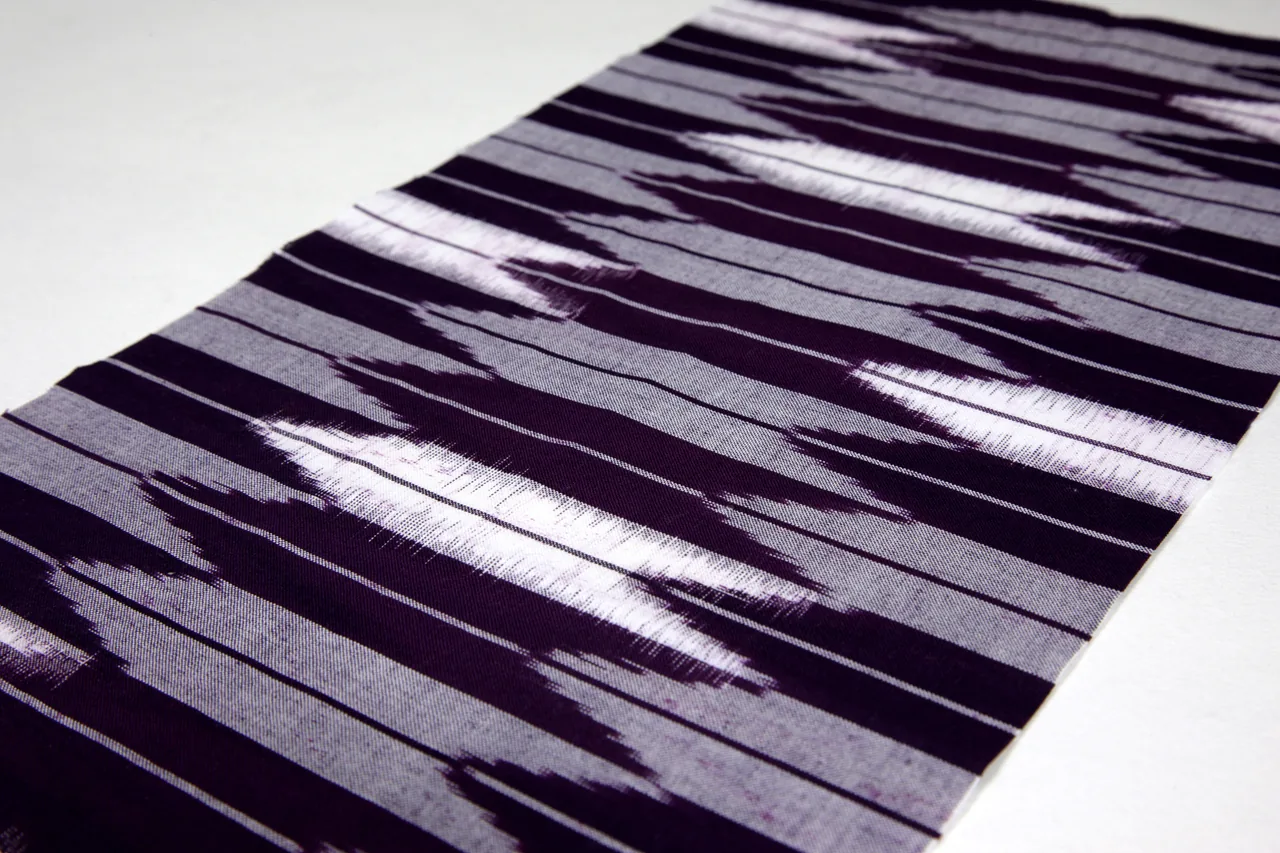
Photo: Ehime Prefectural Tourism & Local Products Association
The technique of dyeing, binding and weaving Iyo kasuri is designated an Intangible Cultural Property of Ehime Prefecture. Besides kimono fabric, it is made into everyday items such as bags, wallets, noren curtains and sandals.
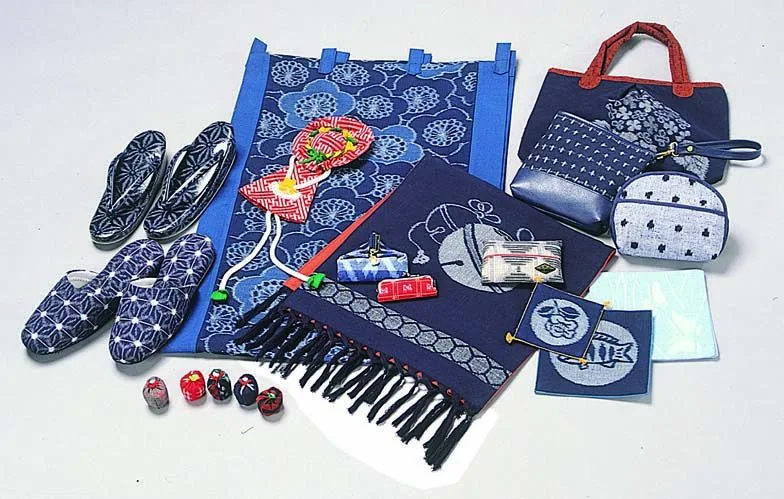
Photo: Ehime Prefectural Tourism & Local Products Association
Hime-daruma: Matsuyama's folk toy for safe childbirth
Hime-daruma is a round folk toy from Matsuyama dressed in red and gold robes.
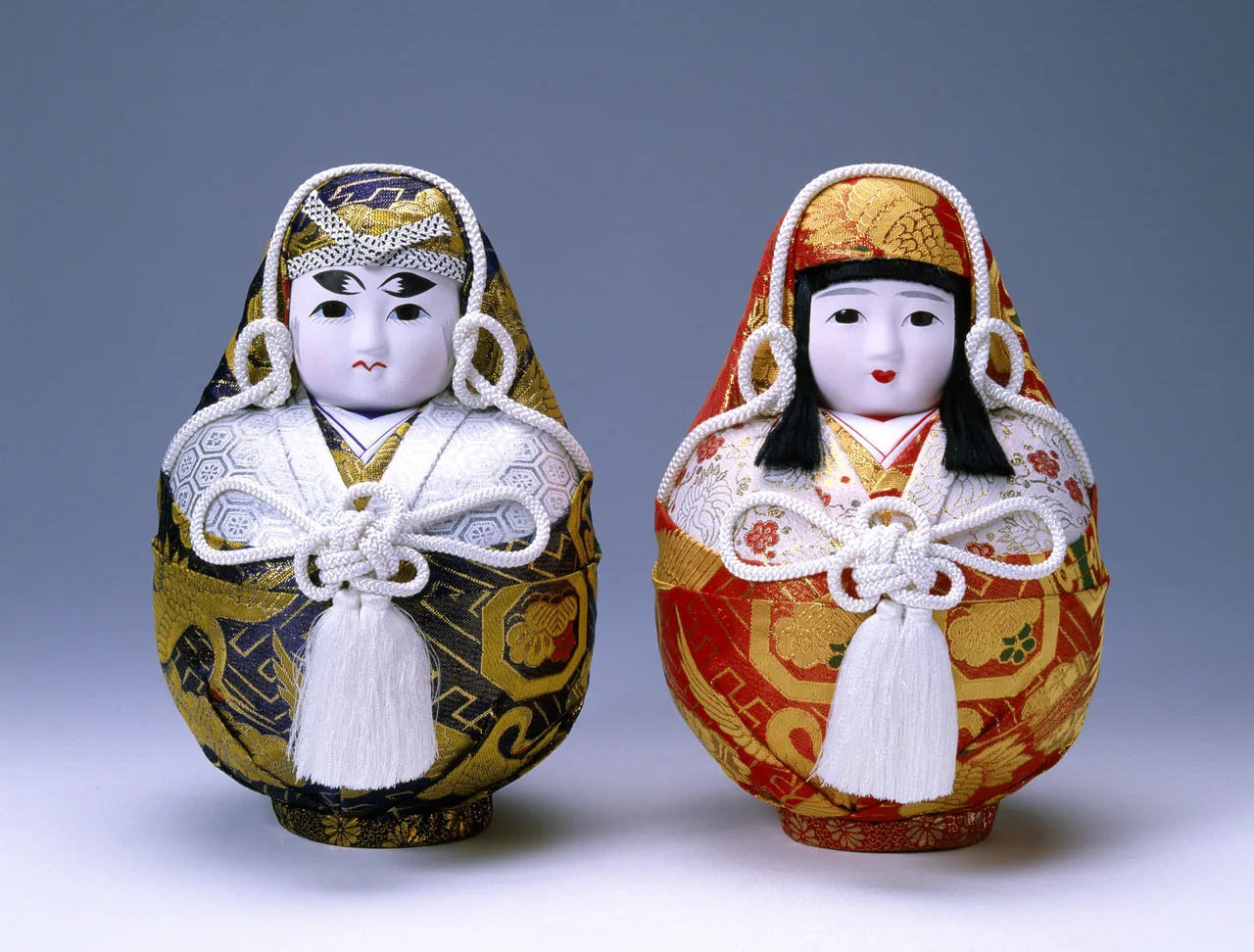
Photo: Ehime Prefectural Tourism & Local Products Association
Long cherished as a charm for safe childbirth and business success, hime-daruma are sold in the Dogo shopping arcade, at Matsuyama Station and at Matsuyama Airport, among other places. Some shops carry versions made with kasuri or other Japanese-pattern fabric.
Sakurai lacquerware: Imabari's lacquer known for stacked boxes
Sakurai lacquerware is made in the Sakurai district of Imabari. Around 1830, in the Tenpo era of the Edo period, a method called kushisashi-ho was devised to join the corners of stacked boxes by interlocking them like the teeth of a comb, and Sakurai became widely known for its sturdy jubako boxes.
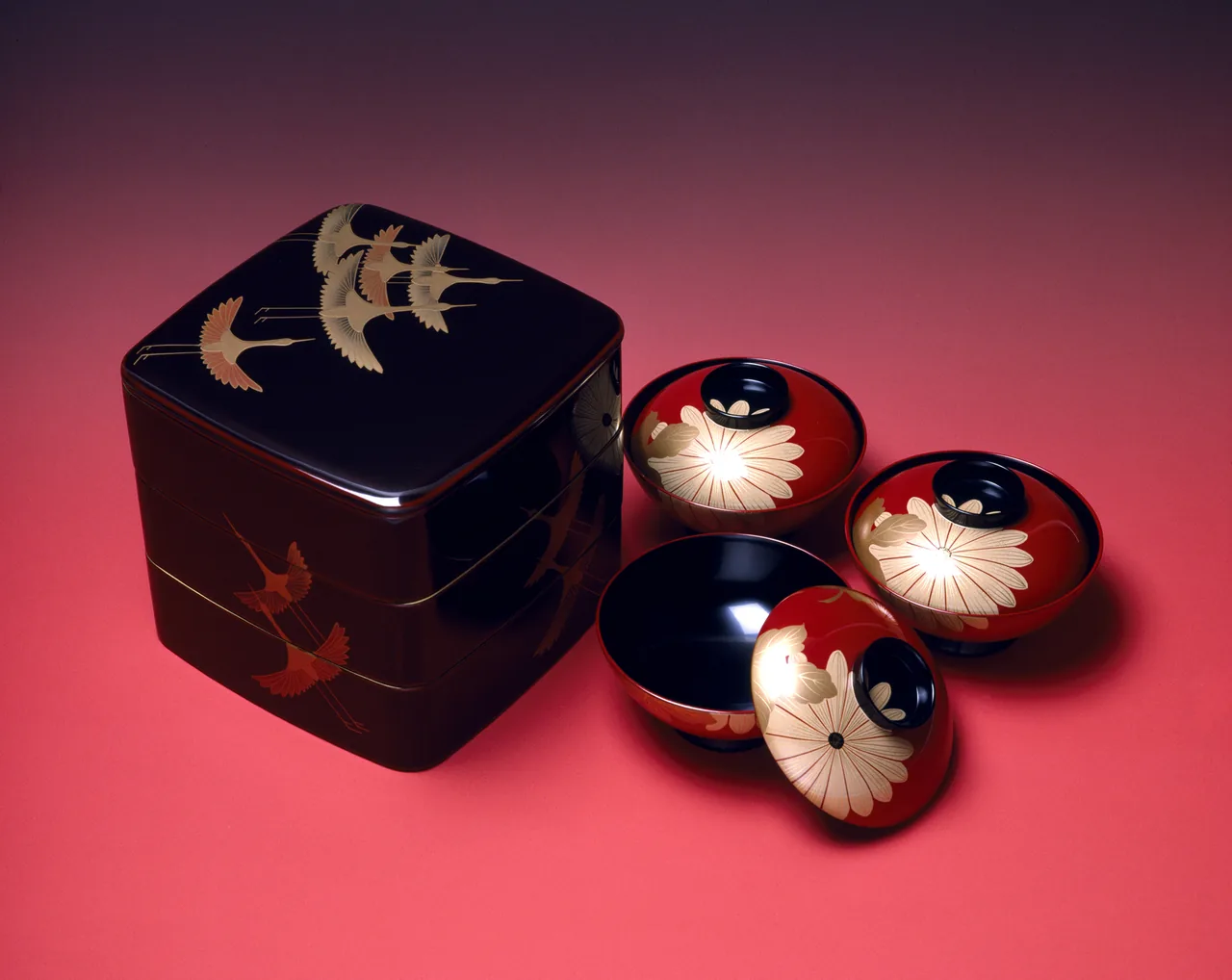
Photo: Ehime Prefectural Tourism & Local Products Association
Sakurai lacquerware was carried to other regions and sold from boats called wanbune, and in the mid-Taisho era there are said to have been more than 400 traveling merchants. Today the craft centers on everyday items such as chopsticks and bowls. In Imabari there is also a place where you can choose lacquerware while watching craftspeople at work.
Tobe ware: indigo on white
Tobe ware, from the town of Tobe just south of Matsuyama, is white porcelain painted with indigo designs. It has been made since the middle of the Edo period. In 1976 it was designated a national Traditional Craft, covering four types: white porcelain, blue-and-white, celadon and tenmoku (iron glaze).
Each kiln in the town has its own designs and shapes. For choosing pottery and painting workshops, see the Tobe Ware Pottery Town page and our guide to Tobe ware and Tobe Zoo.
Horaku-yaki: Imabari's seafood steamed in a horoku pan
Horaku-yaki is a local dish of Imabari. A horoku, a flat unglazed earthenware pan used for roasting sesame and beans, is lined with pebbles and pine needles. Sea bream is placed in the center, surrounded by shrimp, clams, turban shells and other seafood, and everything is steam-roasted with salt as the only seasoning. The stones absorb excess moisture, so the seafood keeps its flavor.
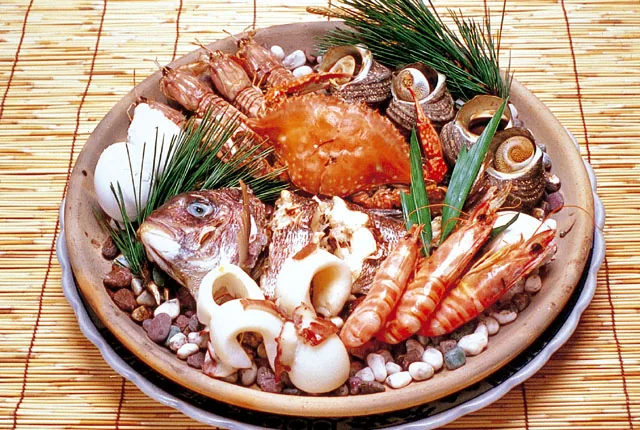
Photo: Ehime Prefectural Tourism & Local Products Association
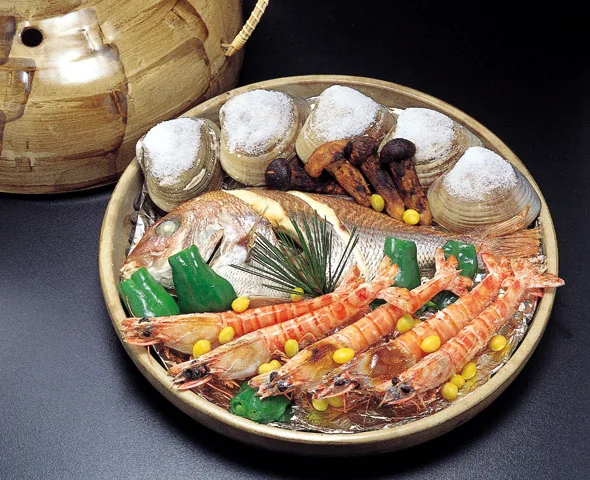
Photo: Ehime Prefectural Tourism & Local Products Association
It is said to have begun as a dish the Murakami navy made to celebrate victories in battle, and it is also called "pirate cuisine."
Where to buy: tips for choosing souvenirs
In Matsuyama, folk crafts such as hime-daruma line the shelves of shops in the Dogo arcade, Matsuyama Station and Matsuyama Airport. Look for Imabari towels at the Towel Museum and at shops in Imabari, and for Tobe ware at the kilns and facilities in Tobe.
Pottery and towels take up space, so leaving your shopping for the end of the trip keeps your luggage light. For Ehime's food, see our Ehime food guide. For crossing to the islands from Imabari, see our Shimanami Kaido travel guide.