Visiting Hiroshima Peace Memorial Park and the Atomic Bomb Dome
This guide is translated from the Japanese edition. Read the Japanese edition
Before visiting Hiroshima Peace Memorial Park: the Atomic Bomb Dome's history, the Cenotaph, the Children's Peace Monument, museum reservations and the streetcar.
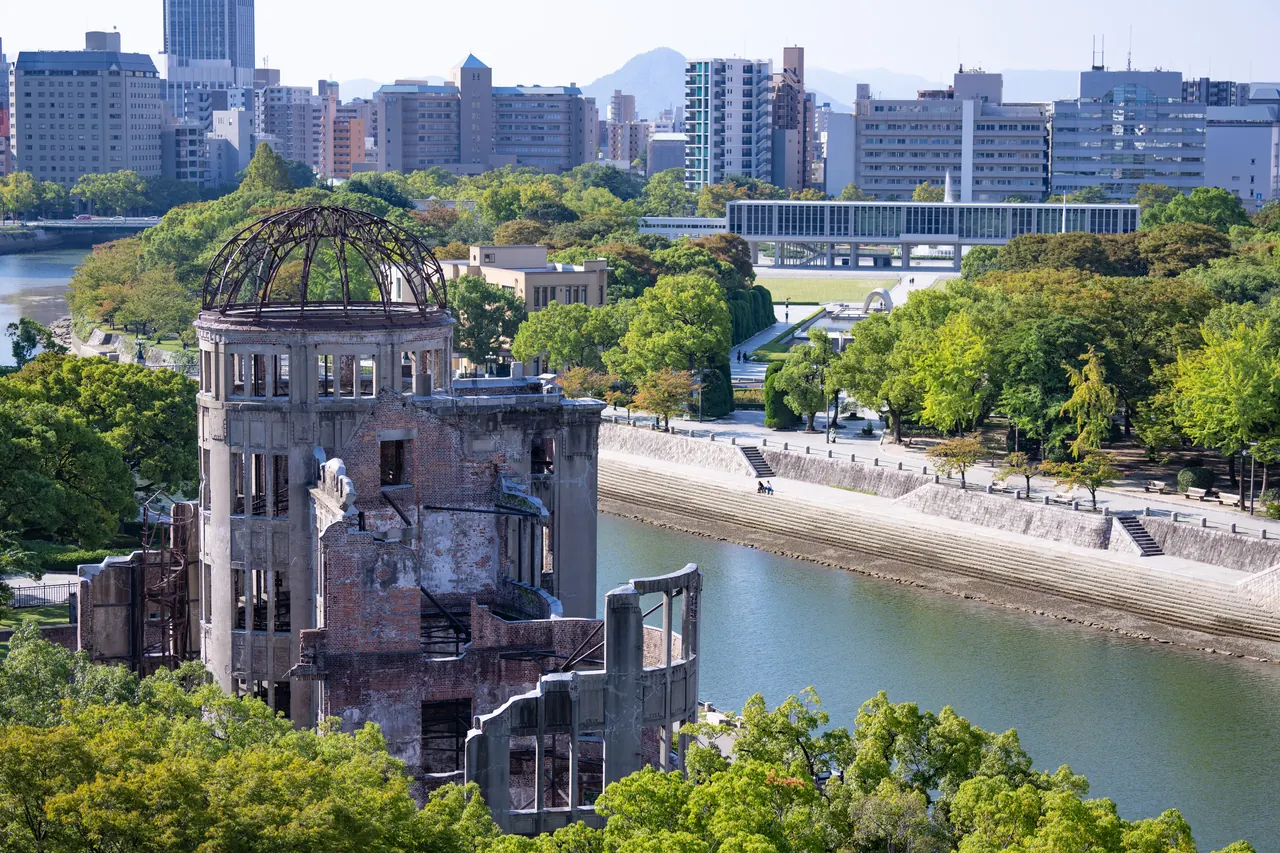
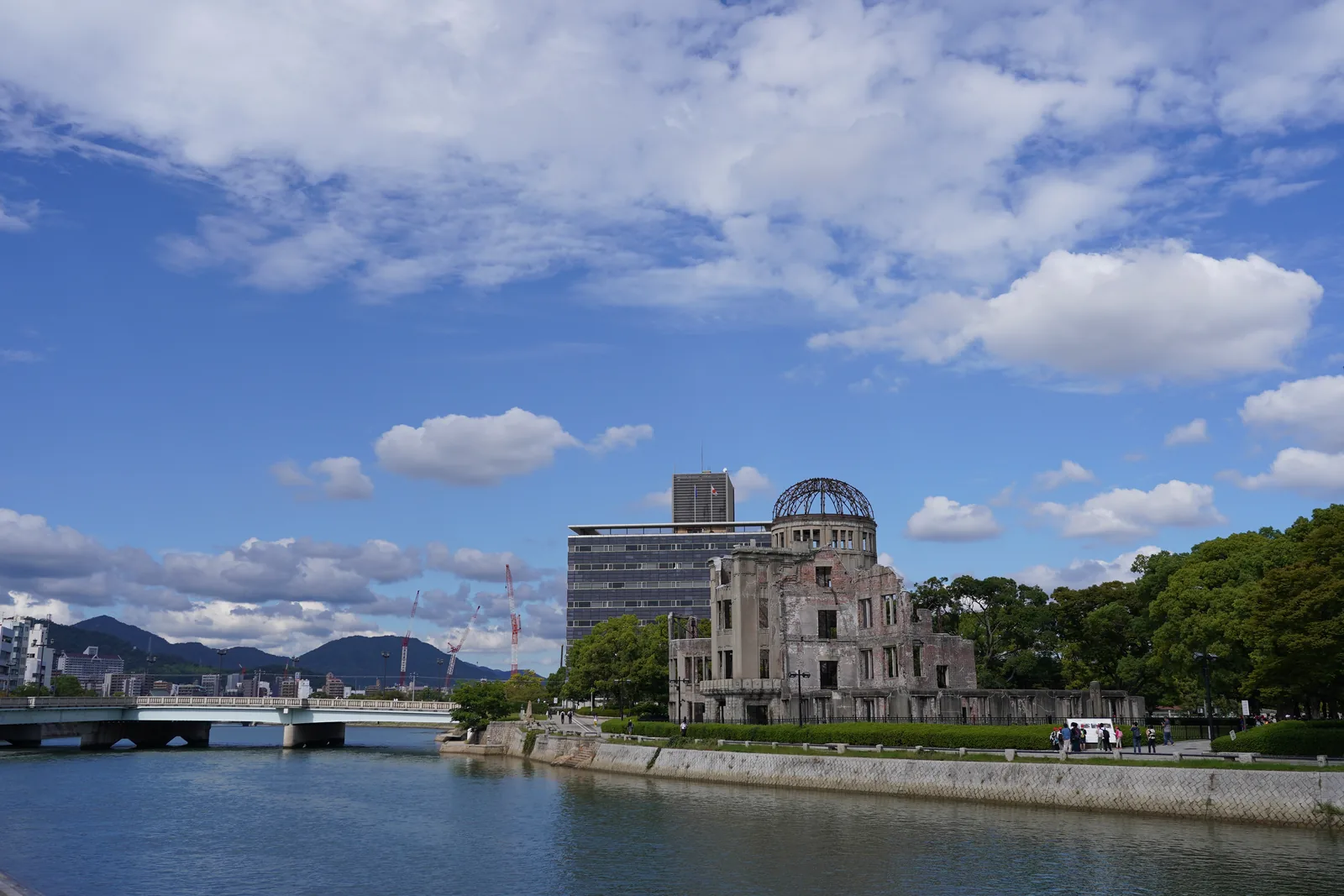
On the bank of the Motoyasu River stands a building topped with a bare steel dome, left as it was. At 8:15 a.m. on August 6, 1945, an atomic bomb exploded in the sky above central Hiroshima. Across the river, Peace Memorial Park holds monuments and statues that console the dead, and a museum that conveys what the bombing did. Before it is a sightseeing spot, this is a place of prayer.
The Atomic Bomb Dome: a building that keeps its bombed form
The Atomic Bomb Dome was completed in 1915 as the Hiroshima Prefectural Commercial Exhibition Hall. It was designed by the Czech architect Jan Letzel and was later called the Hiroshima Prefectural Industrial Promotion Hall. It stood very close to the hypocenter and was badly wrecked, but part of its walls and the steel frame of the dome did not collapse.
Preserved as a building that conveys the devastation of the bombing, it was designated a national historic site in 1995 and inscribed as a UNESCO World Heritage Site in December 1996. You cannot go inside; it is viewed from outside the surrounding fence. Looking across from the opposite bank of the Motoyasu River helps you see how the building relates to the river.
The Cenotaph for the A-bomb Victims and the Flame of Peace
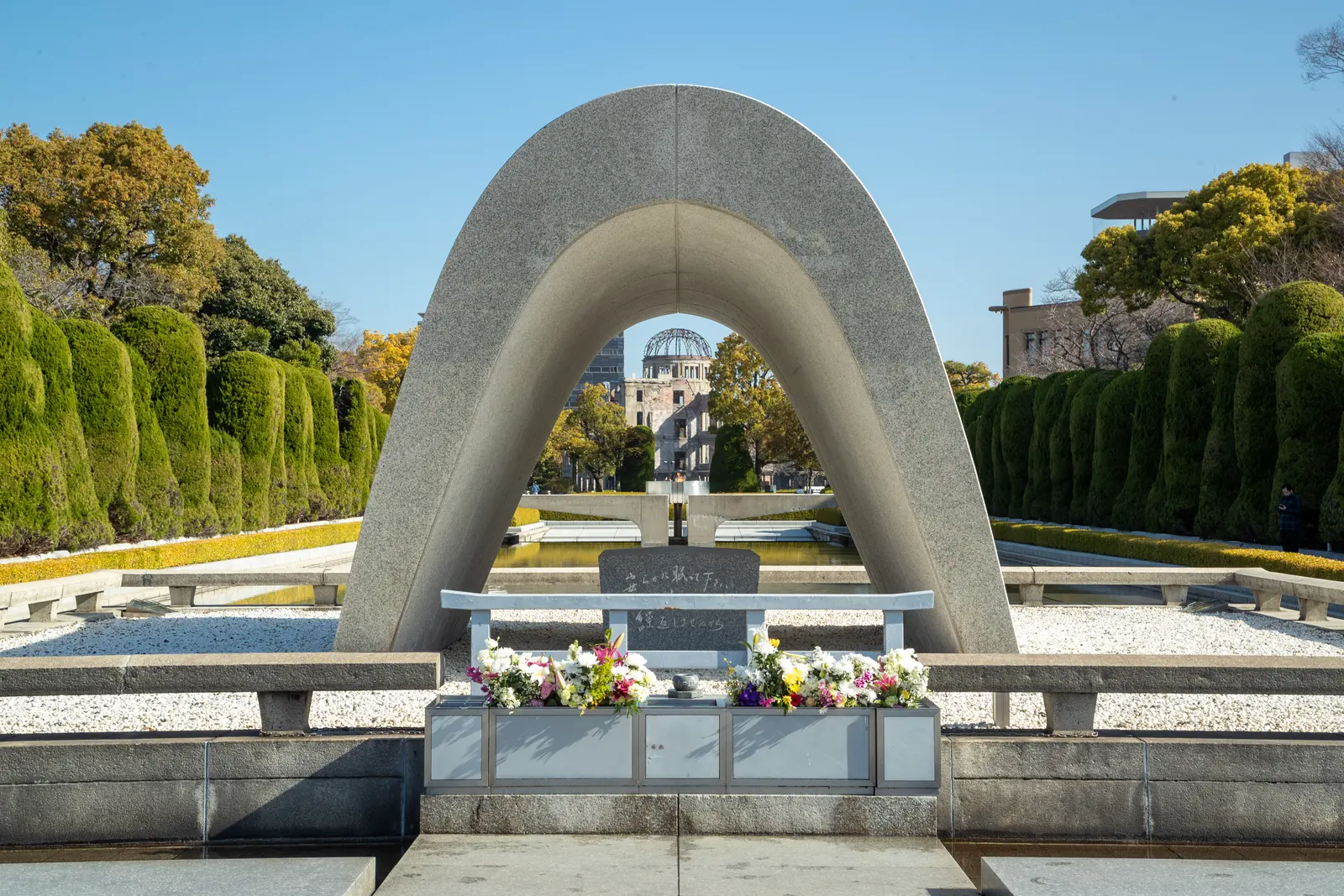
Photo: Hiroshima Tourism Association
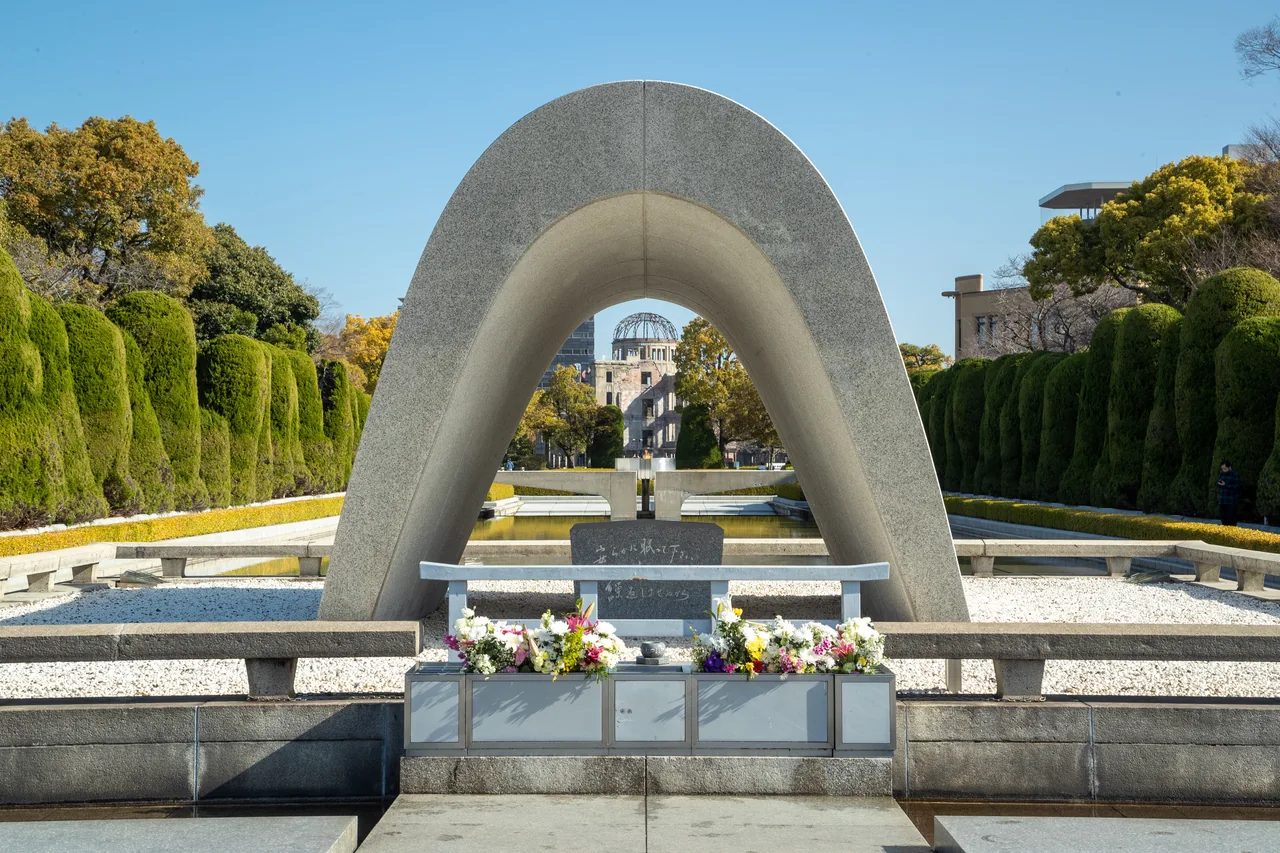
At the center of the park, the Cenotaph for the A-bomb Victims is shaped like the clay haniwa house models found in ancient burial mounds. The stone chest at its center holds the register of names of those who died from the atomic bomb, and the Peace Memorial Ceremony is held in front of it every August 6.
The inscription on the front reads, in Japanese, "Let all the souls here rest in peace, for we shall not repeat the evil." Hiroshima City explains these words as a pledge never to repeat the mistake of war, and there is a multilingual sign explaining their meaning in the Pond of Peace in front of the cenotaph.
Stand beneath the arch and you will see the Flame of Peace and, beyond it, the Atomic Bomb Dome in a straight line. People come here constantly to lay flowers and put their hands together in prayer, so if you take photos, step back a little so you do not get in the way of those paying their respects.
The Children's Peace Monument and paper cranes
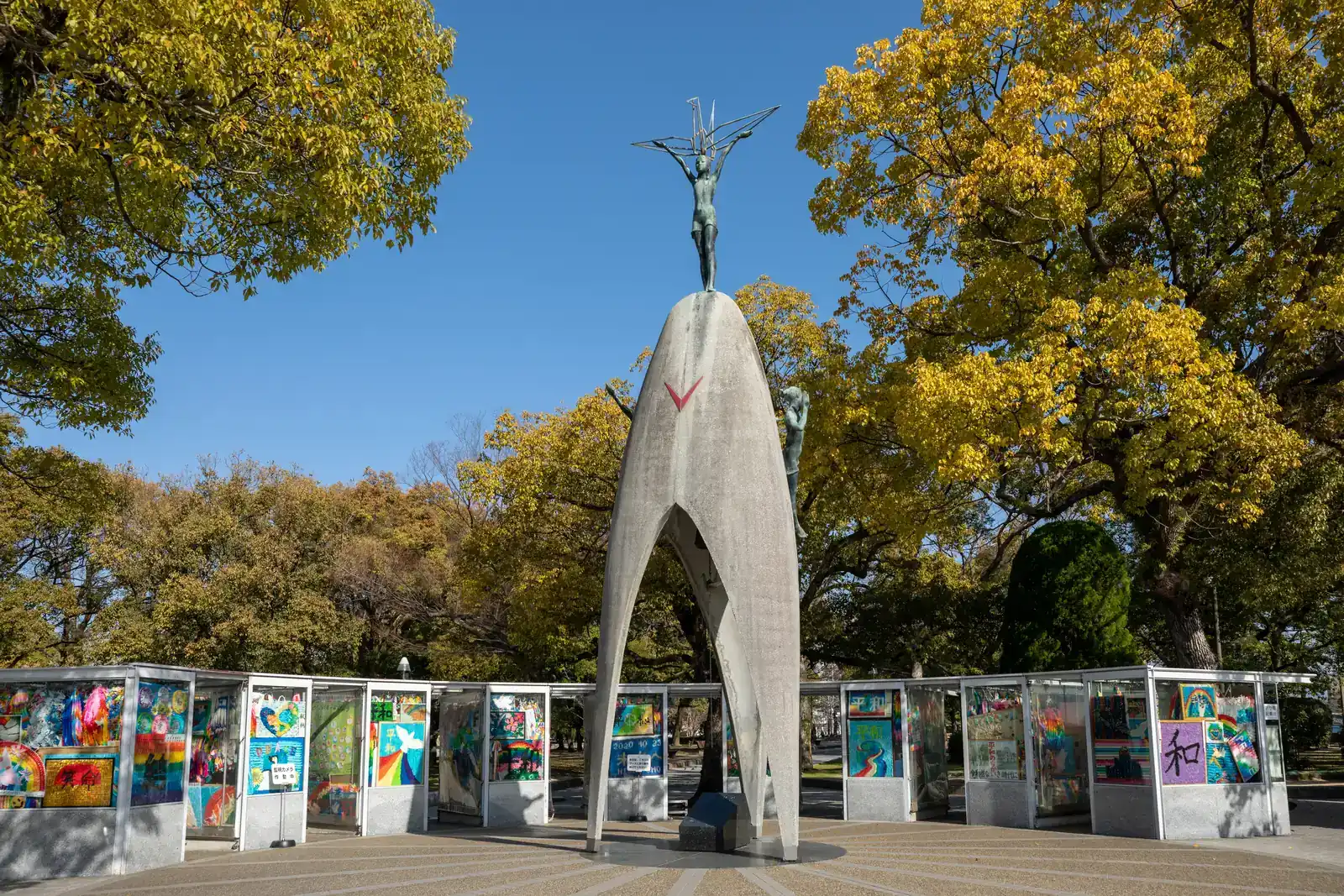
Photo: Hiroshima Tourism Association
The Children's Peace Monument in the north of the park was built because of Sadako Sasaki, who was exposed to the bomb at the age of two and later died. It was completed in May 1958 with donations sent from across Japan.
Because Sadako folded paper cranes in her hospital bed, cranes still arrive at the monument from Japan and around the world. The glass booths around it hold the strings of a thousand cranes that people send. School groups on study trips and travelers come carrying cranes they have folded.
Hiroshima Peace Memorial Museum: route and reservations
In the south of the park, the Hiroshima Peace Memorial Museum shows what the atomic bomb did to people through the belongings of victims, photographs and records. The Main Building, opened in 1955, was designed by Kenzo Tange and designated an Important Cultural Property of Japan in 2006. The East Building opened in 1994, and the exhibition now spans both buildings.
The permanent exhibition starts with the introduction on the third floor of the East Building, continues to the "Reality of the Atomic Bombing" in the Main Building, and returns to the East Building for exhibits on the dangers of nuclear weapons and Hiroshima's history. The belongings and photographs make for heavy viewing, so give yourself plenty of time and go at your own pace. Audio guides are available to rent.
The museum can get very crowded at certain times of year, with lines to get in. In March 2024 Hiroshima City extended the opening hours and introduced online advance reservations. Depending on the season and time of day, you may need a reservation. The time slots that need booking and the opening hours change with the season, so check the official website before you go.
The park and the city from above
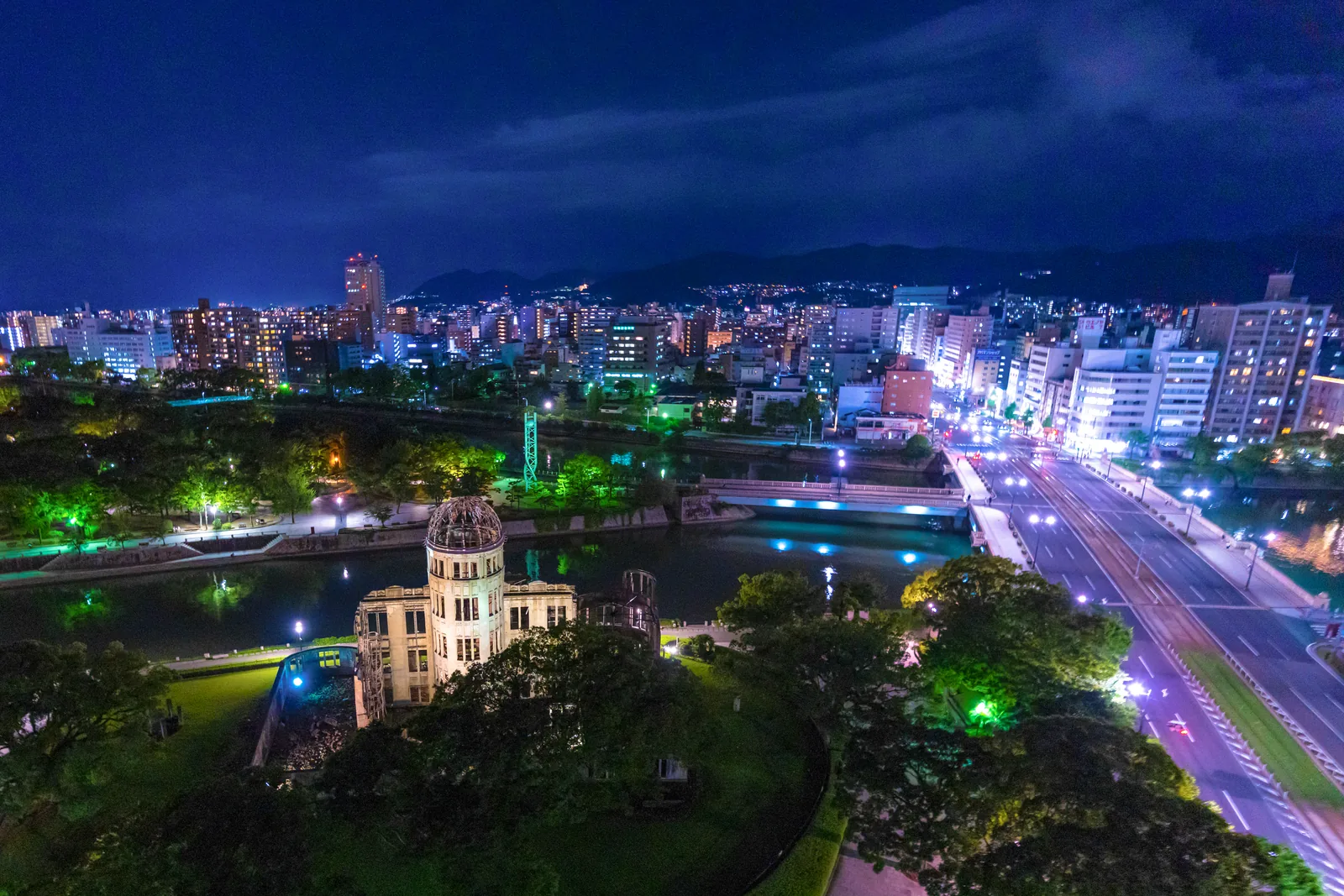
Photo: Hiroshima Tourism Association
After dark, the Atomic Bomb Dome and the trees of the park are lit up among the lights of the city. Seen from above, it becomes clear that the Dome stands right in the middle of today's Hiroshima.
The park is open at all hours, and the Atomic Bomb Dome can be viewed from outside at any time. After the museum closes, walking through the park once more is a good way to end the visit.
Getting to Peace Memorial Park
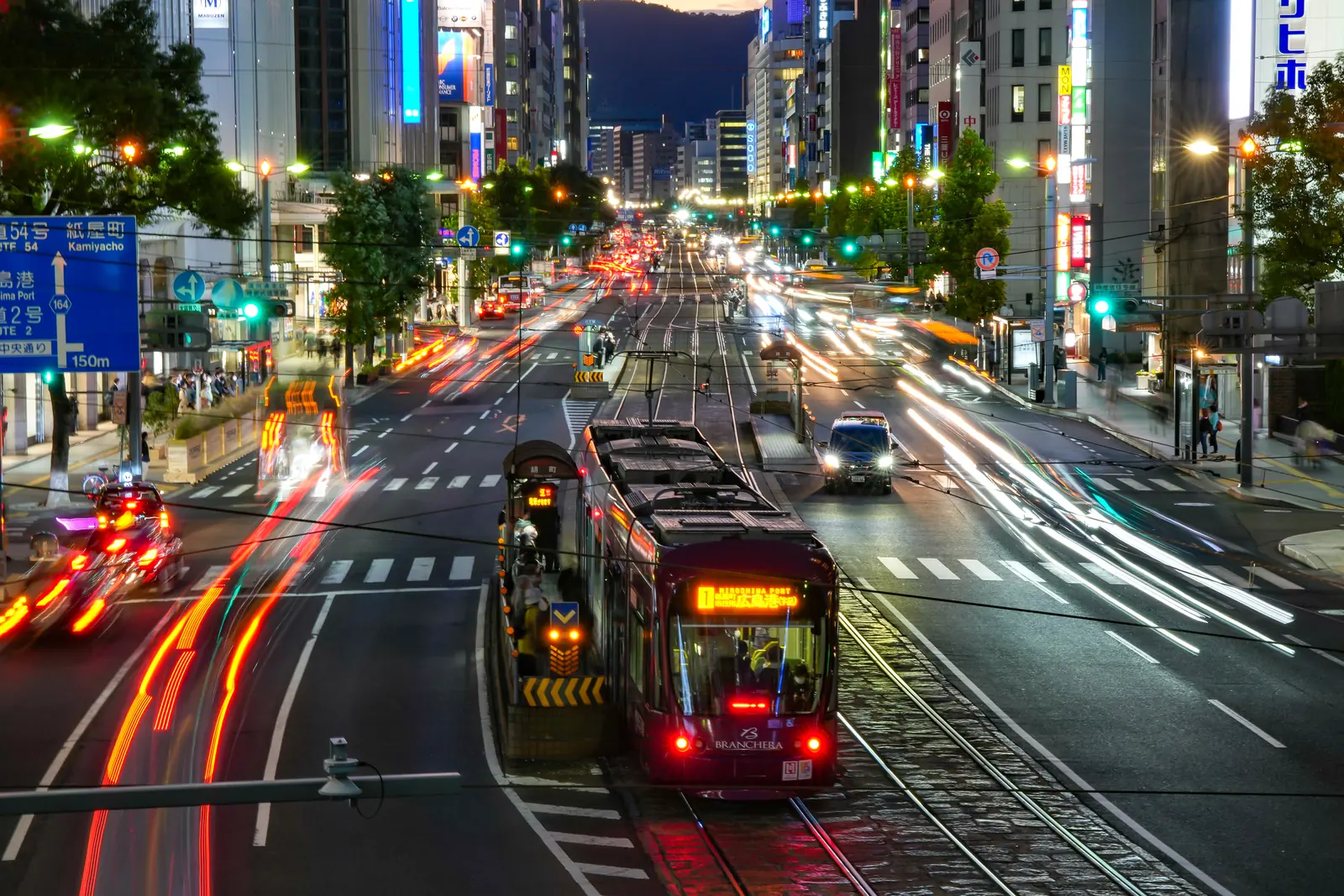
Photo: Hiroshima Tourism Association
From Hiroshima Station, the Hiroden streetcar is the easiest option. Get off at the Genbaku Dome-mae stop and the Atomic Bomb Dome is right in front of you. From there, cross the Motoyasu River and walk through the park past the Cenotaph to reach the museum.
From the north exit of Hiroshima Station you can also take the Meipuru-pu city loop bus; get off at Heiwa Koen-mae for the south side of the park. The park is large, so allow time to walk slowly from the Dome to the museum.
Photo: Hiroshima Tourism Association
For Hiroshima's local food, see the Hiroshima food guide. For the sights of the dome and the park, see the Atomic Bomb Dome and Peace Memorial Park pages.