Kaga Onsen Guide: Yamanaka, Yamashiro, Katayamazu and Awazu
This guide is translated from the Japanese edition. Read the Japanese edition
How Kaga Onsen's four hot springs differ: Yamanaka, Yamashiro, Katayamazu and Awazu, their sights, and getting around from Kaga-Onsen Station by CANBUS.
Step off the shinkansen at Kaga-Onsen Station and you are within reach of a hot spring in a mountain gorge, one surrounded by old streets and one on the shore of a lake. Kaga Onsen is the collective name for four hot spring towns in southern Ishikawa Prefecture: Yamanaka, Yamashiro, Katayamazu and Awazu. Where you stay shapes the whole trip. Yamanaka suits gorge walks, Yamashiro strolls and public baths, and Katayamazu lake views.
What is Kaga Onsen? Four hot springs in two cities
The Ishikawa Prefecture Tourism League presents Yamanaka, Yamashiro, Katayamazu and Awazu as Kaga Onsen. Three of them, Yamanaka, Yamashiro and Katayamazu, are in Kaga City, and Kaga City's own tourist information also treats these three as Kaga Onsen. Awazu Onsen is in neighboring Komatsu. When planning, look at the tourist information of both Kaga and Komatsu to get the full picture.
The Hokuriku Shinkansen was extended to Tsuruga on March 16, 2024, and shinkansen trains now stop at Kaga-Onsen Station. This station is the starting point for touring the hot springs.
| Hot spring | City | Main sights | Getting there from Kaga-Onsen Station, etc. |
|---|---|---|---|
| Yamanaka Onsen | Kaga | Kakusenkei Gorge (Korogi Bridge and Ayatori Bridge) | CANBUS Yama-mawari (mountain) route |
| Yamashiro Onsen | Kaga | Kosoyu and Yunogawa, Iroha Soan | CANBUS Yama-mawari (mountain) route |
| Katayamazu Onsen | Kaga | Ukimido on Lake Shibayama, Nakaya Ukichiro Museum of Snow and Ice | CANBUS Umi-mawari (coast) route |
| Awazu Onsen | Komatsu | Natadera Temple, Japan Automobile Museum | Awazu Station on the IR Ishikawa Railway |
Yamanaka Onsen: walking the Kakusenkei Gorge path
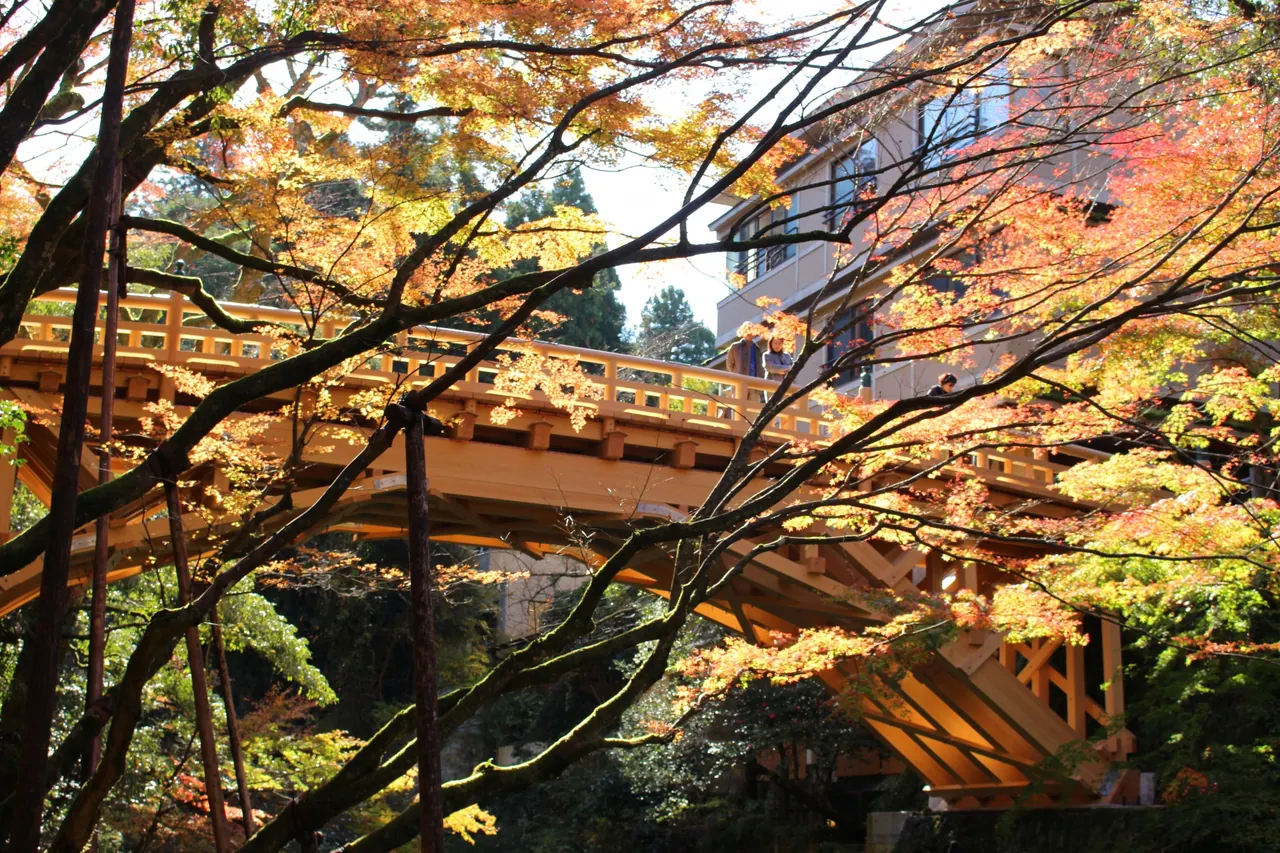
Yamanaka Onsen is a gorge-side hot spring town with the Daishoji River flowing along its streets. That gorge is Kakusenkei Gorge, where a walking path runs for about 1.3 km from Korogi Bridge to Kurotani Bridge. You walk right beside the river, crossing the all-cypress Korogi Bridge and the Ayatori Bridge designed by Teshigahara Hiroshi, head of the Sogetsu school of ikebana.
Walking one way at a relaxed pace takes 40 minutes to an hour. From April to November, the riverside Kakusenkei Kawadoko platform opens, where you can sit and listen to the water. In winter, snow can linger on the path, so wear shoes with a good grip.
Yamashiro Onsen: Yunogawa around the Kosoyu bathhouse
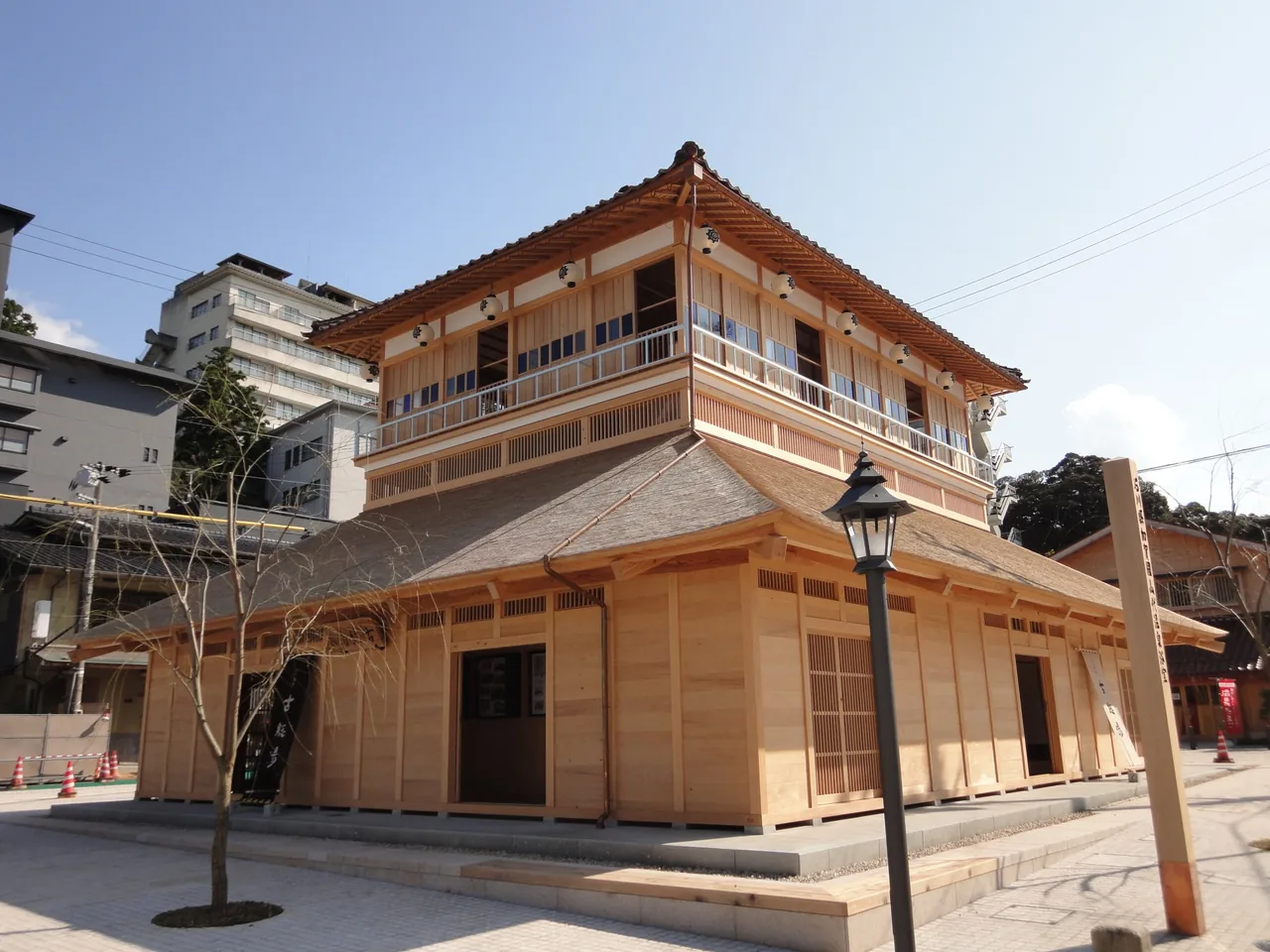
The heart of Yamashiro Onsen is the district called Yunogawa, and at its center stands the public bathhouse Kosoyu. The wooden building recreates the town's public bath built in 1886 and opened in 2010. With its two stories of plain wooden pillars and latticework, it is worth seeing from the outside even if you don't bathe.
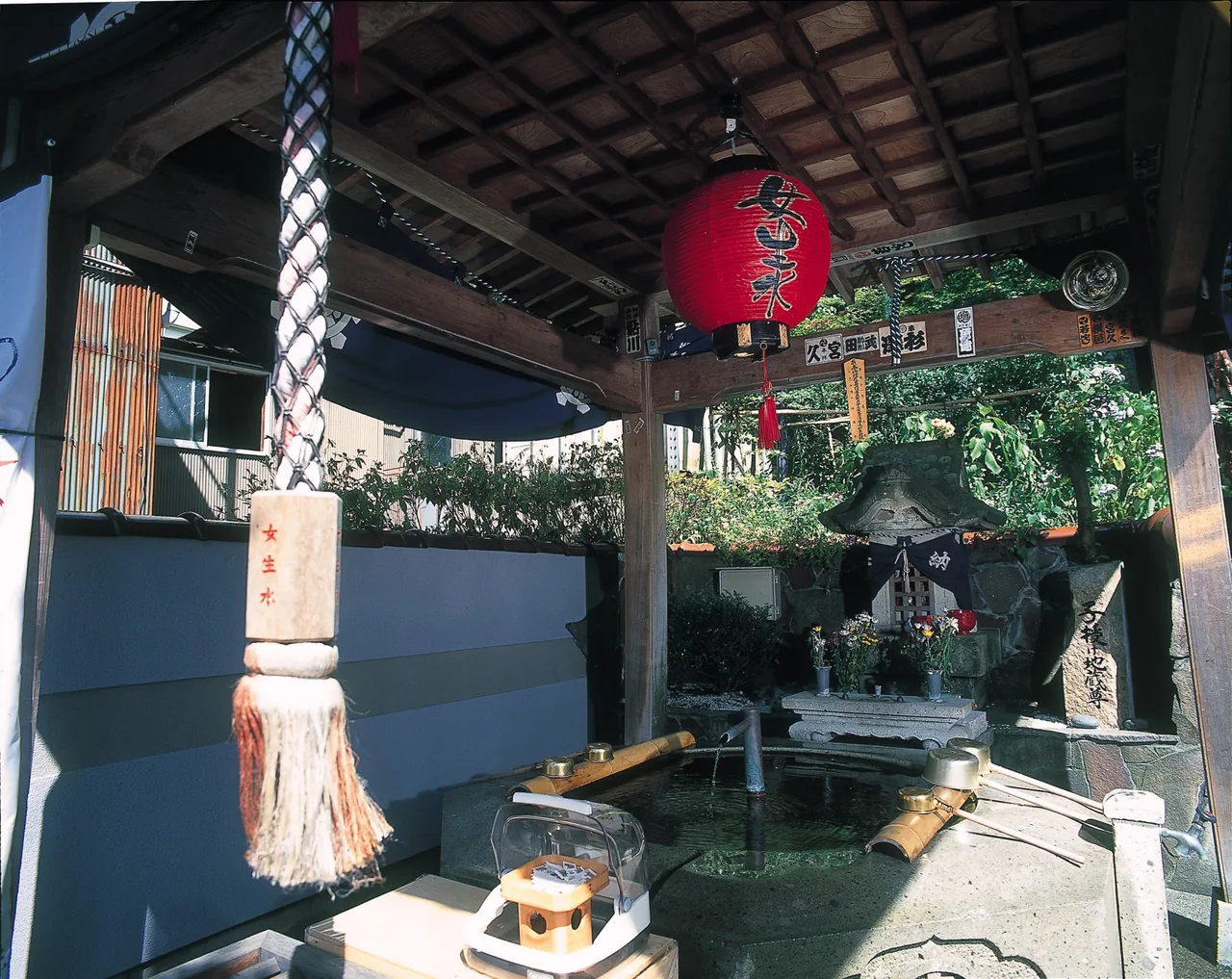
Photo: ©石川県観光連盟
Just by Yunogawa is Rosanjin's Former Residence Iroha Soan, where Kitaoji Rosanjin spent about six months from autumn 1915. During his stay, he studied pottery under Suda Seika, a Kutani ware potter. A bath at Kosoyu, a stroll around Yunogawa and a visit to Iroha Soan fit into half a day.
Katayamazu Onsen: Ukimido floating on Lake Shibayama
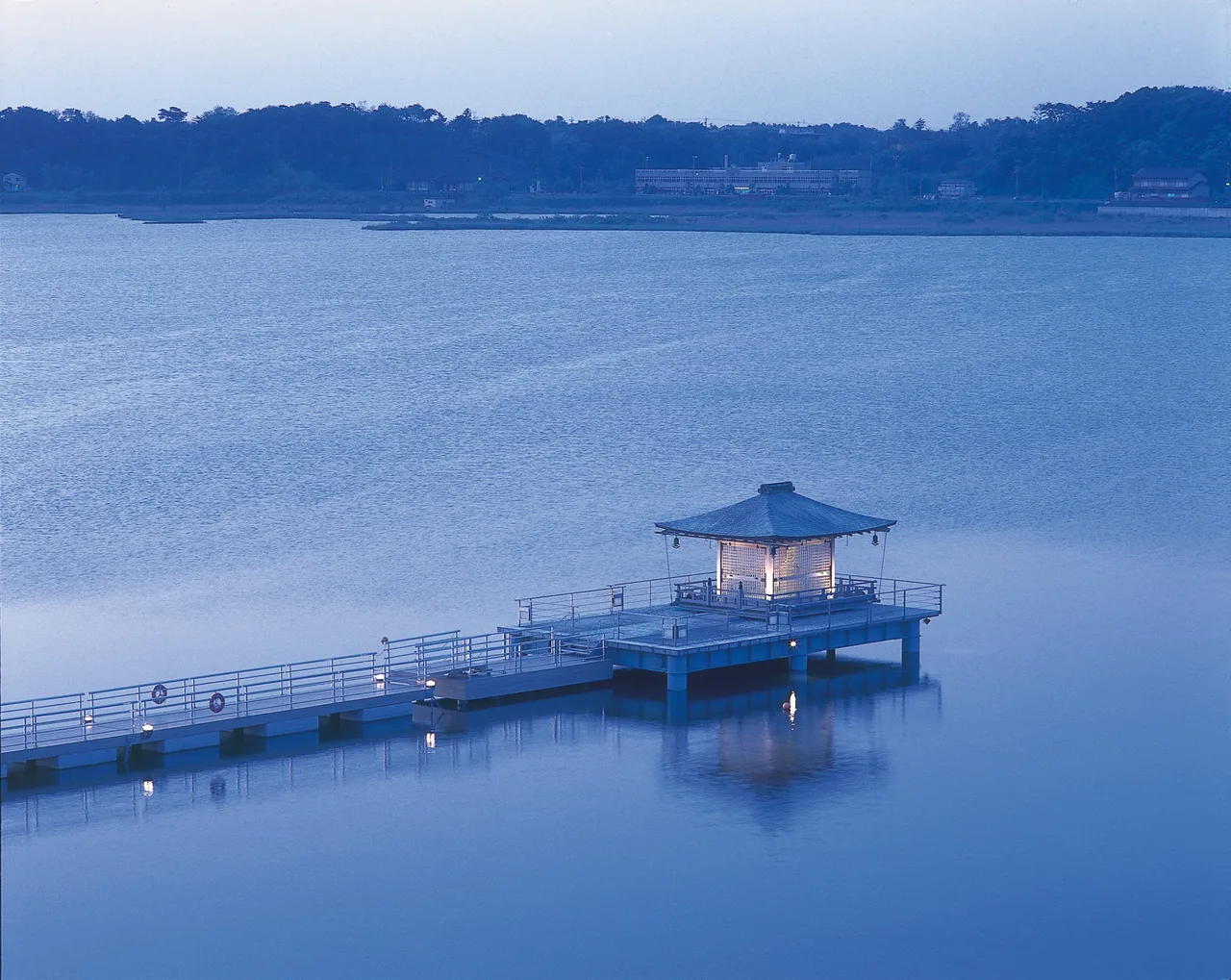
Katayamazu Onsen sits on the shore of Lake Shibayama. From Yunomoto Park on the lakeside, a floating walkway leads out to Ukimido, a hall built so that it seems to float on the lake. From the hall you can look across the hot spring town and the wide water of Lake Shibayama.
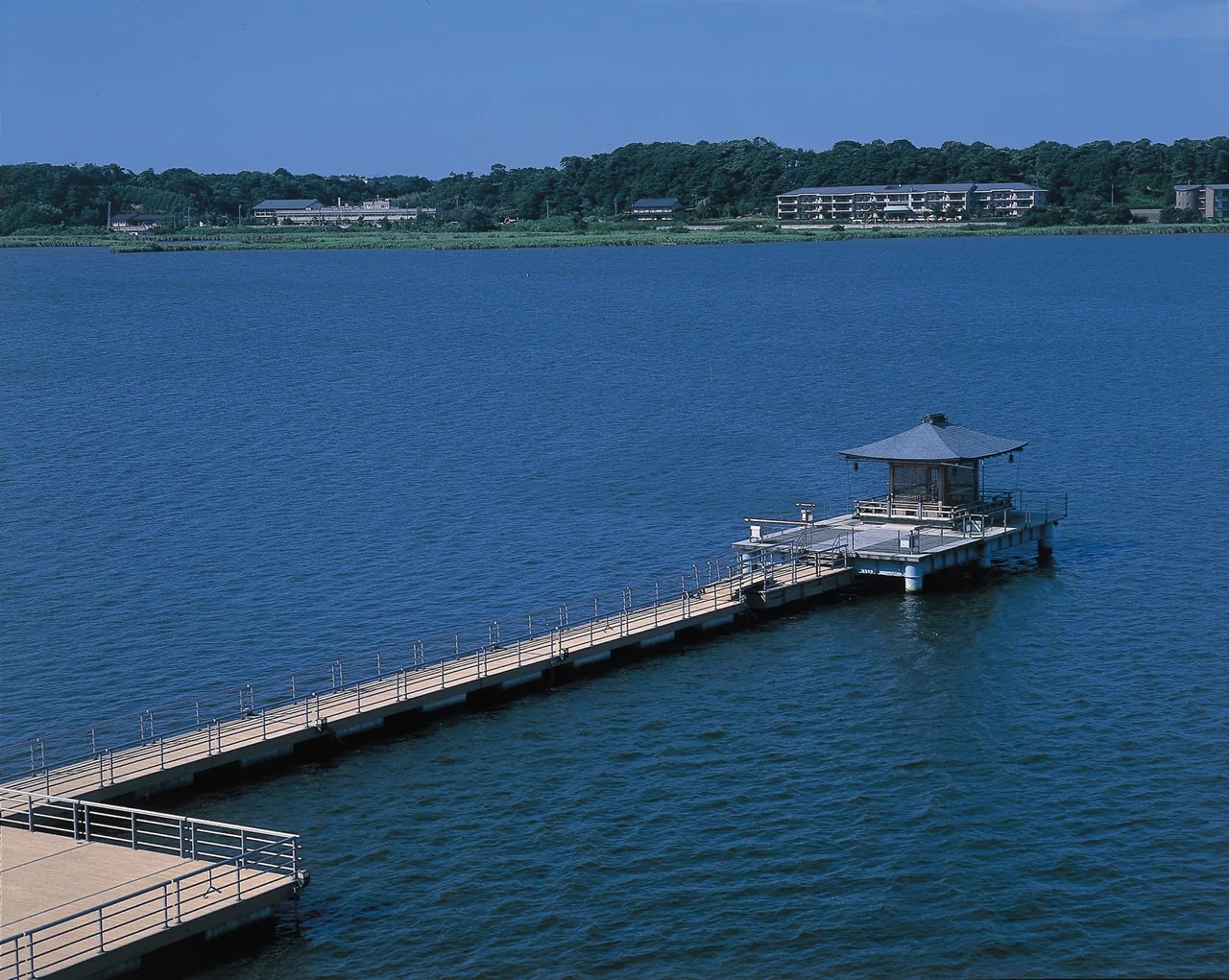
Photo: ©石川県観光連盟
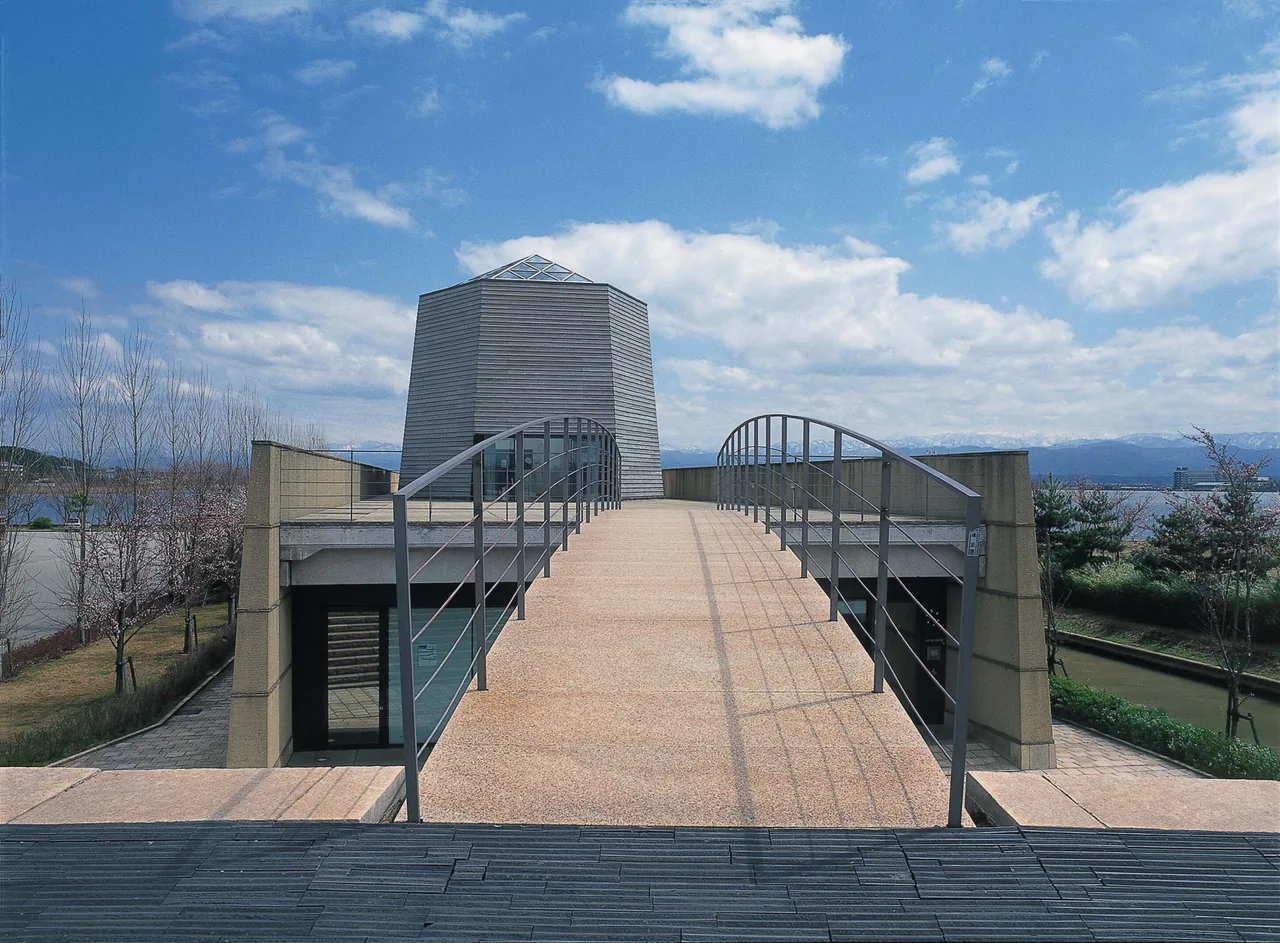
Katayamazu Onsen also has a public bathhouse completed in 2012, so you can bathe on a day trip. A little farther on is the Nakaya Ukichiro Museum of Snow and Ice, devoted to Nakaya Ukichiro, known for the words "Snow crystals are letters sent from the sky." Designed by the architect Isozaki Arata, it closed for repairs after the Noto Peninsula earthquake and reopened on April 4, 2026.
Awazu Onsen: Komatsu's hot spring and Natadera Temple
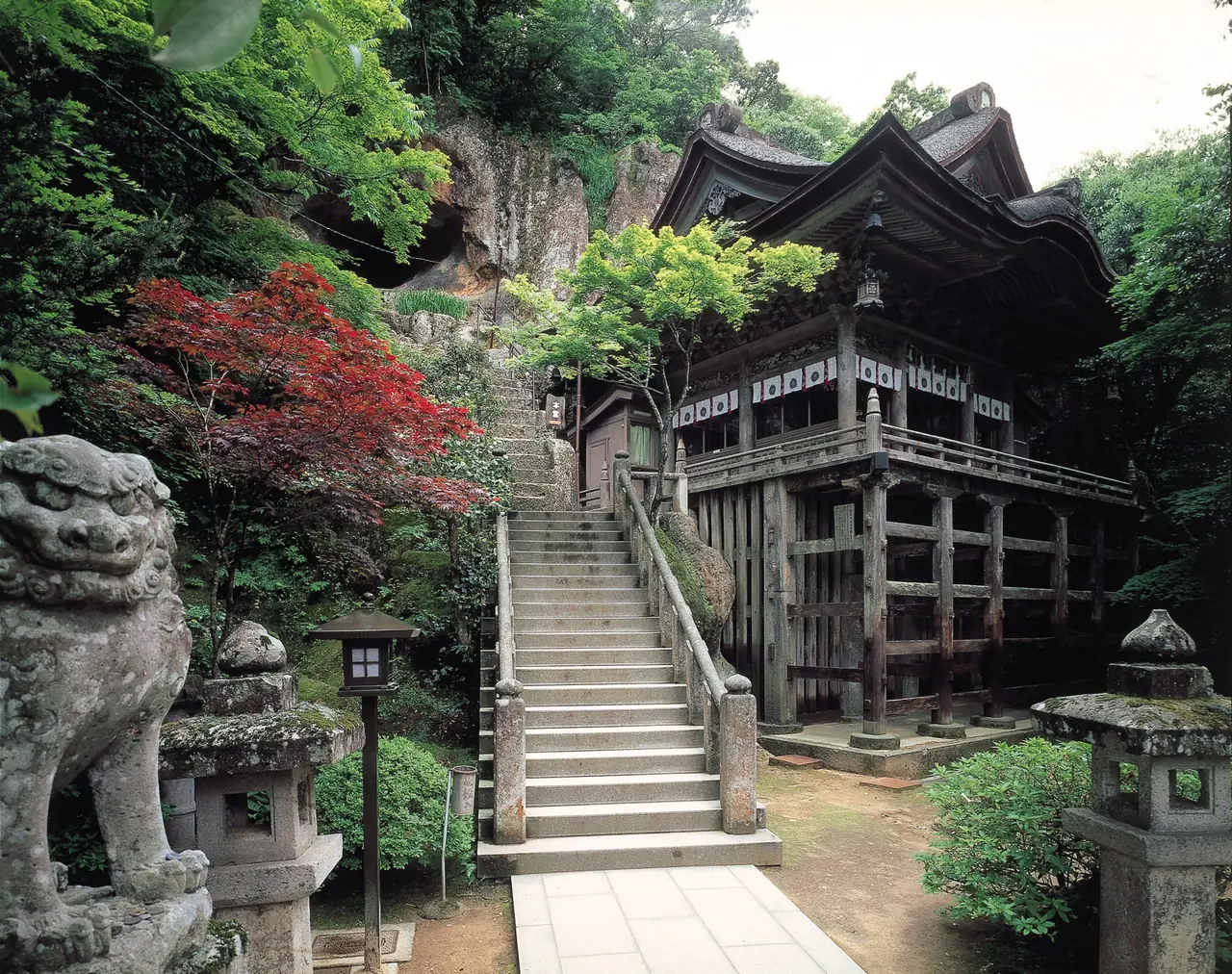
Of the four, only Awazu Onsen is in Komatsu. Nearby is Natadera Temple, said to have been founded by Taicho in 717. Its grounds hold Kigan Yusenkyo, where pale rock pinnacles tower over a pond, and the temple is famous for autumn leaves, drawing many visitors in fall. From Awazu Station on the IR Ishikawa Railway, take a Hokutetsu Kaga Bus bound for Natadera, or a taxi for about 10 minutes.
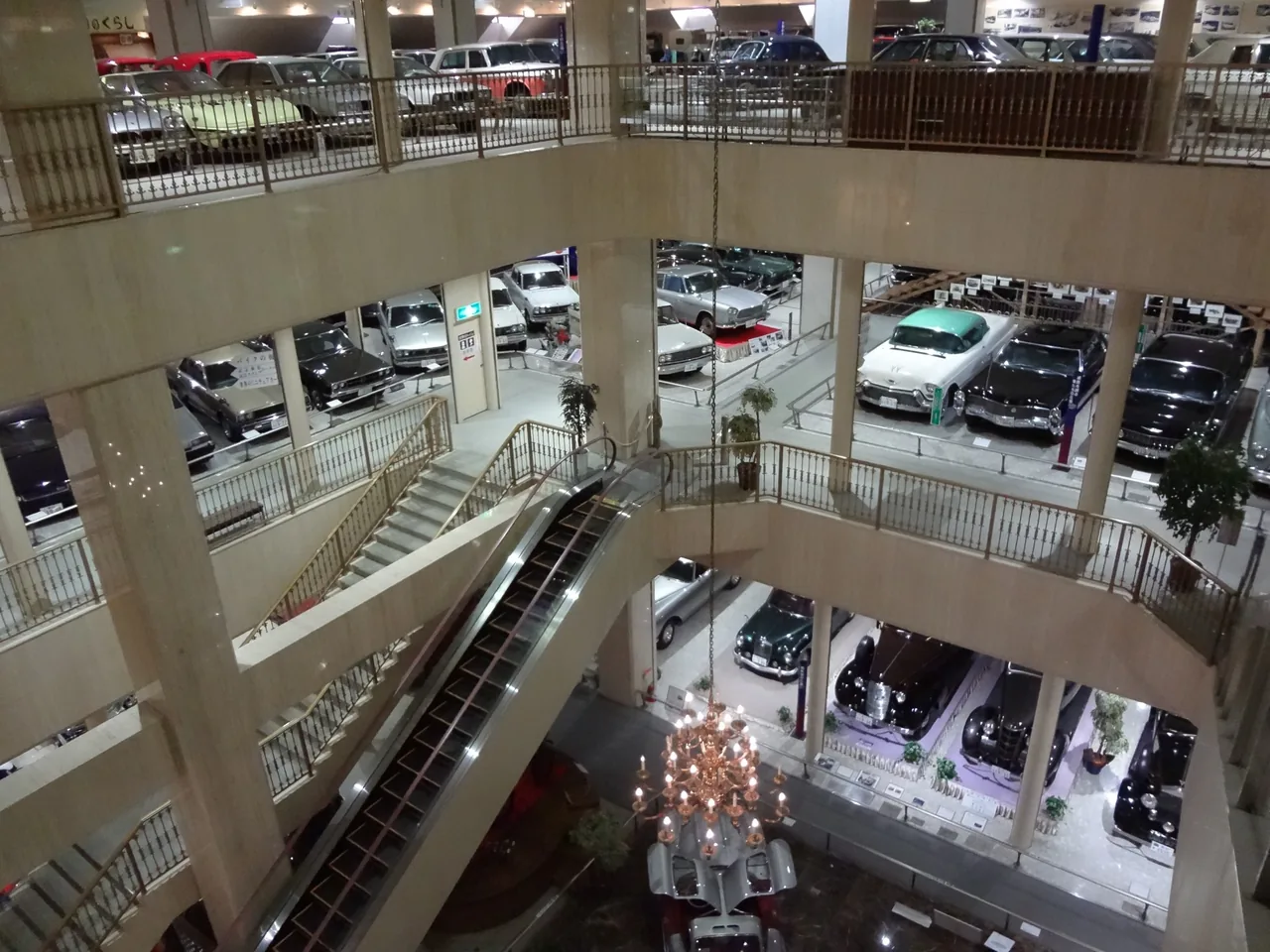
On a rainy day, the Japan Automobile Museum, with around 500 cars on display at any time, is another option. It is a 7–8 minute taxi ride from Awazu Station. Note that Awazu and Daishoji stations have been IR Ishikawa Railway stations since March 2024. Even if older information still calls it JR, you now travel there on the IR Ishikawa Railway.
Stay overnight, or bathe on a day trip?
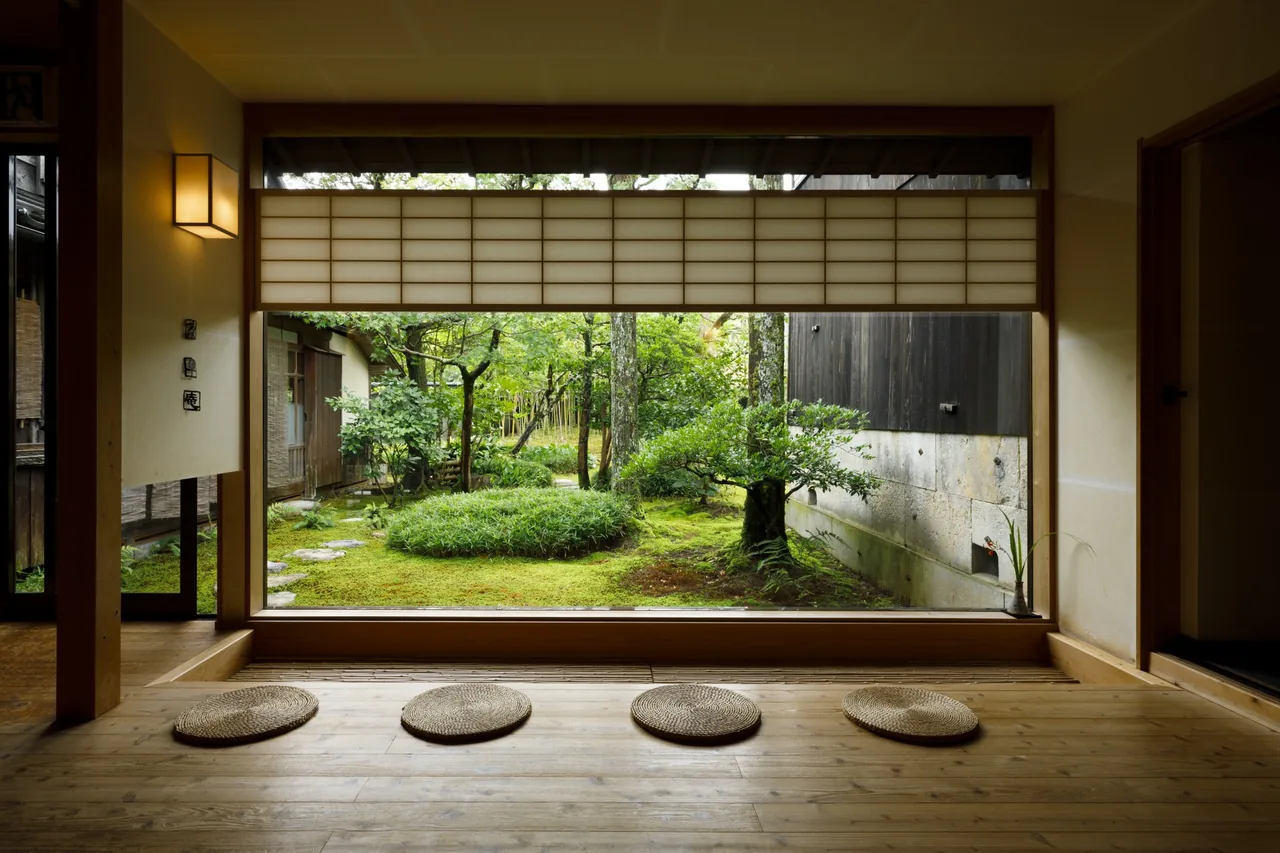
There are two ways to enjoy Kaga Onsen: stay at a ryokan and soak at leisure in its baths, or come for the day and visit the public bathhouses. At a ryokan, you can relax in the baths both at night and in the morning. Your day will revolve around dinner and breakfast times, so seeing temples and gorges before check-in leaves you more time at the inn.
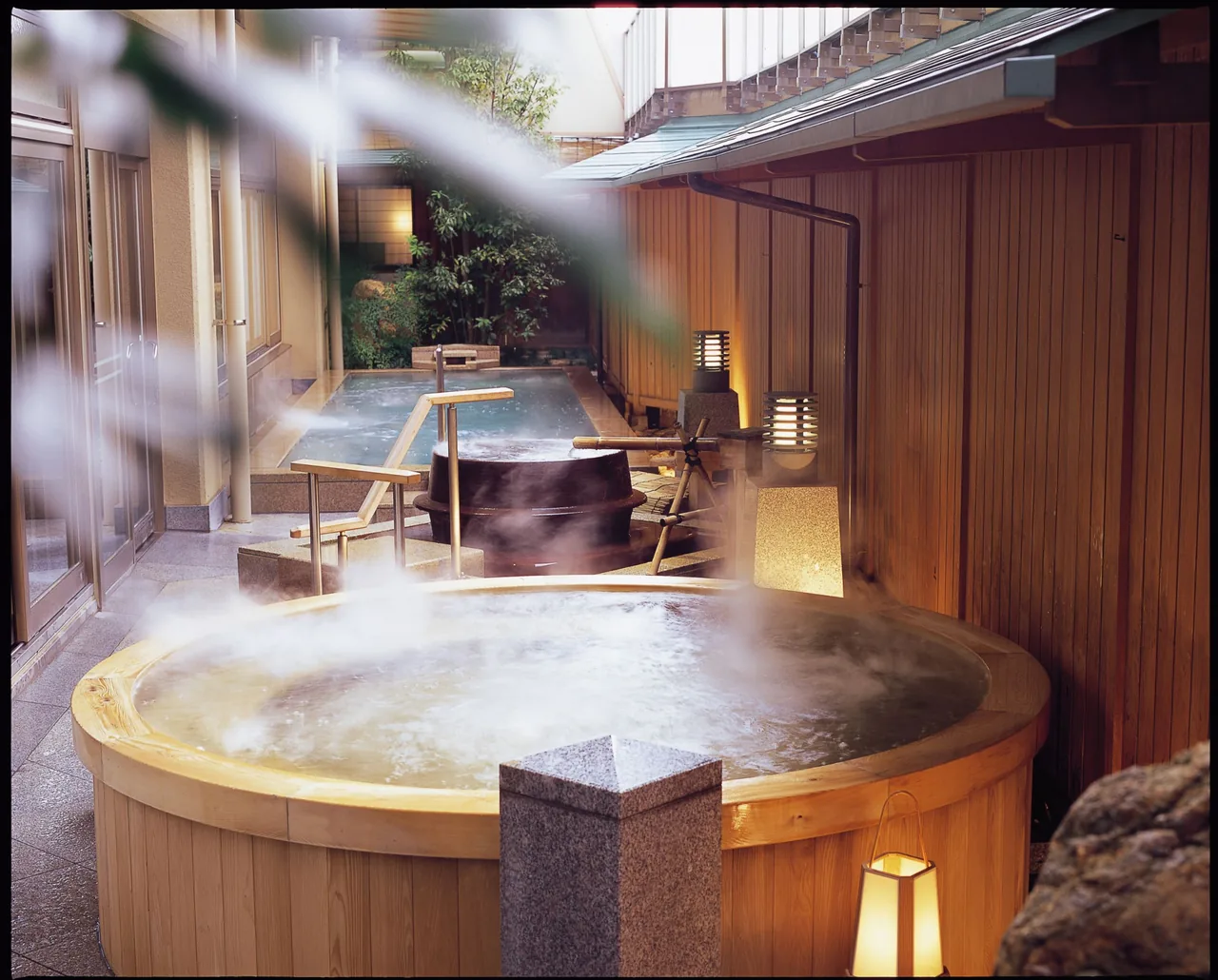
Photo: ©石川県観光連盟
On a day trip, public bathhouses such as Kosoyu in Yamashiro and the bathhouse in Katayamazu are easy to drop into. Check each official source for bathing hours and fees. If it is your first time in a Japanese bath, read onsen etiquette first, and for how to spend your stay, see a first-timer's guide to ryokan.
Getting around from Kaga-Onsen Station by CANBUS
The CANBUS sightseeing loop bus, which starts from Kaga-Onsen Station, links the hot springs and the sights. It has three routes: the Yama-mawari (mountain) route, the Umi-mawari (coast) route and the Komatsu Airport route. The Yama-mawari route covers Yamanaka Onsen, Yamashiro Onsen, Iroha Soan, Natadera Temple and the Japan Automobile Museum, and the Umi-mawari route covers Yunomoto Park in Katayamazu Onsen and the Nakaya Ukichiro Museum of Snow and Ice.
- Natadera Temple is about 35 minutes from Kaga-Onsen Station on the CANBUS Yama-mawari route.
- For Ukimido, the nearest stop is "Katayamazu Onsen Yunomoto Park" on the Umi-mawari route.
- The multi-ride pass that used to be sold is no longer available (as of November 2026). Check fares and timetables on the official website before you ride.
To combine your stay with Kutani ware museums and the pottery village, see Kutani ware country. Find more places in Ishikawa with sights in Ishikawa.