
Kagoshima Food: 6 Local Specialties from Kurobuta Pork to Shochu
This guide is translated from the Japanese edition. Read the Japanese edition
What to eat in Kagoshima and how: kurobuta pork shabu-shabu and tonkatsu, light Kagoshima ramen, Amami's keihan, Makurazaki katsuo, shirokuma shaved ice and imo shochu.
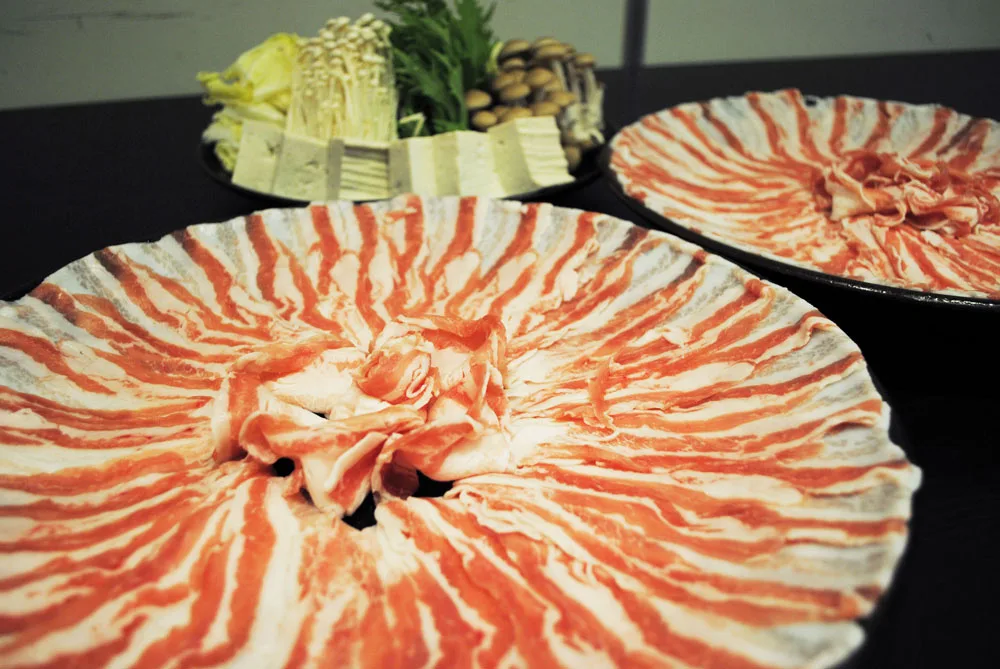
Thin slices of pork, fanned out on a platter like petals, swished through a steaming pot: if you want to taste Kagoshima's kurobuta black pork, shabu-shabu is the place to start. Kagoshima Prefecture raises black pigs and black cattle, it is the home of shochu distilled from sweet potatoes, and the outlying Amami Islands have their own local cuisine. Kurobuta, ramen, keihan, bonito, shirokuma and sweet potato shochu: each has its own places to eat it and its own way of enjoying it.
Kagoshima kurobuta: shabu-shabu and tonkatsu
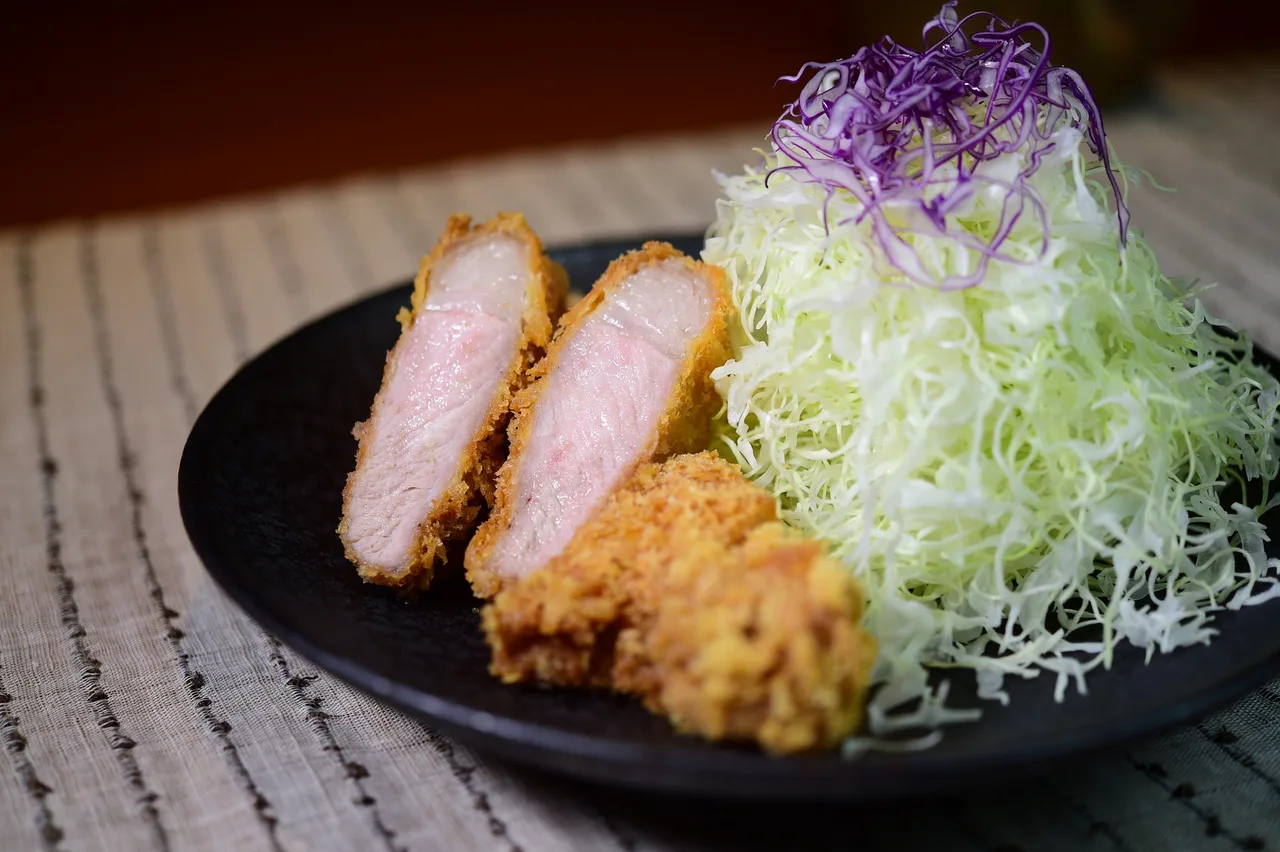
Photo: © K.P.V.B
Kagoshima's black pork is said to go back to small black pigs that arrived via the Ryukyu Kingdom about 400 years ago and were improved with Britain's Berkshire breed in the Meiji era. To carry the "Kagoshima Kurobuta" brand, pigs raised by the prefecture's producers must be Berkshires and, among other conditions, be fed a diet containing 10 to 20 percent sweet potato for at least 60 days in the late fattening period. Because the snout, the four feet and the tail are white, they're also called "rokuhaku," the six whites.
The classic ways to eat it are shabu-shabu and thick-cut tonkatsu like the one in the photo. For shabu-shabu, you swish the thin slices briefly through the broth in the pot to bring out the pork's sweetness. For tonkatsu, there are plenty of specialist restaurants around Kagoshima-Chuo Station and Tenmonkan, and it's an easy choice for lunch.
Kagoshima ramen: a lighter pork-bone broth
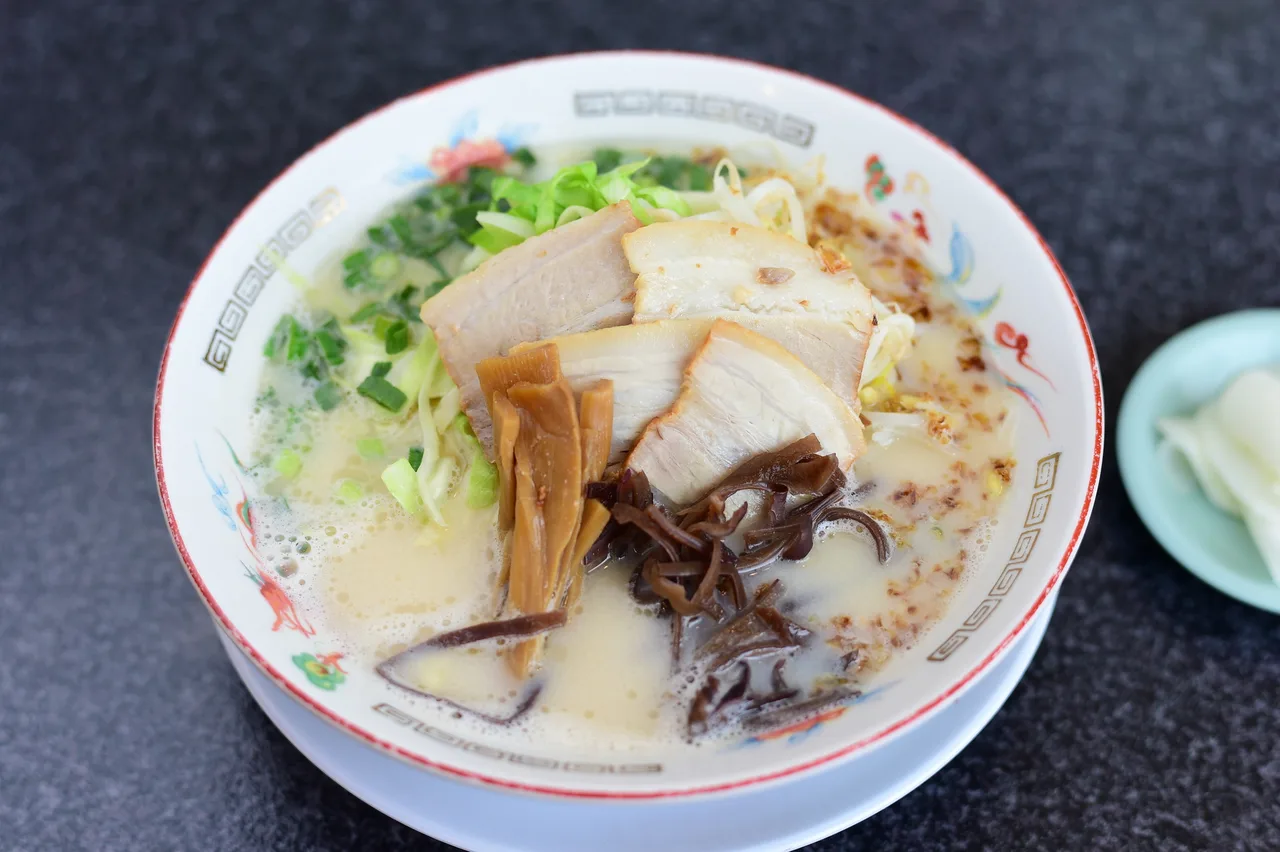
Photo: © K.P.V.B
Kyushu ramen may bring a rich pork-bone broth to mind, but Kagoshima ramen is said to be comparatively low in fat, light and easy to eat. Many shops combine pork bones with chicken bones, vegetables or seafood for their broth, and noodle thickness and broth strength vary a lot from shop to shop. With no fixed definition, trying a few places to find your favorite bowl is part of the fun.
Plenty of ramen shops are clustered around Tenmonkan and Kagoshima-Chuo Station.
Keihan: a dish from Amami
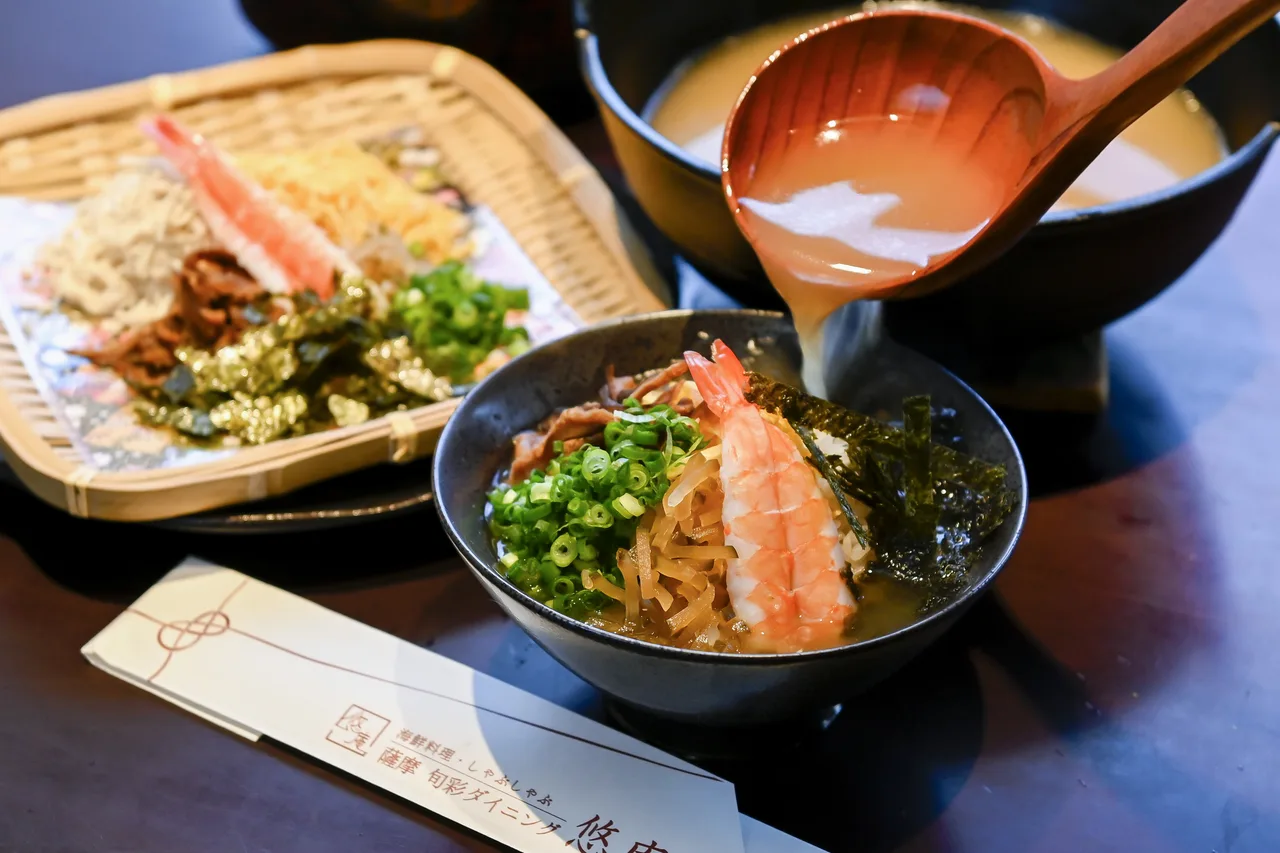
Photo: ©鹿児島市
Keihan is the signature local dish of the Amami region. Shredded chicken, dried shiitake, thin strips of omelet, miso-pickled papaya and other toppings go on white rice, and hot chicken broth is poured over it. It is said to have originated in the Kasari area of Amami Oshima, and because it was served to officials of the Satsuma Domain, it has also been called "the lord's dish."
The recommended way to eat it is with plenty of broth and not too much rice. You don't have to go all the way to Amami: you can have it at local-cuisine restaurants in Kagoshima City.
Makurazaki katsuo: tataki from the bonito flake town
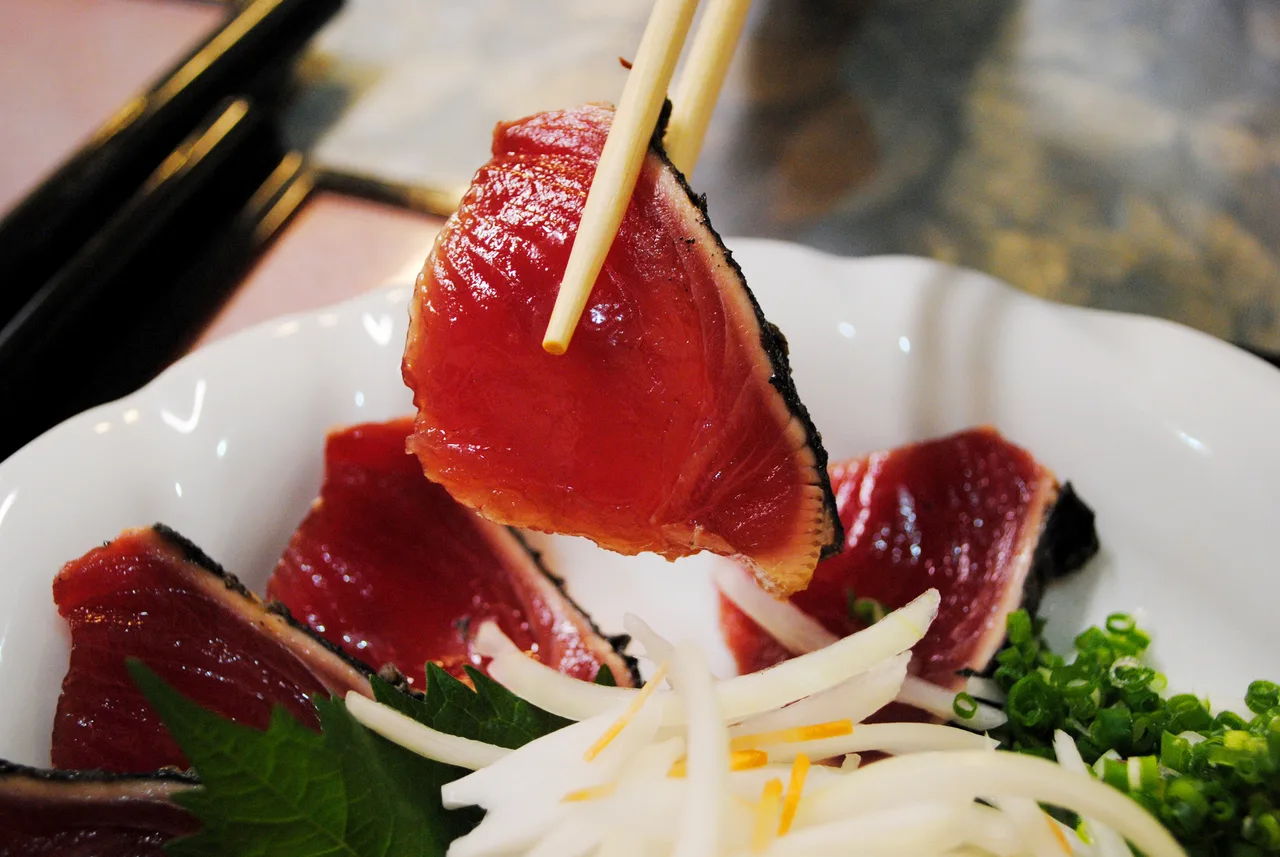
Photo: © K.P.V.B
Makurazaki, in the southwest of the Satsuma Peninsula, is Japan's top producer of katsuobushi, dried bonito flakes. It has a port where katsuo (skipjack tuna) is landed, and katsuobushi has been made here since the middle of the Edo period. Alongside katsuobushi, the city promotes "katsuo no tataki" as a local specialty: katsuo briefly seared on the outside, eaten with condiments.
Makurazaki Station is the terminus of the JR Ibusuki Makurazaki Line and the southernmost JR terminus on Japan's main islands. If you're heading out from Ibusuki, trains are infrequent, so check the times first.
Shirokuma: shaved ice with condensed milk and fruit
Shirokuma ("white bear") is Kagoshima's shaved ice, topped with condensed milk and then a colorful mix of fruit, beans and more. The name is said to come from the way it looked like a white bear when seen from above. It is said to have originated at a long-established eatery in Kagoshima, and today you can also find it as cup ice cream in supermarkets.
Some shops serve very large portions, so share one or choose a small size if there is one. Around Tenmonkan you'll find a cluster of cafes and sweet shops that serve shirokuma.
Imo shochu: with hot water, from a kurojoka
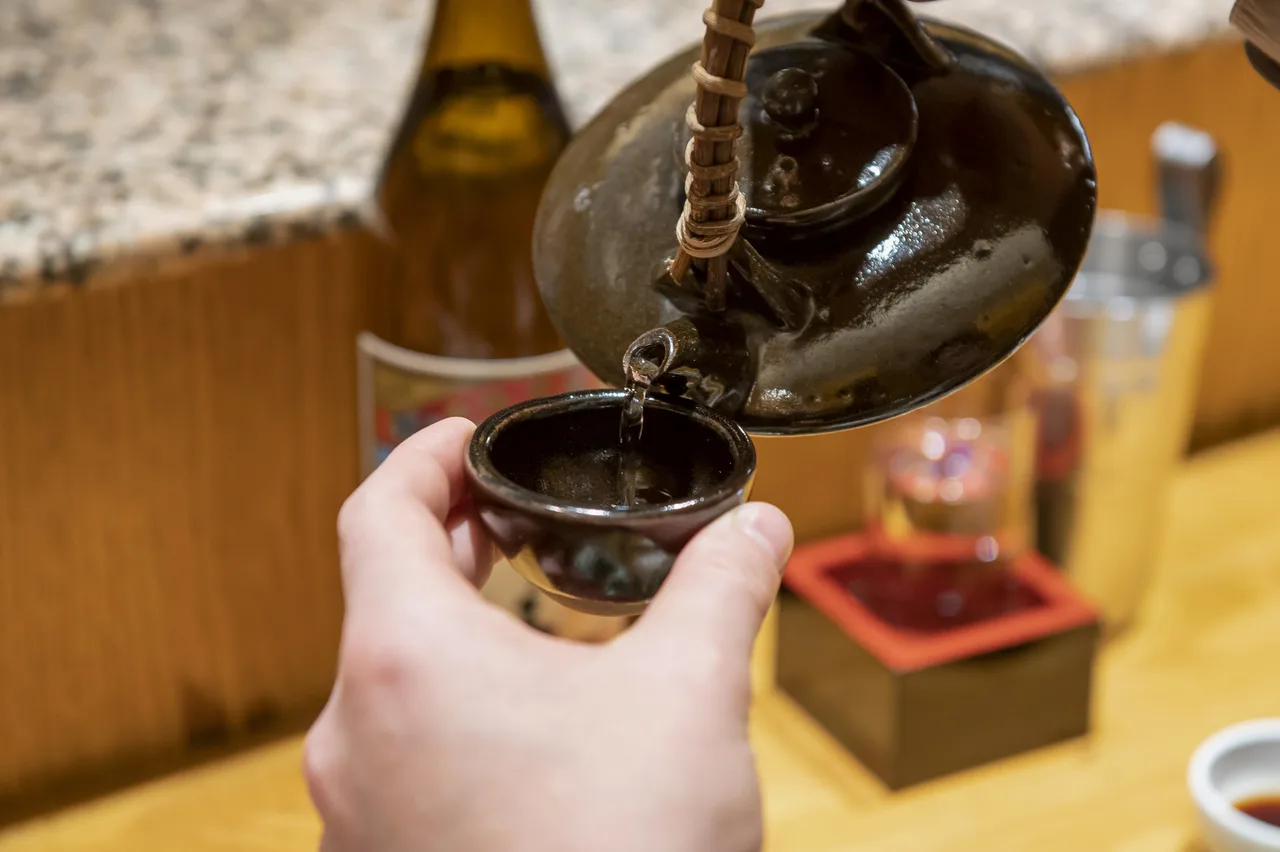
Photo: ©鹿児島市
In Kagoshima, "shochu" means imo shochu, distilled from sweet potatoes. Imo shochu that meets conditions such as using sweet potatoes grown in Kagoshima and being fermented and distilled in the prefecture can carry Japan's geographical indication (GI) "Satsuma" (Amami City and Oshima District are excluded; the Amami Islands are known for kokuto shochu made from brown sugar).
Locals often drink it oyuwari, mixed with hot water. It's said to taste better if you pour the hot water into the glass first and then add the shochu. The black vessel in the photo is a kurojoka, a Kagoshima drinking vessel used to warm shochu that has been pre-mixed with water. Izakaya often carry a long list of brands, so if you're unsure, ask the staff how aromatic or easy-drinking each one is.
Where to eat?
Most of these specialties can be found in Tenmonkan, Kagoshima City's main nightlife district, and around Kagoshima-Chuo Station. Have kurobuta tonkatsu or ramen at lunch, shabu-shabu and shochu in the evening, and shirokuma in the afternoon when your feet are tired, and you can cover a lot in a day. Try katsuo when you head out toward Makurazaki or Ibusuki, and keihan at a local-cuisine restaurant or on a trip to Amami.
Before or after a meal, see our walk through Kagoshima's Meiji Restoration sites and our guide to Sakurajima's viewpoints.