Kagoshima History Walk: 5 Meiji Restoration Sites in the City
This guide is translated from the Japanese edition. Read the Japanese edition
Trace the Meiji Restoration in Kagoshima City: Ishin Furusato-kan, Tsurumaru Castle's Goromon Gate, Ishibashi Park and World Heritage Sengan-en.
Leave Kagoshima-Chuo Station by the east exit, follow the streetcar tracks, and in under ten minutes you reach the banks of the Kotsuki River. This neighborhood, Kajiyacho, is where Saigo Takamori and Okubo Toshimichi were born and raised. Kagoshima City still holds the traces of the modernization the Satsuma Domain pushed in the final years of the shogunate, and of the people who drove the Meiji Restoration, all within reach between the city center and the waterfront. Start at a riverside museum, continue to a castle site and a stone-bridge park, and finish at the Shimazu family's World Heritage villa: in this order, you can see all five places in half a day to a full day.
Satsuma and the Meiji Restoration: a little background
In the Edo period, Kagoshima was the castle town of the Satsuma Domain, ruled by the Shimazu family. In the closing years of the shogunate, the domain lord Shimazu Nariakira brought in Western technology and built Shuseikan, a cluster of factories for ironmaking, shipbuilding, spinning and more, in the Iso district. In 2015 the remains of this project became components of the World Heritage Site "Sites of Japan's Meiji Industrial Revolution." Meanwhile Kajiyacho, a neighborhood of lower-ranking samurai, produced Saigo Takamori and Okubo Toshimichi, who went on to lead the new Meiji government.
Of the five places below, Ishin Furusato-kan, Tsurumaru Castle and Ishibashi Park are in the city center, while Sengan-en and the Ijinkan are in the Iso district on the coast to the north.
Ishin Furusato-kan: where Saigo and Okubo grew up
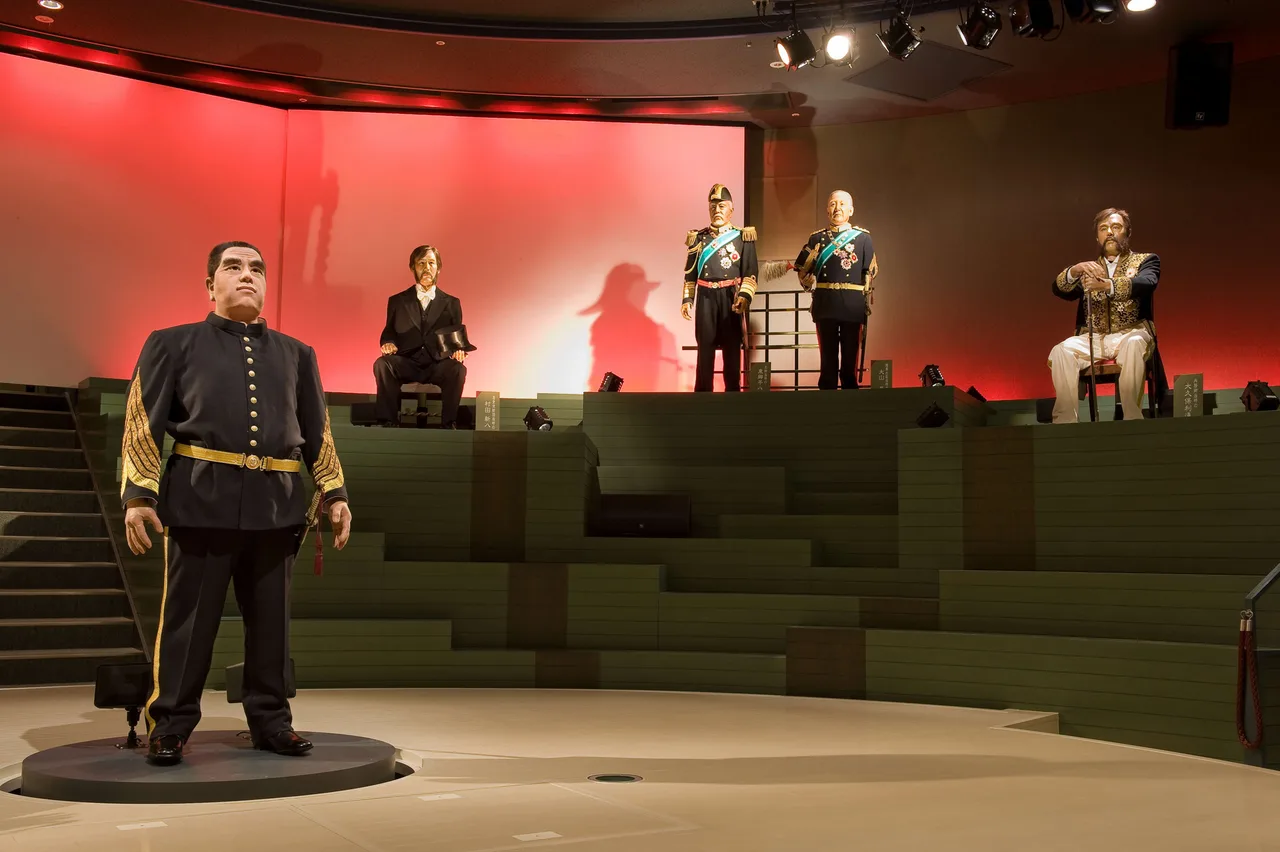
Photo: © K.P.V.B
Ishin Furusato-kan, on the Kotsuki River in Kajiyacho, is a museum about Satsuma's history from the end of the shogunate through the Meiji Restoration. Exhibits and films introduce Saigo Takamori, Okubo Toshimichi and other figures of the era. It's about an 8-minute walk from Kagoshima-Chuo Station, and the Kagoshima City View sightseeing bus stops nearby.
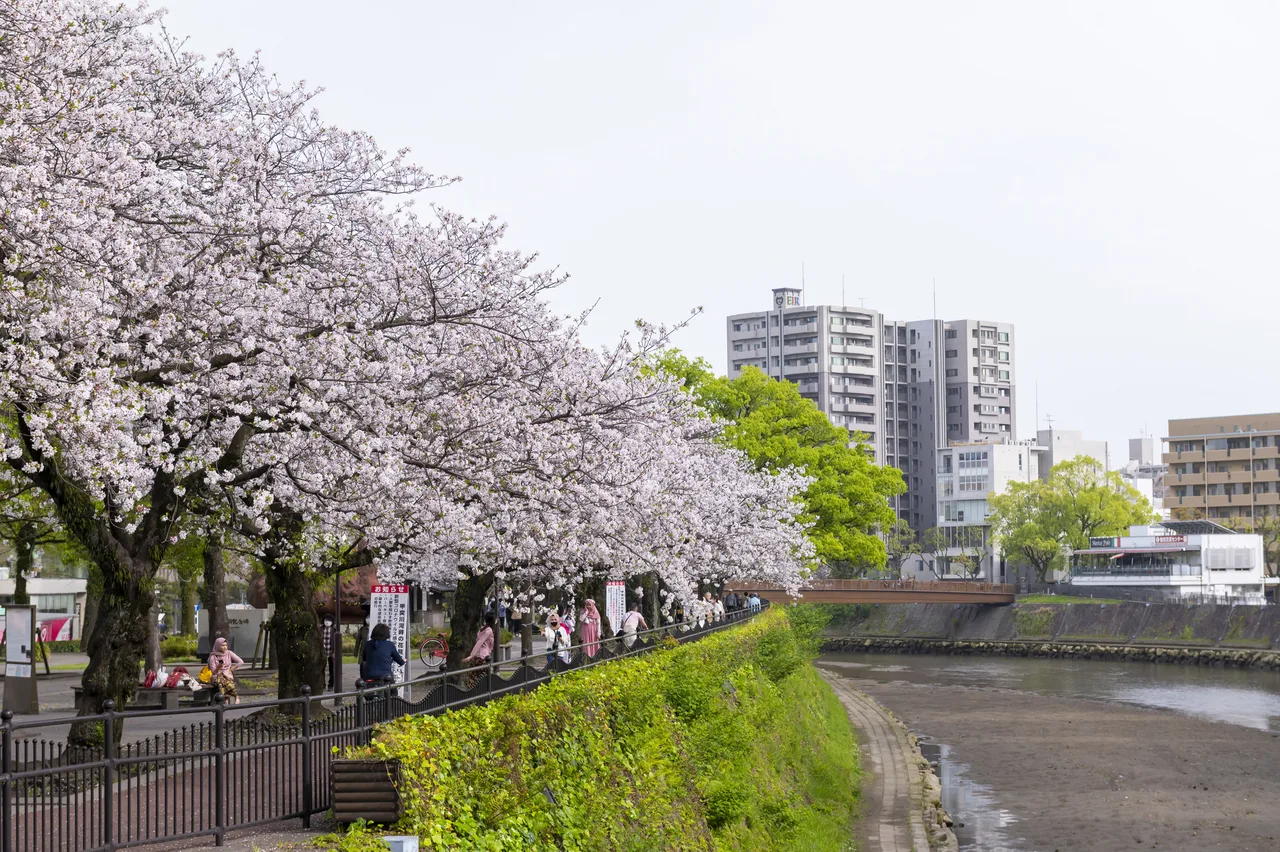
The riverside in front of the museum has been laid out as the Ishin Furusato-no-Michi path, and in spring it becomes an avenue of cherry blossoms, as in the photo at the top of this page. Nearby, stone markers show the birthplace of the brothers Saigo Takamori and Saigo Tsugumichi and the place where Okubo Toshimichi grew up, so you can walk between them along the river.
Ishin Furusato-kan will be closed from November 24, 2026 to January 22, 2027 while its exhibits are renewed (Ishin Furusato-kan notice, Japanese). Check opening days and hours on the official website before you go.
Goromon Gate of Tsurumaru Castle: rebuilt after 147 years
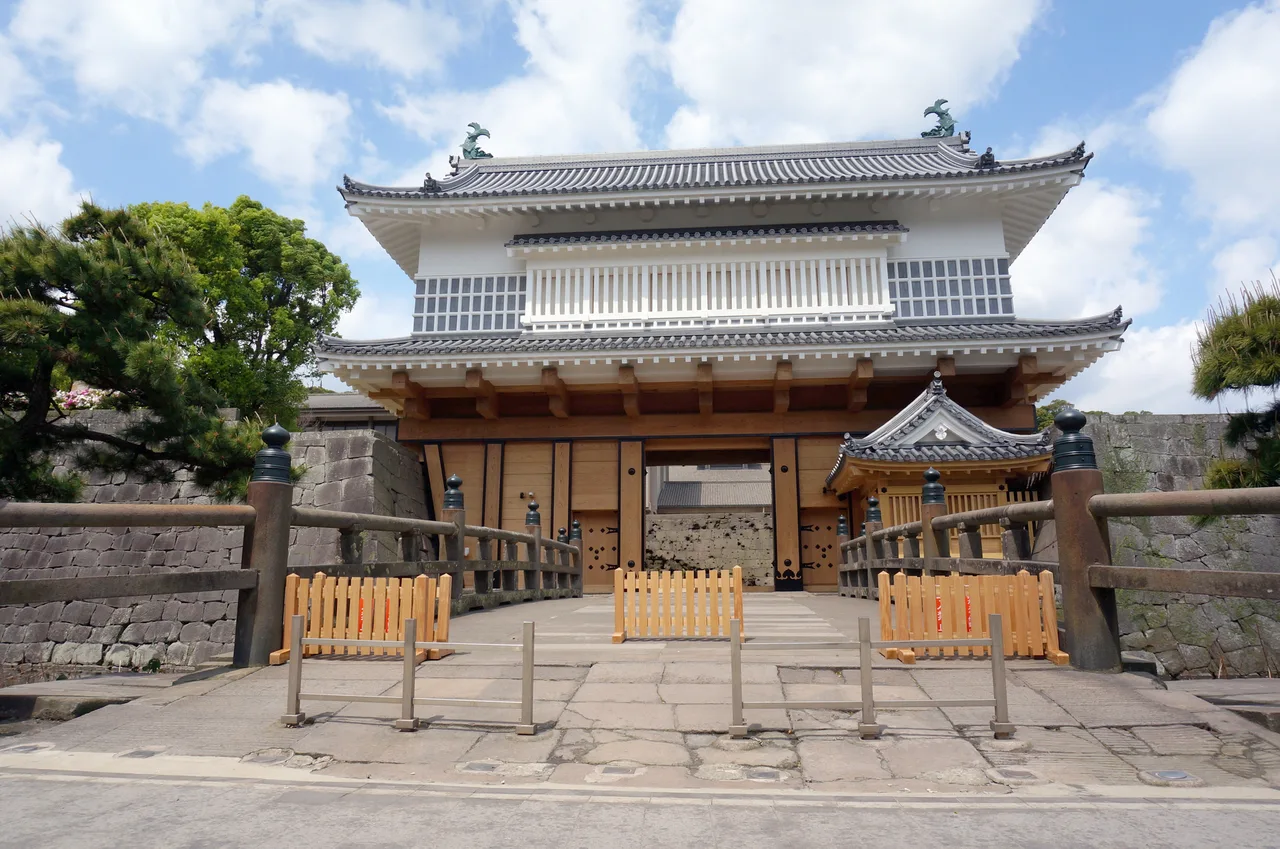
Photo: © K.P.V.B
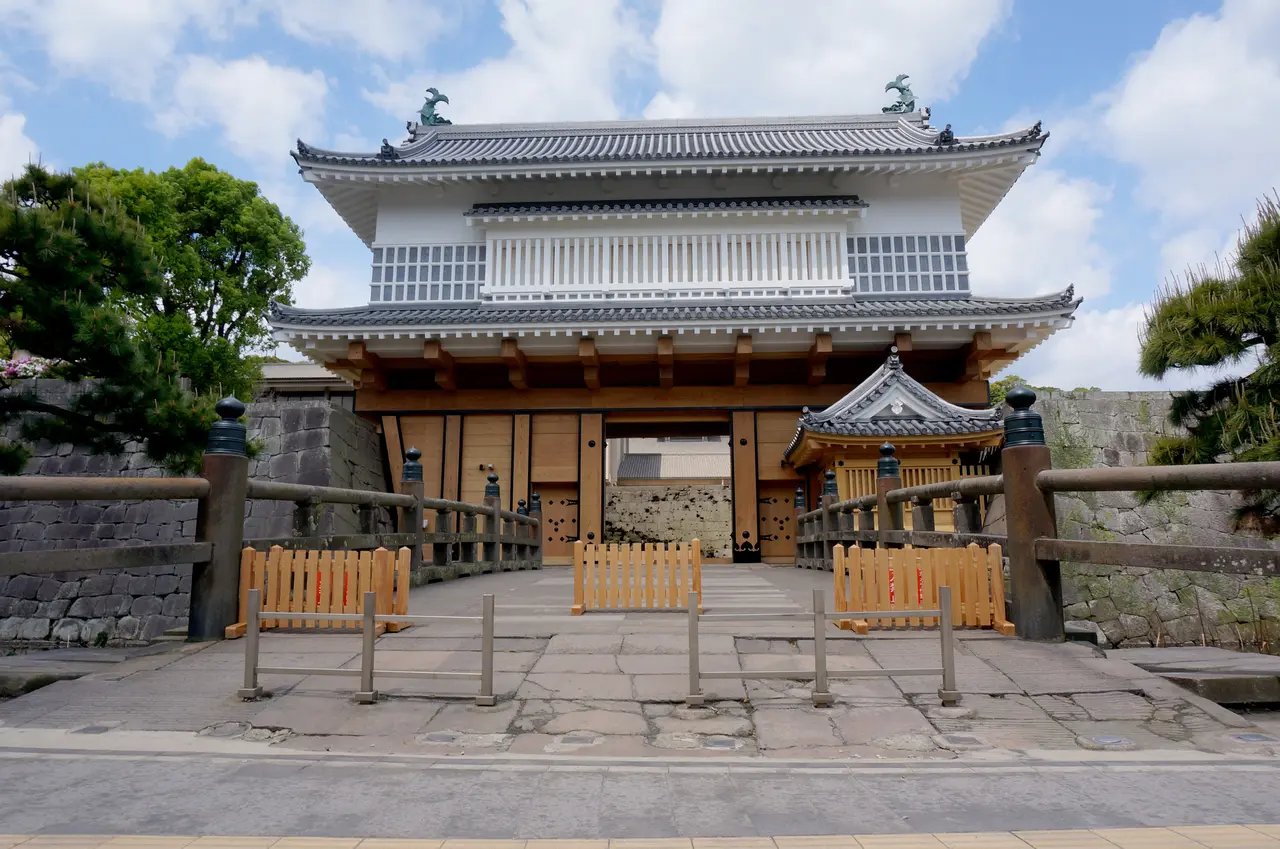
Tsurumaru Castle Ruins, at the foot of Shiroyama hill in the city center, is the site of Kagoshima Castle, the Shimazu family's seat. The Goromon, the main gate of the inner citadel, burned down in a fire in 1873, but a joint public-private effort rebuilt it in March 2020. It is a large gate, about 20 m in both height and width.
Look closely at the stone walls around the gate and you'll see countless dents. Excavations by Kagoshima Prefecture showed that most of them are marks left by bullets and shells during the Satsuma Rebellion of 1877. The Reimeikan, the prefecture's history and art center, stands on the site of the inner citadel and is a good place to take in Kagoshima's history in one go. Climb to the observatory on top of Shiroyama and you can see Sakurajima beyond the city.
Ishibashi Park: the stone bridges of the Kotsuki River
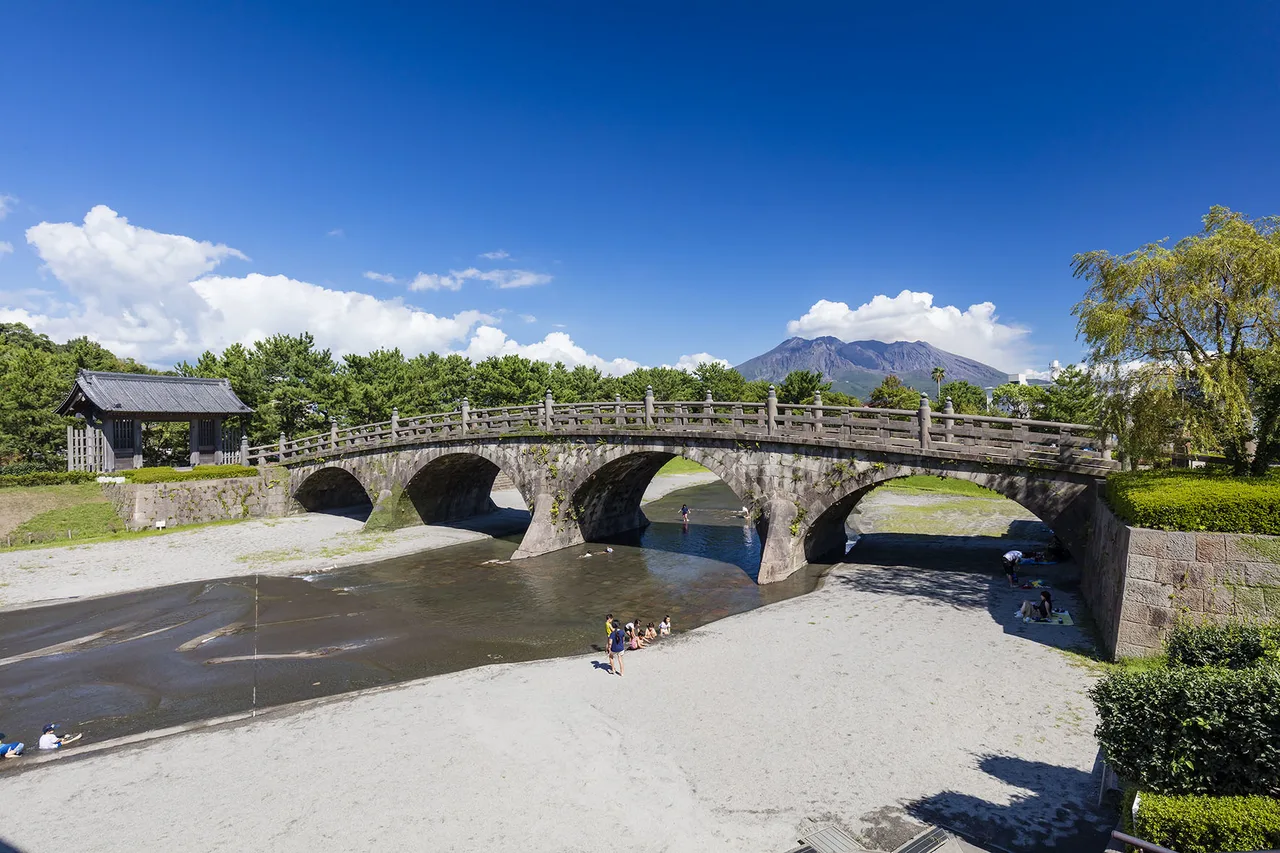
Photo: © K.P.V.B
Toward the end of the Edo period, five arched stone bridges were built over the Kotsuki River, known together as the Five Stone Bridges of the Kotsuki River. Heavy rain in August 1993 washed two of them away, and it was decided to move the remaining three and preserve them as part of the river works. Nishida Bridge was moved to Ishibashi Park in Hamamachi, about a 15-minute walk from JR Kagoshima Station. Korai Bridge and Tamae Bridge were moved to the neighboring Gionnosu Park.
You can still walk across the stone-paved Nishida Bridge. On a clear day, as in the photo, Sakurajima appears beyond it. The park also has the Stone Bridge Museum, which covers the history of the bridges.
Sengan-en and the reverberatory furnace: the Shimazu villa and the start of modernization
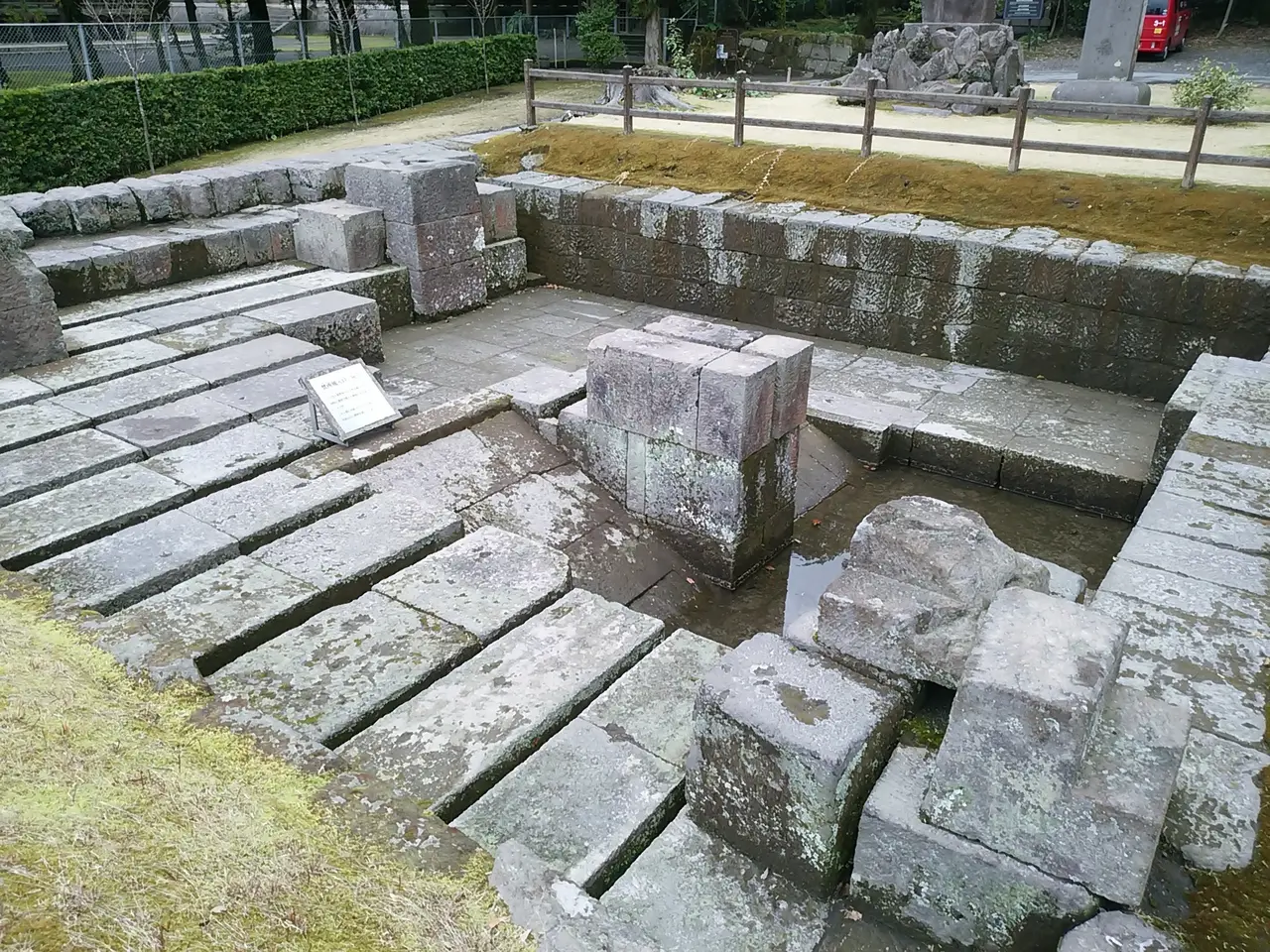
Photo: © K.P.V.B
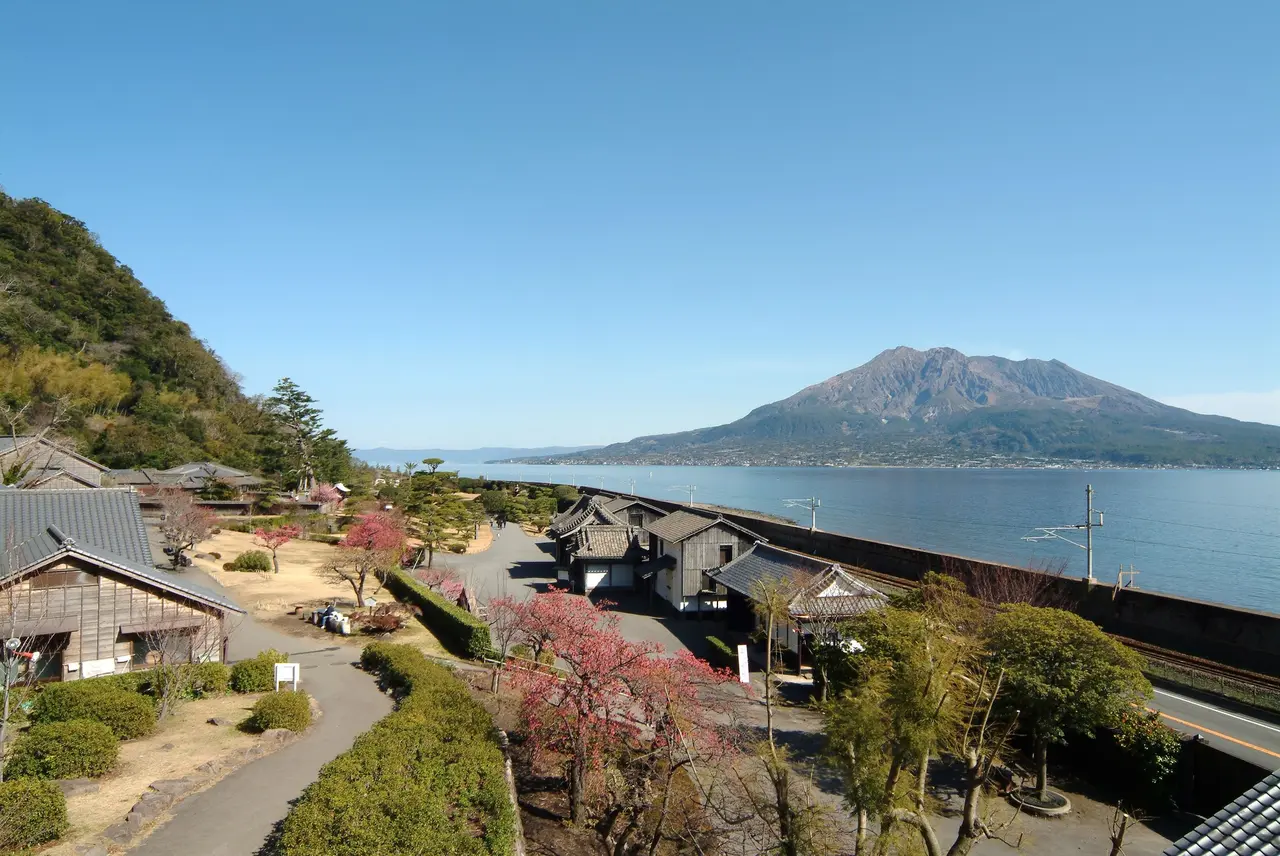
North of downtown, in the Iso district along Kinko Bay, Sengan-en is the Shimazu family villa built by Shimazu Mitsuhisa in 1658. Its garden uses Sakurajima as an artificial hill and Kinko Bay as a pond, and it is designated a national Place of Scenic Beauty.
The reverberatory furnace ruins in the grounds are what's left of a furnace built under Shimazu Nariakira's Shuseikan project to cast cannons. What you see today is the lower part of the No. 2 furnace, completed in 1857 and precisely assembled with Satsuma's stonemasonry techniques. The Iso district, including these ruins, is a component of the World Heritage Site "Sites of Japan's Meiji Industrial Revolution." Next door is the Shoko Shuseikan museum, which tells the history of the Shimazu family.
Former Kagoshima Spinning Mill Engineers' Residence (Ijinkan): home of the British engineers
The wooden Western-style building just near Sengan-en is the Former Kagoshima Spinning Mill Engineers' Residence, commonly called the Ijinkan. It was built in 1867 to house the British engineers invited to the Kagoshima Spinning Mill, Japan's first Western-style spinning mill, established by the Satsuma Domain.
The two-story wooden building has a Western look with verandas, but its roof frame was made with Japanese methods, and it is thought to have been built by Japanese carpenters. It is a national Important Cultural Property and, like the furnace ruins, one of the components of the World Heritage Site.
Getting around: sightseeing bus plus JR
The Kagoshima City View sightseeing bus links all five places from Kagoshima-Chuo Station. It leaves from the station's east exit and loops through Ishin Furusato-kan, Saigo Statue, Shiroyama, Sengan-en and other stops in about 80 minutes. One-day passes are available.
| Order | Place | How to get there |
|---|---|---|
| 1 | Ishin Furusato-kan | About 8 minutes on foot from Kagoshima-Chuo Station |
| 2 | Goromon Gate of Tsurumaru Castle | City center, at the foot of Shiroyama. Move on by Kagoshima City View |
| 3 | Ishibashi Park | Ishibashi Kinen Koen-mae stop on the Kagoshima City View, or about 15 minutes on foot from JR Kagoshima Station |
| 4 | Sengan-en | Sengan-en-mae stop on the Kagoshima City View, or JR Senganen Station |
| 5 | Ijinkan | About 2 minutes on foot from the Sengan-en-mae bus stop |
For the Iso district you can also use Senganen Station on the JR Nippo Line, which opened on March 15, 2025. Walk the city center in the morning and spend the afternoon taking your time with the garden and furnace ruins at Sengan-en, and the day won't feel rushed.
After the history sites, see our guides to viewing Sakurajima from the Shiroyama Observatory and the Sakurajima Ferry and to Kagoshima's local food, from kurobuta pork to shirokuma shaved ice.