Sakurajima Things to Do: Viewpoints, the Ferry and Lava Fields
This guide is translated from the Japanese edition. Read the Japanese edition
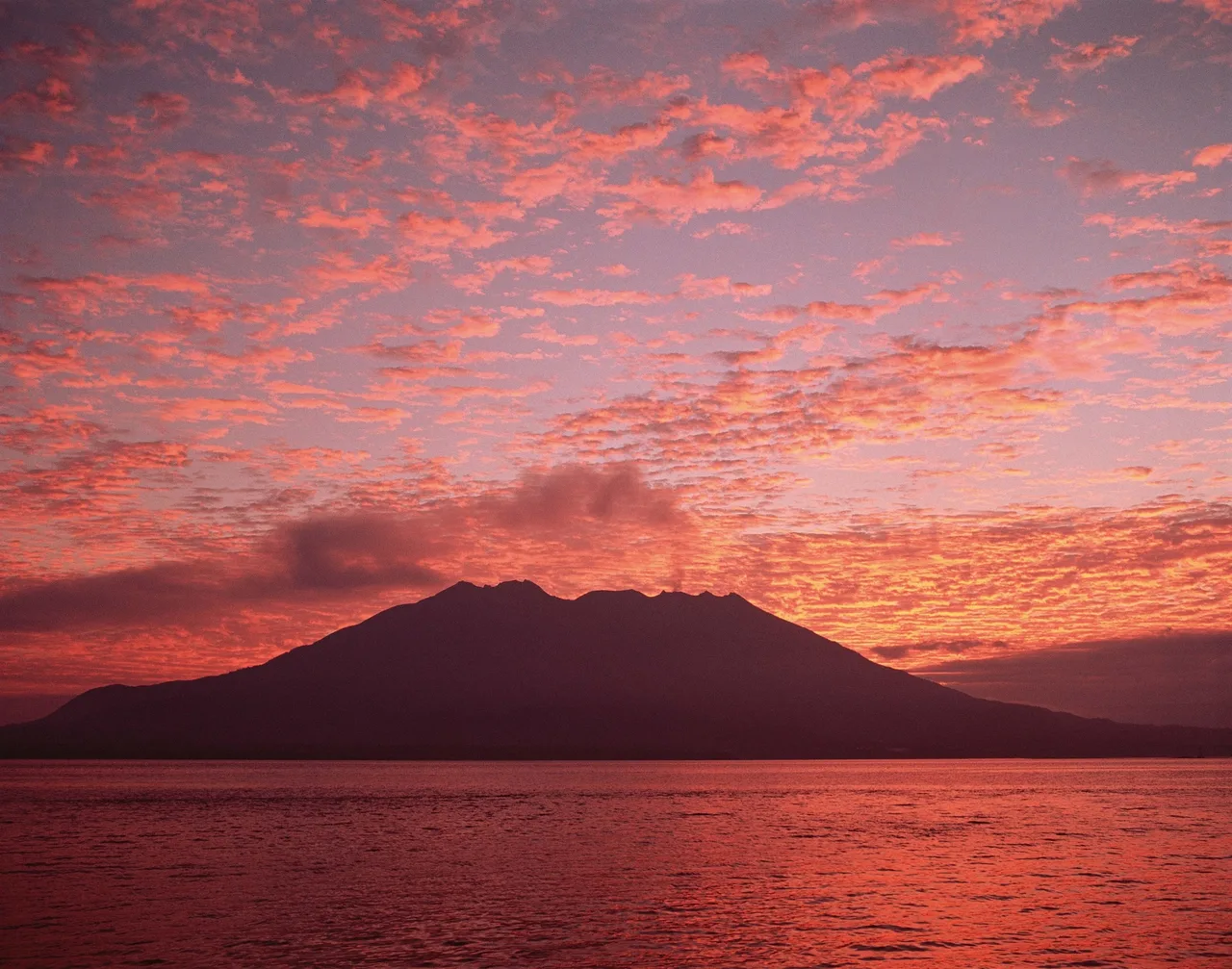
See Sakurajima from across the bay, cross on the 15-minute ferry, then visit Yunohira Observatory, the Arimura lava trail and the buried torii of Kurokami.
Walk around Kagoshima City and a huge mountain keeps appearing across the water between the buildings. Sakurajima, in Kinko Bay, is an active volcano that still sends up plumes of ash, and it's only about 15 minutes from downtown by ferry. Look at it whole from the opposite shore, cross on the ferry, then walk the viewpoints built on its lava. Done in that order, you get a feel for both the sheer size of the mountain and its history of eruptions.
Before you go: check the volcano information
Sakurajima erupts regularly, and the area near the summit craters is off-limits. Climbing is not allowed; as a visitor you can reach viewpoints and facilities along the island's roads. The volcanic alert level and the size of the restricted zone change with the volcano's activity, so check the current situation on the Japan Meteorological Agency's volcano page before you set out.
Depending on the wind, ash can fall on the city and on the island. On ashy days, glasses or sunglasses help keep it out of your eyes. The Sakurajima tourism portal also has eruption and ashfall forecasts and live cameras.
- Volcanic activity: Sakurajima (Japan Meteorological Agency, Japanese)
- Sakurajima eruption, ashfall and weather forecasts (Sakurajima tourism portal, Japanese)
Shiroyama Observatory: Sakurajima beyond the city
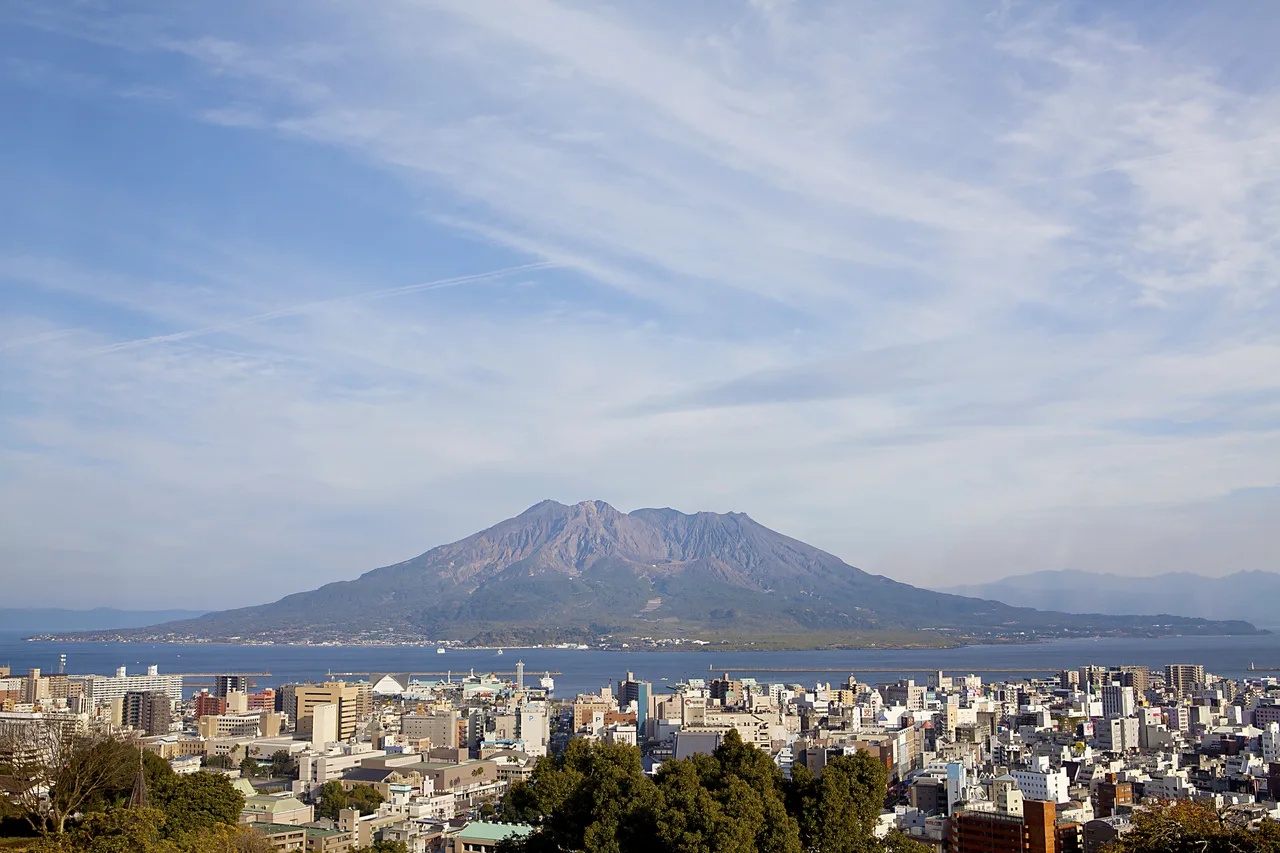
Photo: © K.P.V.B
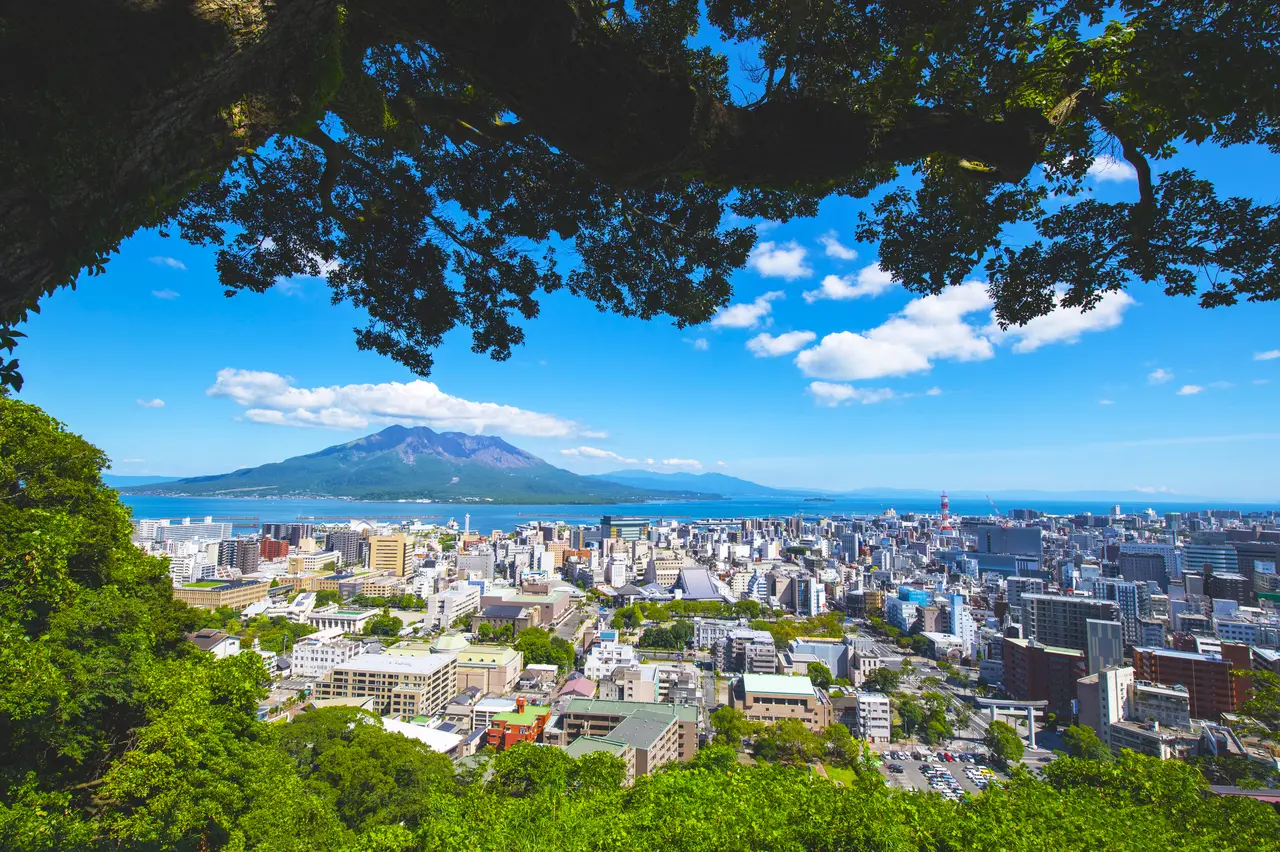
Start by taking in the whole mountain from across the bay. Shiroyama is a hill about 107 m high in the city center, and from the Shiroyama Observatory near the top you get the city in front, then Kinko Bay and Sakurajima, all in one view. On clear days you can also see the Kirishima mountains in the distance.
Shiroyama was also the scene of the last battle of the Satsuma Rebellion, and sites linked to Saigo Takamori, such as the Saigo Cave, are scattered around it. From Kagoshima-Chuo Station, the Kagoshima City View sightseeing bus goes to the Shiroyama stop. At night the city lights spread out below, and many people come up for the night view.
Sakurajima Ferry: a 15-minute crossing
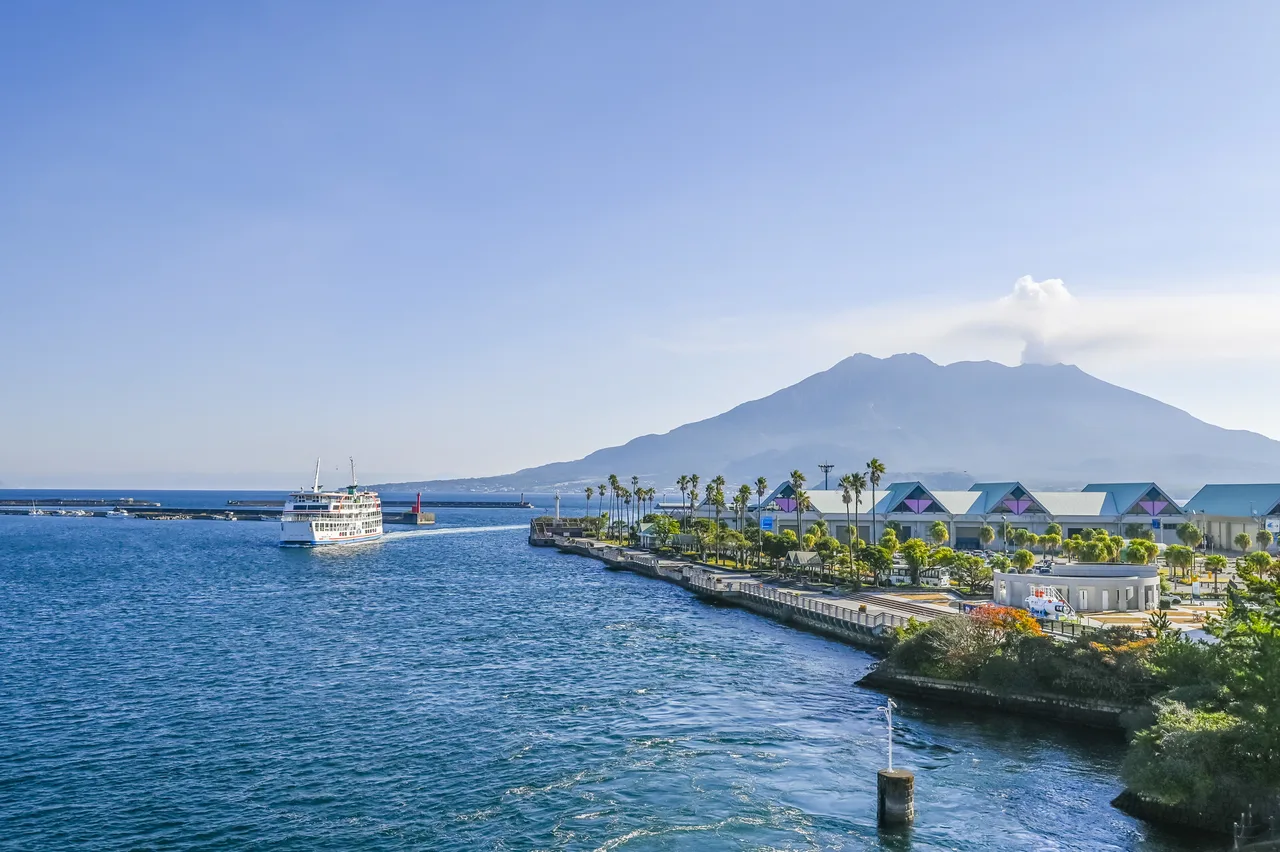
Photo: ©鹿児島市
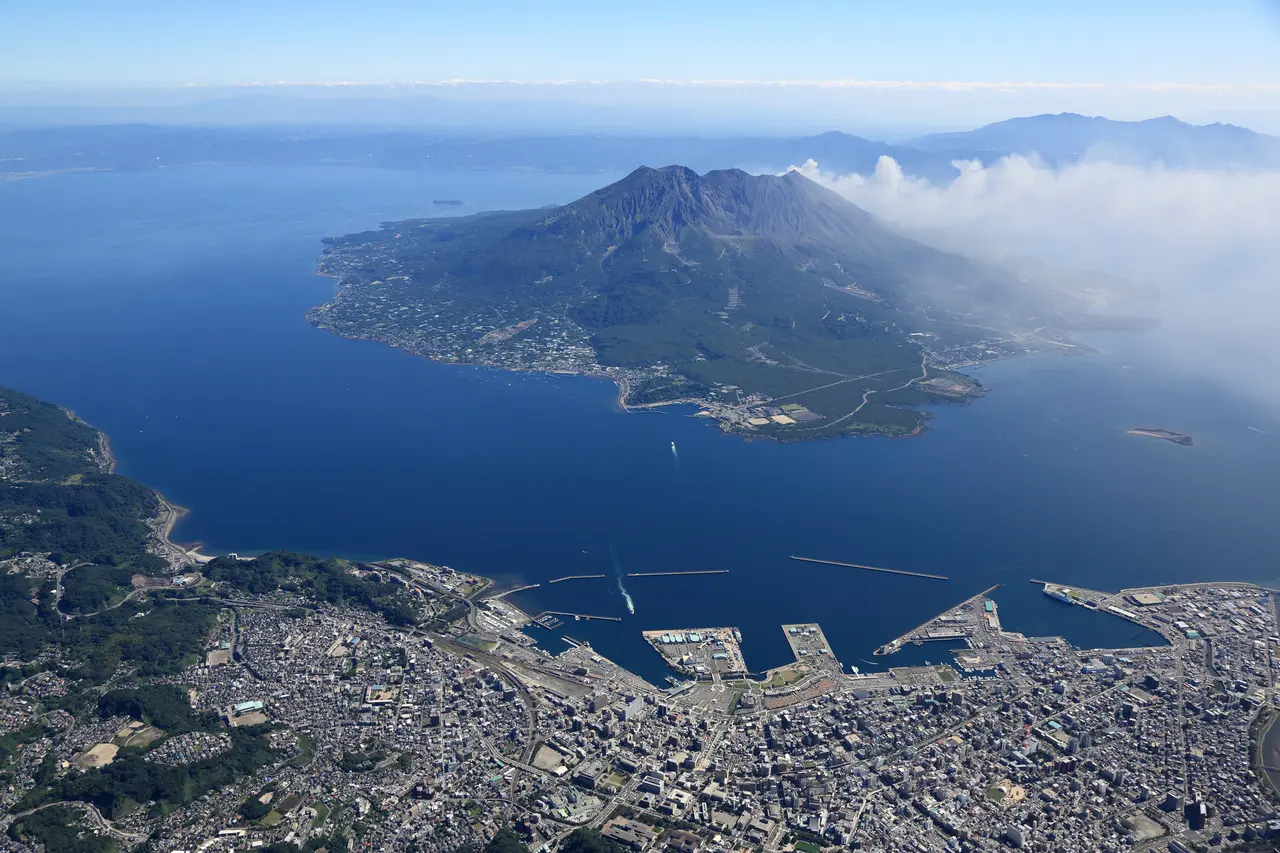
The Sakurajima Ferry, run by Kagoshima City, links Kagoshima Port and Sakurajima Port. The crossing takes about 15 minutes, though it can take around 20 depending on weather and sea conditions. Ferries run frequently through the day, so you rarely wait long even without planning around a timetable.
Step out on deck and the slopes of Sakurajima come into sharper focus as you approach. A timetable revision in October 2025 ended some late-night sailings, so if you're crossing early in the morning or at night, check Kagoshima City's latest timetable first.
Yunohira Observatory: the highest point you can reach
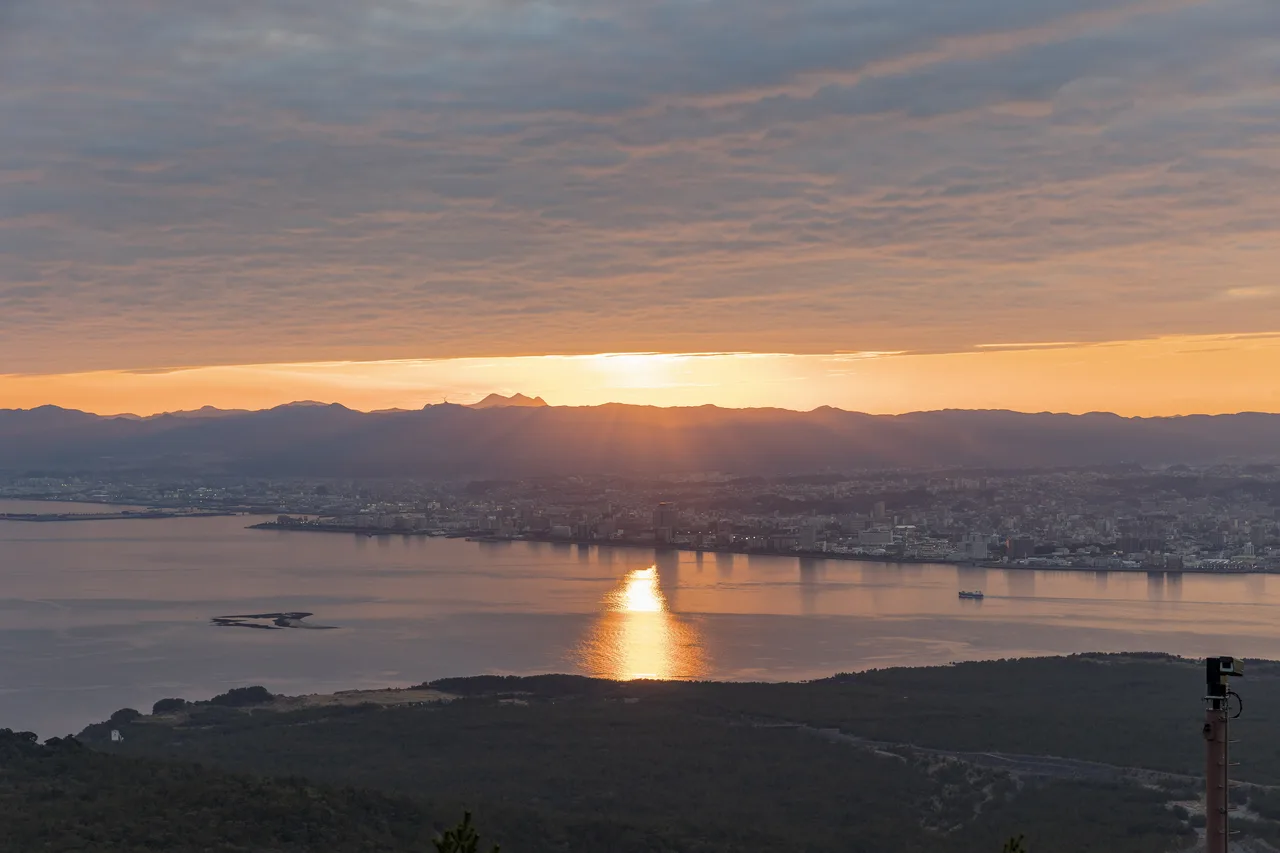
Photo: ©鹿児島市
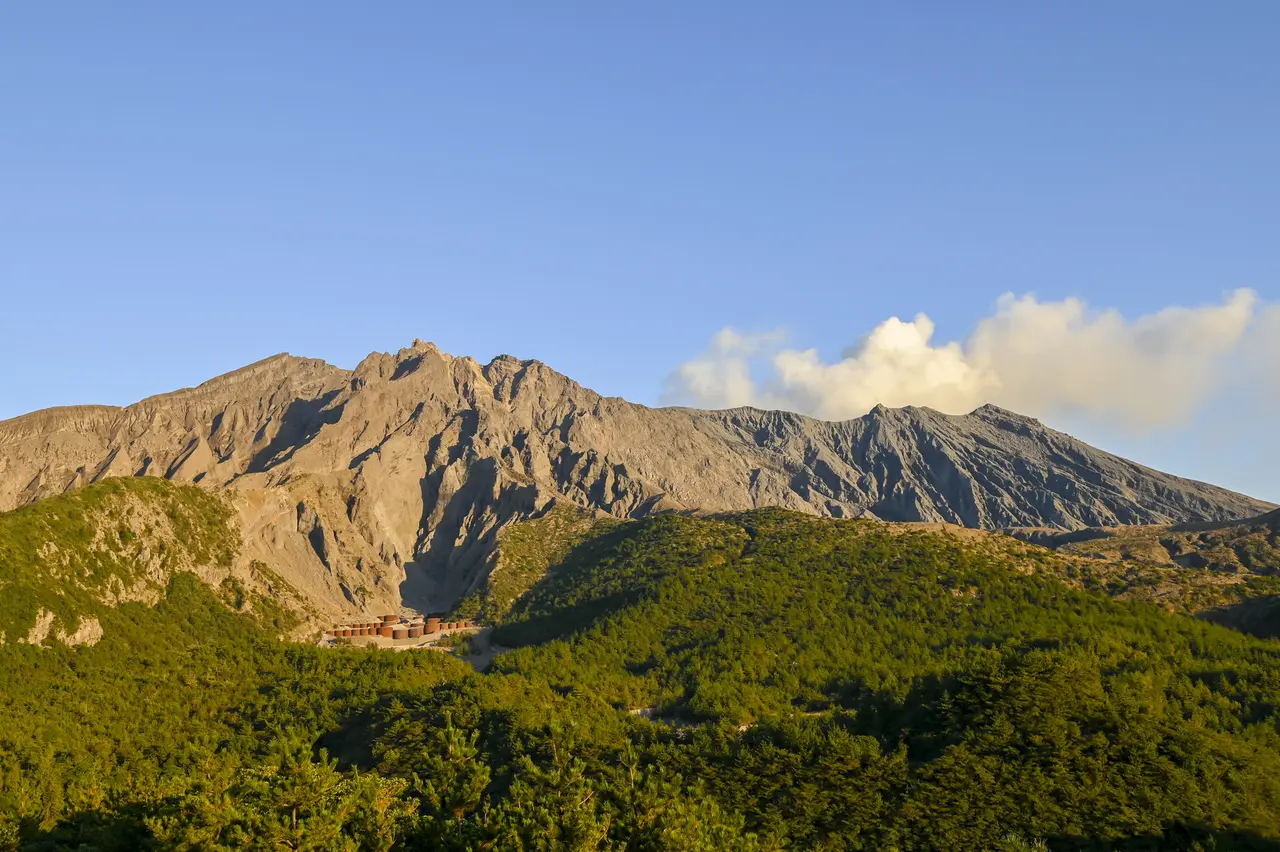
The Yunohira Observatory, at 373 m on the fourth station of Kitadake, is the highest point on Sakurajima open to the public. Turn around and Kitadake's rugged slopes loom close; on the other side, Kinko Bay and the city of Kagoshima spread out. As in the photo, in the evening the sun sets beyond the city.
From Sakurajima Port, the Sakurajima Island View sightseeing bus goes there. Its route goes around the west side of the island, by way of Yunohira Observatory and other stops, and does not go to Arimura in the south or Kurokami in the east (see the Kagoshima City Transportation Bureau's Sakurajima page, Japanese).
Arimura Lava Observatory: walking on the lava field
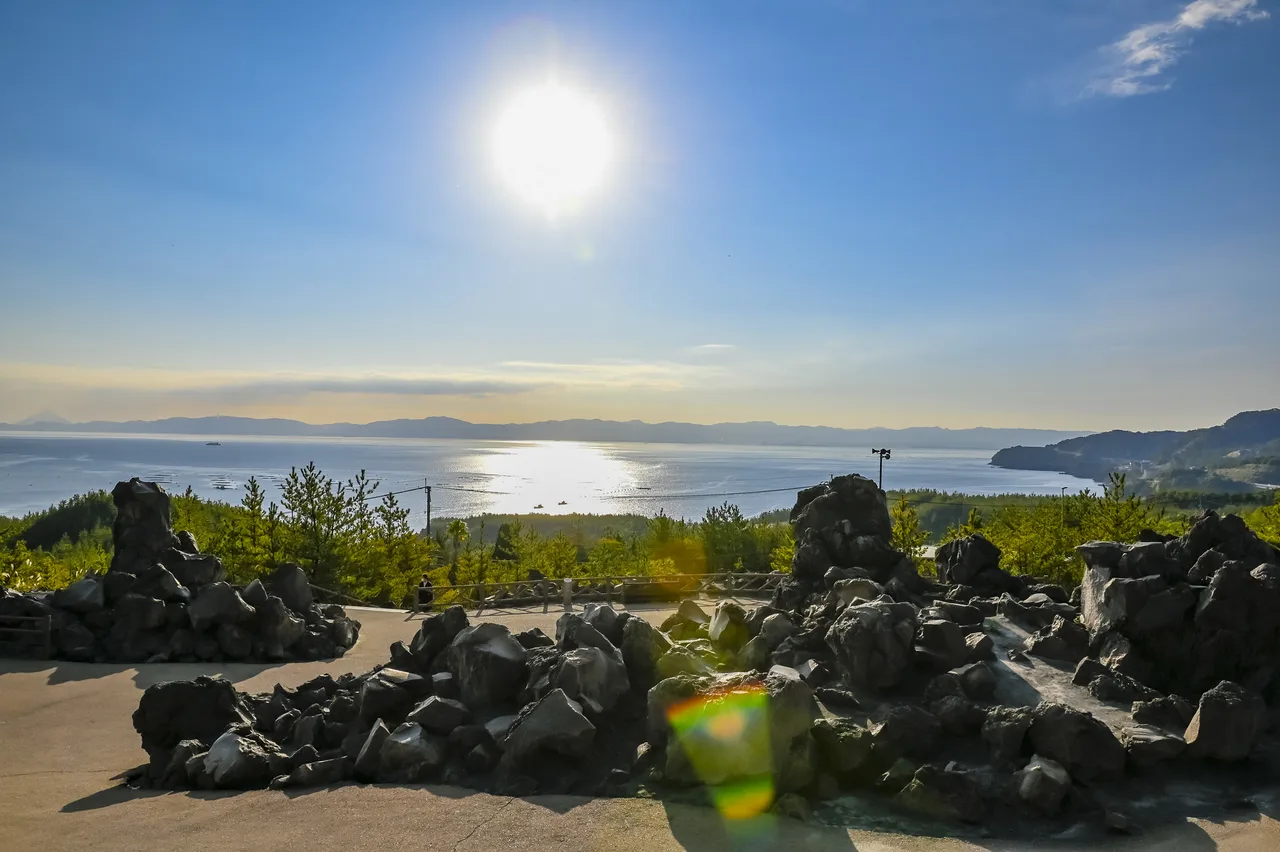
Photo: ©鹿児島市
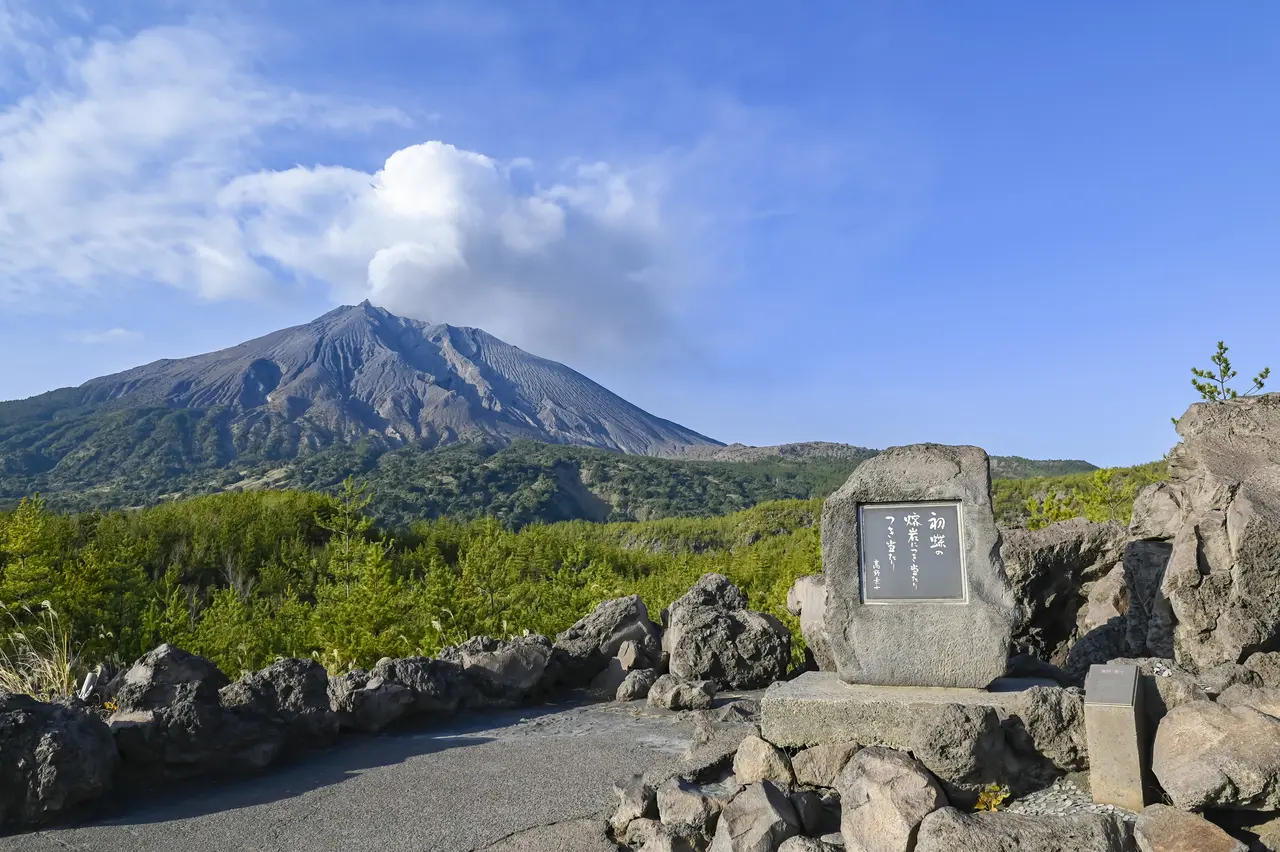
On the south side of the island, the Arimura Lava Observatory stands at the foot of Minamidake, on a field of lava that poured out in the 1946 (Showa 21) eruption. In the great eruption of 1914 (Taisho 3), huge amounts of lava poured out on both the east and west sides of the island. The lava on the east side filled a strait about 400 m wide and joined Sakurajima, until then an island, to the Osumi Peninsula.
The observatory has a walking trail about 1 km long, where you can look at Minamidake and Kinko Bay as you walk between the black lava rocks. On a good day, Mt. Kaimon is visible across the water.
The Island View bus does not go to Arimura or Kurokami. To get there, take a Kagoshima City route bus, a taxi, a rental car or a rental bicycle. Route buses are infrequent, so check the times on the Kagoshima City Transportation Bureau's Sakurajima page (Japanese) before you set out.
Kurokami Buried Torii: a gate kept as a reminder of the eruption
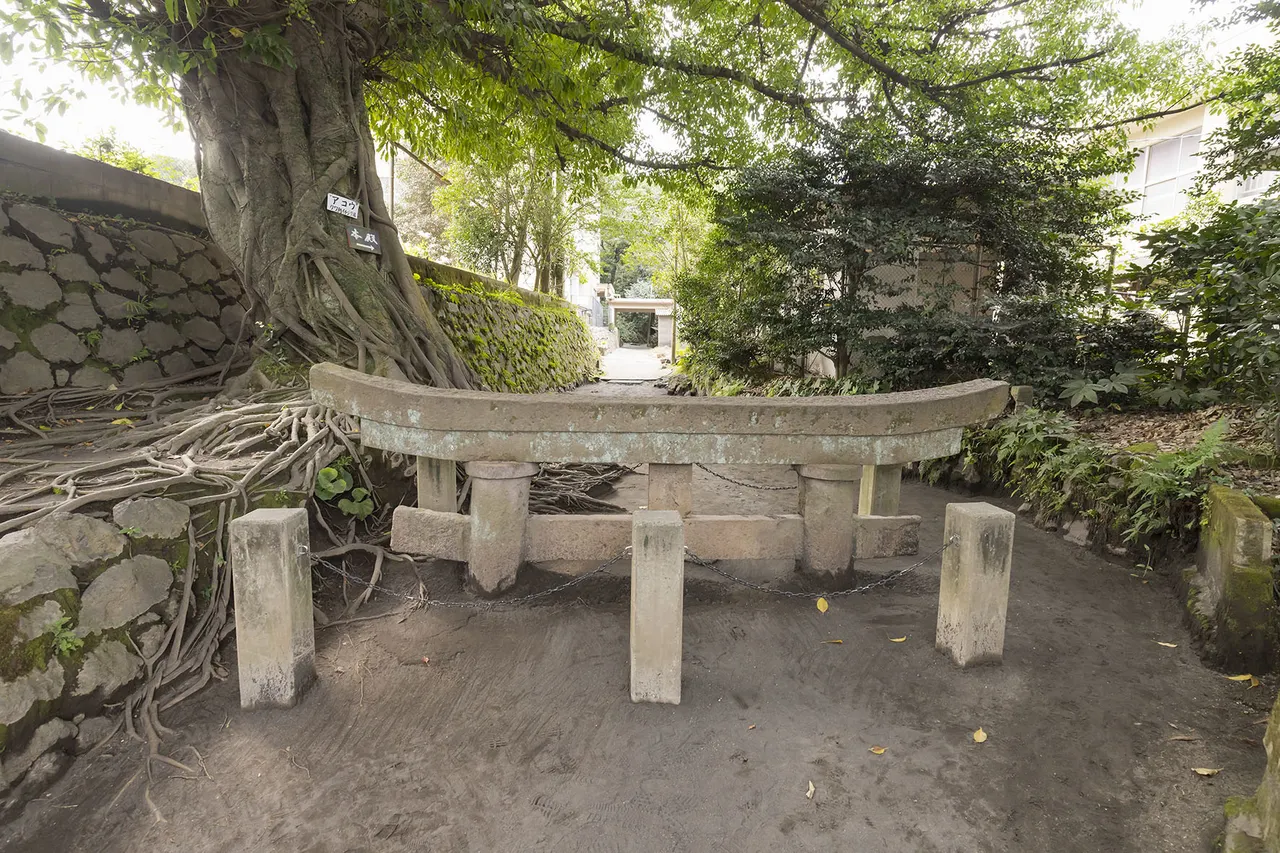
Photo: © K.P.V.B
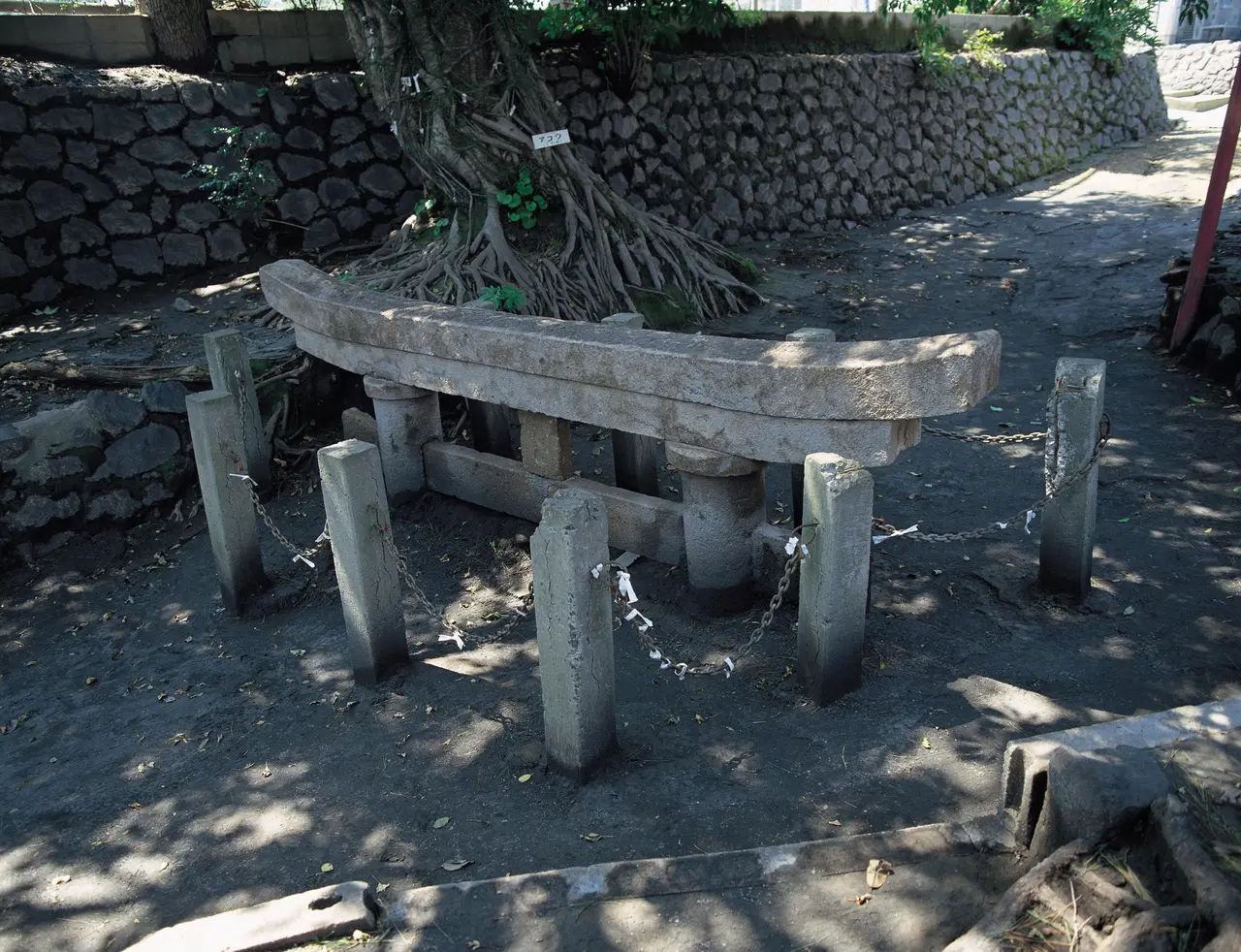
In the Kurokami area on the east side of the island, the Kurokami Buried Torii is the gate of Haragosha Shrine. In the great eruption that began on January 12, 1914, Kurokami village was buried in ash and pumice. Of the 3 m torii, only the kasagi, the top crossbeam, now shows above the ground.
After the eruption, residents tried to dig it out, but the village head at the time decided to leave it as it was, to pass the memory of the eruption on to future generations. The torii and its gateposts were designated a prefectural Natural Monument in 1958. It's about 10 minutes by car from the Arimura Lava Observatory.
A day on and around Sakurajima
| Time | What to do |
|---|---|
| Morning | Look at Sakurajima over the city from the Shiroyama Observatory |
| Late morning | Take the Sakurajima Ferry to Sakurajima Port (about 15 min) |
| Midday | Ride the Sakurajima Island View bus to Yunohira Observatory |
| Afternoon | Drive or cycle to the Arimura Lava Observatory and the Kurokami Buried Torii |
| Evening | Ferry back to the city |
Going only as far as Yunohira Observatory, the ferry and the sightseeing bus get you there and back in half a day. To go around the whole island, allow about an hour's drive plus time at the viewpoints.
Back in the city, pair this with our walk through Kagoshima's Meiji Restoration sites and our guide to Kagoshima's local food, from kurobuta pork to shirokuma.