Nichinan Coast Guide: Aoshima, Udo Shrine and Cape Toi
This guide is translated from the Japanese edition. Read the Japanese edition
Six stops on the Nichinan Coast from Aoshima to Cape Toi: the Devil's Washboard, Udo Shrine in a sea cave, jacaranda and wild horses, plus how to get around.
The Nichinan Coast runs south from Aoshima in Miyazaki City along the Pacific (the Hyuga-nada Sea). Along the way you'll find a highway lined with palm trees, bands of wave-carved rock known as the "Devil's Washboard," a shrine set inside a seaside cave and wild horses grazing on grassland. The farther south you go, the fewer people you see and the bigger the scenery gets. The northern half is an easy day trip from Miyazaki City by train and bus, while the southern half is best covered by car over a full day.
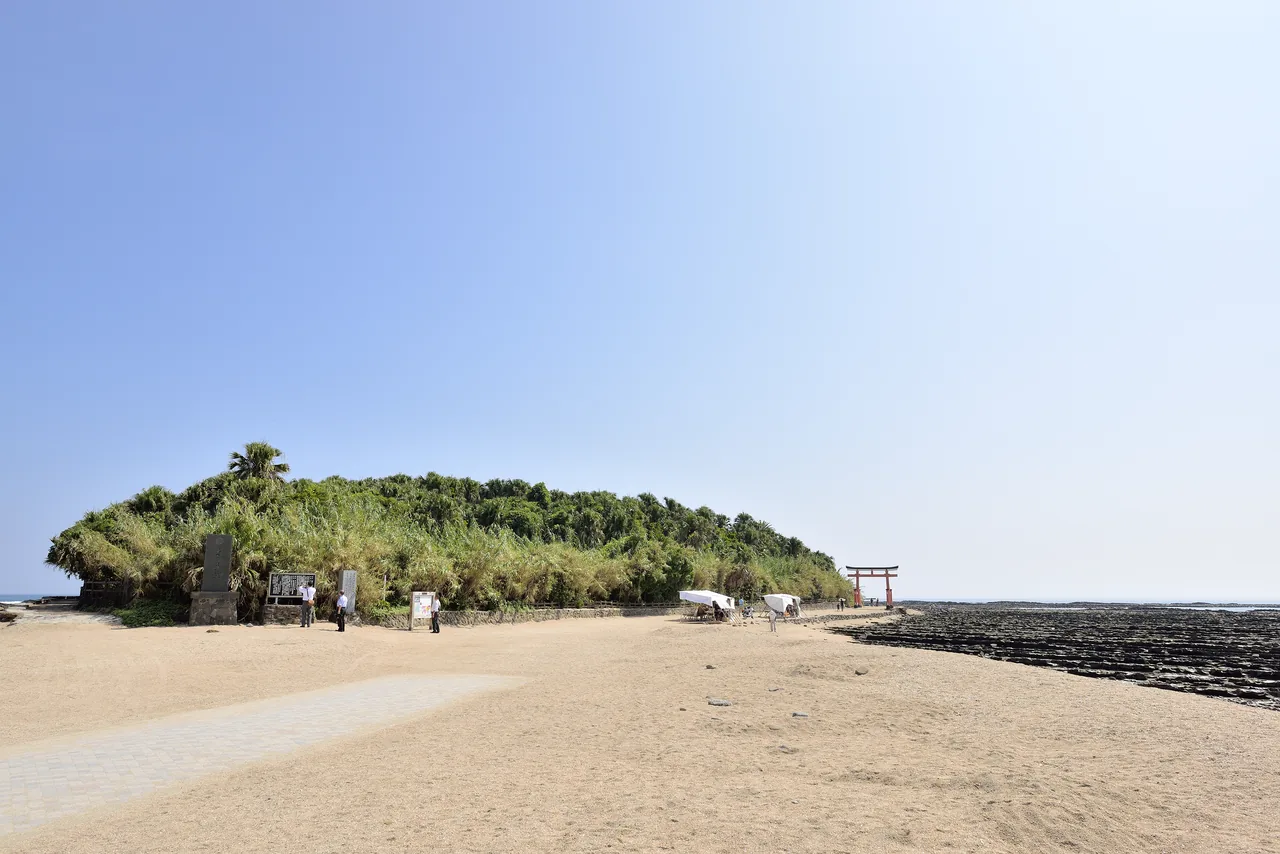
Aoshima: a shrine island ringed by the Devil's Washboard
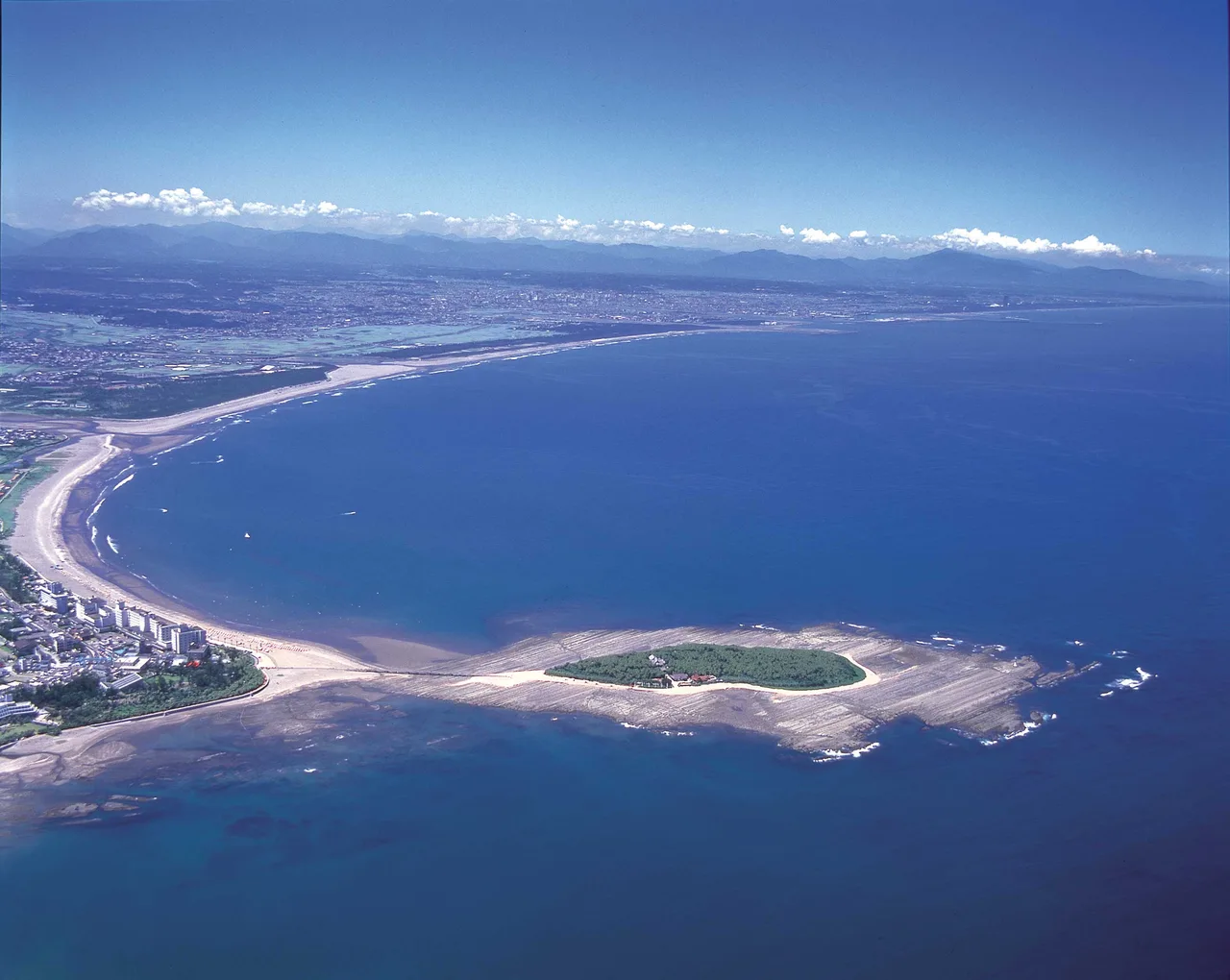
Photo: 宮崎県観光協会
Aoshima is a small island surrounded by a rocky shelf. Aoshima Shrine stands on the island, and you can walk across a bridge from the mainland. It takes about 10 minutes on foot from JR Aoshima Station on the Nichinan Line to the shrine.
The ridged rocks around the island, which look like an old-fashioned washboard, are the "Oni no Sentakuita" (Devil's Washboard). Their official name translates roughly as "the raised sea floor and unusual wave-erosion marks of Aoshima," and they are a designated Natural Monument of Japan. Similar rock formations continue for about 8 km down the coast from Aoshima to Kinchakujima Island. At low tide you can walk out onto the rocks, but they are slippery when wet, so wear shoes with good grip.
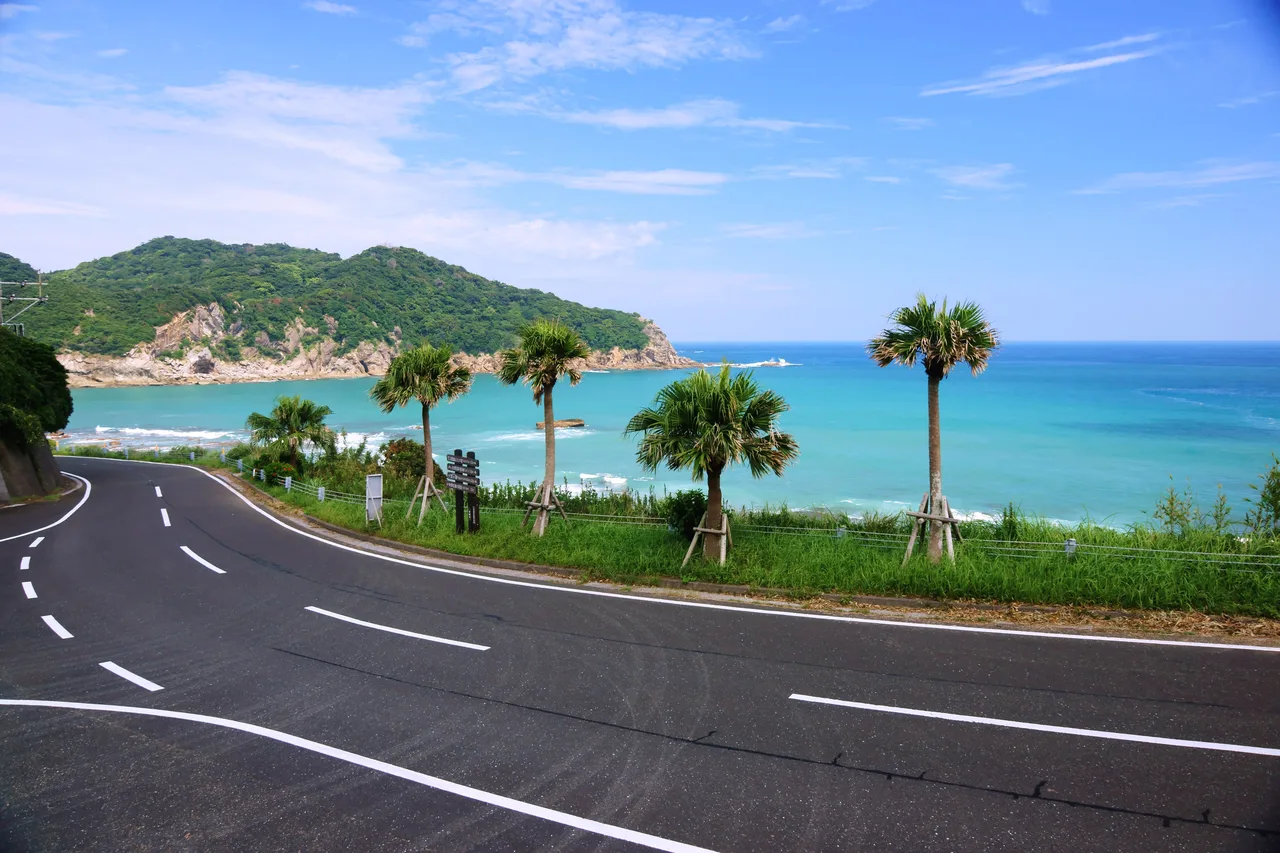
Horikiri Pass: palm trees above the Pacific
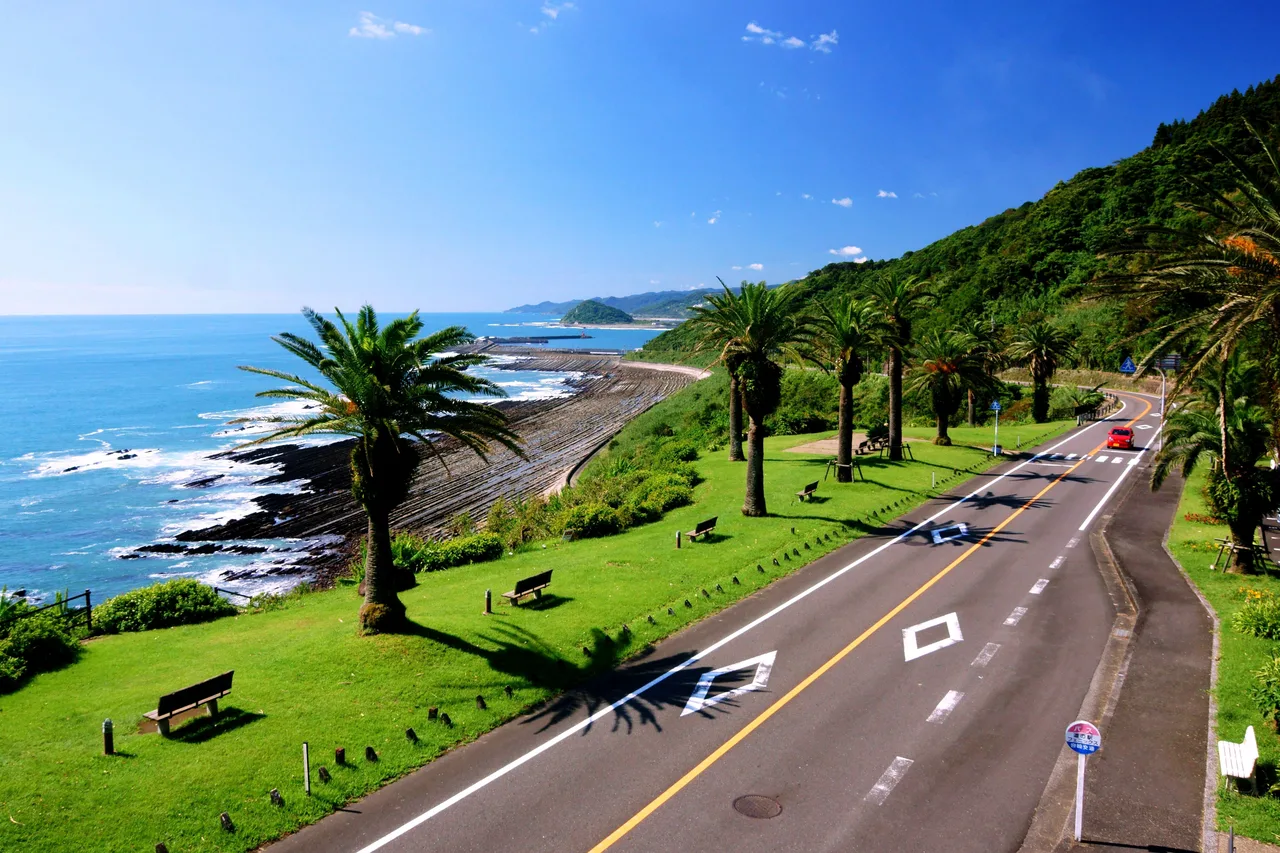
Photo: 宮崎県観光協会
Head south from Aoshima on National Route 220, and once the road crosses the hills you reach Horikiri Pass. It marks the entrance to Nichinan Kaigan Quasi-National Park, and from the lookout you can gaze down at the Pacific and the Devil's Washboard stretching along the shoreline. Palm trees line the road, giving the view the subtropical feel Miyazaki is known for.
About 1 km south of the pass, Michi-no-Eki Phoenix (a roadside rest stop) has its own viewing deck and a staircase down to the shore. When the tide is out, you can walk on the washboard rocks. If you're driving, stop at both the pass and the rest stop for two views from different heights.
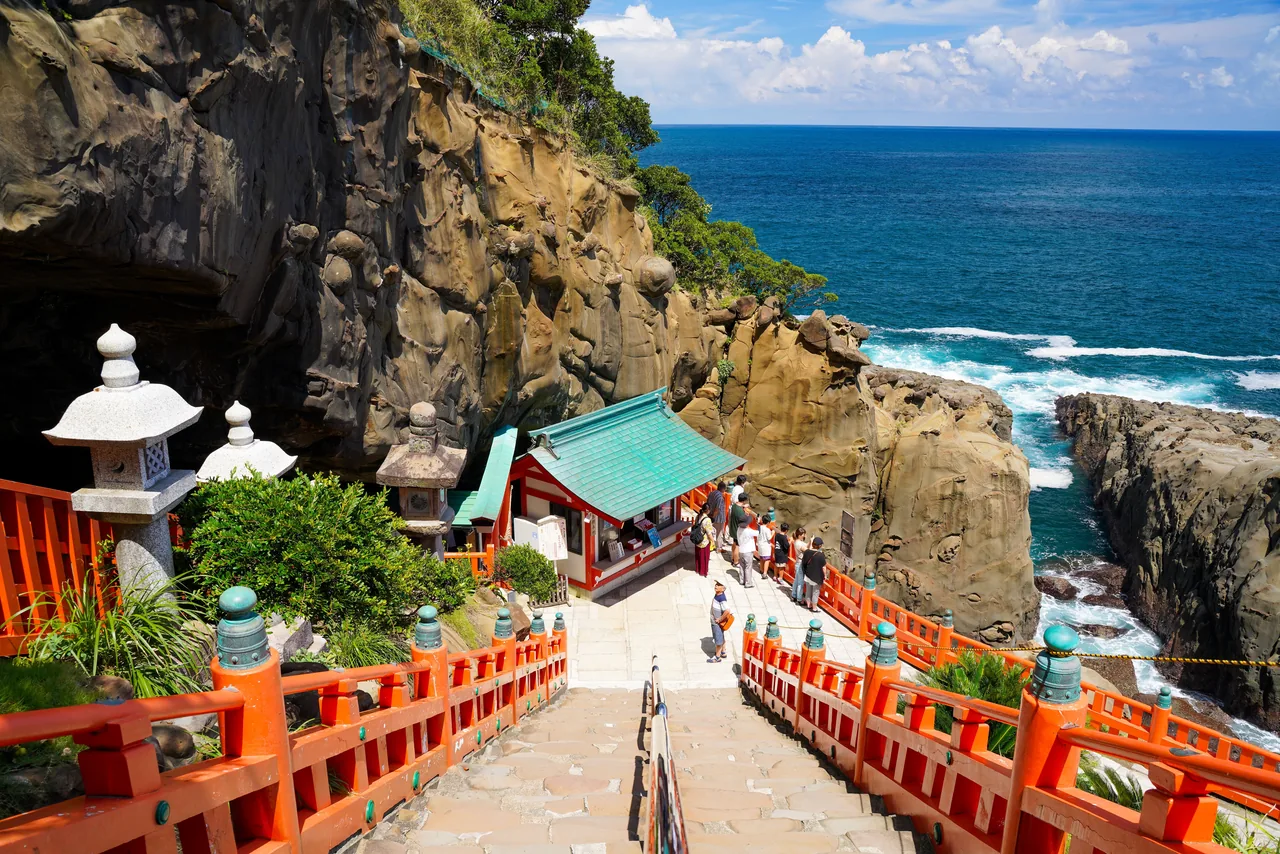
Udo Shrine: a main hall inside a sea cave
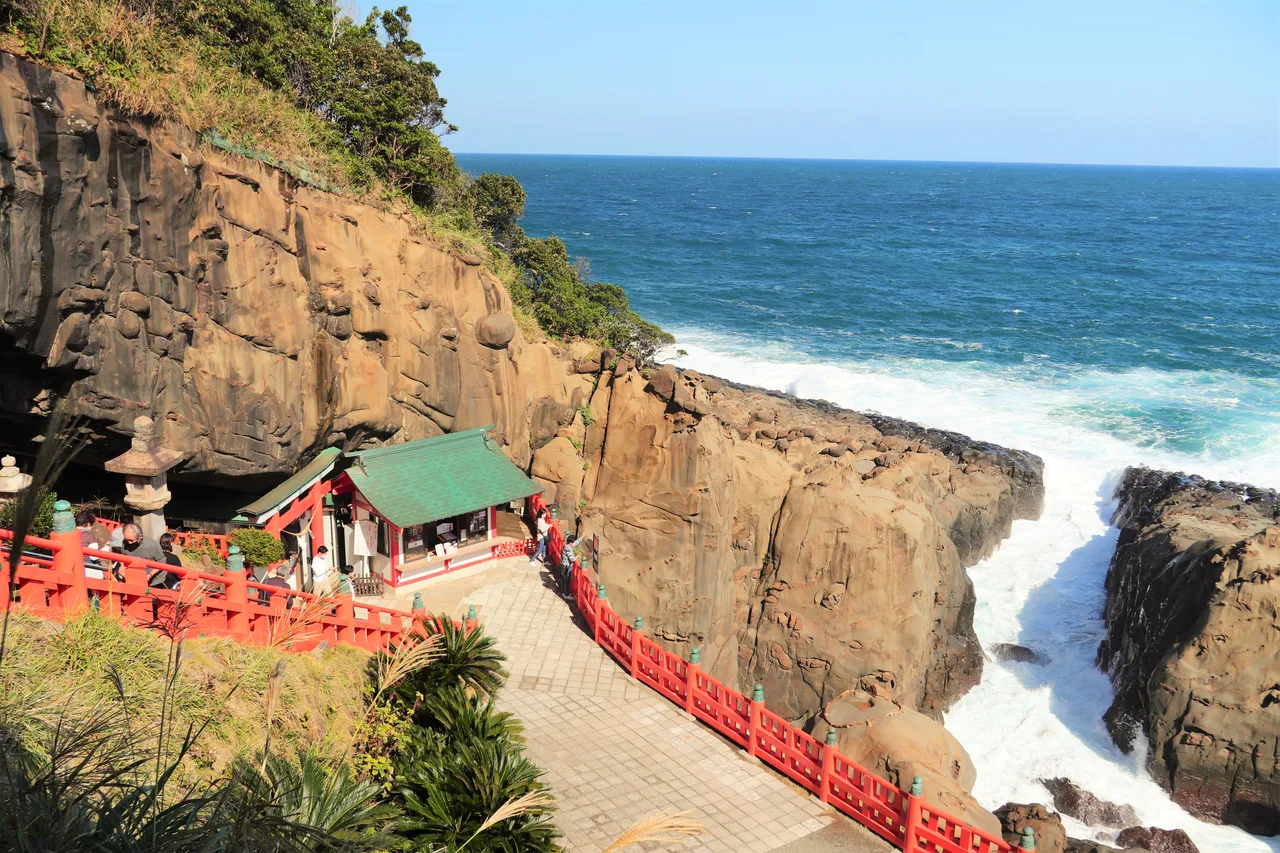
Photo: 宮崎県観光協会
Udo Jingu Shrine in Nichinan City is a shrine whose main hall stands inside a cave facing the Hyuga-nada Sea. The approach runs along cliffs that jut out over the water, and at the bottom of a flight of stone steps the cave opens up. The current main hall is based on a 1711 rebuilding and has been repaired several times since.
In the sea in front of the main hall sits a rock called Kameishi (Turtle Rock). Throw an unglazed clay "undama" (luck ball) at the hollow on its back, and if it lands inside, your wish is said to come true. By custom, men throw with their left hand and women with their right.
Fudo-kutsu Cave Shrine (波切神社): a cave shrine reached by a trail from Udo
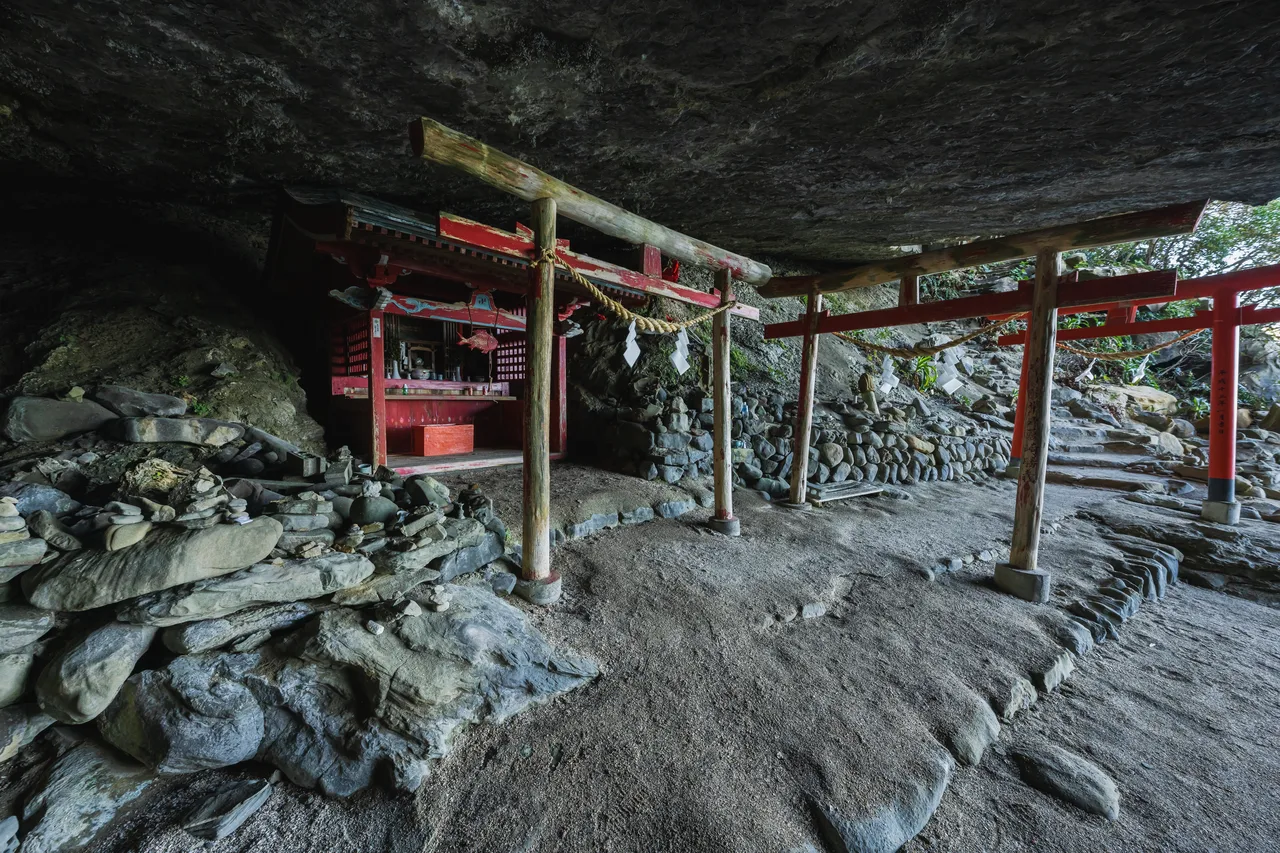
Photo: 宮崎県観光協会
Follow the hillside trail along the coast from Udo Jingu for about 30 minutes and you'll come to a rock cave called Fudo-kutsu. This is where the shrine 波切神社 stands. The cave is a little smaller than the one holding Udo Jingu's main hall, and the shrine building and torii gates sit beneath an overhanging rock.
The cave was originally a place where ascetic monks trained, and later local fishermen began holding rituals here. Under a rock ledge stands a statue of Fudo Myoo (波切不動明王), regarded as a guardian of sailors because he is depicted cutting through the waves. A Buddhist figure enshrined at a Shinto shrine is a holdover from the era before the Meiji period (1868), when Shinto gods and Buddhas were worshipped together. The trail goes up and down, so wear comfortable shoes.
Nango jacaranda: purple blossoms in early summer
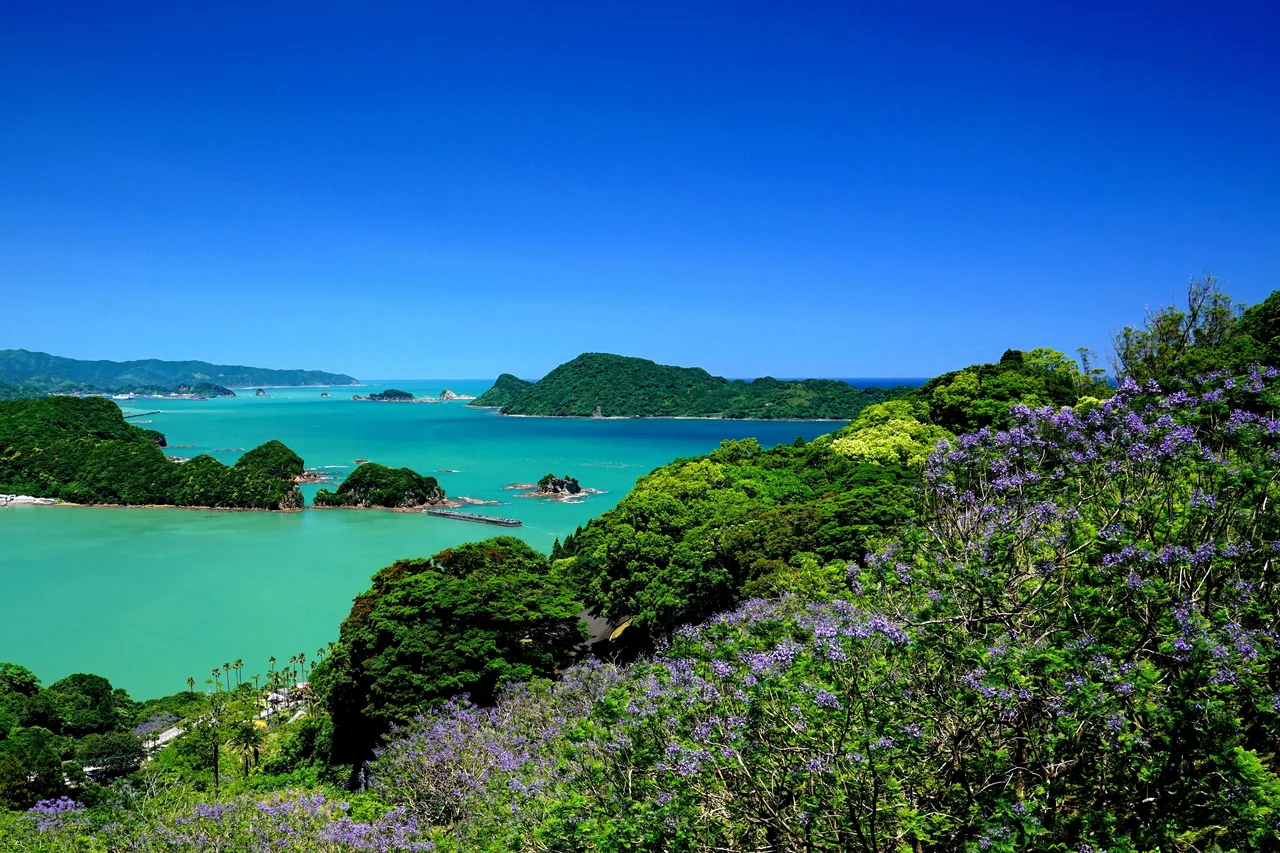
Photo: 宮崎県観光協会
Around Michi-no-Eki Nango, a roadside rest stop in Nango, Nichinan City, is the "Jacaranda Forest," where jacaranda trees have been planted together in large numbers. In early summer, the jacaranda's branches fill with blue-purple flowers.
The flowers usually bloom from late May to the end of June. A Jacaranda Festival is held during the season, but how far the blooms have progressed and the festival dates both change from year to year. Check the Michi-no-Eki Nango website for the current year's information before you go. As in the photo, some spots give you a view of Nango's inlets and small islands beyond the flowers.
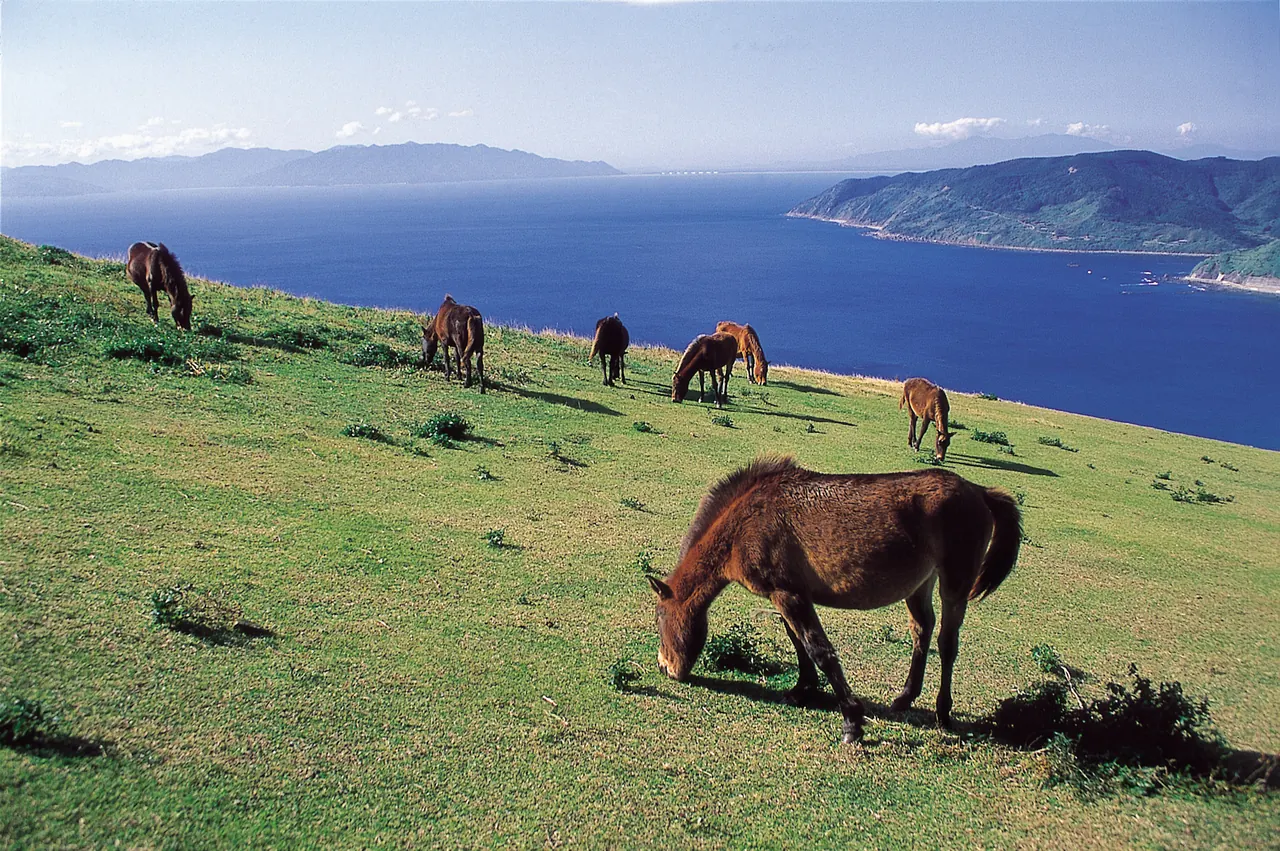
Cape Toi: home of the wild Misaki horses
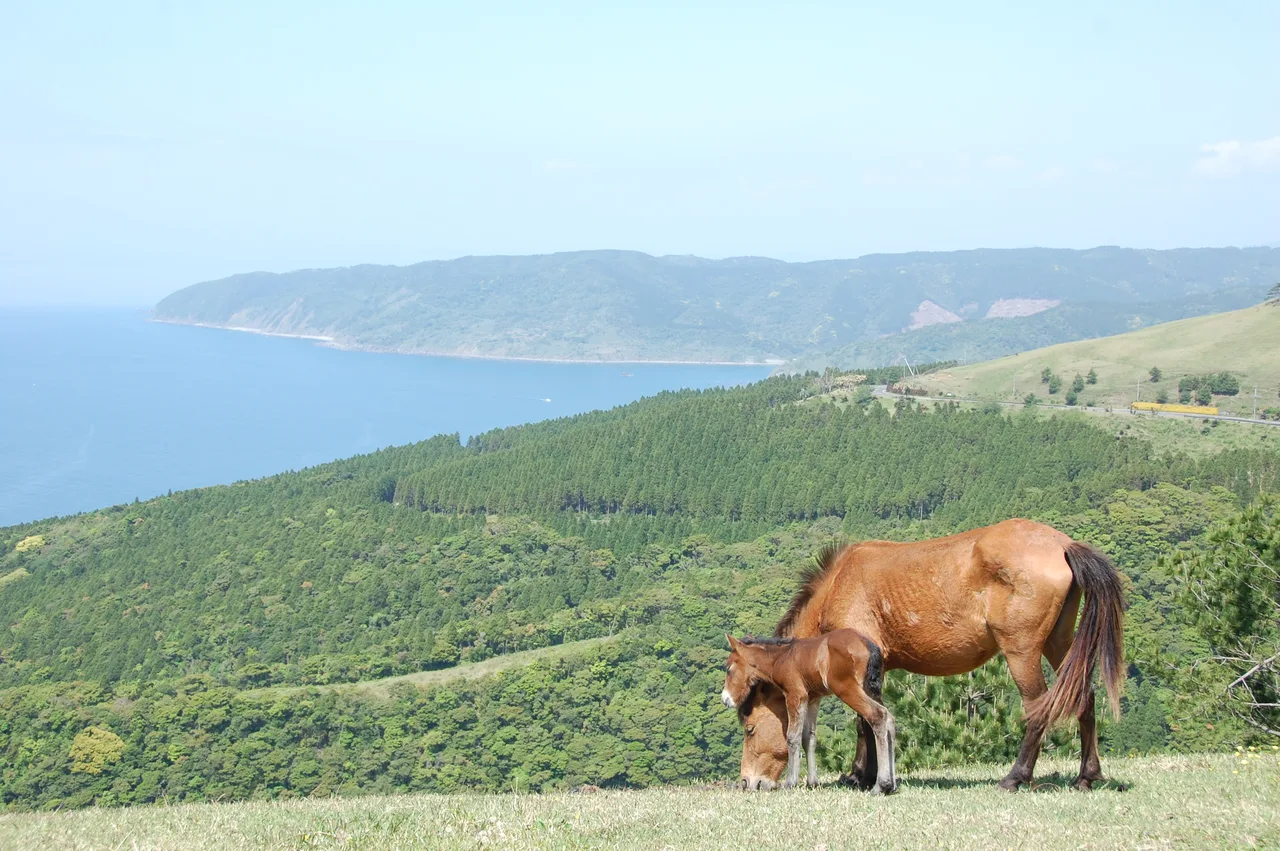
Photo: 宮崎県観光協会
At Cape Toi in Kushima City, at the southern tip of Miyazaki Prefecture, a native Japanese horse breed called the Misaki horse lives in the wild. Misaki horses were designated a Natural Monument of Japan in 1953, and in recent years about 100 of them have moved around the cape from season to season in search of grass. Foals are born from spring into summer, and you may spot mothers and young together on the grassland.
Approaching or touching the horses and feeding them are prohibited on the cape. Mares can be on edge. Always keep your distance and watch from afar so you don't get bitten or kicked. The roads on the cape pass through the horses' habitat, and you may find horses crossing the road or lying down just around a bend, so drive slowly. At the Komadome-mon gate at the entrance, you can pick up a leaflet explaining the cape's rules.
Getting around: train and bus in the north, car in the south
Of the six stops, Aoshima, Horikiri Pass and Udo Jingu are close to Miyazaki City and can be done as a day trip by train and bus. For Aoshima, take the JR Nichinan Line to Aoshima Station. For Udo Jingu, Miyazaki Kotsu local buses run from Miyazaki Station and other stops toward Udo Jingu and Obi, and some services go via Horikiri Pass and Michi-no-Eki Phoenix. Neither runs very often, so look up your outbound and return times in advance. Routes can also change because of construction work. Miyazaki Kotsu sells a pass that gives one day of unlimited rides on its regular local buses in the prefecture, with some routes excluded. Check the Miyazaki Kotsu website for prices and where to buy it.
Nango and Cape Toi are far from Miyazaki City, and a car is by far the easiest way to get around this stretch. The JR Nichinan Line stops at Nango and Kushima stations, but beyond the stations you'll need a car, taxi or Kushima City's community bus. Trains and buses are infrequent, so check the timetables before you plan.
| Order | Place | Getting there |
|---|---|---|
| 1 | Aoshima | About 10 minutes on foot from JR Aoshima Station |
| 2 | Horikiri Pass | South from Aoshima on Route 220; some local buses stop here |
| 3 | Udo Jingu | Local bus from Miyazaki Station and other stops, or by car |
| 4 | Fudo-kutsu Cave Shrine (波切神社) | About 30 minutes on foot along the trail from Udo Jingu |
| 5 | Nango (Michi-no-Eki Nango) | By car; taxi from JR Nango Station |
| 6 | Cape Toi | By car; Kushima City community bus also available |
A short way inland from Udo Jingu lies the castle town of Obi, with its stone walls and samurai residences, and you can stop there by local bus too. If you're visiting in spring or early summer, check bloom times in our guide to Miyazaki's flower spots before you fix your dates.