Niigata Festivals and Fireworks Calendar: Month by Month
This guide is translated from the Japanese edition. Read the Japanese edition
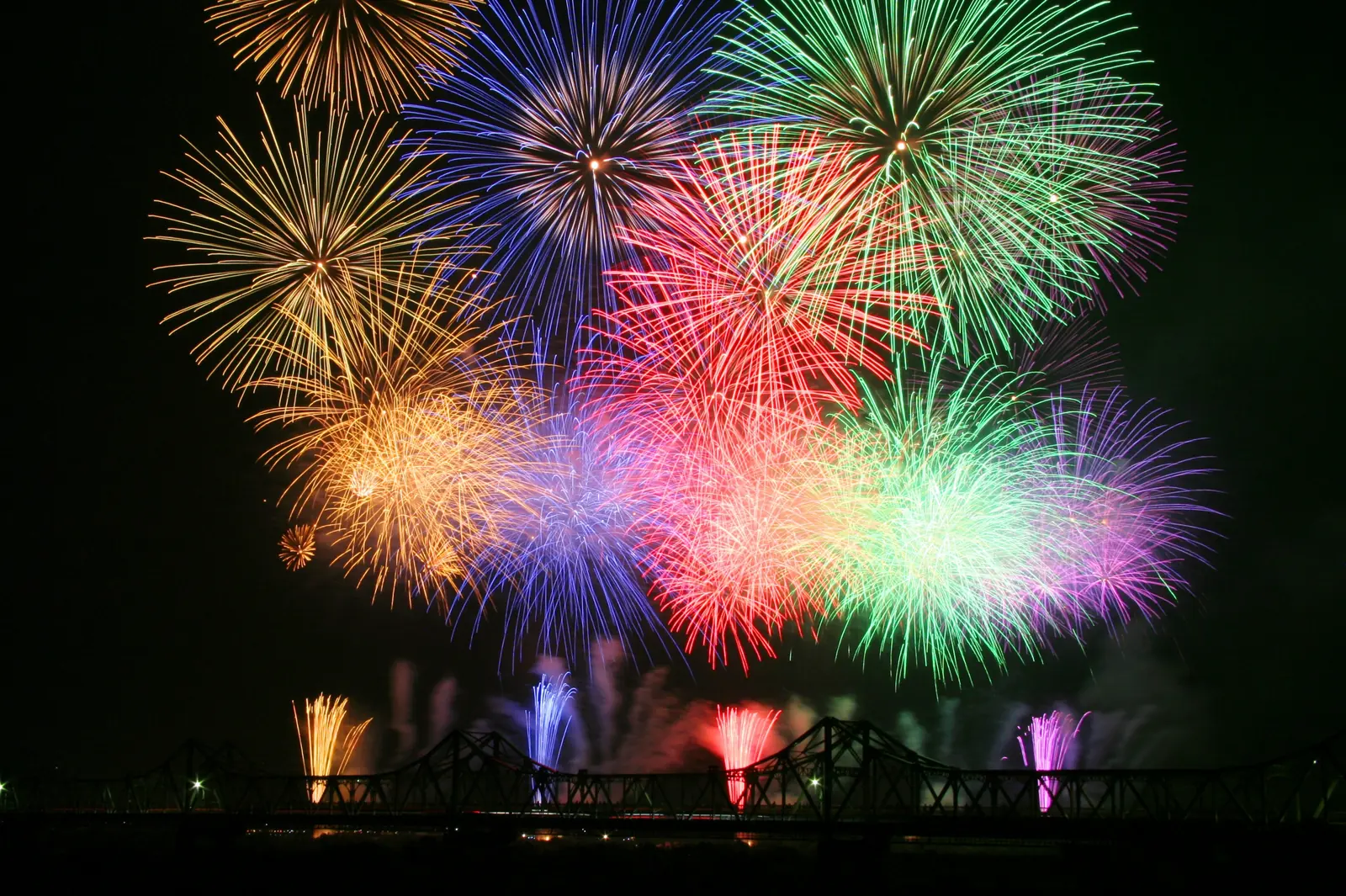
Niigata festivals and fireworks by month: winter snow festivals, spring cherry blossoms and bullfights, the great summer fireworks of Nagaoka, Kashiwazaki and Katakai.
Niigata's year opens with festivals in the snow and peaks with fireworks filling the summer sky. In winter, snow-country events follow one after another on weekends; in summer, big fireworks displays light up towns across the prefecture.
We give exact dates only for events fixed to the same day (or the same weekday) every year, and for past editions as examples. Everything else is shown as "usually in [month]," so check the organizer's announcement for that year's dates.
Winter (January to March): snow-country festivals
- January: Muko-nage and Sumi-nuri (Matsunoyama Onsen, Tokamachi): Usually January 15. Grooms who married in the past year are tossed down the snowy slope below the Yakushi-do hall in celebration. In the "Sumi-nuri" that follows, people smear each other's faces with a mix of snow and ash while saying "congratulations."
- Early February: Lerch Festival (Takada, Joetsu): Named for the first full-scale ski instruction in Japan in 1911, it is held on a weekend in early February at Kanayasan Ski Area and other venues.
- February: Secchu Hanamizu Iwai (Horinouchi, Uonuma): Grooms who married in the past year are doused with water to wish for a happy marriage. It is usually held on the second Saturday of February; in 2027 that is February 13.
- Mid to late February: Tokamachi Snow Festival (Tokamachi): A snow festival that began in 1950, with snow sculptures made by residents set up around town.
- Saturdays in February: Corridor of Light (mountain districts of Joetsu): An evening event with candles lit in the snow; each district has its own date.
- Late February: Ojiya Balloon Festival (Ojiya): A winter festival with hot-air balloons rising from snowfields, first held in 1977.
- March: Tsunan Snow Festival (Tsunan): Sky lanterns are released together into the night sky over the snowfields. Entry is by ticket, so watch for the sale announcement early.
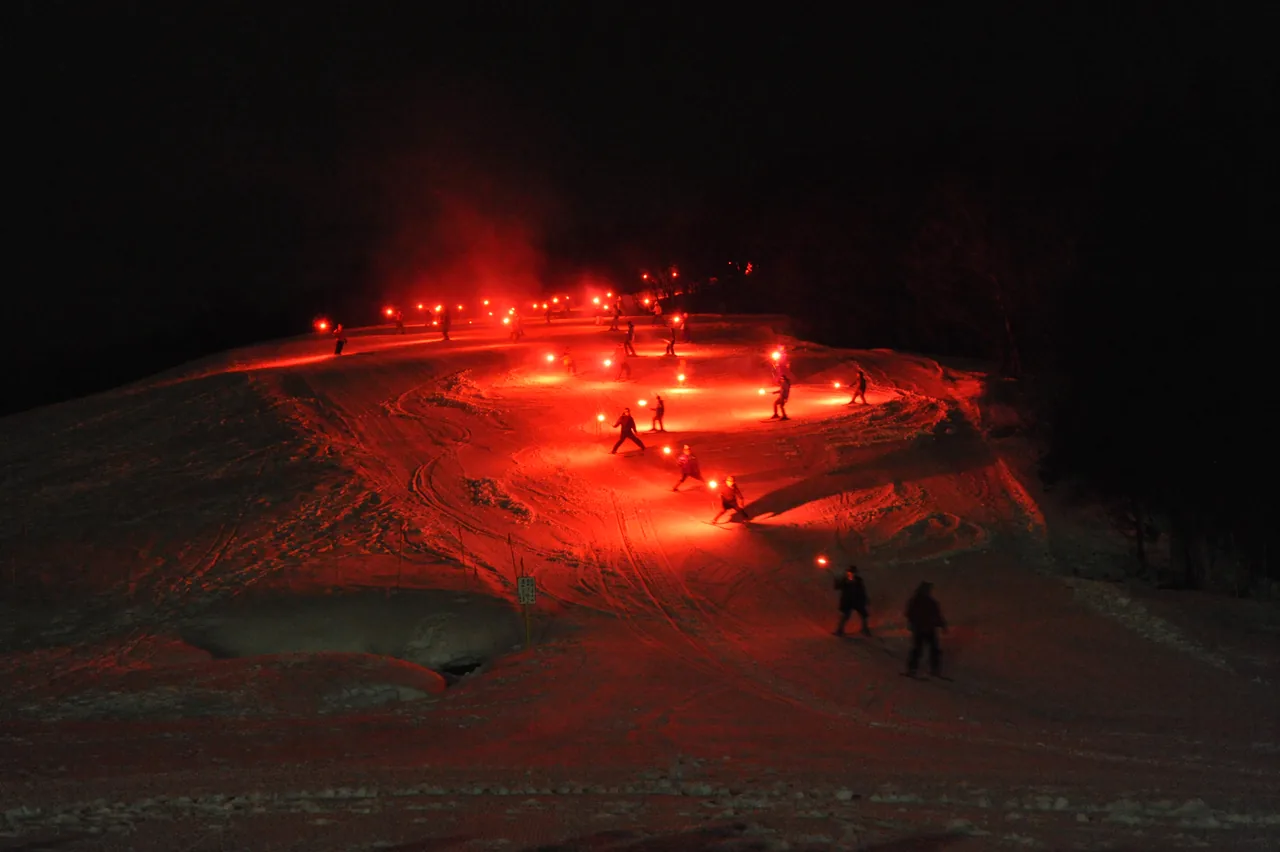
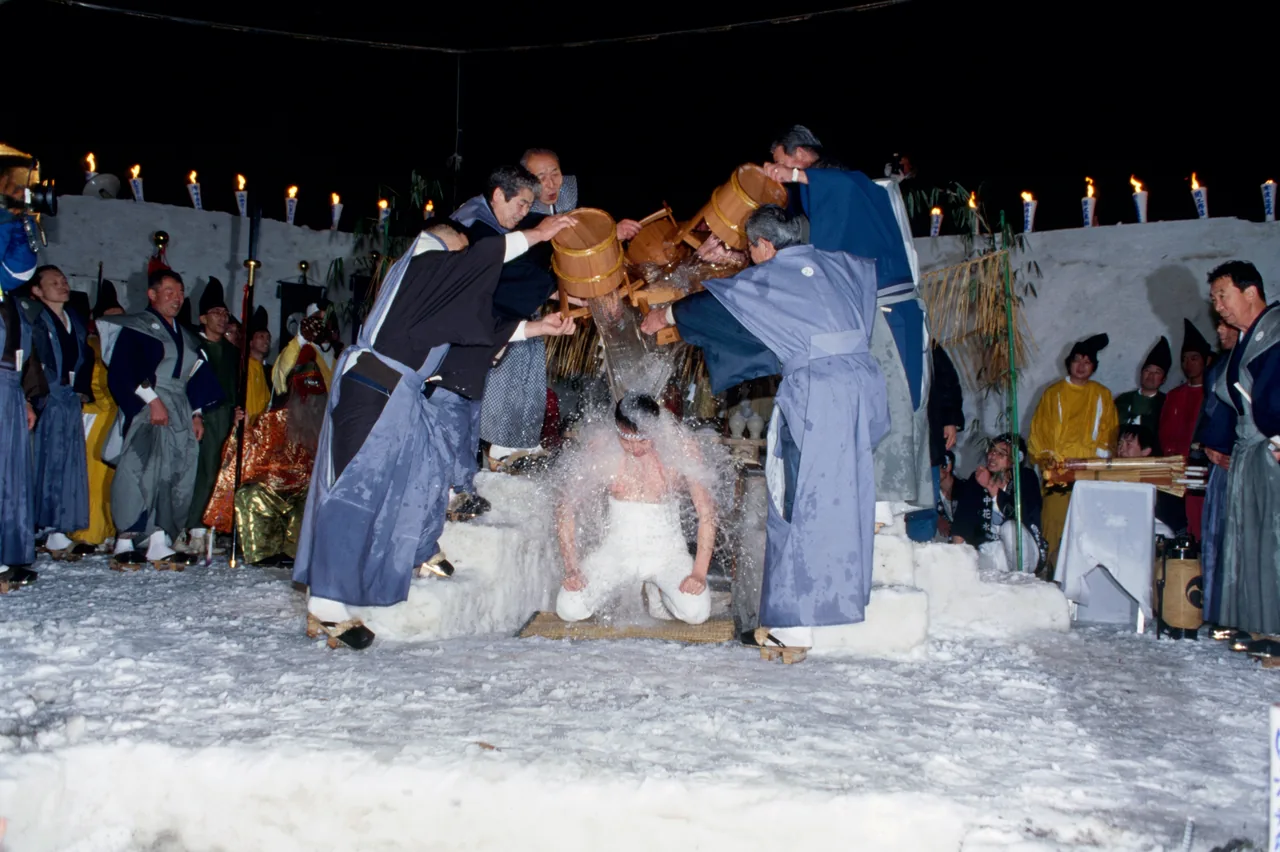
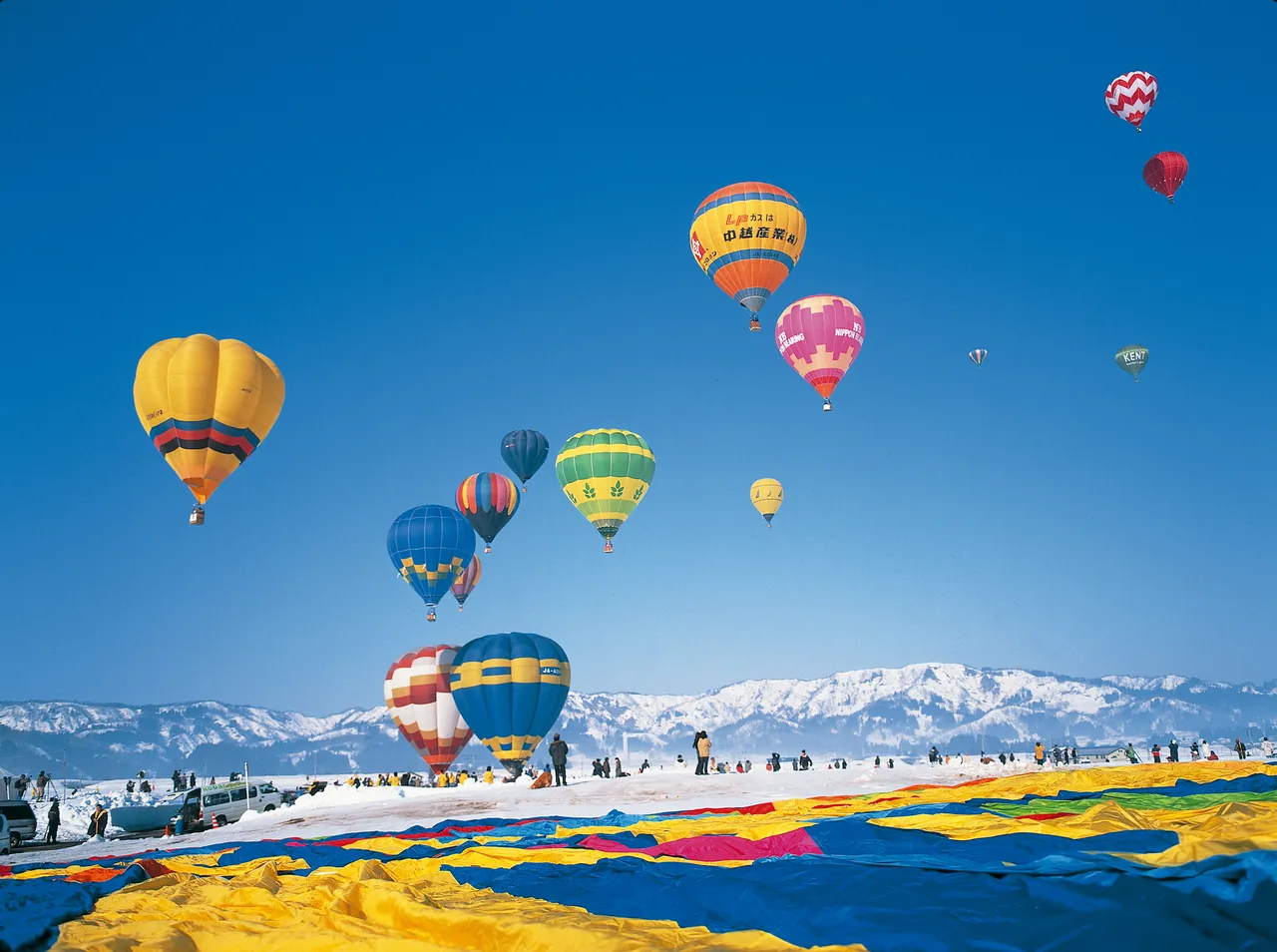
Winter events can change depending on snow and weather. For getting around snow country, see Niigata in winter.
Spring to early summer (April to June): cherry blossoms, bullfights and giant kites
The Takada Castle Site Park Cherry Blossom Festival (Joetsu), in early to mid April, takes place around the moats and three-story turret of Takada Castle Site Park; it marked its 100th edition in 2025. At night the cherry trees are lit up and reflected in the moat.
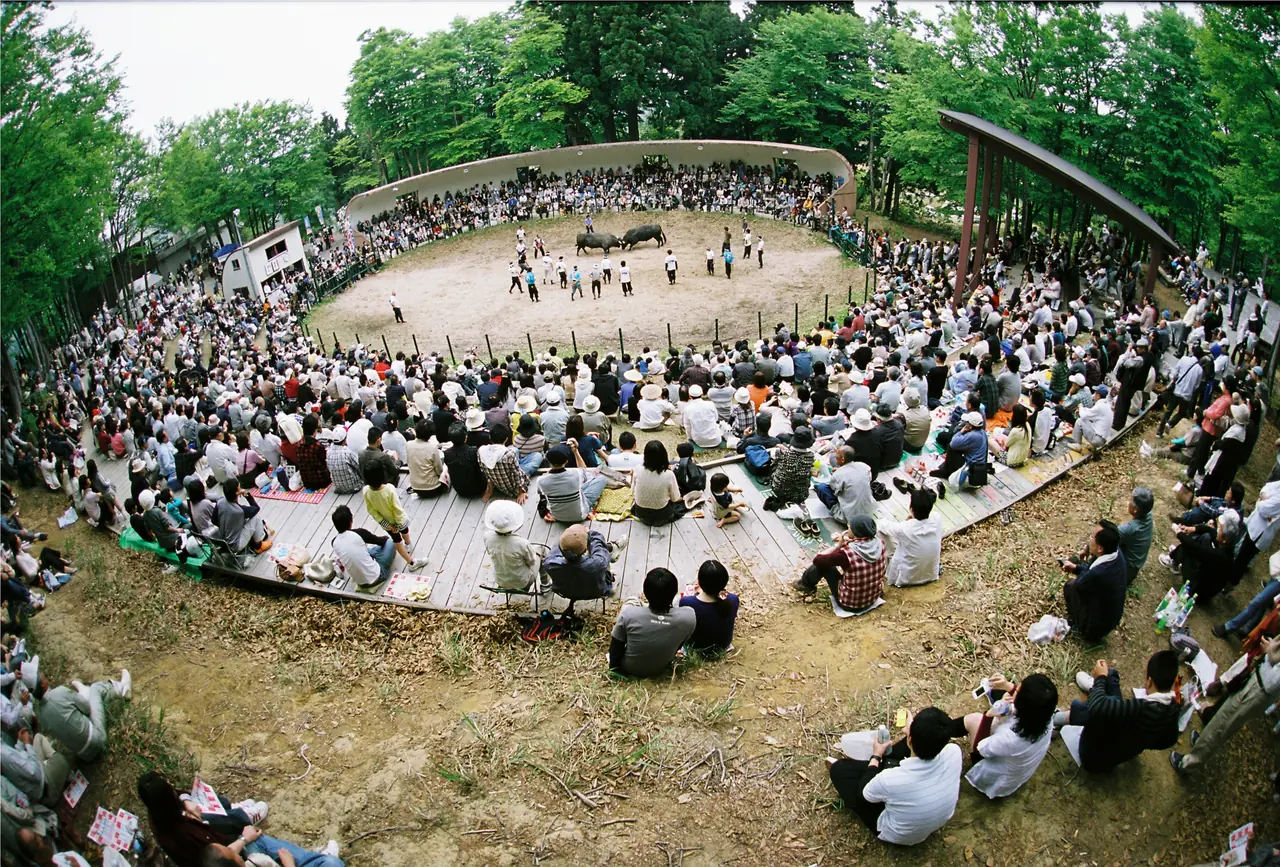
In Yamakoshi, Nagaoka, official tournaments of bullfighting (Ushi no Tsunotsuki) are held from spring to autumn. The season ends with the tournament on November 3. The arena is in the mountains, and roads get busy on event days.
The Shirone Giant Kite Battle (Minami-ku, Niigata City), in early June, sees teams on opposite banks of the Nakanokuchi River fly huge kites, tangle their lines in midair and pull against each other. It is designated an Intangible Folk Cultural Property of Niigata Prefecture as the "kite-fighting custom of Echigo."
Summer (July and August): float festivals and fireworks
In Niigata, fireworks shows follow one after another from late July through August.
- July 6 and 7: Murakami Taisai (Murakami): The annual festival of Senami Haguro Shrine, with the eve festival on the 6th and the main festival on the 7th. Floats called "oshagiri," decorated with carving and lacquer, make their way around town.
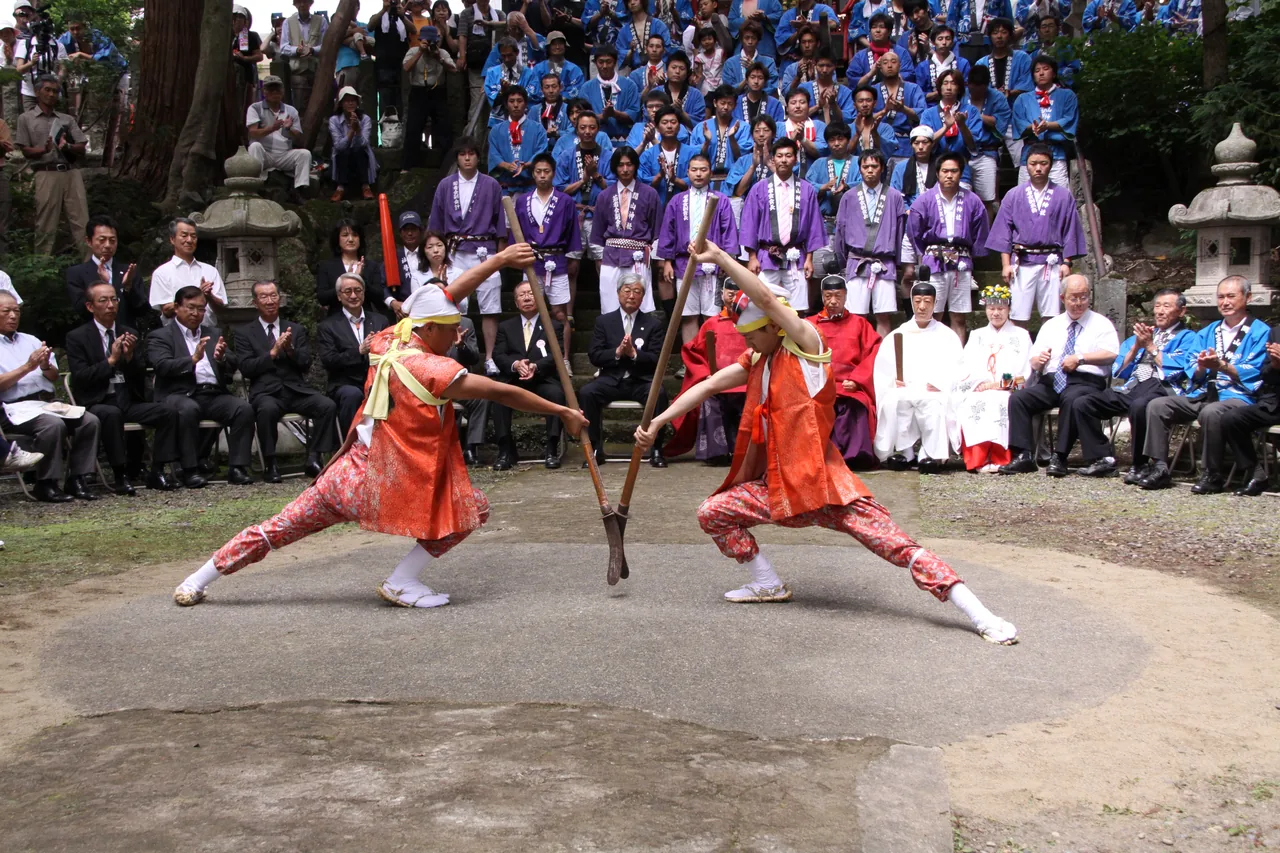
- Mid-July: Sekiyama Shrine Fire Festival (Myoko): Held over a Saturday and Sunday, with staff-fighting by "temporary yamabushi" mountain ascetics and the lighting of tall pine pillars.
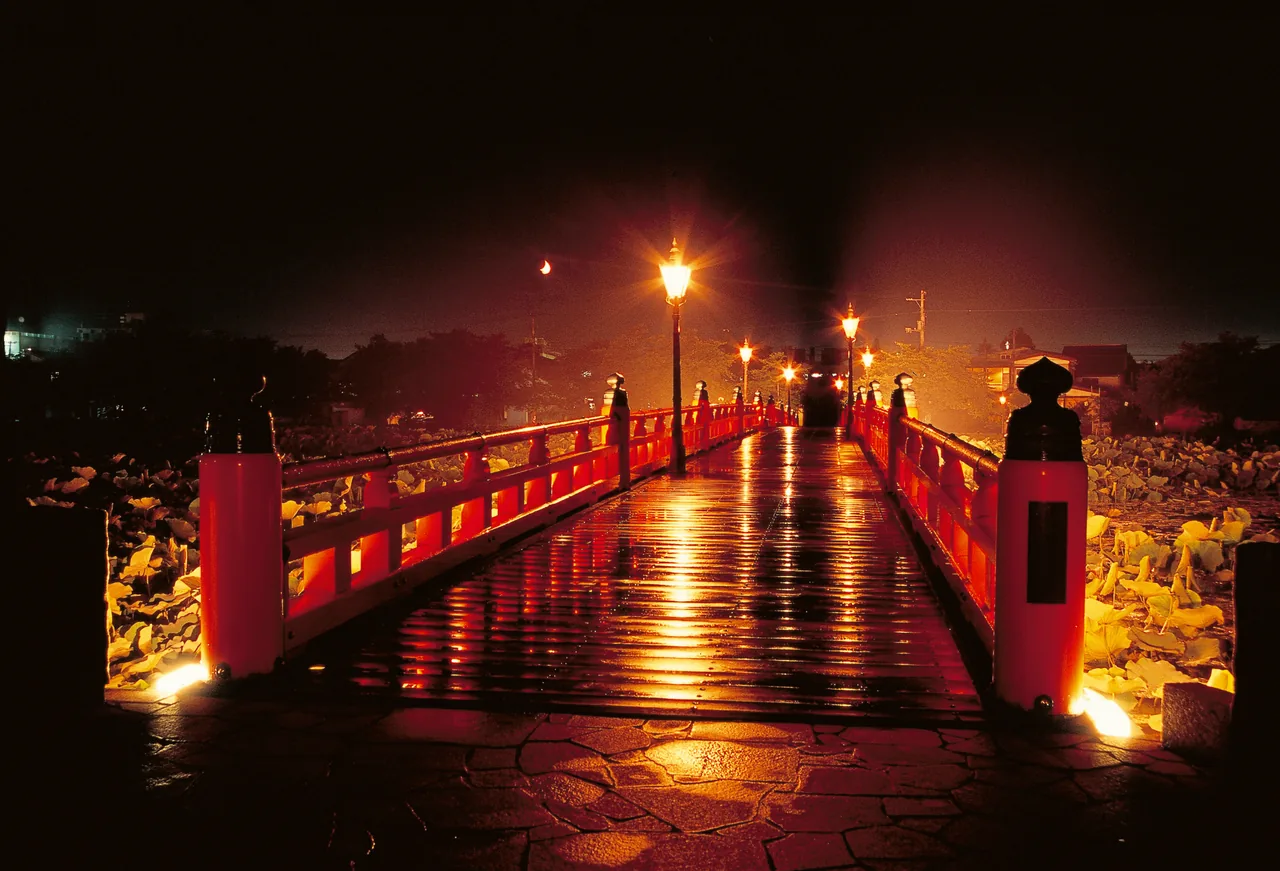
- Mid-July to August: Takada Castle Site Park Lotus Festival (Joetsu): Events timed to the lotus flowers that fill the outer moat of Takada Castle.
- July 26: Gion Kashiwazaki Festival Sea Fireworks (Kashiwazaki): On the last day of the festival, which begins on July 24, fireworks go up over the sea.
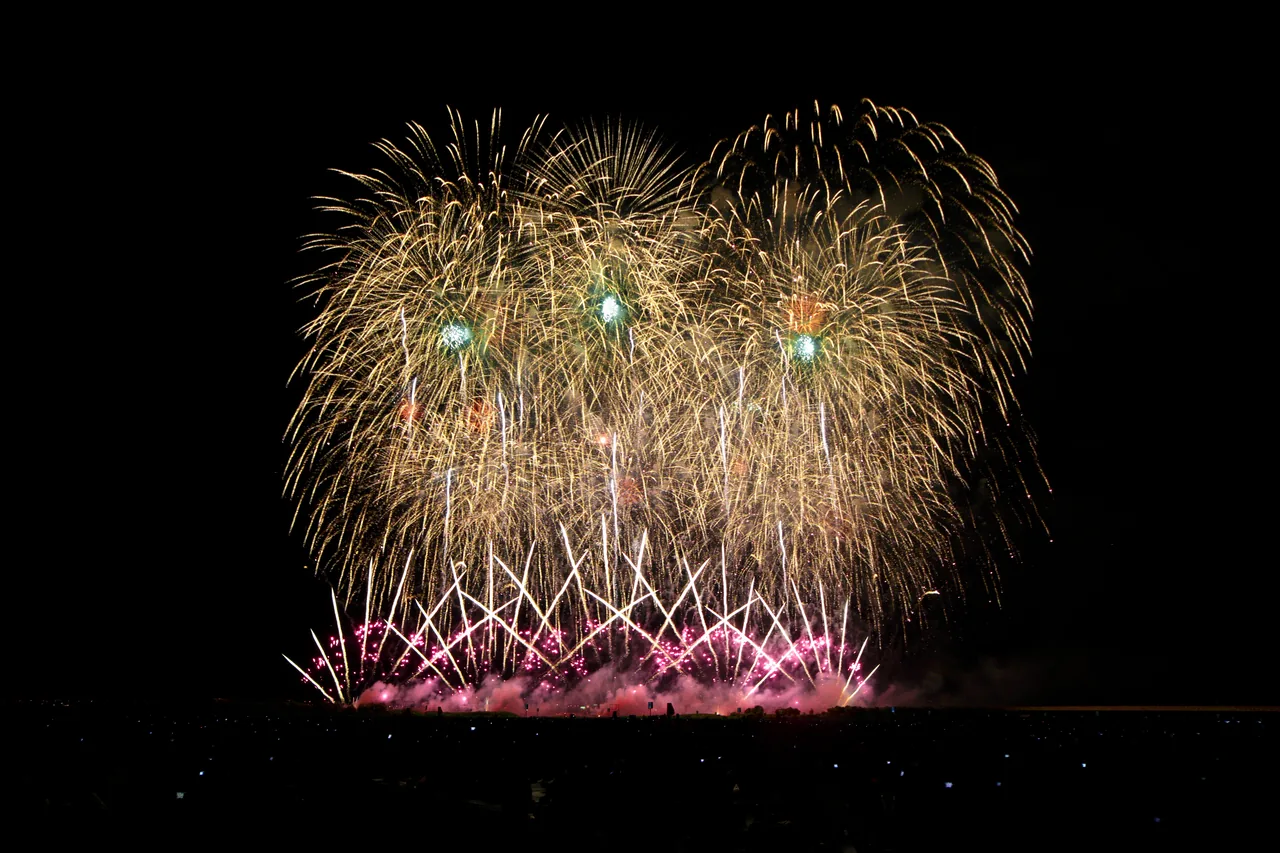
- August 2 and 3: Nagaoka Festival Fireworks (Nagaoka): Held on the Shinano River banks, always on August 2 and 3. The festival began as a prayer for recovery after the air raid on Nagaoka in 1945.
- Early August: Niigata Festival (Niigata City): Dancers parade across Bandai Bridge and through the streets in the Grand Folk Dance Procession, and the last day ends with fireworks over the Shinano River.
- Mid-August: Izumozaki Boat Festival (Izumozaki): Fishing boats parade on the sea, followed by fireworks at night.
- Late August: Earth Celebration (Ogi, Sado): A three-day outdoor music festival hosted by Kodo, the taiko drumming group based on Sado.
- Late August: Aganogawa Gozareya Fireworks (Matsuhama, Kita-ku, Niigata City): A fireworks show on the banks of the Agano River.
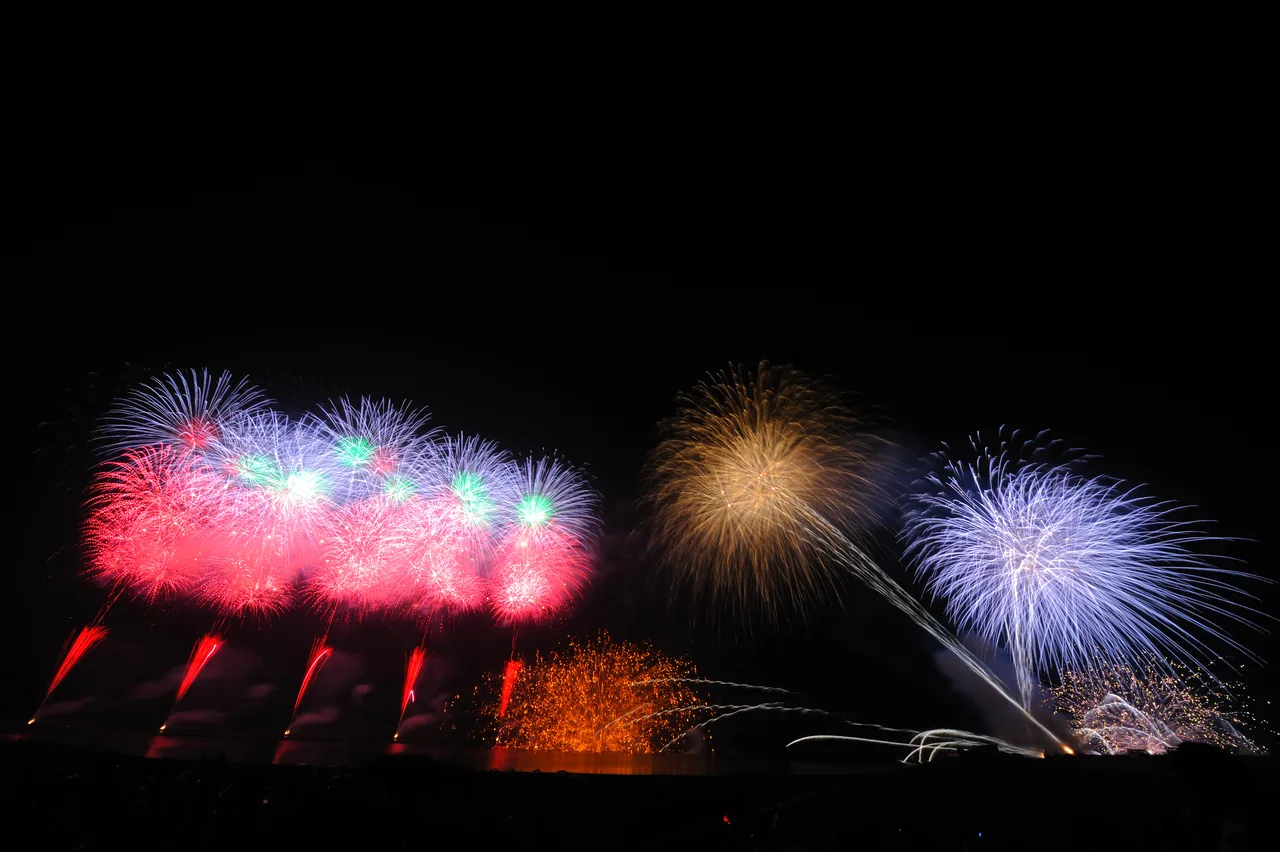
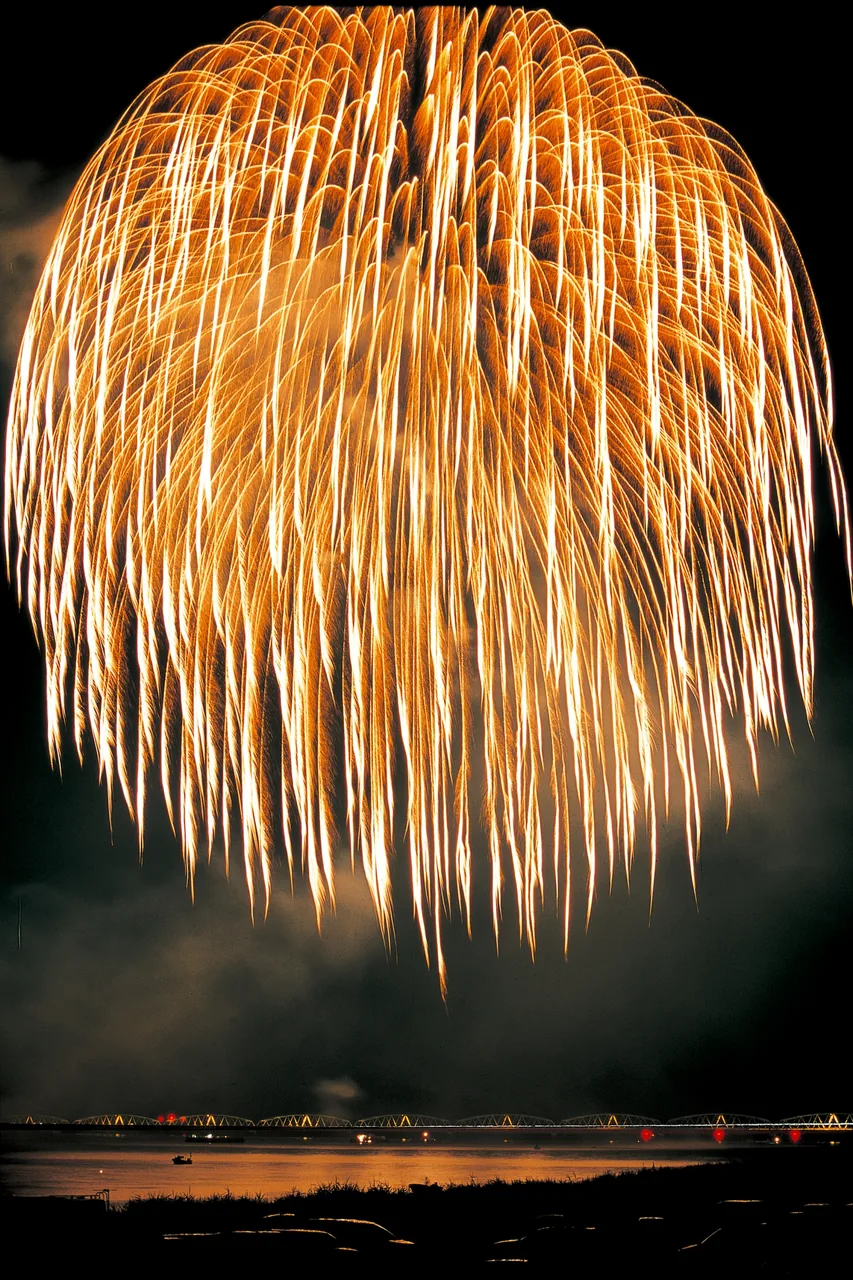
The Nagaoka fireworks draw huge crowds from outside the prefecture, and hotels in the city fill up early. There is paid seating too, so once the dates are set, book your room and seats as soon as you can.
Autumn (September to November): Katakai's giant shell and autumn leaves
The Katakai Festival in September (Katakai, Ojiya) offers fireworks to Asahara Shrine as part of its autumn festival. The fireworks go up over two days, and at night the "yonshakudama," a giant shell about 4 shaku (about 120 cm) across, is launched. The dates change from year to year; in 2026 it was held on September 11 and 12.
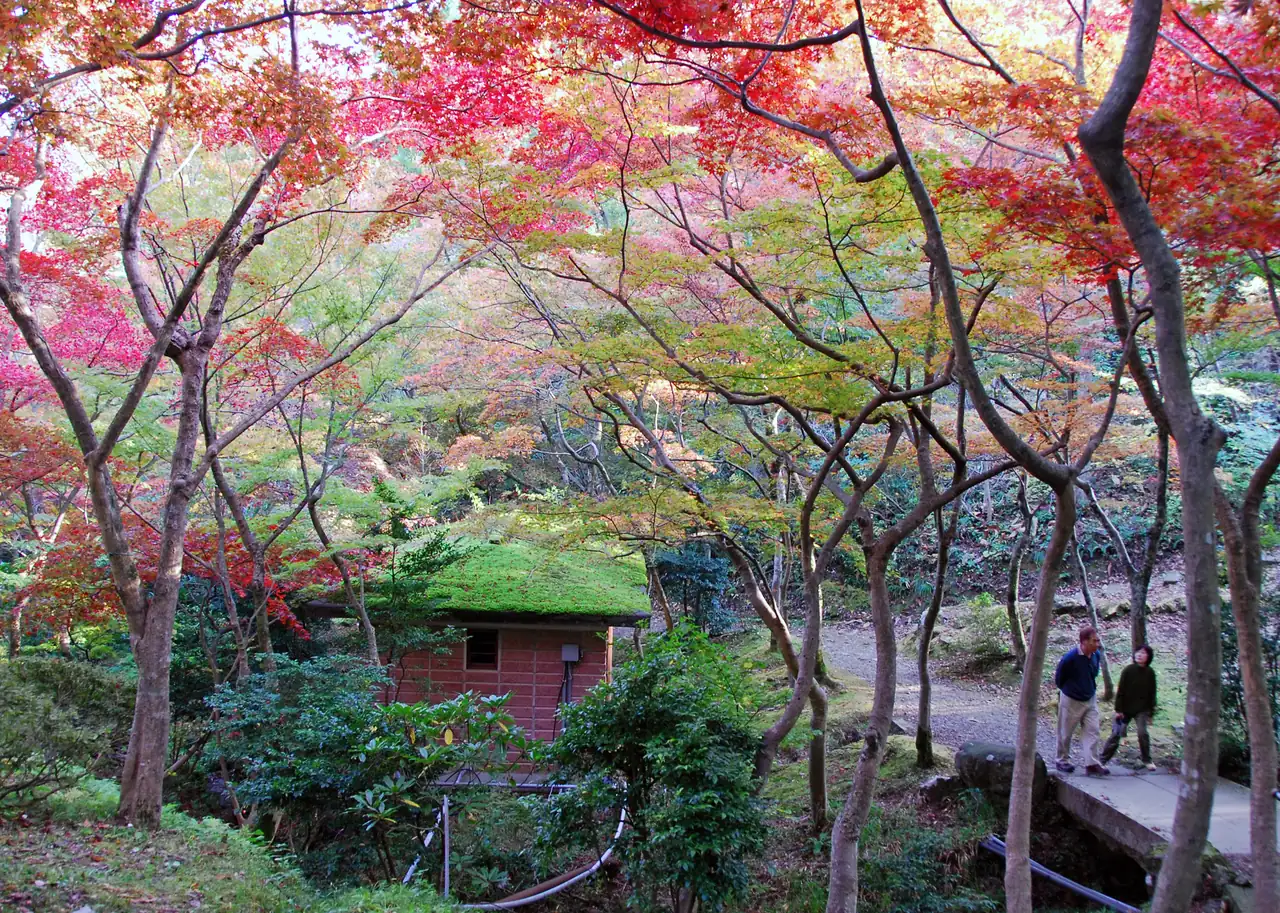
October and November are the season for autumn leaves, and at Yahiko Park Momiji-dani in Yahiko the maples are lit up at night in autumn. On November 3, the Yamakoshi bullfights hold their final tournament of the year.
What are the Three Great Fireworks of Echigo?
The Nagaoka Festival Fireworks, the Katakai Festival and the Gion Kashiwazaki Festival Sea Fireworks are known together as the "Three Great Fireworks of Echigo." Nagaoka is on August 2 and 3, Kashiwazaki on July 26 and Katakai in September, so some people make several summer trips to Niigata to compare them. All three get extremely crowded around the venue, and lines for trains home are long. Allow plenty of time for the walk to the station and for your return train.
Before you go
- Dates: For festivals listed as "usually in [month]," confirm the dates in that year's announcement. Snow festivals can be cancelled or changed because of snow conditions, and fireworks because of weather.
- Accommodation: Hotels near the venues fill up quickly on fireworks days. Another option is to stay a little farther away, in Niigata City or Echigo-Yuzawa, and travel in by train.
- Transport: Traffic restrictions apply near the venues, and temporary parking and shuttle buses are sometimes provided. Check the organizer's access information.
In 2027, the Echigo-Tsumari Art Field's triennial festival, the "Daichi no Geijutsusai," is also scheduled to run from summer to autumn in Tokamachi and Tsunan. To combine festivals with art in the satoyama countryside, see our Tokamachi guide.