
Saga Autumn Leaves: 6 Spots from Kunen-an to Taku Seibyo
This guide is translated from the Japanese edition. Read the Japanese edition
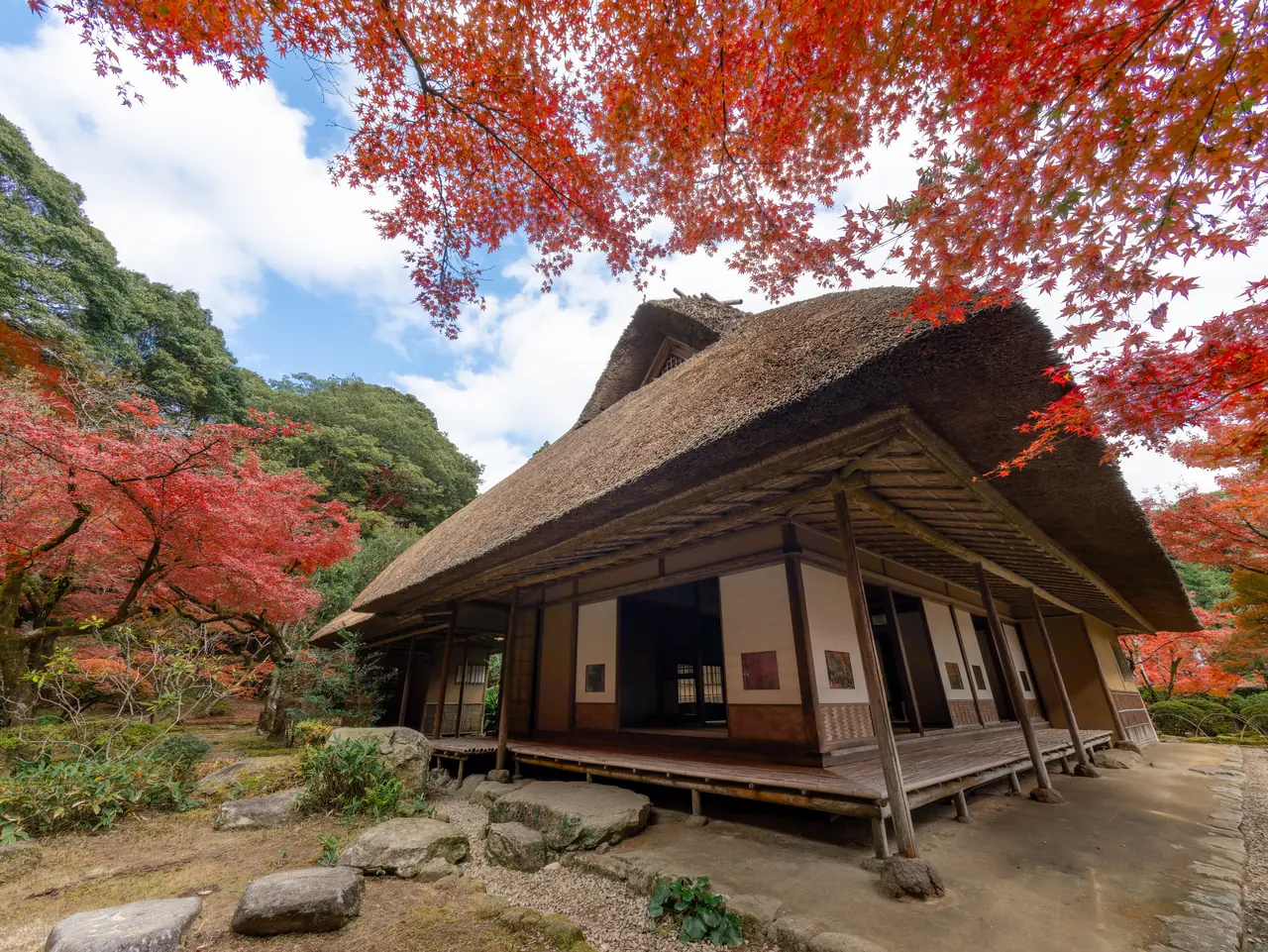
Six places for autumn leaves in Saga: Kunen-an, open just 16 days in autumn, Nihiyama Shrine, Daikozenji Temple, Ryumonkyo Gorge, Taku Seibyo and Takeo Shrine.
Autumn leaves in Saga Prefecture usually peak from mid- to late November. Many of the best spots are temples, shrines and gardens in the hills, and part of the appeal is that they are close enough to see on a day trip from Fukuoka. Kunen-an, which opens its gates for just 16 days in autumn, gets especially busy on weekends during the opening. The peak shifts each year with the temperature.
Kunen-an: A Garden Open for Just 16 Days in Autumn
Kunen-an in Kanzaki City is the former villa and garden built in the Meiji era by the Saga businessman Itami Bunemon and his son Yataro. Maples spread their branches around a thatched-roof house, and the red leaves are reflected on the mossy ground and in the pond. The garden is designated a national Place of Scenic Beauty.
It is normally closed, opening only for limited periods in spring and autumn. The 2026 autumn public opening runs for 16 days, from Saturday, November 14 to Sunday, November 29. On weekends, both the buses from Kanzaki Station and the roads around it fill up. Aim for early morning on a weekday to see it in relative calm.
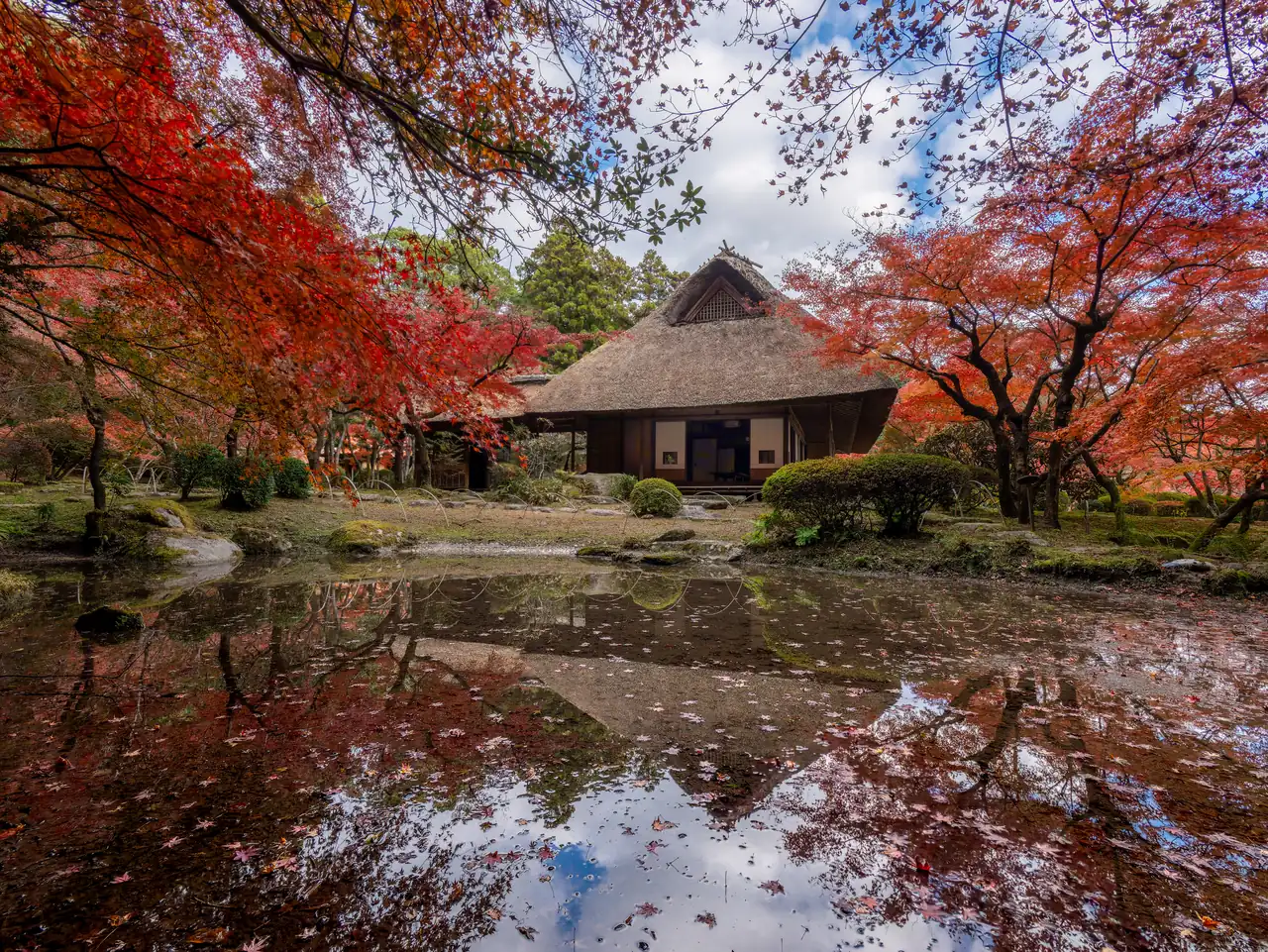
Photo: ©Saga Prefectural Cultural Tourism Federation
Nihiyama Shrine: The Approach Right Next to Kunen-an
Nihiyama Shrine is known for the maples along its approach and in its grounds. In autumn, the stone steps beyond the stone torii are wrapped in red leaves. It stands right next door to Kunen-an, a short walk away, so most people visit the two together. Time your visit to Kunen-an's opening period and you can enjoy both in one go.
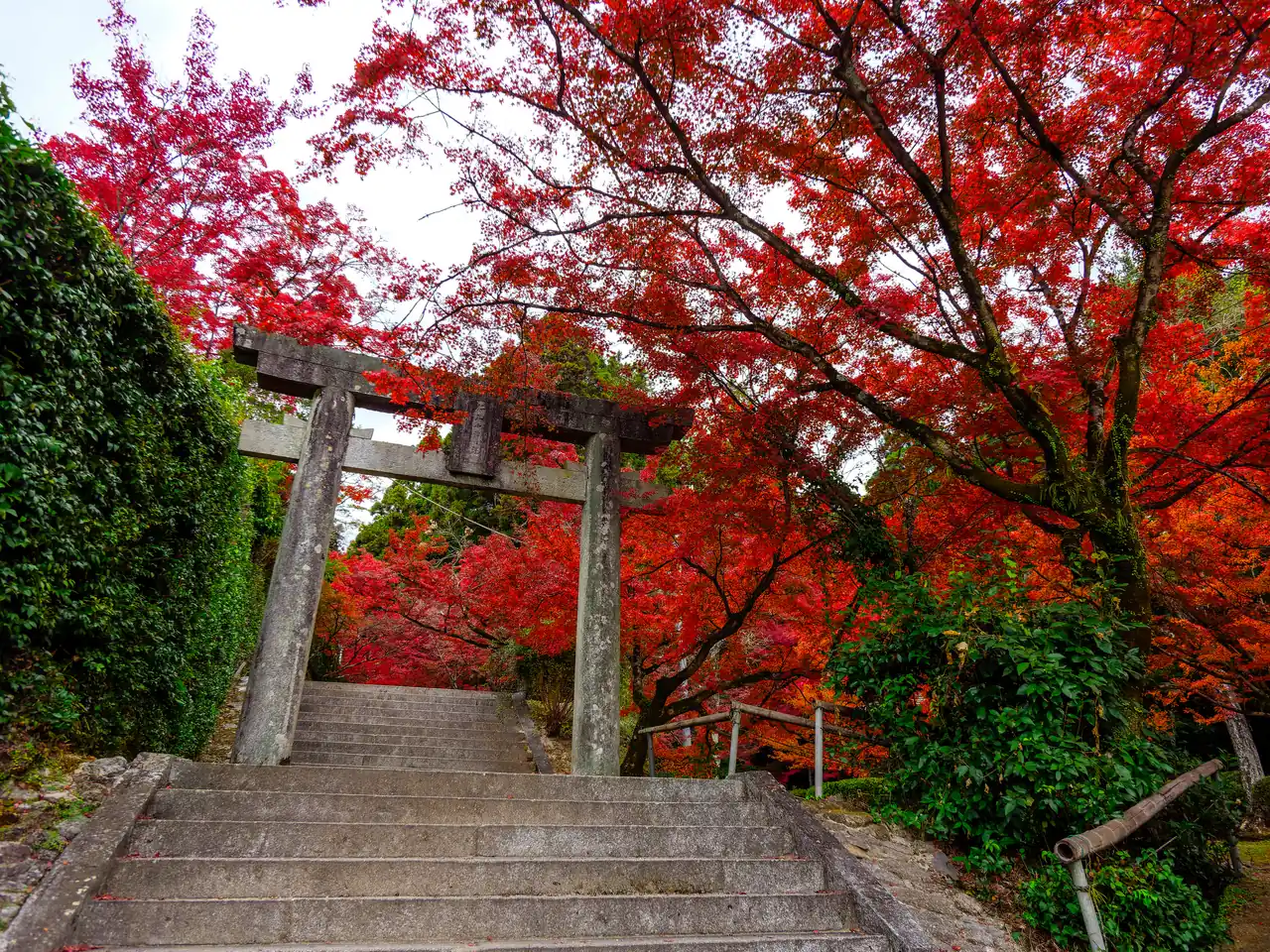
Photo: ©Saga Prefectural Cultural Tourism Federation
Daikozenji Temple: Color on the Mountain Slope
Daikozenji Temple in Kiyama Town, near the border with Fukuoka Prefecture, is said to have been founded by the monk Gyoki in the Nara period. It is also known as the "azalea temple" for its spring azaleas, and a garden called Keien spreads over the hill behind the main hall. In autumn the maples color everything from the temple grounds up the garden slopes, and the temple holds its autumn-leaf festival from early November to early December.
It is about 10 minutes by taxi from JR Kiyama Station. It is close to Fukuoka City too, and you can get there by train from Hakata.
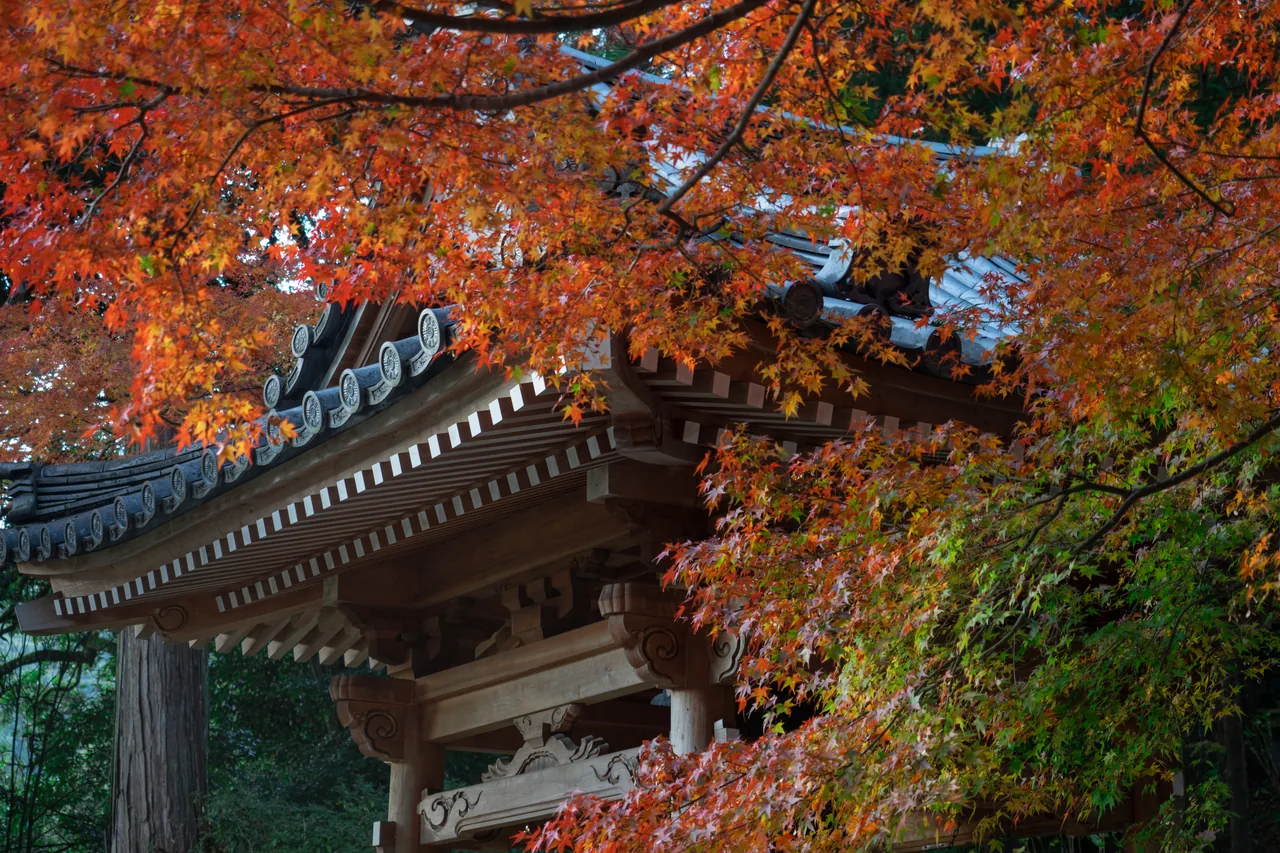
Photo: ©Saga Prefectural Cultural Tourism Federation
Ryumonkyo Gorge: A Clear Stream at the Foot of Mt. Kurokami
Ryumonkyo Gorge in Arita Town is a ravine where water gathered at the foot of Mt. Kurokami flows down. The water is clear and known as a source of fine spring water. Surrounded by rocks and broadleaf forest, in autumn the fallen maple leaves collect on the current, creating scenes like the one in the photo. It is also a trailhead for Mt. Kurokami.
It is about 15 minutes by car from Arita Station and hard to reach by public transport. Combine it by taxi or car with a day in Arita's pottery towns.
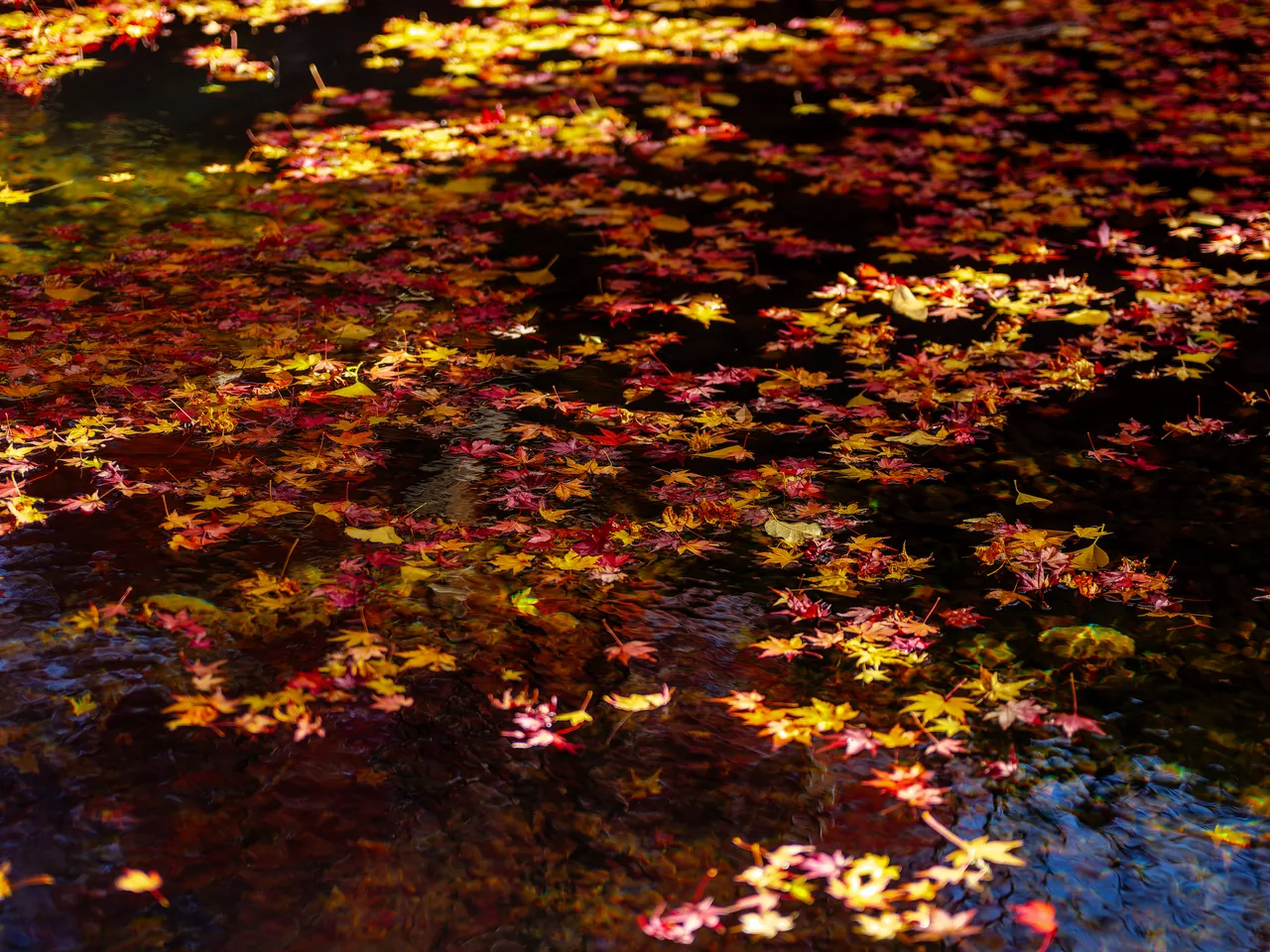
Photo: ©Saga Prefectural Cultural Tourism Federation
Taku Seibyo: A Confucian Shrine Framed by Autumn Leaves
Taku Seibyo in Taku City is a shrine to Confucius built in 1708 by Taku Shigefumi, the local lord, as the heart of his school. The building, decorated in Chinese style, is a national Important Cultural Property, and when the surrounding maples turn, the red pillars and upswept roof overlap with the colored leaves.
In spring and autumn, a traditional ceremony honoring Confucius, the "Sekisai", is held. The autumn ceremony falls on the fourth Sunday of October, so it comes a little before the peak of the leaves.
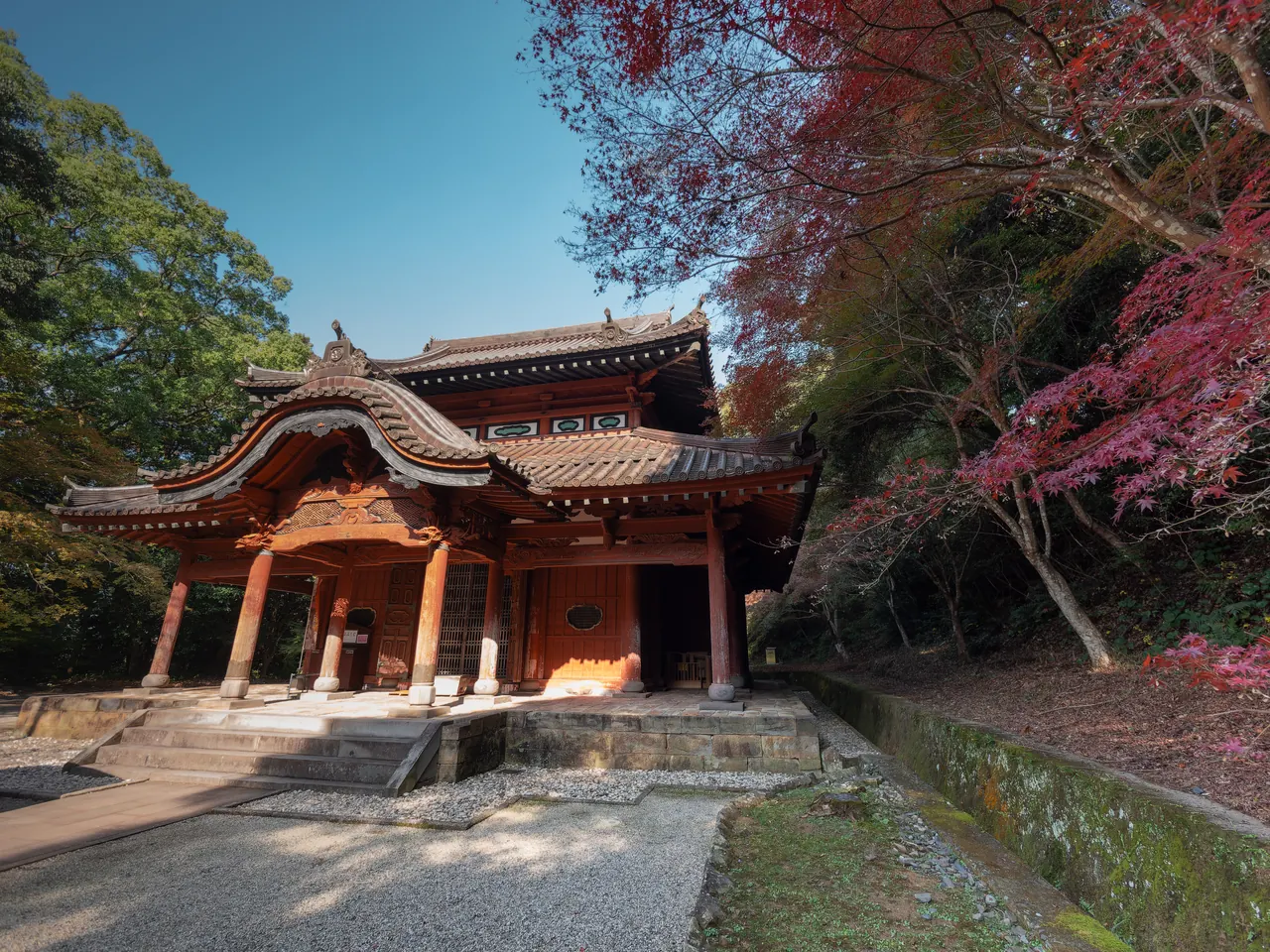
Photo: ©Saga Prefectural Cultural Tourism Federation
Takeo Shrine: The Sacred Camphor and Autumn Leaves in the Grounds
Takeo Shrine in Takeo Onsen is known for its sacred tree, the Great Camphor of Takeo, said to be 3,000 years old. In autumn the maples in the grounds turn color, and the torii leading to the sacred tree is wrapped in autumn leaves. You can walk there from Takeo-Onsen Station, so it is an easy stop on a trip staying at Takeo Onsen and Ureshino Onsen.
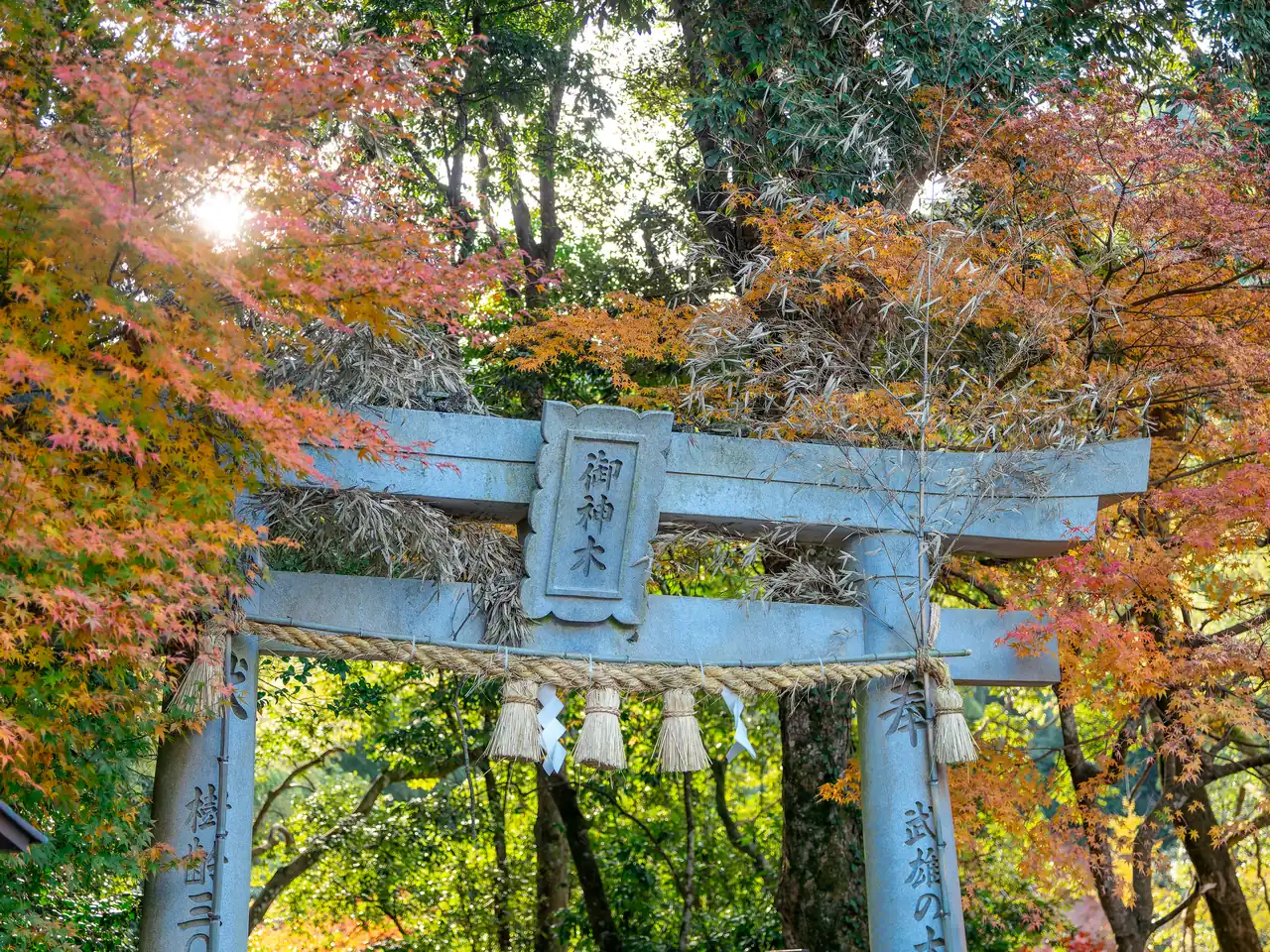
Photo: ©Saga Prefectural Cultural Tourism Federation
Tips for the Autumn Leaves Season
- The peak varies by place and year. Check the foliage updates from local tourism associations and the sites themselves before you go.
- Parking around Kunen-an is limited during the opening period. Taking a bus or taxi from Kanzaki Station makes it easier to avoid traffic jams.
- Ryumonkyo Gorge and Daikozenji Temple are some distance from the station. Decide how you will call a taxi back before you set out.
- Rules for visiting temples, shrines and gardens (such as using tripods) differ from place to place. Follow the signs on site.
Places in this guide
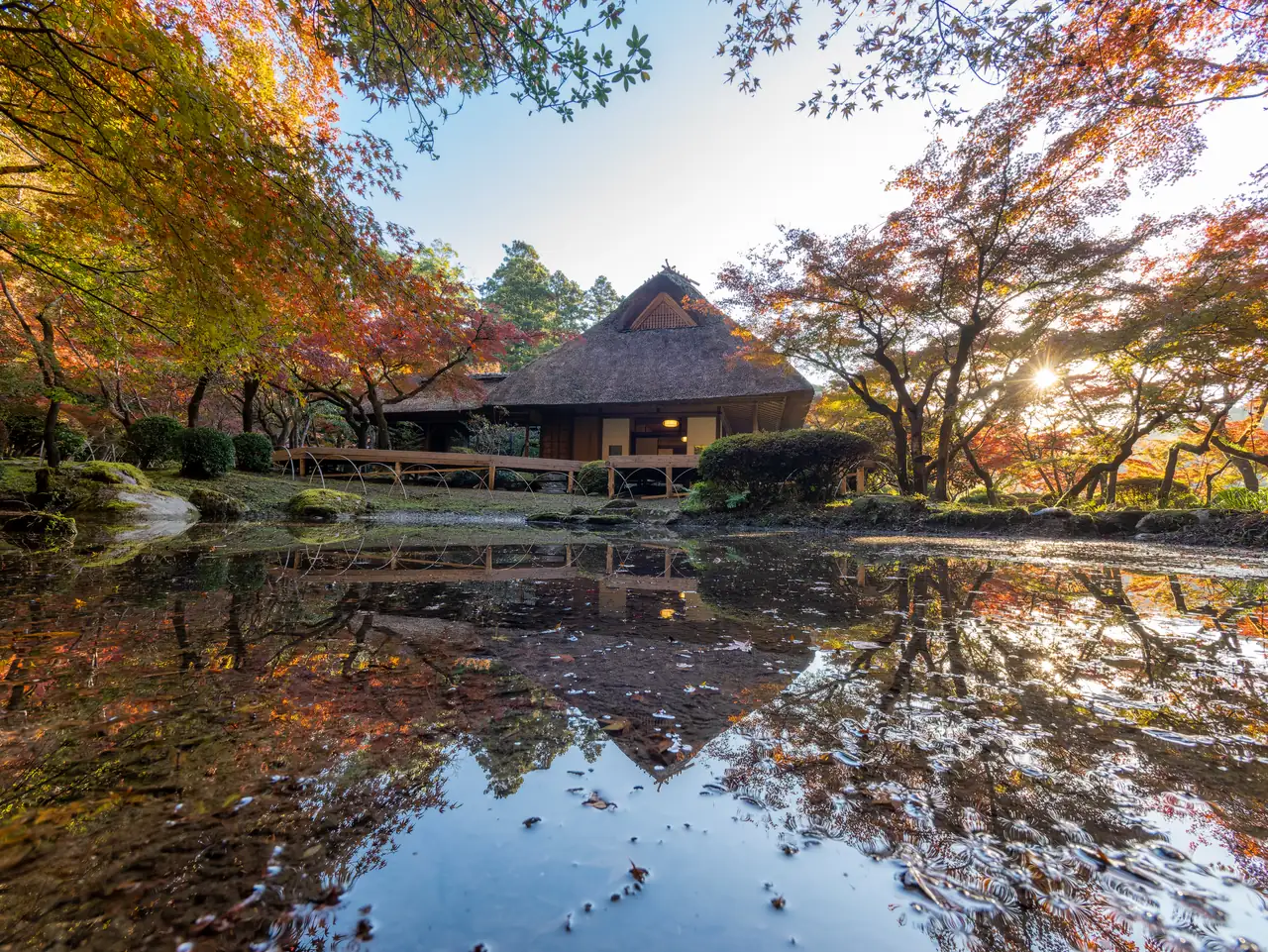
Kunenan
- Photo coming soon
The Great Camphor of Takeo (Takeo Shrine)