Arita Porcelain and Saga Pottery Towns: Arita, Imari, Karatsu
This guide is translated from the Japanese edition. Read the Japanese edition
Arita porcelain and Saga's pottery towns: the Izumiyama quarry, a porcelain torii, Imari's Okawachiyama, a giant Takeo kiln and Karatsu ware.
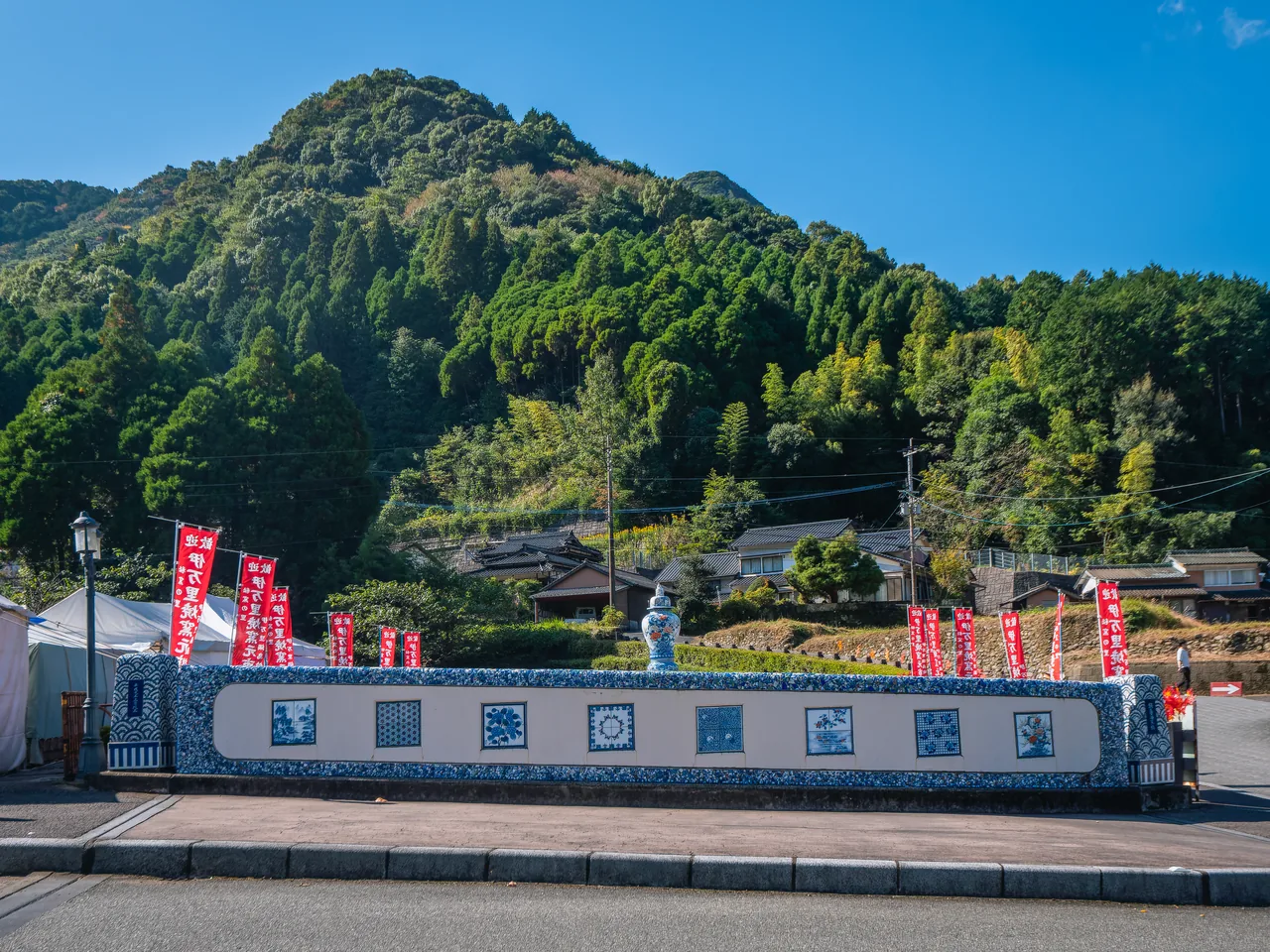
Walk through Arita and you start to notice ceramics everywhere: on bridge railings, on a shrine's torii gate, even in the walls along the lanes. Western Saga Prefecture is where porcelain was first made in Japan, at the start of the Edo period. Kilns still cluster in Arita, Imari, Takeo and Karatsu, and in a day or two you can trace the whole story, from the mountain where the raw stone was dug to the valley that hid the clan's kilns and the shops where you can pick up the pieces. It suits a trip for buying tableware as well as one for wandering old streets.
What is the difference between Arita ware and Imari ware?
Arita ware is the porcelain fired in and around the town of Arita. In the Edo period it was shipped out by boat from the nearby port of Imari, so it was known collectively as "Imari ware" and was exported as far as Europe. Today it is common to call pieces made around Arita "Arita ware" and those made in Imari City "Imari ware." As a national Traditional Craft, it is designated under the name "Imari-Arita ware."
Many pieces are hard white porcelain decorated with indigo underglaze (sometsuke) or overglaze enamels in red, green and gold, and they range from everyday rice bowls to works of art. Karatsu ware, by contrast, is stoneware that makes the most of the clay's texture, so although both are Saga ceramics, they look and feel very different.
Arita Uchiyama: White-Walled Streets and Lanes Lined with Tonbai Walls
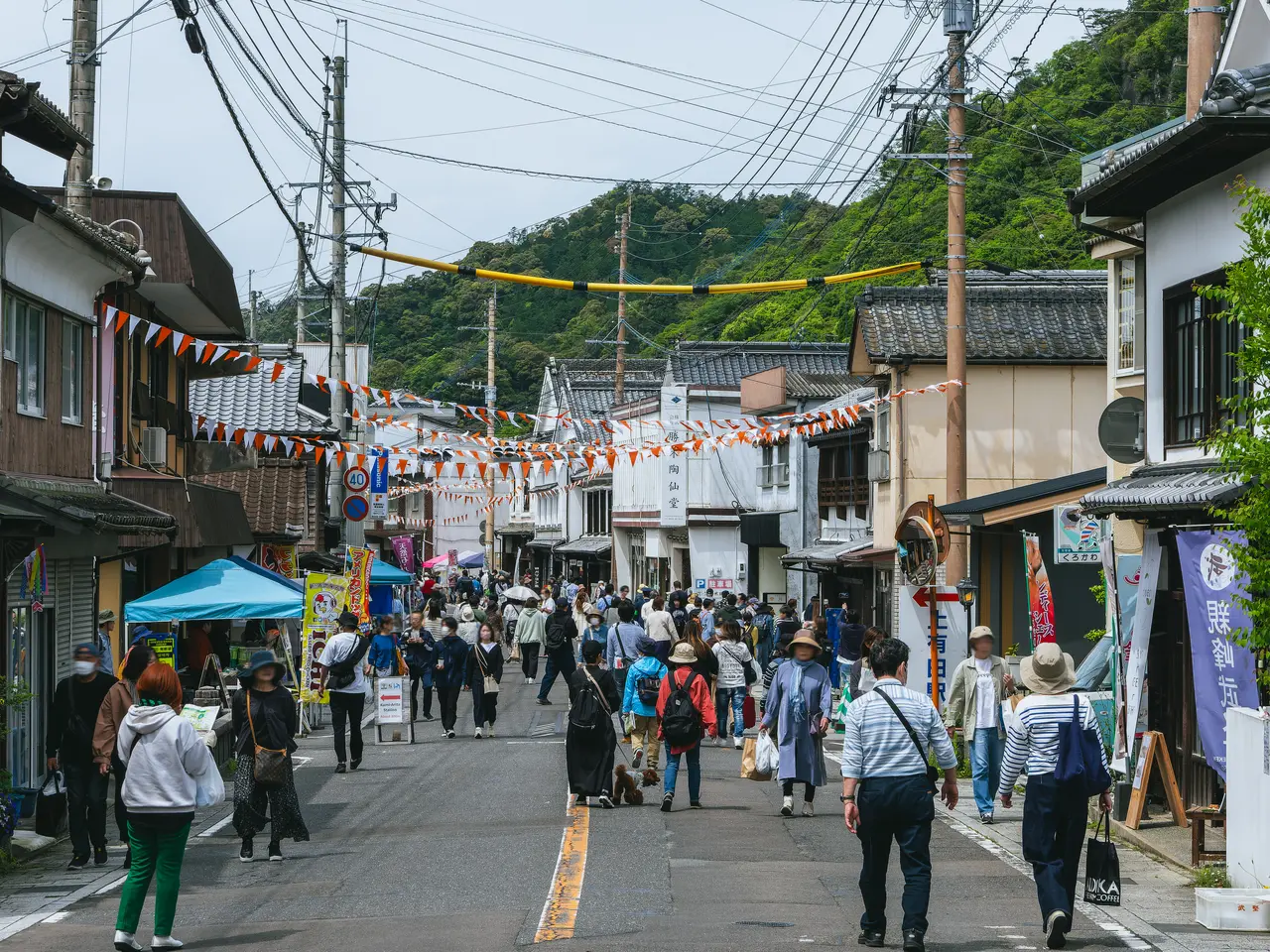
The Uchiyama district, spreading west from JR Kami-Arita Station, has long been the heart of Arita, home to kilns and porcelain merchants. Townhouses with white plaster walls and Western-style buildings remain, and the area is a nationally designated Important Preservation District for Groups of Traditional Buildings. Ceramics shops line the main street, and one block back the atmosphere changes completely.
On the back lanes, look for the "Tonbai walls." They were built from discarded firebricks (tonbai) used to construct climbing kilns, along with single-use kiln tools, set in red clay, so bricks of different colors and shapes are stacked unevenly. It is said that on these back streets, where potters and painters lived, high walls like these surrounded the workshops to keep techniques hidden from outsiders.
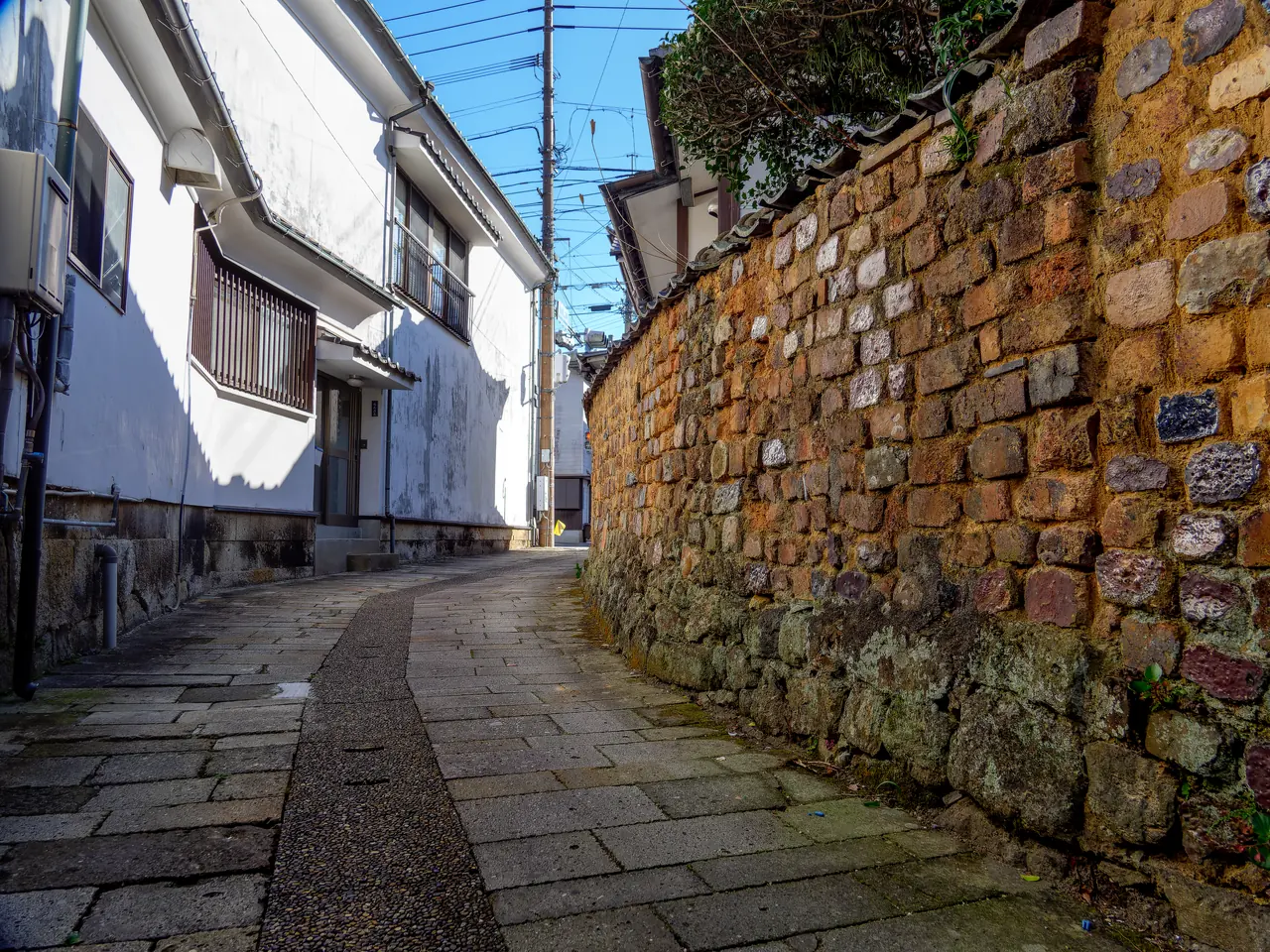
Photo: ©Saga Prefectural Cultural Tourism Federation
Every year from April 29 to May 5, the Arita Ceramics Fair takes over this main street, and the town fills with people hunting for tableware. If you would rather stroll the streets in peace, visit outside the fair.
Sueyama Shrine: A Great Torii Made of Porcelain
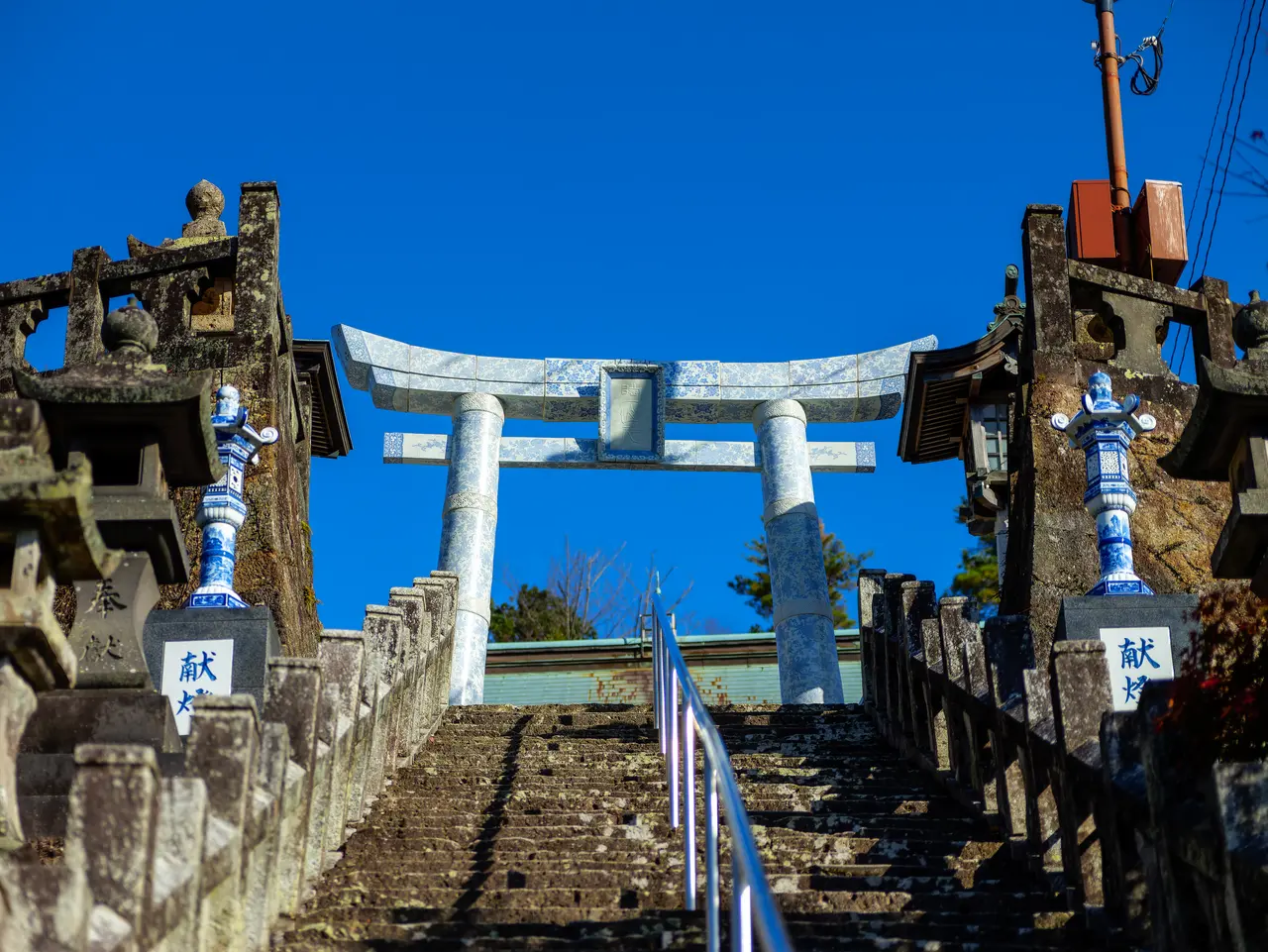
Sueyama Shrine, on a hill in Uchiyama, is a shrine where even the torii gate, the guardian lion-dogs and a large water jar are made of porcelain. The great torii, white porcelain with an arabesque pattern, was donated in the Meiji era and is a Registered Tangible Cultural Property of Japan. Ri Sampei, regarded as the founder of Arita ware, is also enshrined here.
The JR Sasebo Line crosses the approach just before the stone steps, so you walk over a railway crossing and then climb up. From the top you look down over Arita's townscape, ringed by mountains.
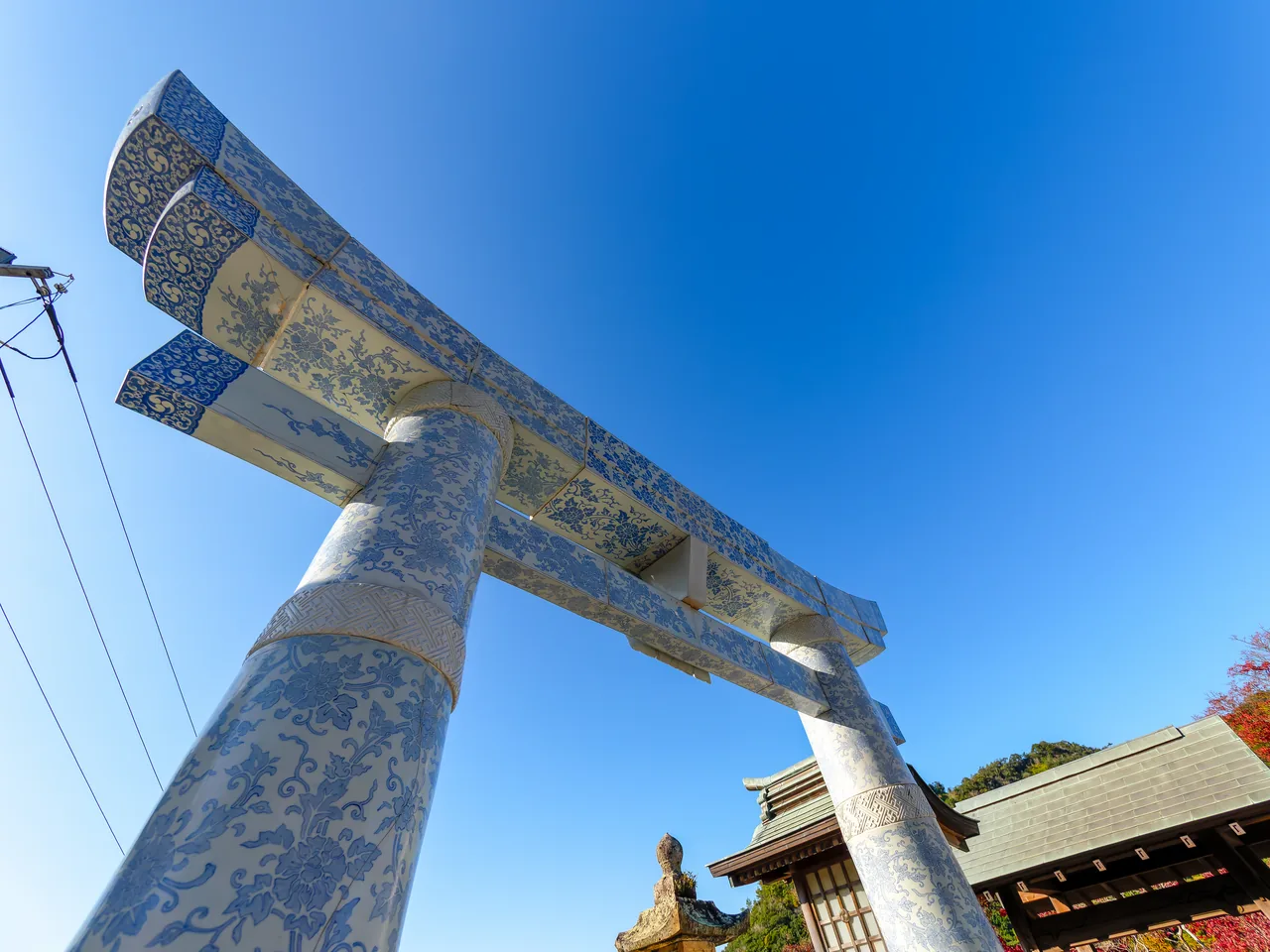
Photo: ©Saga Prefectural Cultural Tourism Federation
Izumiyama Quarry: Where Japanese Porcelain Began
Izumiyama Quarry, near Kami-Arita Station, is the site where the porcelain stone used for Arita ware was dug. At the start of the Edo period, Ri Sampei (Kanagae Sanbei), a potter from the Korean Peninsula, and his group are said to have found porcelain stone here, and porcelain was fired in Japan for the first time (the year is given as 1616). The bare white rock faces of the hill are the marks of porcelain stone dug here over a very long time. Quarrying has stopped, and you view the site from outside the fence.
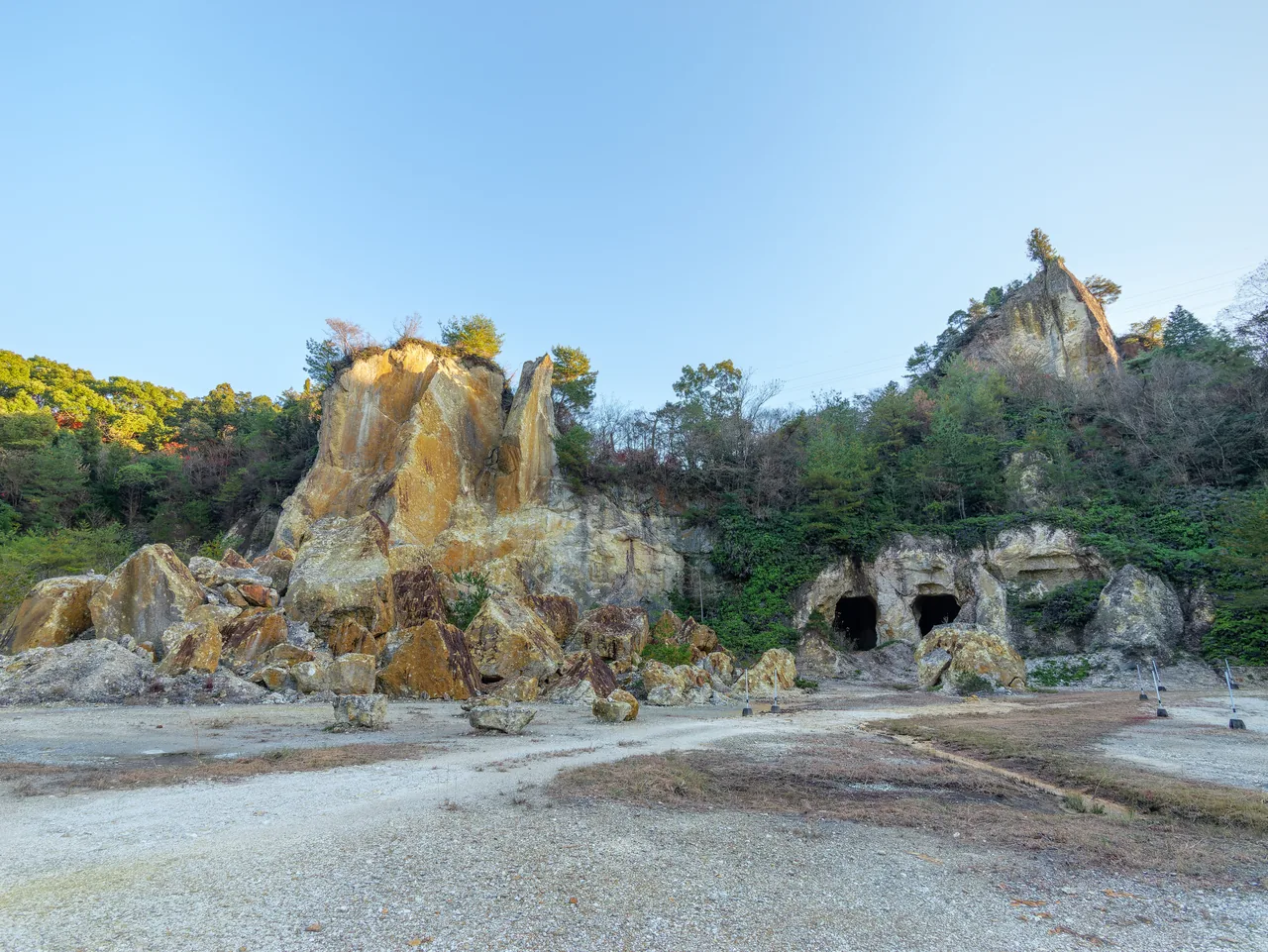
Photo: ©Saga Prefectural Cultural Tourism Federation
Okawachiyama: Imari's "Village of Secret Kilns"
Okawachiyama, in the hills south of central Imari, is where the Saga (Nabeshima) domain set up its official kilns in the Edo period. They fired "Nabeshima" porcelain to present to the shogun and other lords, and the way in was guarded by a checkpoint so the techniques would not leak out, which is why it is called the "village of secret kilns." The site of the domain kilns is a national historic site.
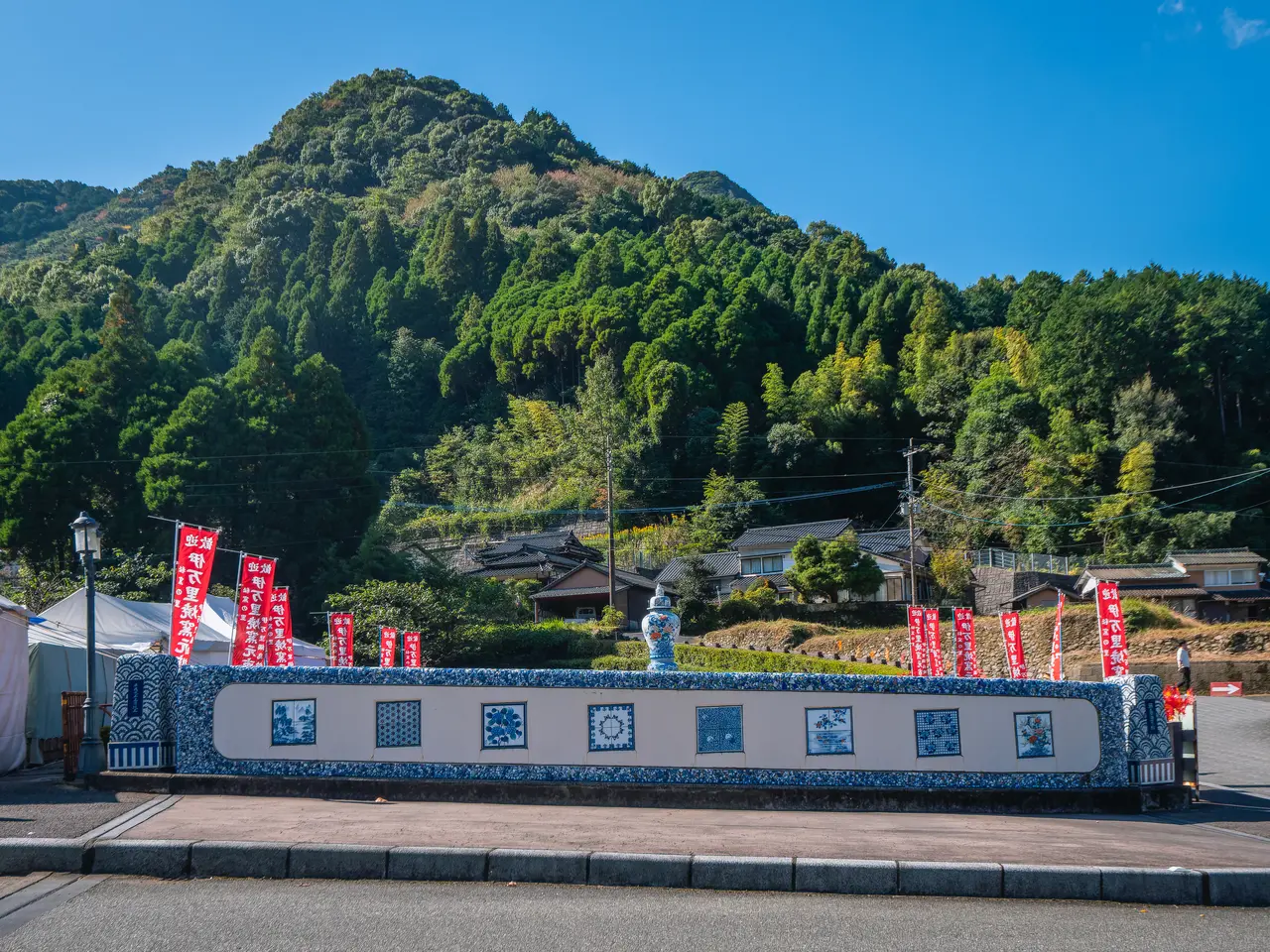
Against a backdrop of sheer rock peaks, around 30 kilns have workshops and shops along a stone-paved slope. The bridge near the entrance is decorated with ceramic tiles. In summer, the Furin Festival hangs porcelain wind chimes from the eaves.
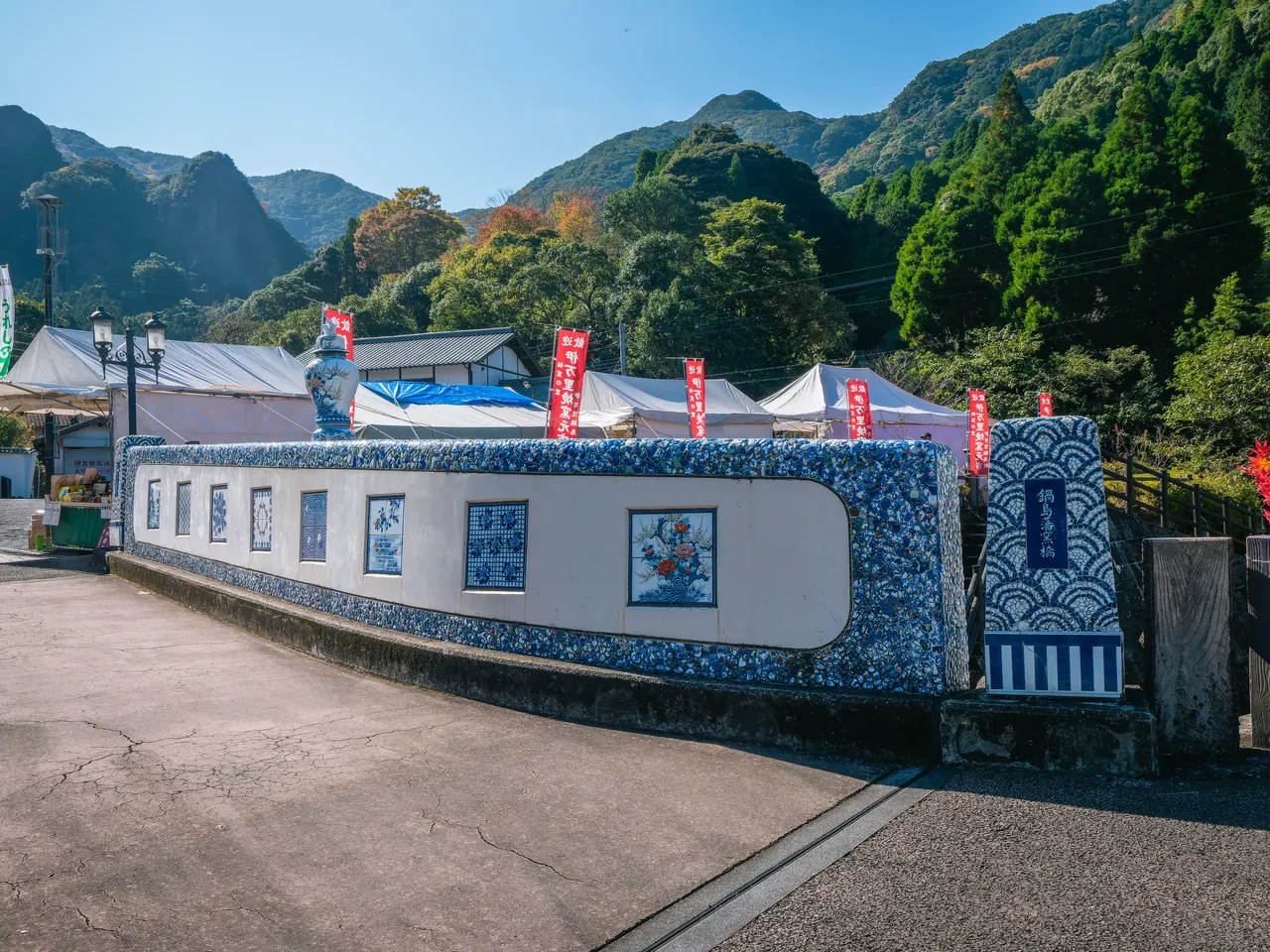
Photo: ©Saga Prefectural Cultural Tourism Federation
Buses run to Okawachiyama from Imari Station (JR and Matsuura Railway), but they are not frequent. Check the return times first, or take a taxi to make the visit easier.
Hiryugama: Takeo's Giant Climbing Kiln
Takeo City, Arita's neighbor to the east, is also a pottery area. Hiryugama, in Takekoba Kiln no Mori Park in Takeuchi-machi, Takeo, is a large climbing kiln with four firing chambers stepping up a slope, 23 meters long in total. It can fire about 120,000 teacups at once. The photo below shows the inside of the kiln, with pieces lined up in a firing chamber that feels like a brick tunnel. At Hiryugama Kobo next door you can try pottery such as wheel throwing (check bookings and dates with the Takeo City Tourism Association).
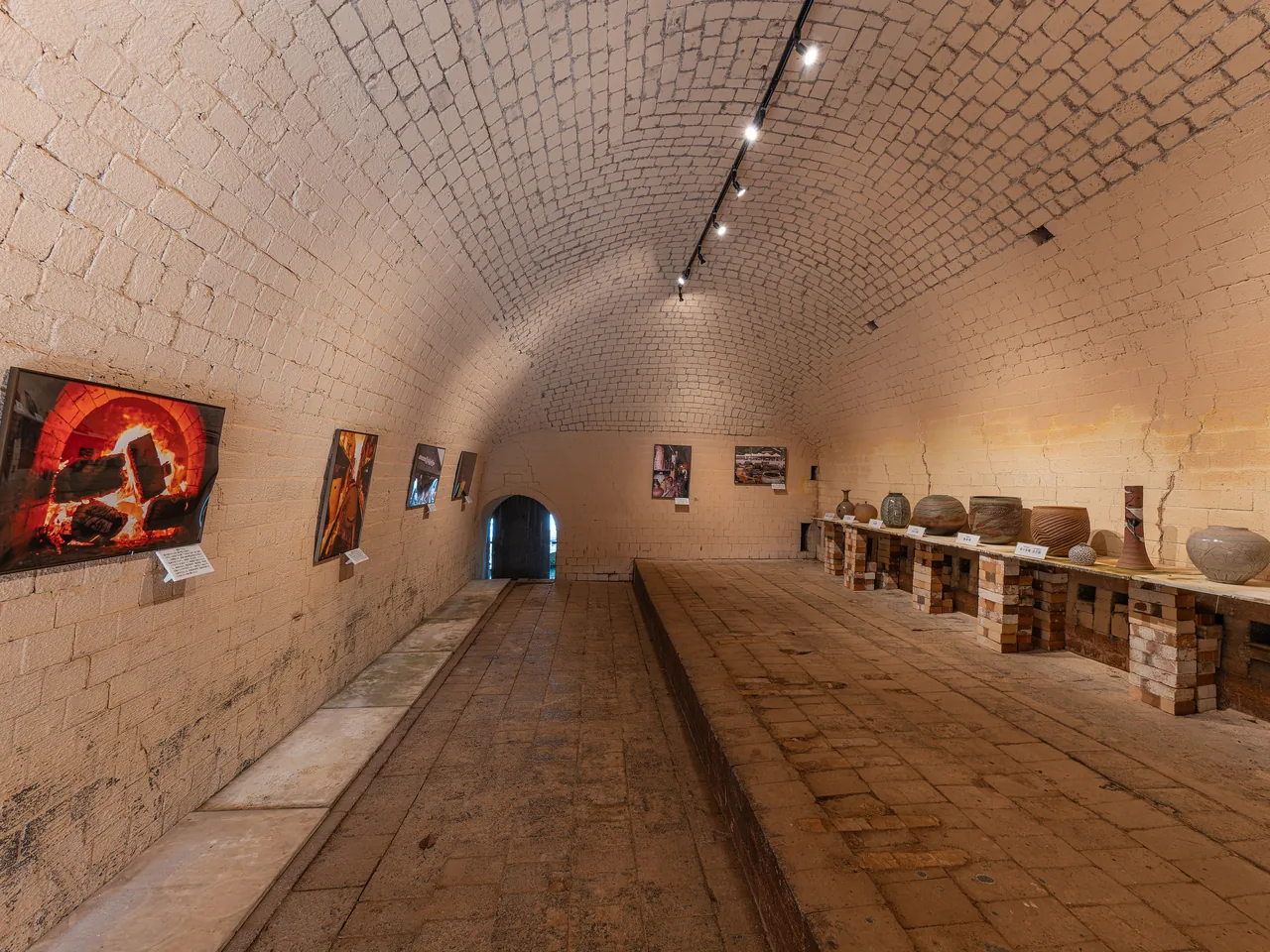
Photo: ©Saga Prefectural Cultural Tourism Federation
Karatsu Ware: Stoneware That Shows Off the Clay
In contrast to the porcelain of Arita and Imari, Karatsu ware from northern Saga is stoneware that brings out the color and feel of the clay. It has long been prized for tea bowls in the world of the tea ceremony. Styles include "E-Garatsu," simple shapes with plants painted in iron oxide, and it was designated a national Traditional Craft in 1988.
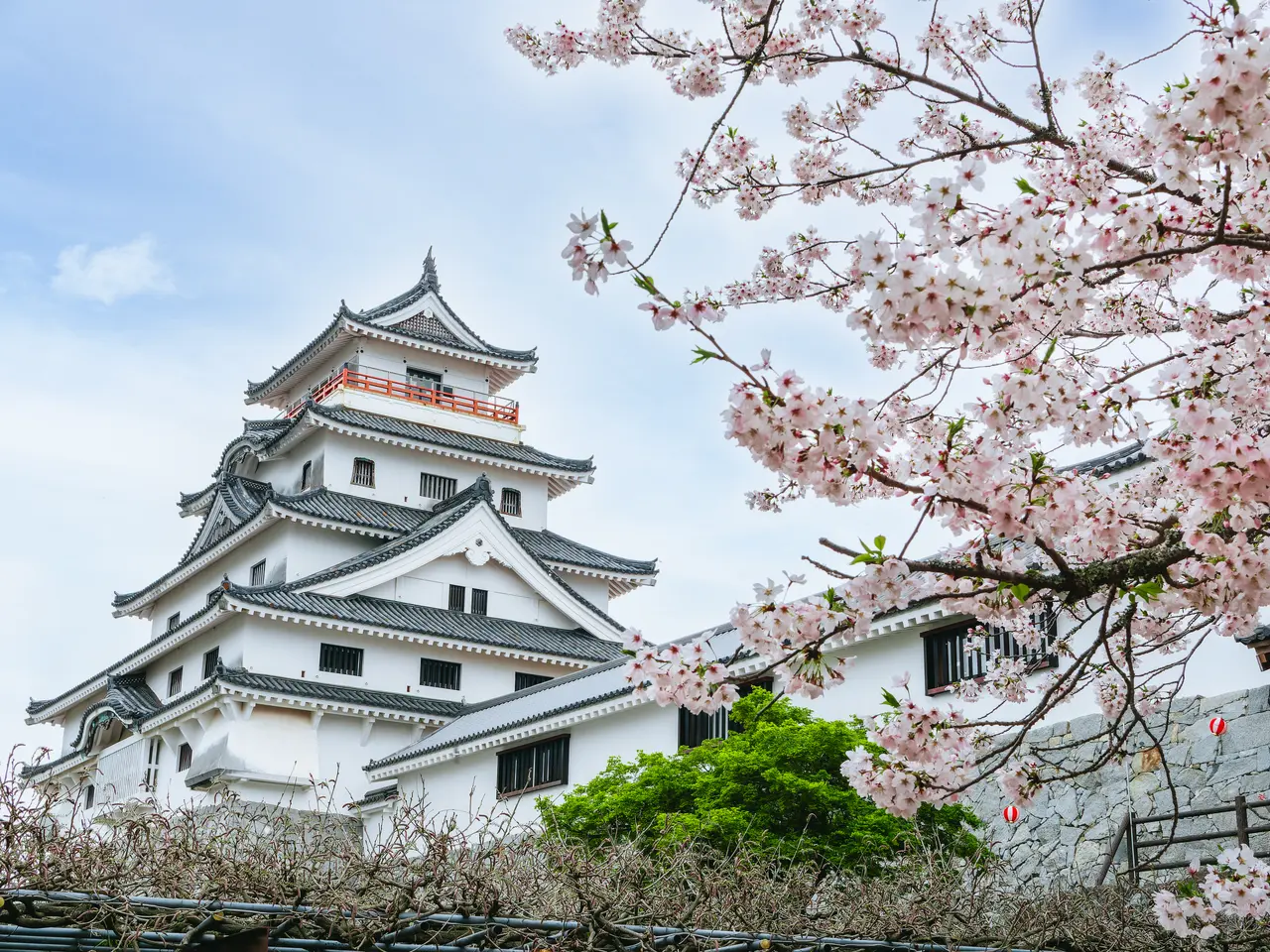
Kilns are scattered through Karatsu City and the surrounding area, and some have galleries attached to the workshop where you can handle the pieces. It pairs well with a walk around Karatsu Castle and the old castle town.
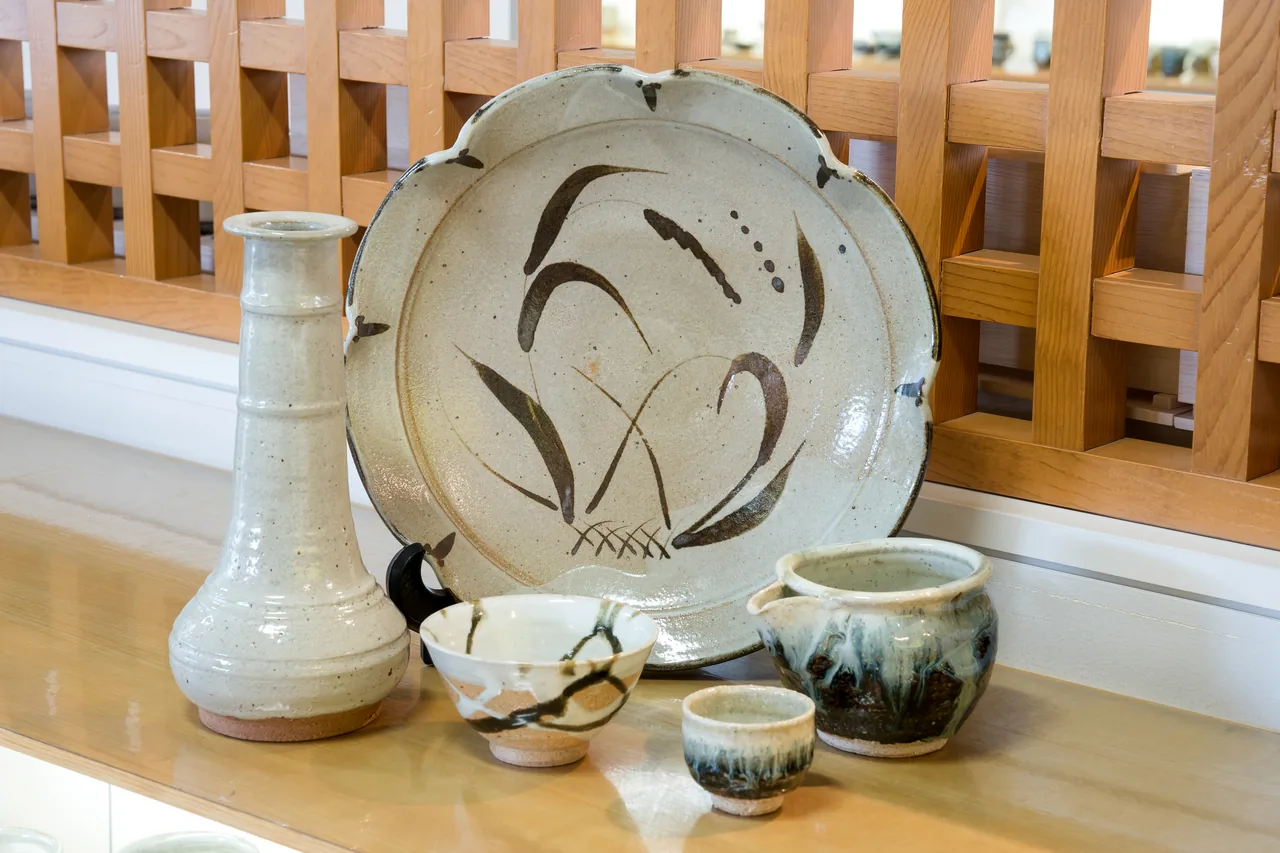
Photo: ©Saga Prefectural Cultural Tourism Federation
Getting Around and Taking Pottery Home
- From Hakata, JR limited express trains run to Takeo-Onsen and Arita. Central Arita can be explored on foot between Kami-Arita and Arita stations.
- Arita and Imari are linked by the Matsuura Railway, but Okawachiyama and Hiryugama need a bus or taxi from the station. Rather than trying to see everything in one day, splitting it up, say Arita and Imari on one day and Takeo and Karatsu on another, leaves time to spare.
- Many kilns and workshops are run by a few people, and their days off vary. If you hope to tour or try a workshop, get in touch in advance.
- Have fragile items wrapped at the shop and carry them in your hand luggage. If you buy a lot, ask whether the shop can ship to your hotel or home. Whether overseas shipping is possible depends on the shop.
- Besides the spring fair, the Arita Autumn Ceramics Festival is held in autumn.