Saitama Spring Day Trip by Tobu Line: Cherry, Wisteria and Kites
This guide is translated from the Japanese edition. Read the Japanese edition
Ride the Tobu line from Asakusa to eastern Saitama for Gongendo's cherry blossoms, the Ushijima wisteria, Kasukabe's giant kite and Kazo's 100 m carp streamer.
Ride a Tobu train north from Asakusa for about an hour and the view turns to farmland and the high levees of big rivers. Eastern Saitama Prefecture is flat country bounded by the Tone and Edo rivers. In spring it puts on a run of sights you won't find elsewhere, from March to May: cherry trees and rapeseed blossoms along a levee, a wisteria said to be 1,200 years old, giant kites in the sky and a 100-meter carp streamer swimming above the river. All of them are a day trip from Tobu stations.
Tobu lines to eastern Saitama: where to get off and where to change
The Tobu line running north from Asakusa and Tokyo Skytree stations is called the Tobu Skytree Line between Asakusa/Oshiage and Tobu-Dobutsu-Koen Station. Beyond that it splits into the Isesaki Line toward Kazo and Hanyu and the Nikko Line toward Satte and Minami-Kurihashi. At Kasukabe Station you can also change to the Tobu Urban Park Line, which links Omiya and Funabashi.
| Destination | Get off at | Line | Changes |
|---|---|---|---|
| Gongendo Embankment | Satte | Nikko Line | No change on trains bound for Minami-Kurihashi; otherwise change at Tobu-Dobutsu-Koen or elsewhere |
| Ushijima wisteria | Fujino-Ushijima | Tobu Urban Park Line | Change at Kasukabe |
| Kasukabe Giant Kite Festival | Minami-Sakurai | Tobu Urban Park Line | Change at Kasukabe; special bus from the station |
| Kazo giant koinobori and Kazo udon | Kazo | Isesaki Line | Some trains require a change at Kuki or elsewhere |
Through trains from the Tokyo Metro Hanzomon Line also run onto the Tobu Skytree Line at Oshiage; the through express and semi-express trains go as far as Kuki or Minami-Kurihashi. Check the change for each destination in Tobu's route search.
Late March to early April: cherry blossoms and rapeseed at Gongendo
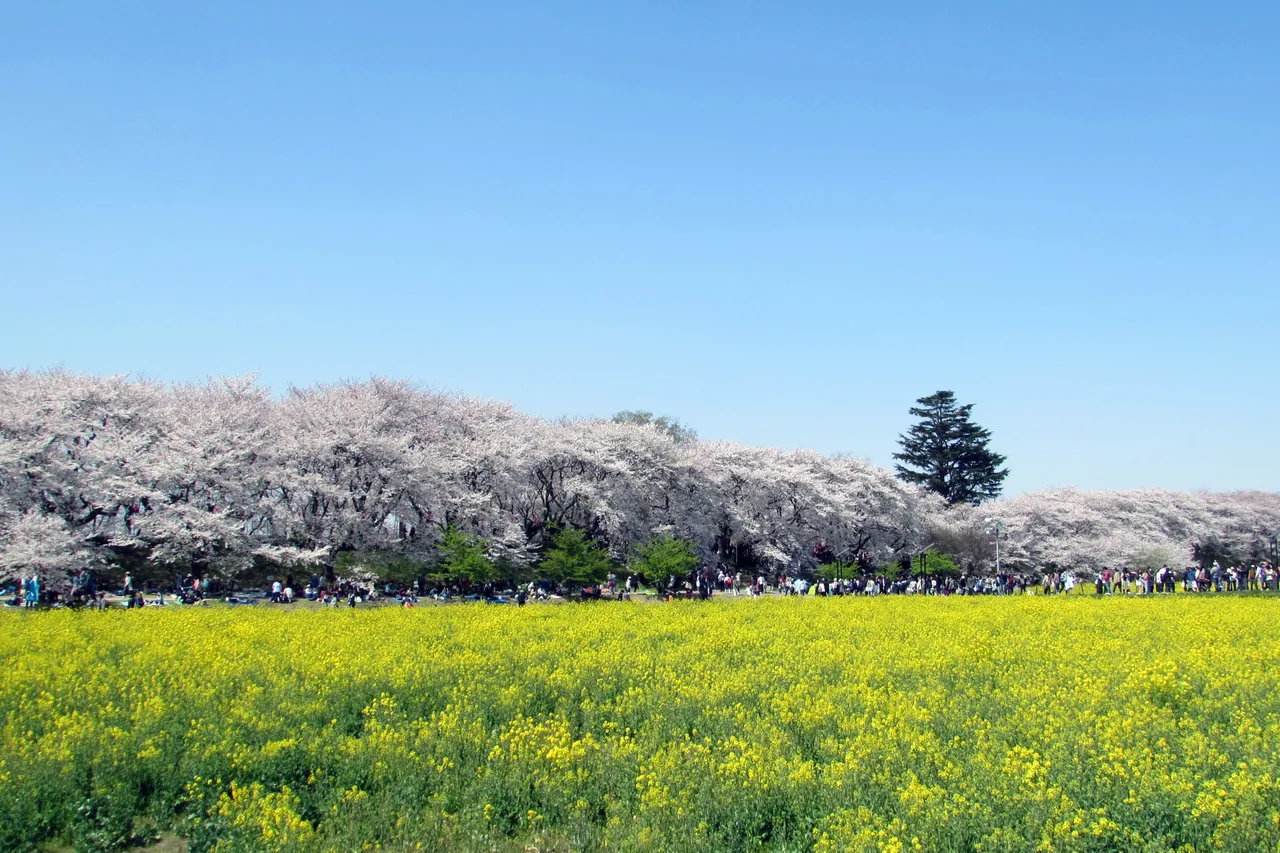
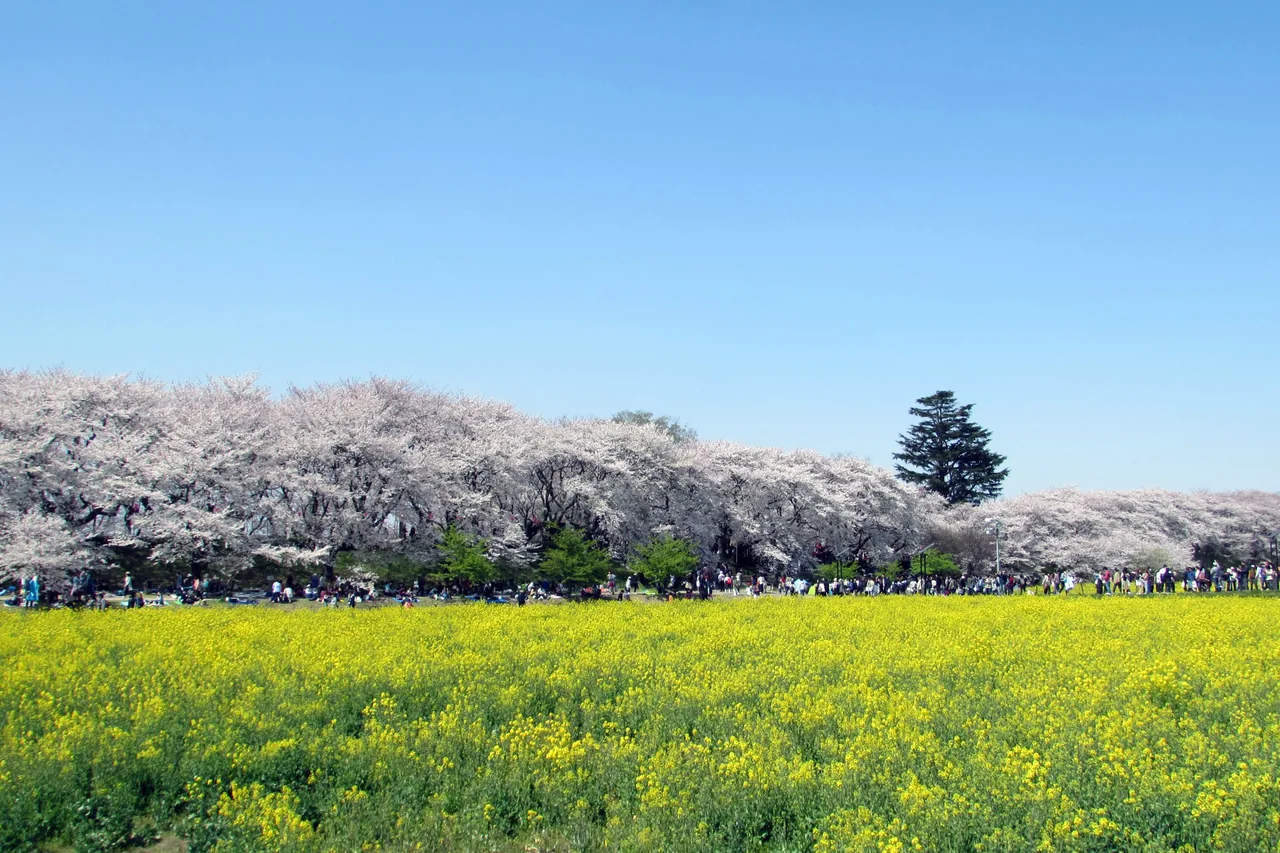
At Gongendo Embankment (Gongendo Park) in Satte, about 1,000 Somei-Yoshino cherry trees line a levee roughly 1 km long. Below the levee spread fields of rapeseed, and the pink of the cherries layered over the yellow of the rapeseed is what the place is known for. The Satte Sakura Festival is held during the bloom.
It is about 2.5 km, or roughly a 30-minute walk, from Satte Station. You can also take an Asahi Bus from Satte Station bound for Goka Town Hall (五霞町役場) and get off at Gongendo-iriguchi. Roads around the park jam during the festival, so the train is the reliable choice. Bloom updates are on the flower information page of Gongendo Park's official site.
Mid-April to early May: the Ushijima wisteria
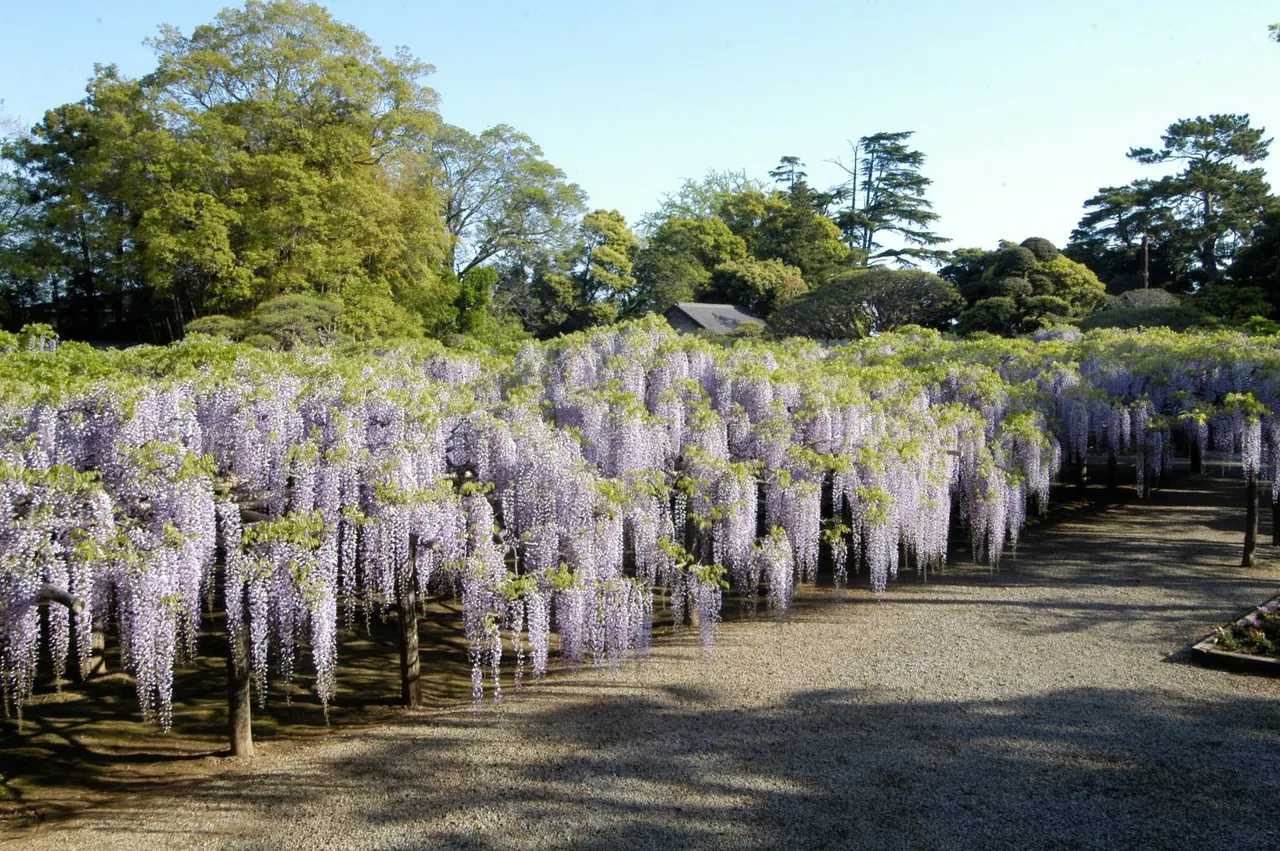
The Ushijima wisteria in Kasukabe is estimated to be 1,200 years old and is designated a Special Natural Monument of Japan. Kasukabe City gives its trunk circumference as over 4 m. At their peak, the long flower clusters hanging from the trellis seem almost to reach the ground. When the flowers peak varies from year to year.
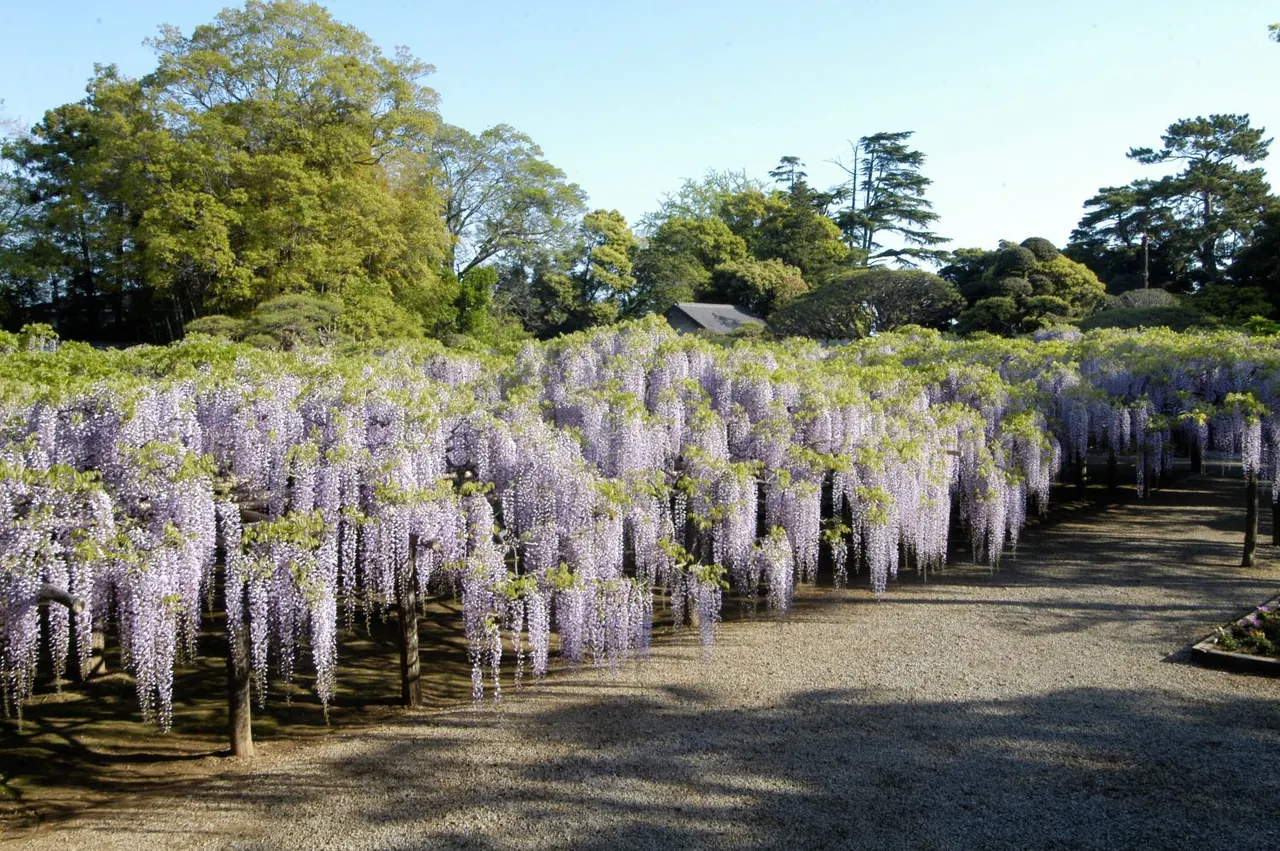
Photo: Saitama Prefecture Products & Tourism Association / Reproduction/Reprint prohibited
The Tokaen garden where the wisteria grows opens only during the bloom. In 2026 it was open from April 11 to May 3, 8 a.m. to 5 p.m., with an admission fee. The next year's dates are announced by Kasukabe City. The nearest station is Fujino-Ushijima, one stop from Kasukabe on the Tobu Urban Park Line.
May 3 and 5: the Kasukabe Giant Kite Festival
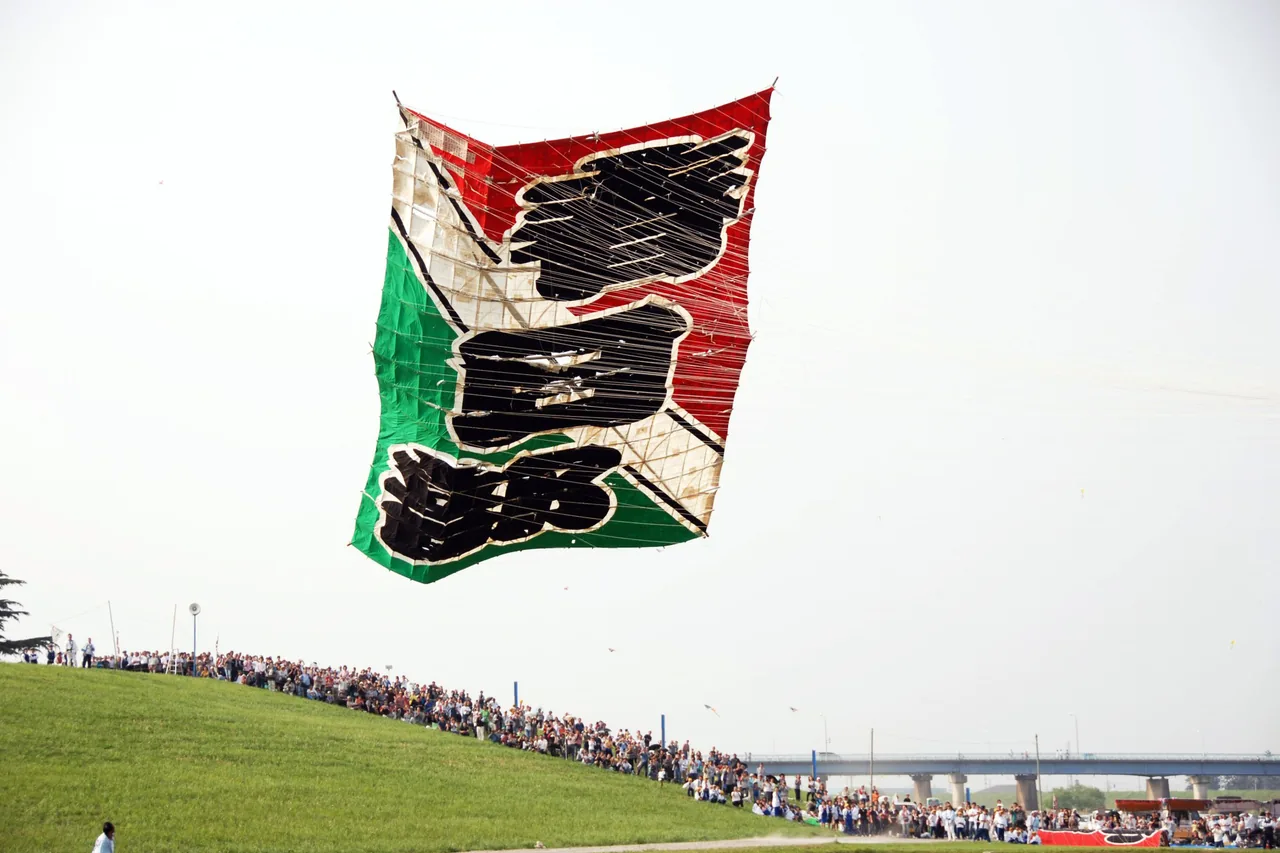
At the Kasukabe Giant Kite Festival, held on the Edo River floodplain every year on May 3 and 5, a giant kite 15 m tall, 11 m wide and weighing about 800 kg is flown. It takes more than 100 people to pull it. When it catches the wind and lifts, a roar goes up from the riverbank.
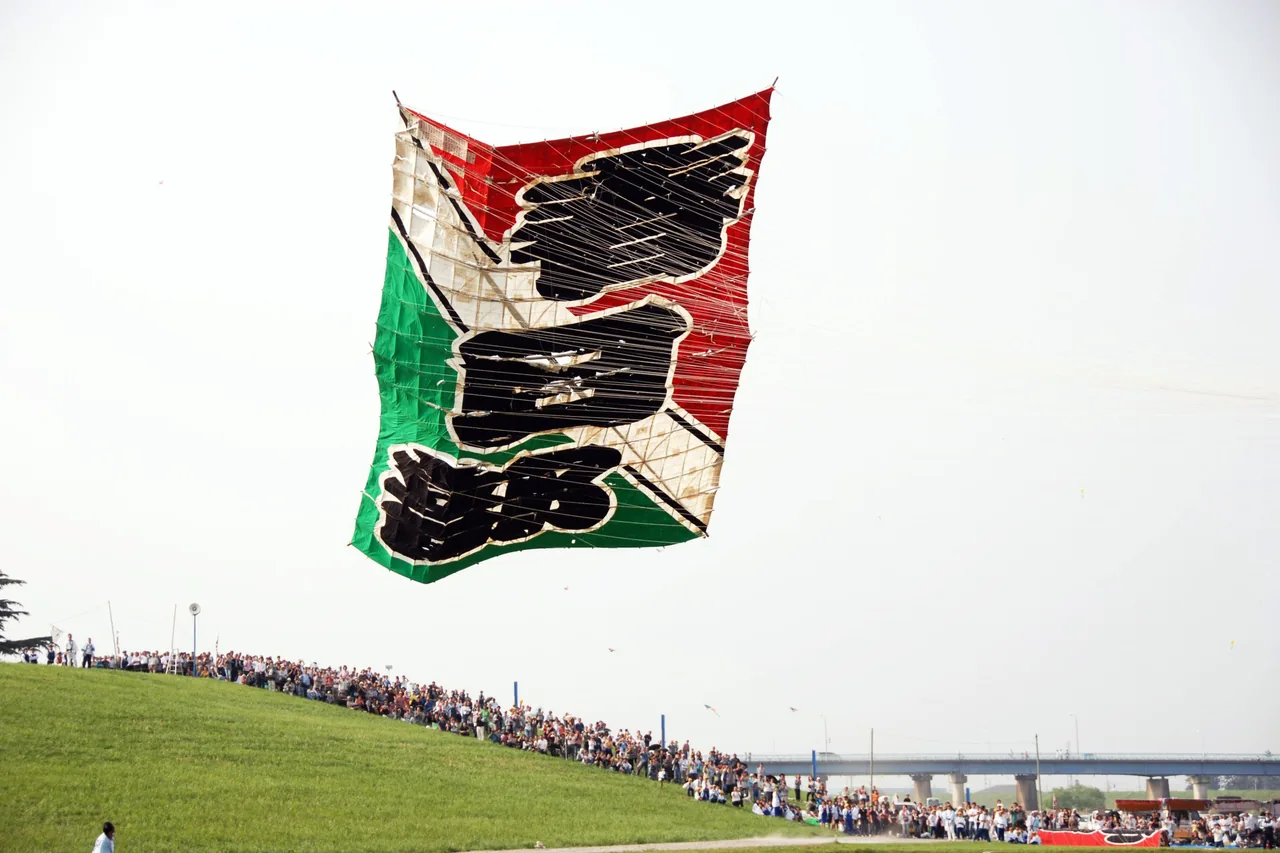
Photo: Saitama Prefecture Products & Tourism Association / Reproduction/Reprint prohibited
The festival is said to have begun in 1841, when Joshin, a monk from Dewa Province, flew a kite to divine the year's silkworm cocoon harvest. Today it is a prayer for the healthy growth of children celebrating their first Boys' Day. A direct bus runs only on festival days from the north exit of Minami-Sakurai Station and takes about 15 minutes. If rain or wind cancels the festival, check Kasukabe City's information for the backup date.
Around May 3: the Kazo giant koinobori
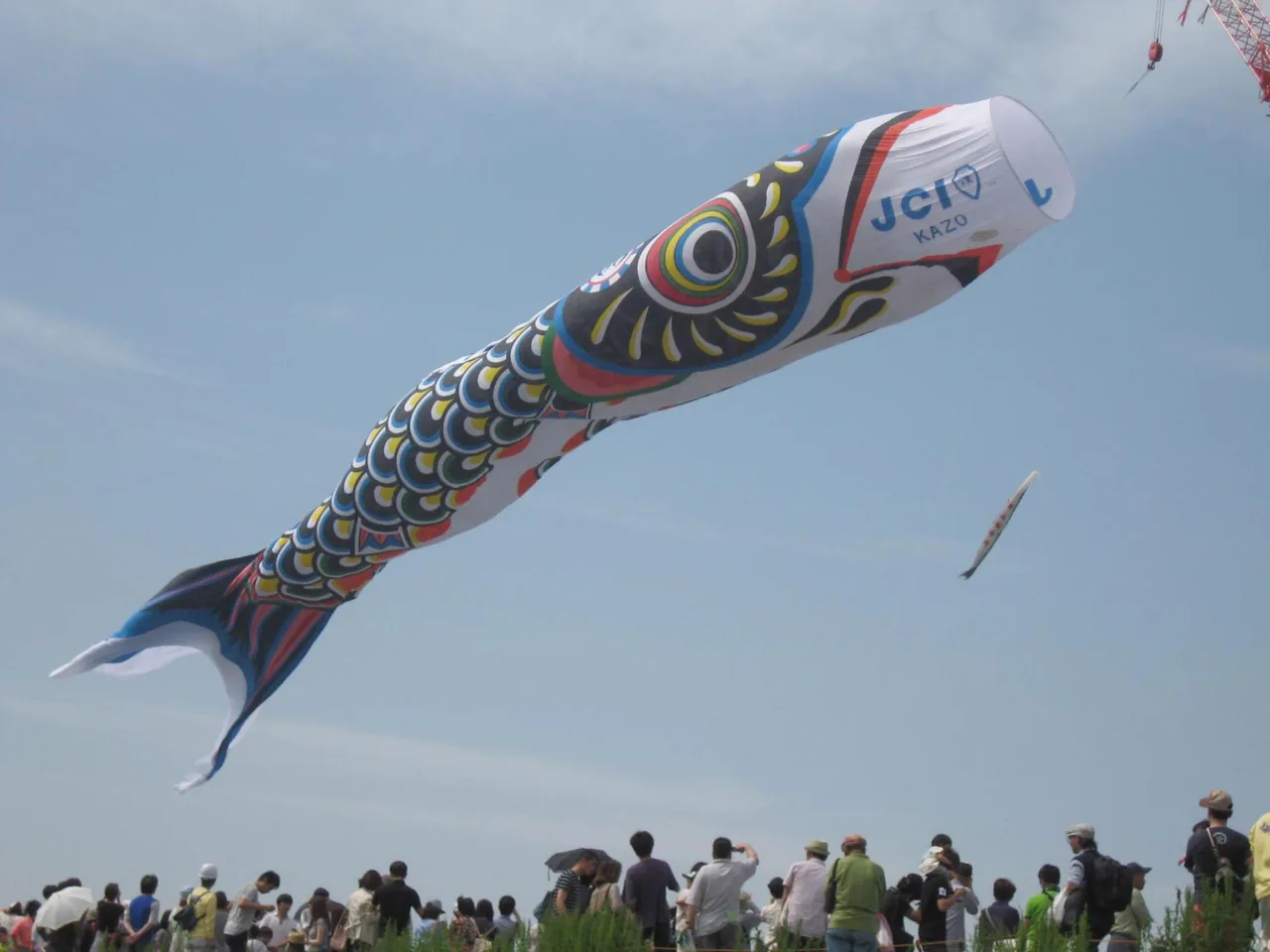
Kazo was once a busy center for making koinobori, the carp streamers flown for Children's Day. At the Kazo Citizens' Peace Festival, usually held around May 3, the 100-meter giant koinobori swims in the sky over the Tone River floodplain. In 2026 the festival was held on May 3 and the streamer was raised twice, at 11:00 and 13:30.
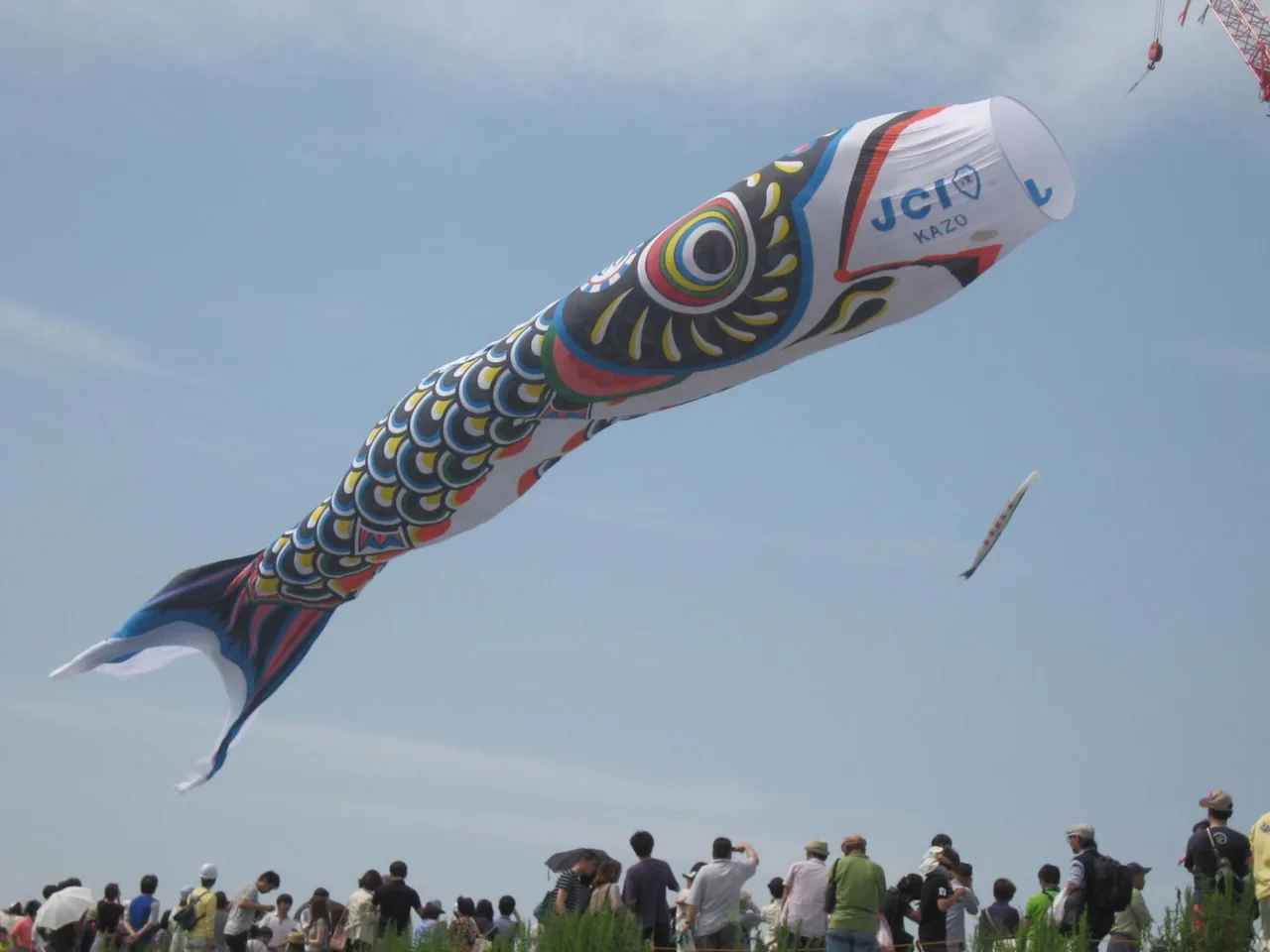
Photo: Saitama Prefecture Products & Tourism Association / Reproduction/Reprint prohibited
In 2026, free shuttle buses ran to the venue, Tone River Floodplain Green Park, from the north exit of Tobu Kazo Station and from the west exits of the Tobu and JR Kurihashi stations. Around the times the streamer goes up, the buses can be too full to board, so head out early. The event can be delayed or cancelled by weather, and whether it goes ahead is announced on Kazo City's official website on the morning of the day.
Lunch in Kazo: hand-made udon
In Kazo, make lunch hand-made udon. According to Kazo City, the town's udon shops are said to have begun about 300 years ago, when noodles were served to worshippers in front of Sogan-ji Temple in Fudooka. The dough is trodden by foot and rested about twice as many times as usual, giving the noodles a firm bite and a smooth slurp. Some shops change the noodle width with the season.
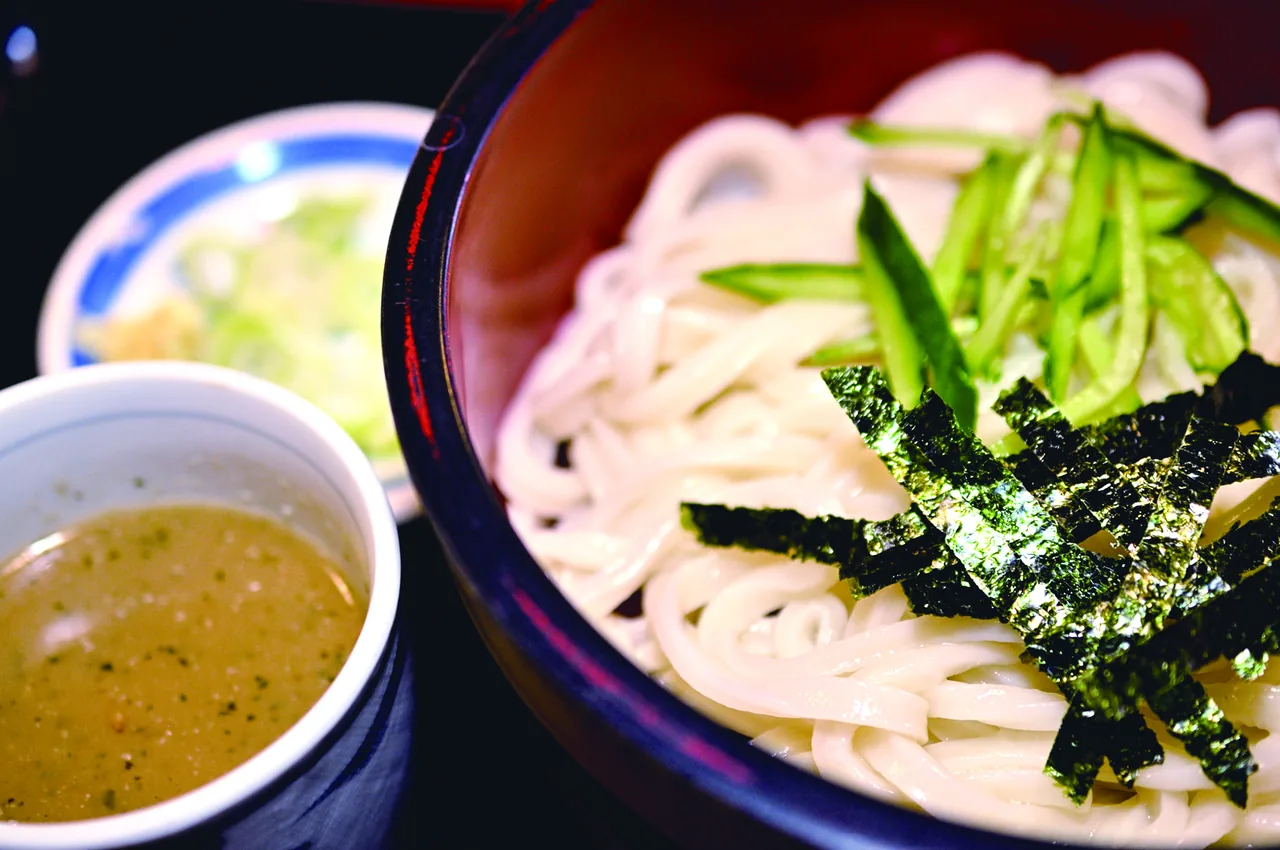
Photo: Saitama Prefecture Products & Tourism Association / Reproduction/Reprint prohibited
Kazo is only one of Saitama's udon towns. See also our guide to Saitama udon.
Planning a spring day
The flowers and festivals fall at slightly different times, so choose by the date you go.
- Late March to early April: Gongendo Embankment in Satte. Walk the levee in the morning to get photos before the crowds
- Mid-April to early May: the Ushijima wisteria in Kasukabe. It is just one change at Kasukabe, so half a day is enough
- May 3: see the Kazo koinobori at 11:00, have Kazo udon for lunch, then go to the Kasukabe kite festival in the afternoon
- May 5: the Kasukabe Giant Kite Festival
If you want to explore Asakusa or Oshiage before boarding, see our Tokyo Skytree and Oshiage guide; to continue up the Tobu line to Nikko, see the Nikko day trip.