
Saitama Udon Guide: Musashino Udon, Nikujiru Udon and Kazo Udon
This guide is translated from the Japanese edition. Read the Japanese edition
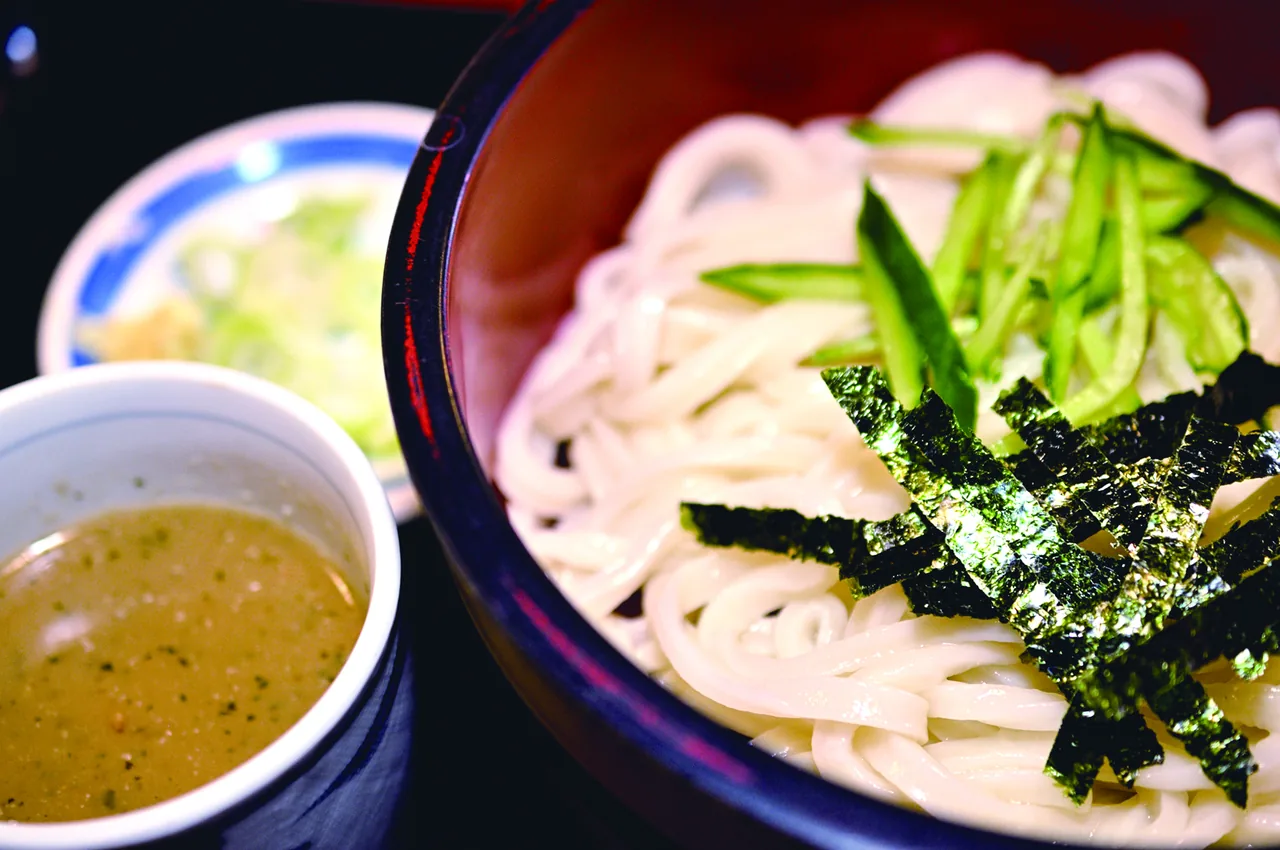
Thick Musashino udon dipped in hot pork broth, 300-year-old Kazo udon, green Sayama tea udon and wide kawahaba udon: Saitama's udon styles and where to eat them.
The noodles piled on the bamboo tray feel heavy when you lift them with your chopsticks, and they have a faint brown tint. You dip them in a hot broth with pork and green onion and eat. Order udon in western Saitama and this is what many shops will bring you. Saitama was long a wheat-growing area, and towns across the prefecture have their own kind of udon. Knowing which town serves which udon makes it a little more fun to choose where to go on a day trip from Tokyo.
What kinds of udon does Saitama have?
Here are the best-known udon styles in the prefecture.
| Name | Main area | What it's like |
|---|---|---|
| Musashino udon | Western Saitama (around Tokorozawa, Iruma, Kawagoe) and the Tama area of Tokyo | Thick, firm noodles, usually eaten cold with a hot dipping broth |
| Nikujiru udon | Musashino udon shops | The classic way to eat Musashino udon, dipped in a hot broth simmered with pork and green onion |
| Kazo udon | Kazo City (eastern Saitama) | Hand-made udon trodden and rested many times for a firm bite and smooth texture |
| Sayama tea udon | Sayama, Iruma and nearby | Green noodles made with Sayama tea |
| Kawahaba udon | Konosu City | Broad, flat noodles |
They are all "udon," but noodle thickness, texture and the way you eat them vary a lot. If you are picturing the smooth, soft noodles of Sanuki udon, the chew of Musashino udon may surprise you.
Musashino udon and nikujiru udon
Musashino udon has long been eaten on the Musashino plateau, which stretches from western Saitama into the Tama area of Tokyo. The noodles are thick and rough on the surface, with a firmness that needs real chewing. At many shops the noodles also look slightly brown.
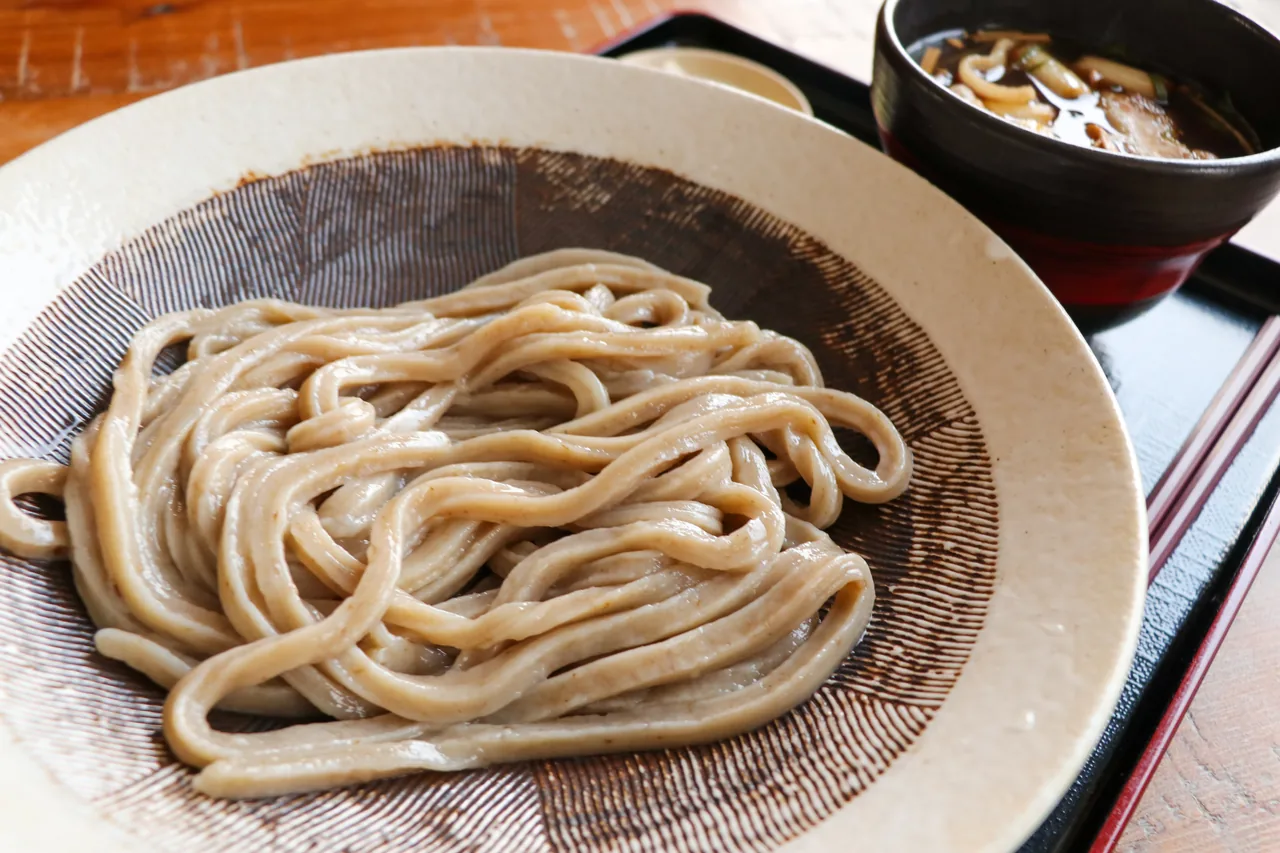
Photo: Saitama Prefecture Products & Tourism Association / Reproduction/Reprint prohibited
The best-known way to eat it is nikujiru udon: cold noodles dipped in a hot broth simmered with pork and green onion. Some shops serve it with boiled greens or other vegetables on the side. Portions can be large, so at a new shop it is safest to order the regular size first.
Kazo udon: temple-gate noodles with a 300-year history
Kazo, in eastern Saitama, has made udon its local specialty. According to Kazo City, its hand-made udon shops are said to have begun about 300 years ago, when noodles were served to worshippers in front of Sogan-ji Temple in Fudooka. The dough is trodden by foot and rested about twice as many times as usual, which gives the noodles a firm bite and a smooth slurp. Some shops change the noodles by season, thinner in summer and wider in winter.
Sogan-ji keeps a letter of thanks from the lord of Tatebayashi Castle for a gift of Kazo's udon flour, and Kazo City has named June 25, the date on the letter, "Kazo City Udon Day." Kazo Station is on the Tobu Isesaki Line, an easy day trip from Asakusa. To reach Sogan-ji, take a local bus bound for Kazo Shako from the north exit of Kazo Station and walk about 3 minutes from the last stop. Walking the temple grounds before a bowl of udon at the gate shows you where Kazo udon came from. In spring, our Saitama spring by Tobu line guide shows how to combine it with the giant koinobori, usually flown around May 3.
Sayama tea udon and kawahaba udon
Western Saitama is also where Sayama tea is grown. Sayama tea udon has the tea kneaded into the noodles, which turn bright green when boiled. Eaten cold on a bamboo tray, the color and aroma come through best.
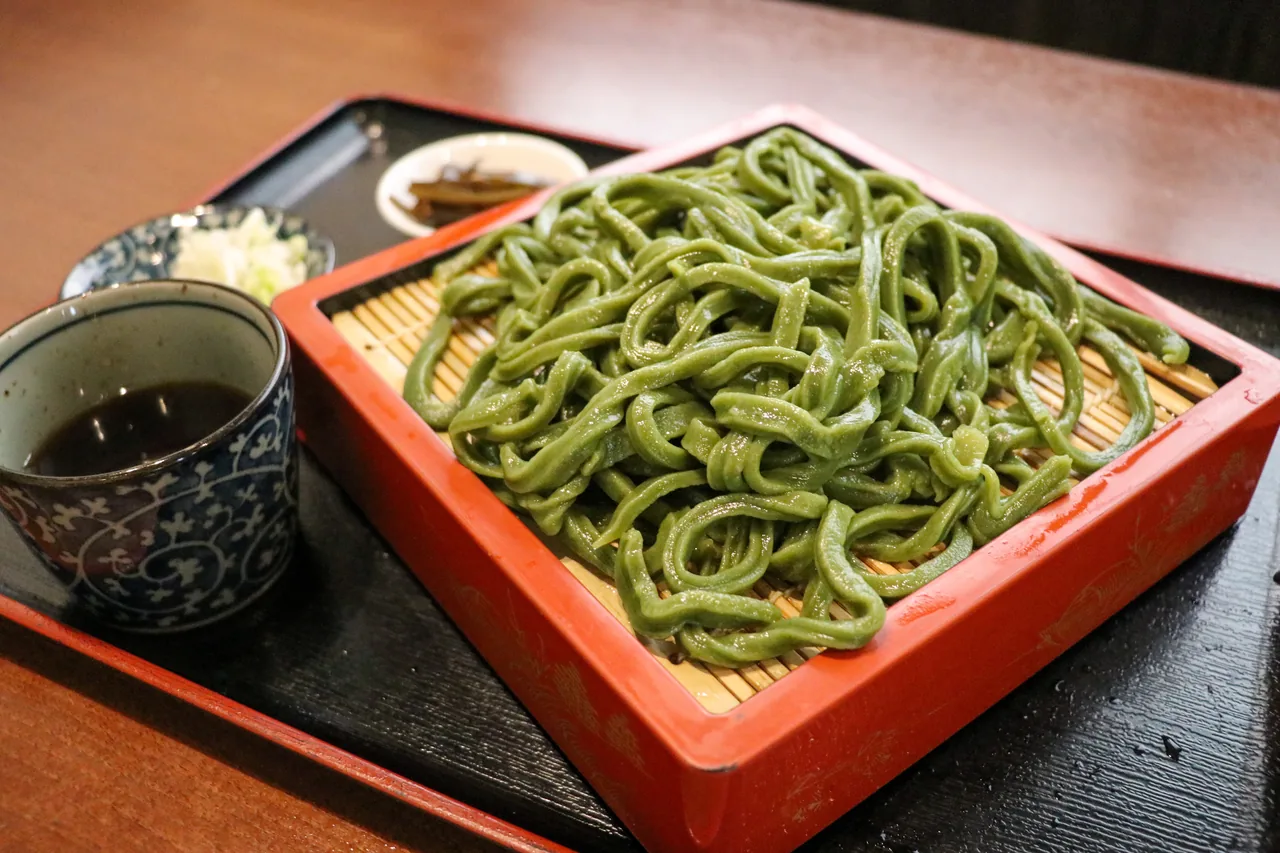
Photo: Saitama Prefecture Products & Tourism Association / Reproduction/Reprint prohibited
In Konosu, in central Saitama, shops serve "kawahaba udon" with broad, flat noodles. The Arakawa River, which flows between Konosu and the town of Yoshimi, is known as the place where the river is widest in Japan from levee to levee, and the name ("river width") comes from that. The width and the way it is served differ from shop to shop, so the look of the bowl is part of the fun.
Tips for ordering and eating
Most udon shop menus list both hot (kake, in broth) and cold (zaru, mori) noodles. For Musashino udon and nikujiru udon, the basic combination is cold noodles with a hot dipping broth.
- Don't pour the broth over the noodles; dip them a little at a time
- Slurping is not rude
- Small shops may take cash only, so carry some
- Shops get busy at lunchtime and some close early when the noodles run out, so avoid a late lunch
To find shops, search a map app for the dish name, such as "Musashino udon," "nikujiru udon" or "Kazo udon," and you will see the shops in that town. A shop whose curtain or sign says teuchi (hand-made) makes its noodles on the premises. Some shops have you buy a meal ticket at a machine by the door and others take orders at the table, so look at what other customers do when you walk in.
For more dining manners, see our Japanese restaurant etiquette guide.
Where to eat each style
Musashino udon shops are concentrated in western Saitama around Tokorozawa, Iruma and Kawagoe, so it also makes a good lunch on a Kawagoe walk. For Kazo udon, look around Kazo Station and Sogan-ji; for Sayama tea udon, around Sayama and Iruma. For getting to Kawagoe, see our Kawagoe day trip, and find more of Saitama in Saitama spots.