Nyuto Onsen Guide: Tsurunoyu, Kuroyu and the Yumeguri-cho Pass
This guide is translated from the Japanese edition. Read the Japanese edition
Nyuto Onsen, Akita: single-inn hot springs in the mountains. How Tsurunoyu, Kuroyu, Ganiba, Taenoyu and Kyukamura differ, the bus, the Yumeguri-cho pass and winter tips.
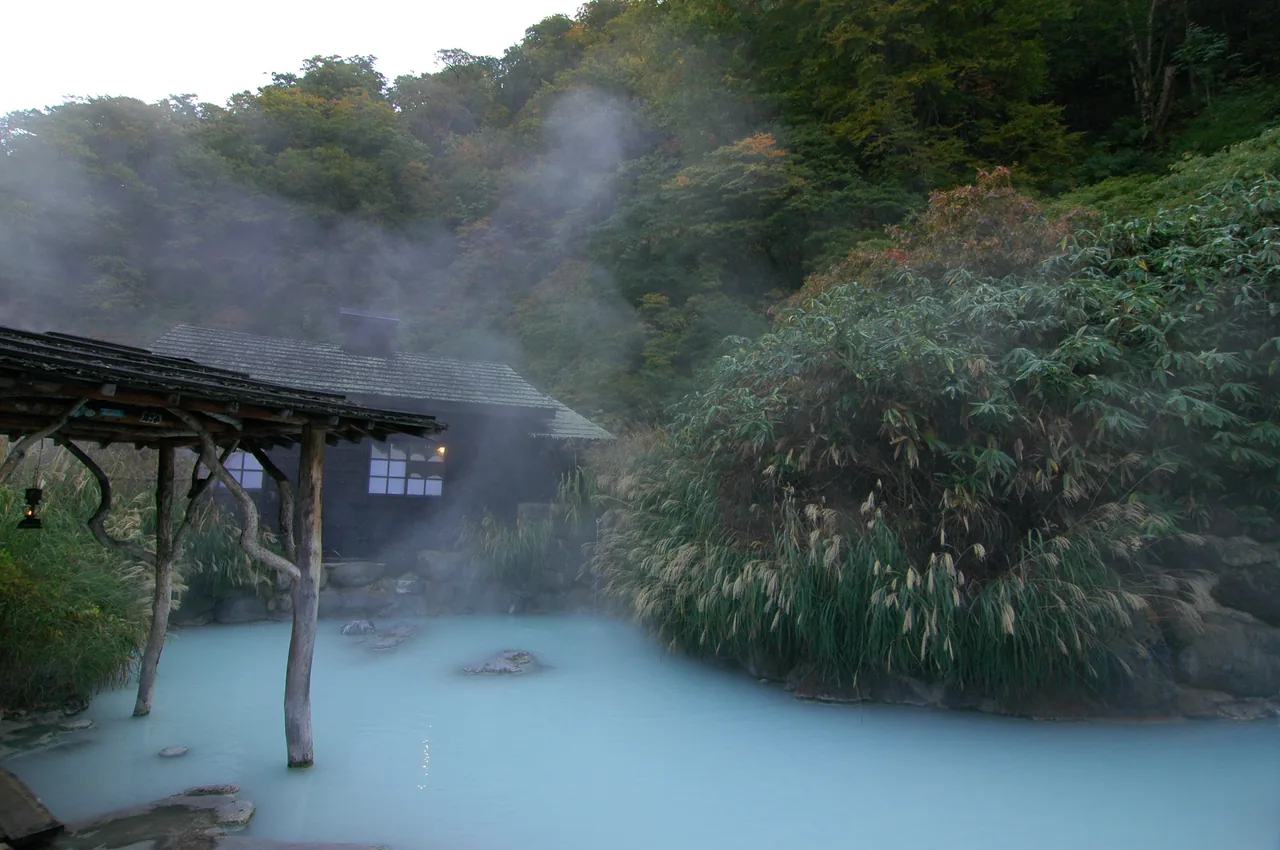
Trees layer behind the steam, and the milky water takes on a bluish tint. Nyuto Onsen is a hot spring area reached by bus into the mountains from Tazawako Station, where single inns, each with its own source, are scattered through the forest. The color of the water and the feel of the buildings differ from inn to inn, so the main pleasure here is yumeguri: staying at one inn and hopping between the baths of the others. To decide where to stay and which baths to visit, it helps to know the bus route, how the inns' waters differ, and how the Yumeguri-cho pass for overnight guests works.
Getting to Nyuto Onsen
The gateway is JR Tazawako Station, where the Akita Shinkansen Komachi stops. From the station, the Ugo Kotsu "Nyuto line" bus takes about 45 minutes to its last stop, Nyuto Onsen. Stops along the way, such as Kyukamura-mae, Taenoyu-mae and Nyuto Ganiba Onsen, let you get off close to the inns. The highland hot spring facility Alpa Komakusa is about 35 minutes away.
Guests staying at Tsurunoyu can use the inn's shuttle from the Alpa Komakusa bus stop; the official website asks guests to call the inn when they arrive at Tazawako Station. Check bus times on the Ugo Kotsu website before you set out.
Tsurunoyu: the thatched honjin and the milky outdoor bath
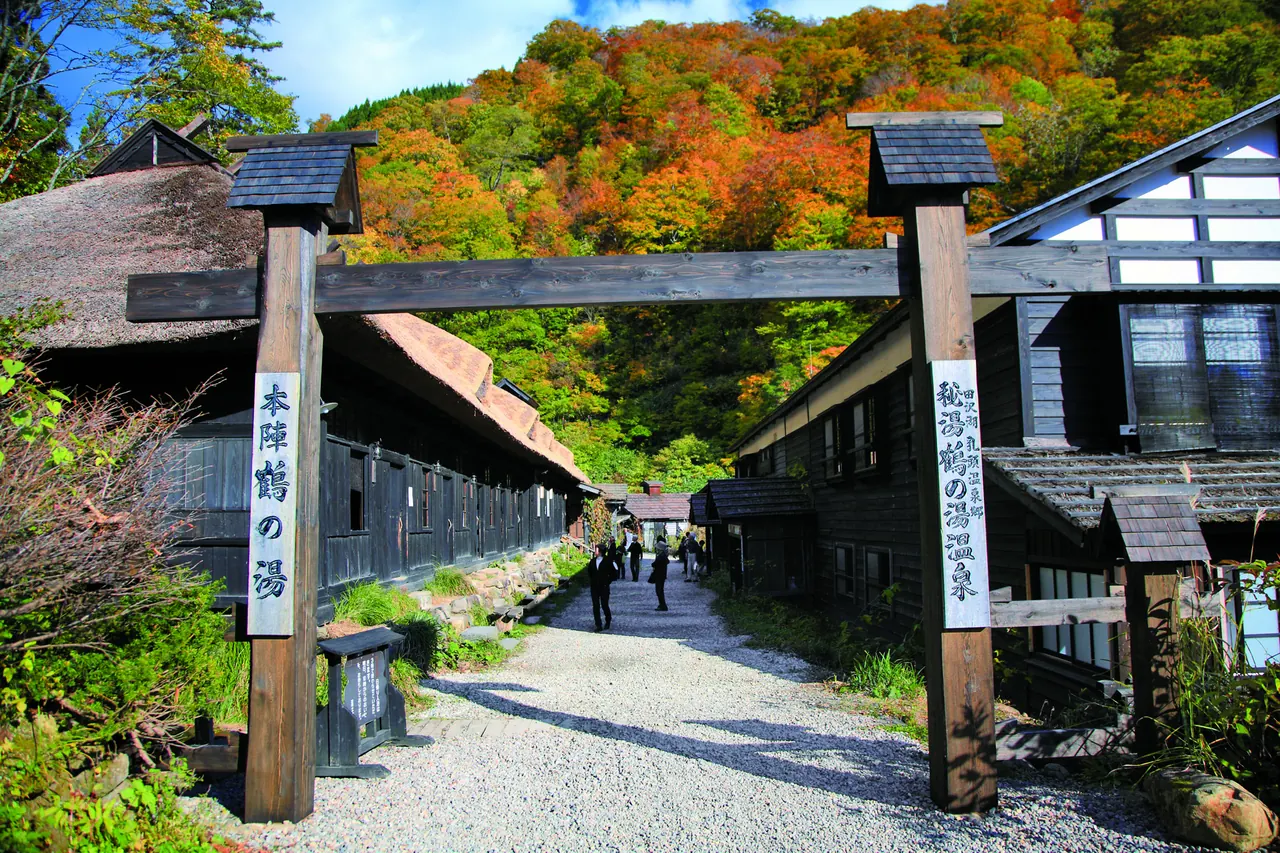
Tsurunoyu has the longest history in Nyuto Onsen. It is known as a spring where the lords of the Akita domain came to take the waters, and as you pass through the entrance gate you see the honjin, a thatched row house where the lord's guards are said to have stayed. The name comes from a legend that a hunter found an injured crane healing its wounds in the water.
The signature bath is a milky-white mixed-gender outdoor bath surrounded by trees. Four sources, Shirayu, Kuroyu, Naka-no-yu and Taki-no-yu, rise near the inn, and the water differs from bath to bath. Day visitors can bathe without staying. In winter, snow piles head-high even in front of the honjin, and at night lights glow in the walls of snow along the paths.
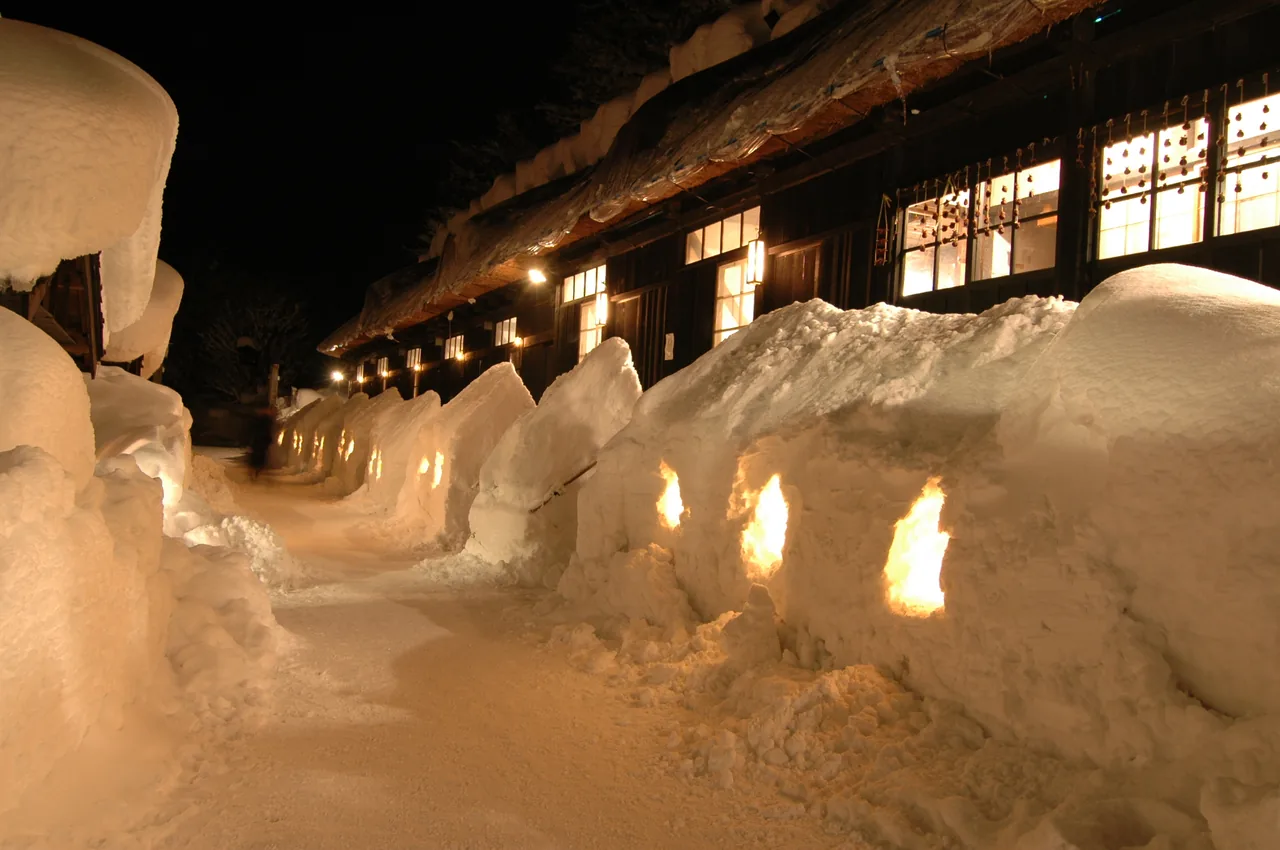
Photo: Akita Prefecture
Kuroyu Onsen: a steaming old bathhouse inn
Kuroyu Onsen keeps the look of a traditional toji (therapeutic bathing) retreat, with lodgings and bathhouses under roofs of thatch and cedar bark. Beside the inn is a riverbed where the hot spring wells up, and you can watch the water bubbling out. Its flow is said to be the most abundant in Nyuto Onsen, and besides the outdoor bath there is an utaseyu, a bath where hot water falls from above onto your shoulders.
It closes for winter. The dates vary a little from year to year, but the closure runs roughly from mid-November to around April of the following year, and the phone is not answered during that time. In the autumn foliage season, the mountains around the valley turn red and yellow, a striking match for the rising steam.
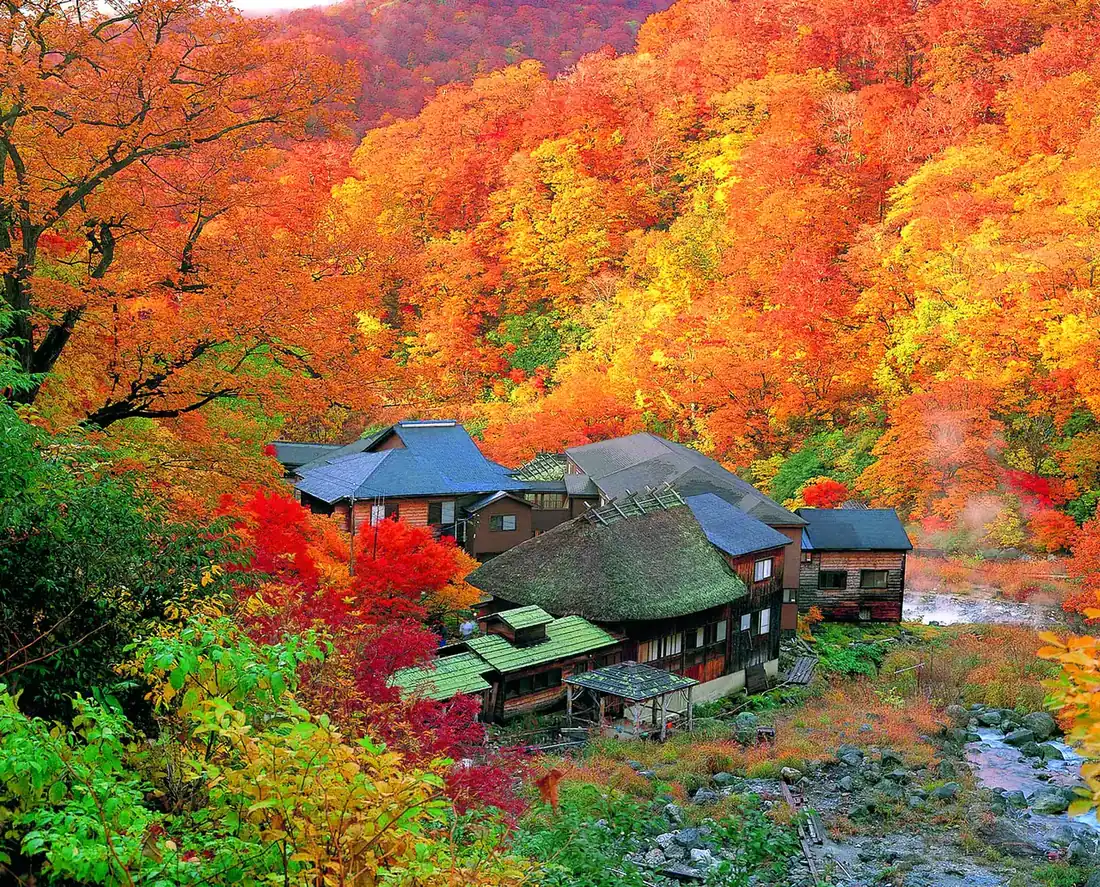
Photo: Akita Prefecture
Ganiba Onsen: an outdoor bath in old-growth forest
Ganiba Onsen takes its name from the crabs (kani) that once lived in great numbers in a nearby stream. Its outdoor bath sits in old-growth forest about 50 m from the inn building, so you soak surrounded by trees. In the snow season, snow covers both the roof and the edge of the bath, and it becomes a quiet bath in the middle of the woods.
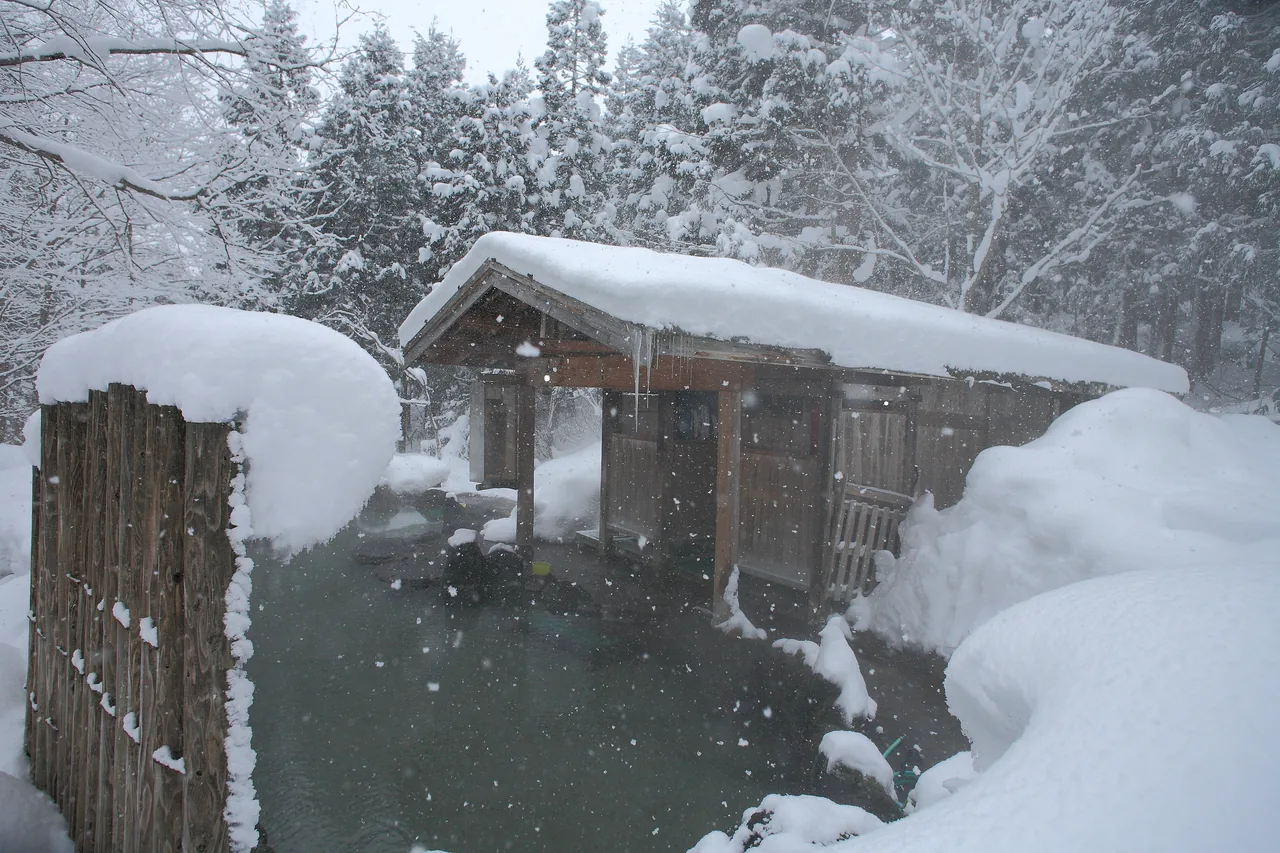
Photo: Akita Prefecture
Taenoyu: listening to the Sendatsu River
At Taenoyu, the Sendatsu River runs right past the eaves. The draw is the outdoor bath where you soak to the sound of the stream, and the inn uses two kinds of water that it calls the "Gold Bath" and the "Silver Bath."
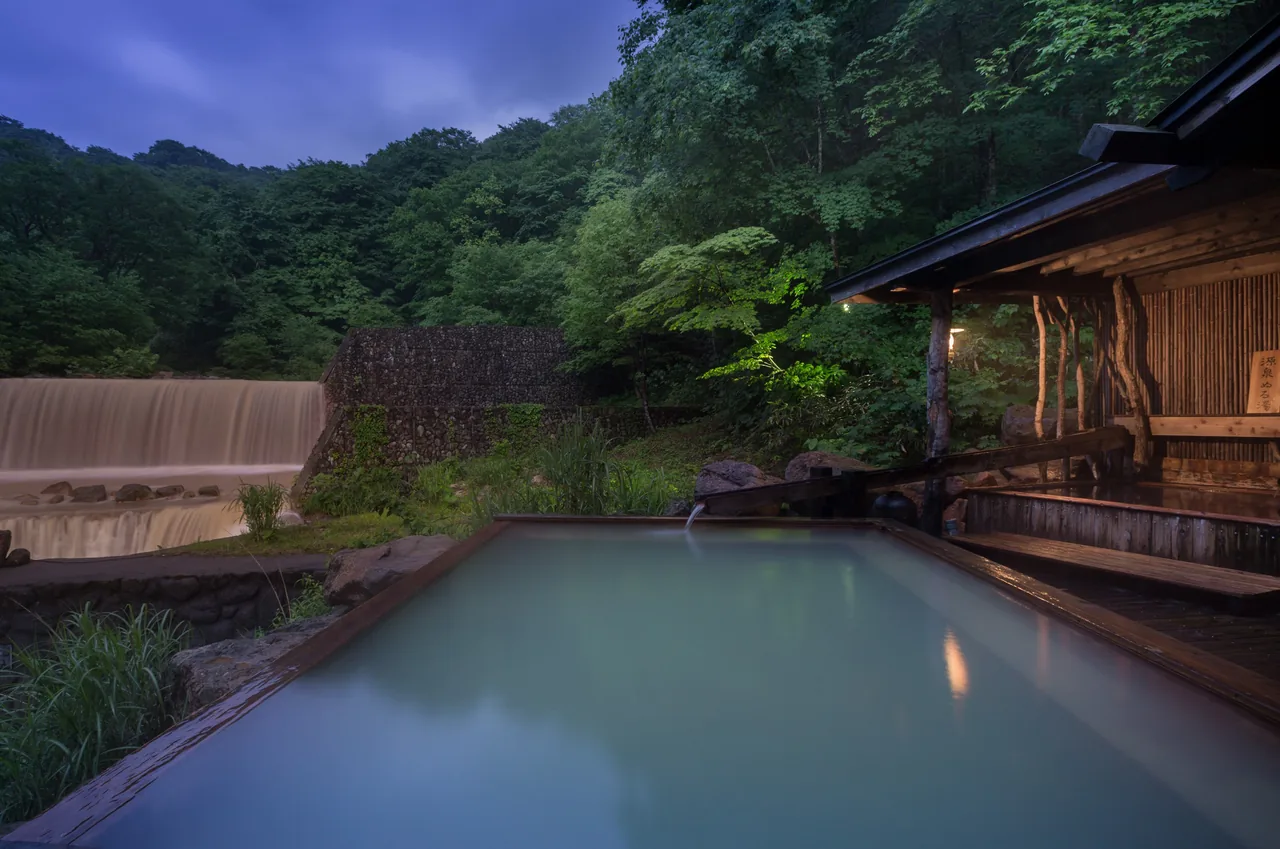
Photo: Akita Prefecture
Kyukamura Nyuto Onsenkyo: beech forest and two sources
Surrounded by beech forest, Kyukamura Nyuto Onsenkyo is a hotel-style inn. Its indoor "Nyuto-no-yu" bath is a cloudy brown sodium bicarbonate spring, while the "Tazawako Kogen-no-yu," used in both an indoor and an outdoor bath, is a milky simple sulfur spring, so you can try two sources in one place. From the outdoor bath you see the beech forest change with the seasons. Day bathing is also available.
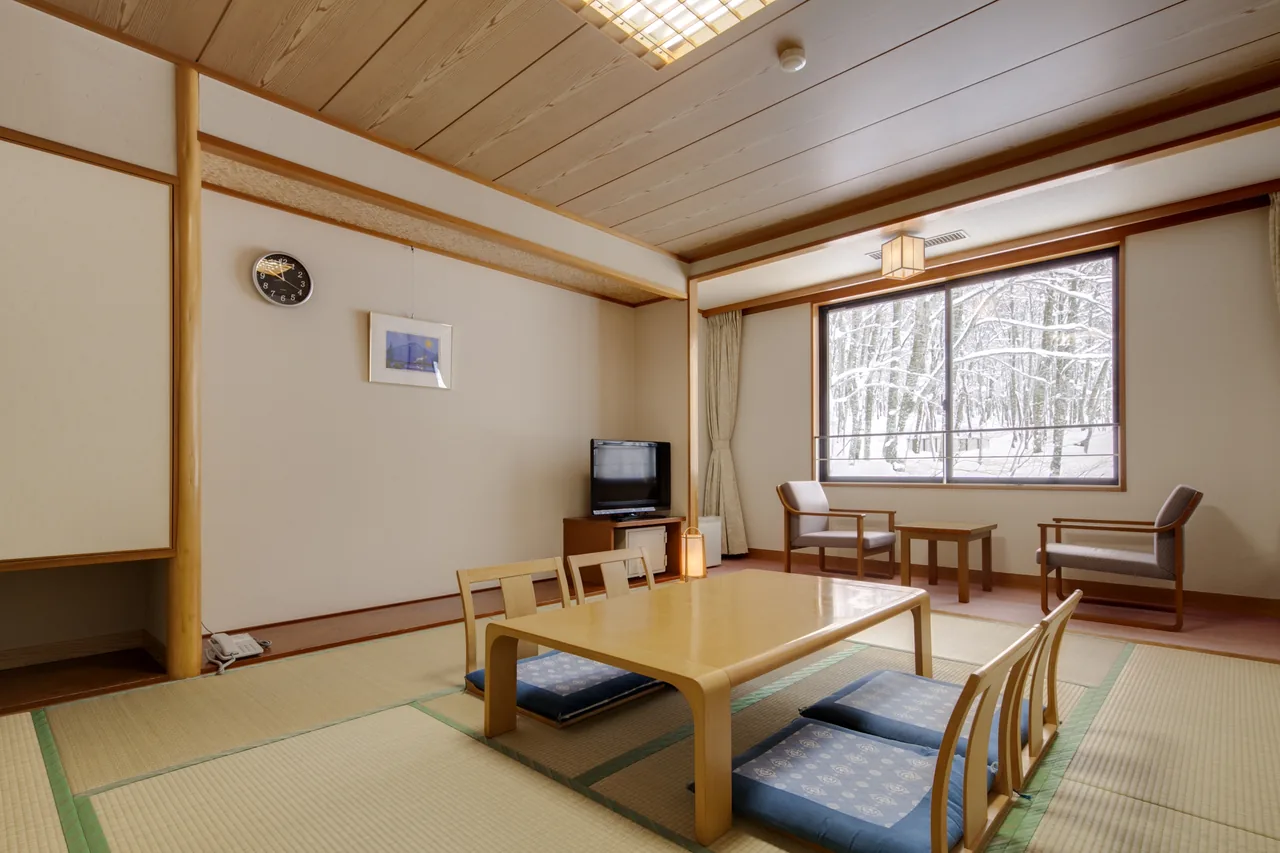
Photo: Akita Prefecture
Using the Yumeguri-cho and the Yumeguri-go bus
For bath-hopping at Nyuto Onsen there is the Yumeguri-cho, a pass sold only to guests staying at an inn in the area. It gives you one bath at each of seven inns, Tsurunoyu, Taenoyu, Ganiba Onsen, Ogama Onsen, Magoroku Onsen, Kuroyu Onsen and Kyukamura Nyuto Onsenkyo, and is valid for one year from purchase.
With a Yumeguri-cho you can ride the Yumeguri-go, a shuttle bus that circulates between the inns. No reservation is needed, and the route and timetable change with the season. In winter Kuroyu Onsen is closed, so the bus does not go there. Prices and sales conditions change from year to year, so ask at the inn where you stay.
For visitors not staying overnight, a one-day "Yumeguri Map" that included rides on the Yumeguri-go has been sold at times, but sales have also been suspended at times. If you are visiting for the day, limiting yourself to two or three inns you can reach by local bus and on foot keeps things manageable.
Mixed bathing and winter tips
Several inns in Nyuto Onsen, including Tsurunoyu, have mixed-gender outdoor baths. Whether there are separate baths for men and women, and whether bathing wear is allowed, differ from inn to inn, so if this matters to you, check the inn's information before you go. Basics such as washing before you get in and keeping your towel out of the water are covered in our guide to onsen etiquette.
Snow is deep in winter, and you also need to watch for snow and ice on the roads. Drive only if you are used to winter driving; otherwise use the local bus and the inn shuttles.
Pair it with Mt. Akita-Komagatake and Lake Tazawa
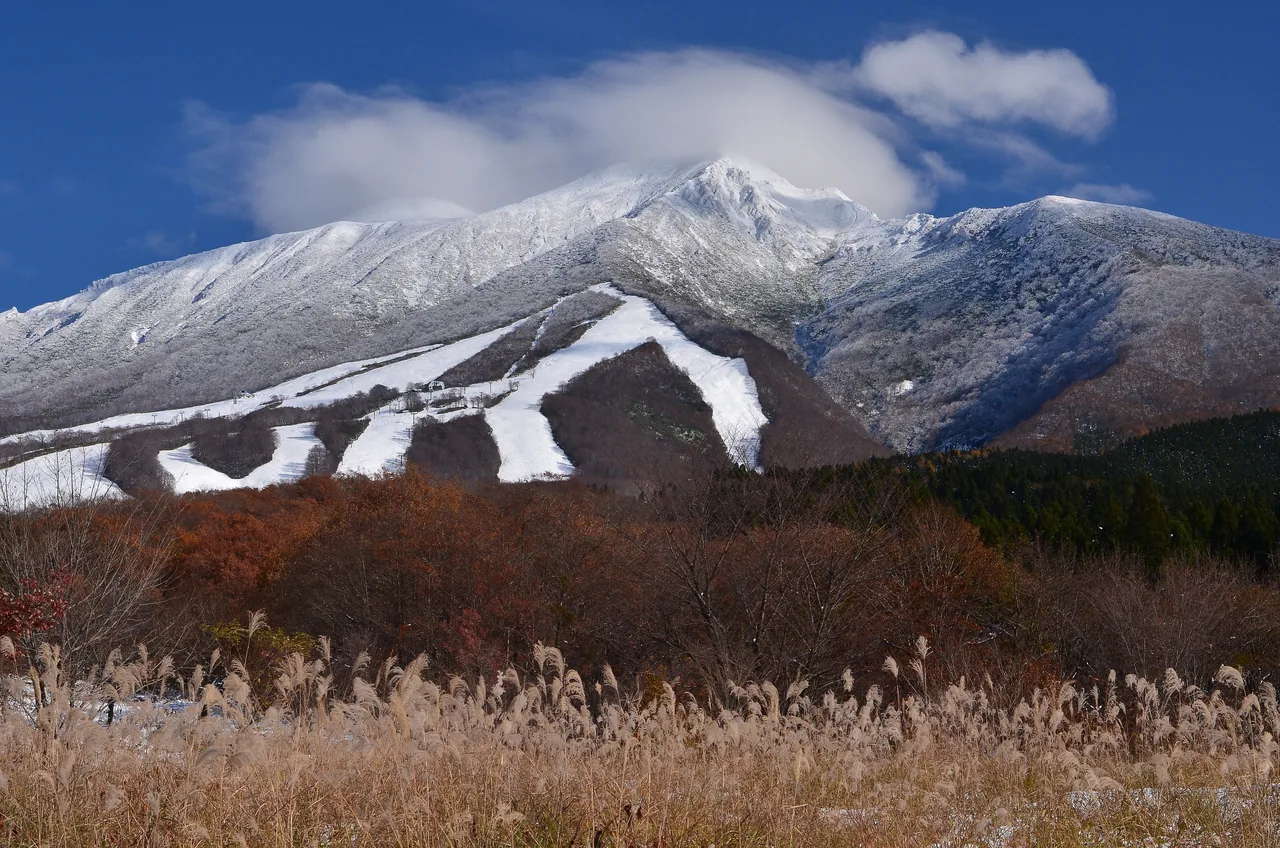
If you stay at Nyuto Onsen in summer or autumn, you can add a hike on Mt. Akita-Komagatake. At 1,637 m it is the highest mountain in Akita Prefecture; in summer buses run up to the eighth station, and from there the summit is about 60 minutes on foot. From early summer into summer, white chinguruma flowers carpet the slopes. On days when private cars are restricted, change at Alpa Komakusa to the bus bound for the eighth station. The road to the eighth station is closed from November 1 to May 31.
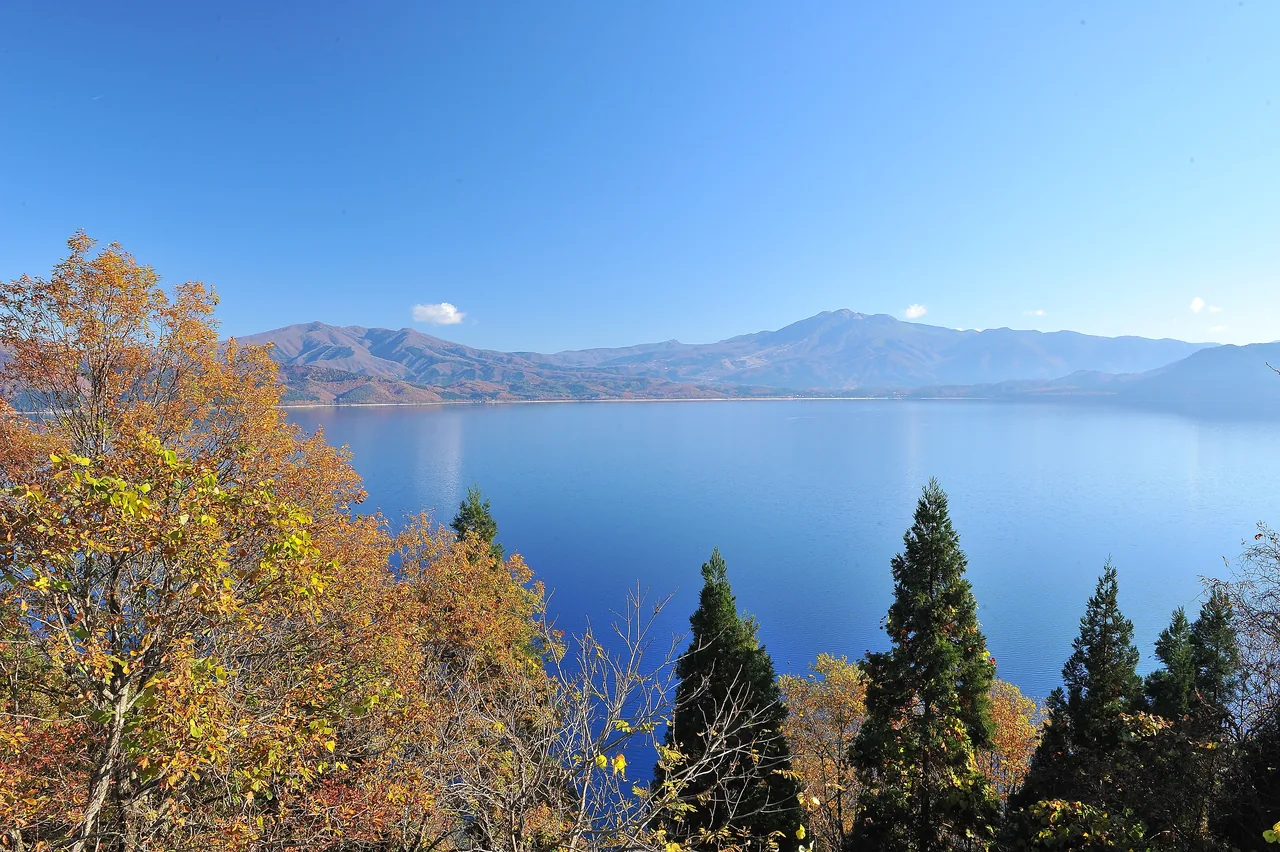
On your last day, take the Tazawako loop bus from Tazawako Station to Lake Tazawa. You can see the blue of Japan's deepest lake and the vermilion torii gate on its shore before catching the shinkansen. For combining Nyuto with other parts of Akita, see our first-timer's guide to Akita; for Tamagawa Onsen and Akita's other hot spring areas, see our Akita onsen guide.
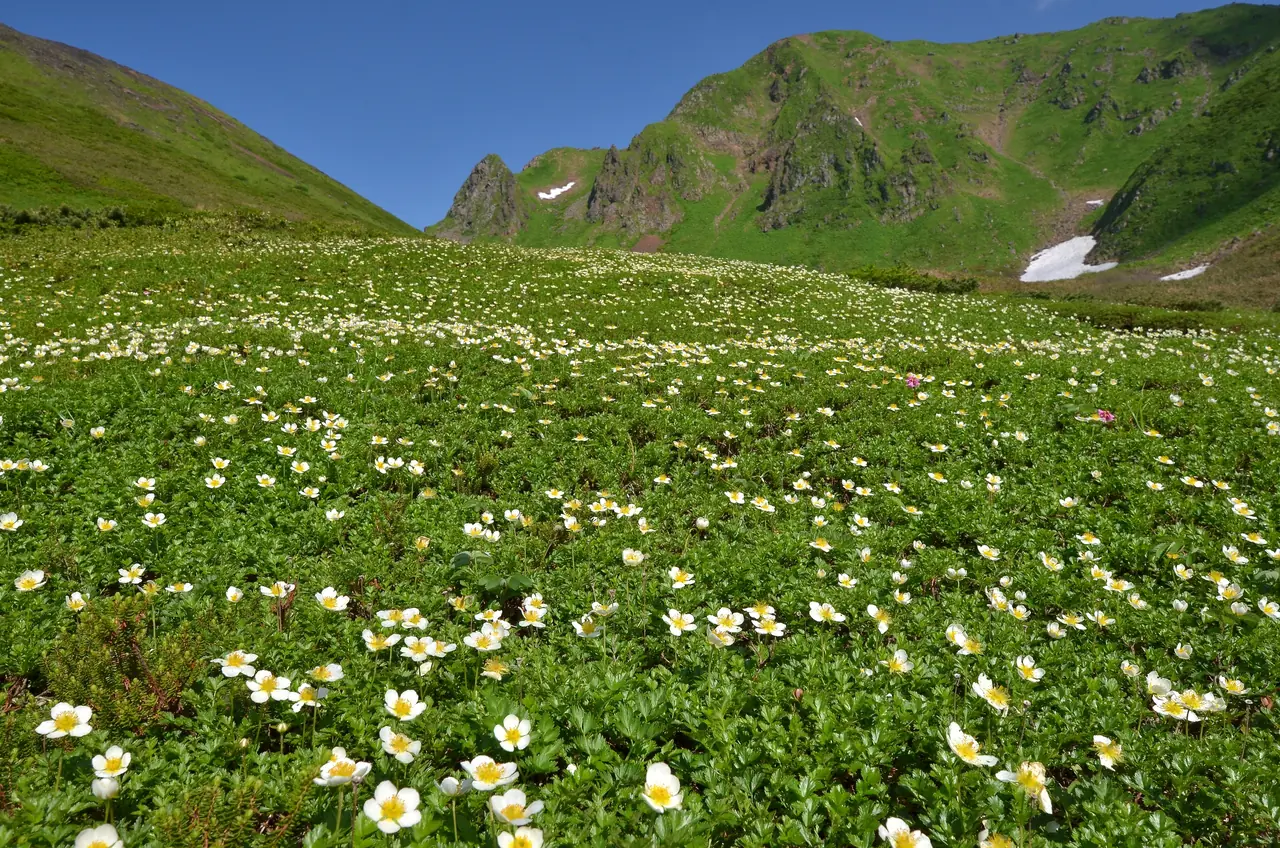
Photo: Akita Prefecture
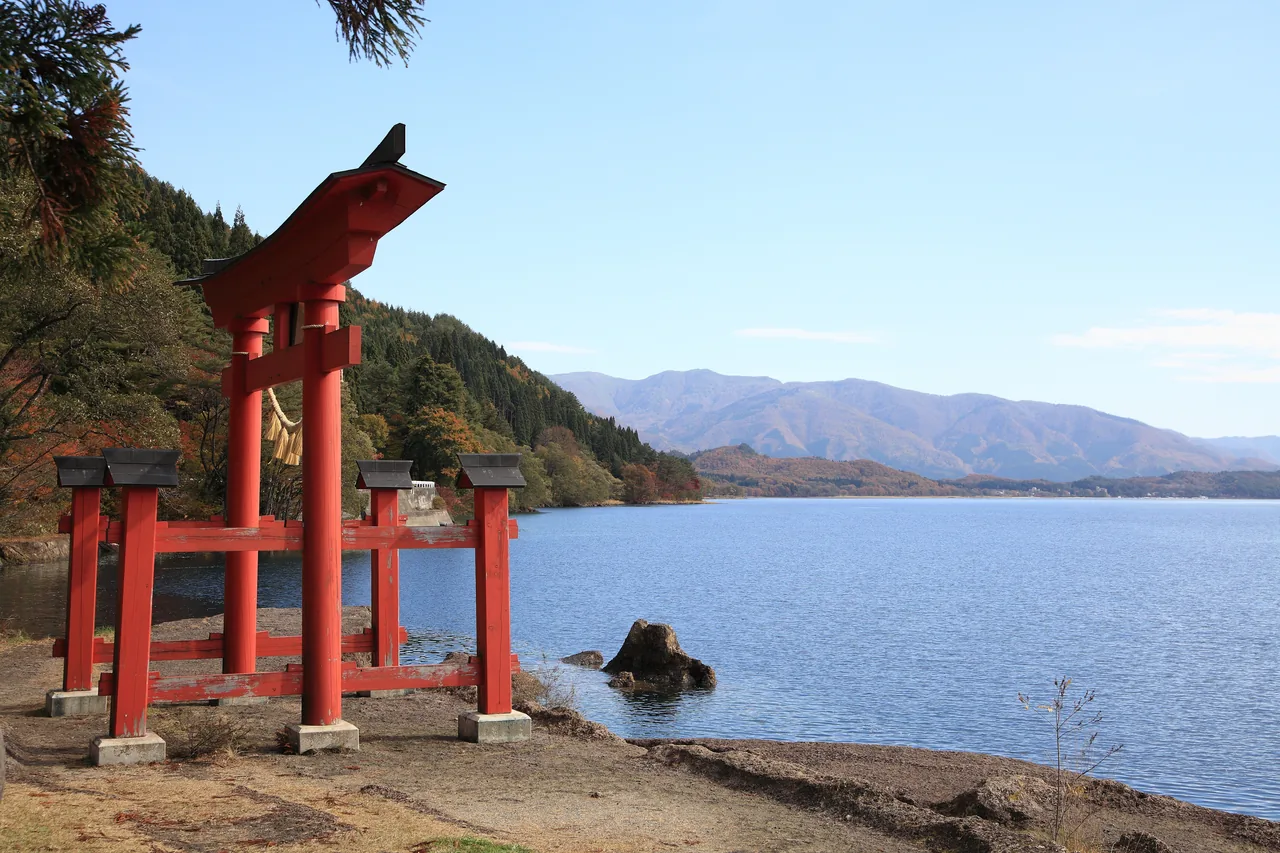
Photo: Akita Prefecture