Akita Onsen Guide: Tamagawa, Oga, Akinomiya and Oyasukyo
This guide is translated from the Japanese edition. Read the Japanese edition
Akita onsen beyond Nyuto: pH 1.2 Tamagawa and Shin-Tamagawa, Oga Onsen with Namahage drumming, Akinomiya, Oyasukyo's steaming gorge and the Kawarage hot waterfall.
Boiling water bursts from cracks in the rock at the bottom of a gorge, and white steam rises from the mountainsides. Akita Prefecture has many hot spring areas where the water wells up beside rugged scenery shaped by volcanoes and geothermal heat. Besides Nyuto Onsen and its row of thatched single inns (see our Nyuto Onsen guide), there is Tamagawa Onsen in the mountains of Semboku, Oga Onsen on the Oga Peninsula facing the Sea of Japan, and Akinomiya Onsen and Oyasukyo Onsen in Yuzawa in the south of the prefecture, each with its own character. All are some way from a railway station, and in winter road access and inn opening change a great deal, so choose with the route and the season in mind.
Tamagawa Onsen: pH 1.2 acidic water and a nature trail
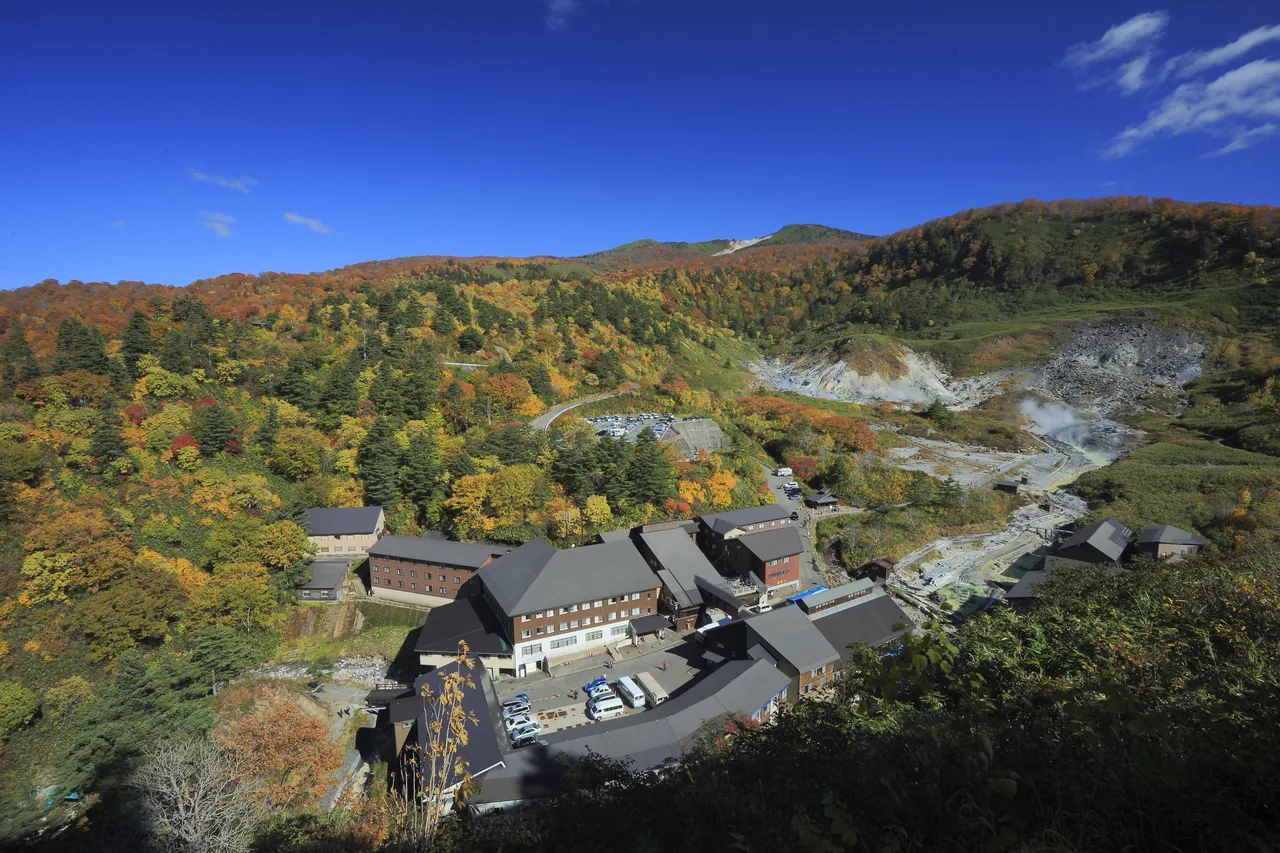
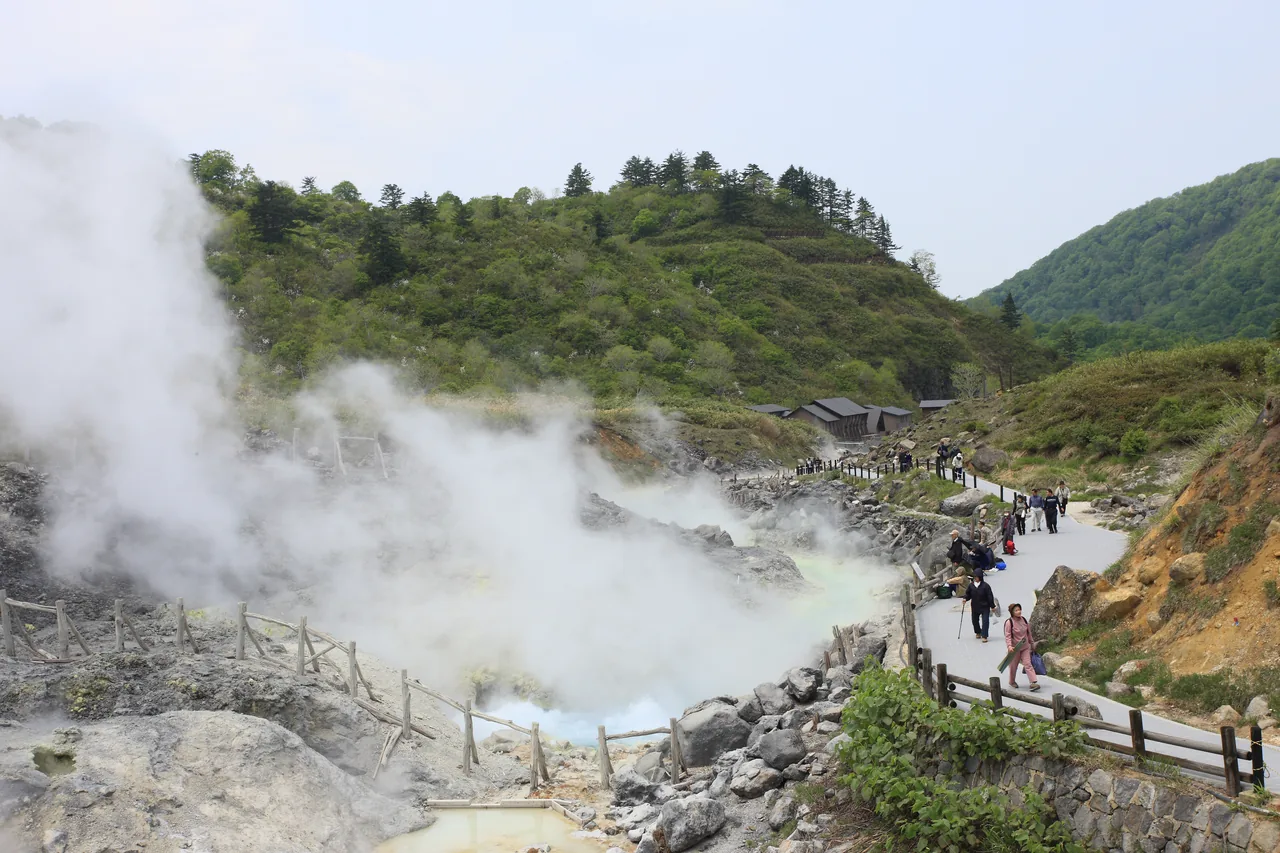
In a steam-filled valley in the mountains of Semboku, Tamagawa Onsen has strongly acidic water, pH 1.2 and mainly hydrochloric acid, and the flow from a single source is the largest in Japan. Water at 98°C gushes from its source, called Obuki.
Behind the inn, a nature trail of about 30 minutes loops around the source and the fumarole area, and anyone can walk it without staying. Milky blue-white water runs underfoot, and the rocks have turned yellow and white. Along the trail there are also spots for natural bedrock bathing, where people spread straw mats on rocks warmed by geothermal heat and lie down. With fumaroles and hot water close by, do not step outside the fences or the path. The trail is closed in winter.
The inn's large bathhouse is a wooden building framed with thick pillars and beams. Because the water is so acidic, read the bathing instructions posted at the bath before getting in. From in front of JR Tazawako Station, the Ugo Kotsu "(Express) Tamagawa Line" bus takes about 75 minutes; get off at "Tamagawa Onsen."
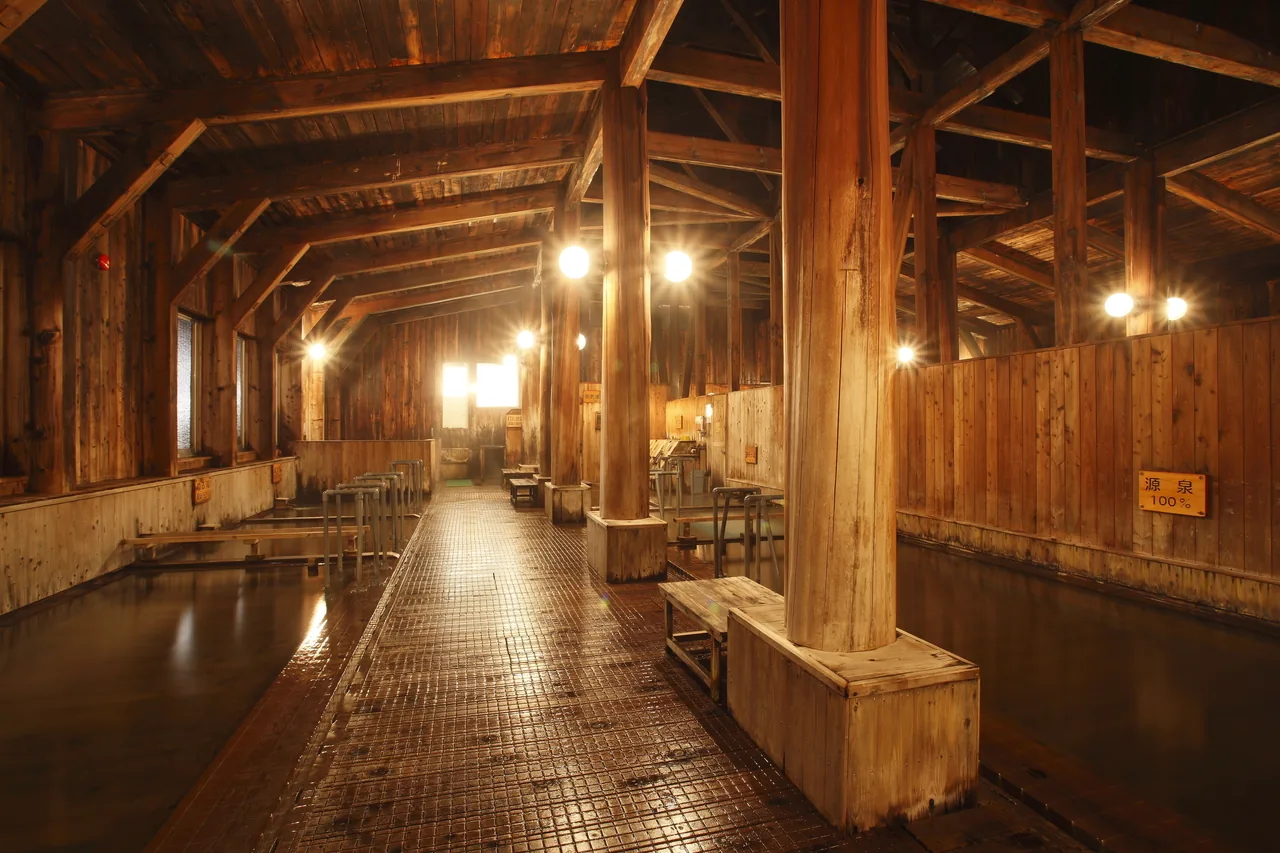
Photo: Akita Prefecture
Shin-Tamagawa Onsen: another inn with the same water
Shin-Tamagawa Onsen, near Tamagawa Onsen, draws its water from the same Obuki source. Besides an outdoor bath in the main bathhouse, it has an indoor bedrock bath for overnight guests that can be used in any season or weather.
In winter, access changes a great deal. Part of National Route 341 is closed to private vehicles from around December to late April each year, and the local bus switches to the "Express Shin-Tamagawa Line." The Tamagawa Onsen inn closes in winter (in 2025–26, from November 30, 2025 to April 15, 2026), while its sister inn, Shin-Tamagawa Onsen, stays open. If you want to soak in this acidic water in winter, check Shin-Tamagawa Onsen's opening and access on its official website before you plan.
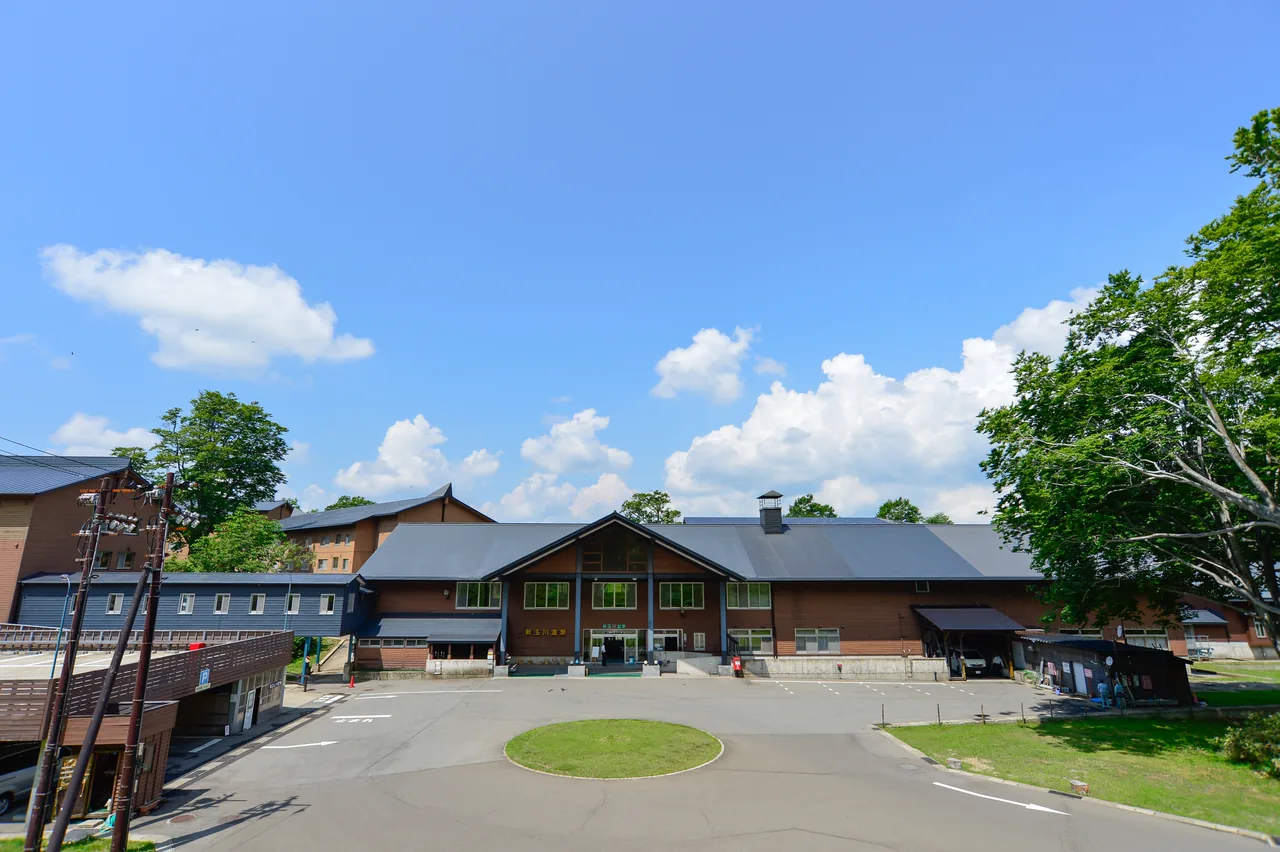
Photo: Akita Prefecture
Oga Onsen: Namahage drumming and a base for the peninsula
On the north side of the Oga Peninsula, Oga Onsen is a hot spring area close to the peninsula's main sights, such as the Namahage Museum, Oga Aquarium GAO and Cape Nyudozaki. Hotels and ryokan are gathered here, making it the place to stay when you spend a night touring the peninsula.
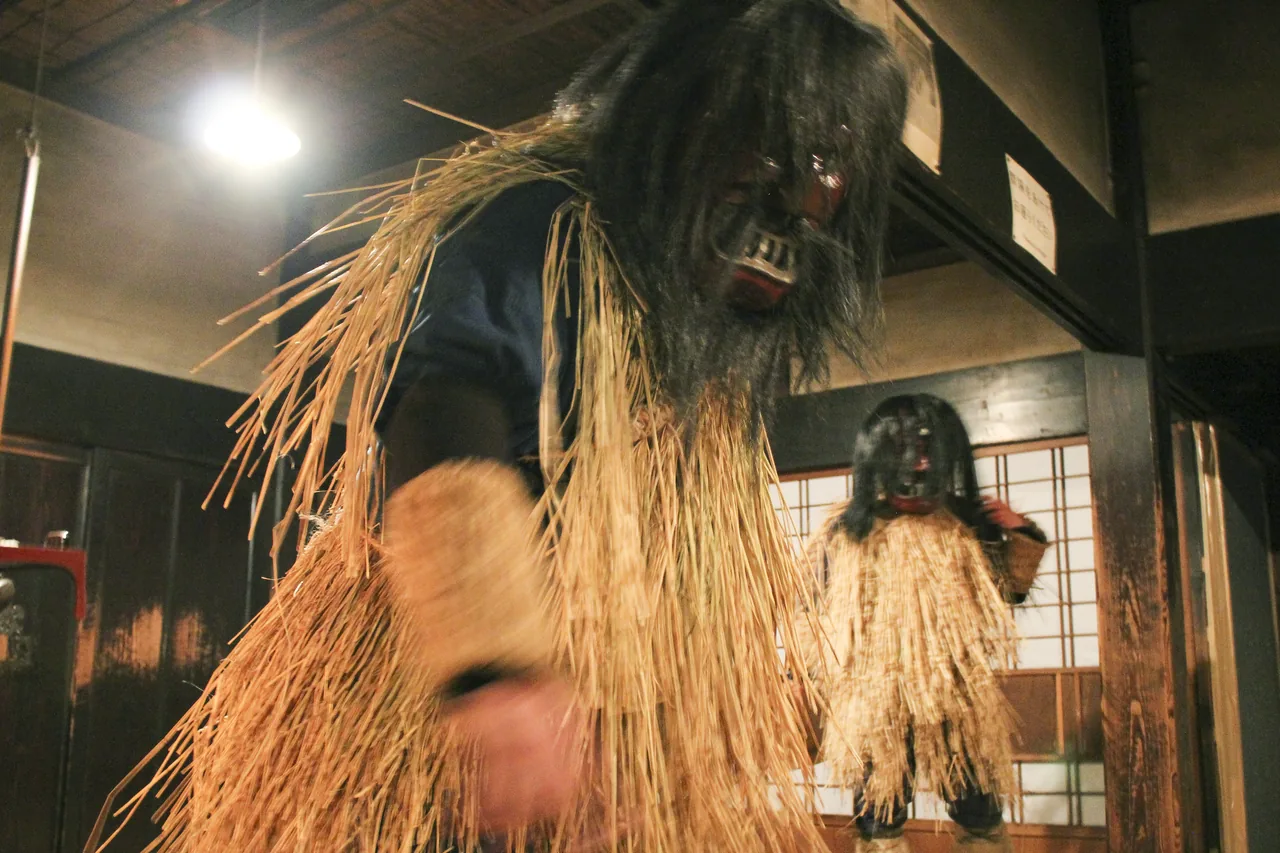
At the Oga Onsen community hall "Gofu" in the hot spring area, the "Gofu Namahage Taiko Live" is held every year from April to November. Onga, a drumming group based in Oga Onsen, beat Japanese taiko drums wearing Namahage masks and costumes. Check performance dates and times with the Oga City Tourism Association.
The Oga Shinzan Folklore Museum, which recreates the New Year's Eve Namahage ritual in the tatami room of an old farmhouse, is also within easy reach of the hot spring area.
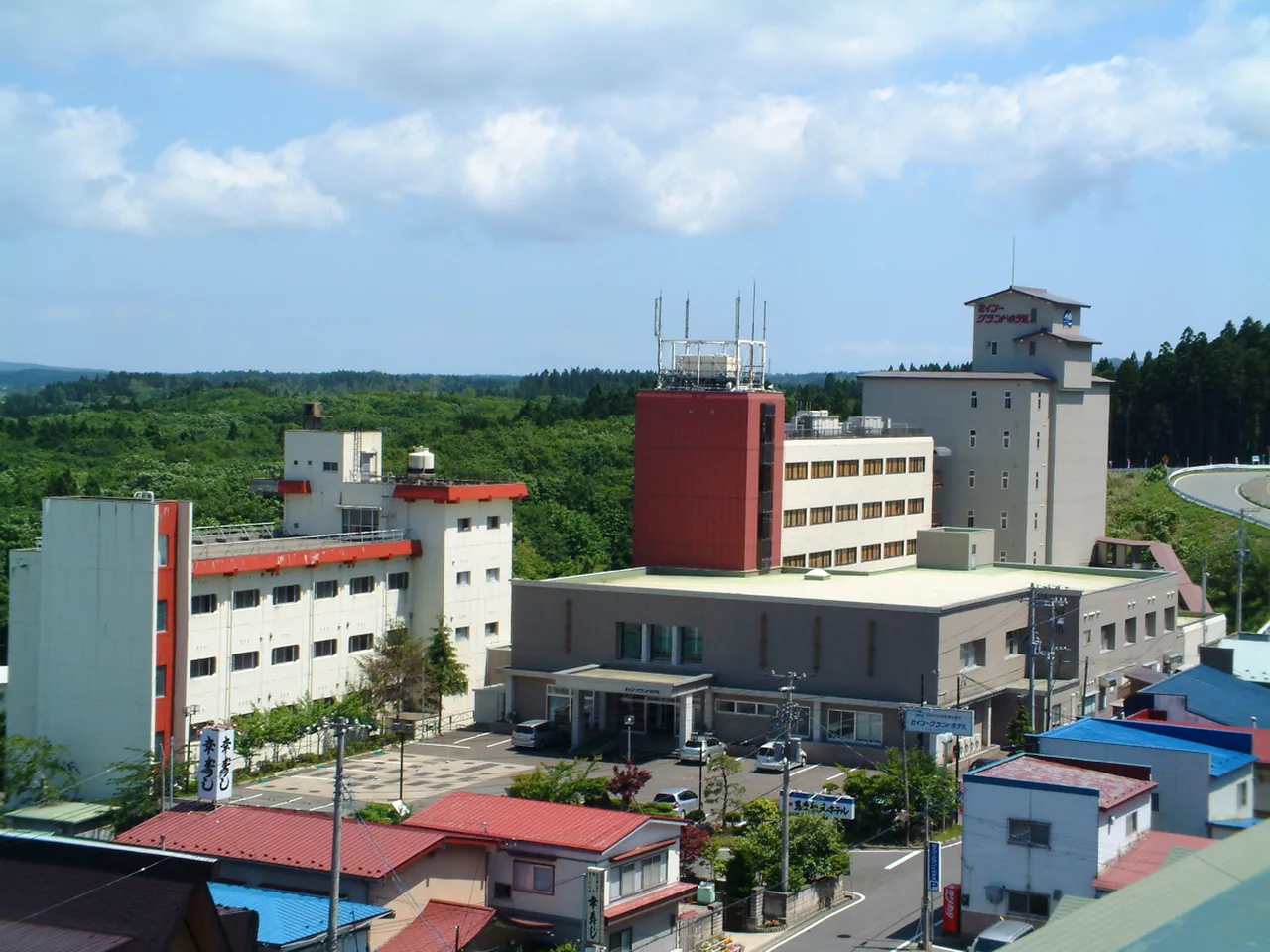
Photo: Akita Prefecture
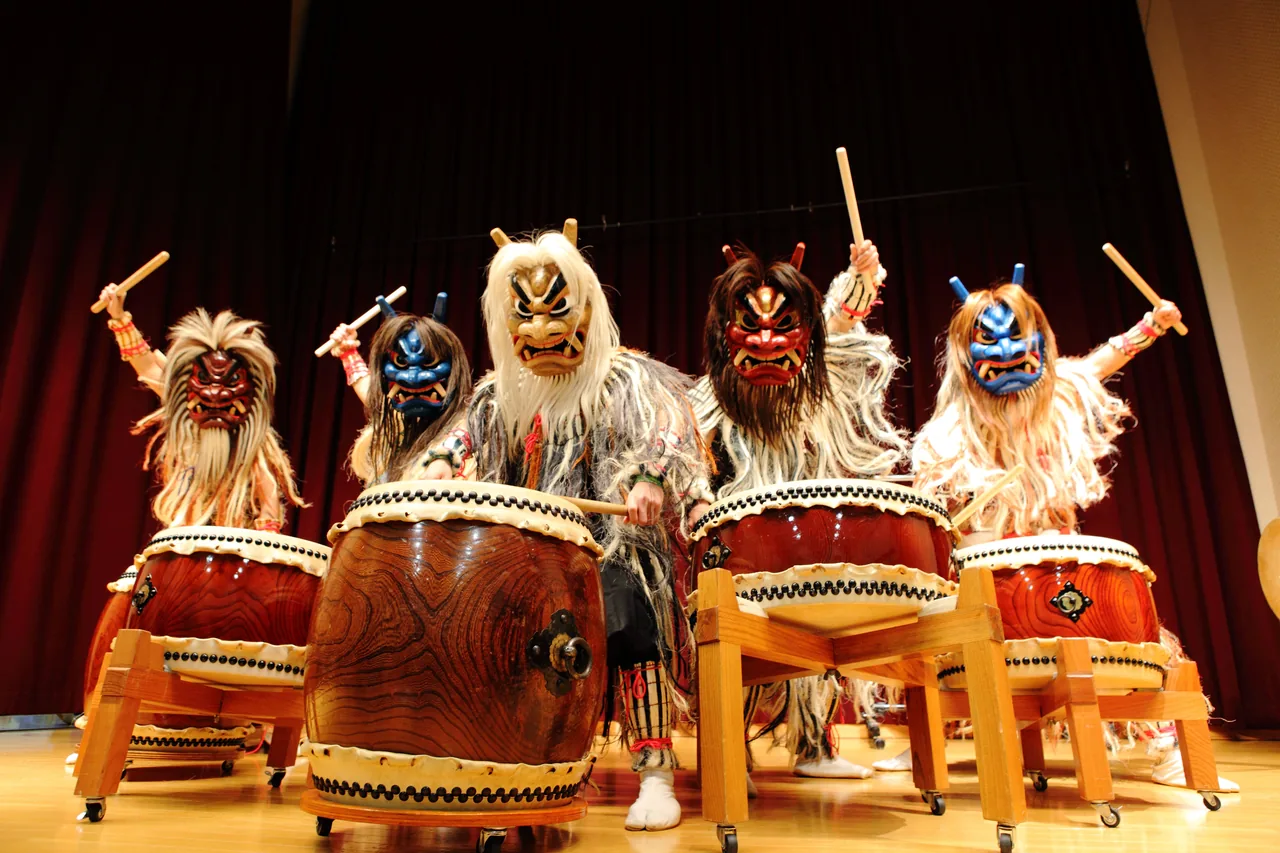
Photo: Akita Prefecture
Akinomiya Onsen: a gorge-side hot spring said to be Akita's oldest
In Yuzawa, the inns of Akinomiya Onsen are scattered along the Yakunai River, which flows from the foot of Mt. Kurikoma. It is known as the oldest hot spring area in Akita Prefecture and has long been loved by writers such as Saneatsu Mushanokoji. Each inn has its own source, and some have outdoor baths looking over the gorge. Takanoyu Onsen, founded in 1885, is one of them.
An unusual way to enjoy the area is Kawara no Yukko. Hot water springs from the bed of the Yakunai River, and with the shovels provided you can dig into the riverbed and make your own footbath. The idea came from local residents looking to revitalize the town.
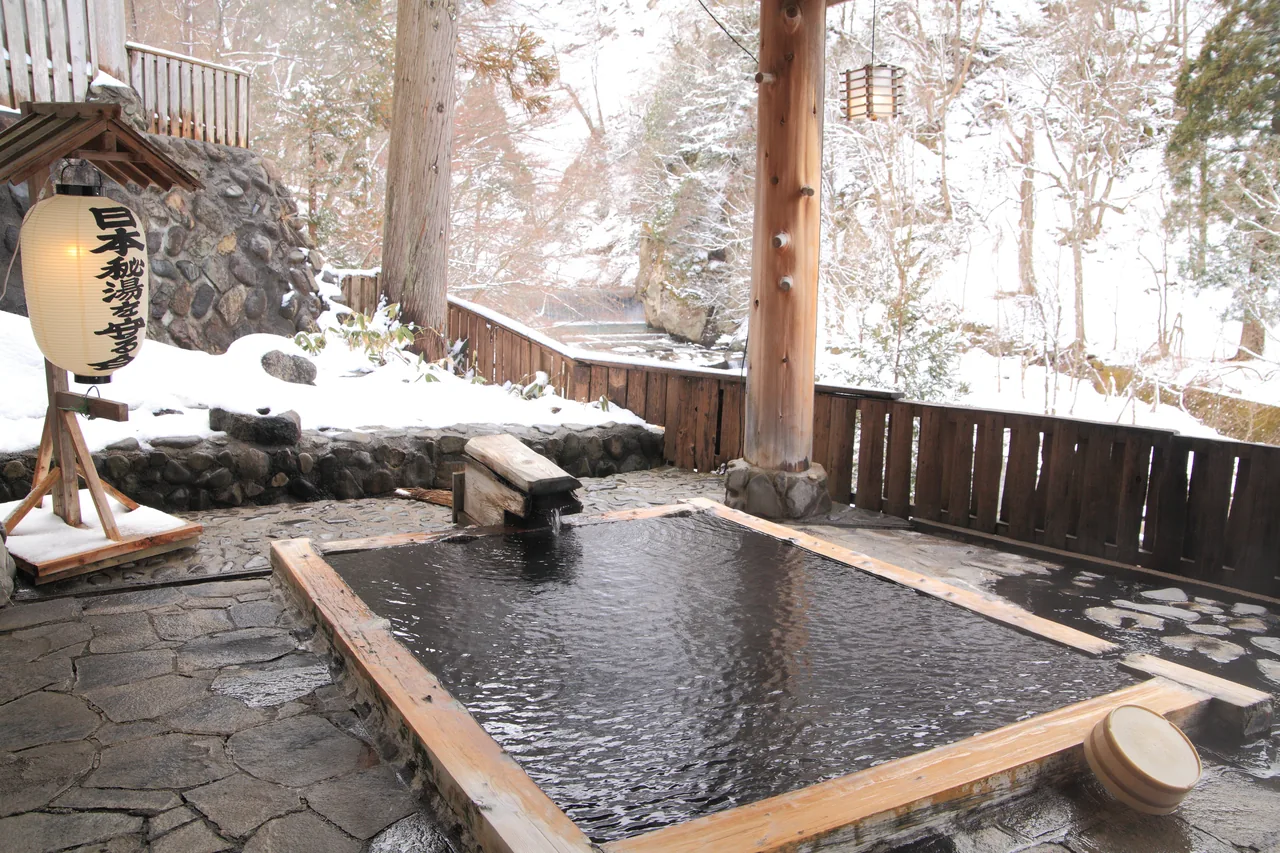
Photo: Akita Prefecture
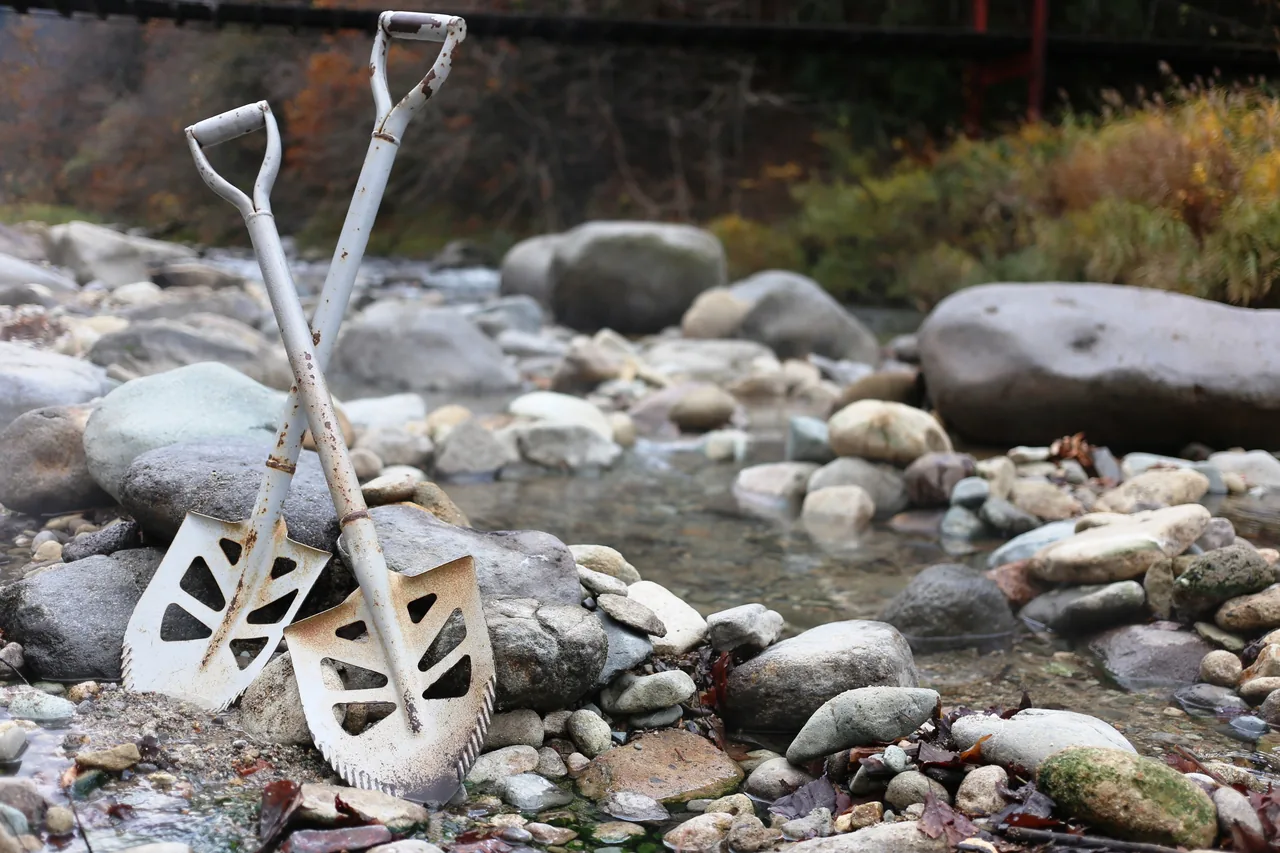
Photo: Akita Prefecture
Oyasukyo Onsen: a hot spring town above the steaming gorge
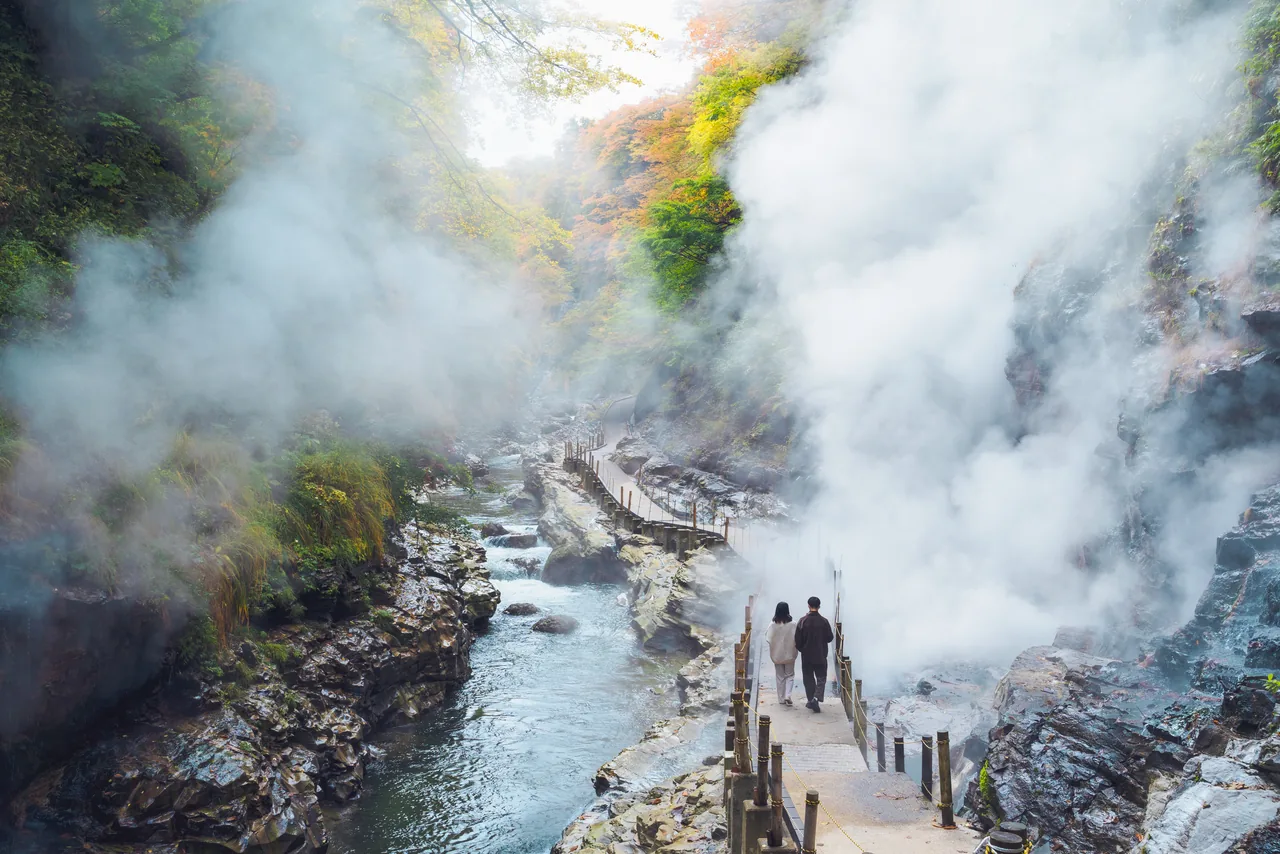
The town of Oyasukyo Onsen sits right above Oyasukyo Gorge, a deep V-shaped valley cut by the Minase River. The spring is said to have been opened in the early Edo period and discovered thanks to a crane that was healing an injured leg in the water. It is said to have been a favorite of the Satake lords of the Akita domain, and there are footbaths in town that you can use for free.
From town, a stairway down the rock face descends about 60 m to a path at the bottom of the gorge. Further along, boiling water and steam as hot as 98°C shoot from cracks in the cliff: this is the Daifunto. The path is closed for winter from mid-November to mid-April, and also when heavy rain raises the river. Even when it is closed, you can watch the steam from the Kawarayu Bridge across the gorge. From JR Yuzawa Station, the Ugo Kotsu bus on the Yuzawa–Oyasu line takes about 52 minutes to "Kawarayu," then it is about 2 minutes on foot.
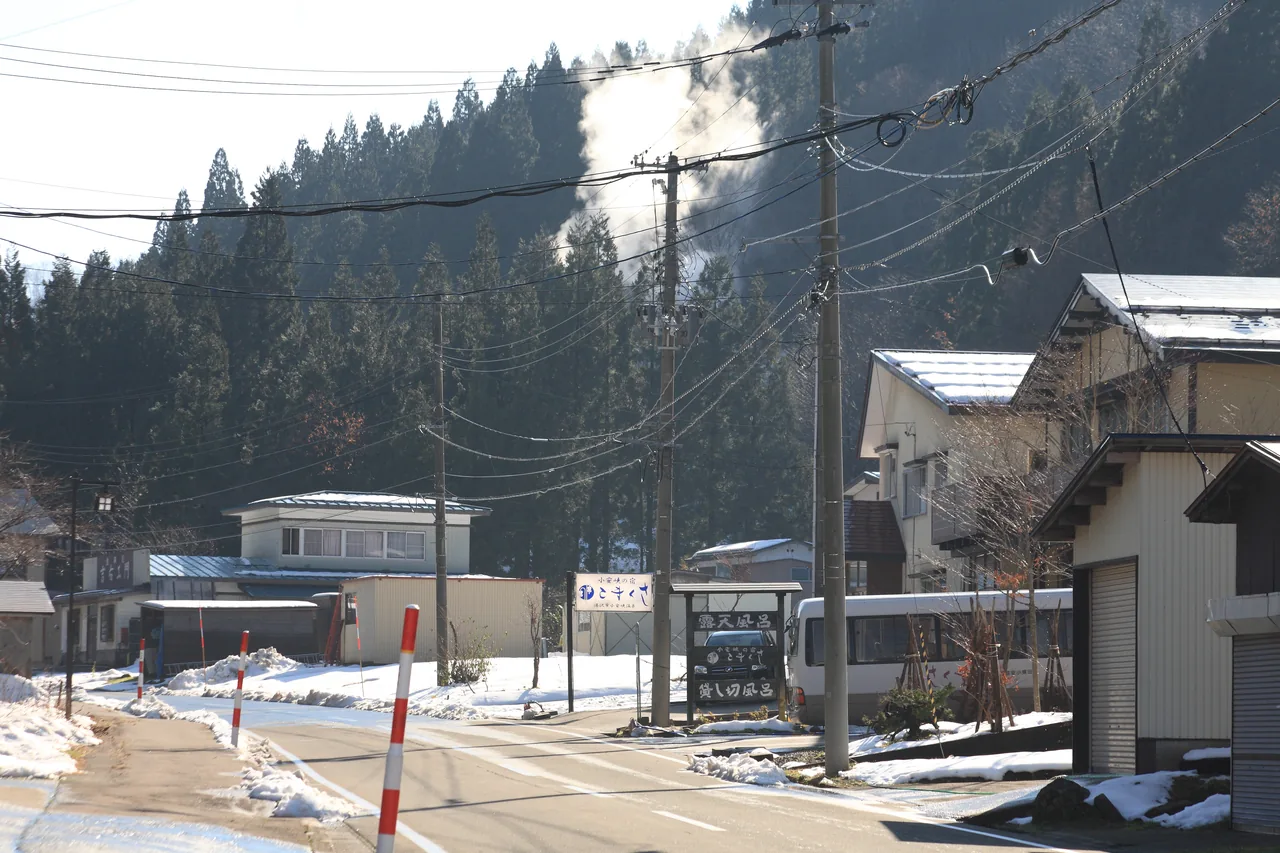
Photo: Akita Prefecture
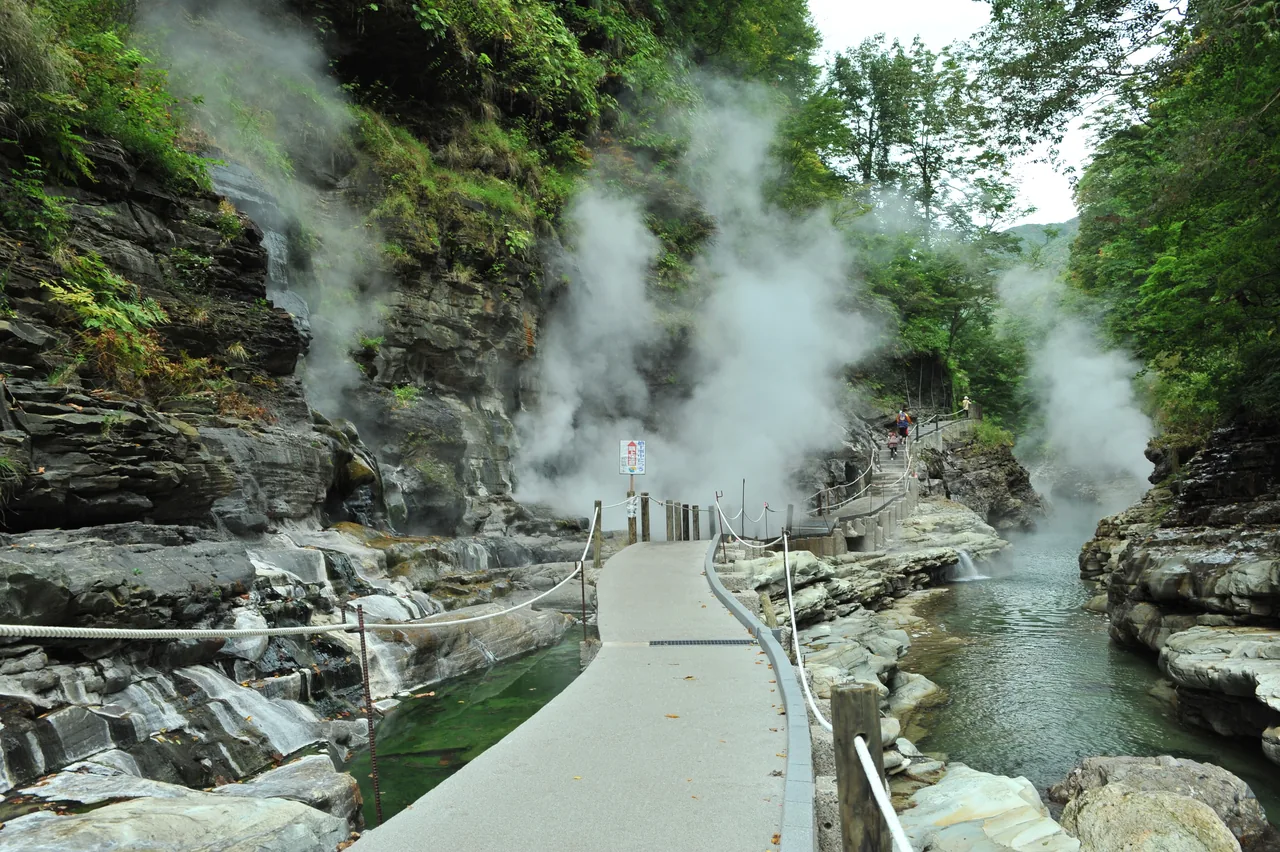
Photo: Akita Prefecture
Kawarage Jigoku and the Kawarage Oyutaki hot waterfall you can bathe in
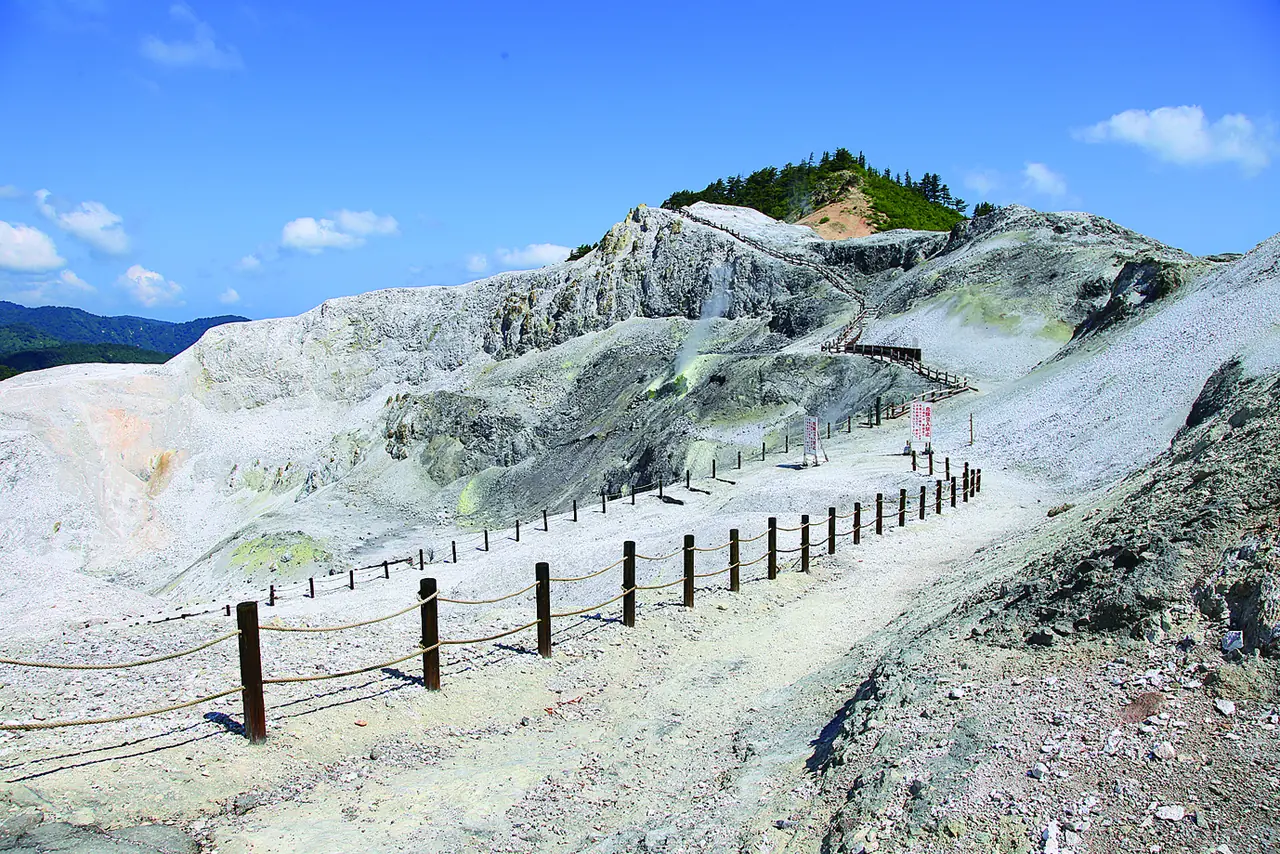
In the mountains of Yuzawa lies Kawarage Jigoku, an expanse of grey-white rock where almost nothing grows. It is counted as one of Japan's three great sacred sites, alongside Osorezan and Tateyama, and the walking path is laid out to avoid spots where hydrogen sulfide gas is concentrated. Do not go beyond the rope fences or into closed areas.
Near Kawarage Jigoku is the Kawarage Oyutaki, a waterfall of hot spring water where you can soak in the plunge pool. The bathing season is usually early July to mid-September, and swimwear is required. There is no charge, but on some days the water cools with the weather or rain. The water is strongly acidic, so people with sensitive skin should keep their soak short. The roads to both Kawarage Jigoku and the waterfall are closed for winter from early November to early May. Kawarage Jigoku is about 50 minutes by car from JR Yuzawa Station.
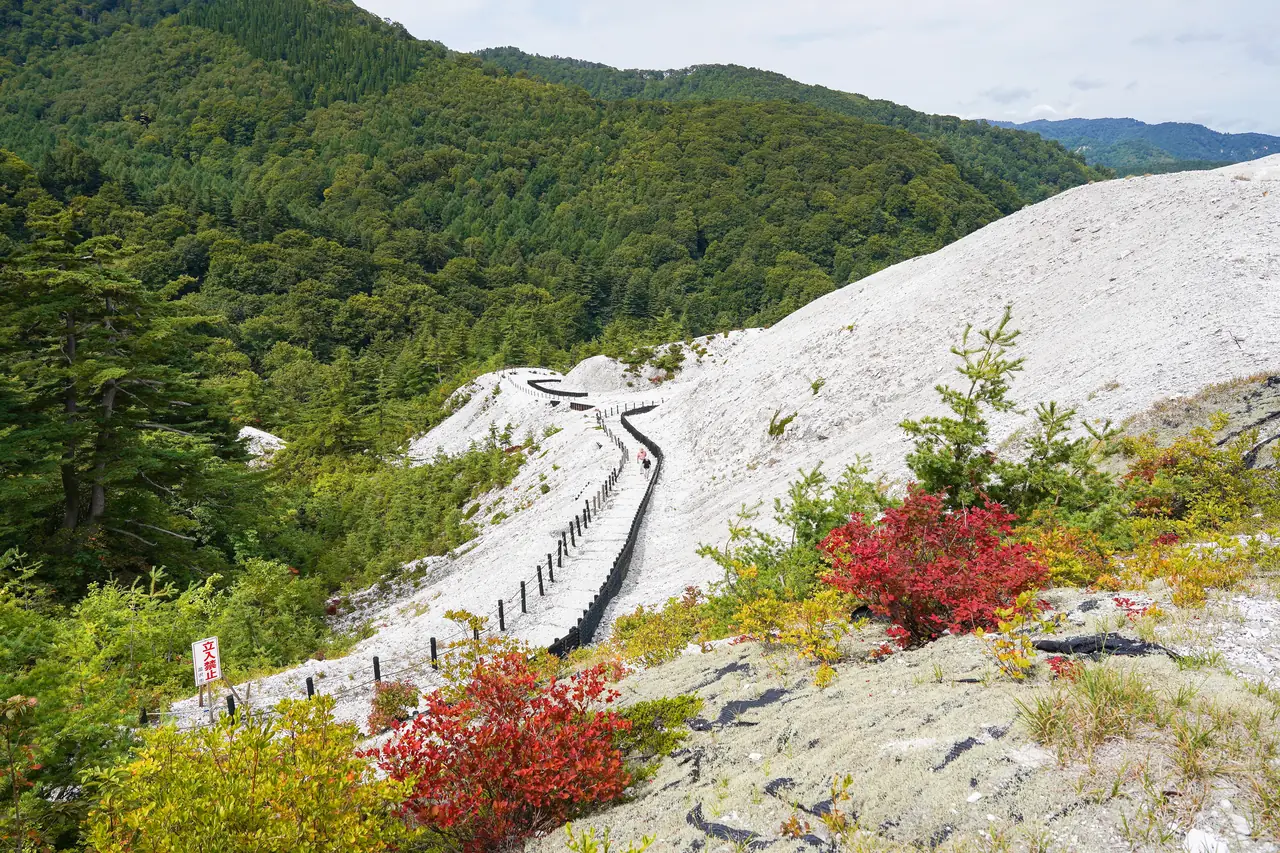
Photo: Akita Prefecture
Bathing in acidic water, and traveling in winter
Some of Akita's hot springs, like Tamagawa Onsen, have water that is hard on the skin. If it is your first time, avoid long soaks and follow the bathing instructions posted at the bath. Basics such as washing before you get in and keeping your towel out of the water are covered in our guide to onsen etiquette. In the mountains, roads close and inns shut in winter, so if you are going between November and April, check opening and transport with the inn and the local government's official information.
- Tamagawa Onsen and Shin-Tamagawa Onsen: Semboku City tourism information (Tamagawa Onsen Nature Trail), Shin-Tamagawa Onsen
- Oga Onsen: Oga City Tourism Association (Oganavi)
- Akinomiya Onsen, Oyasukyo Onsen and Kawarage: Yuzawa City tourism information