Ibusuki Day Trip: Sand Bath, Lake Ikeda and Mt. Kaimon
- Ibusuki Sand Bath (Saraku Sand Bath Hall)
- Lake Ikeda
- Tosenkyo Somen Nagashi
- Nishi-Oyama Station
- Cape Nagasakibana

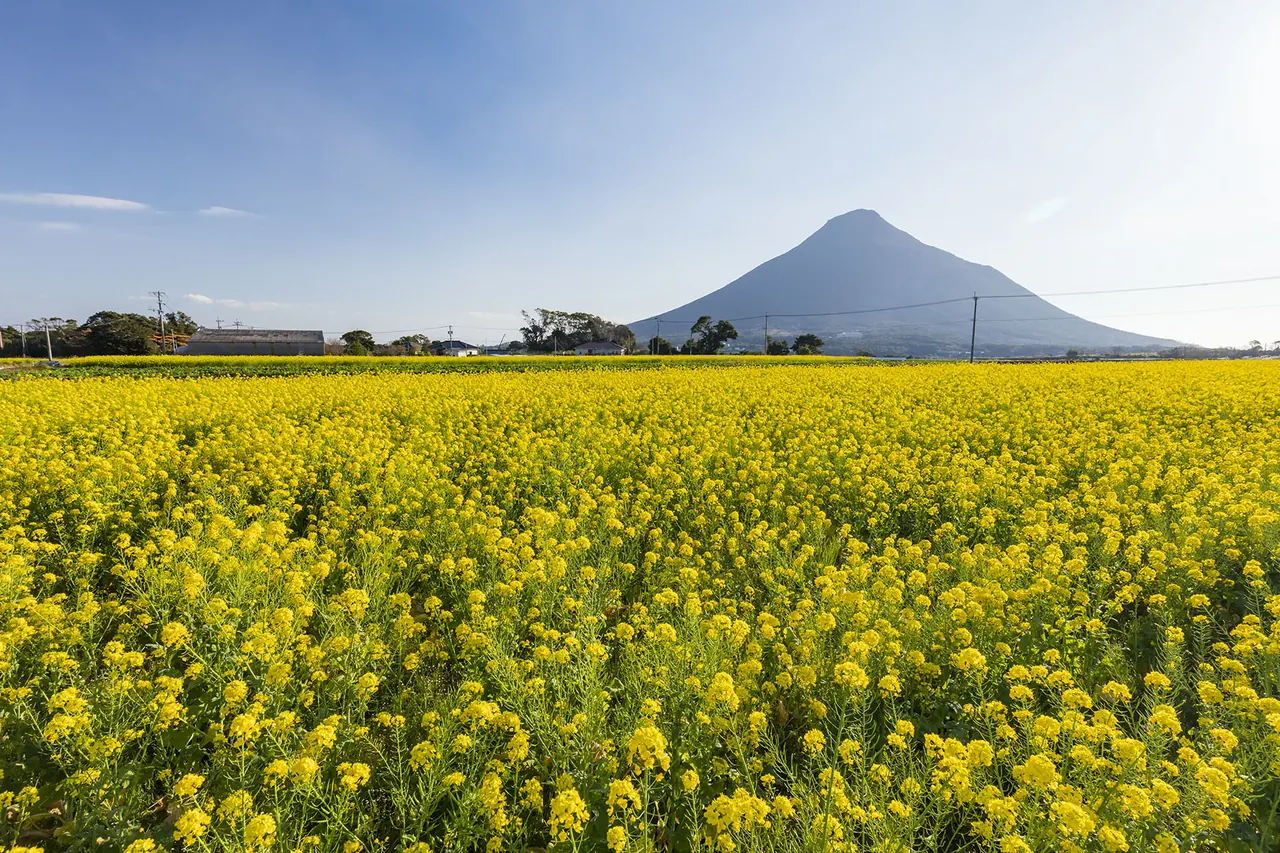
Photo: © K.P.V.B
Areas of Kagoshima
Ibusuki, at the tip of the Satsuma Peninsula, is known for hot sand baths and Mount Kaimon. Nishi-Oyama Station, Nagasakibana, Tamatebako Onsen and access.
Choose a numbered circle to zoom in there; choose a name to open the area's page.
This page is translated from the Japanese edition. Read the Japanese edition
Ibusuki is a hot spring town at the southern tip of the Satsuma Peninsula. Hot spring water runs beneath the sand on the shore, and people have long buried themselves in the warm sand for a sunamushi, or sand bath. Southwest of town rises Mount Kaimon, a cone that seems to climb straight out of the sea, and the landscape around it was shaped by volcanoes, from Lake Ikeda, the largest lake in Kyushu, to Cape Nagasakibana, the southernmost point of the Satsuma Peninsula.
It is about an hour by train from Kagoshima-Chuo Station, so a day trip is possible, but to enjoy the hot springs and the sunset, staying a night is better. Trains around the foot of Mount Kaimon are infrequent, so a car or a sightseeing taxi makes it easier to get around.
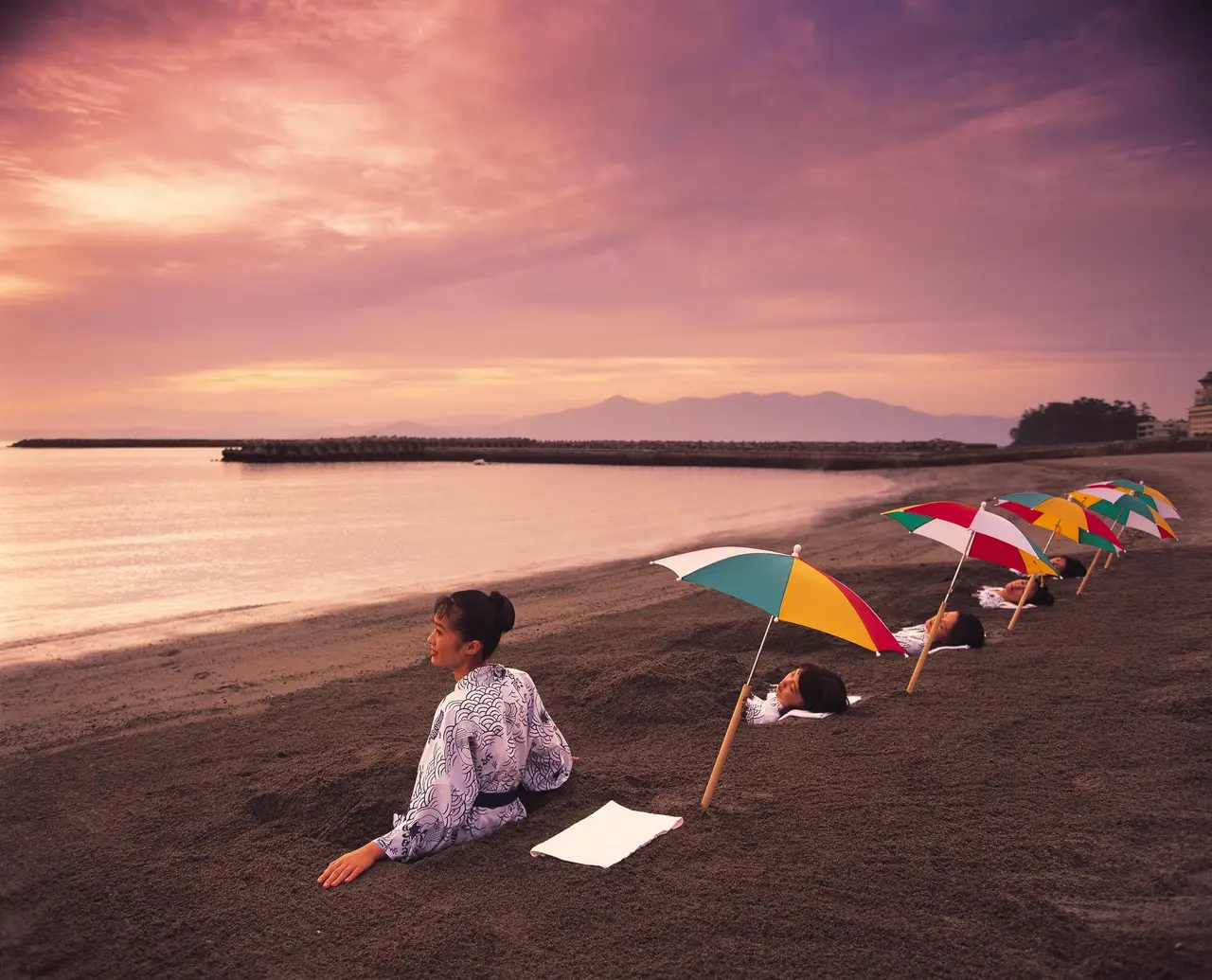
A way of bathing in which you are buried in warm sand, on the shore in central Ibusuki. You change into a yukata and go out onto the beach, where staff shovel sand over you up to your neck. The sand is heavy, and heat slowly spreads through your back. After brushing off the sand, you can soak in the hot spring. Bring a face towel to wrap around your head. See Ibusuki Natural Sand Bath.
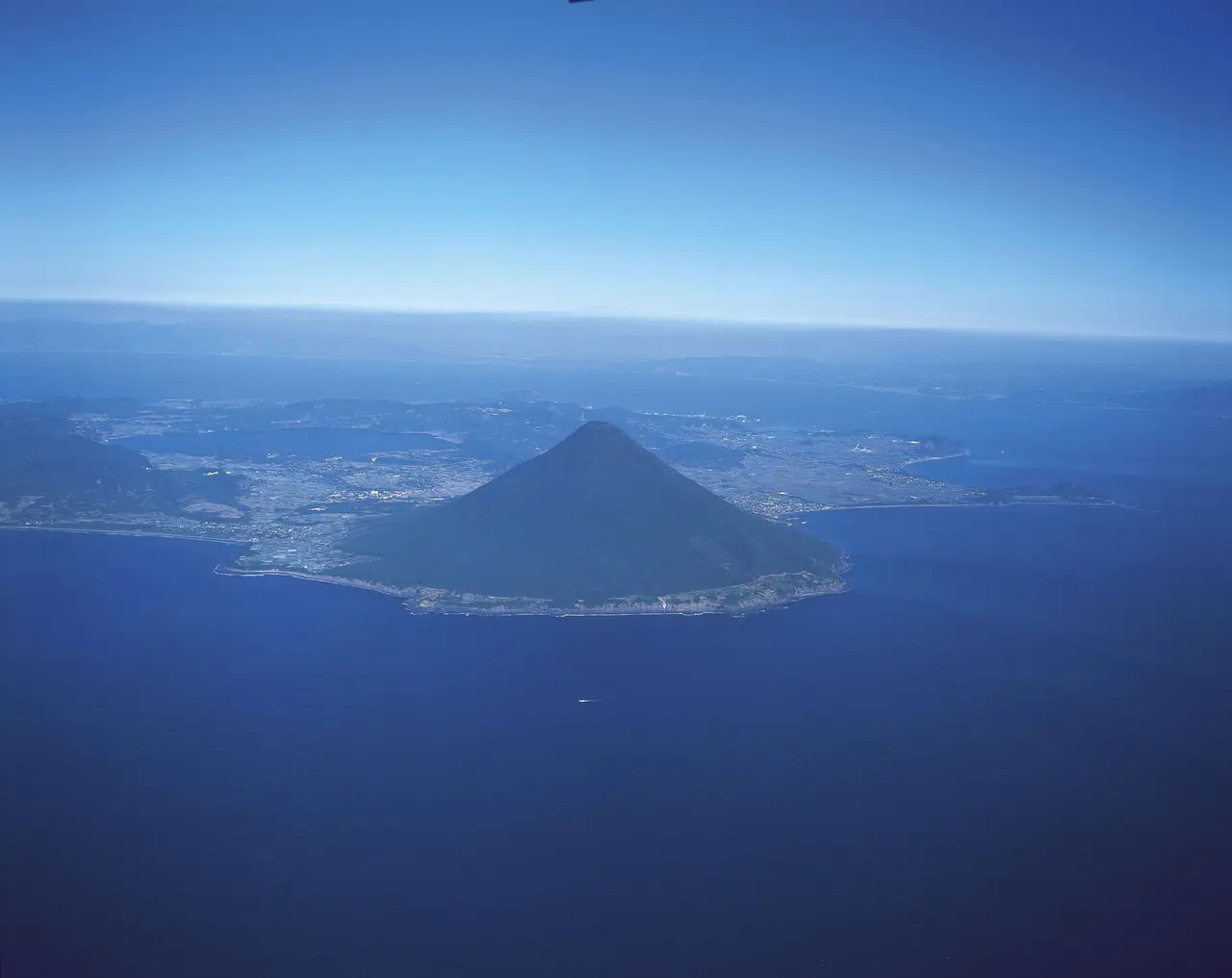
Mount Kaimon (924 m) is one of Japan's 100 Famous Mountains, called "Satsuma Fuji" for its even, conical shape. On the shore of Lake Ikeda to the north, rape blossoms bloom from winter into early spring, with the mountain rising beyond the yellow fields. A trail leads to the summit, and Ibusuki City puts the climb up and down at 4 to 6 hours. See Mount Kaimon.
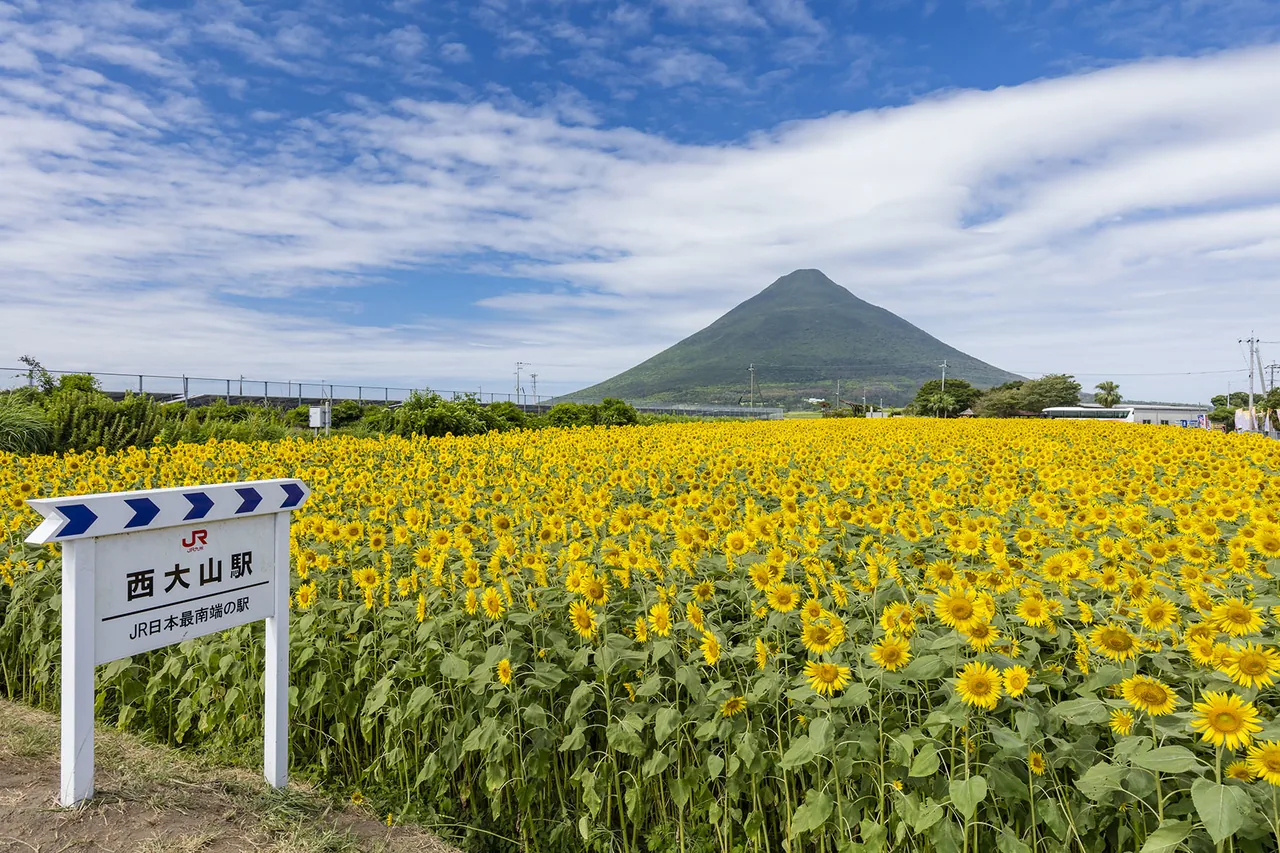
Photo: © K.P.V.B
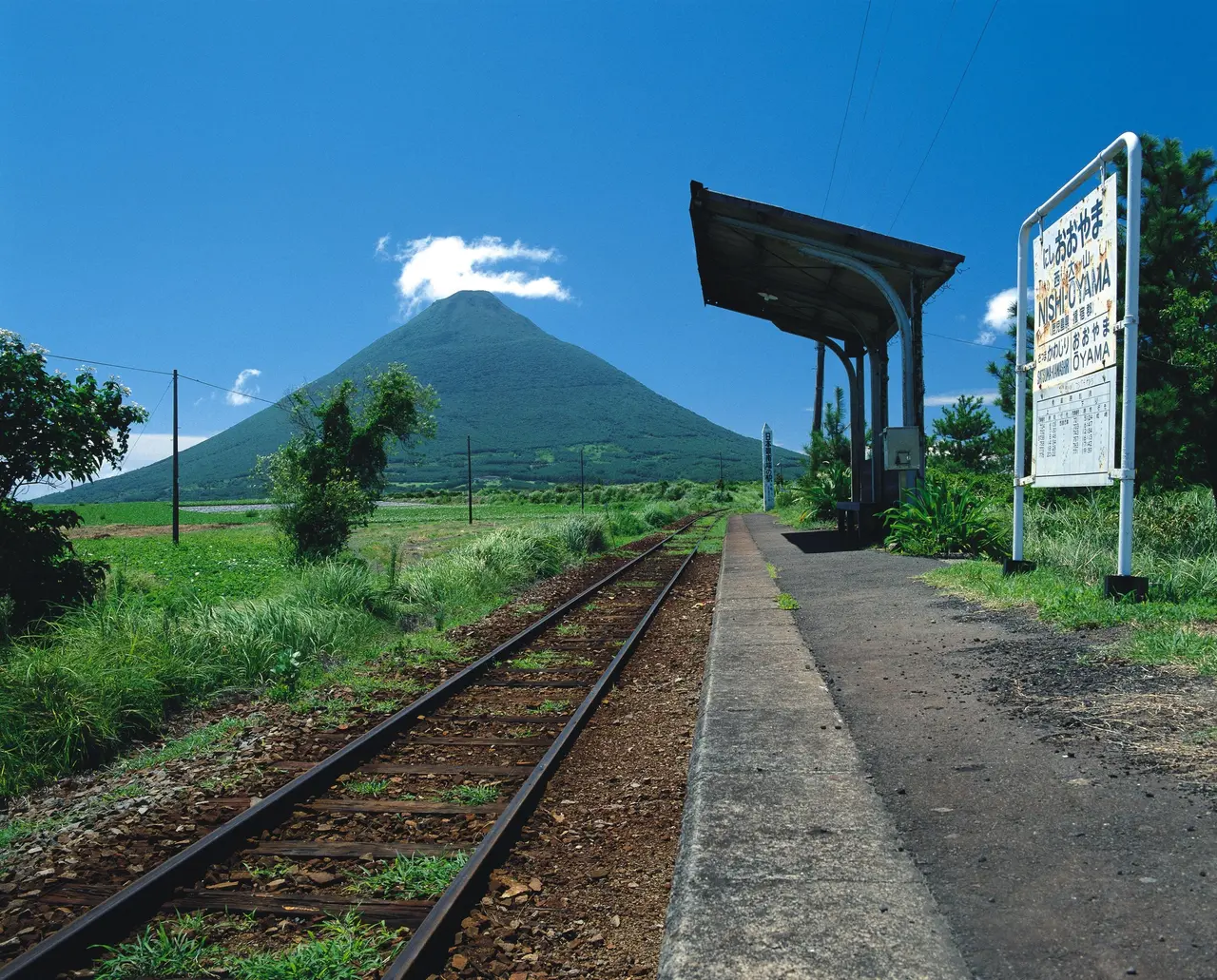
A small unstaffed station on the JR Ibusuki Makurazaki Line, the southernmost of all JR stations in Japan. Mount Kaimon looms large beyond the platform, which is surrounded by fields, and many people take photos with the sign marking it as the southernmost JR station. Only a few trains stop each day, so check times for both directions first. See Nishi-Oyama Station.
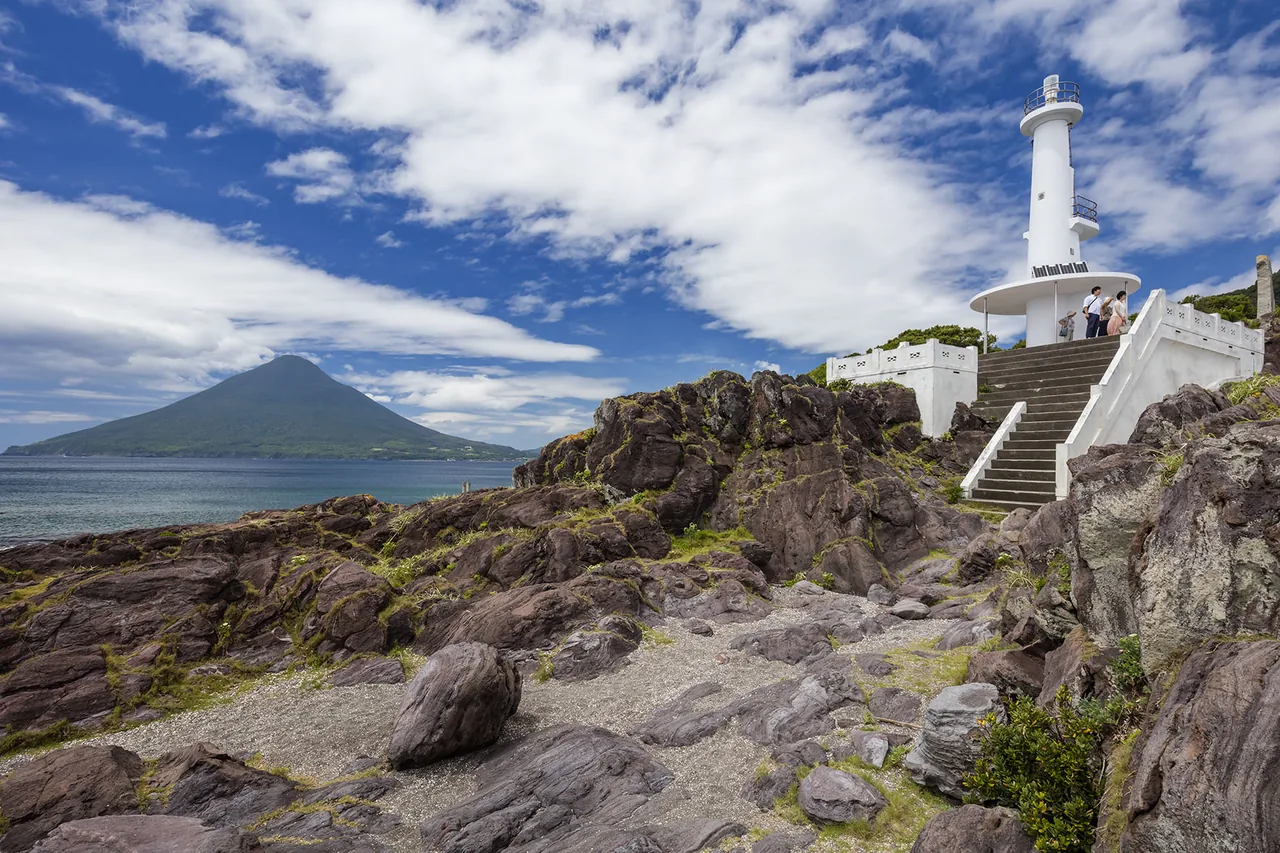
Photo: © K.P.V.B
A cape at the southernmost point of the Satsuma Peninsula, with a lighthouse at its tip and Mount Kaimon beyond the rocks. Legend says this is where Urashima Taro set off for the Dragon Palace, and nearby is Ryugu Shrine, dedicated to Toyotama-hime, said to be the model for the palace's princess Otohime. On clear days you may see islands such as Yakushima and Iojima across the sea.
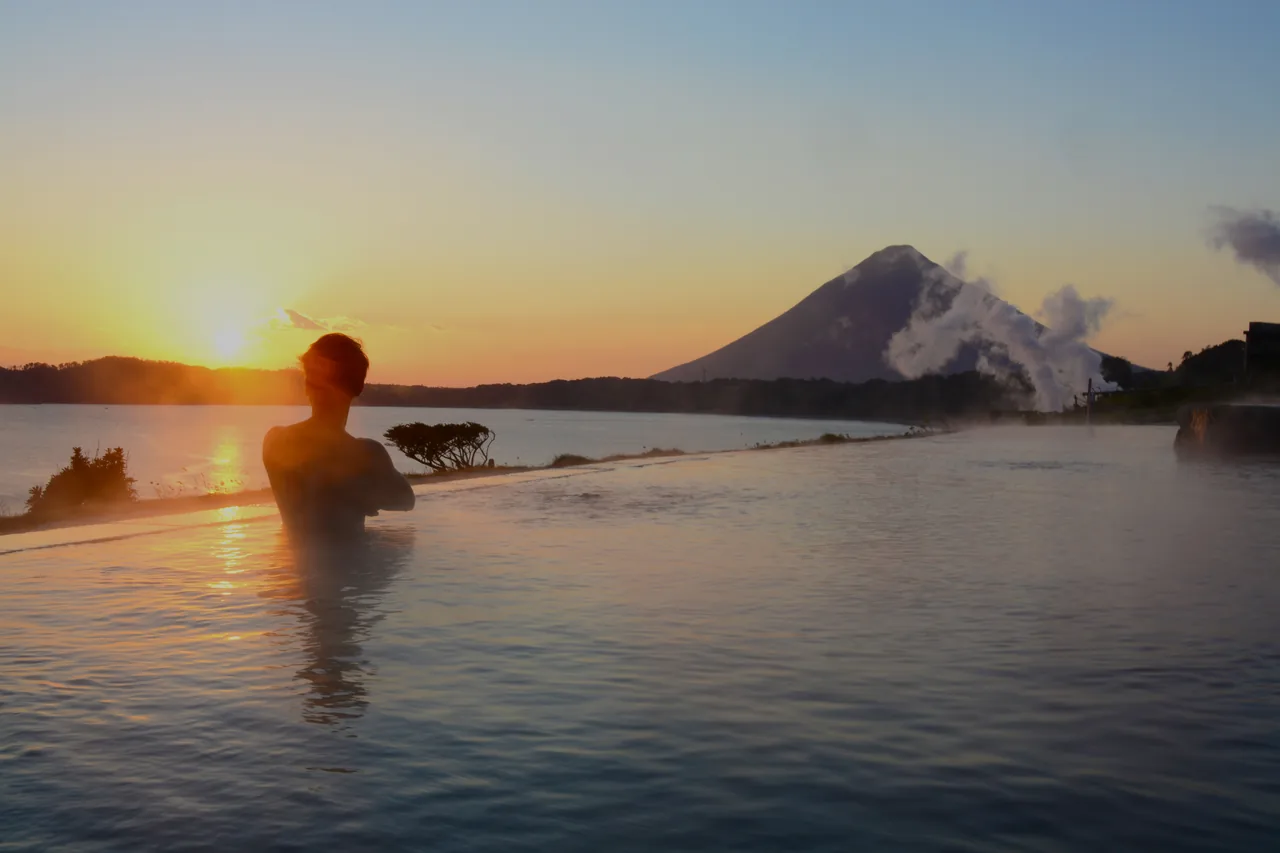
Photo: Ibusuki City Tourism Division
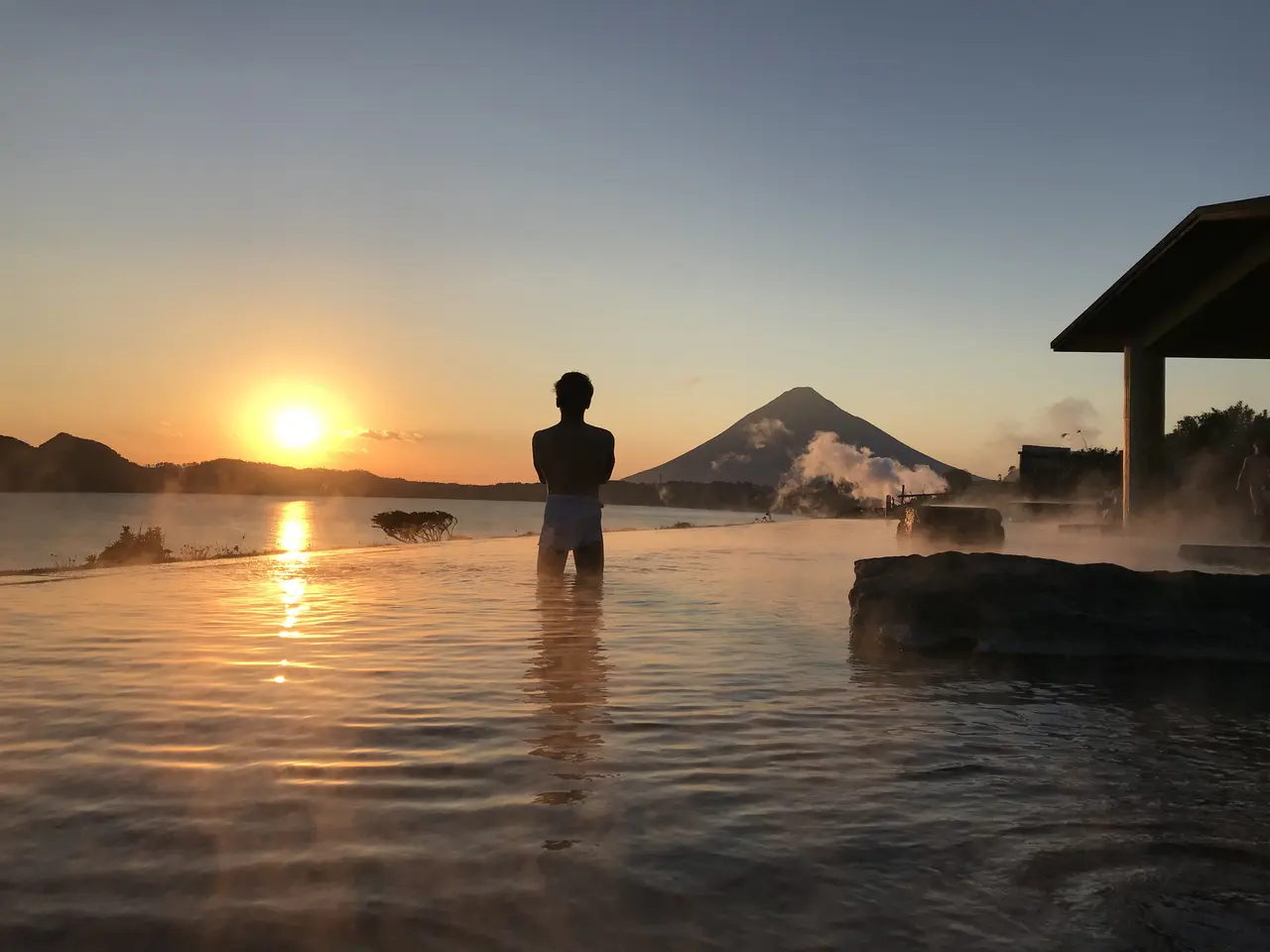
A city-run day-use hot spring on the coast at Yamagawa in Ibusuki, famous for outdoor baths that look out over the East China Sea and Mount Kaimon. On clear evenings you can watch the sun sink into the sea beside the silhouette of Mount Kaimon without leaving the water. It reopened in November 2025 after major renovation. See Tamatebako Onsen.
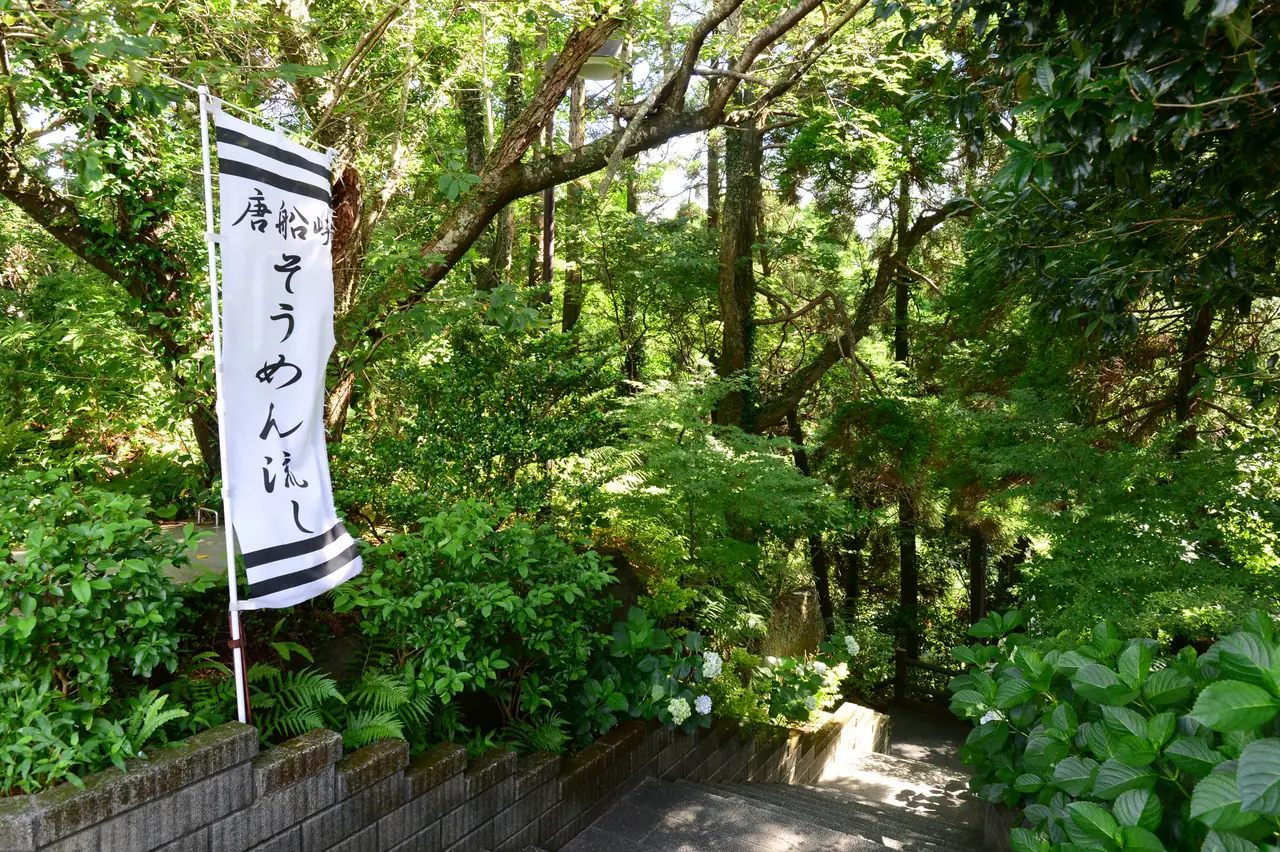
Photo: © K.P.V.B
A well-known spot for flowing noodles, in a gorge surrounded by trees at the northern foot of Mount Kaimon. Cold water circles inside a round tub and you scoop up the somen noodles as they flow past; this rotating style of somen nagashi is said to have started here. The water is spring water chosen as one of the "100 Exquisite and Well-Conserved Waters of the Heisei Era". It gets especially busy in summer.
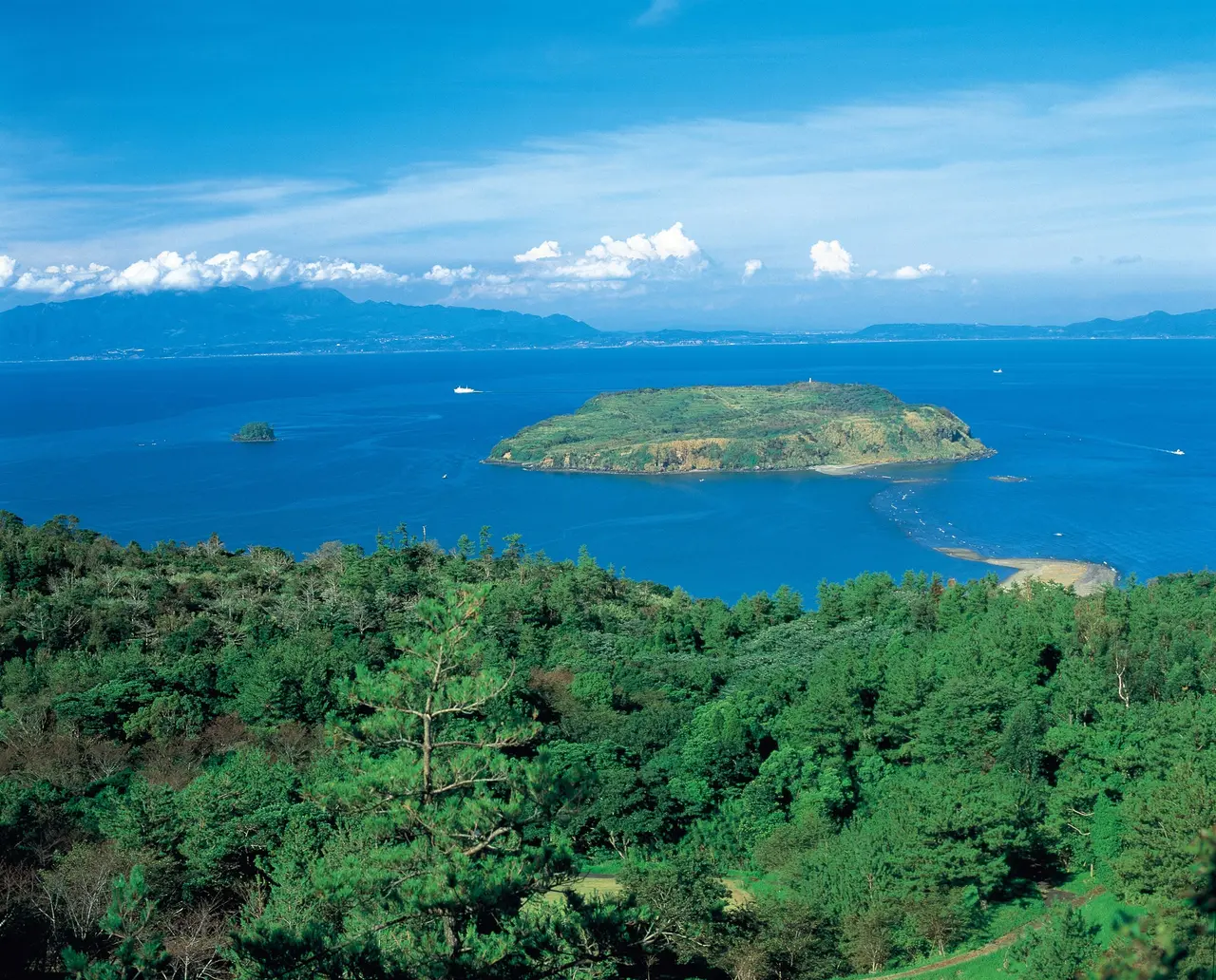
An uninhabited island in Kinko Bay northeast of town. From March to October, around low tide on days of spring and middle tides, a sand bar about 800 m long appears between the shore and the island so you can walk across. The Ibusuki City Tourism Association publishes forecasts of when the sand bar will appear each year. Walking around inside the island is still not possible because of landslides, so check the latest information before you go. See Chiringashima Island.
Besides the flowing noodles at Tosenkyo, Ibusuki is known for vegetables and eggs steamed in hot spring vapor, and for bonito landed at nearby Yamagawa Port. From winter into spring, vegetables such as broad beans and okra grown in Ibusuki's mild fields appear in the shops.
Places to eat and souvenir shops are clustered around the sand baths and Ibusuki Station. There are few shops on the roads around the foot of Mount Kaimon and toward Nagasakibana, so on driving days decide on lunch first.
For an overnight stay, an easy plan is a sand bath on the afternoon you arrive, then Tamatebako Onsen at Yamagawa in the evening to watch the sun set into the sea beside Mount Kaimon. The next day, drive around Lake Ikeda, Tosenkyo, Nagasakibana and Nishi-Oyama Station to see Mount Kaimon from many angles.
Around spring tides between spring and autumn, you can also fit in a walk across the sand bar to Chiringashima at a morning or midday low tide. Head west from Ibusuki and you reach Chiran and Ei, home to Kamafuta Shrine and Cape Banshobana. On the way back, return to central Kagoshima, or take the ferry from Yamagawa Port across to the Osumi Peninsula and on to Cape Sata.