
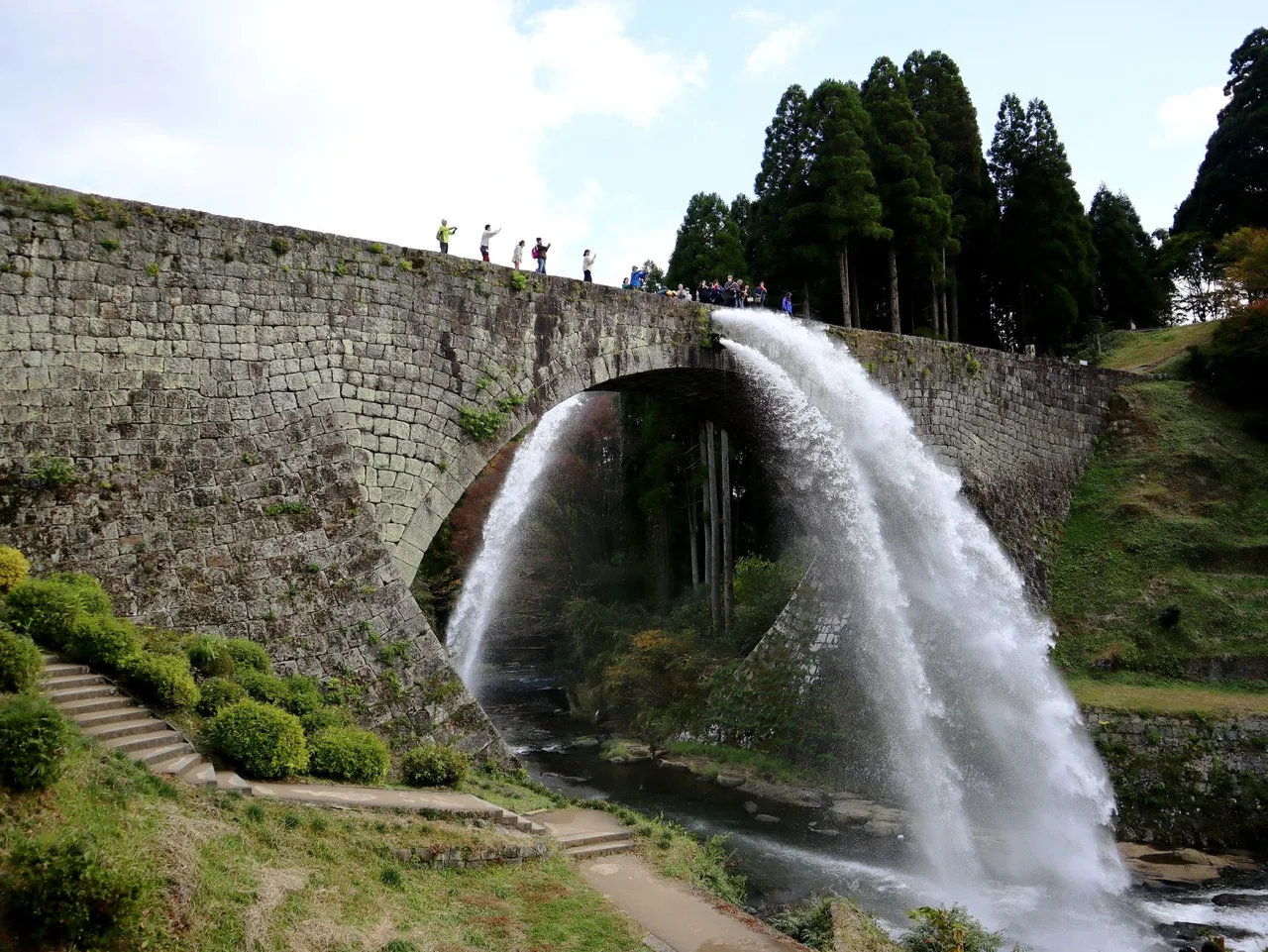
Yamato & Misato (stone bridges)
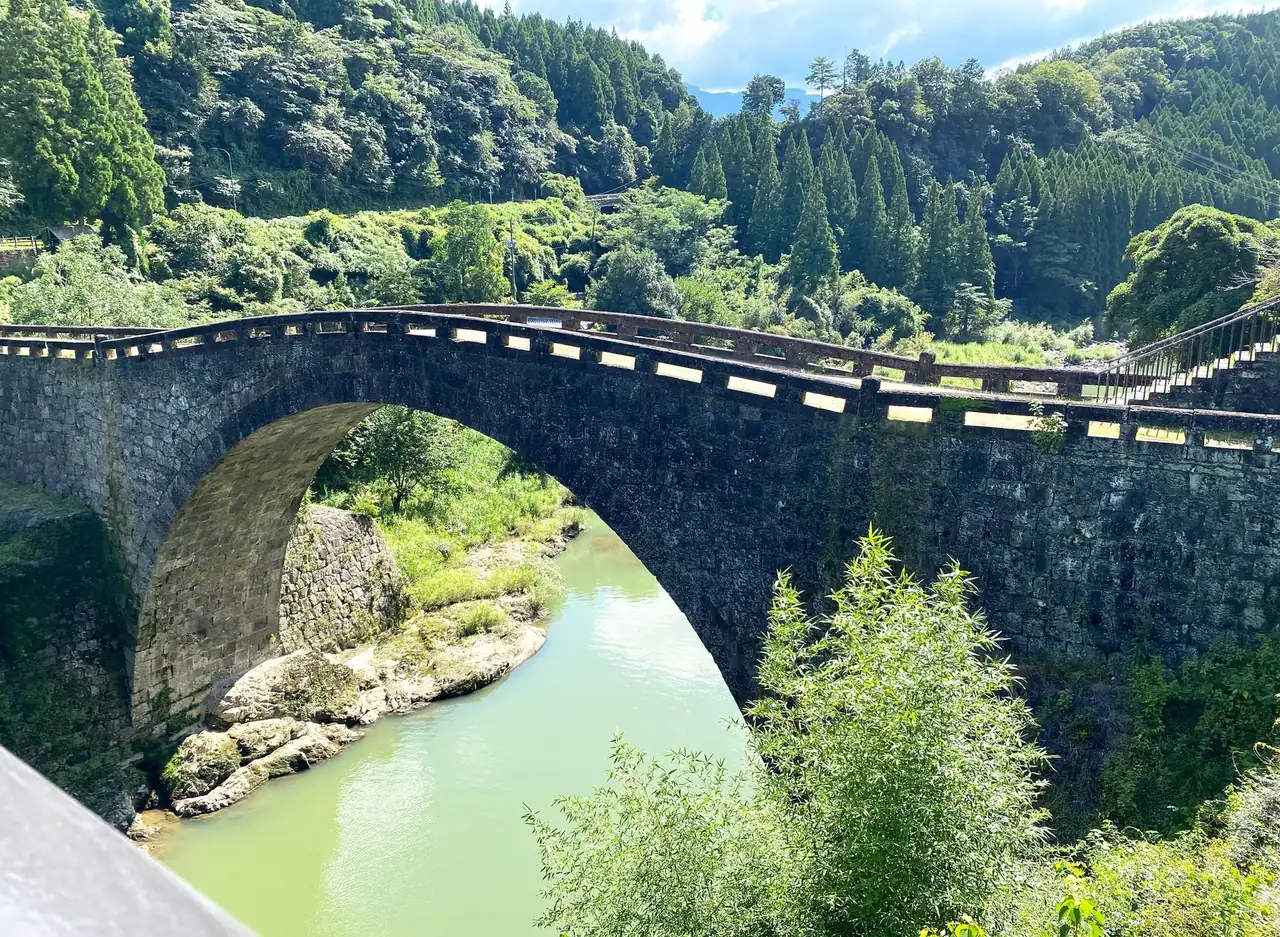
Photo: © Kumamoto Prefecture Tourist Federation.
Areas of Kumamoto
Yamato & Misato (stone bridges)
Edo-period stone bridges in Kumamoto's hills: the National Treasure Tsujunkyo Bridge, Reidaikyo, Futamata Bridge over a small stream and Seiwa Bunraku.
Find on the map
Choose a numbered circle to zoom in there; choose a name to open the area's page.
This page is translated from the Japanese edition. Read the Japanese edition
What is the area like?
Southeast of Kumamoto City, on the way up into the Kyushu Mountains, lie the towns of Yamato and Misato. Rivers run through deep valleys here, and from the late Edo period onward many arched bridges were built of stacked stone. Many stone bridges remain in Misato.
There is an aqueduct bridge that carried water across a valley to a plateau, and a bridge built of stone because the wooden ones kept being washed away. Each was built for a practical reason in people's daily lives. The bridges are scattered around the two towns and there is no railway, so the realistic way to explore is by car, combining the bridges with mountain shrines and a puppet theater.
Main sights
Tsujunkyo Bridge
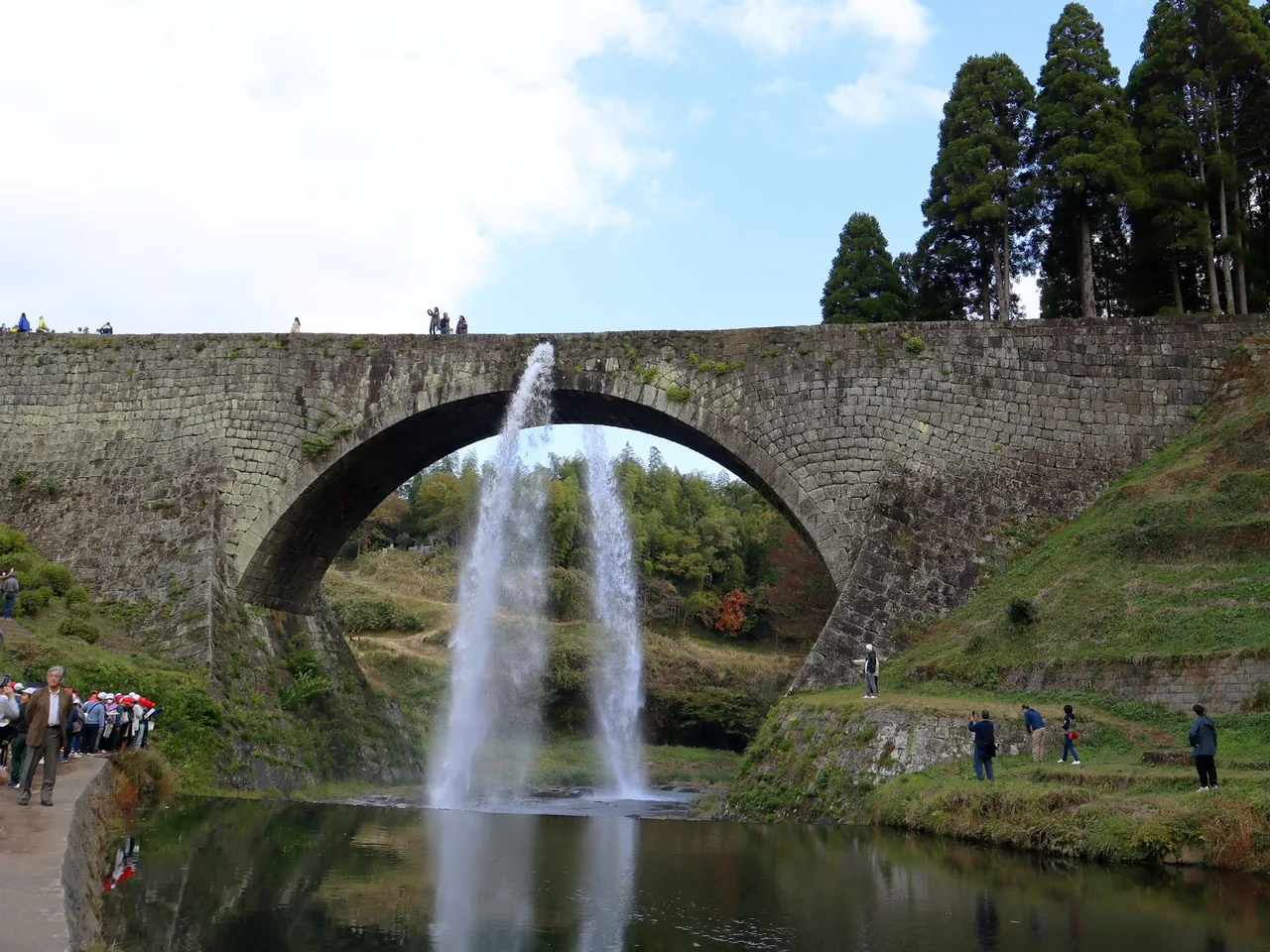
Photo: © Kumamoto Prefecture Tourist Federation.
This stone aqueduct bridge was built in 1854 to carry water to a dry plateau. It was designated a National Treasure in 2023. It is known for its water discharge, when water gushes out of openings in the middle of the bridge, and on discharge days people gather on the riverbank to watch. Discharges take place only on set days, so check Yamato Town's schedule before you go. Walks on top of the bridge are suspended for fiscal 2026. See Tsujunkyo Bridge.
Reidaikyo Bridge (Misato)
Reidaikyo, the bridge in the photo at the top of this page, spans the Midori River in Misato and was completed in 1847. According to Misato Town, the wooden bridges here were washed away again and again, so a local village headman planned a stone bridge, which was built under a master stonemason (宇助). It is a nationally designated Important Cultural Property. An iron bridge was built upstream in 1966, and the stone bridge was retired from road traffic.
Futamata Bridge
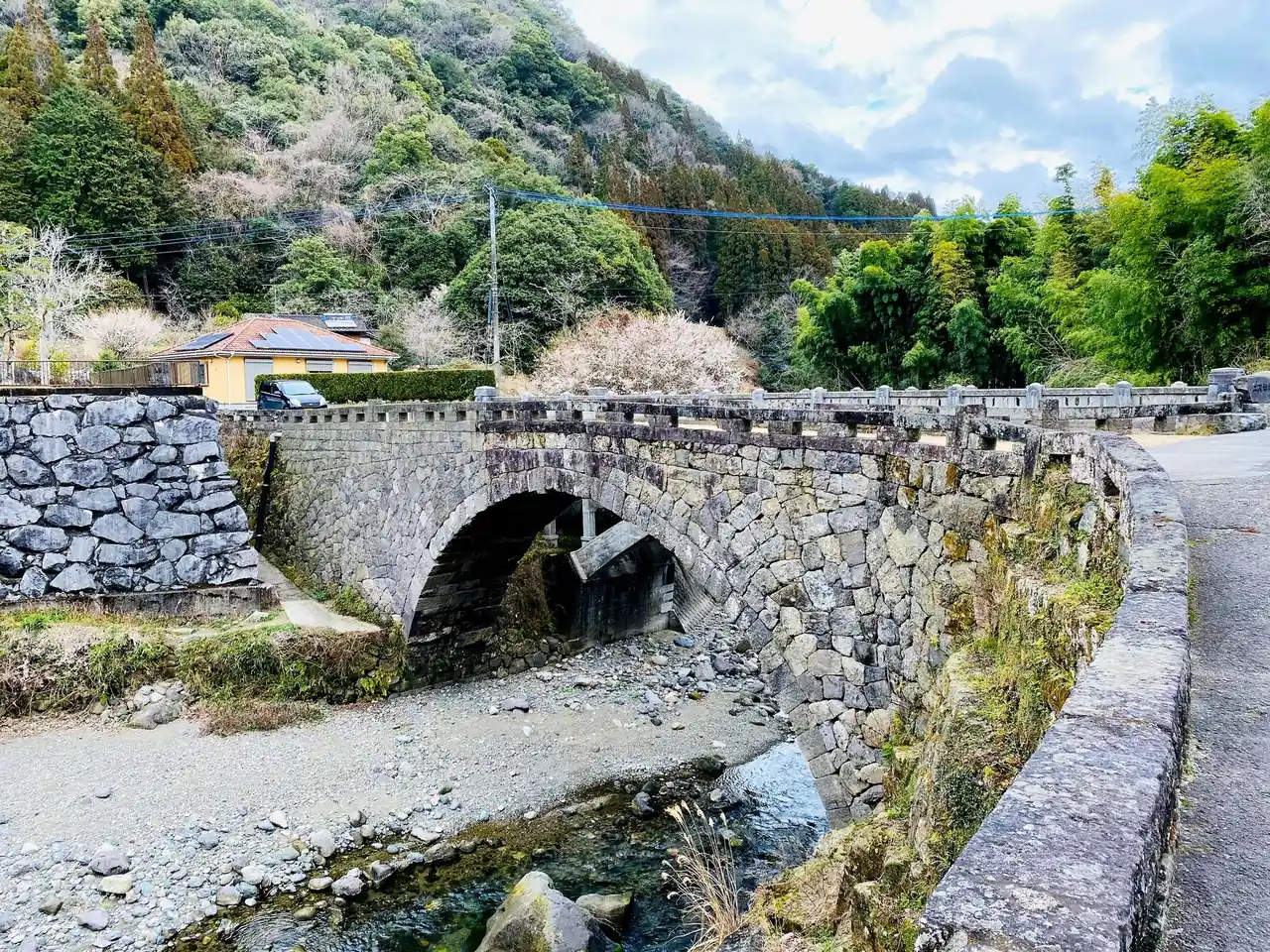
Photo: © Kumamoto Prefecture Tourist Federation.
A stone bridge over a small river in Misato. Its mossy stone arch spans a small stream among the trees. Before you go, check Misato Town's information on whether the area around the bridge is open.
Nihon-ichi no Ishidan stone steps
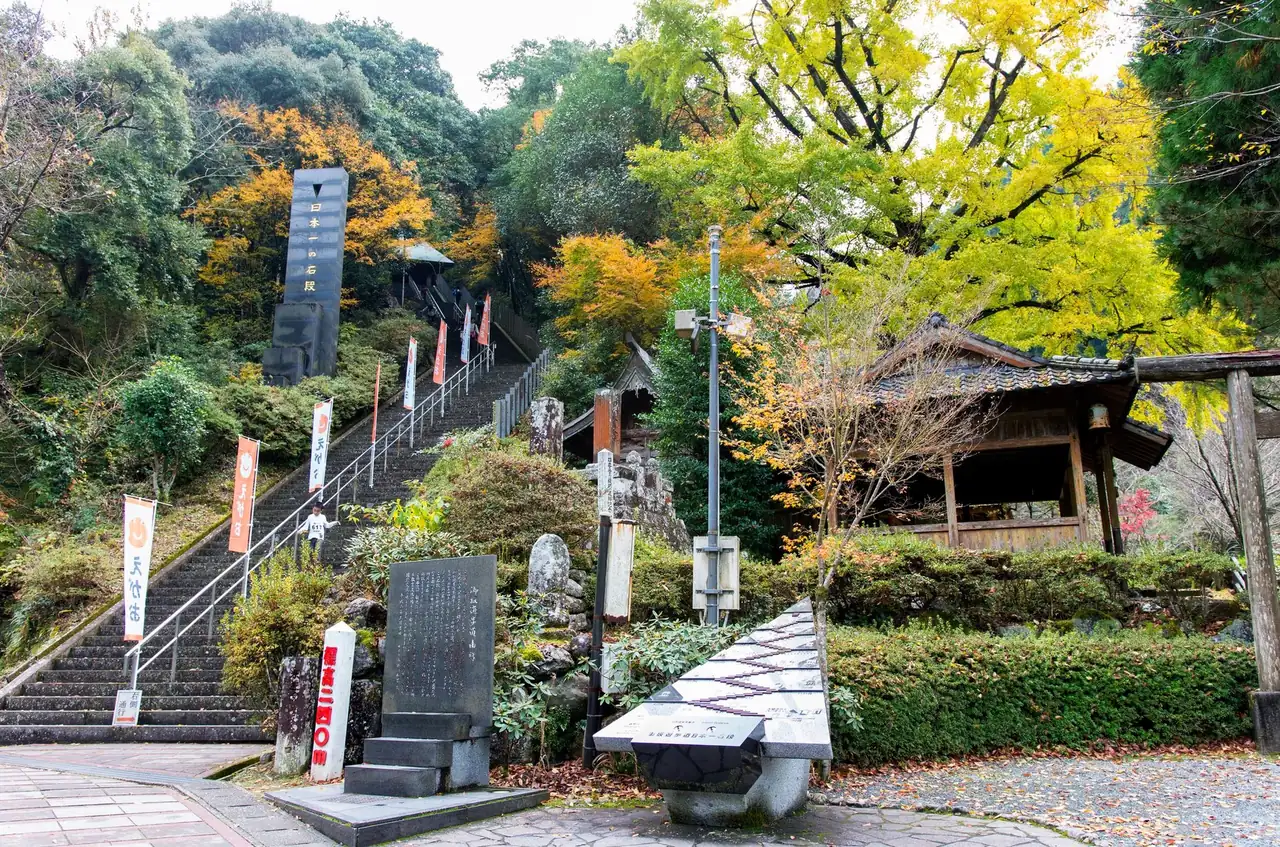
Photo: © Kumamoto Prefecture Tourist Federation.
Misato Town presents this promenade (御坂遊歩道) under the name "Nihon-ichi no Ishidan" (日本一の石段). A flight of 3,333 steps climbs between the trees toward the top of the mountain. Going up and down takes time and stamina, so wear comfortable shoes.
Heitate Shrine
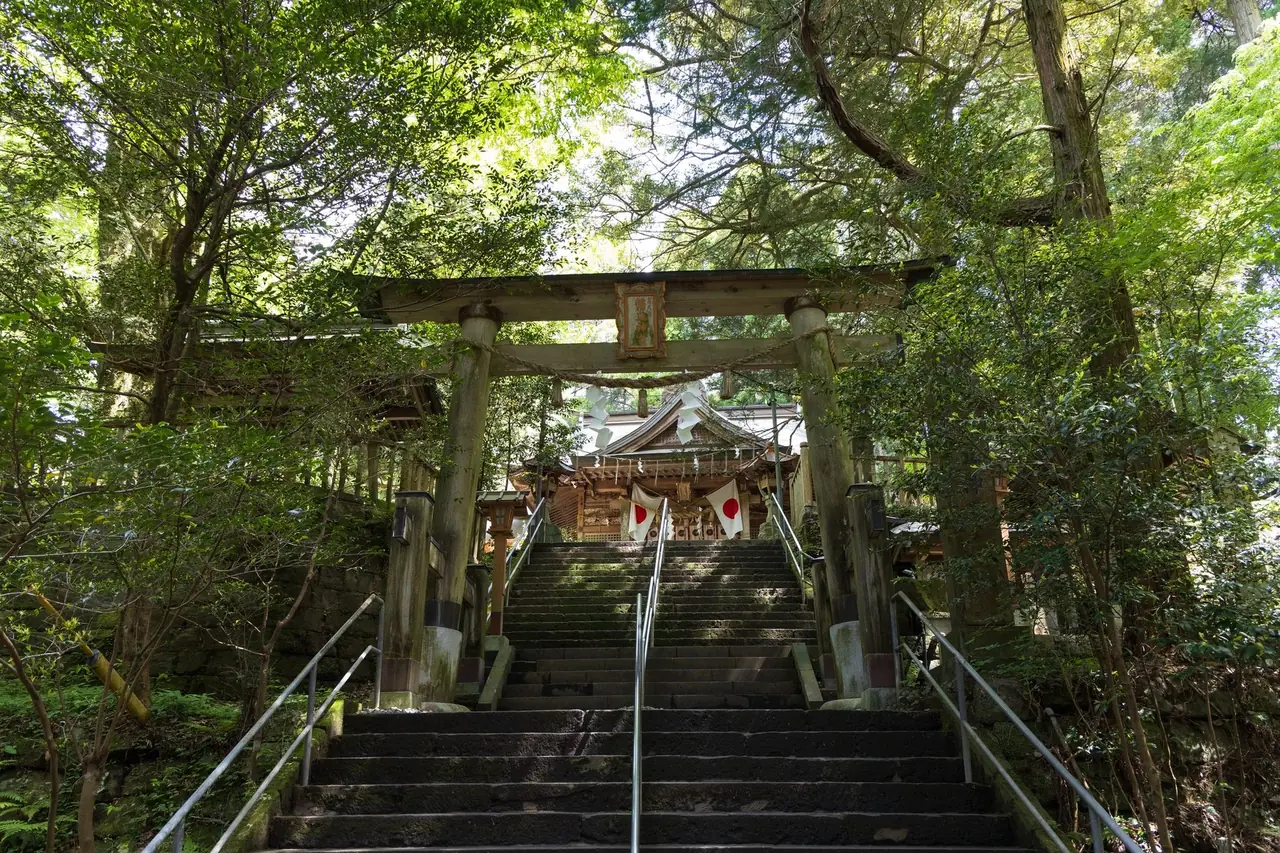
Photo: © Kumamoto Prefecture Tourist Federation.
A shrine in the woods of Yamato. It is said to be connected with the myths of Takamagahara, the heavenly realm of the gods, and old trees stand in the grounds, including a sacred cypress. Surrounded by cedars, the shrine building at the top of the steps is quiet even at midday.
Seiwa Bunraku-kan
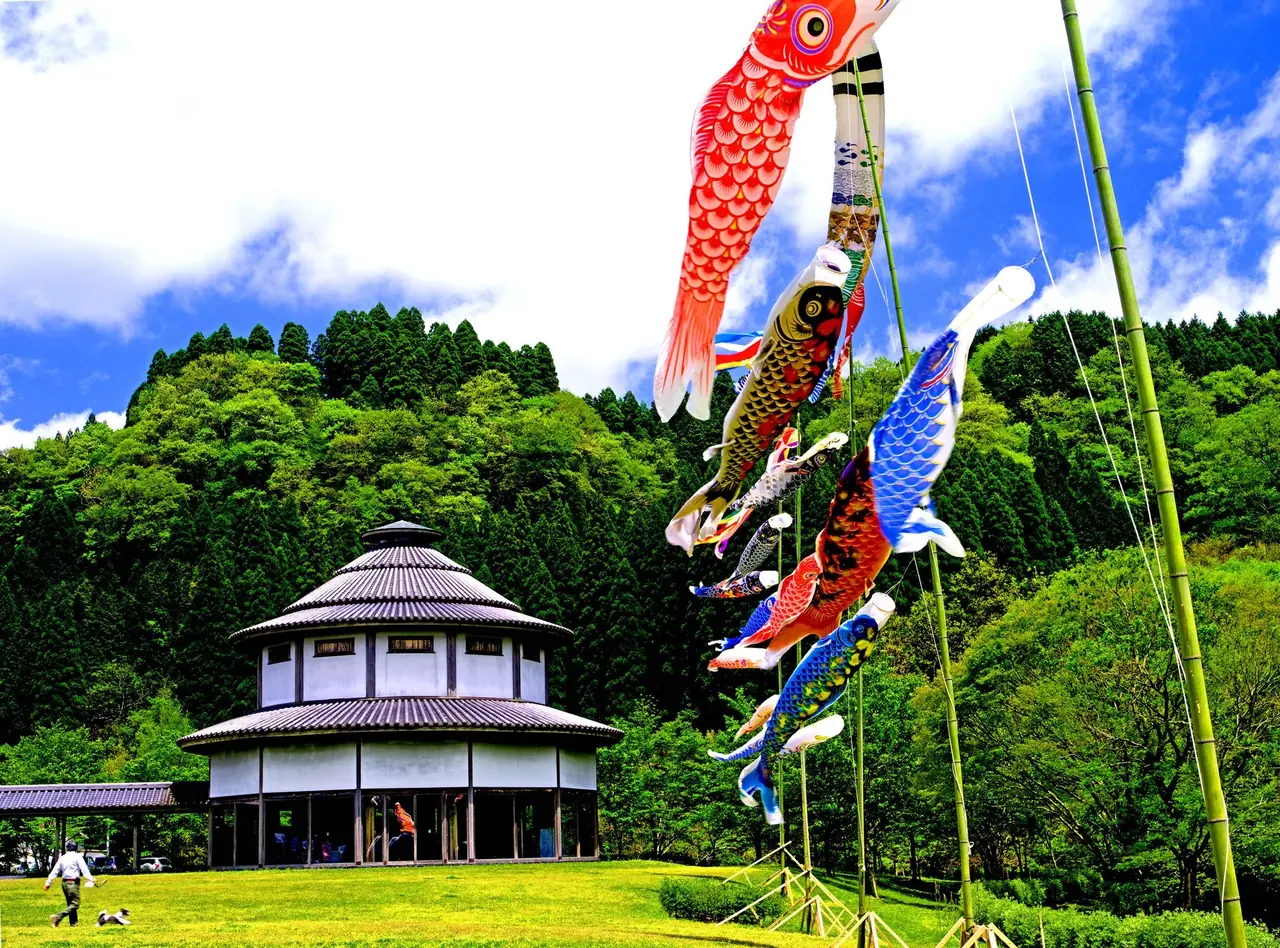
Photo: © Kumamoto Prefecture Tourist Federation.
A theater that stages Seiwa Bunraku, a form of puppet theater (ningyo joruri) passed down in the Seiwa district of Yamato. It stands inside the Seiwa Bunrakumura roadside station, and you can also see displays of puppets and the stage. Check the performance schedule on the Seiwa Bunraku-kan official website.
At the Hassaku Festival, held in Yamato like Tsujunkyo Bridge, huge figures called "otsukurimono", made from natural materials such as bamboo and cedar leaves, are paraded through the town.
Food and shopping
The Seiwa Bunrakumura roadside station has a restaurant serving local dishes. These are mountain towns, so there are not many places to eat. Decide in advance where you will have lunch.
Getting there
- By car: Head southeast from Kumamoto City into the hills. The bridges and shrines are far apart, so a rental car is by far the easiest way to get around.
- By bus: Local buses are infrequent, and most bridges and shrines are far from the bus stops. If you go by bus, check the route and times on the bus company's timetable before you set off.
Getting around the area
On a day trip, enter Misato from Kumamoto City, see Reidaikyo and Futamata Bridge, then continue to Yamato so you don't have to double back. In the afternoon, visit Tsujunkyo Bridge and, if you have time, go on to Seiwa Bunraku-kan or Heitate Shrine. If you want to see a water discharge, plan the day around Tsujunkyo Bridge.
Check the discharge schedule and visitor information for Tsujunkyo Bridge on the Yamato Town official website. To the northeast lies Minamiaso & Takamori, with its springs and shrines.


