Shimanto River Chinkabashi One-Day Itinerary by Bus
- Sada Submersible Bridge (Imanari Bridge)
- Takase Submersible Bridge (Takase Chinkabashi)
- Iwama Submersible Bridge (Iwama Chinkabashi)
- Ekawasaki

画像提供:(公財)高知県観光コンベンション協会
Areas of Kochi
Three submersible bridges on the Shimanto River in Shimanto City: Sada, Takase and Iwama. Each bridge, getting there from Nakamura, and crossing safely.
This page is translated from the Japanese edition. Read the Japanese edition
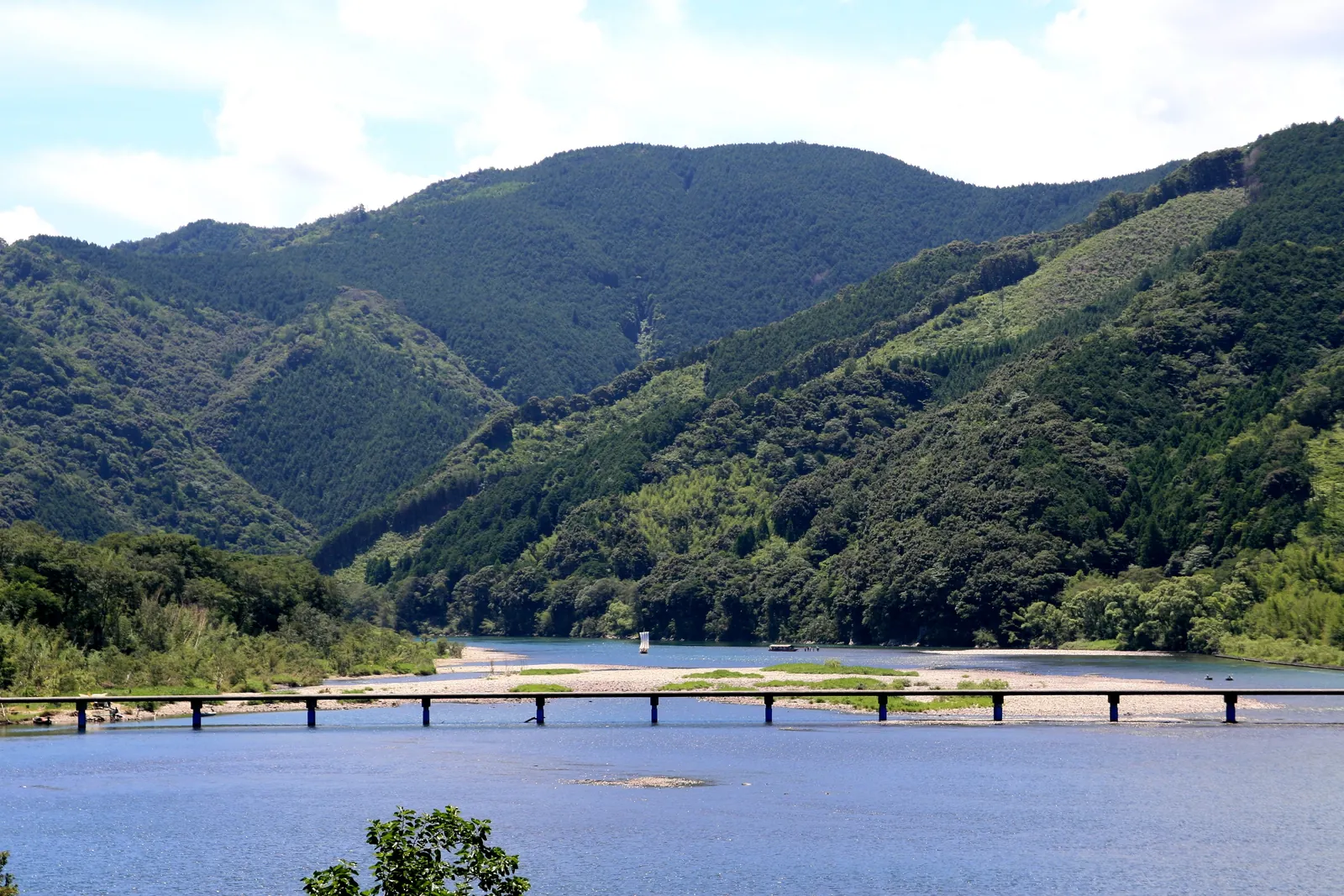
Follow the Shimanto River upstream from central Nakamura and you keep seeing narrow, railing-free bridges laid just above the water. These are chinkabashi, "submersible" bridges built low so that they go underwater when heavy rain swells the river, and local cars and people still use them every day.
Going upstream from Sada to Takase and Iwama, the river slowly narrows and the mountains close in. The bridges are spread out: Sada, downstream, is about 15 minutes by car from Nakamura Station, while Iwama, on the middle reaches, is about 50 minutes.
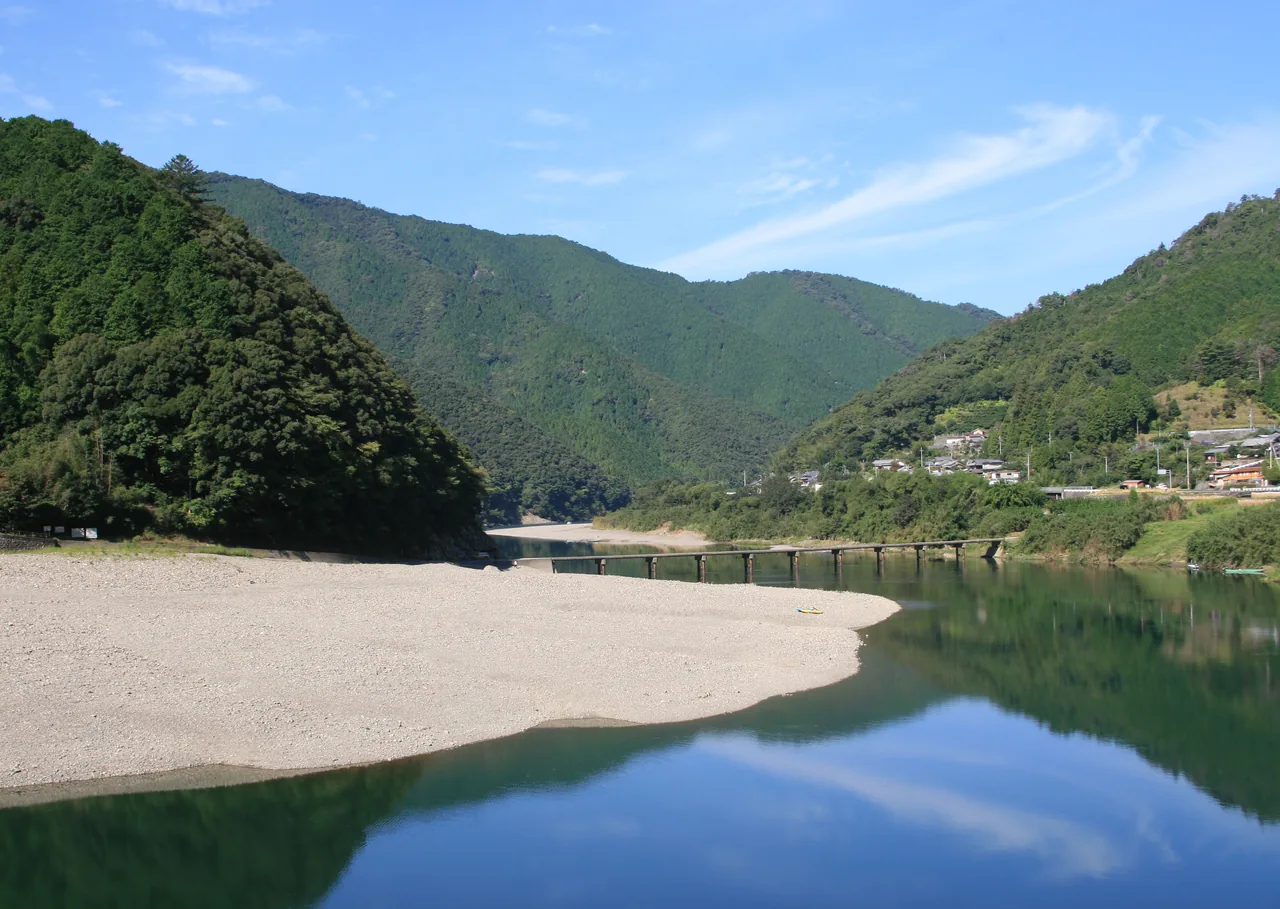
The farthest downstream and the longest of the submersible bridges remaining on the Shimanto River. Its official name is Imanari Bridge; it is 291.6 meters long and 4.2 meters wide, and was built in 1972. The slender bridge runs straight across the full width of the river, and from the riverbank below you can see just how low it is. For more, see Sada Submersible Bridge. Official information is on the Sada Submersible Bridge page of Kochi-tabi.
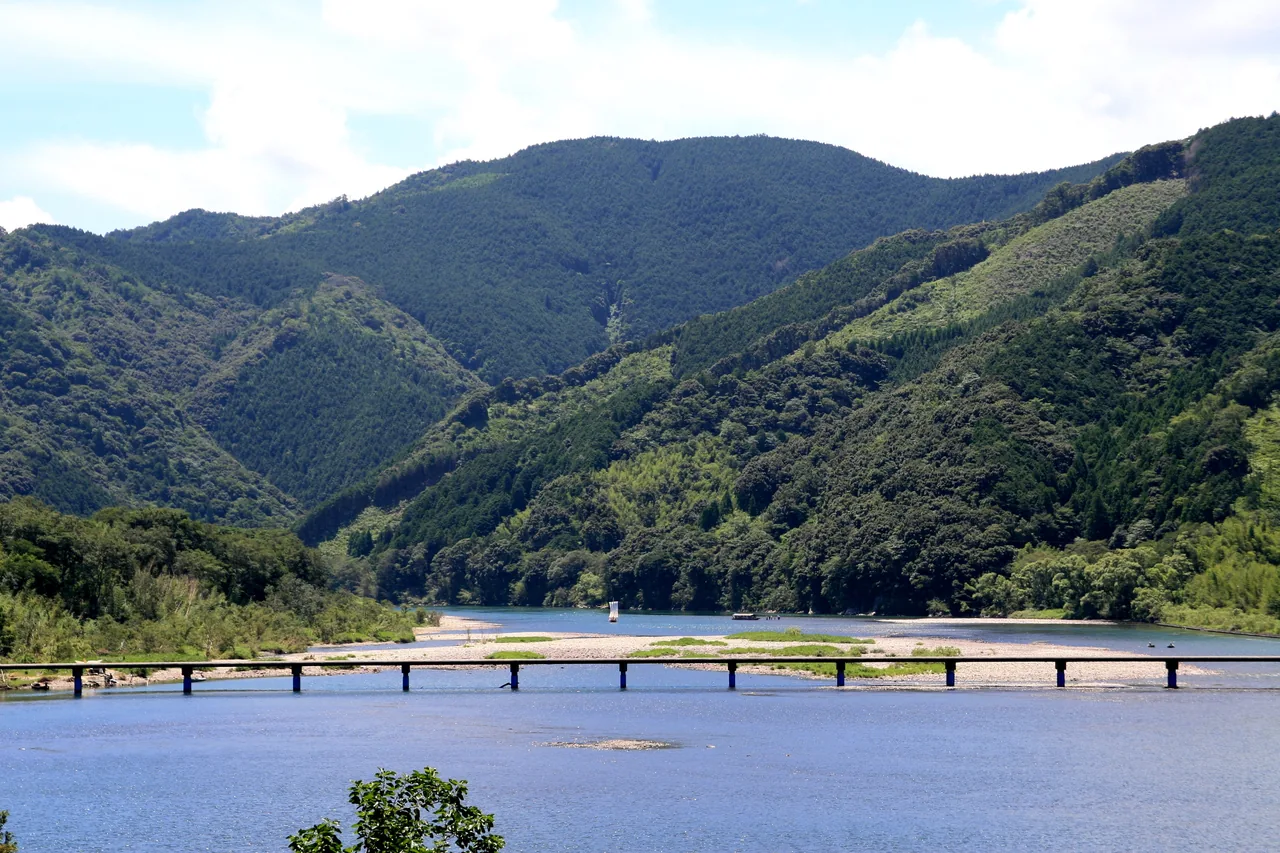
Completed in 1973, it is 232.3 meters long and 3.4 meters wide. It is the third-longest submersible bridge on the Shimanto, and ordinary cars can cross it. The riverbank around it draws people watching fireflies in early summer and camping in summer. For more, see Takase Submersible Bridge.
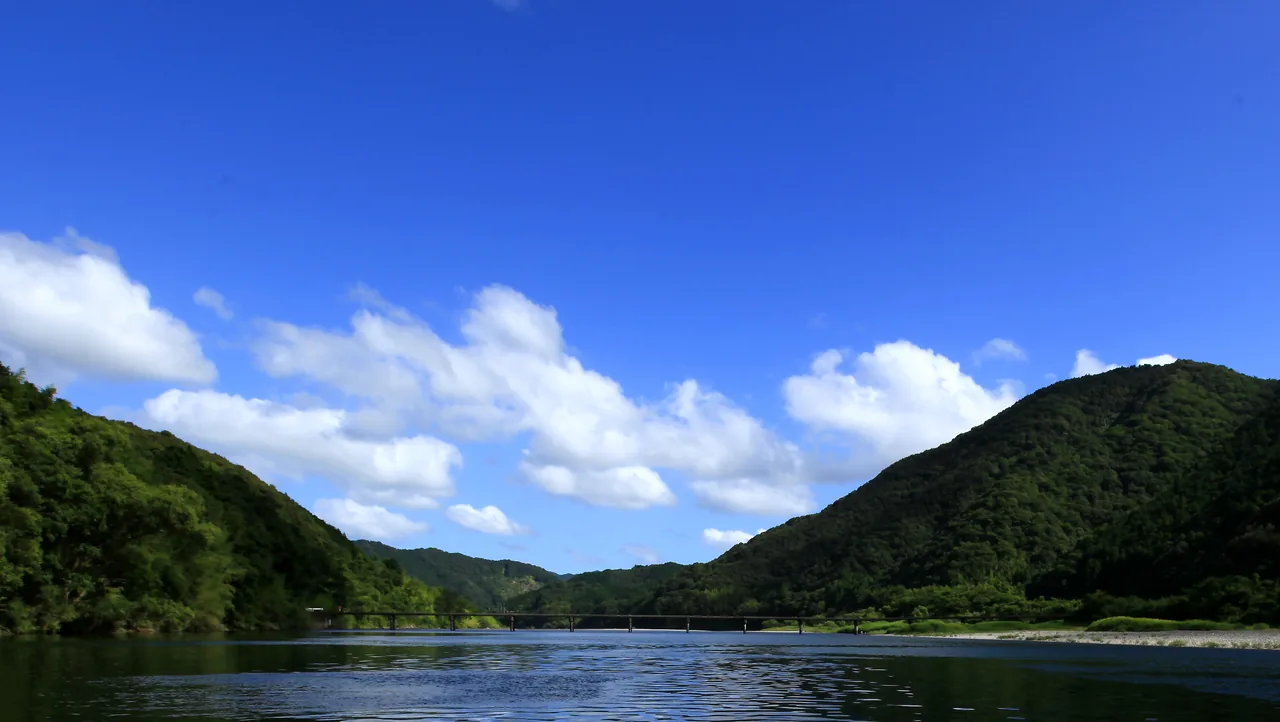
This 1966 bridge crosses the river in the Iwama district of Nishitosa, on the middle reaches. At 120 meters long and 3.5 meters wide, it runs low over the deep green water between the mountains, a view that has appeared in tourism posters and TV commercials. For more, see Iwama Submersible Bridge. Kochi-tabi's Iwama Submersible Bridge page gives its location and access.
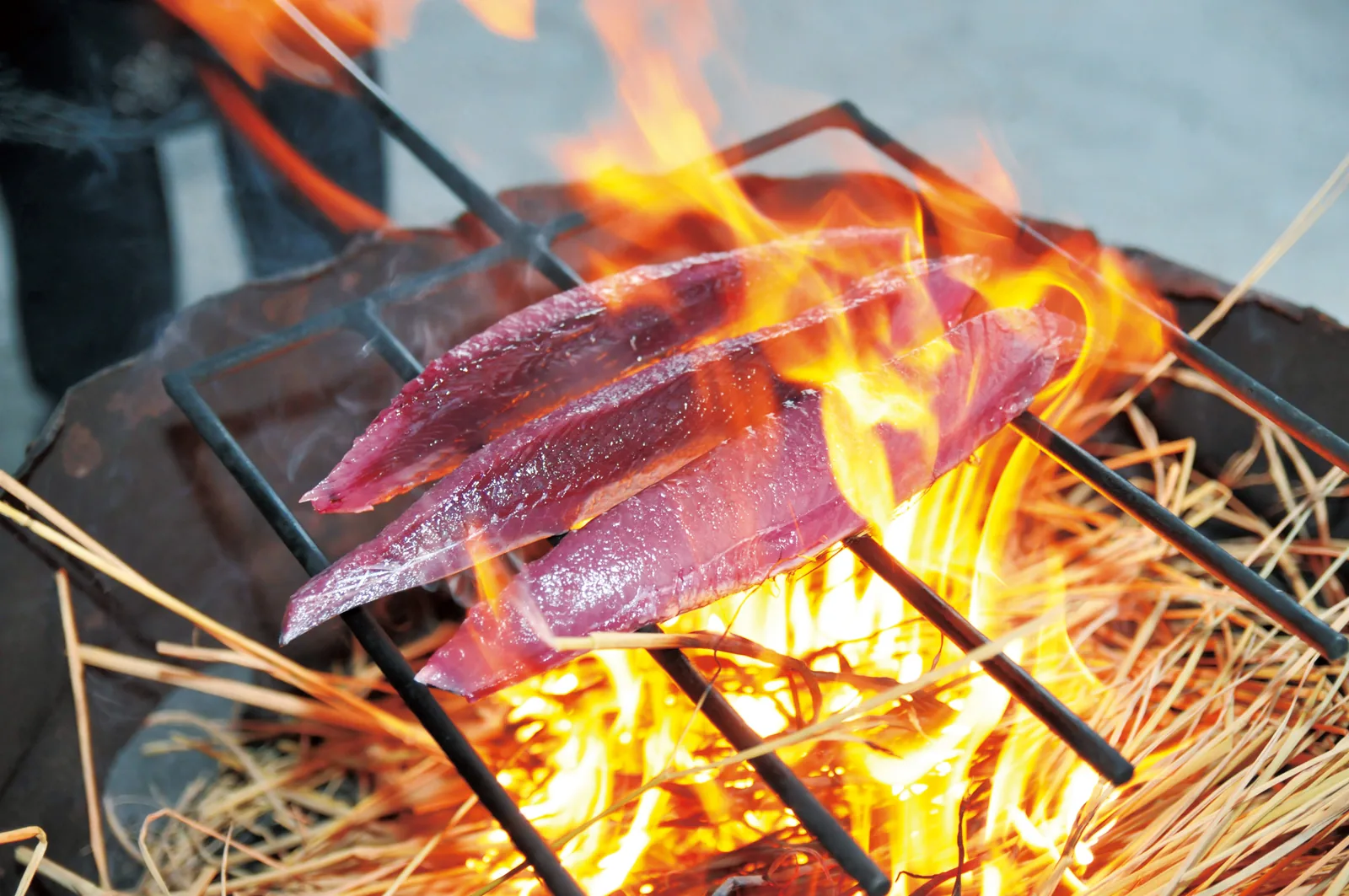
The bridges stand by riverside villages and riverbanks. Getting around is easier if you eat and shop in central Nakamura, your base, beforehand. Places to eat are listed below on this page.
Visiting in order upstream, from Sada to Iwama, lets you watch the scenery change. For a one-day plan by bus, see our Shimanto River chinkabashi one-day itinerary; for each bridge in detail, see our guide to the Shimanto River chinkabashi.
The bridges have no railings. Stay away from the edges, and when a car comes, step off the bridge and wait. Do not cross when the river is running high after rain. Iwama has been closed before after a pier sank, so check the Shimanto City Tourism Association's notices for its current status.
For the base town, see our Nakamura (Shimanto City) area guide; for the oldest bridge, upstream in Shimanto Town, see our Taisho & Towa (Shimanto Town) area guide.