Yanai & Suo-Oshima
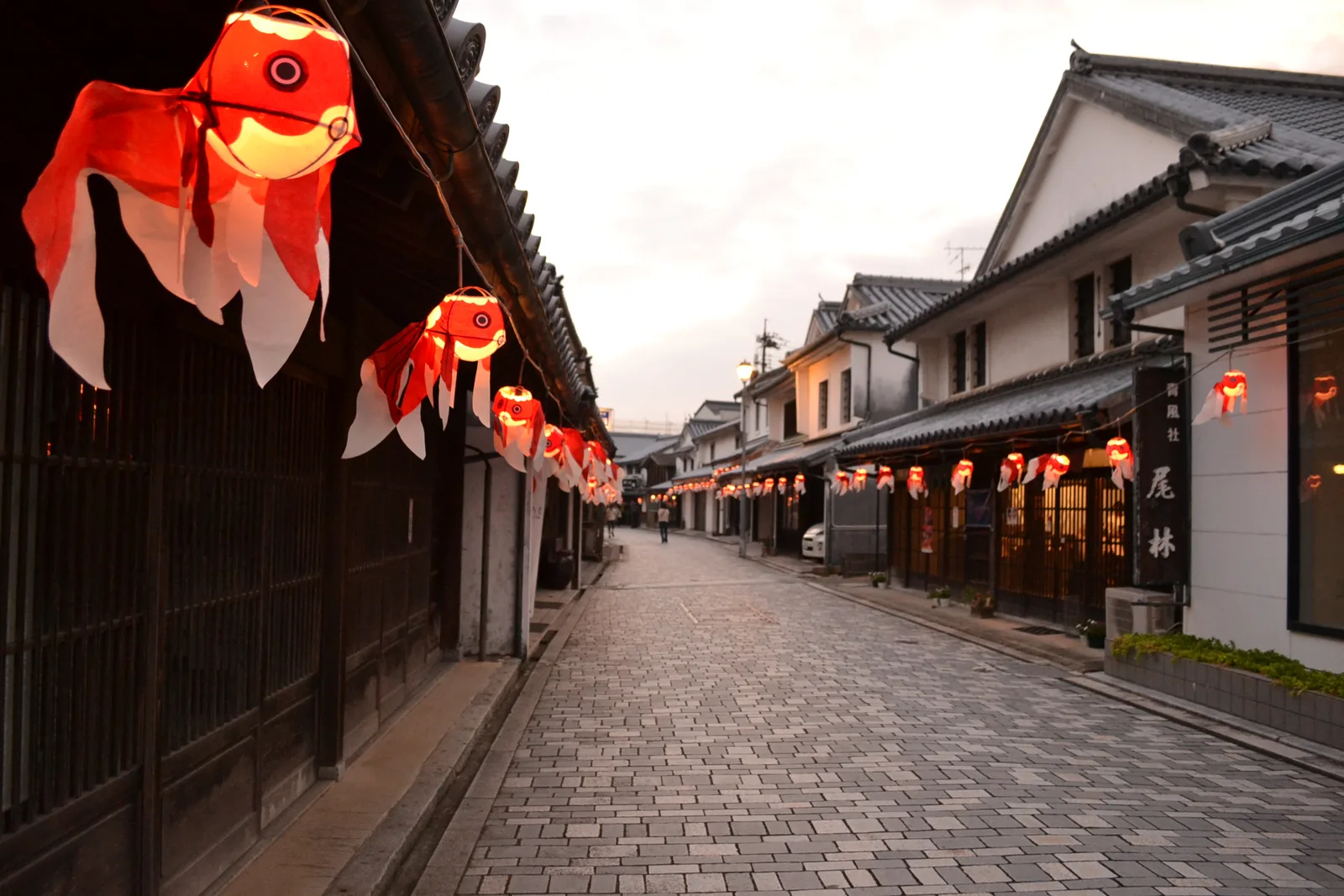
Photo: (c) Yamaguchi Prefectural Tourism Federation
Areas of Yamaguchi
Yanai & Suo-Oshima
Goldfish lanterns glow on summer evenings in Yanai's white-walled streets. Local kanro soy sauce and Suo-Oshima, the 'island of mikan', from JR Yanai Station.
Find on the map
Choose a numbered circle to zoom in there; choose a name to open the area's page.
This page is translated from the Japanese edition. Read the Japanese edition
What is the area like?
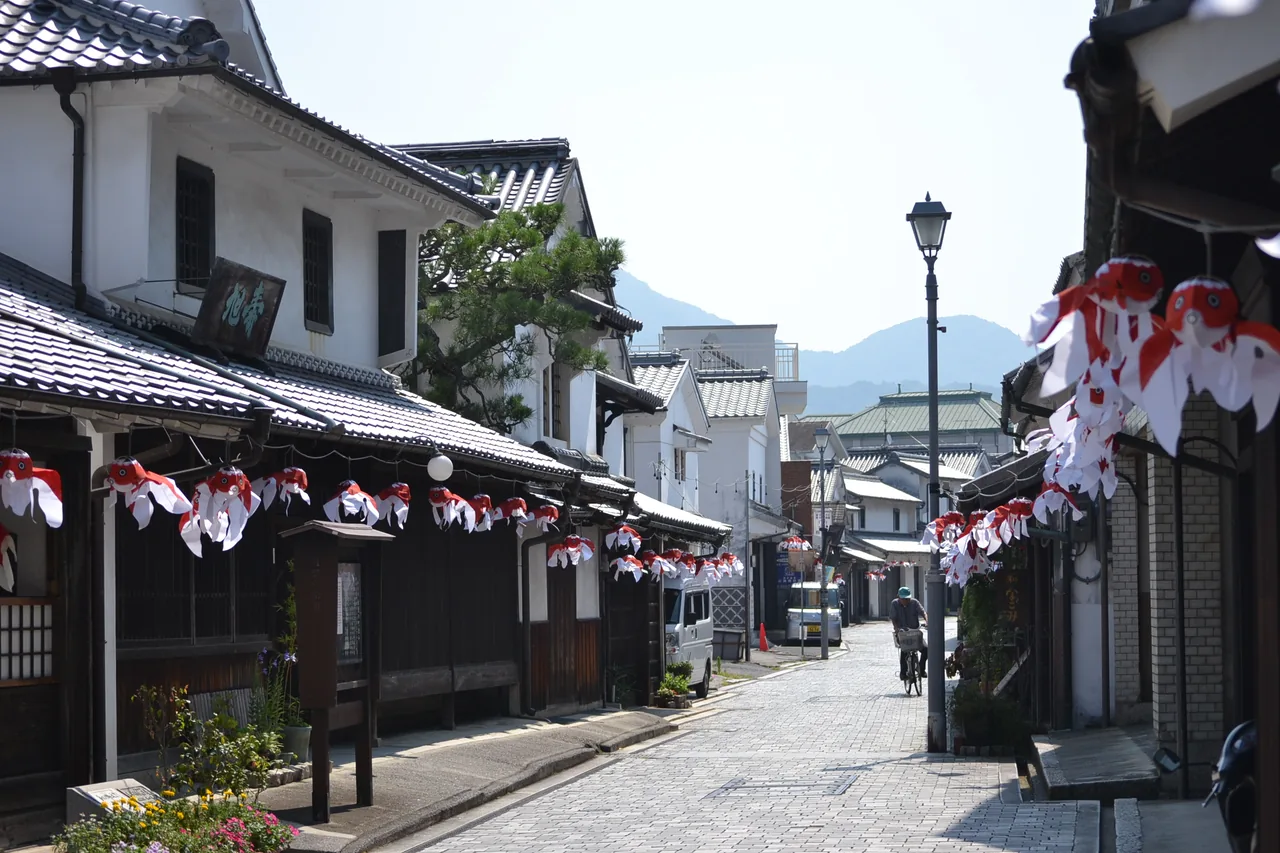
Yanai is a town on the Seto Inland Sea, and in its center a stone-paved street is still lined with merchant houses with white plaster walls and tiled roofs. The red, goldfish-shaped lanterns hanging from the eaves are kingyo-chochin, Yanai's local folk craft. On summer evenings the lanterns along the street are lit, and the white-walled town fills with rows of red goldfish.
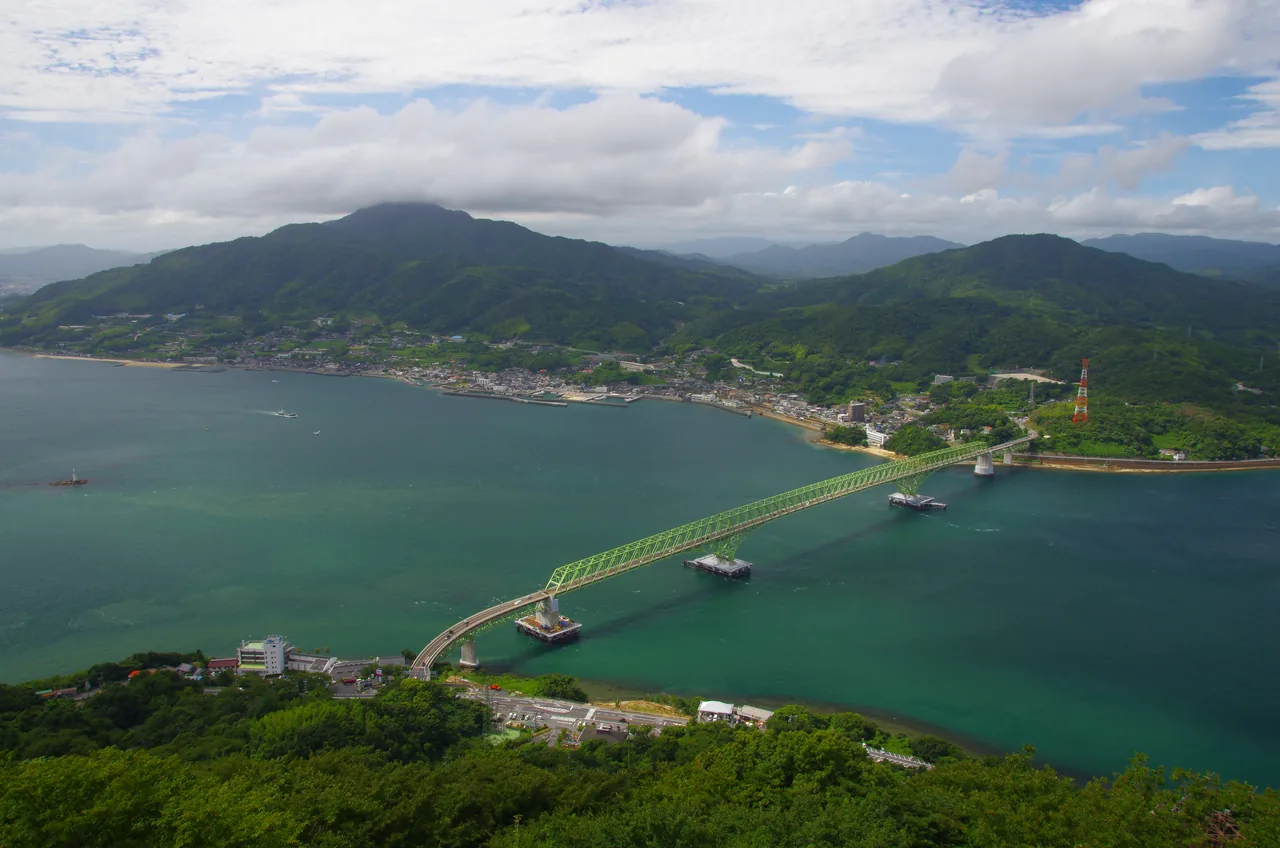
Off the coast lies Suo-Oshima, an island linked to Honshu by Oshima Bridge. It is known as the "island of mikan" for its mandarin oranges, and the mikan season runs from autumn into winter. What makes this area good is that you can pair a walk through the old streets with a trip across the bridge to the island.
Main sights
Shirakabe (White-Walled) Townscape
In central Yanai, white-walled merchant houses line a stone-paved street. Many houses hang goldfish lanterns, and as the sun goes down the lanterns under the eaves light up one by one. The lanterns are said to have been created in the late Edo period by a Yanai merchant inspired by the goldfish nebuta lanterns of Hirosaki in Aomori Prefecture. Every August the street hosts the Yanai Goldfish Lantern Festival. The summer decoration and lighting period changes from year to year, so check Yanai City's tourism information. See Shirakabe (White-Walled) Townscape.
Oshima Bridge and Suo-Oshima
A 1,020 m truss bridge linking Yanai on the Honshu side with Suo-Oshima in the Seto Inland Sea. It opened in 1976 and can be crossed by car. You see best how it strides across the blue strait from somewhere high up. On Suo-Oshima, across the bridge, some orchards offer mikan picking in autumn. Dates and prices differ by orchard, so check the Suo-Oshima Tourism Association's information. See Oshima Bridge.
Food and shopping
Yanai's specialty is kanro shoyu, a soy sauce said to have been devised by a Yanai merchant in the Edo period. It is made by the saishikomi (double-brewing) method, in which koji is added again to soy sauce that has already been brewed and left to mature, which makes it dark in both color and flavor. Breweries in town still make kanro shoyu, so it makes a good souvenir from your walk through the old streets.
On Suo-Oshima, mikan nabe, a hot pot combining unshu mandarins with seafood from the Seto Inland Sea, is a known local dish.
Getting there
- By JR: Get off at Yanai Station on the JR Sanyo Line. The white-walled street is within walking distance of the station. The Sanyo Line connects east to Iwakuni and Hiroshima and west to Tokuyama.
- To Suo-Oshima: By car, cross Oshima Bridge. For public transport, check the Suo-Oshima Tourism Association website.
Getting around the area
The white-walled street is compact and walkable from the station. Walk it in the daytime and look into the merchant houses and soy sauce breweries, and in summer come back to the street as the sun goes down to see the goldfish lanterns lit. When the sky turns deep blue, the white walls stand out and the red of the lanterns looks even brighter.
If you go on to Suo-Oshima, driving across Oshima Bridge is the easiest way to get around. From Yanai, the Sanyo Line east takes you back to Iwakuni & Kintaikyo, and west to Shunan, known for its factory night views.