Iwakuni Yanai Day Trip: Kintaikyo Bridge to White-Walled Streets
- Kintaikyo Bridge
- Iwakuni Castle
- Kikko Park
- White-Walled Streets of Yanai

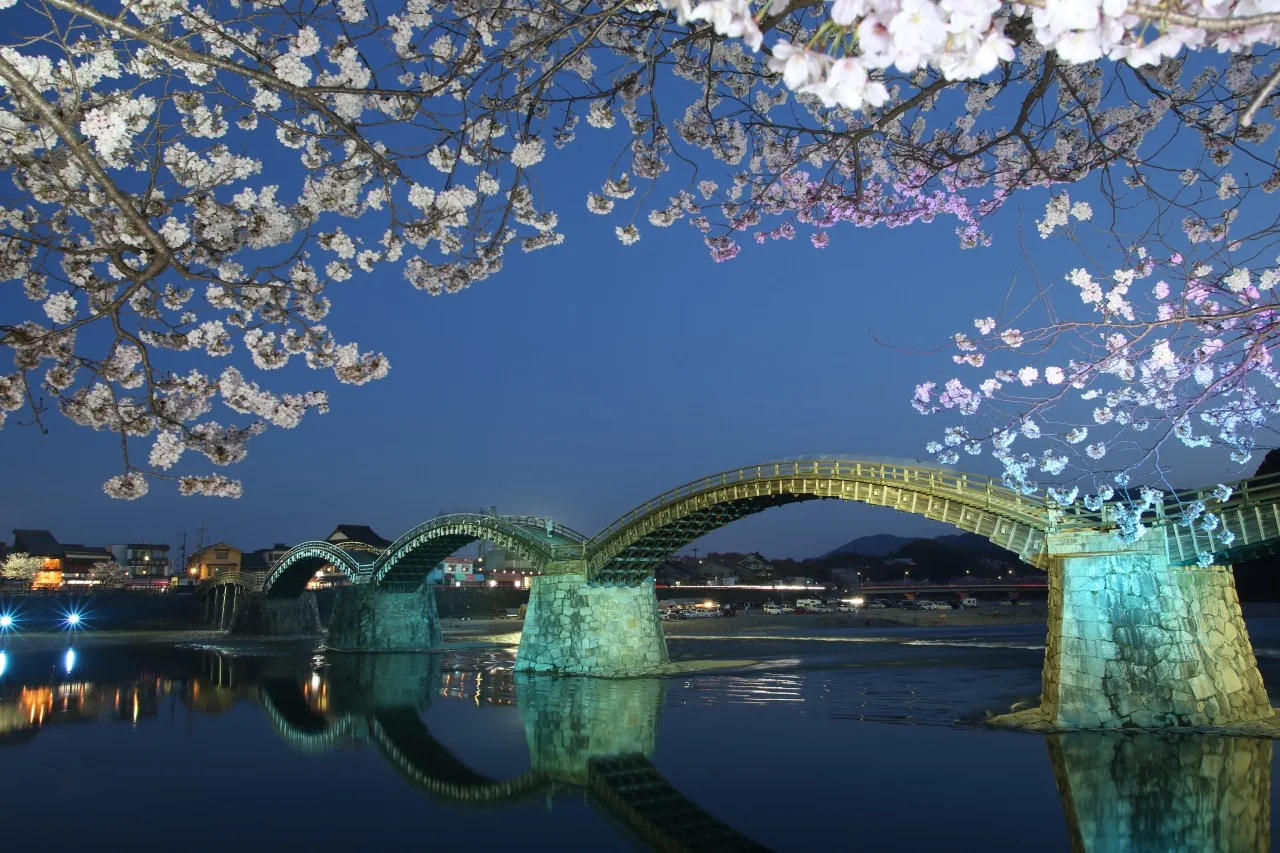
Photo: (c) Yamaguchi Prefectural Tourism Federation
Areas of Yamaguchi
Kintaikyo's five wooden arches, Kikko Park beyond the bridge and Iwakuni Castle on the hilltop, all linked on foot, with buses from Shin-Iwakuni and JR Iwakuni.
Choose a numbered circle to zoom in there; choose a name to open the area's page.
This page is translated from the Japanese edition. Read the Japanese edition
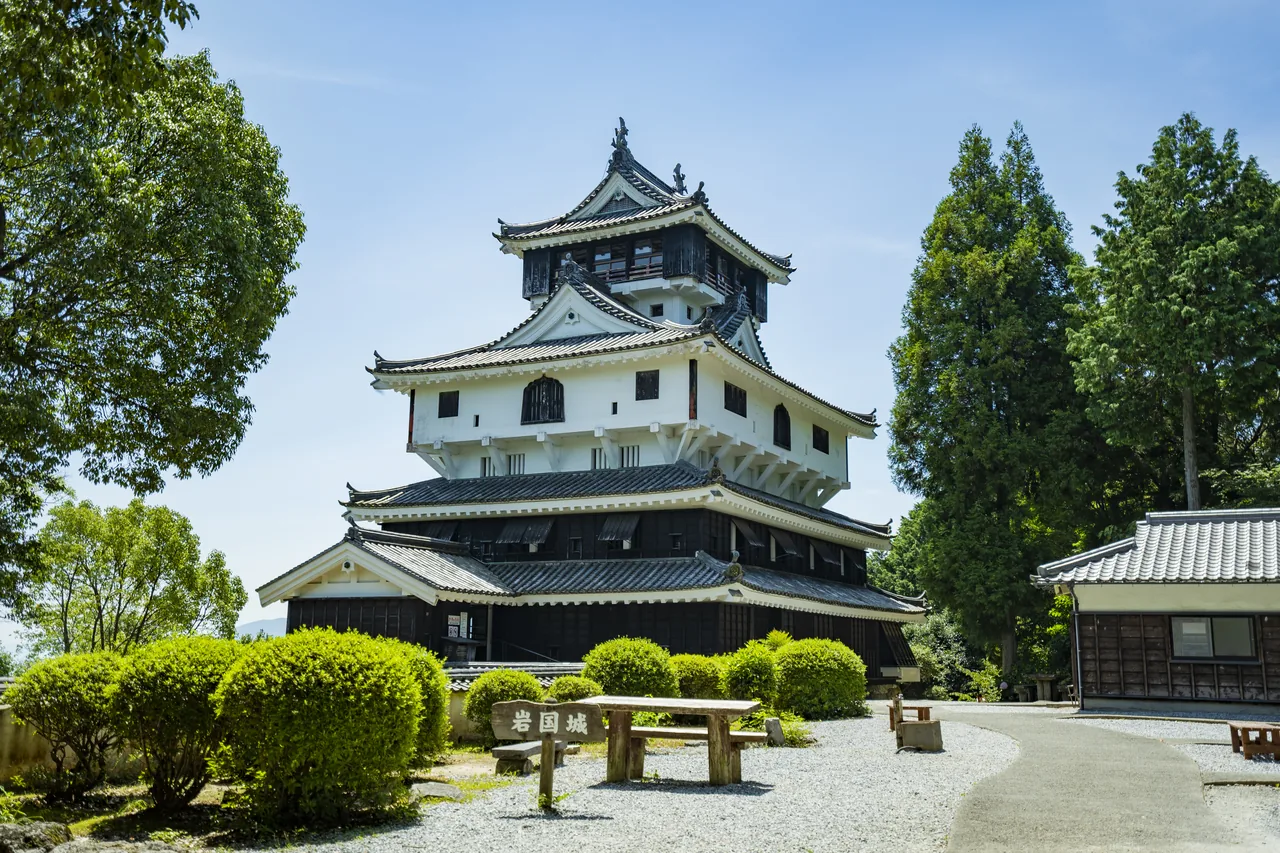
Iwakuni sits at the eastern tip of Yamaguchi Prefecture, close to the border with Hiroshima Prefecture. Kintaikyo, a wooden bridge of five linked arches, spans the Nishiki River as it flows through town. At the foot of Shiroyama on the far side stood the residence of the Kikkawa family, lords of the Iwakuni domain, and the grounds are now Kikko Park. The keep of Iwakuni Castle stands on the summit. Bridge, park and castle are all close together, so you can link them on foot.
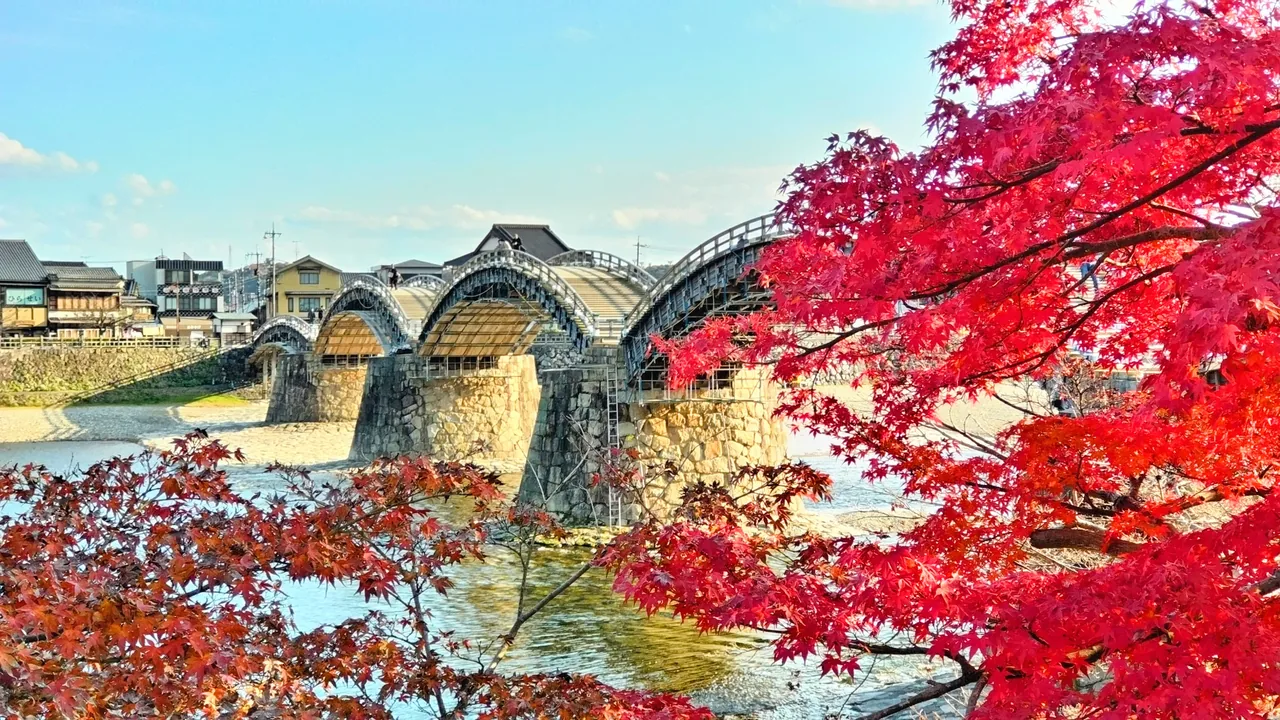
In spring, cherry trees bloom on both banks, and at night the illuminated bridge is mirrored in the river. The illuminations are not limited to cherry blossom season; they run through the year with a different presentation each season. In autumn the maples along the river and the ginkgo trees in the park change color. Iwakuni Station is on the JR Sanyo Line, connected to Hiroshima and Miyajimaguchi, which makes the town easy to combine with a trip to Hiroshima.
A wooden bridge of five linked arches over the Nishiki River. It was first built in 1673 by Kikkawa Hiroyoshi, the third lord of the Iwakuni domain; after a typhoon washed it away in 1950, it was rebuilt in wood in 1953. Don't just cross it: walk down to the riverbank and look at it side-on, and you will see the wooden arches rolling like waves on top of the stone piers. Check the official website for illumination dates and times. See Kintaikyo Bridge.
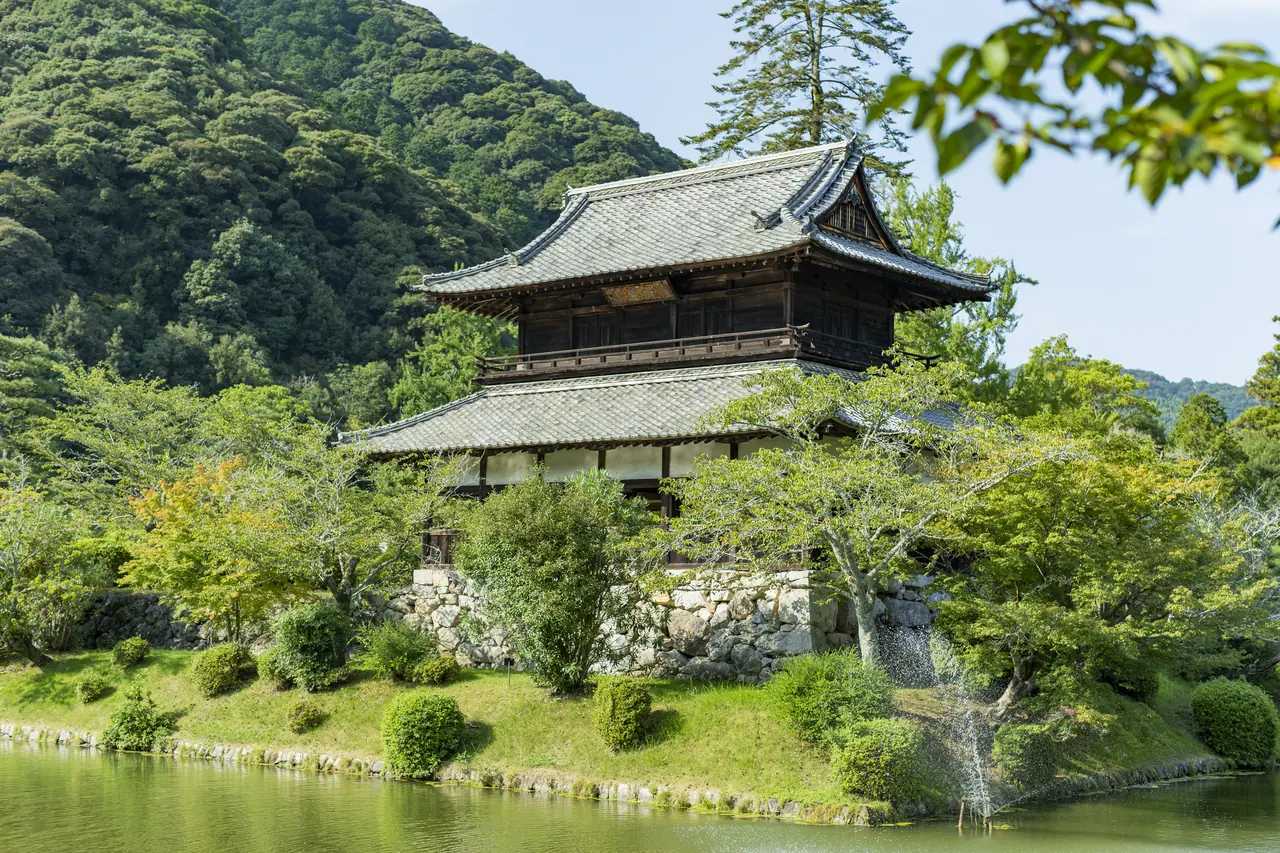
The park that opens out on the far side of Kintaikyo. In the Meiji era, Kikko Shrine, dedicated to the Kikkawa line, was moved here, and its grounds were laid out as a park. Kinunkaku, facing the moat, is the shrine's votive tablet hall, and in autumn the maples around it are mirrored in the water. The park's iris garden is usually at its best from early to mid June. See Kikko Park.
The castle on the summit of Shiroyama. Kikkawa Hiroie, the first lord of the Iwakuni domain, built it in 1608, but it was torn down soon after completion, and the present keep is a 1962 reconstruction. From the top floor, now an observation deck, you look down on the winding Nishiki River and the chain of Kintaikyo's arches across it. The ropeway from the base station in front of Kikko Park takes about 3 minutes to the top. See Iwakuni Castle.
Iwakuni's local specialty is Iwakuni-zushi, a pressed sushi. Vinegared rice and toppings are packed in layers into a wooden mold, pressed firm and cut into portions, with a generous layer of shredded egg crêpe on top. Lotus root, grown in Iwakuni since the Edo period, is a common ingredient. You will find places serving Iwakuni-zushi around Kintaikyo.
On days when you walk up Shiroyama or deep into the park, eating near Kintaikyo before you set off makes the rest of the day easier. Other Yamaguchi specialties, and where in the prefecture to try them, are covered in Yamaguchi food specialties.
Get off at the Kintaikyo bus stop, walk down to the riverbank to see the bridge side-on, then cross it. Go through Kikko Park, ride the ropeway up Shiroyama and look down on the river and bridge from the castle keep. On the way back, pass through the park and over the bridge again to the bus stop. That order wastes no steps.
It is worth planning to spend the early evening around the bridge for the illuminations; in spring you can see the cherry blossoms at night too. If you want to go up Shiroyama at night, check the ropeway's operating hours first. On snowy days the bridge deck gets slippery, so watch your step.
Heading back toward Hiroshima, take the Sanyo Line to Miyajimaguchi Station and cross to Miyajima. Continuing west through Yamaguchi, the Sanyo Line takes you to Yanai, with its white-walled old streets.