Tsunoshima Bridge Drive and Chofu: Ocean Views and a Castle Town
- Tsunoshima Bridge
- Tsunoshima Lighthouse
- Chofu Castle Town

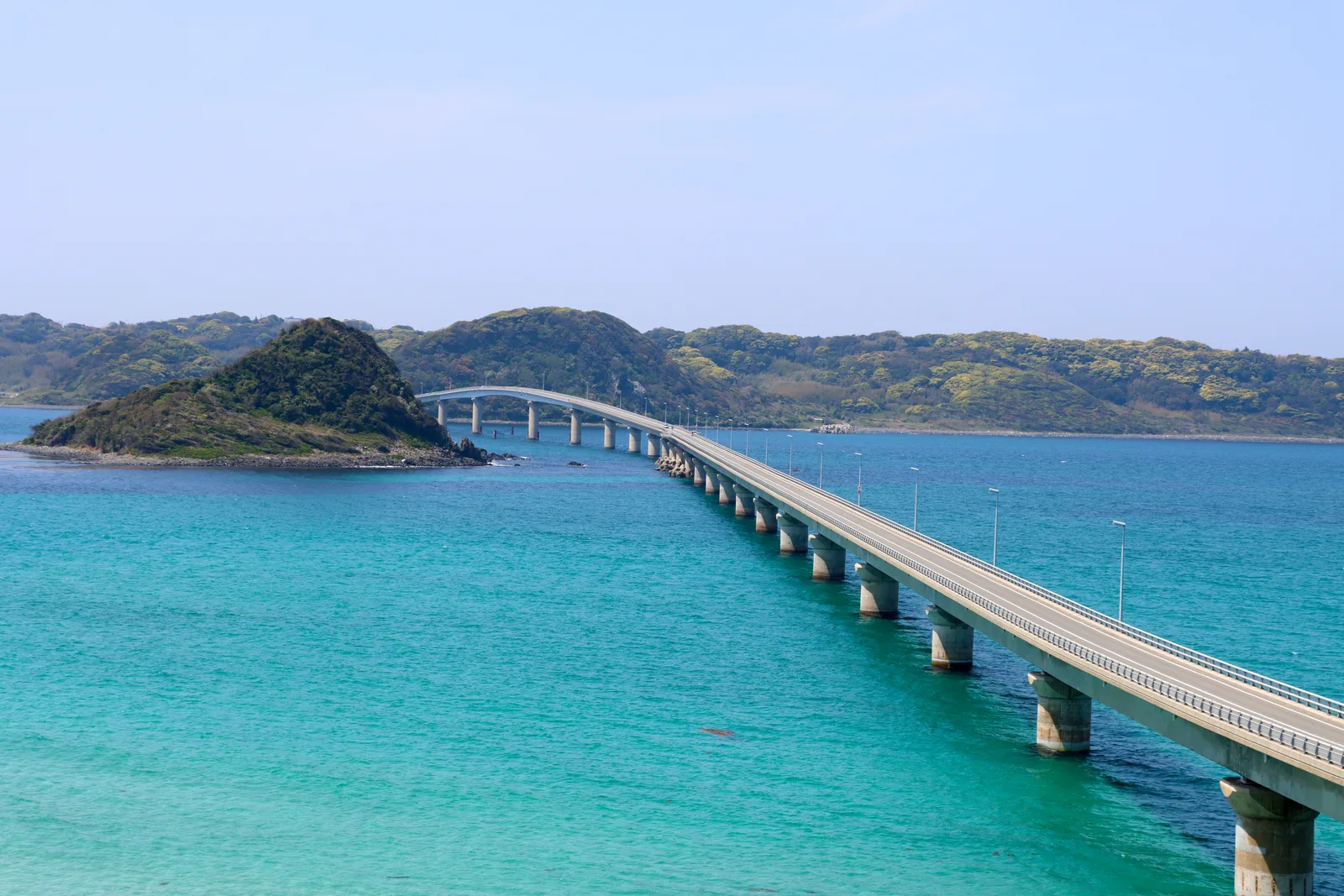
Photo: (c) Yamaguchi Prefectural Tourism Federation
Areas of Yamaguchi
Tsunoshima in Shimonoseki has the 1,780 m Tsunoshima Bridge and a Meiji-era lighthouse. When the sea looks best, climbing the lighthouse, and access by bus or car.
Choose a numbered circle to zoom in there; choose a name to open the area's page.
This page is translated from the Japanese edition. Read the Japanese edition
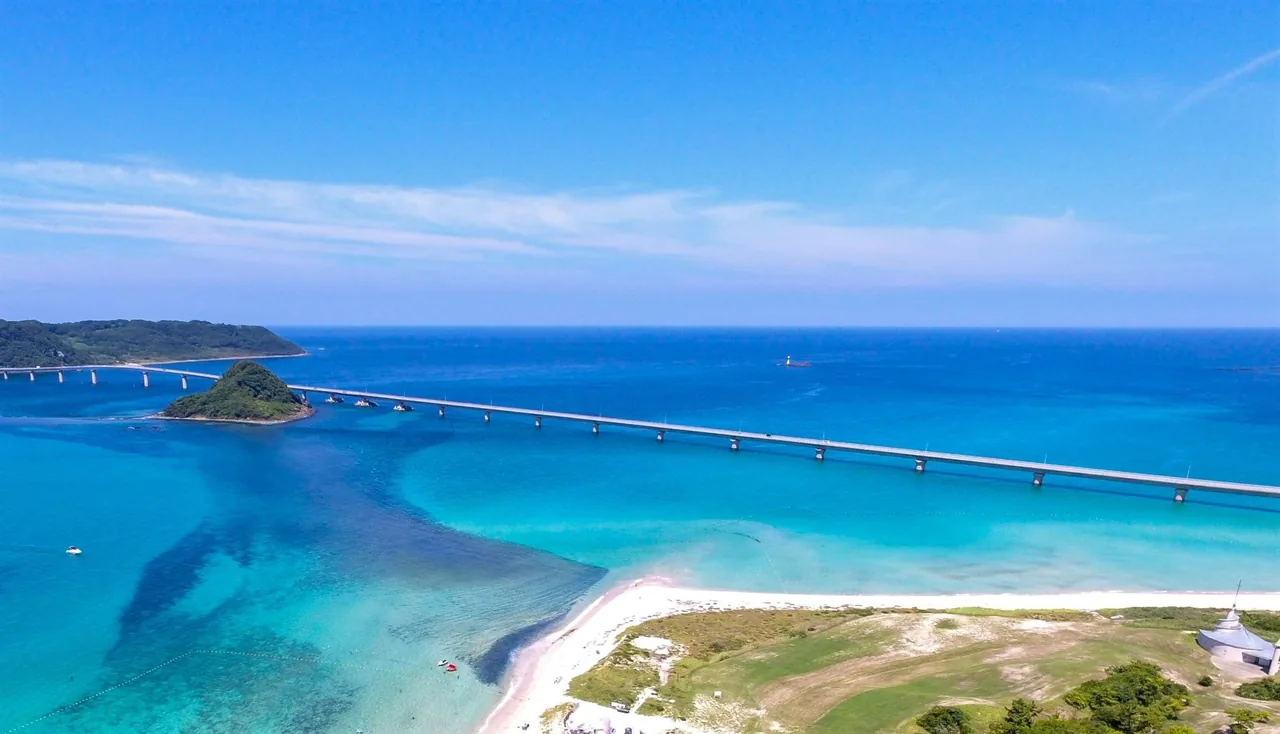
Over shallow water so clear you can see down to the foot of the piers, a white bridge curves gently out to an island. Tsunoshima lies in the Hibikinada Sea off Hohoku in northern Shimonoseki, linked to the mainland by Tsunoshima Bridge.
As you drive across, there is sea on both sides. On the island at the far end stands Tsunoshima Lighthouse, which has lit the sea since the Meiji period. It is a long way out, about 70 minutes by car from the Shimonoseki IC on the Chugoku Expressway, but on a trip built around the scenery of Yamaguchi's Sea of Japan coast, it becomes one of the main destinations, together with Motonosumi Shrine and others.
A bridge 1,780 meters long linking the mainland and Tsunoshima, opened in 2000. There is no toll. On a clear day, shallow emerald-green sea spreads out on both sides, and the color is more vivid the stronger the sunshine.
Partway across is a small island called Hatojima, and the bridge curves gently beside it. The view that fits the green island, the white bridge and the blue sea into one frame is best seen from the mainland end. See Tsunoshima Bridge.
Designed by the British engineer Brunton, the lighthouse was first lit in 1876. Its tower is built of stacked granite, and it was designated a national Important Cultural Property in 2020. It is one of the lighthouses visitors can climb, and from the top of 105 spiral steps you look out over the sea. Check visiting hours on the official website.
It is still a working lighthouse, so after dark it comes on and its beam sweeps over the black sea. If you want to see it at night, settle the time of your bus back or your drive home first.
Tsunoshima is a place for coastal scenery, and there are fewer places to eat than in town. If you plan to eat on the island or by the bridge, check opening days first and allow plenty of time.
Also in northern Shimonoseki is Kawatana Onsen, said to be where kawara soba was born: green tea soba cooked on a hot roof tile. How to eat it is covered in Yamaguchi's local food. For fugu (pufferfish) and market sushi, go on to Karato in Shimonoseki.
By car, look at the whole bridge from the mainland end, cross to Tsunoshima Lighthouse, and cross back on the way home: about half a day. The sea looks its best in the daytime on a clear day, so choosing your day by the weather forecast makes a big difference to how the bridge looks.
Head east along the coast and you can drive on to Motonosumi Shrine and the Higashi-Ushirobata rice terraces in Motonosumi and Yuya in Nagato. For a route linking the Sea of Japan coast's scenic spots in one day, see Yamaguchi's scenic spots.