What is the area like?
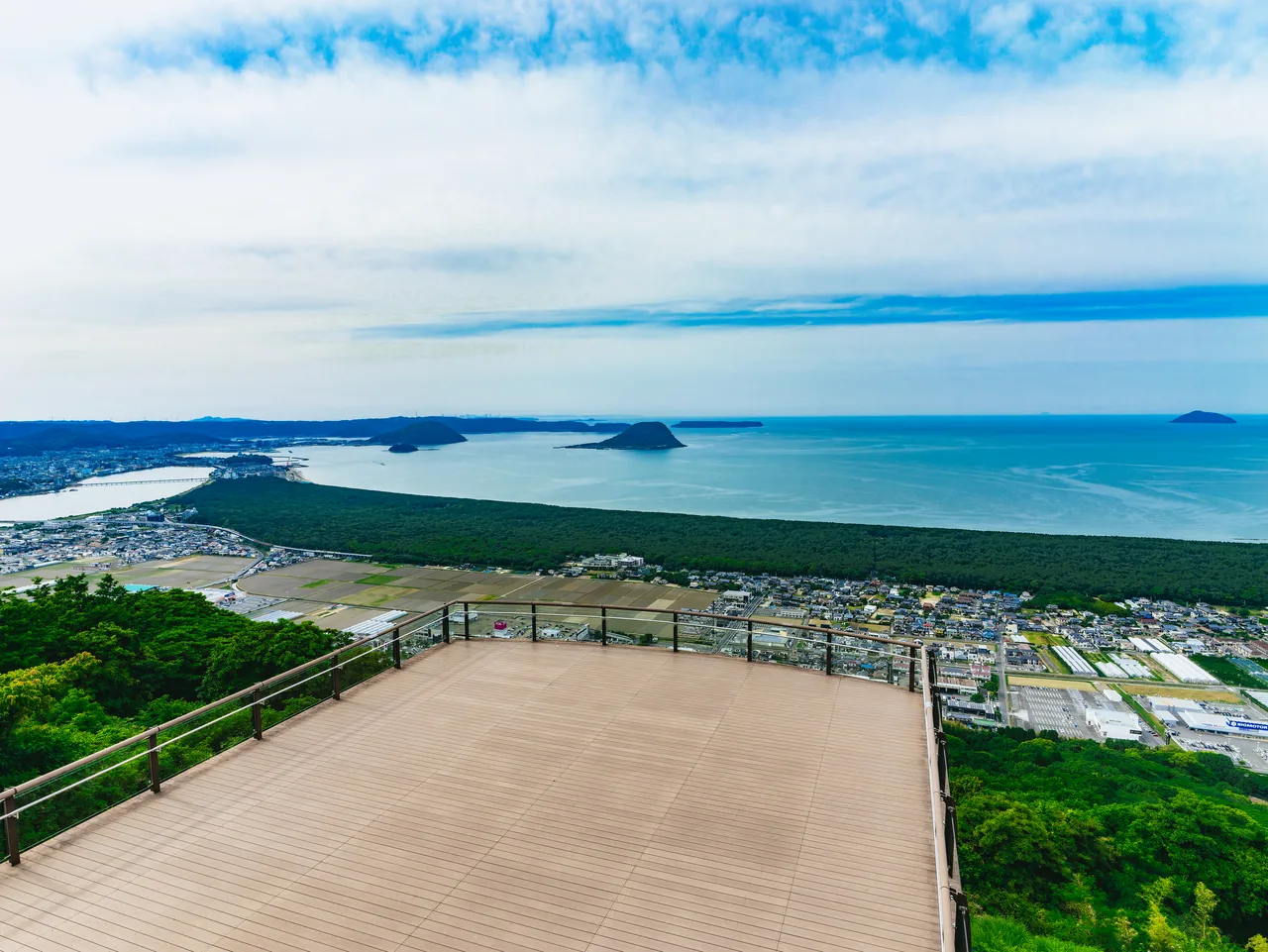
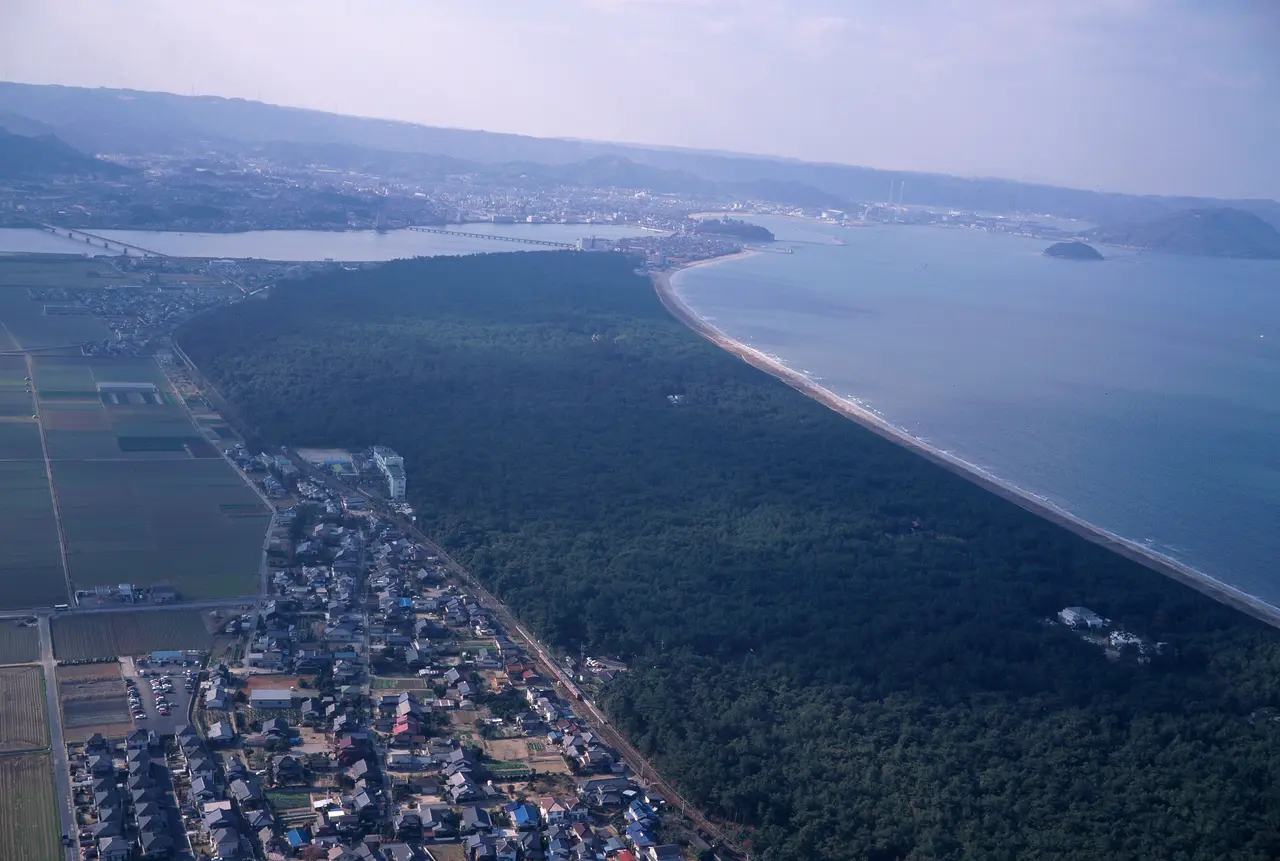
From the summit of Kagamiyama, you can take in the whole scene at once: a green band of pines curving along Karatsu Bay, the town beyond it and islands scattered across the water. Karatsu is a port town in northwestern Saga Prefecture, facing the Genkai Sea, and it grew as a castle town after Karatsu Castle was built in the early Edo period.
The Fukuoka City Subway Airport Line runs through onto the JR Chikuhi Line, and some trains come all the way from Hakata and Tenjin without a change, so Karatsu is a popular day trip from Fukuoka. The old castle town, with Karatsu Castle and the Former Takatori Residence, is within walking distance of Karatsu Station. Buses to Yobuko & Genkai, with the squid port of Yobuko and the Nagoya Castle ruins, also leave from central Karatsu.
Main sights
Karatsu Castle
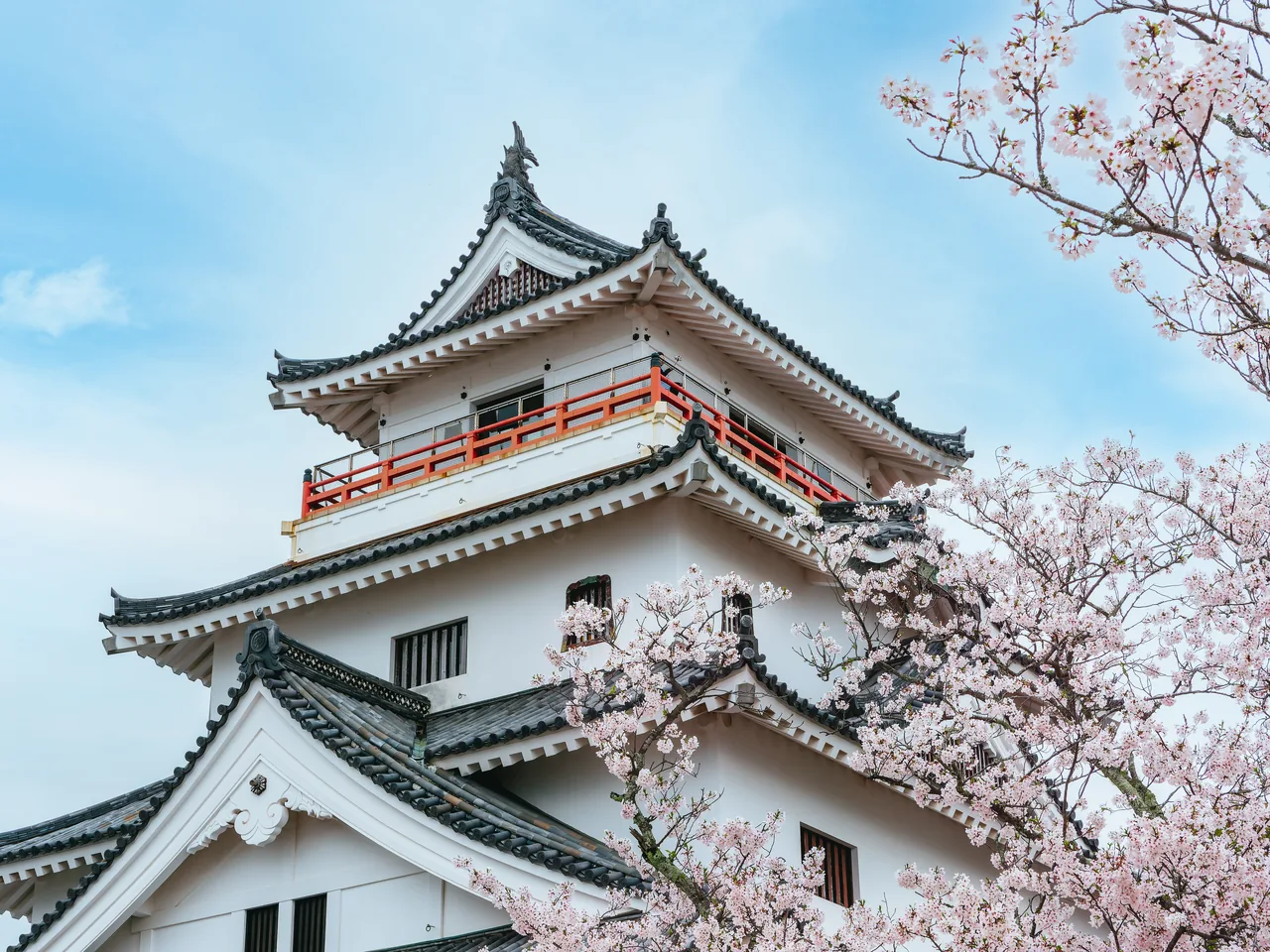
Photo: ©Saga Prefectural Cultural Tourism Federation
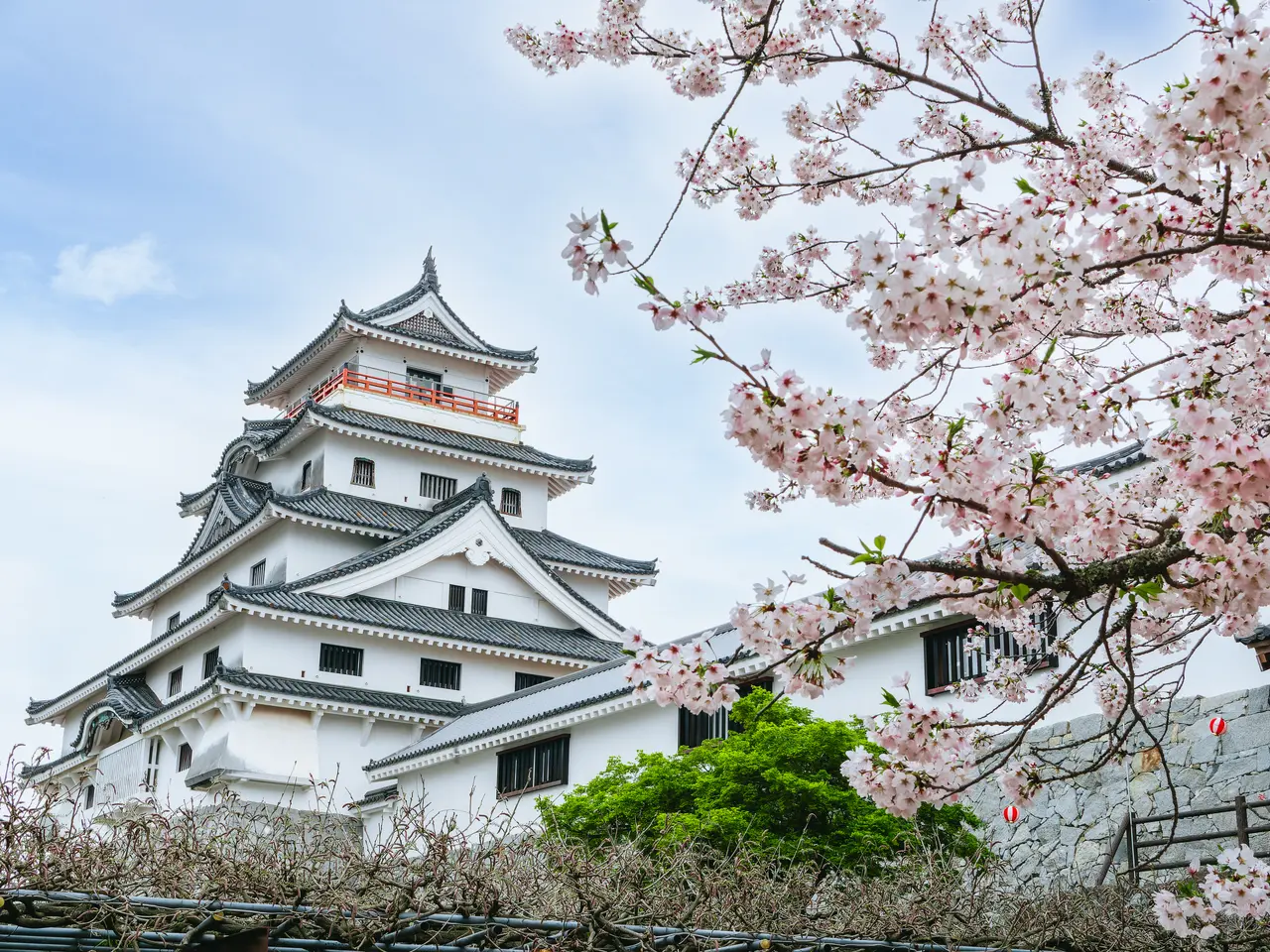
The castle stands on a low hill jutting into Karatsu Bay. Terazawa Hirotaka, a retainer of Toyotomi Hideyoshi, is said to have built it over seven years from 1602. The pine forests stretching east and west were likened to the outspread wings of a crane, so it is also called Maizuru-jo, the "Dancing Crane Castle." The present keep dates from 1966. Inside are exhibits on the history of the Karatsu domain and Karatsu ware, and the top floor is an observation deck overlooking Karatsu Bay and Niji-no-Matsubara. The photo shows the keep in cherry blossom season. See Karatsu Castle for details.
Former Takatori Residence
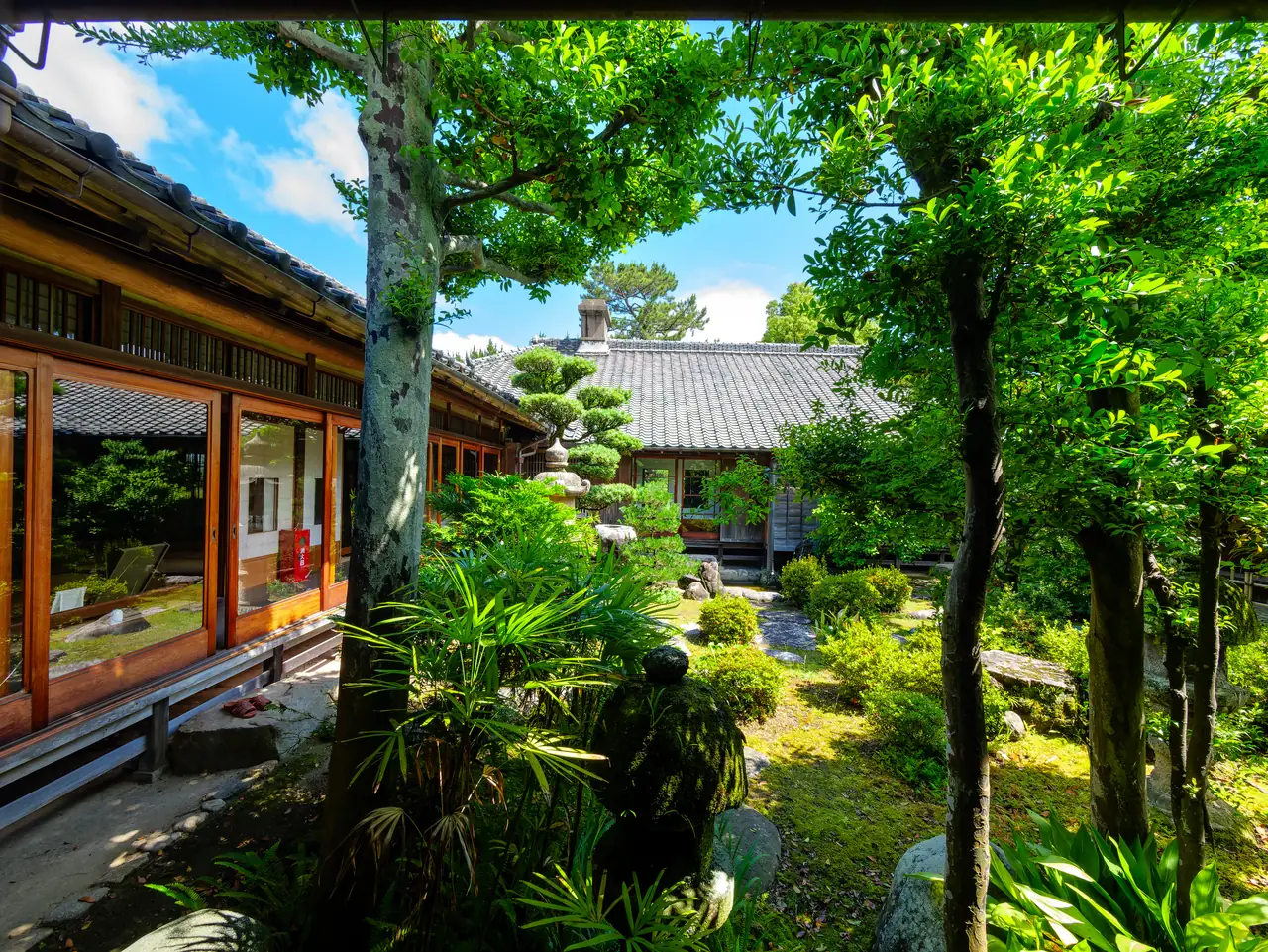
Photo: ©Saga Prefectural Cultural Tourism Federation
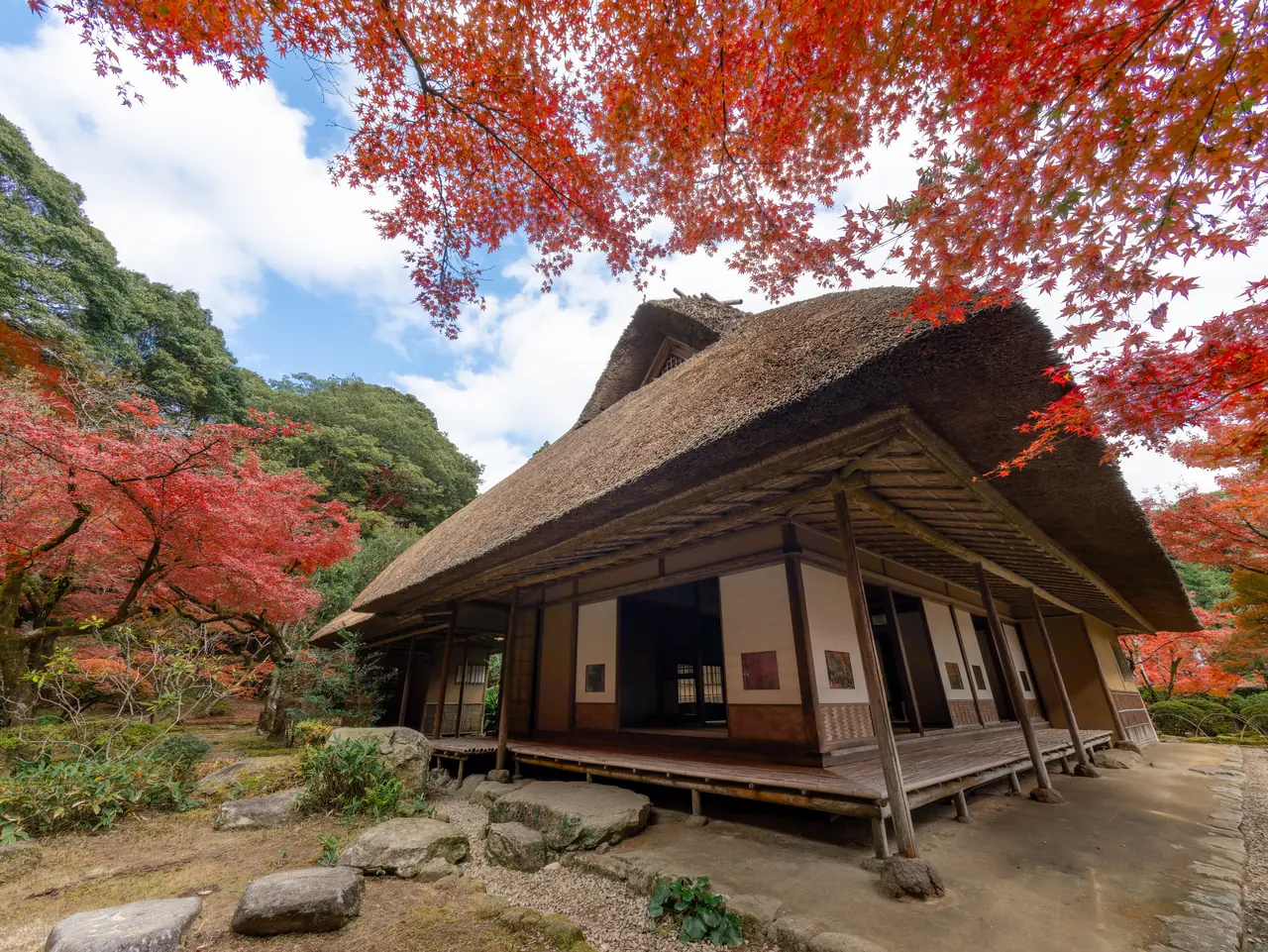
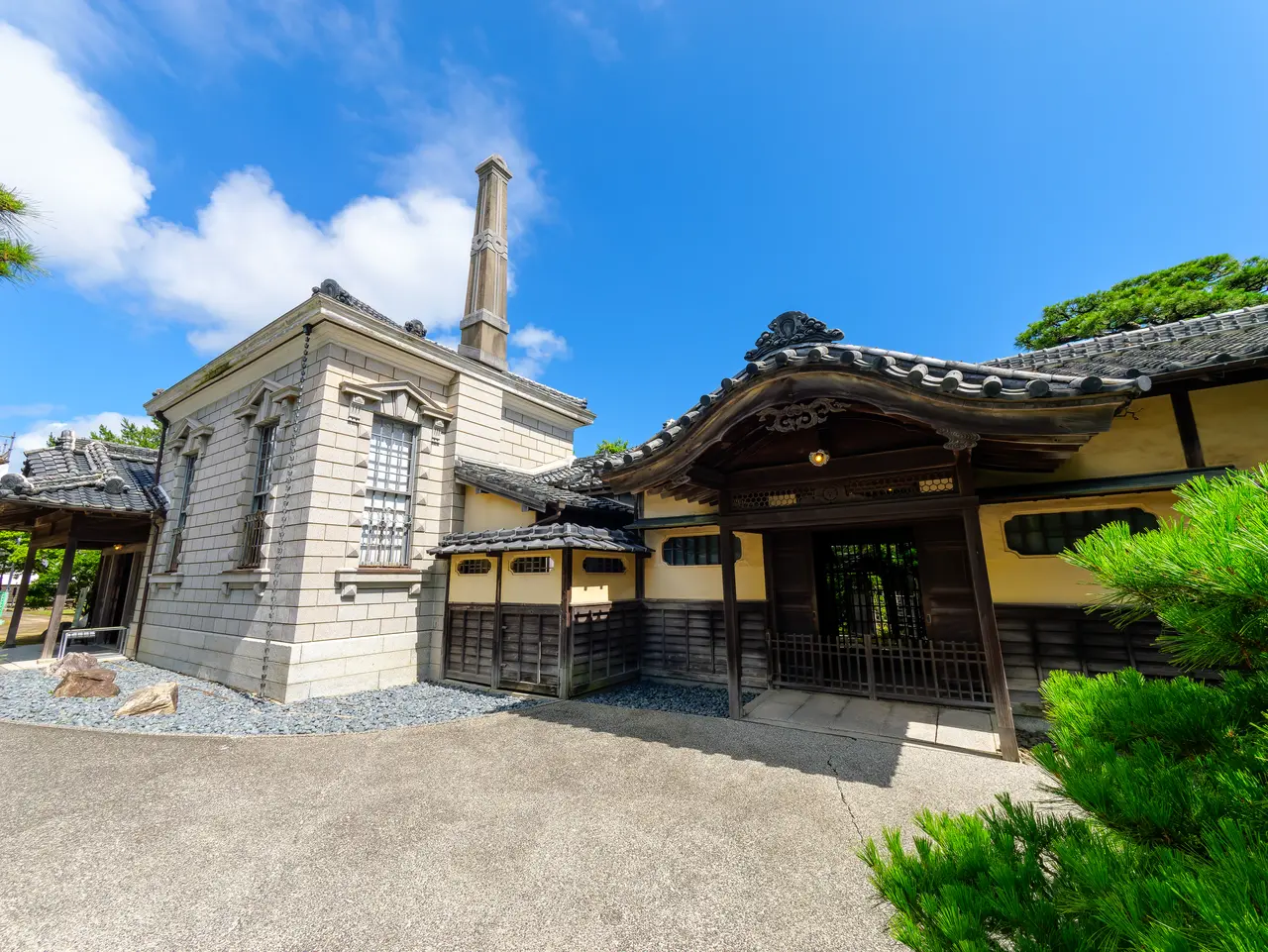
This is the home of Takatori Koreyoshi, who made his fortune in coal mining, built by the sea near Karatsu Castle. A Japanese-style mansion with Western-style rooms and even a Noh stage inside its great hall, it is designated an Important Cultural Property. Each room has its own painted cedar doors and carved transoms, and comparing them as you walk through is part of the pleasure. See Former Takatori Residence for details.
Niji-no-Matsubara
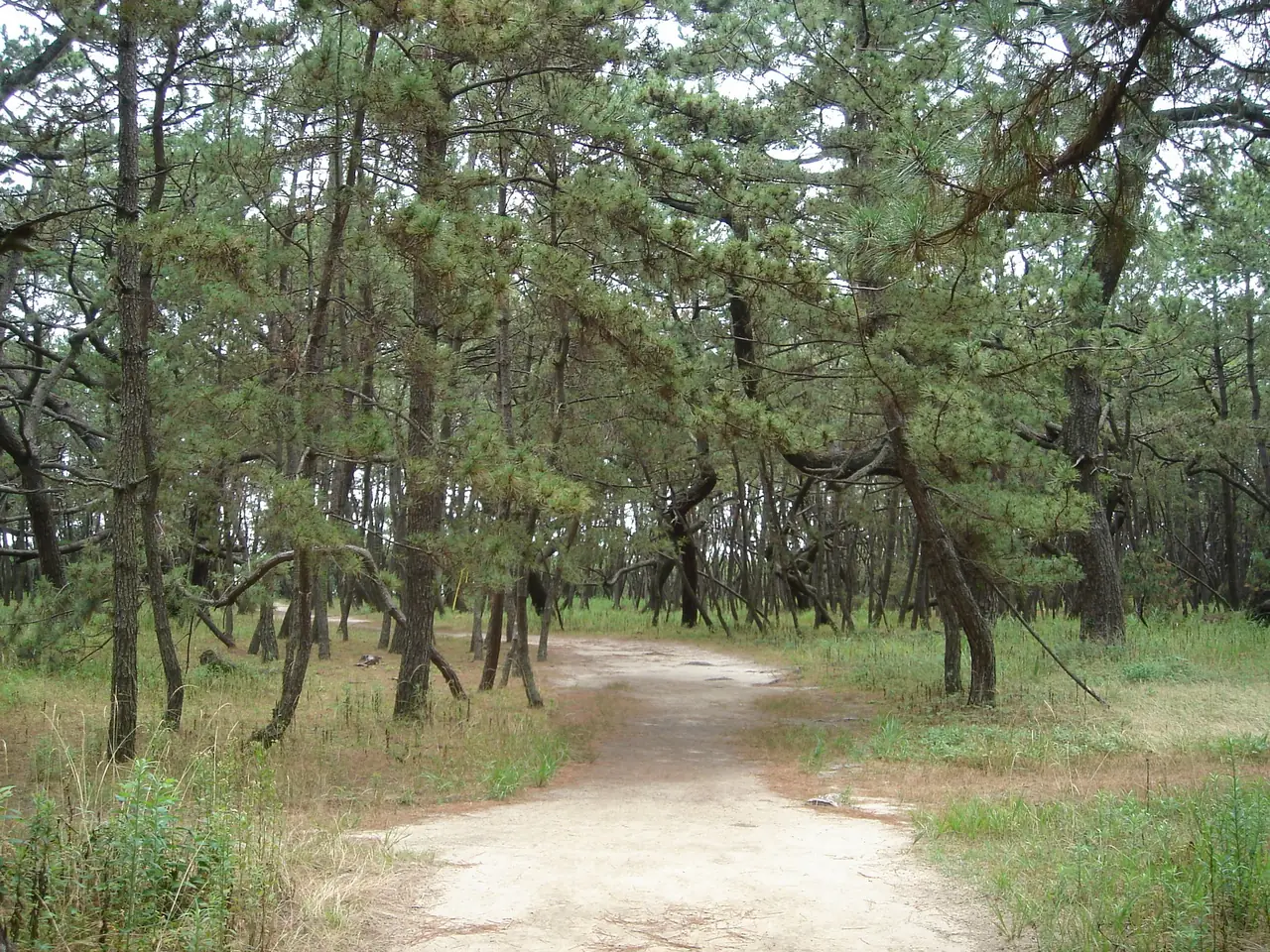
Photo: ©Saga Prefectural Cultural Tourism Federation
This black pine forest runs along the shore of Karatsu Bay for about 4.5 km, about 500 m wide. It is said to have been planted by Terazawa Hirotaka, the builder of Karatsu Castle, to protect farmland from wind and salt spray, and it is designated a Special Place of Scenic Beauty. Paths wind through the trees, and you can walk in from Nijinomatsubara Station on the JR Chikuhi Line. The best view of the whole forest is from the summit of Kagamiyama to the south (the photo at the top of this page). See Niji-no-Matsubara for details.
Karatsu Kunchi
The autumn grand festival of Karatsu Shrine is held every year from November 2 to 4. Fourteen lacquered floats called hikiyama are pulled through the old castle town to the music of flutes, bells and drums and the shouts of the pullers. The Karatsu Kunchi float procession is an Important Intangible Folk Cultural Property, and in 2016 it was inscribed on UNESCO's Intangible Cultural Heritage list as one of the Yama, Hoko, Yatai float festivals. During the festival the town fills with spectators and traffic restrictions apply. See Karatsu Kunchi for details.
Food and shopping
Karatsu is also a pottery town. Shops and galleries selling Karatsu ware from local kilns are scattered around the center, and you can pick up and compare tea bowls and plates that keep the feel of the clay. Pottery is heavy, so if you plan to buy a lot, ask whether the shop can ship it for you.
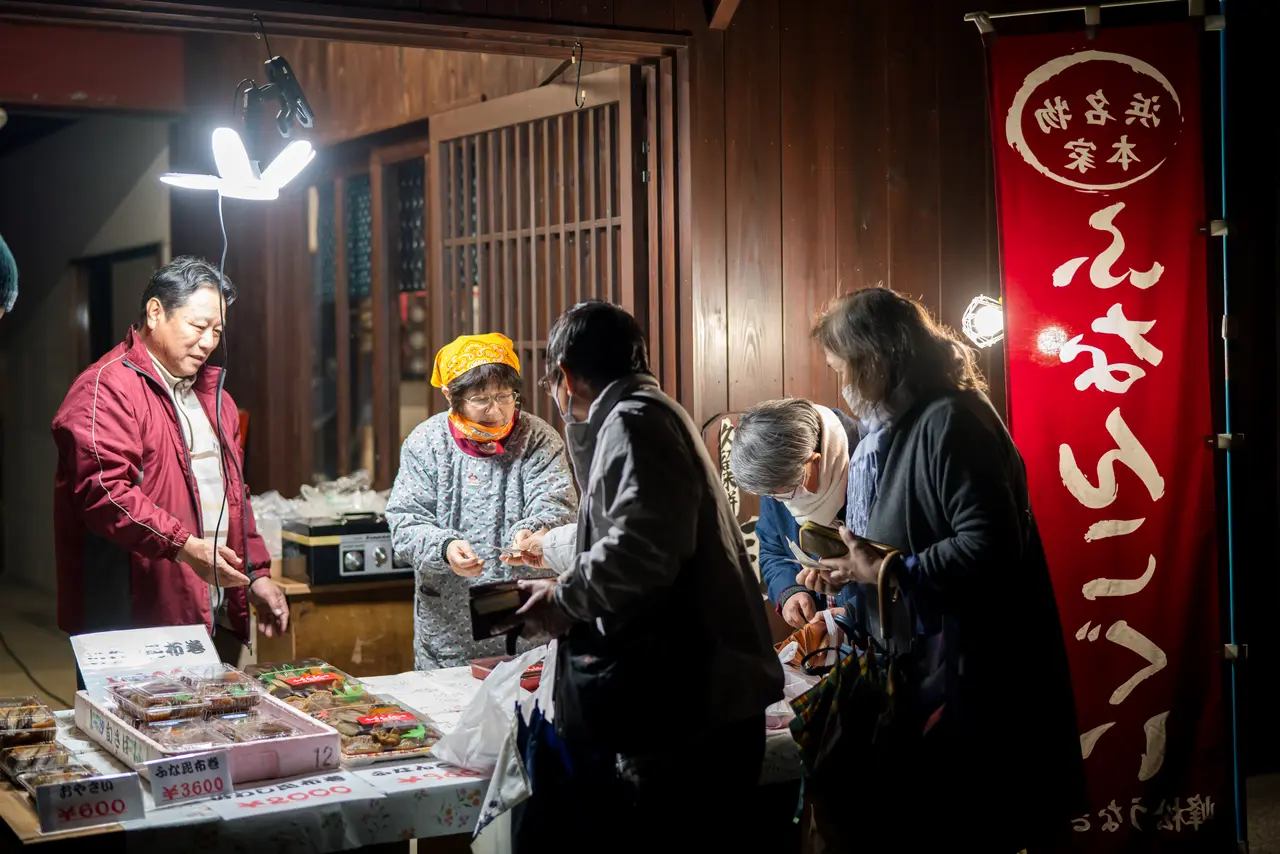
Facing the Genkai Sea, the town eats mostly seafood. Yobuko, famous for live squid sashimi (ikizukuri), is a bus ride away, so you can stay in Karatsu and head to the Yobuko morning market the next day.
Getting there
- From Fukuoka: The Fukuoka City Subway Airport Line connects with the JR Chikuhi Line at Meinohama Station, and some trains run from Hakata and Tenjin to Karatsu without a change. At some times of day you change at Chikuzen-Maebaru Station. Hakata to Karatsu takes about 1 hour 20 minutes.
- To Karatsu Castle: About 25 minutes on foot from the north exit of Karatsu Station. Showa Bus services from the north exit or the Oteguchi Bus Center stop near the castle at "Karatsu-jo Iriguchi."
- To Niji-no-Matsubara: Take the JR Chikuhi Line three stops east of Karatsu to Nijinomatsubara Station; the forest is right there.
- To Yobuko and the Nagoya Castle ruins: Showa Bus services leave from the Oteguchi Bus Center in Karatsu.
Timetables and stops are listed on the access page of the Karatsu Tourism Association.
Getting around the area
Walk north from Karatsu Station to the Former Takatori Residence and on to Karatsu Castle, and you can see the castle town's main sights in half a day. The climb to the castle involves stone steps, so wear comfortable shoes. Niji-no-Matsubara lies on the east side of town: to walk among the trees, take the Chikuhi Line to Nijinomatsubara Station; to look down on the forest, go by car or taxi to the top of Kagamiyama, where there is a parking lot.
During Karatsu Kunchi from November 2 to 4, the whole town is busy with festival crowds. If you plan to stay overnight for it, look for a room early.
To go further, take a bus north to Yobuko & Genkai, or the JR Chikuhi Line west to the pottery town of Imari.