Arita and Imari Day Trip: Walking Japan's Porcelain Towns
- Izumiyama Porcelain Stone Quarry
- Sueyama Shrine
- Arita Uchiyama Old Town
- Okawachiyama (Nabeshima Clan Kiln Village)
- Imari's Lucky Bridges

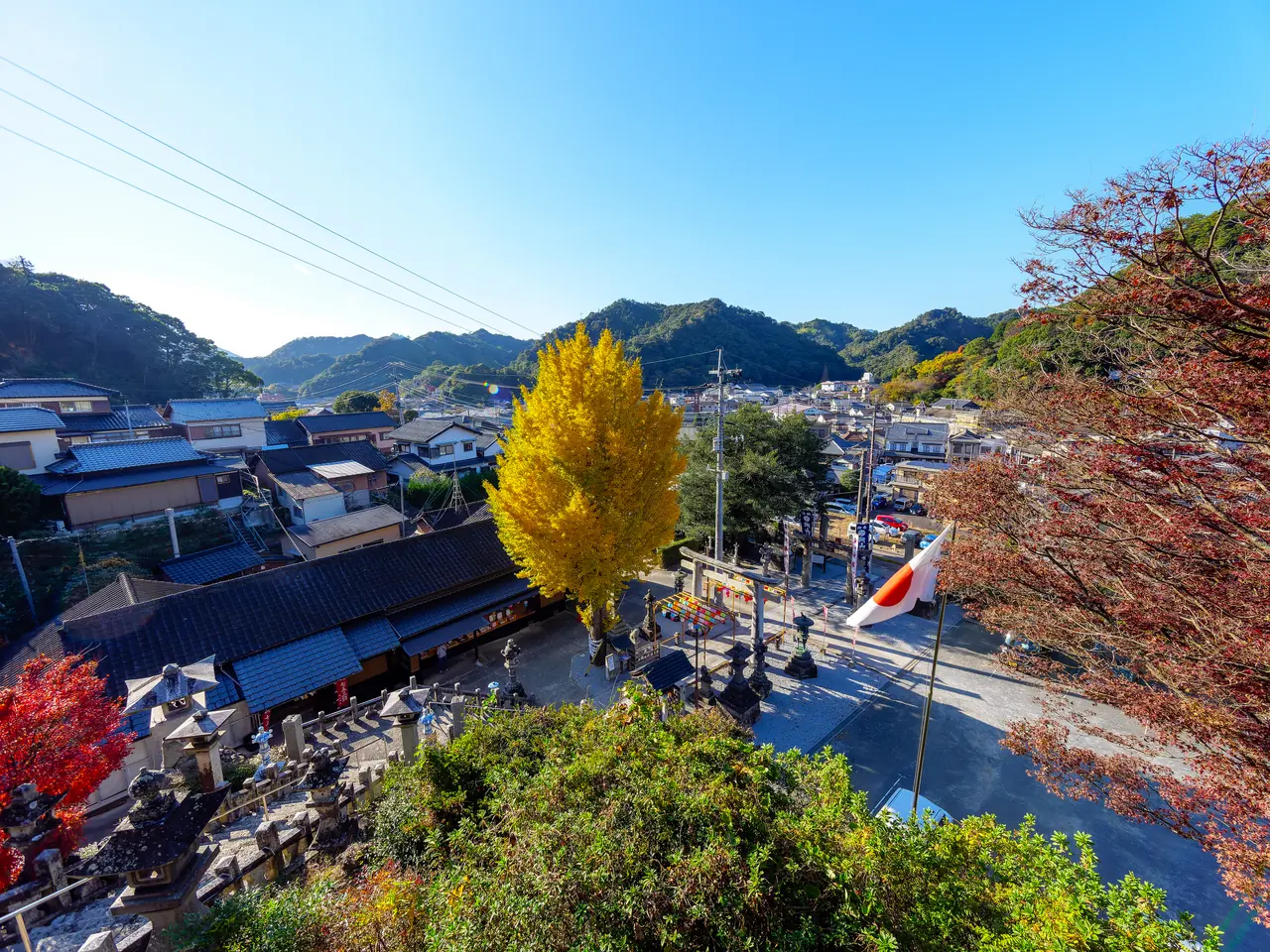
Photo: ©Saga Prefectural Cultural Tourism Federation
Areas of Saga
Things to do in Arita, home of Arita ware: Sueyama Shrine's porcelain torii, the Uchiyama old town, the Izumiyama quarry, the spring pottery fair and trains from Hakata.
 Jan 19Kashima Funa-ichi (Crucian Carp Market) and Funanko-gui
 Feb 13 – Mar 14Saga Castle Town Hina Matsuri (Doll Festival)
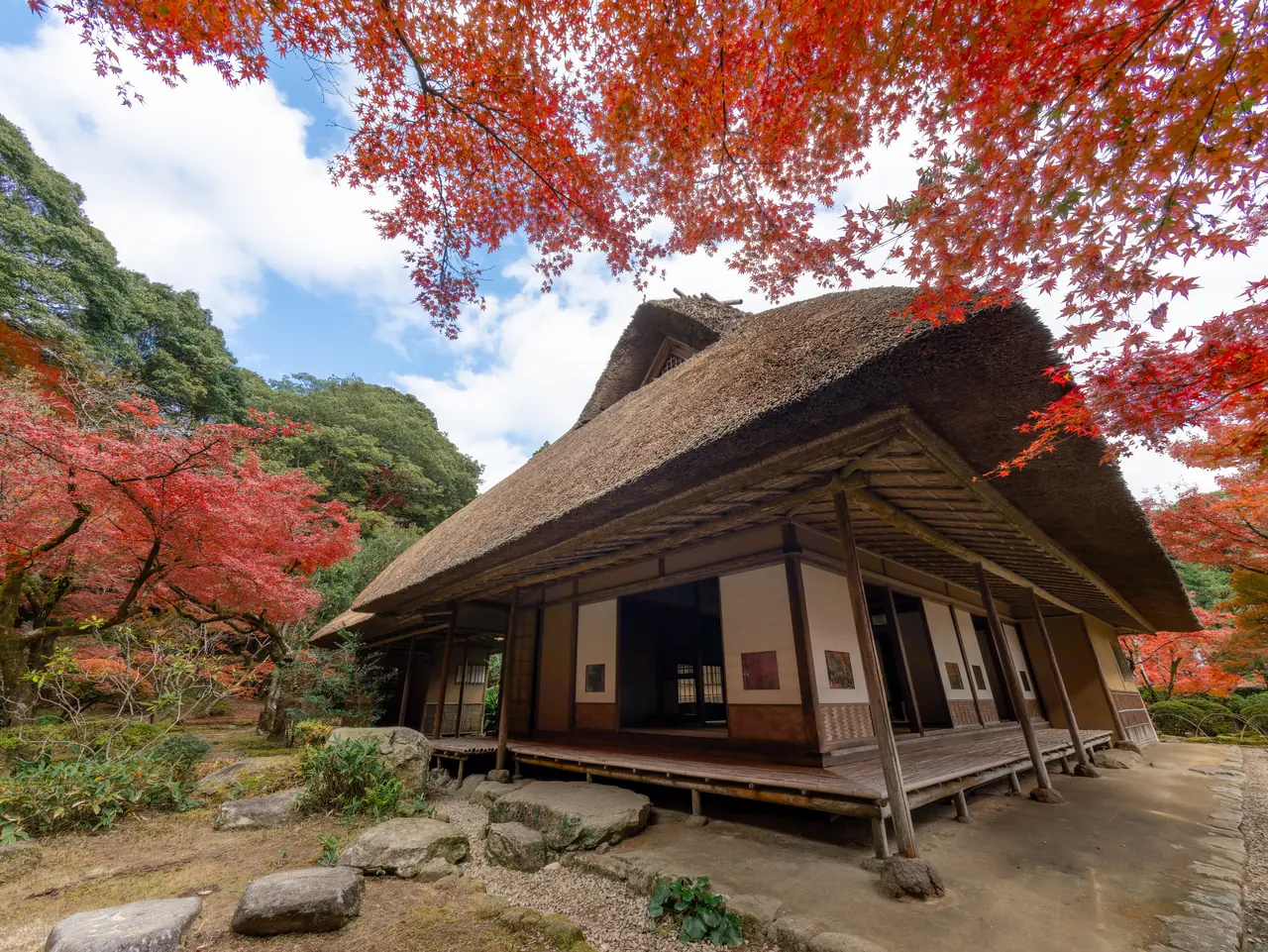 GuidesSaga Autumn Leaves: 6 Spots from Kunen-an to Taku Seibyo
This page is translated from the Japanese edition. Read the Japanese edition
In a long, narrow valley between the mountains, tiled roofs and kiln chimneys line the way through Arita, known as the town where porcelain making in Japan began. In the early 17th century, the potter Ri Sanpei and others who had come from the Korean Peninsula are said to have found porcelain stone at Izumiyama on the east side of town, and the history of Arita ware began there.
In the Uchiyama district at the heart of town, merchant houses and kiln buildings from the Edo period through the Meiji and Taisho eras still stand, and you can browse shops selling ceramics as you walk. Every spring, during the Arita Ceramics Fair, pottery stalls fill the town's streets and crowds pour in. Arita is about 1 hour 20 minutes from Hakata by limited express and is linked by rail to Imari and Takeo Onsen.
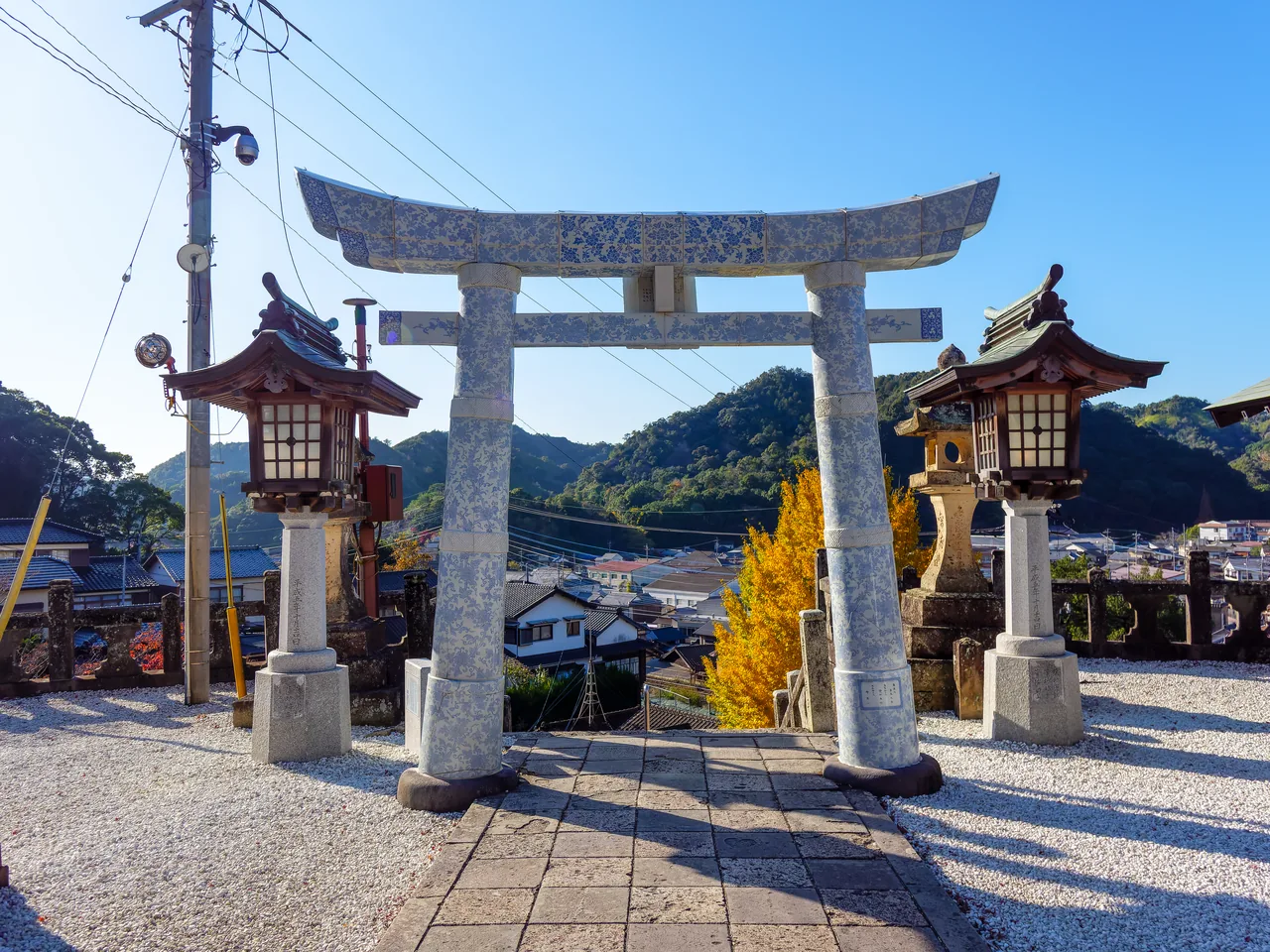
Photo: ©Saga Prefectural Cultural Tourism Federation
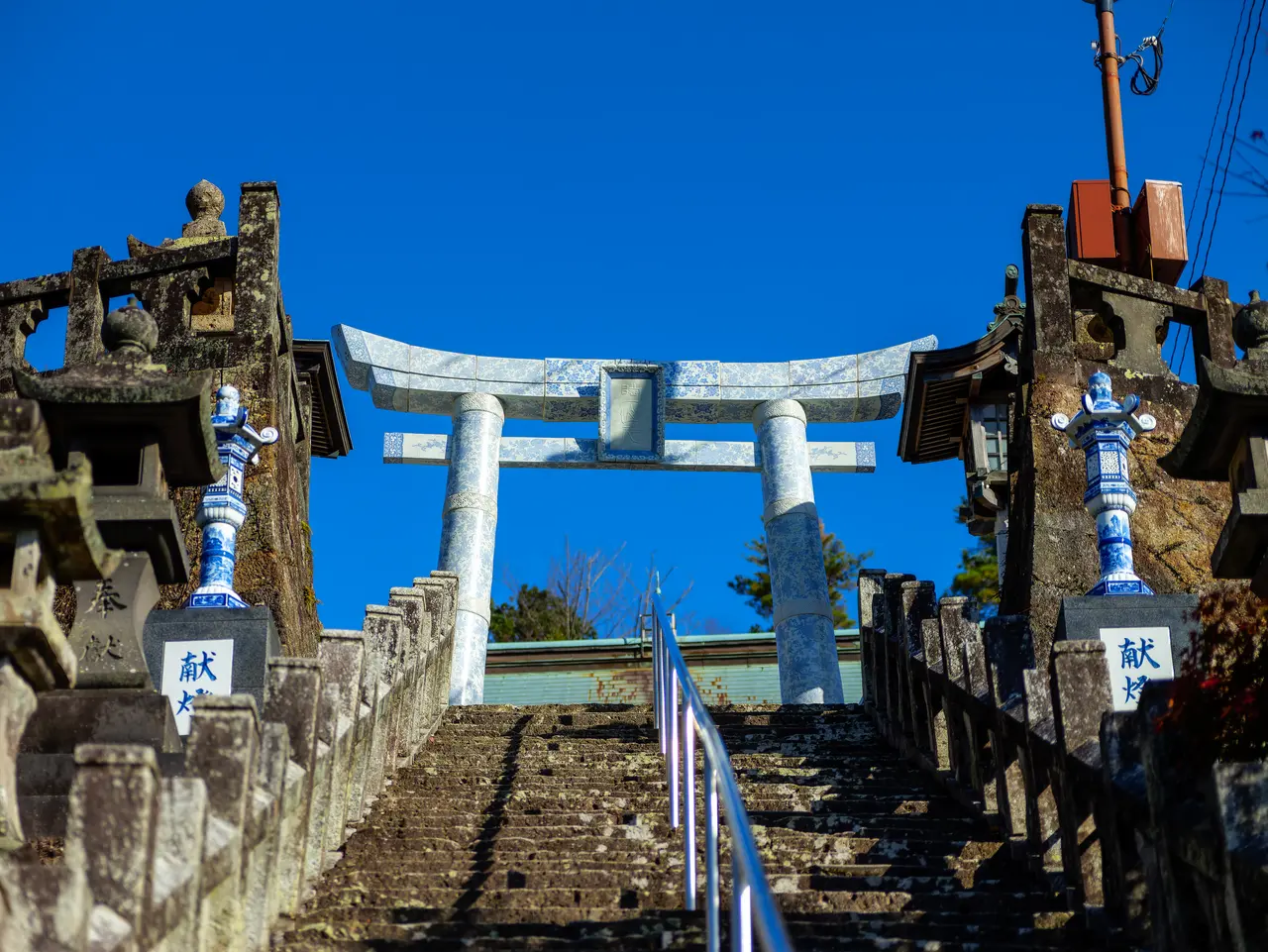
This hillside shrine looks down over Arita, and its torii gate, guardian dogs, large water basin and fence are all made of porcelain. The great torii, white porcelain painted with an arabesque pattern, was dedicated in the Meiji era and is a Registered Tangible Cultural Property. Ri Sanpei, regarded as the founder of Arita ware, is also enshrined here. Another sight unique to this shrine is the JR Sasebo Line crossing the approach just below the stone steps. From the upper part of the grounds you can look out over the town, as in the photo at the top of this page. See Sueyama Shrine for details.
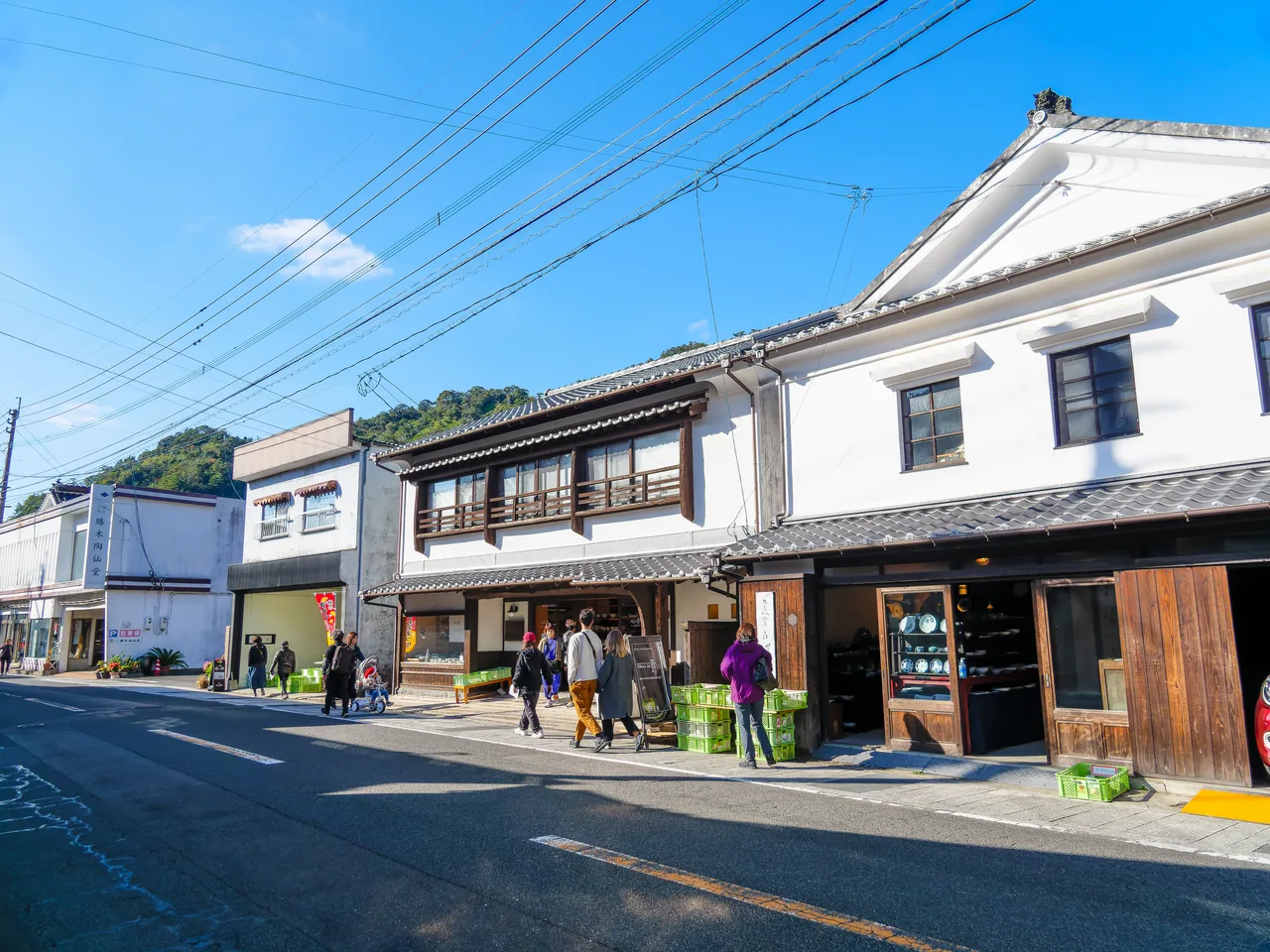
Photo: ©Saga Prefectural Cultural Tourism Federation
This district runs for about 2 km between the upper checkpoint at Izumiyama and the lower checkpoint at Iwayagawachi, both set up in the Edo period, and it is a nationally designated Important Preservation District for Groups of Traditional Buildings. White plastered merchant houses, Western-style buildings and kiln buildings line the street, and you can step into the pottery shops to browse as you go.
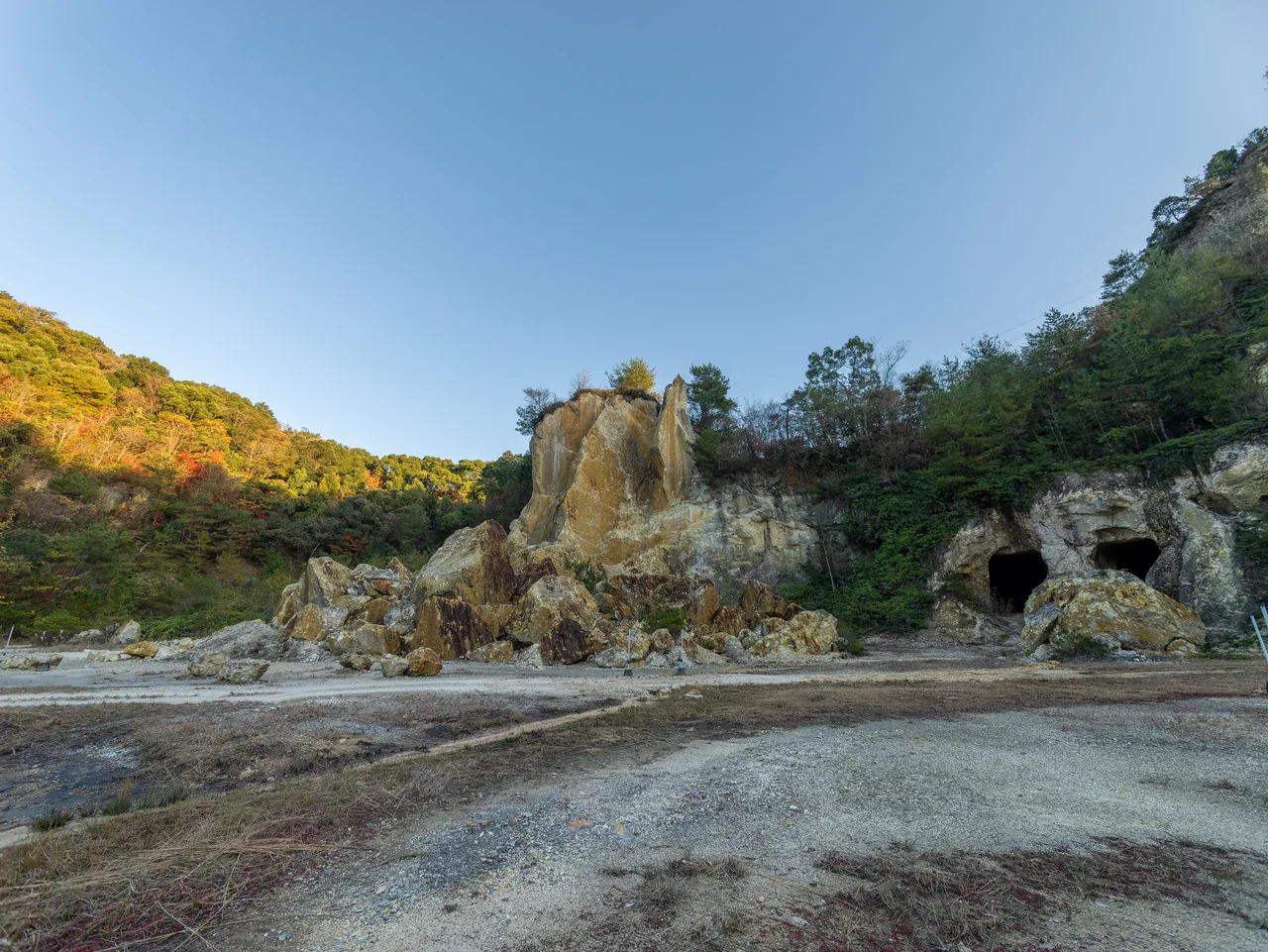
Photo: ©Saga Prefectural Cultural Tourism Federation
This is where Ri Sanpei and others are said to have found high-quality porcelain stone in the early 17th century, and it is a National Historic Site. Where the mountain was cut away to dig out the stone, a pale rock face now spreads out. Almost no stone is quarried here today. During the autumn Arita ceramics festival, part of the quarry has sometimes been opened to visitors.
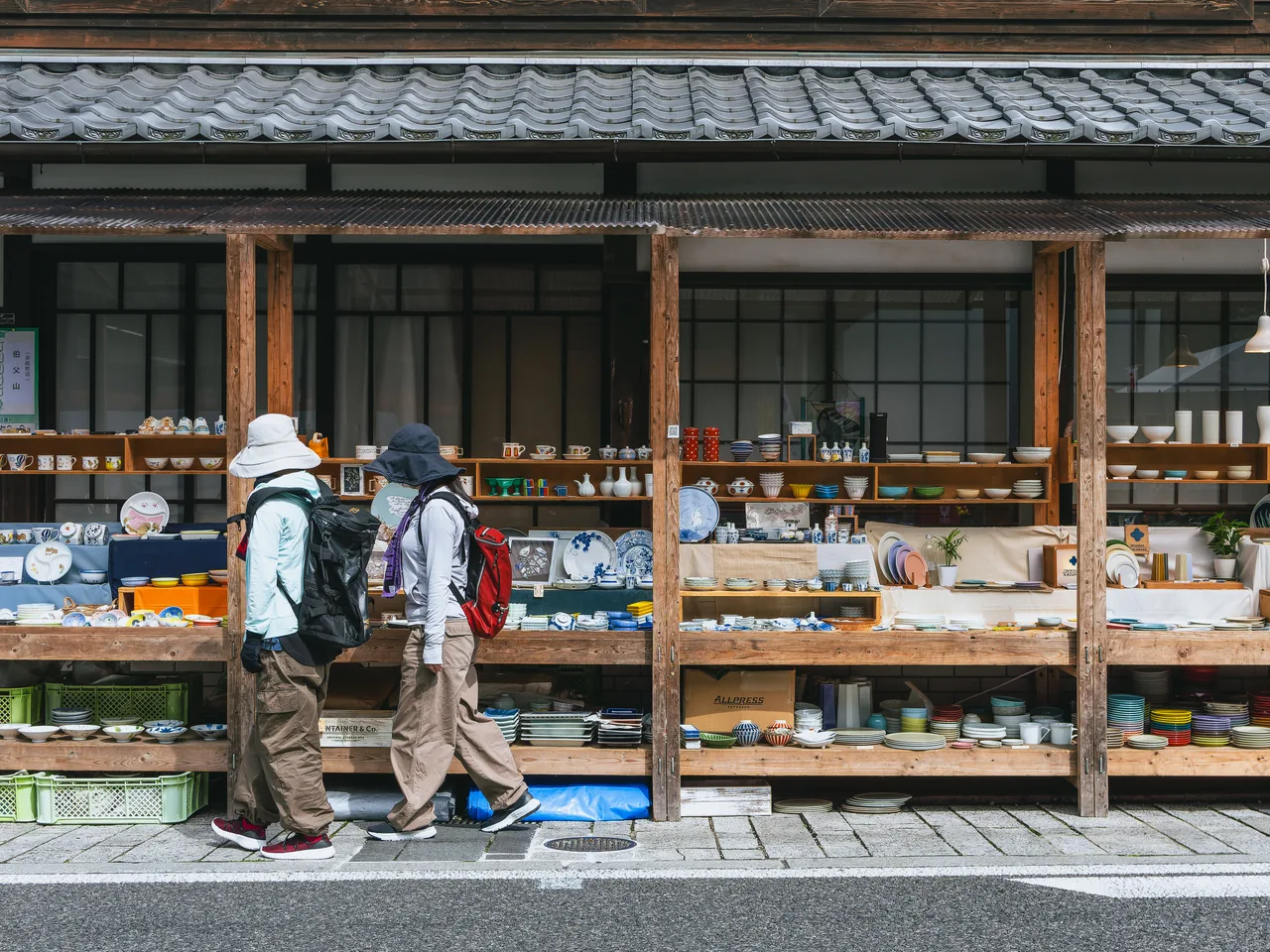
Photo: ©Saga Prefectural Cultural Tourism Federation
The Arita Ceramics Fair is a huge pottery market held every year from April 29 to May 5, when kilns and trading houses set out their wares along the street between Arita Station and Kami-Arita Station. The street becomes pedestrian-only during the fair, and some limited express trains make extra stops at Kami-Arita Station. In autumn, the Arita Autumn Ceramics Festival centers on the Uchiyama district, combining a stroll through town in the autumn leaf season with pottery shopping.
Shopping in Arita is, above all, about ceramics. Kilns and trading houses along the Uchiyama street sell everything from plates and bowls for everyday meals to finely painted art pieces, across a wide range of prices. If the pieces you like are heavy or you are worried about breakage, ask whether the shop can ship them.
During the Ceramics Fair, stalls line the long street between Arita Station and Kami-Arita Station, so you end up walking a long way. If you plan to buy a lot, a large bag comes in handy.
The roads around Arita get very congested during the Ceramics Fair, and the organizers ask visitors to come by public transport.
Get off at Kami-Arita Station, see the Izumiyama quarry, then walk west along the Uchiyama street, stopping at Sueyama Shrine on the way to Arita Station, and you pass the town's sights in order. If you stop at pottery shops along the way, allow about half a day.
To learn more about the history of Arita ware, combine Arita with Imari, the port that shipped the porcelain, and Okawachiyama, where the Nabeshima domain's kilns stood, and you will see how the pottery towns are connected. For an overnight stay, Takeo Onsen, linked by the JR Sasebo Line, is convenient.