
Imari
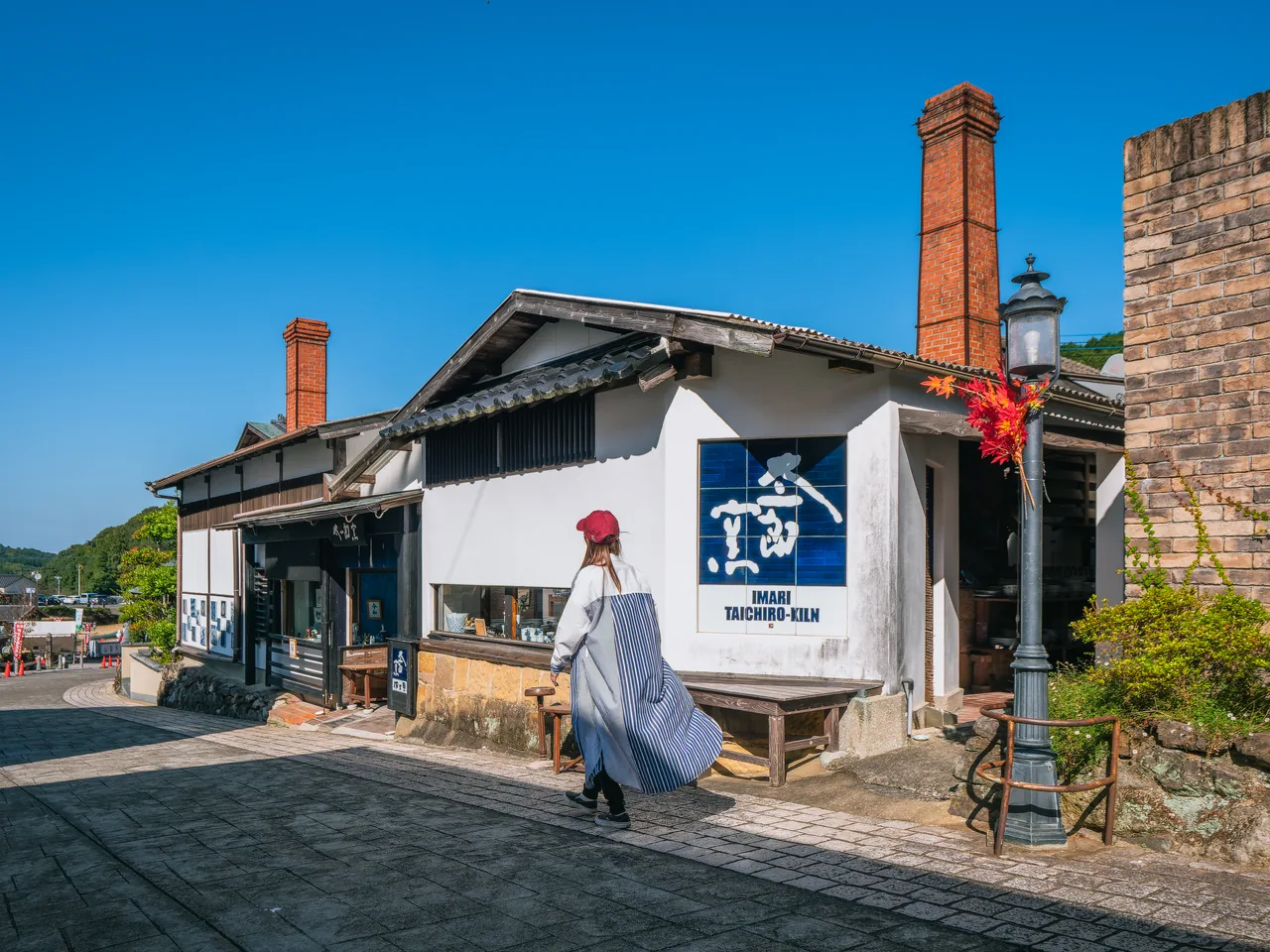
Photo: ©Saga Prefectural Cultural Tourism Federation
Areas of Saga
Imari
Things to do in Imari, home of Imari ware: the Okawachiyama kiln village, the summer wind chime festival, the old port bridges and the bus from Imari Station.
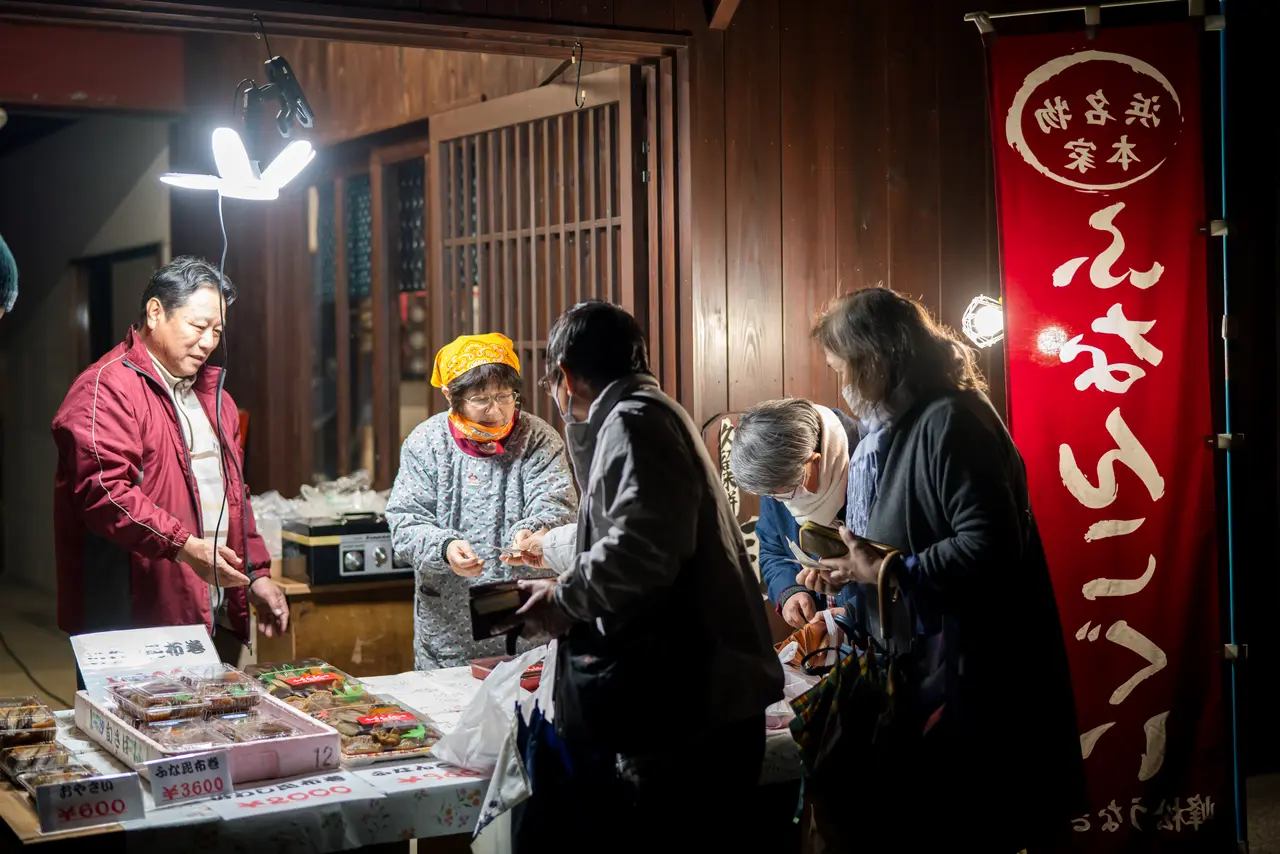 Jan 19Kashima Funa-ichi (Crucian Carp Market) and Funanko-gui
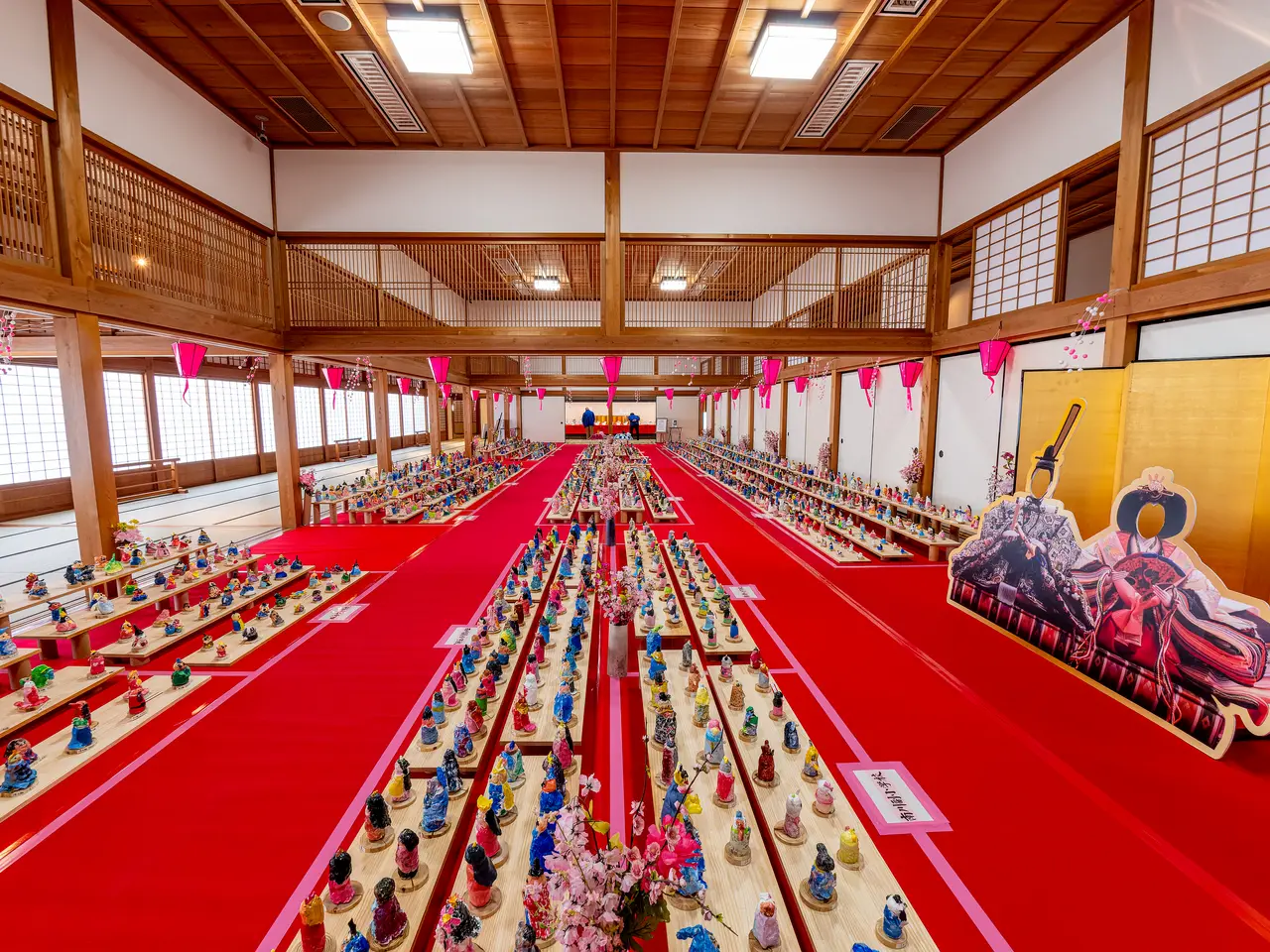 Feb 13 – Mar 14Saga Castle Town Hina Matsuri (Doll Festival)
 GuidesSaga Autumn Leaves: 6 Spots from Kunen-an to Taku Seibyo
Find on the map
This page is translated from the Japanese edition. Read the Japanese edition
What is the area like?
In the early Edo period, porcelain fired across western Hizen, in Arita, Hasami and elsewhere, was shipped from the port of Imari to the rest of Japan and, by way of Dejima in Nagasaki, overseas. Named after the port it left from, this porcelain became known as Imari ware, and its fame reached as far as Europe.
The center of present-day Imari is a town spread around the mouth of the Imari River. In the mountains to the south is Okawachiyama, the village where the Saga (Nabeshima) domain had its official kilns make gifts for the shogun and feudal lords; about 30 kilns are gathered there today. Imari is about 25 minutes by rail from Arita and is also linked to Karatsu by the JR Chikuhi Line, making it easy to fit into a trip around the pottery towns.
Main sights
Okawachiyama, the Nabeshima kiln village
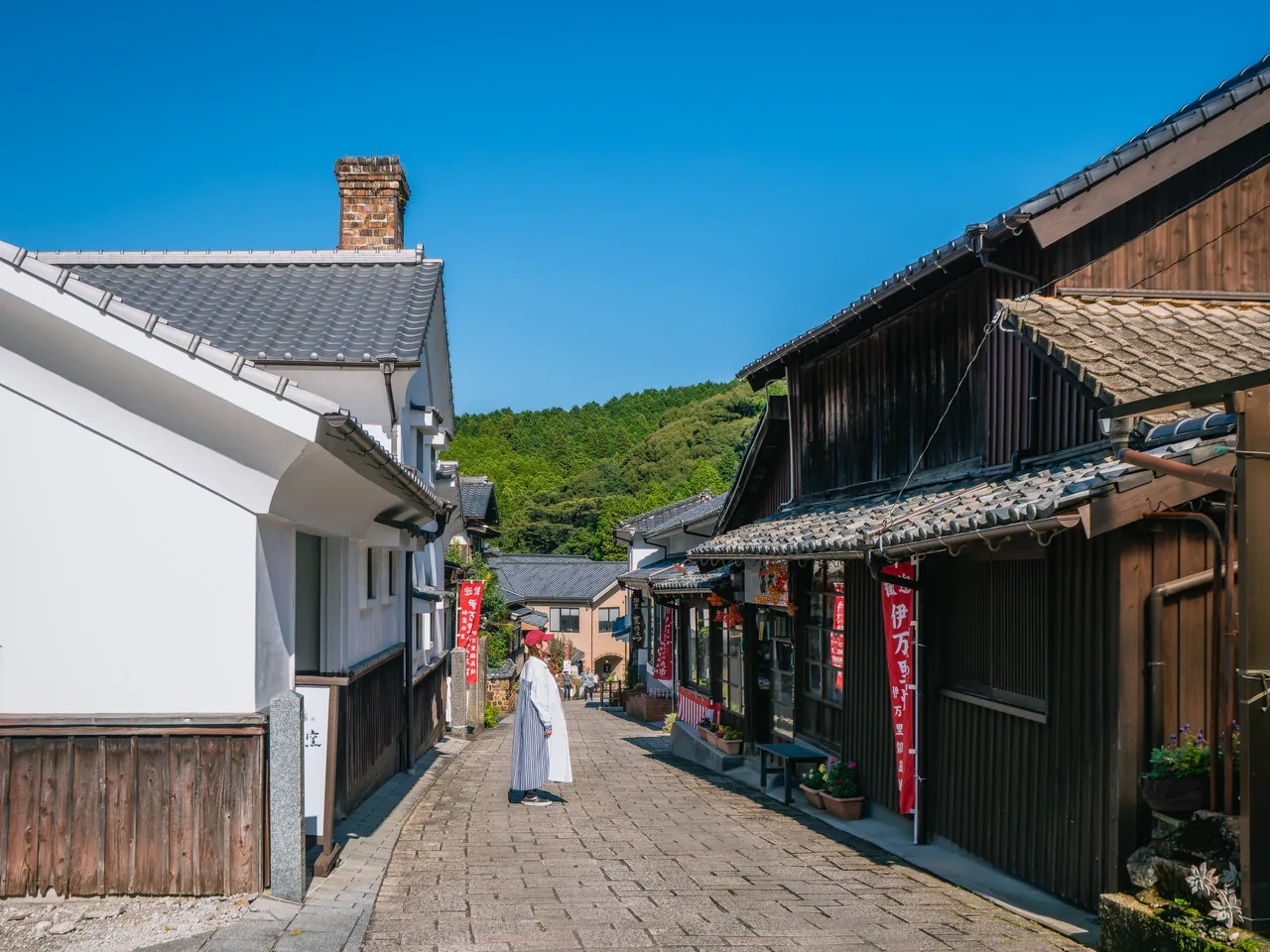
Photo: ©Saga Prefectural Cultural Tourism Federation
The Saga domain placed its official kilns in this valley to make Nabeshima porcelain for presentation, and it guarded the entrance with a checkpoint so the techniques would not leak out, which is why it is called the "village of secret kilns." The site of the domain kilns is a National Historic Site. With steep rock peaks rising behind like a folding screen, kiln workshops and shops line the stone-paved slope, and brick chimneys rise above the roofs (the photo at the top of this page). Each kiln has its own style, and the way to enjoy Okawachiyama is to climb the slope comparing pieces as you go. See Okawachiyama for details.
Imari Okawachiyama Wind Chime Festival
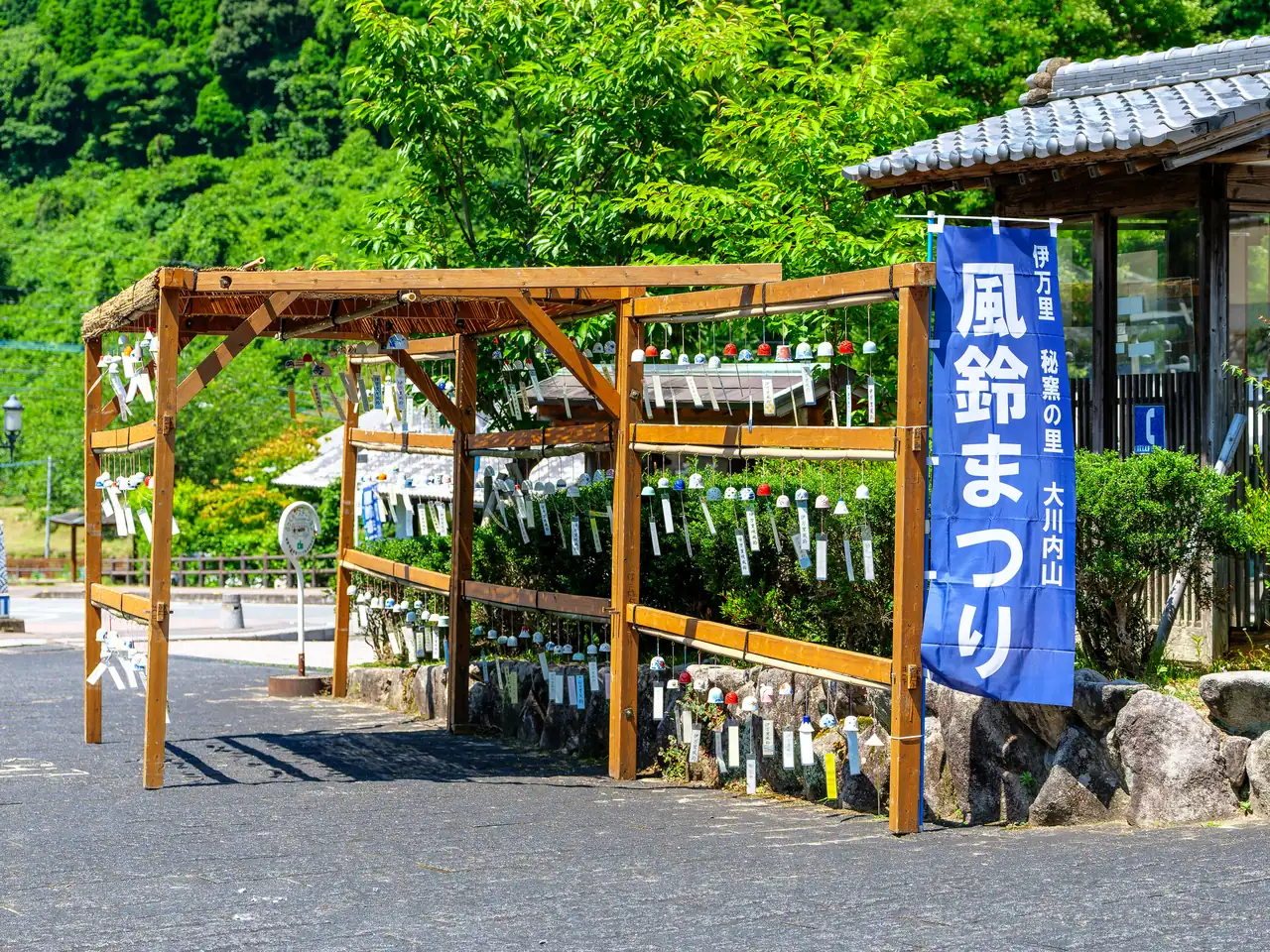
Photo: ©Saga Prefectural Cultural Tourism Federation
Usually from mid-June to around the end of August, porcelain wind chimes made by the Okawachiyama kilns hang all over the village, and every breeze fills the valley with their clear ring. In 2026 the event was held under the name Nabeshima Hanyo Furin-ichi from June 20 to August 31. Each kiln's chimes have their own designs, and you can buy one you like to take home. See Imari Okawachiyama Wind Chime Festival for details.
Central Imari and Aioi Bridge
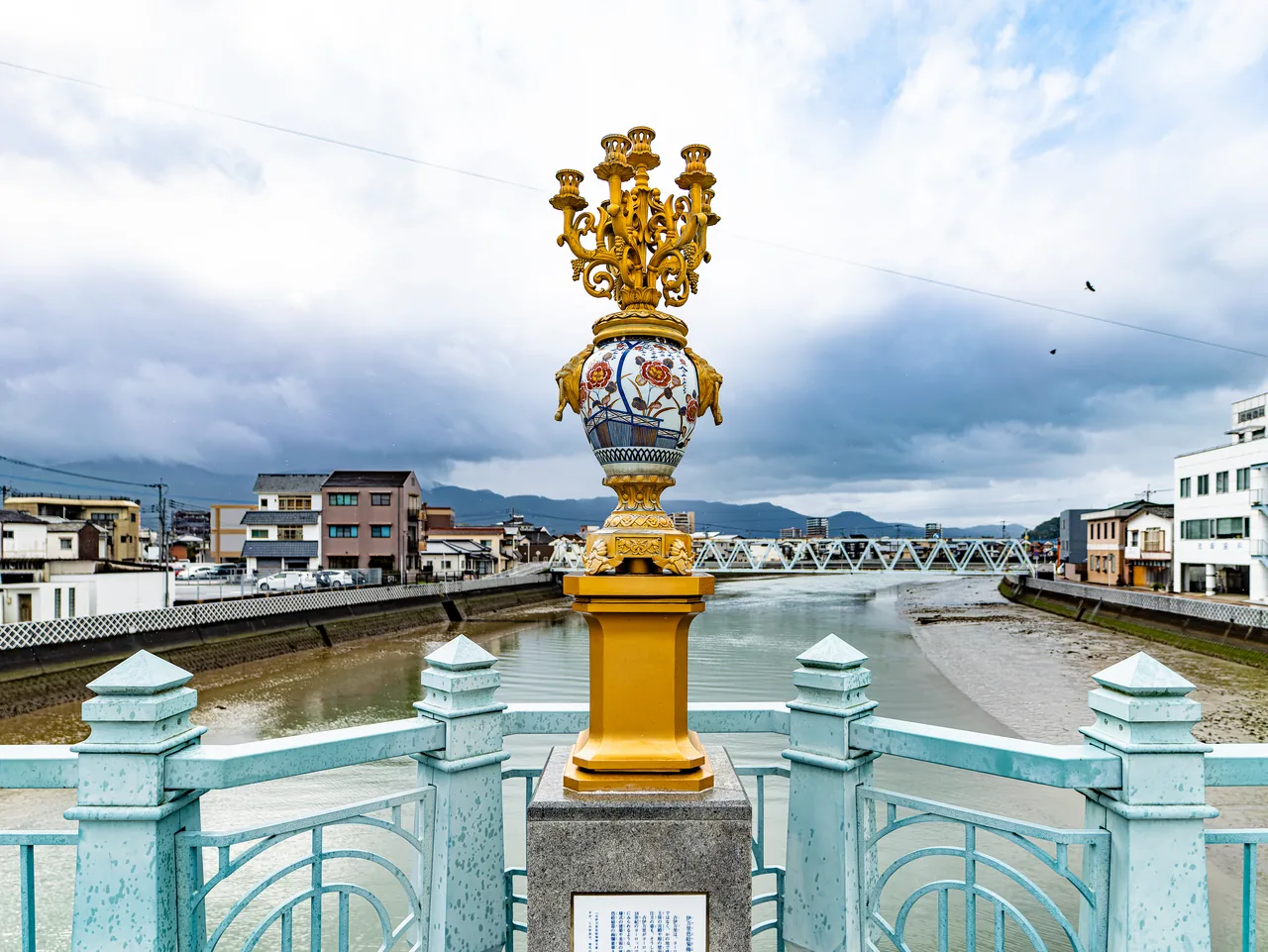
Photo: ©Saga Prefectural Cultural Tourism Federation
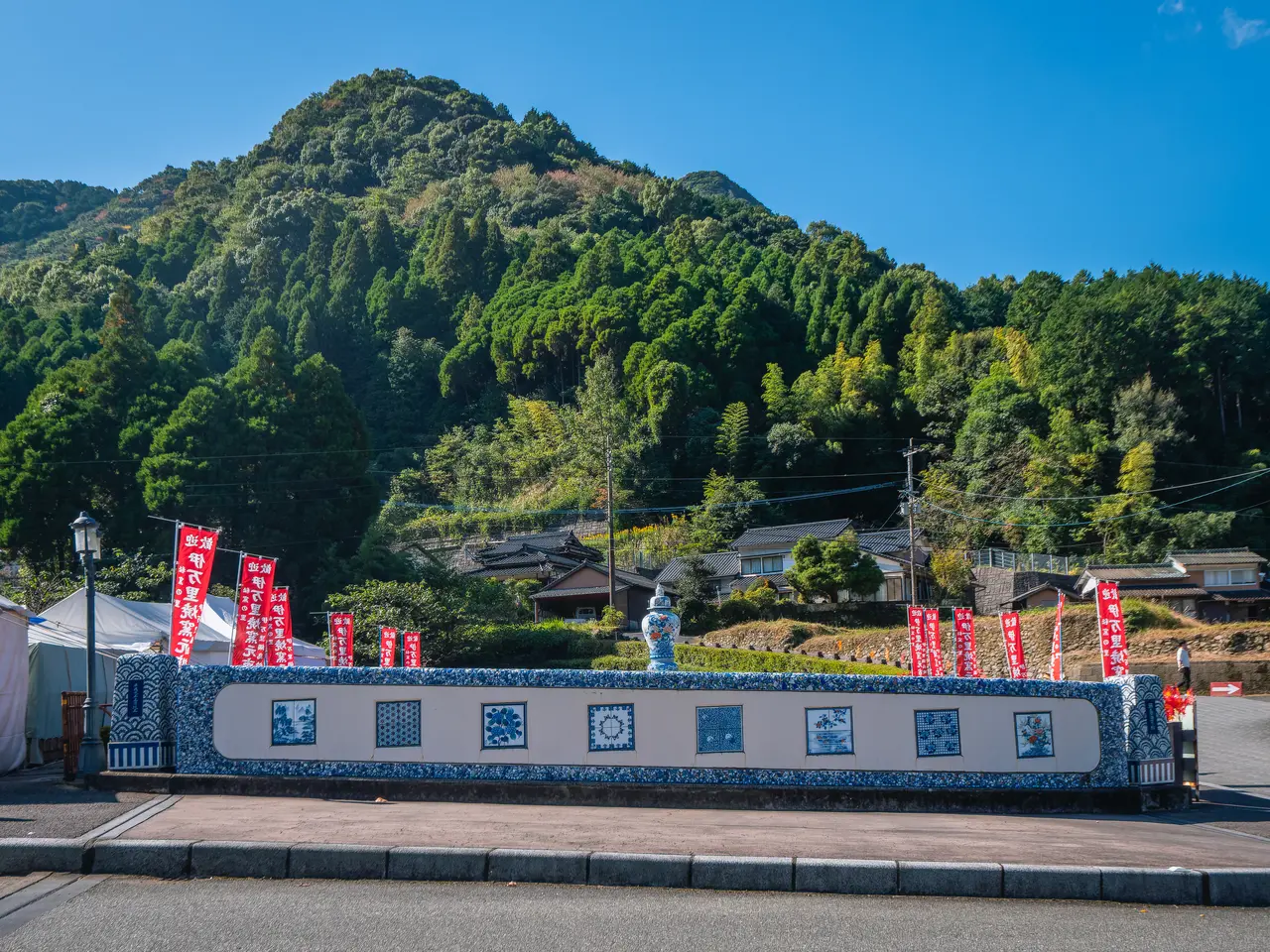
Walk from Imari Station toward the Imari River and you will find monuments shaped like Imari ware jars on the railings of the bridges. The foot of Aioi Bridge was once the starting point for shipping the porcelain: from here, small boats carried it out to larger ships anchored offshore. A walk along the river gives a sense of the port town that prospered on pottery.
Food and shopping
At the kiln shops in Okawachiyama you can choose pieces in each kiln's specialty, such as colored Iro-Nabeshima, blue-and-white sometsuke or celadon. They range from small everyday plates and teacups to elaborately painted works, so take your time and compare several shops.
Imari's signature food is Imari beef, described by the Imari City Tourism Association as "top-grade Japanese Black beef." Restaurants in town serve it as steak, hamburg steak and other dishes.
Getting there
- From Arita: Change at JR Arita Station to the Matsuura Railway; it is about 25 minutes to Imari Station. From Hakata, take the limited express Midori to Arita.
- From Karatsu: You can ride the JR Chikuhi Line from Karatsu Station to Imari Station without changing.
- To Okawachiyama: About 15 minutes by bus bound for Okawachiyama from Imari Station. Buses are not frequent, so check the times first or take a taxi from the station. See Access (Imari Nabeshima Ware Cooperative) for details.
Getting around the area
Okawachiyama is small enough to walk from the Imari Nabeshima Ware Hall at the entrance to the far end of the village. Allow two to three hours for the kilns and you can compare many shops. The slopes and stone paving continue throughout, so wear comfortable shoes.
In central Imari, walking around Aioi Bridge on your way to or from Okawachiyama gives you a feel for the old shipping port. To link the pottery towns, you can spend the morning in Arita and the afternoon in Imari. To continue to Karatsu, take the JR Chikuhi Line to Karatsu.


