
Kamojima & Kawashima
Courtesy of Tokushima Prefecture and the Tokushima Prefecture Tourism Association
Areas of Tokushima
Kamojima & Kawashima
Kamojima and Kawashima in Yoshinogawa: Fujii-dera, Temple 11 of the Shikoku pilgrimage, and the Kawashima submersible bridge over the Yoshino River, with access.
Find on the map
This page is translated from the Japanese edition. Read the Japanese edition
What is the area like?
After Temple 10, Kirihata-ji, walking pilgrims cross the Yoshino River into Yoshinogawa City on the south bank. On that route is the Kawashima submersible bridge, which disappears under the water when the river rises. Beyond it, south of JR Kamojima Station, stands Fujii-dera, Temple 11.
From Fujii-dera a mountain trail leads on to Temple 12, Shosan-ji, so this is also where the temple circuit leaves the plain and heads into the mountains.
Main sights
Fujii-dera Temple (Temple 11)
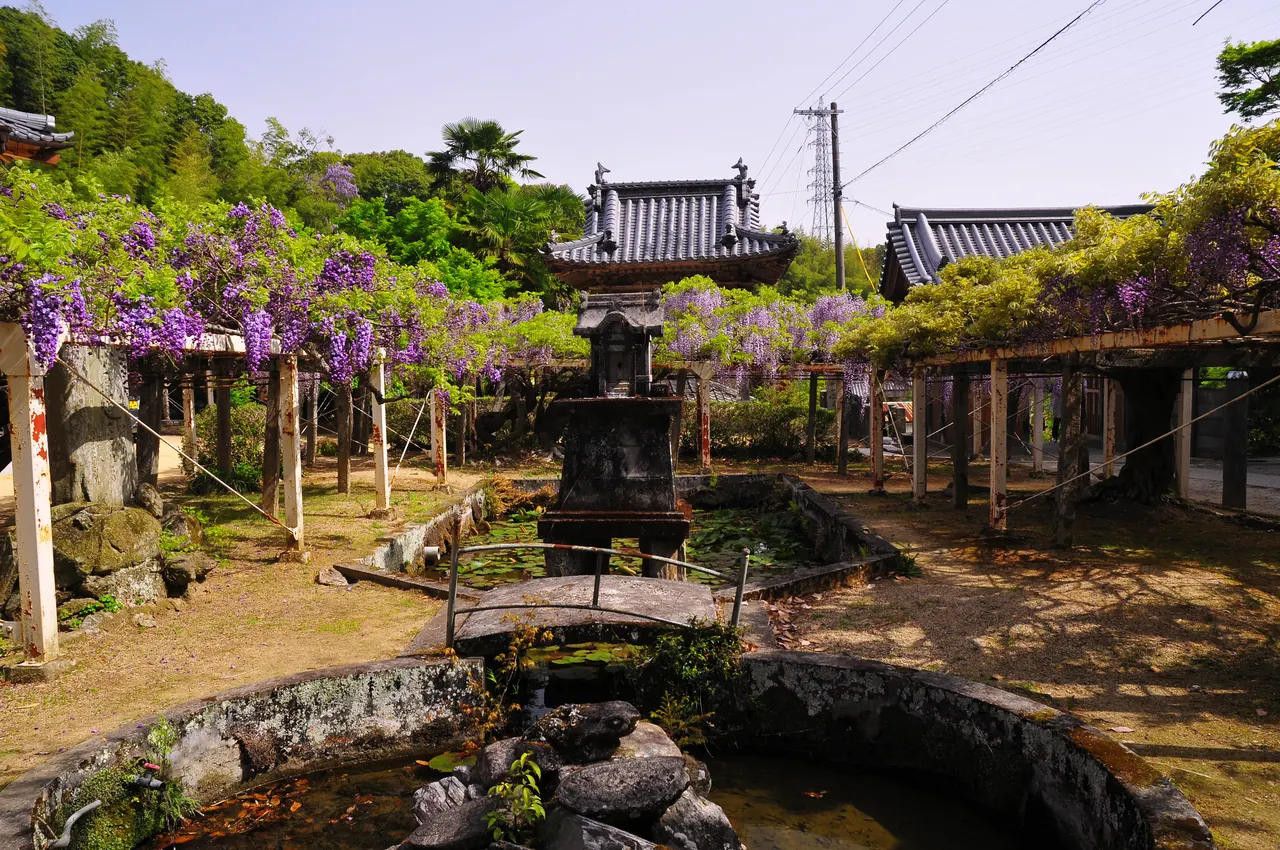
Its mountain name is Kongozan, and it is said to have been founded by Kobo Daishi in 815. The principal image, the "Yakuyoke Yakushi" Medicine Buddha, is a national Important Cultural Property. After Tensho-era fires burned the whole mountain, the temple declined until the early Edo period. A wisteria trellis in the grounds hangs with purple blossoms in spring. See Fujii-dera Temple for details. Official information: Fujii-dera Temple on Awanavi (Tokushima tourism site).
Kawashima Chinkabashi (Submersible Bridge)
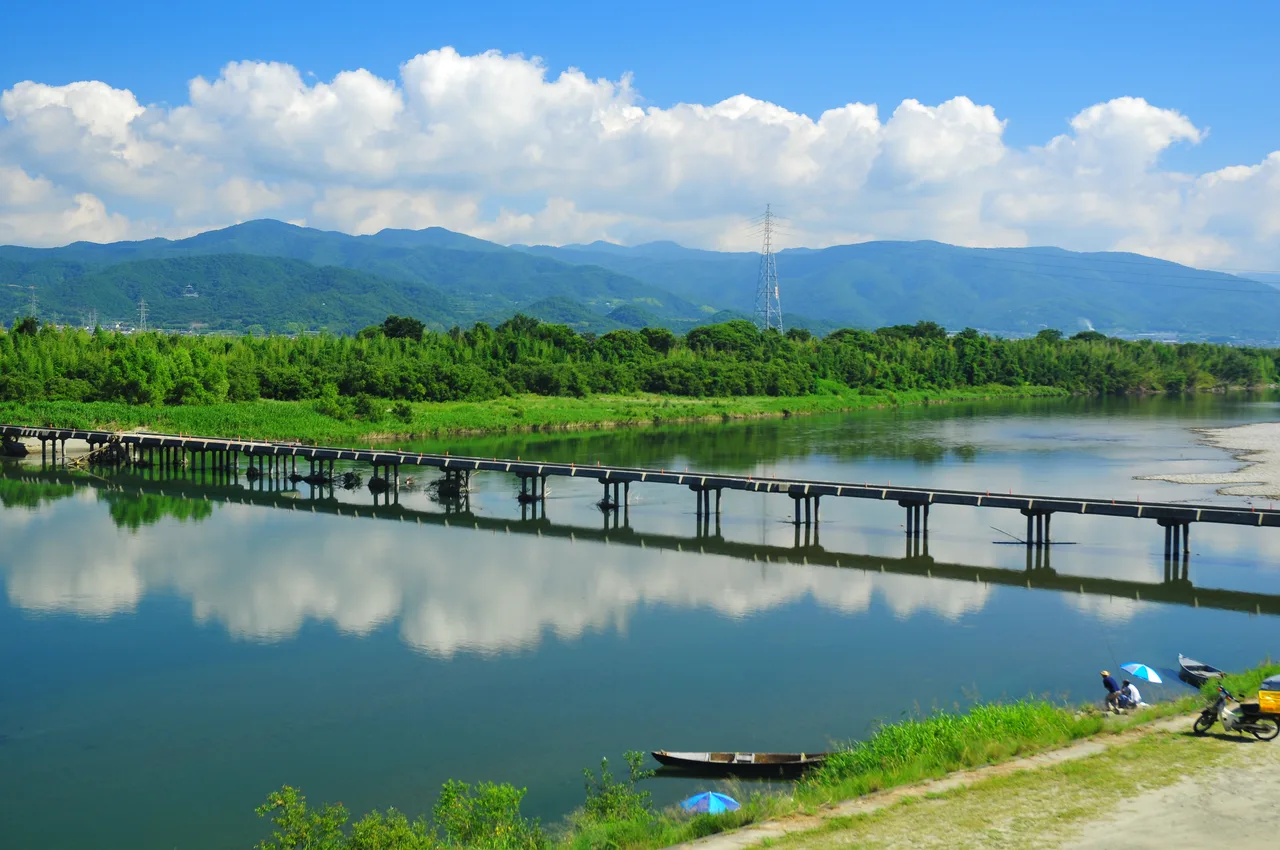
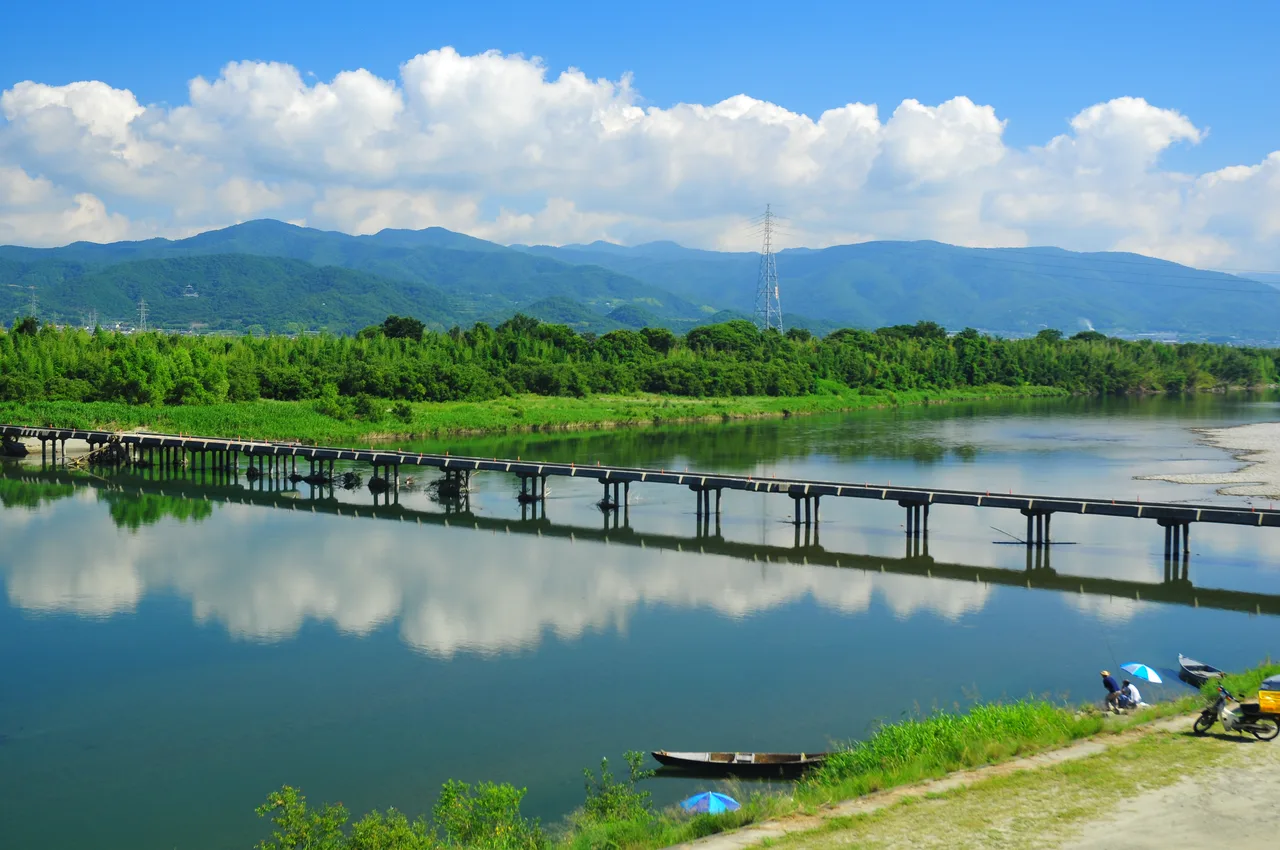
A low bridge from Kawashima in Yoshinogawa City to Zennyujito, an island in the middle of the Yoshino River. When the river rises, the bridge disappears under the water, which is why it is called a "sensuibashi" (submersible bridge); it is built the same way as the "chinkabashi" bridges found elsewhere in Japan. On clear, still days the bridge and the mountains are reflected in the river. See Kawashima Chinkabashi for details. Official information: Kawashima Chinkabashi on Awanavi (Tokushima tourism site).
Food and shopping
If you plan to walk the mountain trail from Fujii-dera to Shosan-ji, get drinks and food in central Kamojima before you set off. For places to eat, see the list further down this page.
Getting there
- Fujii-dera: about 3 km south of Kamojima Station on the JR Tokushima Line, about 40 minutes on foot or 10 minutes by car. The "Inoonaka" and "Fujiideraguchi" Tokushima Bus stops are about 1 km away.
- Kawashima Chinkabashi: the bridge spans the Yoshino River at Kawashima, Yoshinogawa City. Cars use it too, so watch for traffic when you walk across or stop for photos. It cannot be crossed when the river is high, such as after heavy rain.
Getting around the area
The submersible bridge lies on the pilgrim path from Kirihata-ji to Fujii-dera. If you come by car, look at the river from the bridge first and then visit Fujii-dera, and you will be following the pilgrims' order. For the wisteria, come in spring.
For Temples 6 to 10, see the Donari & Kamiita area guide; for Temple 12, Shosan-ji, at the end of the mountain trail, see the Kamiyama area guide.
Sights in Kamojima & Kawashima
Tokushima guides
See all

More areas of Tokushima
- Naruto Park & Uzu-no-Michi
- Uchinoumi
- Naruto Otsu
- Naruto & Oasa (Temples 1–2)
- Itano (Temples 3–5)
- Donari & Kamiita (Temples 6–10)
- Aizumi
- Kitajima
- Kokufu & Ishii (Temples 13–17)
- Tokushima Station, Mt. Bizan & Shinmachi River
- Kawauchi
- Hachiman, Shibuno & Joroku
- Komatsushima (Temples 18–19)
- Anan & Hanoura
- Aratano (Temple 22)
- Tairyuji, Kakurinji & Washiki
- Cape Kamoda & Tsubaki
- Kawaguchi Dam
- Hiwasa (Temple 23)
- Akamatsu
- Tainohama Beach
- Mugi & Tebajima Island
- Kainan
- Asakawa
- Shishikui & Takegashima
- Todoroki Falls
- Kisawa Waterfalls
- Kamiyama (Temple 12)
- Kamiyama Kamibun
- Kamikatsu Kashihara
- Kamikatsu Kanjogataki
- Okawara Highlands
- Yamakawa & Misato
- Awa Earth Pillars
- Wakimachi
- Yaoyorozu Kami no Goten
- Sadamitsu
- Ichiu
- Koyadaira
- Higashimiyoshi
- Iya Kazurabashi
- Iya Valley
- Kurozo Wetland
- Oboke
- Higashi-Iya Ochiai
- Oku-Iya
- Mt. Tsurugi
- Konose Gorge