
Oku-Iya
Courtesy of Tokushima Prefecture and the Tokushima Prefecture Tourism Association
Areas of Tokushima
Oku-Iya
Oku-Iya, deep in Miyoshi, Tokushima: the Oku-Iya Double Vine Bridges, Nagoro village with over 300 scarecrows, the winter closure, and getting there.
Find on the map
This page is translated from the Japanese edition. Read the Japanese edition
What is the area like?
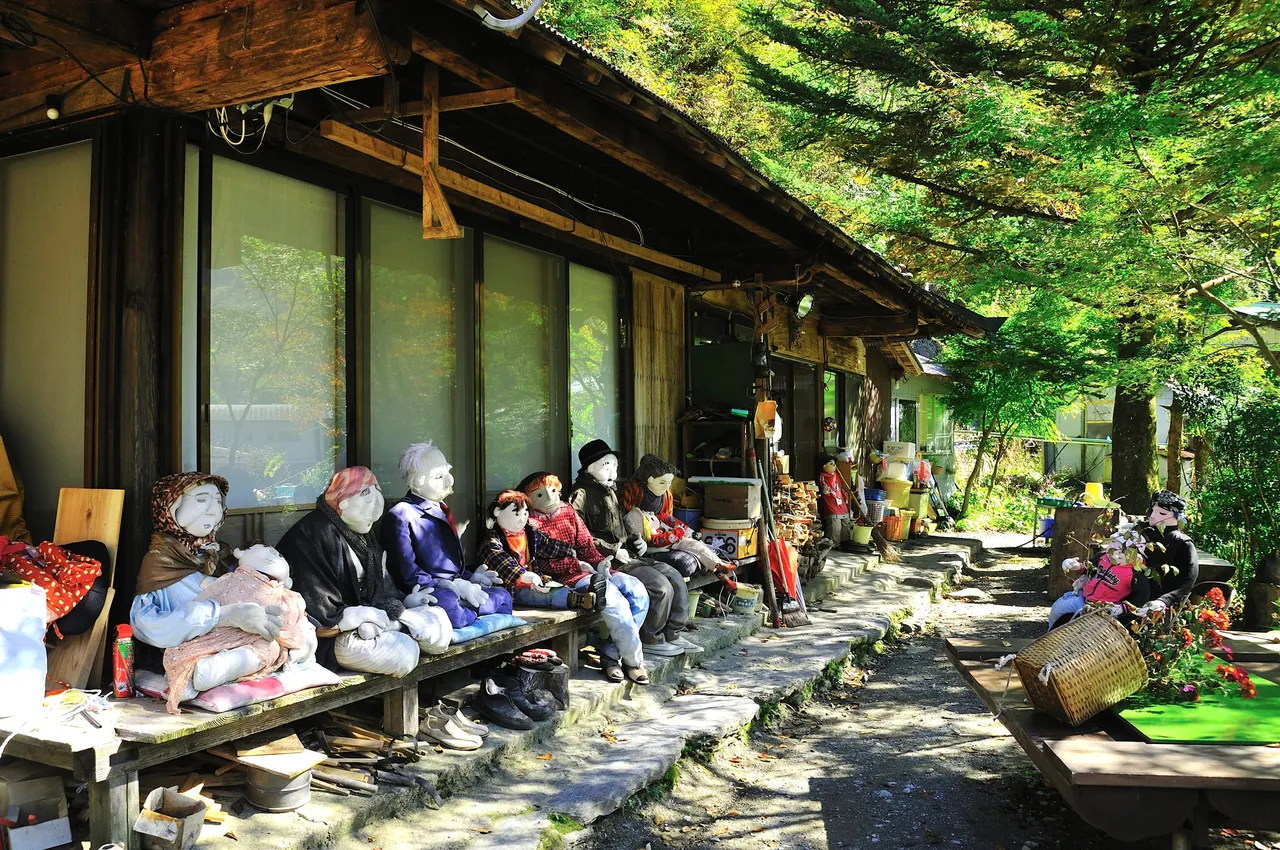
Oku-Iya is the area of Sugeoi and Nagoro on the upper Iya River, even deeper into the mountains than Higashi-Iya. Two vine bridges span a deep valley, and in the village of Nagoro, scarecrows dressed as people working in the fields or chatting by the road greet you all over.
It is more than two hours by car from the Ikawa-Ikeda IC, and the double vine bridges close in winter, so check the season and the route before you go.
Main sights
Oku-Iya Double Vine Bridges
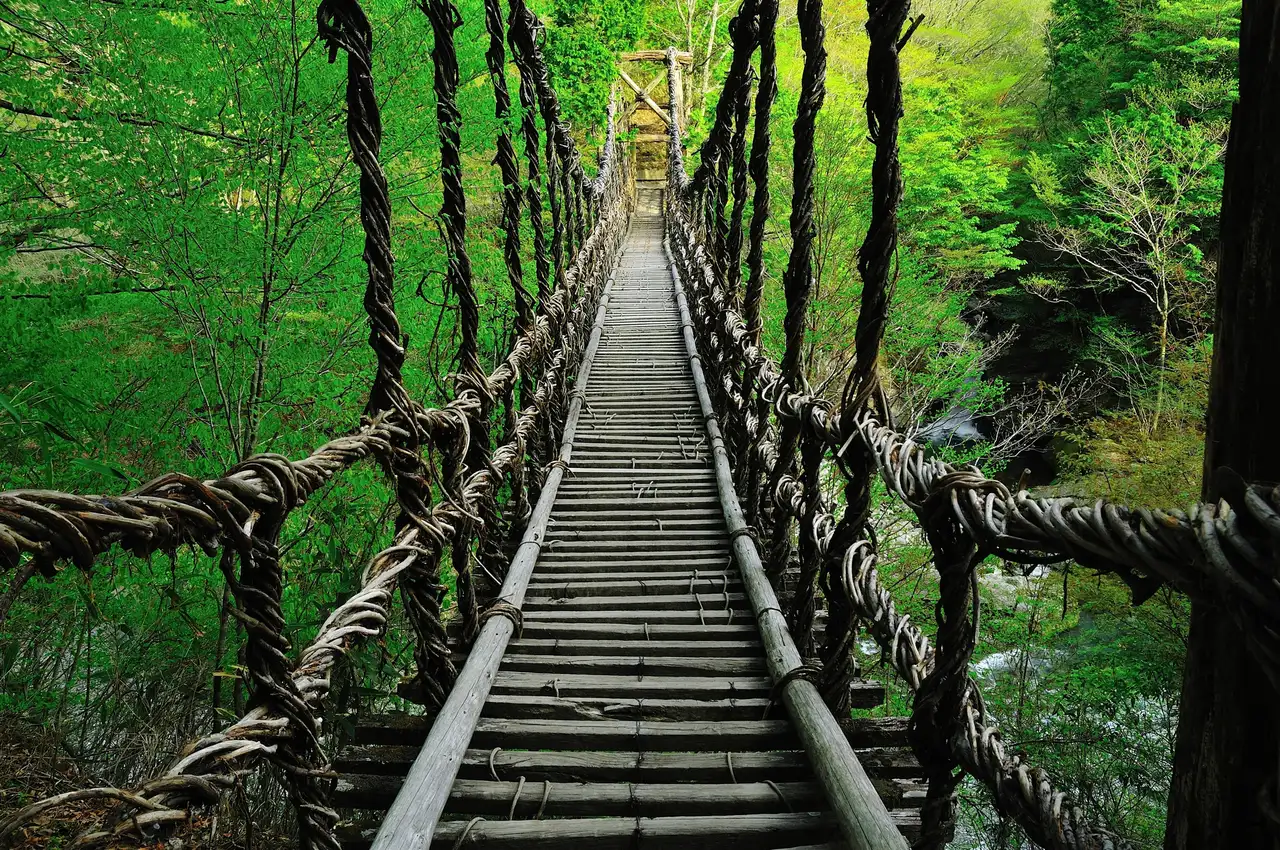
Two vine bridges span the Iya River at Sugeoi. They are called the "Otoko-bashi" (husband bridge) and the "Onna-bashi" (wife bridge), and together are also known as the "Fufu-bashi" (married couple bridges). The Onna-bashi is smaller and crosses upstream of the Otoko-bashi. Thin wooden slats run between handrails of woven vines, and from the bridge you can see the Iya River flowing below. The site closes in winter (December to March). For more, see Oku-Iya Double Vine Bridges. Official information: Oku-Iya Double Vine Bridges on Awanavi (Tokushima tourism site).
Nagoro Scarecrow Village
In Nagoro, more than 300 scarecrows sit on benches under the eaves, in front of sheds and by the roadside. Each wears its own clothes and hat, as if acting out a scene from village life. People live here, so do not enter their property. For more, see Nagoro Scarecrow Village. Official information: Nagoro Scarecrow Village on Awanavi (Tokushima tourism site).
Getting there
- Car: about 2 hours 10 minutes from the Ikawa-Ikeda IC to Nagoro. Reaching Sugeoi, where the double vine bridges are, also involves a long drive on mountain roads, so allow plenty of time.
- Bus: from JR Oboke Station, take the Shikoku Kotsu Nishi-Iya Line to "Kazurabashi Yume-butai" (かずら橋夢舞台), change to the Higashi-Iya Line for "Kubo" (久保), then change again to a Miyoshi City bus and get off at "Nagoro." The direct bus from Awa-Ikeda Station ended with the October 2026 timetable change. Buses are infrequent, so check your connections on the Shikoku Kotsu timetable.
Getting around the area
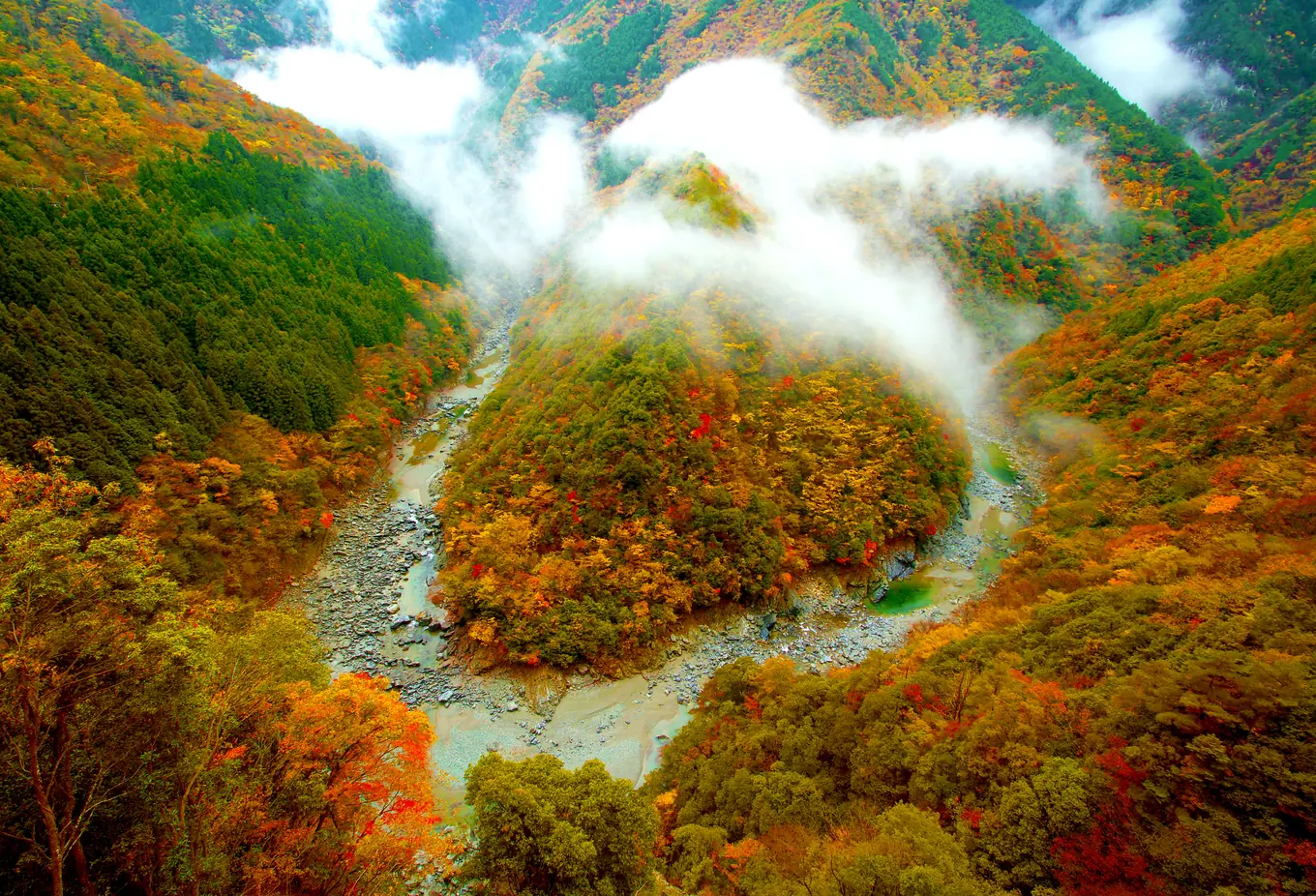
In autumn the mountains around the double vine bridges turn red and yellow. The bridges close for winter in December, so if you want to see the autumn colors, go by the end of November. In Nagoro, buckwheat blooms in September, and the look of the village changes with the seasons.
The "Yaen," a hand-pulled cable car on the bridge grounds, cannot be used as of November 2026. Check the Miyoshi City Tourism Association's notices to see whether it has reopened.
Mt. Tsurugi is also in Sugeoi, Higashi-Iya, and down the Iya River is Ochiai Village. See our Mt. Tsurugi area guide and Higashi-Iya Ochiai area guide.
Sights in Oku-Iya
Tokushima guides
See all

More areas of Tokushima
- Naruto Park & Uzu-no-Michi
- Uchinoumi
- Naruto Otsu
- Naruto & Oasa (Temples 1–2)
- Itano (Temples 3–5)
- Donari & Kamiita (Temples 6–10)
- Kamojima & Kawashima
- Aizumi
- Kitajima
- Kokufu & Ishii (Temples 13–17)
- Tokushima Station, Mt. Bizan & Shinmachi River
- Kawauchi
- Hachiman, Shibuno & Joroku
- Komatsushima (Temples 18–19)
- Anan & Hanoura
- Aratano (Temple 22)
- Tairyuji, Kakurinji & Washiki
- Cape Kamoda & Tsubaki
- Kawaguchi Dam
- Hiwasa (Temple 23)
- Akamatsu
- Tainohama Beach
- Mugi & Tebajima Island
- Kainan
- Asakawa
- Shishikui & Takegashima
- Todoroki Falls
- Kisawa Waterfalls
- Kamiyama (Temple 12)
- Kamiyama Kamibun
- Kamikatsu Kashihara
- Kamikatsu Kanjogataki
- Okawara Highlands
- Yamakawa & Misato
- Awa Earth Pillars
- Wakimachi
- Yaoyorozu Kami no Goten
- Sadamitsu
- Ichiu
- Koyadaira
- Higashimiyoshi
- Iya Kazurabashi
- Iya Valley
- Kurozo Wetland
- Oboke
- Higashi-Iya Ochiai
- Mt. Tsurugi
- Konose Gorge