
Higashi-Iya Ochiai
Courtesy of Tokushima Prefecture and the Tokushima Prefecture Tourism Association
Areas of Tokushima
Higashi-Iya Ochiai
Ochiai Village in Higashi-Iya, Tokushima, a preserved hamlet of old houses and stone walls: the viewpoint, winter scenery, etiquette, and getting there.
Find on the map
This page is translated from the Japanese edition. Read the Japanese edition
What is the area like?
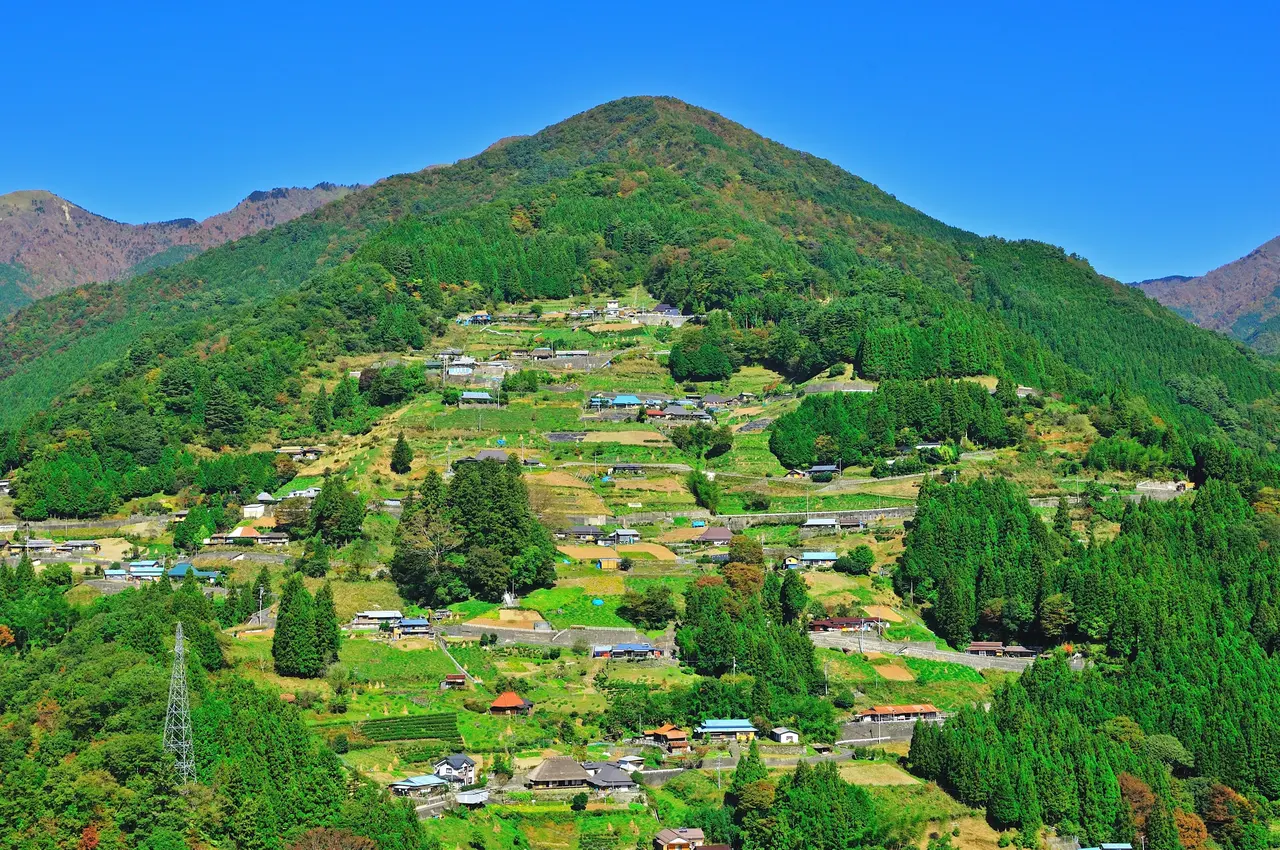
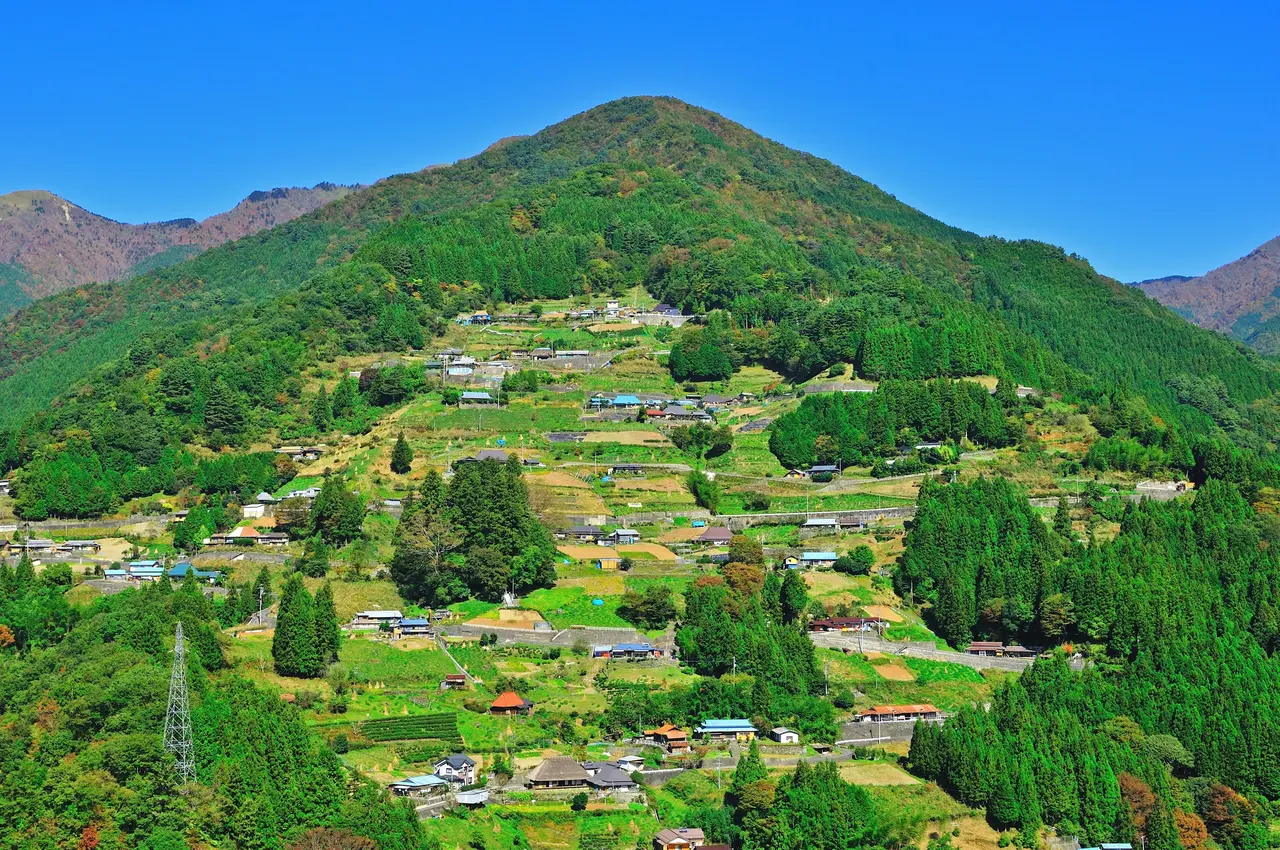
Across the valley, houses, fields and stone walls climb a mountainside in steps. This is Ochiai Village, which spreads up the slope from around the point where the Iya and Ochiai rivers meet, almost in the center of Higashi-Iya.
The difference in height between the top and bottom of the village is about 390 meters. Farmhouses built between the mid-Edo period and the early Showa era survive along with stone walls and fields, and the village is a nationally designated Important Preservation District for Groups of Traditional Buildings.
Main sights
Ochiai Village
Houses scattered across the slope, with fields and stone walls between them, show how people have lived in these mountains. Within the village, a thatched farmhouse is rented out whole as accommodation. People live here, so do not enter houses or fields; enjoy the view from the viewpoint and the roads. For more, see Ochiai Village. Official information: Ochiai Village on Awanavi (Tokushima tourism site).
The viewpoint facing the village
On the opposite side of the valley is a viewpoint looking straight at the village. You can take in the houses, fields and stone walls at a glance, and scarecrows dressed as grandfathers and grandmothers sit there too. When snow falls in winter, the houses and fields turn white and the terraces of stone walls stand out sharply.
Getting there
- Bus: from Oboke Station on the JR Dosan Line, take the Shikoku Kotsu Nishi-Iya Line to "Kazurabashi Yume-butai" (かずら橋夢舞台) and change to the Higashi-Iya Line. The direct bus from Awa-Ikeda Station ended with the October 2026 timetable change. Buses are infrequent, so check your stop and connections on the Shikoku Kotsu timetable.
- Car: about 115 minutes from the Ikawa-Ikeda IC on the Tokushima Expressway.
Getting around the area
Start at the viewpoint across the valley to see the whole village, then walk the roads through it, and you will appreciate both the height of the slope and the way the stone walls are built. If you stay in the thatched rental house, you can also see the village in the morning and evening light.
Down the Iya River is the Iya Kazurabashi, a suspension bridge woven from vines, and farther up the valley is Oku-Iya, home to the double vine bridges and the scarecrow village. See our Iya Kazurabashi area guide and Oku-Iya area guide.
Sights in Higashi-Iya Ochiai
Tokushima guides
See all

More areas of Tokushima
- Naruto Park & Uzu-no-Michi
- Uchinoumi
- Naruto Otsu
- Naruto & Oasa (Temples 1–2)
- Itano (Temples 3–5)
- Donari & Kamiita (Temples 6–10)
- Kamojima & Kawashima
- Aizumi
- Kitajima
- Kokufu & Ishii (Temples 13–17)
- Tokushima Station, Mt. Bizan & Shinmachi River
- Kawauchi
- Hachiman, Shibuno & Joroku
- Komatsushima (Temples 18–19)
- Anan & Hanoura
- Aratano (Temple 22)
- Tairyuji, Kakurinji & Washiki
- Cape Kamoda & Tsubaki
- Kawaguchi Dam
- Hiwasa (Temple 23)
- Akamatsu
- Tainohama Beach
- Mugi & Tebajima Island
- Kainan
- Asakawa
- Shishikui & Takegashima
- Todoroki Falls
- Kisawa Waterfalls
- Kamiyama (Temple 12)
- Kamiyama Kamibun
- Kamikatsu Kashihara
- Kamikatsu Kanjogataki
- Okawara Highlands
- Yamakawa & Misato
- Awa Earth Pillars
- Wakimachi
- Yaoyorozu Kami no Goten
- Sadamitsu
- Ichiu
- Koyadaira
- Higashimiyoshi
- Iya Kazurabashi
- Iya Valley
- Kurozo Wetland
- Oboke
- Oku-Iya
- Mt. Tsurugi
- Konose Gorge