
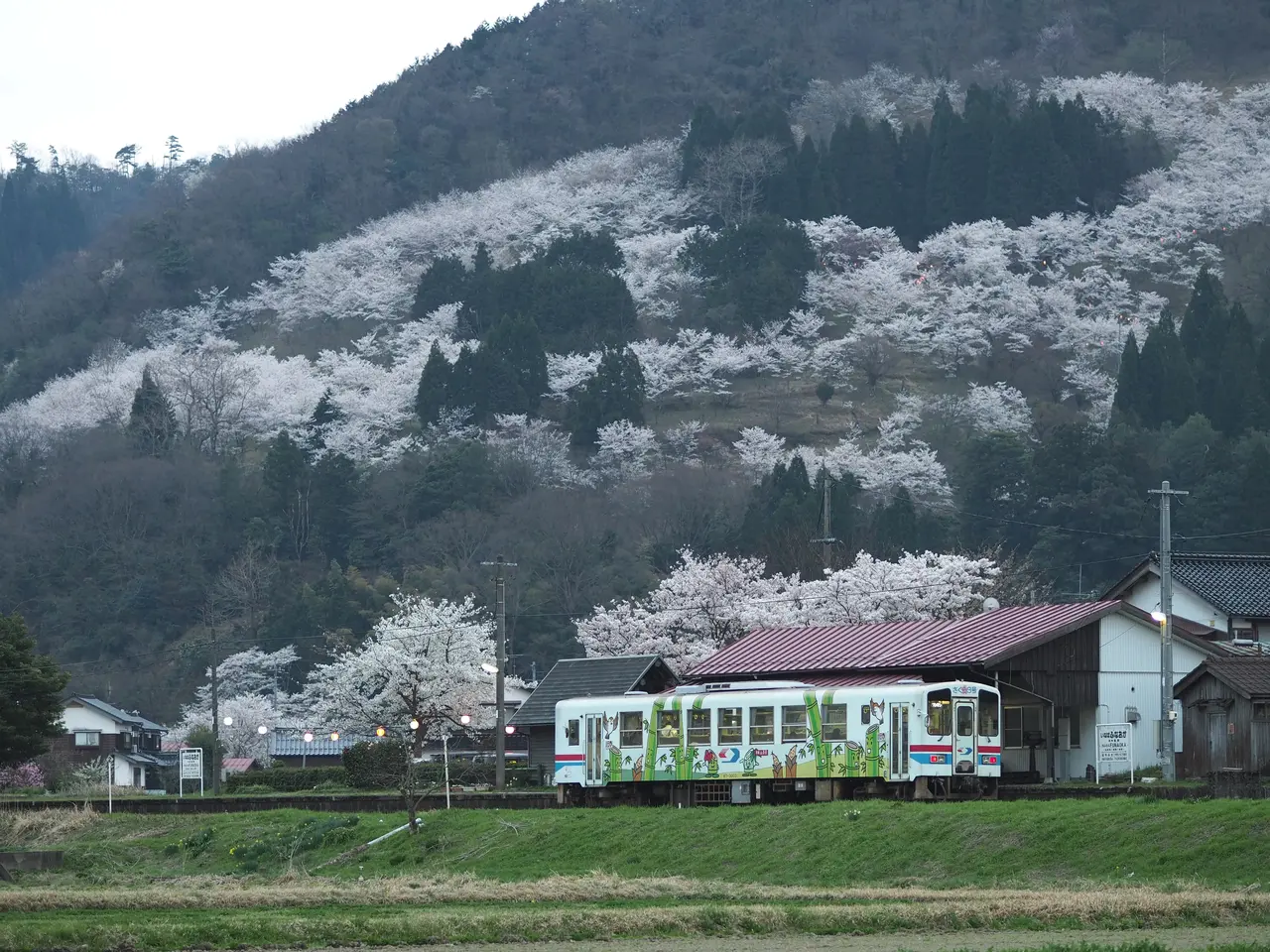
Wakasa
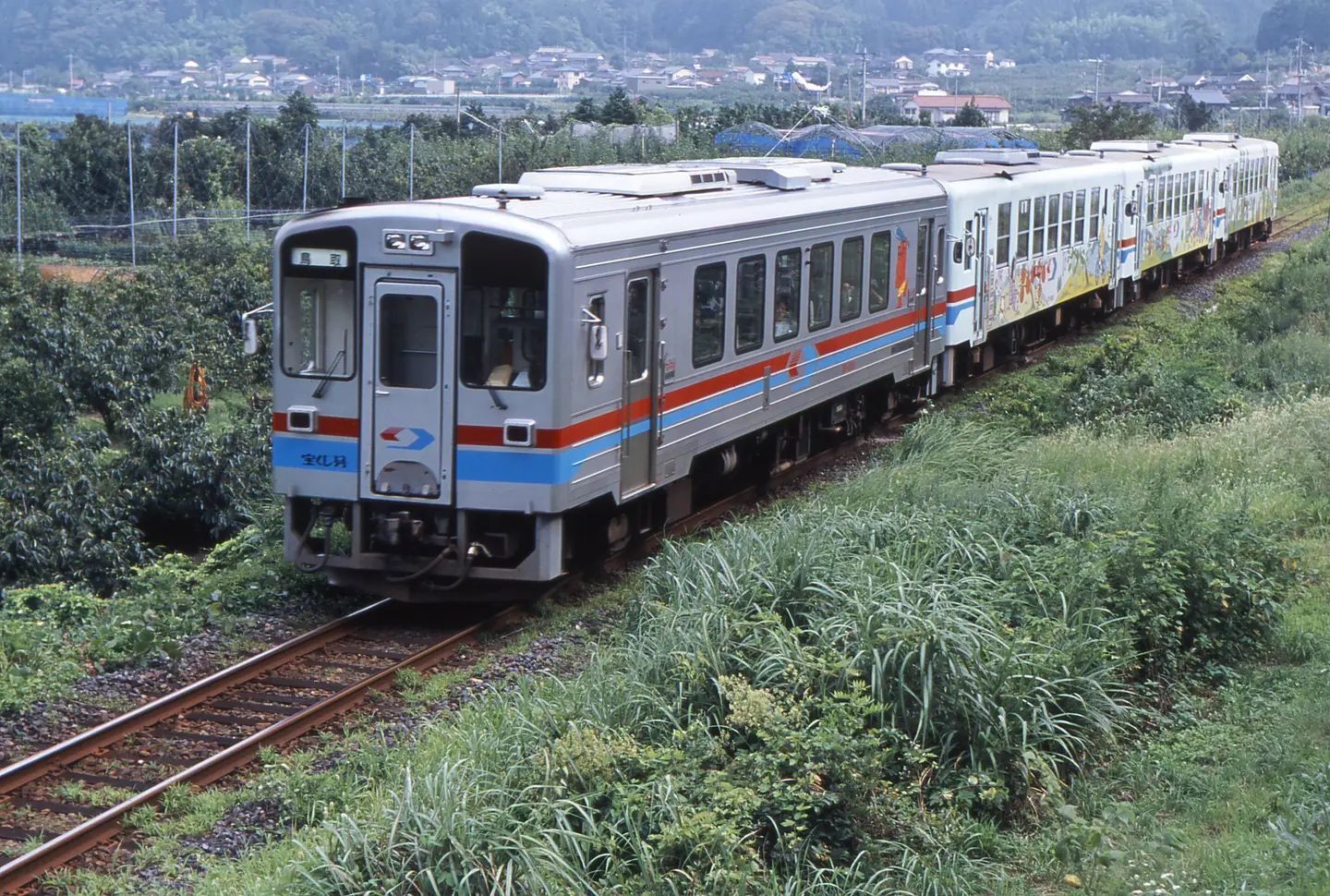
Photo: ©Tottori Pref.
Areas of Tottori
Wakasa
Wakasa in eastern Tottori: Wakasa Railway's historic stations, the C12 steam locomotive and turntable at Wakasa Station, and the Kura-dori and Kariya-dori streets.
 Nov 21 – Dec 6Tottori Sakyu Illusion
 GuidesTottori Crab Ryokan: 6 Onsen Inns for Matsuba Crab Season
 GuidesMatsuba Crab in Tottori: Season, Itsukiboshi and How to Eat It
Find on the map
Choose a numbered circle to zoom in there; choose a name to open the area's page.
This page is translated from the Japanese edition. Read the Japanese edition
What is the area like?
Wakasa is a town in the hills of eastern Tottori Prefecture, near the border with Hyogo. The star of any trip here is the Wakasa Railway, a local line that runs 19.2 km from Koge Station on the JR Inbi Line to Wakasa Station. It opened in 1930 as the national railways' Wakasa Line, and since 1987 it has been run by the Wakasa Railway, a company jointly owned by the public and private sectors.
Around Wakasa Station, the terminus, the streets of a former post town remain, and you can walk from the station to Kura-dori, lined with storehouses, and Kariya-dori, with eaves typical of snow country. This is an area where the train ride itself and the walk at the end of the line are both part of the fun.
Main sights
Wakasa Railway
Twenty-three structures, including original station buildings and platforms, bridges, and the turntable and water tower at Wakasa Station, are Registered Tangible Cultural Properties, so the stations along the line are sights in their own right. Inaba-Funaoka Station keeps its 1929 station building and platform, and Abe Station's building dates from the line's opening in 1932. In spring, cherry trees bloom along the tracks. After leaving Koge, the train runs between fields and villages toward Wakasa. The photo above was taken some years ago; the trains' designs and paint schemes have changed several times. See Wakasa Railway.
The steam locomotive and turntable at Wakasa Station
Steam locomotive C12 167 is preserved at Wakasa Station, the terminus. It was based at the Tottori depot from 1944 to 1946 and ran on lines including the Wakasa Line; after retiring it was kept in Hyogo Prefecture, and in 2007 it came back to Wakasa Station. It has since been restored to move on compressed air, and visitors can try driving it in the station yard. The station's 15.2 m turntable is also a Registered Tangible Cultural Property.
Kura-dori and Kariya-dori
A short walk from Wakasa Station brings you to Kura-dori, with storehouses on one side of the street and temples on the other. On Kariya-dori, as a way of living with heavy snow, houses were given lean-to roofs called kariya across their fronts, forming a continuous line of eaves. Rebuilding has left gaps today, but the kariya that remain here and there show how a snow-country town adapted.
Food and shopping
Wakasa is a small town in the hills. Decide where to eat in advance, together with your train times, and you won't be rushing for the train back. Tottori's specialties are covered in Tottori Food Guide.
Getting there
- By train: Take the JR Inbi Line from JR Tottori Station to Koge Station and change to the Wakasa Railway for Wakasa Station, the terminus. The limited express Super Hakuto from Kyoto and Osaka also stops at Koge.
- On foot: Kura-dori and Kariya-dori are within walking distance of Wakasa Station.
Getting around the area
Fix the times of your trains there and back first, then fit the steam locomotive at Wakasa Station and the old streets in between. If you get off at Inaba-Funaoka or Abe to see the station buildings, check the time of the next train before you step off.
Also in the hills of eastern Tottori are Chizu, where the houses of an old post town line the street, and Amedaki Falls, one of Japan's Top 100 Waterfalls.
Sights in Wakasa
Tottori guides
See all

More areas of Tottori
- Tottori Sand Dunes
- Central Tottori & Tottori Castle Ruins
- Hakuto Coast
- Uradome Coast & Iwai Onsen
- Amedaki Falls (Kokufu)
- Shikano
- Chizu & Itaihara
- Kurayoshi White-Walled Storehouses
- Misasa Onsen
- Mt. Mitoku
- Lake Togo & Hawai Onsen
- Hokuei
- Mt. Daisen
- Hoki (Shoji Ueda Museum of Photography)
- Nanbu & Tottori Hanakairo Flower Park
- Kaike Onsen
- Yonago
- Sakaiminato