
Mikuni Pass
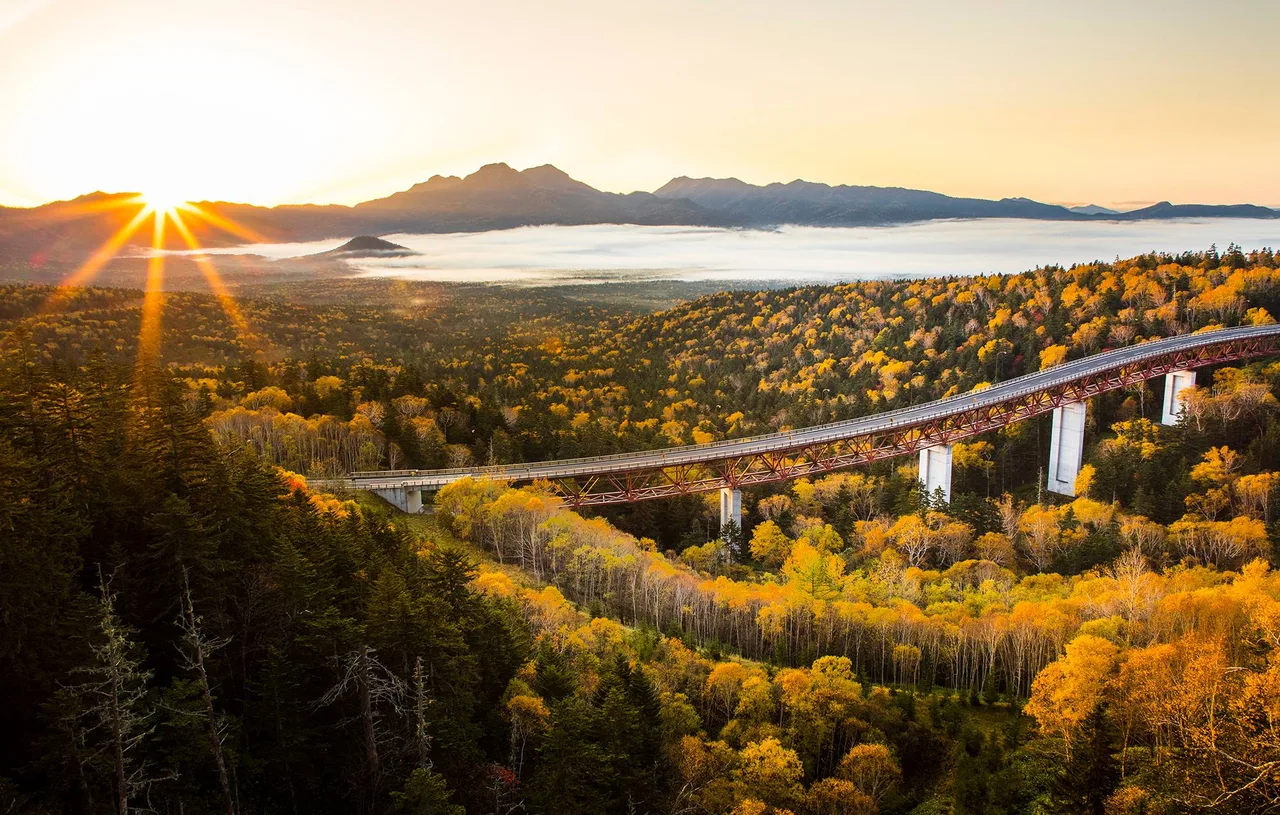
Photo: Hokkaido Love! Photo Library
Areas of Hokkaido
Mikuni Pass
At 1,139 m, Mikuni Pass on Route 273 is the highest national road point in Hokkaido. The forest view, Matsumi Bridge, autumn colors, and driving tips.
 Nov 20 – Dec 25Munich Christmas Market in Sapporo
 Nov 20 – Mar 14Sapporo White Illumination
 Dec 1 – Dec 25Hakodate Christmas Fantasy
Find on the map
This page is translated from the Japanese edition. Read the Japanese edition
What is the area like?
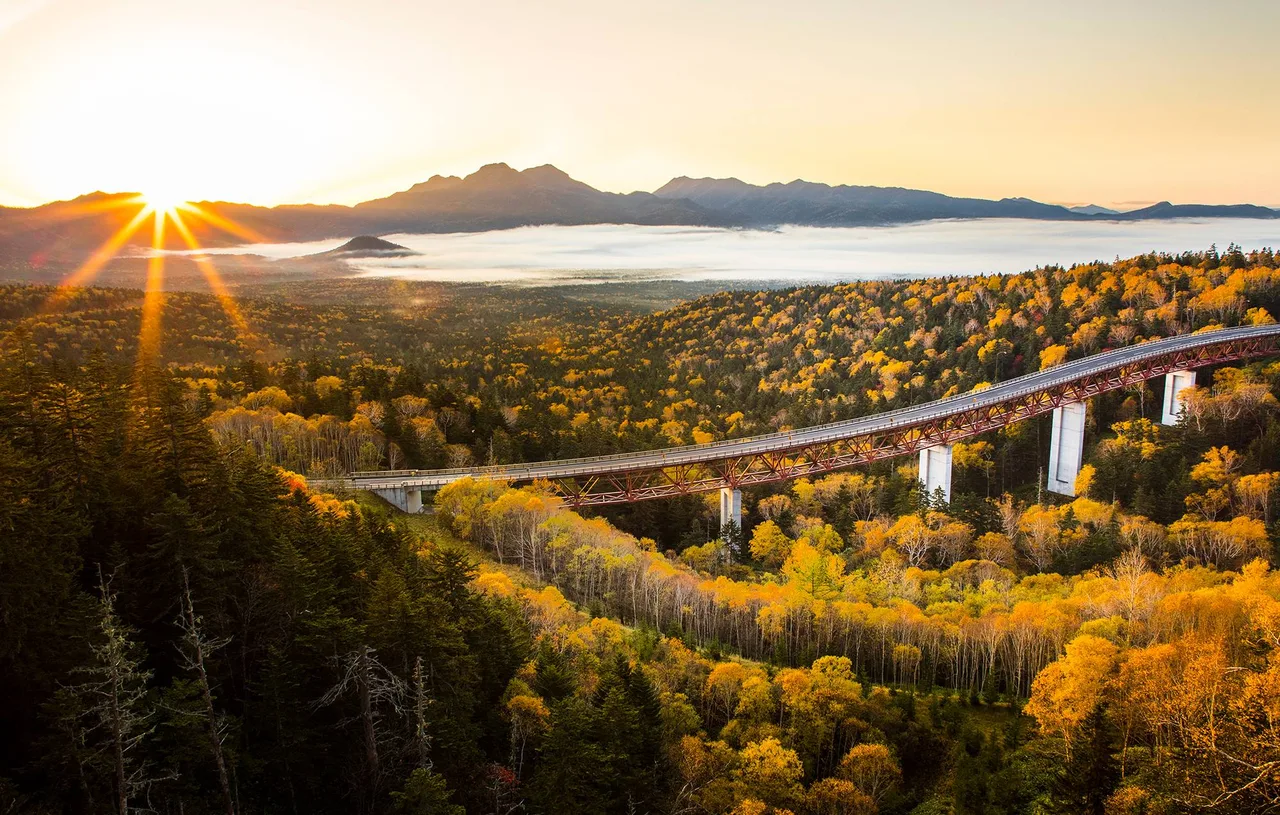
Climb south from Sounkyo on Route 273, and after a stretch of curves through the forest the view suddenly opens up. Mikuni Pass, on the border of Kamikawa and Kamishihoro, sits at 1,139 m and is the highest point on any national road in Hokkaido. Its name, "three provinces pass", comes from its closeness to where the old provinces of Ishikari, Tokachi and Kitami met.
Around the pass is the deep forest on the east side of the Daisetsuzan mountains, far from any town. The sight to see is the sea of trees below the viewpoint, with the road curving through it. Head north and you reach Sounkyo; head south and you come to the hot springs of Nukabira and Lake Nukabira. It is a stop on the drive between the north side of Daisetsuzan and Tokachi.
Main sights
Mikuni Pass viewpoint
At the top of the pass are a car park and a viewing area, so you can step out of the car straight to the view. Below, forests of Sakhalin fir and Yezo spruce stretch as far as you can see, and the red Matsumi Bridge sweeps through them in a wide curve. Beyond the forest rise the Daisetsuzan peaks.
The leaves usually turn from late September to early October, when the reds and yellows of broadleaf trees mix with the dark green of the conifers. There is also a seasonal café at the pass. See Mikuni Pass for details.
Matsumi Bridge
A bridge in the forest on the south, Kamishihoro side of the pass. From the viewpoint you see the red bridge curving through deep green, the signature view of Mikuni Pass. The bridge carries traffic, so only take photos after parking in a proper place such as the viewpoint at the pass.
Food and shopping
Apart from the seasonal café at the pass, there is almost nowhere to eat or shop on either side of it. The café closes for the winter. Have a meal and fill up the tank before you head for the pass, in Sounkyo, central Kamishihoro or Nukabira Onsen.
Getting there
- Car: About 1 hour from Kamikawa-Sounkyo Interchange on the Asahikawa-Monbetsu Expressway, and about 1 hour 30 minutes from Otofuke-Obihiro Interchange on the Do-To Expressway. About 40 minutes from Sounkyo and about 2 hours from Obihiro.
- Public transport: Almost no route buses cross the pass, so come by car.
Snow can fall in October and the road can ice over. Winter tires are a must from late autumn to early spring. In winter the road is sometimes closed by blizzards, so check road information before setting out.
Getting around the area
Most people stop at Mikuni Pass on the drive between Sounkyo and Nukabira or Obihiro. Twenty to thirty minutes at the viewpoint is plenty. On autumn-color weekends the car park at the pass gets busy, so passing early in the morning lets you enjoy the view in peace.
Heading south, you pass near Taushubetsu River Bridge, an arch bridge of the old JNR Shihoro Line left in Lake Nukabira. Combine the pass and the lake, and you can see the forests and lake on the east side of Daisetsuzan in one day. Mountain weather changes quickly and the pass is much colder than the towns, so bring a jacket even in summer.
Sights in Mikuni Pass
Recommended hotels in Mikuni PassPR
See prices and availability for hotels in Sapporo and book on our partner Trip.com.
See hotels in Sapporo on Trip.comHokkaido guides
See all
More areas of Hokkaido
- Sapporo Station & Odori
- Moerenuma Park
- Susukino
- Hitsujigaoka
- Maruyama & Hokkaido Jingu
- Mt. Moiwa
- Jozankei Onsen
- Otaru
- Hakodate Bay Area & Motomachi
- Hokuryu
- Goryokaku
- Yunokawa
- Onuma Park
- Matsumae
- Asahiyama Zoo
- Mt. Asahidake
- Sounkyo Gorge
- Shirogane, Biei
- Mt. Tokachidake
- Nakafurano
- Noboribetsu Onsen
- Lake Shikaribetsu
- Nukabira & Lake Nukabira
- Lake Toya & Mt. Usu
- Shakotan Peninsula
- Muroran
- Miyanosawa
- Lake Shikotsu
- Shiretoko & Utoro
- Takinoue
- Niseko
- Shari
- Abashiri
- Nakashibetsu & Kaiyodai
- Biei Hills
- Asahikawa
- Notsuke Peninsula
- Lake Akan & Lake Onneto
- Lake Mashu & Lake Kussharo
- Tsurui
- Kushiro Wetland
- Wakkanai
- Sarobetsu Wetland
- Cape Soya
- Rishiri Island
- Rebun Island
- Cape Erimo