
Shimoda
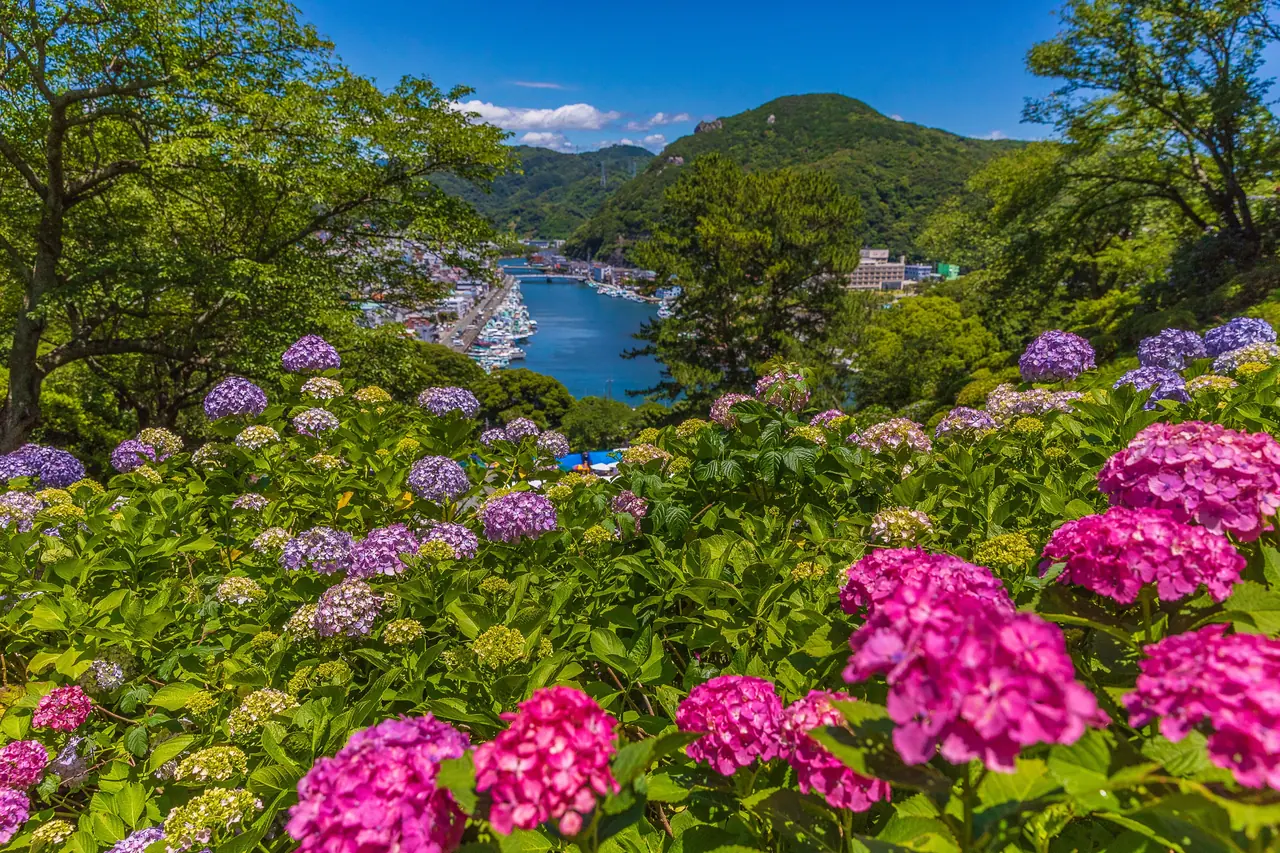
Photo: copyright© Shizuoka Prefectural Tourism Association.
Areas of Shizuoka
Shimoda
Things to do in Shimoda: Perry Road and Ryosenji, the ropeway up Mt. Nesugata, Ryugukutsu sea cave, Shirahama beach, June hydrangeas, kinmedai fish and getting around.
 Nov 14 – Dec 6Atami Baien Autumn Leaves Festival (Momiji Matsuri)
 GuidesShizuoka Autumn Leaves: Mt. Fuji, Shuzenji, Sumatakyo and Temples
 GuidesStrawberry and Mikan Picking in Shizuoka: Kuno, Izu, Ito, Mikkabi
Find on the map
This page is translated from the Japanese edition. Read the Japanese edition
What is the area like?
Shimoda, home to Izukyu-Shimoda Station at the end of the Izu Kyuko line, is the port town where Commodore Perry's Black Ships arrived at the end of the Edo period. In 1854, Perry's party walked along a street in town to Ryosenji Temple and signed the Shimoda Treaty, which set out the detailed rules of the Japan–US Treaty of Peace and Amity. That route is today's Perry Road.
Mt. Nesugata rises right behind the station, overlooking Shimoda Port, and just outside town are white sand beaches and a sea cave carved by the waves. It is an area where you get both port-town history and the Izu sea. To the west is Cape Irozaki at the peninsula's southern tip, and to the north is Kawazu with its early cherry blossoms.
Main sights
Perry Road and Ryosenji Temple
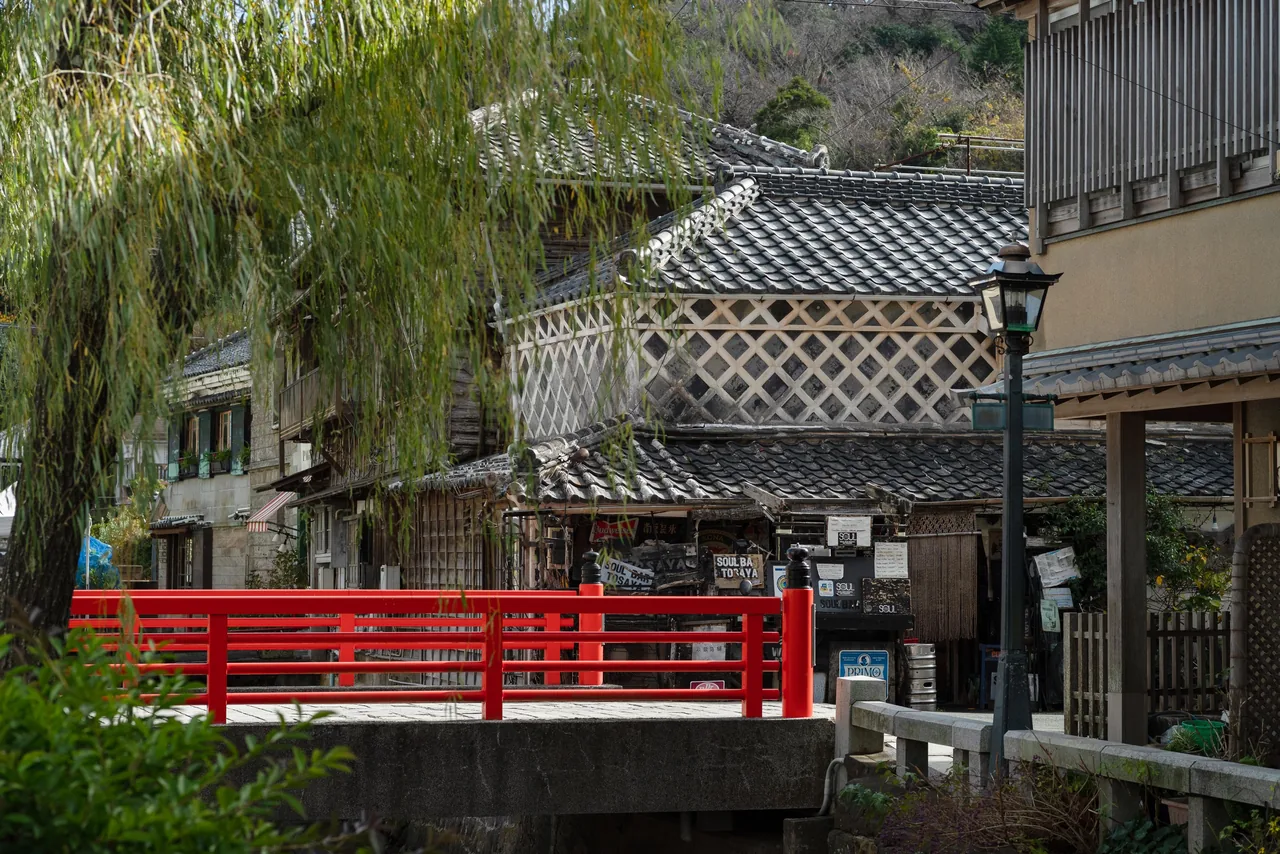
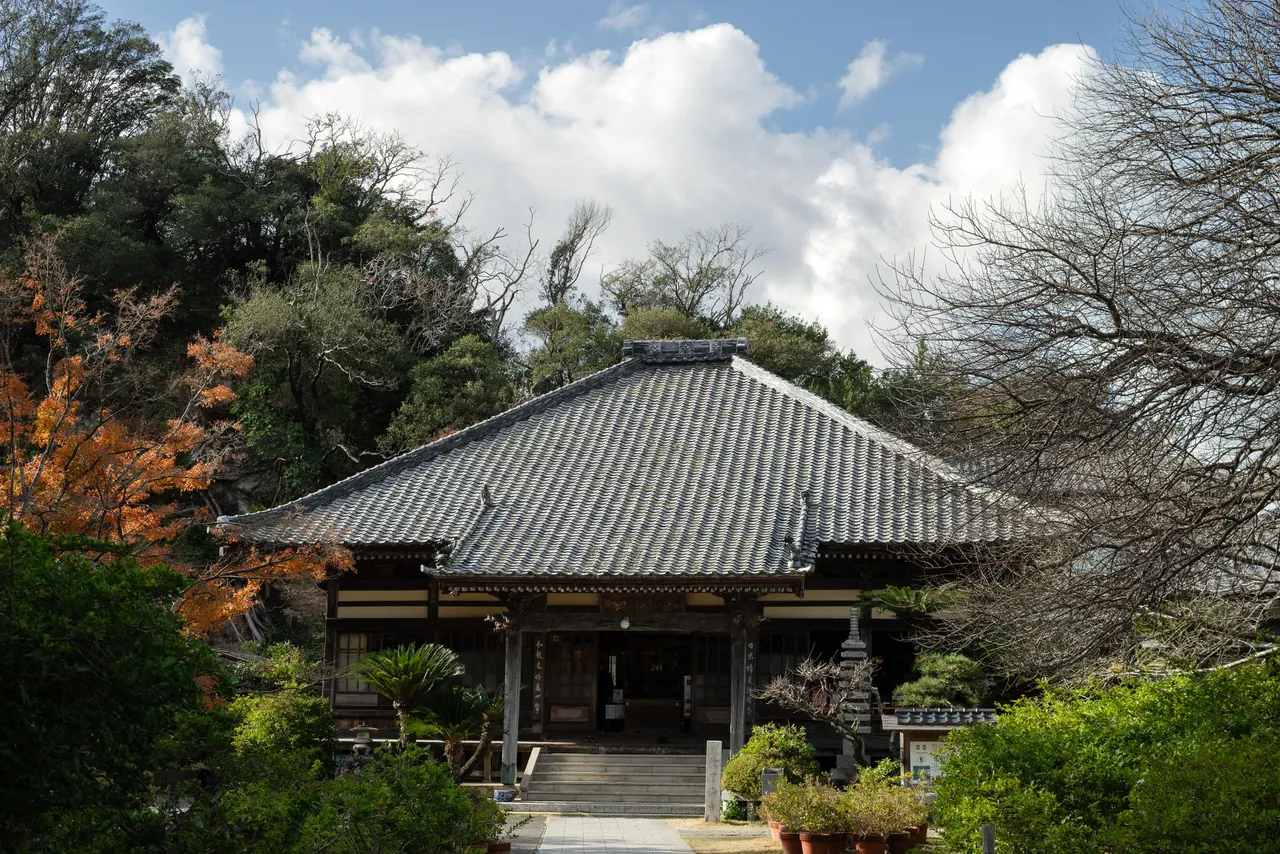
A lane of about 400 m along the Hiranami River, from near the monument to the arrival of Perry's fleet to the gate of Ryosenji. Stone paving and gas lamps run beneath the willows, and old buildings with namako-kabe tiled walls and Izu stone still stand (Perry Road). At the end, Ryosenji Temple is a Historic Site of Japan as the place where the Shimoda Treaty was signed. In mid to late May, about 1,000 Brunfelsia bushes bloom, and at the Black Ship Festival every May the signing ceremony is re-enacted here.
Mt. Nesugata
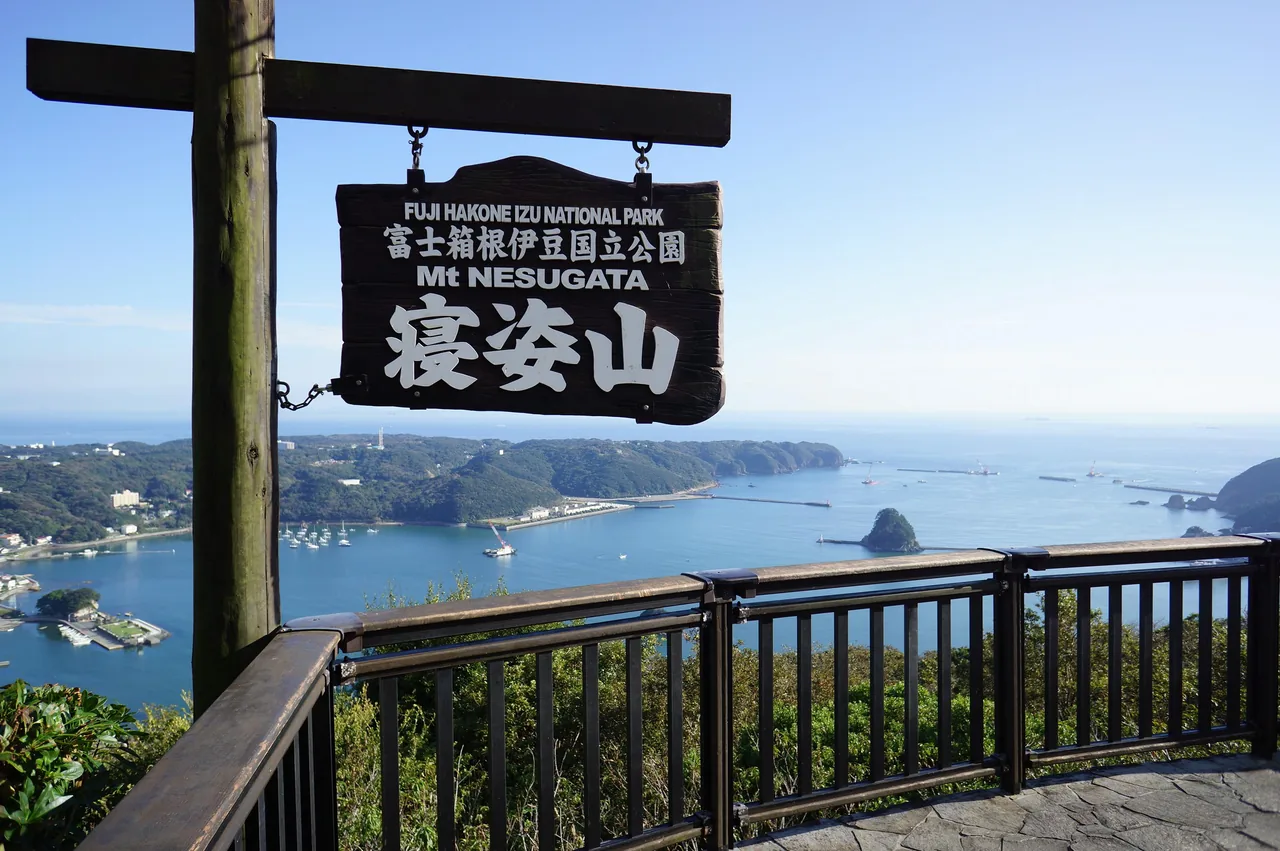
The mountain right behind Izukyu-Shimoda Station; the Shimoda Ropeway reaches the top in about three and a half minutes. From the observation deck you look down on Shimoda Port, the town and the open sea. About 10 minutes along the path from the summit station is Aizendo, a vermilion octagonal hall. See Mt. Nesugata.
Ryugukutsu Cave
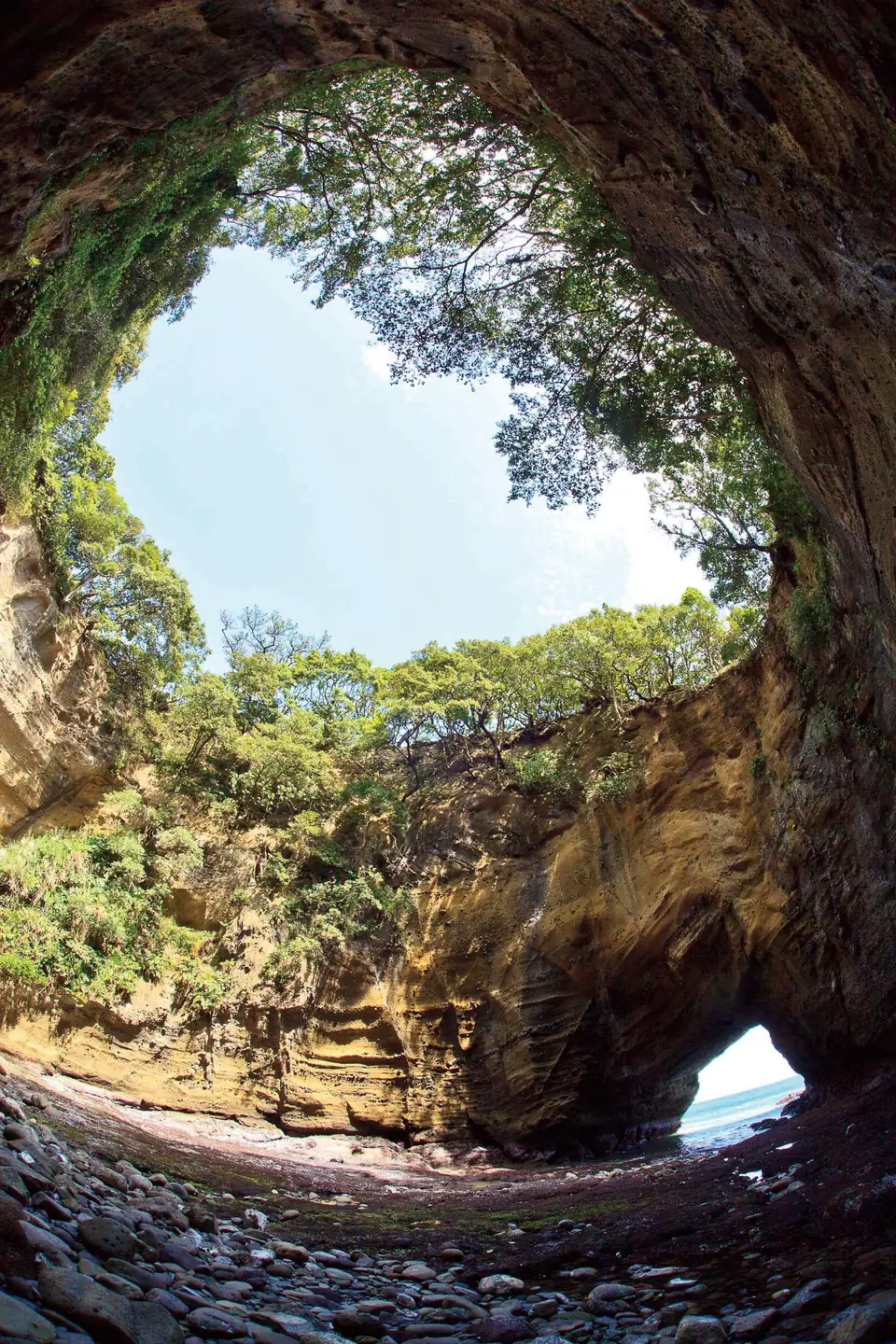
A sea cave on the coast at Toji in Shimoda, where the roof has collapsed to leave a skylight about 40–50 m across. You can look up at the skylight from inside the cave, and from the path above there is a spot where it looks like a heart. Part of the cave is closed because of the risk of falling rocks, so follow the signs on site. See Ryugukutsu Cave.
Shirahama Ohama Beach and the Shimoda Hydrangea Festival
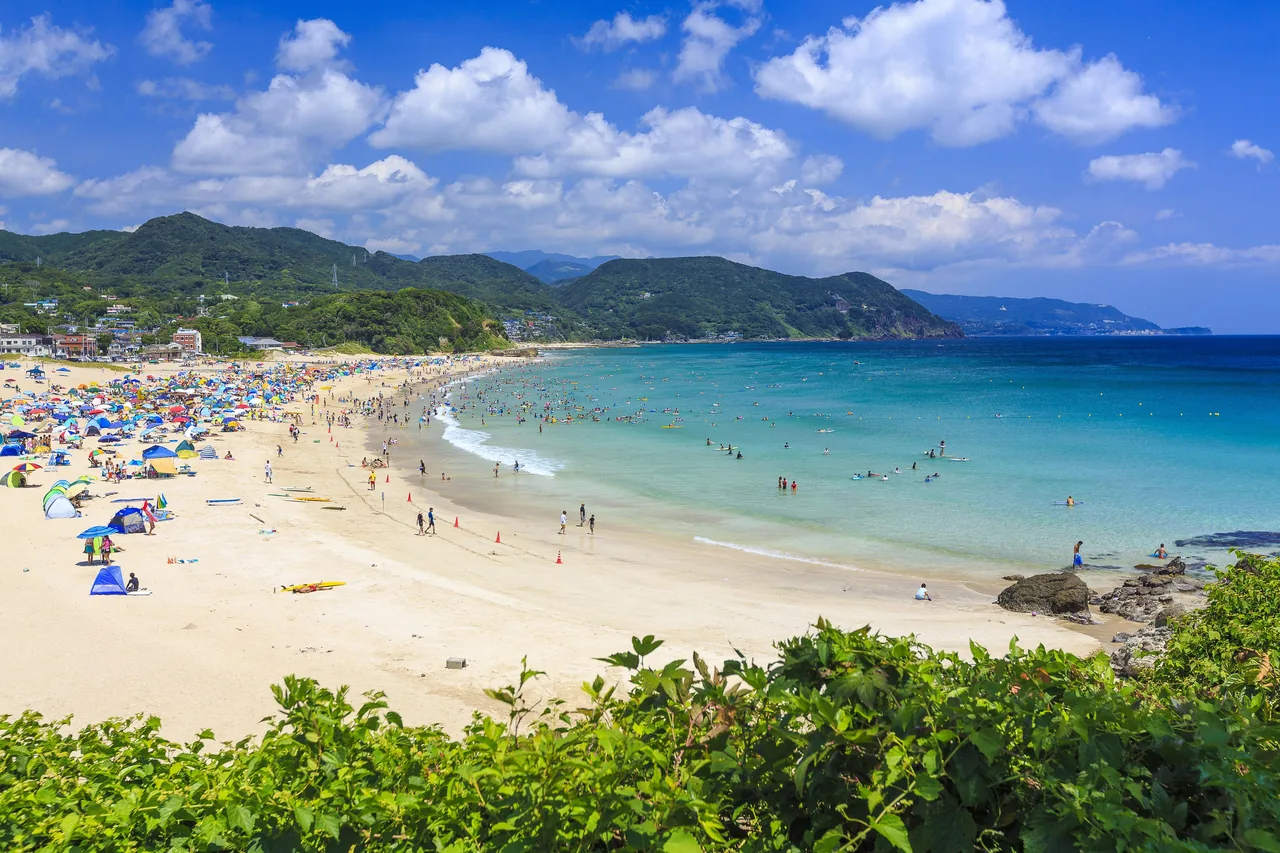
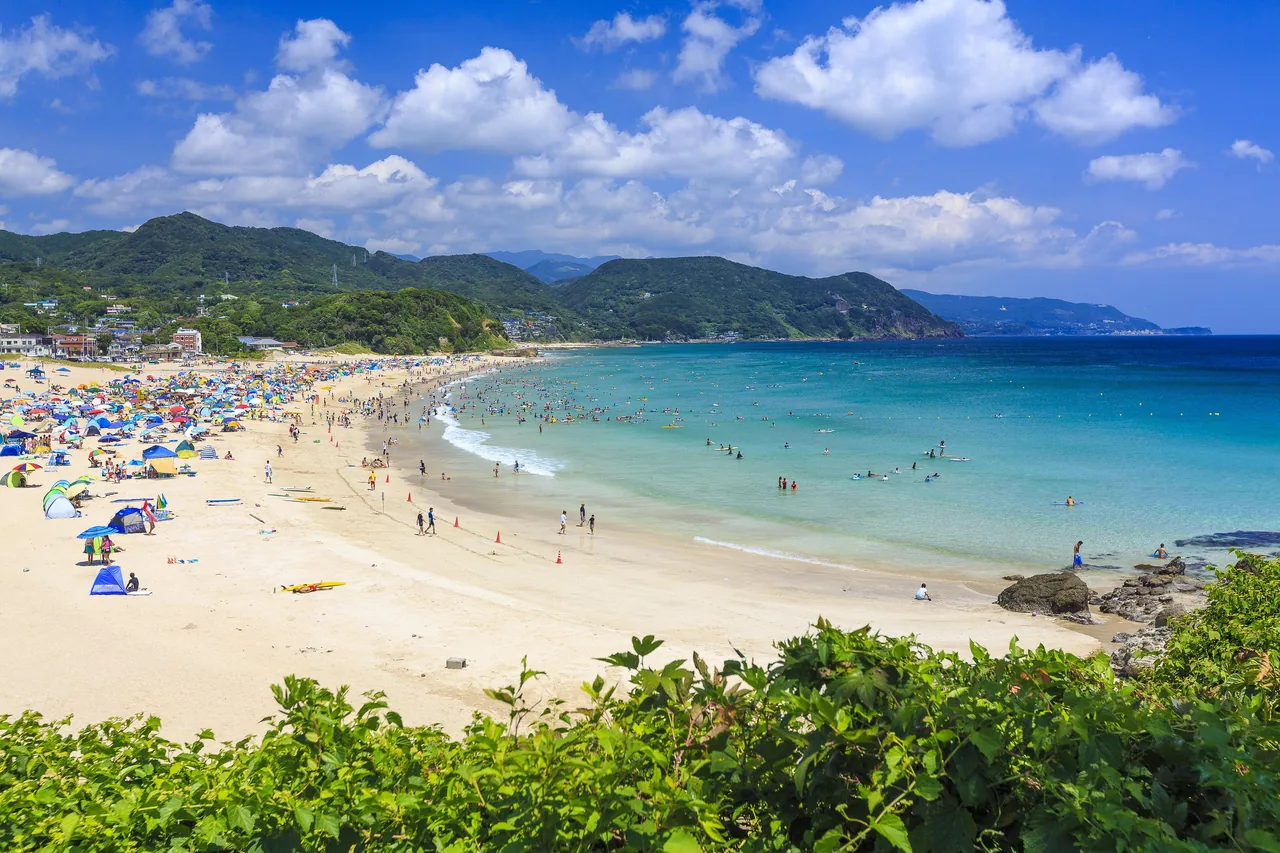
Shirahama Ohama Beach is the largest swimming beach in Izu, with about 700 m of white sand. In 2026 it was open for swimming from July 18 to August 31. In June, the Shimoda Hydrangea Festival is held in Shimoda Park above the port, where hydrangeas said to number about 3 million blooms cover the slopes. They usually peak in mid to late June.
Food and shopping
Shimoda Port lands some of the largest catches of kinmedai (splendid alfonsino) in Japan, and kinmedai simmered in a sweet-savory sauce is a staple at Shimoda's diners and inns (see our Shizuoka food guide). You can find places to eat in the list further down this page.
Getting there
- Rail: Get off at Izukyu-Shimoda Station, the last stop on the Izu Kyuko line. From Tokyo, the Odoriko limited express runs there without a change.
- To Perry Road: About 15 minutes on foot from the station. Ryosenji is about 10 minutes along Maimai-dori from the station.
- To Ryugukutsu Cave: Take a bus toward Toji to the Ryugukutsu stop. Buses are infrequent, so check the timetable.
- To Shirahama Ohama Beach: About 15 minutes by bus toward Itado; get off at Respo Shirahama.
Getting around the area
Mt. Nesugata, Ryosenji, Perry Road and Shimoda Park are all within walking distance of the station. View the port from Mt. Nesugata in the morning, then walk through town to Ryosenji and Perry Road at midday, and you can cover them in half a day. Ryugukutsu and Shirahama are outside town, so plan around the bus times.
For combining Shimoda with the rest of the peninsula, see our Izu Peninsula travel guide; beaches are covered in our Izu beach guide.
Sights in Shimoda
Shizuoka guides
See all
More areas of Shizuoka
- Atami
- Hatsushima
- Ito & Izu-Kogen
- Atagawa & Inatori
- Kawazu
- Cape Irozaki
- Matsuzaki & Kumomi
- Nishiizu (Dogashima & Koganezaki)
- Shuzenji
- Amagi-Yugashima
- Izu-Nagaoka & Nirayama
- Mishima
- Western Hakone (Mishima Skywalk & Yamanaka Castle)
- Numazu Port
- Cape Osezaki
- Gotemba
- Oyama (Takenoshita)
- Susono
- Southern Slopes of Mt. Fuji (Mizugatsuka & Nishiusuzuka)
- Fujinomiya
- Shiraito Falls & Lake Tanuki
- Asagiri Highlands
- Fuji City
- Tagonoura
- Obuchi Sasaba
- Kanbara
- Yui & Satta Pass
- Shimizu & Miho
- Nihondaira & Kunozan
- Central Shizuoka City
- Utsunoya
- Yaizu
- Okabe (Gyokuro no Sato)
- Kawane
- Sumatakyo Gorge
- Okuoi-Kojo Station
- Kanaya (Makinohara Plateau)
- Sagara
- Makinohara (Hagima)
- Omaezaki
- Kakegawa
- Higashiyama & Nissaka
- Daito & Osuka (Takatenjin & Yokosuka Castles)
- Fukuroi (Kasuisai & Yusanji)
- Hattasan
- Mori
- Iwata
- Hamamatsu
- Tenryu-Futamata
- Okuhamanako (Hokoji & Ryugashido Cave)
- Bentenjima & Arai