
Higashiyama & Nissaka
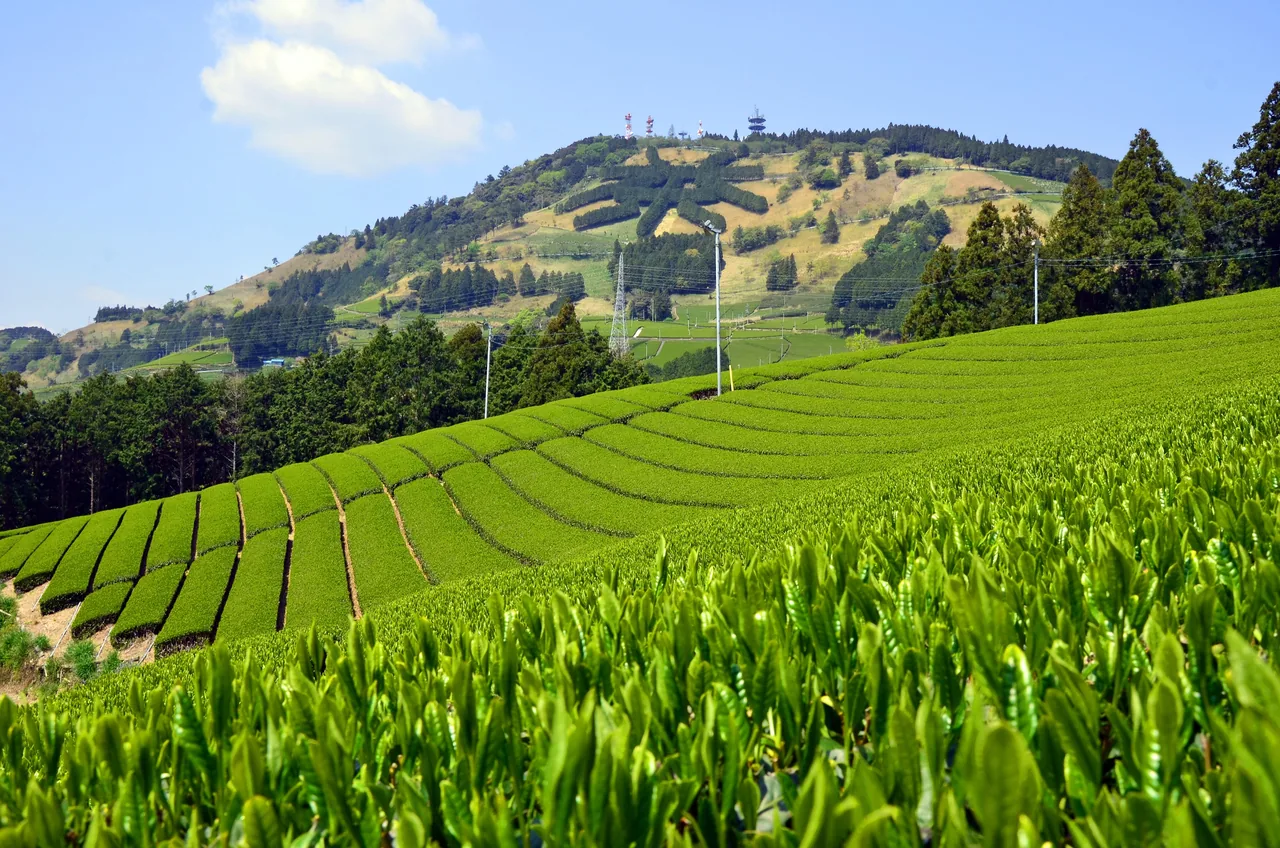
Photo: copyright© Shizuoka Prefectural Tourism Association.
Areas of Shizuoka
Higashiyama & Nissaka
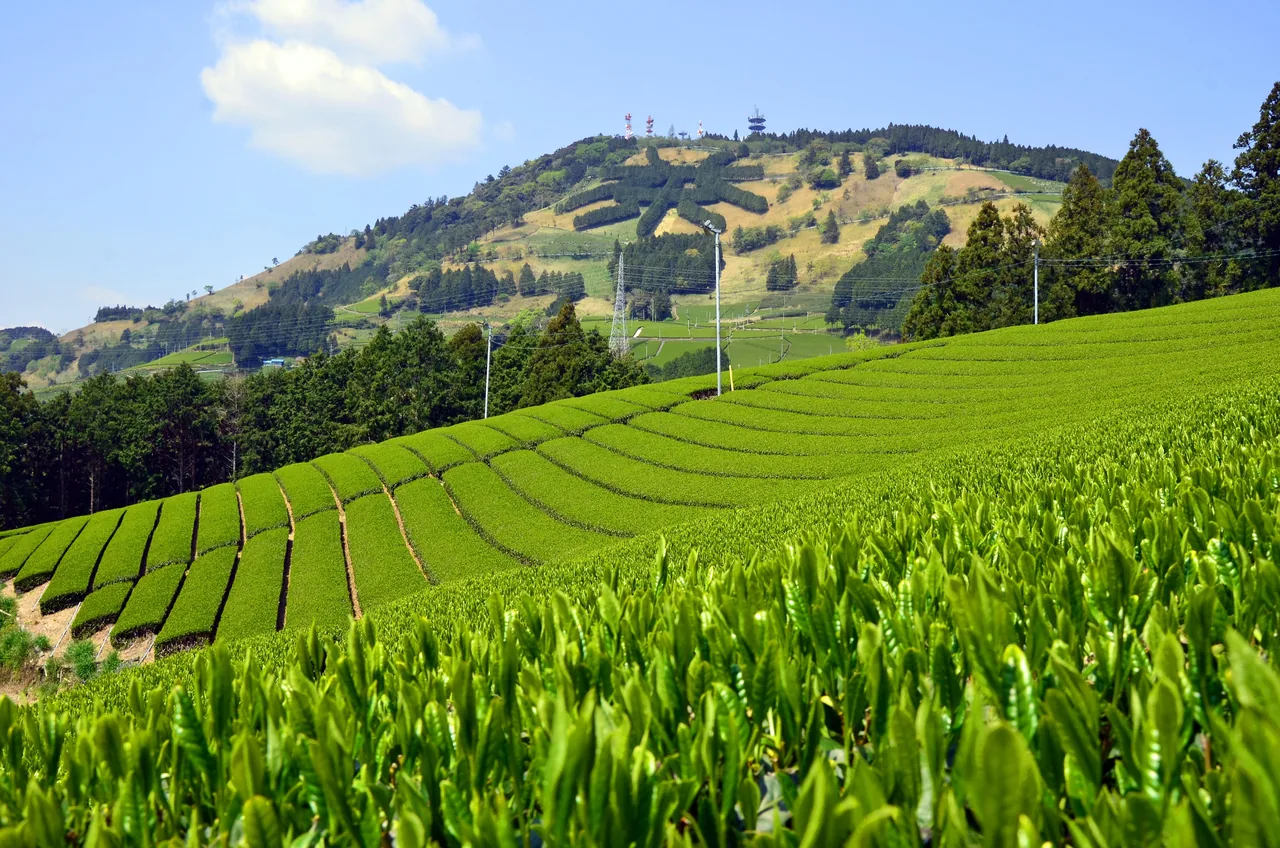
Higashiyama and Nissaka in Kakegawa: tea fields below the giant tea character on Mt. Awagatake, chagusaba farming, Kotonomama Hachimangu's great trees, new tea and buses.
 Nov 14 – Dec 6Atami Baien Autumn Leaves Festival (Momiji Matsuri)
 GuidesShizuoka Autumn Leaves: Mt. Fuji, Shuzenji, Sumatakyo and Temples
 GuidesStrawberry and Mikan Picking in Shizuoka: Kuno, Izu, Ito, Mikkabi
Find on the map
This page is translated from the Japanese edition. Read the Japanese edition
What is the area like?
At Higashiyama, at the foot of Mt. Awagatake northwest of Kakegawa, tea fields follow the rise and fall of the hills. On the mountainside, a huge character for "tea" is drawn in planted cypress trees, and you can look up at it from among the fields.
To the south, around Nissaka, is a district on the old Tokaido with Kotonomama Hachimangu, a shrine long believed to grant wishes just as they are spoken. Head east to the town of Kakegawa.
Main sights
Higashiyama Tea Fields (Mt. Awagatake)
Here the traditional chagusaba method continues: grass is cut from the grasslands around the tea fields and spread between the rows. "Shizuoka's Chagusaba Tea Farming" is a Globally Important Agricultural Heritage System. Higashiyama's rows curve with the hills rather than lying on a flat plateau, and in the spring new-tea season the fresh shoots shine. The fields belong to farmers, so view them from the road. See Higashiyama Tea Fields (Mt. Awagatake).
Kotonomama Hachimangu Shrine
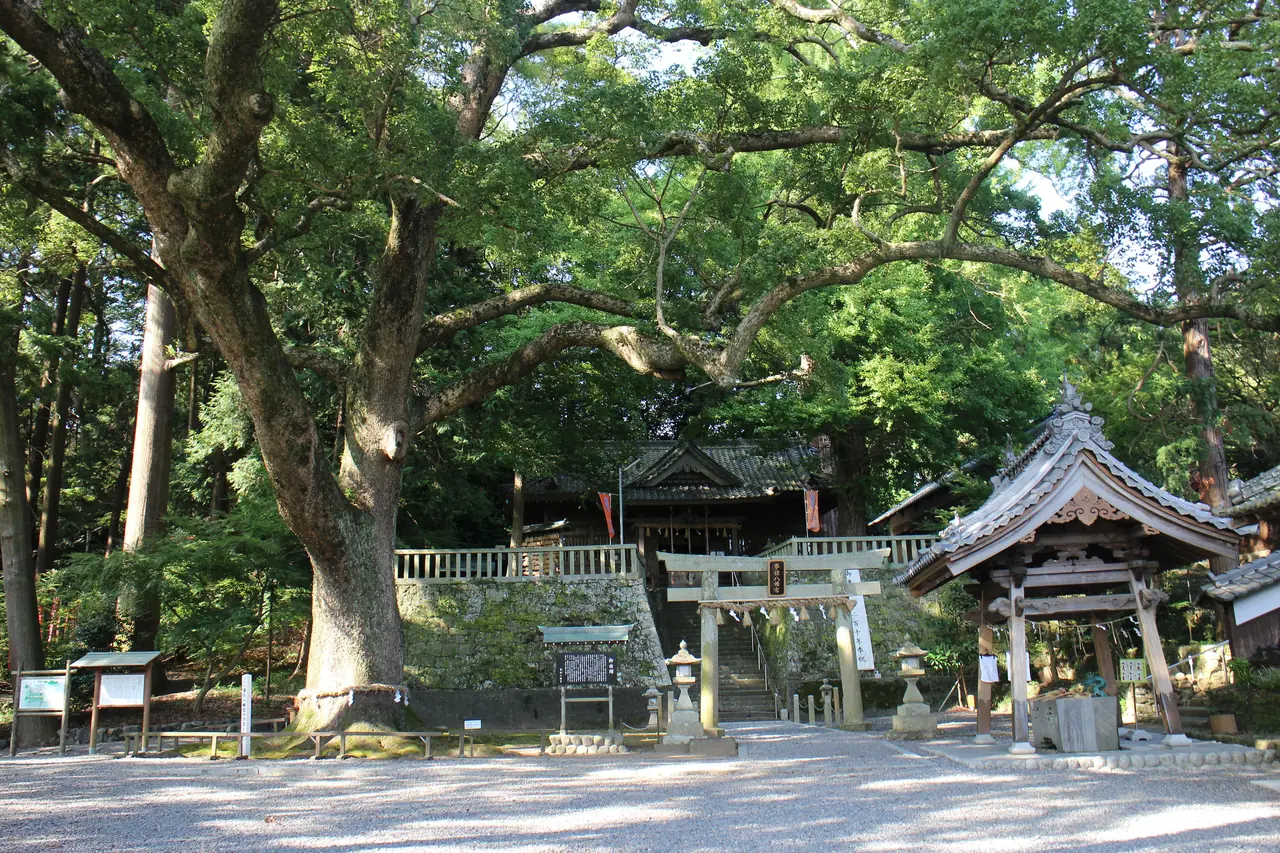
An old shrine that appears as "Kotonomama no Myojin" in The Pillow Book of the Heian period. Great camphor and cedar trees with thick trunks stand in the grounds; the sacred cedar and camphor are said to have been planted by Sakanoue no Tamuramaro and are Kakegawa city natural monuments. In autumn the trees along the approach turn yellow and red. Around the small shrines at the back, tree roots spread across the ground, so watch your step. See Kotonomama Hachimangu Shrine.
Food and shopping
How to choose tea grown with the chagusaba method, and the deep-steamed tea common in central and western Shizuoka, is covered in our Shizuoka green tea guide. You can find places to eat in the list further down this page.
Getting there
- To Higashiyama: From the north exit of JR Kakegawa Station, take the Kakegawa Bus Service Higashiyama Line (about 40 minutes) to the last stop, Chamoji no Sato Higashiyama. You can drive up close to the top of Mt. Awagatake, but the road is narrow and winding.
- To Kotonomama Hachimangu: It is easiest by car or taxi from JR Kakegawa Station. The shrine is on the old Tokaido, near Route 1.
Getting around the area
Buses to Higashiyama are infrequent, so check the return times before you set off. By car you can see the Higashiyama tea fields and Kotonomama Hachimangu in half a day. In the new-tea season, many farm vehicles use the lanes, so do not park on the road.
The chagusaba method is explained in detail on the GIAHS Shizuoka chagusaba website. Kotonomama Hachimangu also appears in our guide to Shizuoka's shrines.
Sights in Higashiyama & Nissaka
Shizuoka guides
See all
More areas of Shizuoka
- Atami
- Hatsushima
- Ito & Izu-Kogen
- Atagawa & Inatori
- Kawazu
- Shimoda
- Cape Irozaki
- Matsuzaki & Kumomi
- Nishiizu (Dogashima & Koganezaki)
- Shuzenji
- Amagi-Yugashima
- Izu-Nagaoka & Nirayama
- Mishima
- Western Hakone (Mishima Skywalk & Yamanaka Castle)
- Numazu Port
- Cape Osezaki
- Gotemba
- Oyama (Takenoshita)
- Susono
- Southern Slopes of Mt. Fuji (Mizugatsuka & Nishiusuzuka)
- Fujinomiya
- Shiraito Falls & Lake Tanuki
- Asagiri Highlands
- Fuji City
- Tagonoura
- Obuchi Sasaba
- Kanbara
- Yui & Satta Pass
- Shimizu & Miho
- Nihondaira & Kunozan
- Central Shizuoka City
- Utsunoya
- Yaizu
- Okabe (Gyokuro no Sato)
- Kawane
- Sumatakyo Gorge
- Okuoi-Kojo Station
- Kanaya (Makinohara Plateau)
- Sagara
- Makinohara (Hagima)
- Omaezaki
- Kakegawa
- Daito & Osuka (Takatenjin & Yokosuka Castles)
- Fukuroi (Kasuisai & Yusanji)
- Hattasan
- Mori
- Iwata
- Hamamatsu
- Tenryu-Futamata
- Okuhamanako (Hokoji & Ryugashido Cave)
- Bentenjima & Arai